The Best Used 40ft High Cube Container Prices
Table of Contents
- Table of Contents
- Understanding the Value of Used 40ft High Cube Containers
- Dimensions and Capacity Advantages Over Standard Units
- Current Market Price Ranges for Used High Cubes
- Cargo Worthy vs. Wind and Watertight Pricing
- As-Is Condition Discounts and Risks
- Key Factors That Influence Container Costs
- Geographic Location and Port Proximity
- Seasonal Demand and Steel Market Fluctuations
- Where to Find the Best Deals on Used Inventory
- Buying from National Suppliers vs. Local Yards
- Hidden Costs Beyond the Initial Purchase Price
- Delivery Fees and Tilt-Bed Trailer Requirements
- Site Preparation and Foundation Expenses
- Inspection Checklist to Ensure Price-to-Value Ratio
- Maximizing Your Investment Through Maintenance and Upgrades
Table of Contents
- Understanding the Value of Used 40ft High Cube Containers
- Dimensions and Capacity Advantages Over Standard Units
- Current Market Price Ranges for Used High Cubes
- Cargo Worthy vs. Wind and Watertight Pricing
- As-Is Condition Discounts and Risks
- Key Factors That Influence Container Costs
- Geographic Location and Port Proximity
- Seasonal Demand and Steel Market Fluctuations
- Where to Find the Best Deals on Used Inventory
- Buying from National Suppliers vs. Local Yards
- Hidden Costs Beyond the Initial Purchase Price
- Delivery Fees and Tilt-Bed Trailer Requirements
- Site Preparation and Foundation Expenses
- Inspection Checklist to Ensure Price-to-Value Ratio
- Maximizing Your Investment Through Maintenance and Upgrades
If you’re shopping for a used 40ft high cube container, price is probably the first thing on your mind. That’s fair. These containers represent one of the most practical large-format storage and workspace options you can buy, and the used market offers real savings over one-trip units. But the sticker price you see online rarely tells the whole story. Delivery logistics, container grade, geographic location, and site conditions all play a role in what you’ll actually spend. A $3,000 container can quickly become a $5,500 project if you don’t plan ahead. This guide breaks down realistic pricing, the factors that shift costs up or down, and the hidden expenses that catch first-time buyers off guard. Whether you’re a contractor staging equipment, a homeowner adding backyard storage, or a small business expanding inventory space, you’ll walk away knowing what a fair deal actually looks like and how to avoid overpaying.
Understanding the Value of Used 40ft High Cube Containers
The 40ft high cube shipping container is the workhorse of the used container market for good reason. It gives you roughly 2,700 cubic feet of enclosed, secure space in a single unit. That’s enough room for a full workshop, seasonal inventory overflow, or a serious storage operation on a farm or commercial property. Compared to building a permanent structure, a used high cube delivers usable square footage at a fraction of the cost and in a fraction of the time.
Used units also retain structural integrity well past their ocean shipping lifespan. A container that’s been retired from international freight after 10 to 15 years of service still has decades of useful life for ground-level storage, provided it’s been graded correctly. That’s the core value proposition: you’re buying Corten steel construction rated for extreme conditions, at a price point that makes sense for non-shipping applications.
Dimensions and Capacity Advantages Over Standard Units
A standard 40ft container has an interior height of about 7 feet 10 inches. A 40ft high cube bumps that to roughly 8 feet 10 inches, giving you an extra foot of vertical clearance. The exterior dimensions are 40 feet long by 8 feet wide by 9 feet 6 inches tall, with interior usable space of approximately 39 feet 5 inches by 7 feet 8 inches by 8 feet 10 inches.
That extra foot matters more than people expect. If you’re building shelving systems, stacking pallets, or converting the container into an office or workshop, the additional headroom makes the space feel dramatically less cramped. Standard-height containers can feel tight once you add lighting, insulation, or overhead fixtures. High cubes give you room to work with. For anyone planning a conversion project or storing tall equipment like riding mowers or industrial shelving, the high cube is the clear choice.
Current Market Price Ranges for Used High Cubes
As of 2024 and into 2025, a used 40ft high cube container price typically falls between $2,200 and $5,500, depending on condition, location, and availability. That’s a wide range, so understanding what drives those numbers is essential.
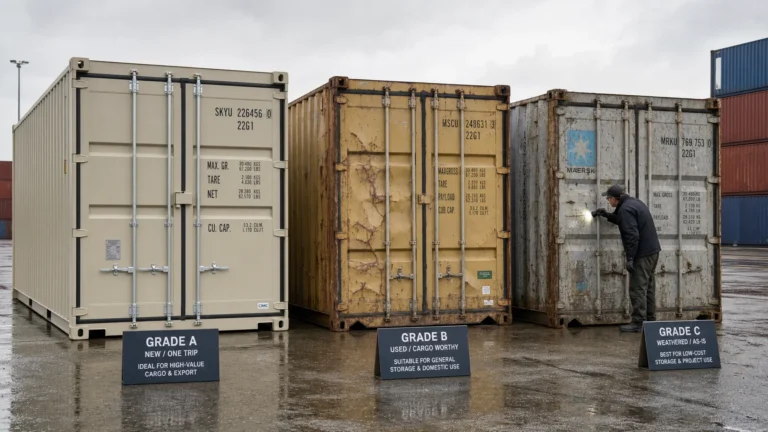
At the lower end, you’ll find As-Is units with cosmetic damage, surface rust, or minor structural issues. Mid-range pricing, roughly $3,000 to $4,200, covers most Wind and Watertight and Cargo Worthy grades. At the higher end, you’re looking at Cargo Worthy units in above-average condition, sometimes with recent CSC certification or newer manufacturing dates.
Cargo Worthy vs. Wind and Watertight Pricing
These two grades represent the most common options in the used market, and the distinction directly affects your cost.
- Cargo Worthy (CW) containers have been inspected and certified for ocean transport. They’re structurally sound, with functional doors, intact floors, and no holes. Expect to pay $3,200 to $5,000 for a 40ft high cube in CW condition.
- Wind and Watertight (WWT) containers keep weather out but haven’t been certified for shipping. They may have more surface rust, minor dents, or patched repairs. Pricing typically runs $2,500 to $3,800.
If you’re using the container strictly for on-site storage, WWT is often the smarter buy. You’re paying less for a container that still does the job. If you need to transport goods or resell the container later, CW gives you more flexibility and better resale value.
As-Is Condition Discounts and Risks
As-Is containers are sold without any guarantee of condition. Prices can dip below $2,000 for a 40ft high cube, which sounds appealing until you see what you’re getting. Common issues include rusted-through panels, damaged door hardware, compromised floor boards, and structural dents that affect stacking or modification potential.
Some As-Is units are perfectly usable for dry storage in covered areas or as raw material for conversion projects where you’re cutting and welding anyway. Others are essentially scrap. The rule of thumb: never buy an As-Is container without inspecting it in person or requesting detailed, dated photos of all six sides, the interior ceiling, and the door seals. A $1,800 container that needs $1,500 in repairs isn’t a deal.
Key Factors That Influence Container Costs
The price tag on any used high cube reflects more than just the container’s condition. Several market forces push pricing up or down throughout the year.
Geographic Location and Port Proximity
Containers are cheapest near major ports. Cities like Houston, Savannah, Los Angeles, and Newark see high volumes of decommissioned containers coming off ships, which keeps supply strong and prices competitive. If you’re buying in a landlocked state or a rural area far from port infrastructure, expect to pay a premium of $500 to $1,500 or more, largely because of transport costs to get the container to that market.
In the Southeast, buyers near the Port of Savannah or the Port of Charleston often find better pricing than those further inland. Lease Lane Containers, based in Raleigh, North Carolina, sources inventory with proximity to these Southeast port networks, which helps keep pricing competitive for buyers across the region and nationwide.
Seasonal Demand and Steel Market Fluctuations
Container pricing isn’t static. Spring and summer typically see higher demand as construction projects ramp up, farms need seasonal storage, and businesses prepare for peak inventory periods. Buying during late fall or winter can sometimes save you $200 to $600 on the same grade of container.
Steel commodity prices also play a role. When scrap steel values rise, the floor price for used containers goes up because sellers have the option to scrap units rather than sell them at a discount. Conversely, when steel prices drop, you’ll see more competitive pricing on used inventory. Tracking these trends isn’t essential, but being aware of them helps you recognize whether you’re shopping in a buyer’s market or a seller’s market.
Where to Find the Best Deals on Used Inventory
Your source matters as much as the container itself. Where you buy determines the quality of grading information, the accuracy of condition reports, and whether you’ll have support if something goes wrong.
Buying from National Suppliers vs. Local Yards
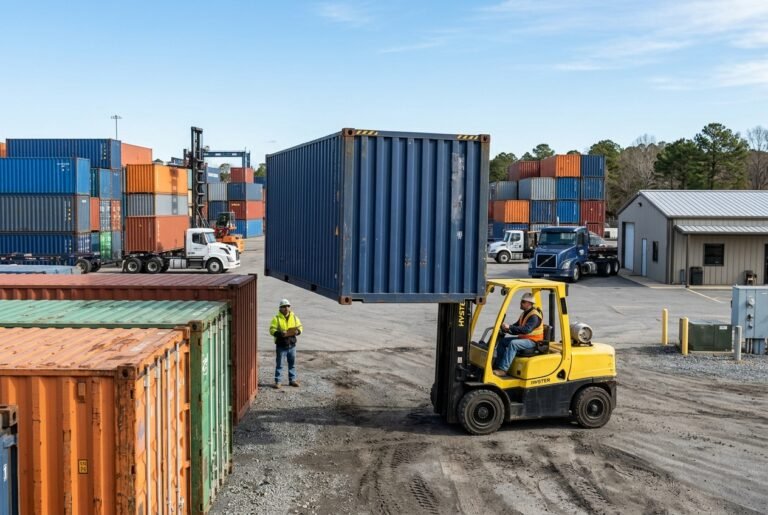
Local salvage yards and auction sites sometimes offer lower upfront prices, but the trade-off is limited grading transparency and little to no delivery support. You might save $300 on the container and then spend $800 figuring out how to move it.
National and regional suppliers like Lease Lane Containers provide clear grading guidance, honest condition descriptions, and delivery planning support. That means you know exactly what grade you’re getting, and you get help figuring out whether a tilt-bed or roll-off truck is right for your site. For first-time buyers especially, that kind of straightforward support prevents expensive mistakes. The best used 40ft high cube container price isn’t always the lowest number: it’s the one that accounts for what you actually receive and the service behind it.
Hidden Costs Beyond the Initial Purchase Price
The container itself is only part of the total cost. Two major expenses catch buyers off guard consistently.
Delivery Fees and Tilt-Bed Trailer Requirements
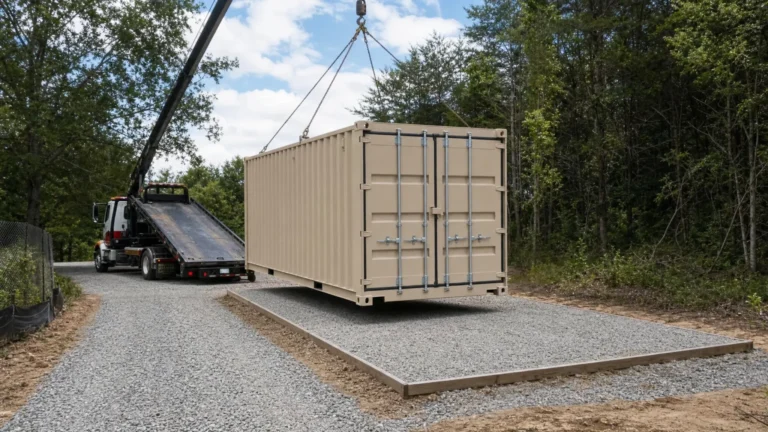
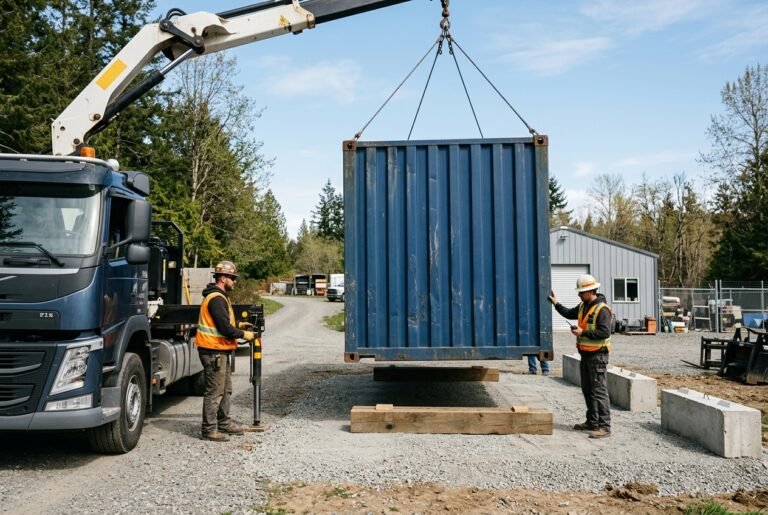
Shipping container delivery for a 40ft unit requires a tilt-bed trailer or a flatbed with a crane. Delivery fees typically range from $300 to $1,200 depending on distance from the supplier’s depot to your site. Longer hauls or difficult access locations push that number higher.
Your site needs at least 100 feet of straight clearance for a tilt-bed to slide the container off. Overhead power lines, tree branches, and narrow driveways create problems. If the truck can’t access your placement spot, you may need a crane drop, which adds $500 to $1,500. Measuring your access route before ordering saves real money and frustration. Lease Lane Containers provides delivery planning guidance that covers turning radius, overhead clearance, and ground conditions so you can avoid surprises on delivery day.
Site Preparation and Foundation Expenses
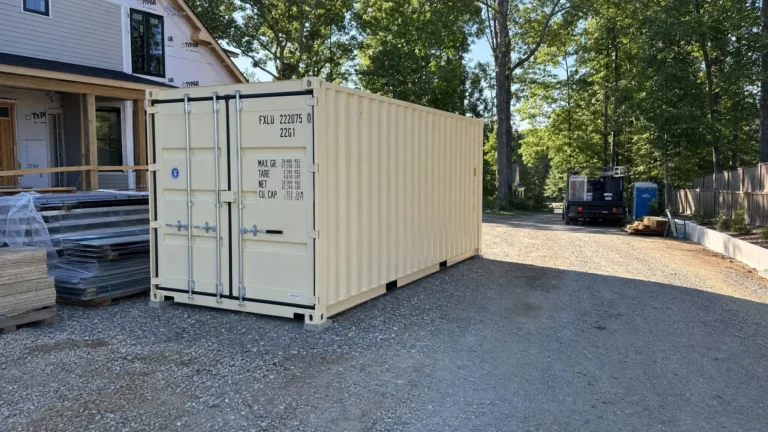
A 40ft high cube container weighs roughly 8,500 to 9,000 pounds empty. It needs a level, stable surface. Placing a container directly on bare soil invites settling, moisture problems, and accelerated rust on the undercarriage.
Common foundation options include:
- Compacted gravel pad (4 to 6 inches deep): $300 to $800 depending on area
- Concrete piers or blocks at each corner: $200 to $500
- Full concrete slab: $1,500 to $4,000 depending on local rates
For most storage applications, a gravel pad with railroad ties or concrete blocks at the corners works well. Budget at least $400 to $800 for basic site prep on top of your container and delivery costs.
Inspection Checklist to Ensure Price-to-Value Ratio
Before you commit to a purchase, verify the container’s condition against these critical checkpoints:
- Door operation: Both doors should open and close smoothly. Check the locking bars, cam handles, and gaskets for wear or damage.
- Roof condition: Look for dents, rust-through spots, or standing water marks on the interior ceiling. Roof leaks are the most common issue with used containers.
- Floor integrity: Marine-grade plywood flooring should be solid, not soft or warped. Push hard with your foot in multiple spots, especially near the door end.
- Wall panels: Check for patches, holes, and excessive rust. Light surface rust is normal. Flaking or bubbling paint signals deeper corrosion.
- Undercarriage: If possible, look beneath the container for cross-member rust and forklift pocket condition.
- Corner castings: These are the structural anchors. Cracks or heavy corrosion here compromise the container’s integrity.
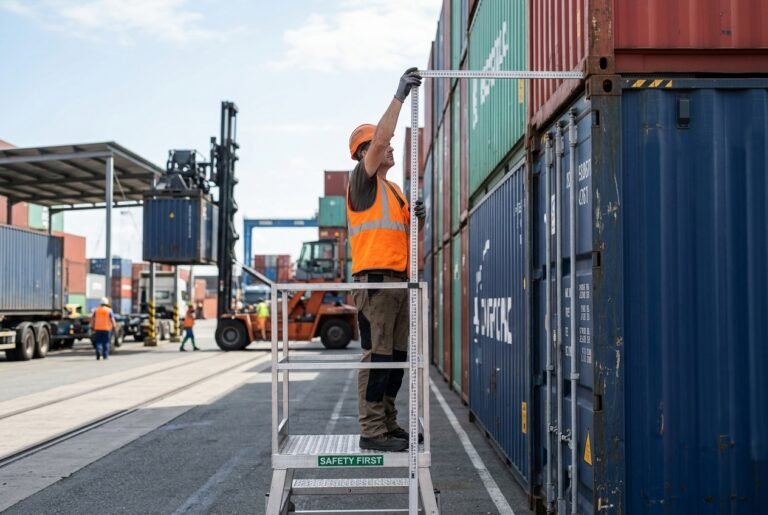
Spending 20 minutes on this checklist can save you thousands in unexpected repairs. If you’re buying remotely, request photos of each of these areas and ask the supplier about their grading criteria.
Maximizing Your Investment Through Maintenance and Upgrades
A used 40ft high cube shipping container can last 25 years or more on the ground with basic care. Annual maintenance is minimal but makes a real difference in longevity.
Inspect the roof and door seals once a year. Touch up any bare metal spots with rust-inhibiting primer and marine-grade paint. Budget roughly $50 to $150 per year for basic maintenance supplies. Keep the area around the container clear of vegetation that traps moisture against the walls.
Strategic upgrades also increase the container’s usefulness and resale value. Adding a lock box ($30 to $80) protects your padlock from bolt cutters. Ventilation kits ($100 to $300) reduce condensation inside. If you’re converting the space into a workshop or office, insulation and electrical work can turn a $3,500 container into a functional building for under $8,000 total.
The key to getting real value from your purchase is treating the container as a long-term asset, not a disposable box. A well-maintained used high cube holds 40% to 60% of its purchase price at resale even after years of use, which is better than most storage buildings depreciate.
If you’re ready to compare options, browse available inventory at Lease Lane Containers to see current container sizes, grades, and pricing. Their Raleigh-based team can help you match the right container to your project and plan delivery logistics before you commit.