

The Best Shipping Container Grades for Export
Table of Contents
- Table of Contents
- Understanding Container Grading Standards for International Shipping
- The Role of the Institute of International Container Lessors (IICL)
- ISO Standards and Structural Integrity Basics
- Cargo Worthy (CW) Containers: The Industry Gold Standard
- Criteria for CSC Plate Certification
- Why CW is Preferred for Overseas Freight
- One-Trip Containers for Premium Export Needs
- Benefits of Minimal Wear and Tear
- Long-term Value and Resale Potential
- Wind and Watertight (WWT) vs. Cargo Worthy Grades
- Why WWT May Not Be Sufficient for Export
- Essential Documentation for Export-Ready Containers
- Obtaining a Valid Survey Report
- Understanding the ACEP Program
- Factors Influencing Grade Selection for Your Cargo
- Sensitivity of Goods and Environmental Protection
- Budget Constraints vs. Transit Risks
- Final Checklist for Selecting an Export-Grade Container
Table of Contents
- Understanding Container Grading Standards for International Shipping
- Cargo Worthy (CW) Containers: The Industry Gold Standard
- One-Trip Containers for Premium Export Needs
- Wind and Watertight (WWT) vs. Cargo Worthy Grades
- Essential Documentation for Export-Ready Containers
- Factors Influencing Grade Selection for Your Cargo
- Final Checklist for Selecting an Export-Grade Container
Choosing the right shipping container grade for export is one of the most consequential decisions in international freight logistics. Get it wrong, and you risk cargo damage, port rejection, or costly delays that ripple through your supply chain. Get it right, and your goods arrive intact, your documentation clears customs without friction, and your per-unit shipping costs stay predictable. The challenge is that container grading terminology varies between sellers, surveyors, and shipping lines, which creates confusion for first-time exporters and experienced shippers alike. This guide breaks down each major container grade, explains the certification and documentation requirements for international transit, and gives you a practical framework for matching grade to cargo type. Whether you’re shipping manufactured goods from a North Carolina warehouse or agricultural equipment from the Midwest, the grade you select determines whether your container is accepted at port, survives the ocean crossing, and protects your investment on the other side.
Understanding Container Grading Standards for International Shipping
Container grading is not a single universal system. Instead, it draws from overlapping standards set by international bodies, leasing companies, and national regulators. Understanding how these standards interact is the first step toward selecting the best container grade for export shipments.
The three grades you’ll encounter most often are One-Trip, Cargo Worthy (CW), and Wind and Watertight (WWT). Each represents a different level of structural integrity, cosmetic condition, and certification status. One-Trip containers have made a single voyage from the manufacturing facility (typically in China) to their destination port. Cargo Worthy containers have been inspected and certified as safe for loaded ocean transport. Wind and Watertight containers keep weather out but may lack the structural certification required for international shipping.
The Role of the Institute of International Container Lessors (IICL)
The IICL sets the benchmark inspection criteria used by most container leasing companies and many shipping lines worldwide. Their standards define acceptable levels of corrosion, dent depth, floor condition, door seal integrity, and weld quality. When a surveyor inspects a container and declares it “IICL grade,” they’re confirming it meets these specific thresholds.
For exporters, IICL standards matter because many shipping lines reference them when deciding whether to accept a shipper-owned container (SOC) for loading. A container that fails IICL criteria may be rejected at the terminal gate, leaving you scrambling for a replacement while your booking window closes. The IICL publishes detailed repair guidelines that specify maximum patch sizes, acceptable steel thickness after grinding, and minimum remaining wall and roof panel integrity. These aren’t abstract benchmarks: they directly determine whether your container boards a vessel.
ISO Standards and Structural Integrity Basics
ISO 668 and ISO 1496 govern the physical dimensions, corner casting specifications, and structural load ratings for intermodal containers. ISO 668 defines the standard external dimensions: a 20ft container measures 20′ x 8′ x 8’6″ (or 9’6″ for high cube shipping containers), while a 40ft unit doubles the length. ISO 1496 specifies the minimum strength requirements for floors, walls, roofs, and corner posts, including the ability to withstand stacking loads of up to 192,000 kg on the corner castings.
These standards ensure that any ISO-compliant container can be safely lifted by port cranes, stacked on a vessel, and secured with twist locks and lashing rods. A container that has suffered structural damage to its corner posts, cross members, or bottom rails may no longer meet ISO load ratings, even if it appears sound from the outside. This is precisely why a visual inspection alone is insufficient for export containers. Structural integrity must be verified by a qualified surveyor who understands both ISO requirements and the specific stresses of ocean transit.
Cargo Worthy (CW) Containers: The Industry Gold Standard
For most export applications, a Cargo Worthy container hits the sweet spot between cost and compliance. CW is not just a marketing label: it’s a formal certification backed by a physical inspection and documented survey report.
Criteria for CSC Plate Certification
Every container used in international transport must carry a valid CSC (Convention for Safe Containers) plate. This metal plate, riveted to the container’s door end, displays the manufacturing date, maximum gross weight, allowable stacking weight, and the date of the last approved examination. Under the International Convention for Safe Containers (1972), a container must pass periodic examination to maintain its CSC approval.
The CSC examination covers specific structural elements: corner posts must be free of significant corrosion or deformation, bottom cross members must support the rated floor load, door gaskets must create a reliable seal, and the roof must withstand a 300 kg distributed load (representing a worker walking on top during lashing operations). A container that passes this examination receives an updated CSC plate or decal, confirming it’s approved for loaded international transport. Without a valid CSC plate, port authorities in virtually every country will refuse to allow the container onto a vessel.
Why CW is Preferred for Overseas Freight
Cargo Worthy containers offer the most practical balance for exporters. They cost significantly less than One-Trip units, typically 40-60% less for a 20ft standard container, while still carrying the certification required for ocean shipping. A CW container will show cosmetic wear: surface rust, minor dents, patched panels, and faded paint. None of that affects its ability to protect cargo during a 30-day ocean crossing.
The key advantage is the survey report. When you purchase a CW container, you receive documentation from a certified surveyor (often IICL-certified) confirming the unit’s structural soundness. This report is what shipping lines, customs authorities, and insurance underwriters want to see. At Lease Lane Containers, transparent grading guidance means every Cargo Worthy unit comes with honest condition descriptions so buyers know exactly what they’re getting before delivery. For the majority of general cargo exports, from machinery and building materials to packaged consumer goods, CW is the standard that keeps costs reasonable while satisfying every regulatory requirement.
One-Trip Containers for Premium Export Needs
One-Trip containers represent the highest commercially available grade. These units have made exactly one loaded voyage, usually from a Chinese manufacturing plant to a U.S. port, and they arrive in near-new condition.
Benefits of Minimal Wear and Tear
A One-Trip container typically shows almost no corrosion, no dent damage, and original factory paint in good condition. The floor is marine-grade plywood (typically 28mm Apitong or equivalent) with no wear patterns, stains, or soft spots. Door seals are factory-fresh, hinges operate smoothly, and locking mechanisms engage without resistance.
For exporters shipping sensitive or high-value goods, this condition translates to real protection. Pharmaceutical products, electronics, fine art, and precision machinery all benefit from the cleaner interior environment of a One-Trip unit. There’s no risk of residual odors or chemical traces from previous cargo, and the tight door seals minimize moisture ingress during transit. If your cargo insurance premium is tied to container condition (and it often is for high-value shipments), a One-Trip container can actually reduce your total cost of risk.
Long-term Value and Resale Potential
One-Trip containers hold their value better than any other grade. A standard 20ft One-Trip unit purchased today will still qualify as Cargo Worthy for 10-15 years with basic maintenance. That means you can use it for an export shipment, then repurpose it for storage, sell it domestically, or use it for future shipments without needing recertification for years.
The resale market reflects this durability. A One-Trip container retains roughly 70-80% of its purchase price after five years, compared to 40-50% for a CW unit over the same period. For businesses that export regularly, buying One-Trip containers and cycling them through multiple shipments before selling them can be more cost-effective than leasing or renting CW units for each voyage. The math depends on your shipping frequency, but for anyone moving more than four to five containers per year, ownership of One-Trip units often wins on a per-shipment basis.
Wind and Watertight (WWT) vs. Cargo Worthy Grades
The distinction between WWT and CW is where many first-time exporters make expensive mistakes. The names sound similar, and both describe functional containers, but they serve fundamentally different purposes.
A Wind and Watertight container has been verified to keep rain, wind, and pests out of the interior. It will have intact walls, a solid roof, and functional door seals. What it may lack is the structural certification required for loaded ocean transport. A WWT container might have corroded bottom rails, weakened corner posts, or a thinning floor that wouldn’t support a forklift loading palletized cargo. These issues don’t matter for ground-level storage on a farm or job site, but they’re disqualifying for international shipping.
Why WWT May Not Be Sufficient for Export
The core problem is certification. A WWT container does not carry a current CSC examination approval unless it has been separately inspected and certified. Most WWT units have aged out of their CSC validity period, and the cost of bringing them back into compliance (structural repairs, new floor sections, corner post reinforcement, fresh survey) often exceeds the price difference between WWT and CW in the first place.
Shipping lines will reject a container without valid CSC documentation at the terminal gate. Port authorities in the EU, Australia, Japan, and most other major import markets enforce CSC compliance strictly. Even if you somehow got a WWT container loaded onto a vessel, the receiving port could impound it, and your cargo along with it.
The rule of thumb is simple: WWT containers are excellent for stationary storage, job site use, and ground-level applications. For anything that goes on a ship, you need Cargo Worthy or better. If you’re buying a container specifically for export, confirm that it carries a valid CSC plate and a current survey report before you commit. Lease Lane Containers provides clear grading explanations for every unit, so buyers understand whether a specific container is rated for ocean transport or better suited for storage.
Essential Documentation for Export-Ready Containers
Having the right container grade is only half the equation. Without proper documentation, even a perfect One-Trip container won’t clear port.
Obtaining a Valid Survey Report
A container survey report is issued by a qualified inspector, typically someone holding IICL certification or equivalent credentials from a recognized classification society (Bureau Veritas, Lloyd’s Register, or similar). The report documents the container’s condition at the time of inspection, including:
- Structural integrity of corner posts, rails, and cross members
- Floor condition and load-bearing capacity
- Wall and roof panel thickness and patch history
- Door operation, gasket condition, and locking bar function
- CSC plate validity and any required re-examination dates
This report serves multiple purposes. Shipping lines use it to approve shipper-owned containers for loading. Insurance underwriters reference it when setting cargo coverage terms. Customs authorities in the destination country may request it as part of import clearance. Keep the original report with your shipping documents and carry a digital copy accessible from your phone or email. Survey reports are typically valid for 30 months from the inspection date, though some shipping lines impose shorter windows.
Understanding the ACEP Program
The Approved Continuous Examination Program (ACEP) is an alternative to the standard periodic CSC examination. Under ACEP, a container owner commits to inspecting their containers during normal operations, such as during loading, unloading, or repositioning, rather than on a fixed calendar schedule. Containers enrolled in ACEP display a decal on their CSC plate indicating ACEP participation.
For exporters purchasing containers from leasing companies or large fleet operators, ACEP enrollment is common. The practical implication is that an ACEP container doesn’t have a fixed “next examination due” date on its CSC plate. Instead, the owner is responsible for ensuring the container remains in safe condition through ongoing inspection. If you’re buying a container that was previously under ACEP and taking it out of the original owner’s fleet, you’ll need a fresh survey to establish a new examination baseline. Don’t skip this step: a lapsed ACEP container without a current independent survey is a liability at the port gate.
Factors Influencing Grade Selection for Your Cargo
The right grade depends on what you’re shipping, where it’s going, and how much risk you’re willing to absorb.
Sensitivity of Goods and Environmental Protection
General cargo like steel parts, building materials, or packaged dry goods does well in any Cargo Worthy container. The structural certification ensures the container can handle stacking loads and rough seas, and the intact seals keep weather out. For these shipments, spending extra on a One-Trip unit doesn’t meaningfully reduce risk.
Sensitive cargo changes the calculation. Electronics, textiles, food products, and anything susceptible to moisture damage benefit from the tighter seals and cleaner interior of a One-Trip container. Pharmaceutical shipments and hazardous materials often require One-Trip or equivalent condition as a regulatory or insurance mandate. If your cargo requires temperature stability, consider that older CW containers with minor seal degradation allow more air exchange, which can cause condensation problems on long ocean crossings through varying climate zones.
A practical middle ground exists: you can purchase a CW container and invest $200-400 in new door gaskets and a moisture barrier treatment. This brings the environmental protection close to One-Trip levels at a fraction of the cost. Ask your container supplier whether gasket replacement is available before delivery.
Budget Constraints vs. Transit Risks
A 20ft Cargo Worthy container typically costs $1,800-$3,500 depending on location and condition, while a comparable One-Trip unit runs $3,500-$5,500. The $1,500-$2,000 gap matters, especially when you’re shipping multiple containers per order.
Weigh that gap against your cargo value. If you’re exporting $150,000 worth of CNC machinery, spending an extra $2,000 on a One-Trip container is insurance that costs 1.3% of cargo value. If you’re shipping $8,000 worth of recycled metal, the economics point firmly toward CW. The 80% rule works well here: if the container upgrade costs less than 2% of your cargo value, go with the better grade. Above that threshold, CW with a valid survey report provides sufficient protection for most general cargo.
Transit duration also matters. A 10-day Atlantic crossing puts less stress on container seals than a 45-day voyage to Southeast Asia through tropical humidity zones. Factor your route into the grade decision.
Final Checklist for Selecting an Export-Grade Container
Before you commit to a container for international shipping, run through these verification steps:
- Confirm the container grade is Cargo Worthy or One-Trip. WWT is not acceptable for ocean freight.
- Verify the CSC plate is present, legible, and shows a valid examination date or ACEP enrollment.
- Request and review the survey report from a certified inspector. Confirm it covers structural integrity, floor condition, and door seal function.
- Inspect the interior for odors, stains, or residue that could contaminate or damage your specific cargo.
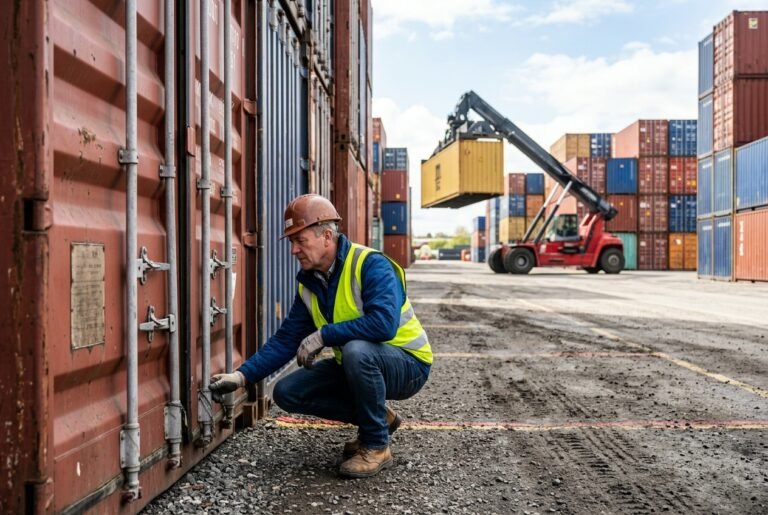
- Check door operation: both doors should open fully to 270 degrees, gaskets should compress evenly, and locking bars should engage without forcing.
- Verify floor condition by walking the full interior. Soft spots, delamination, or visible rot in the marine plywood indicate a container that may fail under forklift loading.
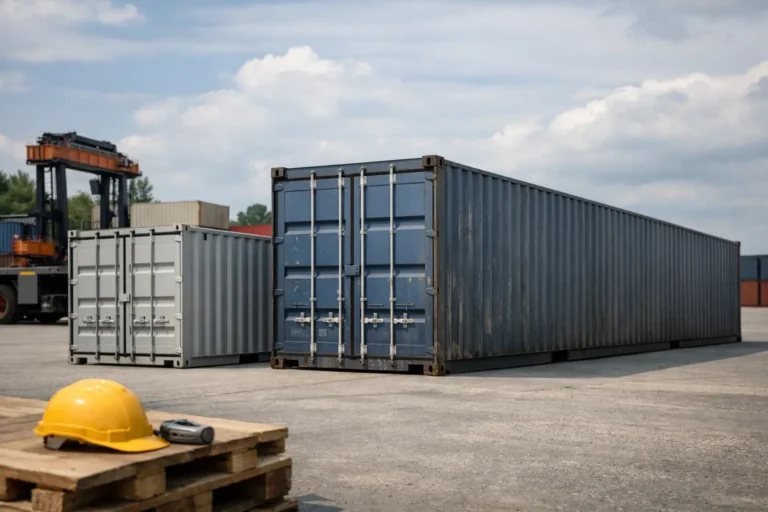
- Confirm the container dimensions match your booking: standard height (8’6″) vs. high cube (9’6″), 20ft vs. 40ft.
- Ensure your shipping line will accept a shipper-owned container and confirm their specific condition requirements, which sometimes exceed basic CW standards.
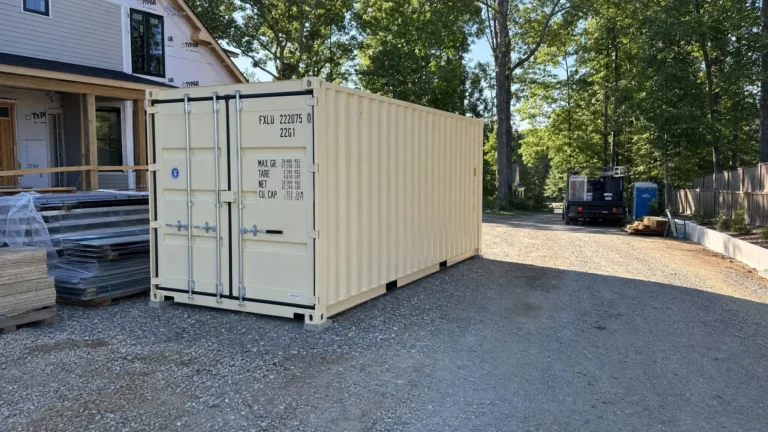
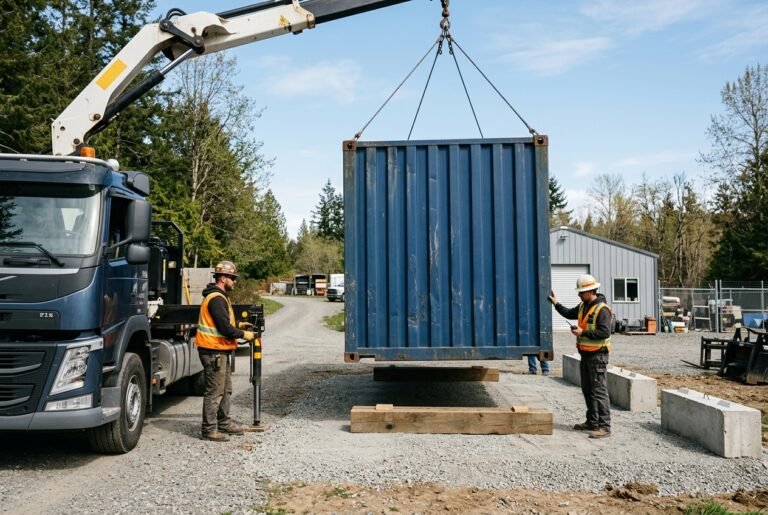
- Arrange delivery logistics early. A tilt-bed truck needs roughly 100 feet of straight clearance for drop-off, and overhead lines or tree branches above 14 feet need to be clear.
- Keep all documentation (survey report, CSC plate photos, purchase receipt) in both physical and digital formats accessible throughout the shipping process.
Selecting the right export-grade container protects your cargo, satisfies port authorities, and keeps your shipment on schedule. The difference between a smooth export and an expensive delay often comes down to grade selection and documentation, two factors entirely within your control.
If you’re comparing container options for an upcoming export or storage project, browse Lease Lane Containers’ current inventory to see available sizes, grades, and pricing. The Raleigh-based team offers straightforward guidance on matching the right container to your specific needs, with delivery planning support across the U.S.
One Comment