Raleigh Shipping Containers: What to Know
A container that looks fine in a listing can become a problem the day it arrives if the grade was vague, the site was not ready, or the delivery method was never clearly discussed. That is why buyers looking at Raleigh shipping containers usually care about more than price alone. They want verified specifications, clear condition standards, and a delivery plan that works the first time.
In this market, the right container depends on what you are storing, how long you need it, and how much appearance matters. A contractor securing tools on a job site has different priorities than a homeowner building a workshop, and both are different from a retailer needing clean overflow inventory space. The common thread is simple: no one wants surprises after the container is already on the truck.
How Raleigh shipping containers are actually chosen
Most buyers start with size, but size is only one part of the decision. The more useful way to evaluate a container is by matching four variables: dimensions, condition, delivery access, and intended use.
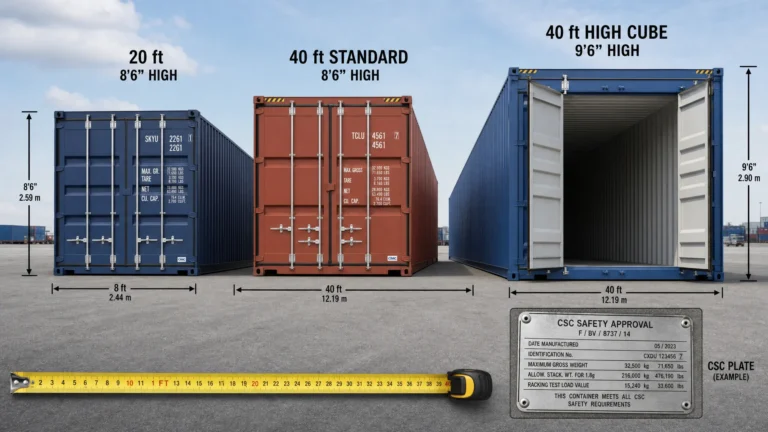
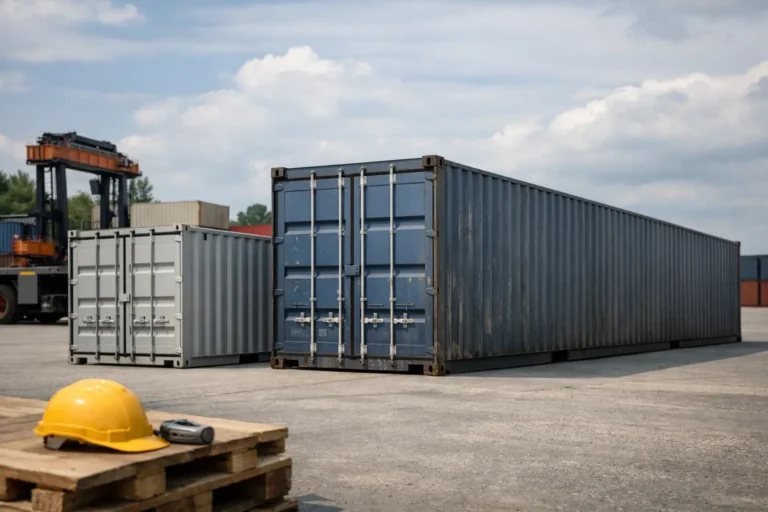
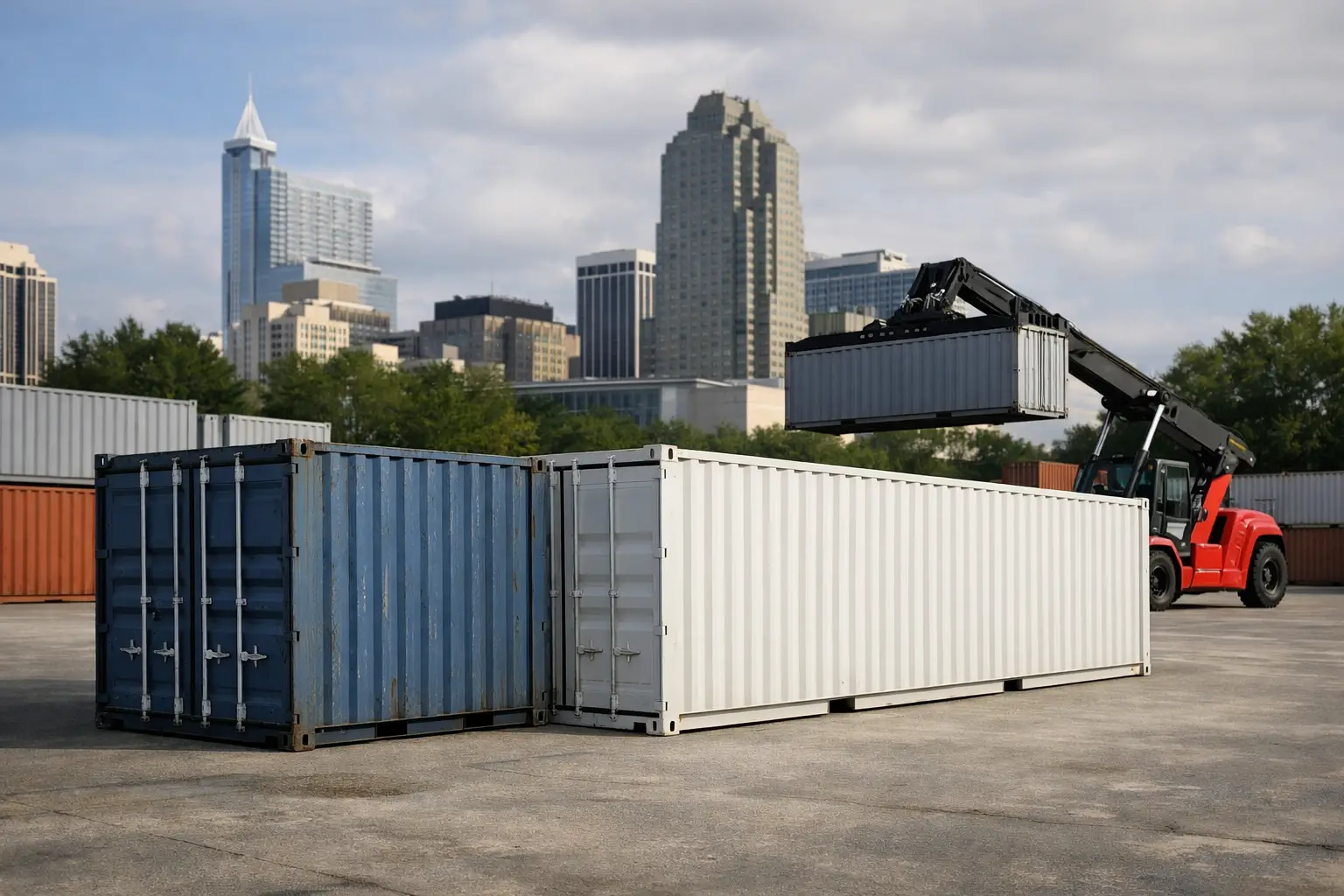
For straightforward storage, 20-foot and 40-foot containers handle most needs. A 20-foot unit is often the better fit for tighter residential lots, smaller construction sites, or farms where maneuvering room is limited. A 40-foot unit gives you more uninterrupted floor space and usually lowers the cost per square foot of storage, but it also demands more room for placement and truck access.
If vertical space matters, a high-cube container is often worth considering. High-cube units add about one extra foot of interior height compared with standard containers. That sounds minor on paper, but it matters when you are stacking inventory, storing taller equipment, or planning a workshop or modular build.
Specialty units come into play when the use case is more specific. Refrigerated containers are built for temperature-sensitive storage. Open-top containers are practical for loading bulky materials from above. Tunnel containers, with doors at both ends, help when fast access and flow-through loading are more important than pure storage volume.
New, used, or refurbished: the trade-offs matter
One-trip containers are the closest thing to new in this industry. They have typically made a single cargo trip after manufacturing, which means less wear, cleaner interiors, straighter panels, and a more professional appearance. Buyers who care about aesthetics, long service life, or future modifications often prefer one-trip units.
Used containers are more budget-friendly, but condition can vary. That is where grading transparency matters. A Wind and Watertight container should keep out rain and wind, with solid doors and a usable floor, but it may show dents, surface rust, patches, and cosmetic wear. Cargo Worthy containers generally meet a higher transport-related standard, though buyers should still ask what has been inspected and what documentation is available.
Refurbished units sit somewhere in the middle. They can be a practical option for customers who want stronger appearance than a typical used box without the price of a one-trip unit. Still, refurbished does not always mean identical from seller to seller. One company may repaint and repair doors. Another may perform broader structural work. That is why buyers should ask exactly what was repaired, what grade the unit started as, and whether the final condition is documented clearly.
Why container grade affects total cost
The cheapest quoted price is not always the lowest real cost. If a container arrives with door issues, floor damage, or more corrosion than expected, the savings can disappear quickly in repairs, downtime, or replacement.
For job-site storage, structural integrity usually matters more than cosmetic perfection. If the container stays weather-tight, locks securely, and sits level, visible dents may not matter much. For a retail pop-up, mobile office, or residential conversion, exterior appearance becomes more important, and that often pushes buyers toward one-trip or carefully refurbished inventory.
The floor deserves special attention. Many shipping containers have marine-grade plywood floors designed for cargo use. Buyers should ask whether the floor is original, patched, or replaced, and whether there are soft spots, delamination, or contamination concerns. This is especially important for workshops, insulated builds, or any space where people will spend time inside.
Delivery is where many container orders go wrong
A container can be structurally sound and still become a problem if the delivery setup is not discussed in detail. This is one of the most common gaps between online pricing and real-world service.
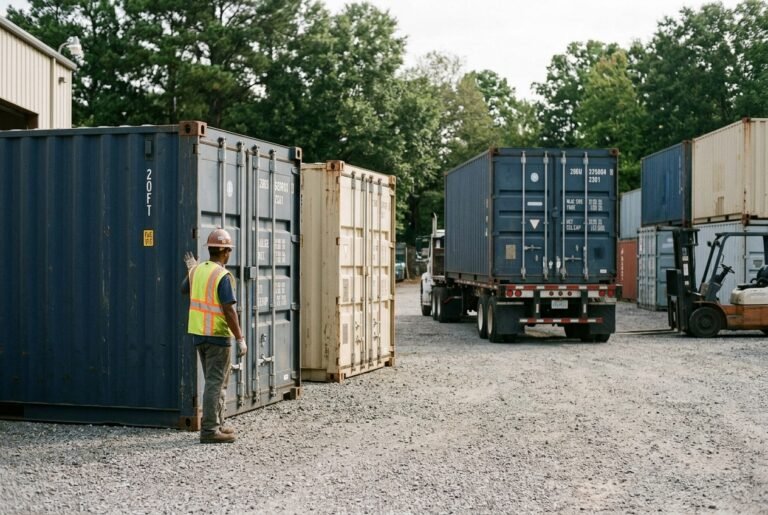
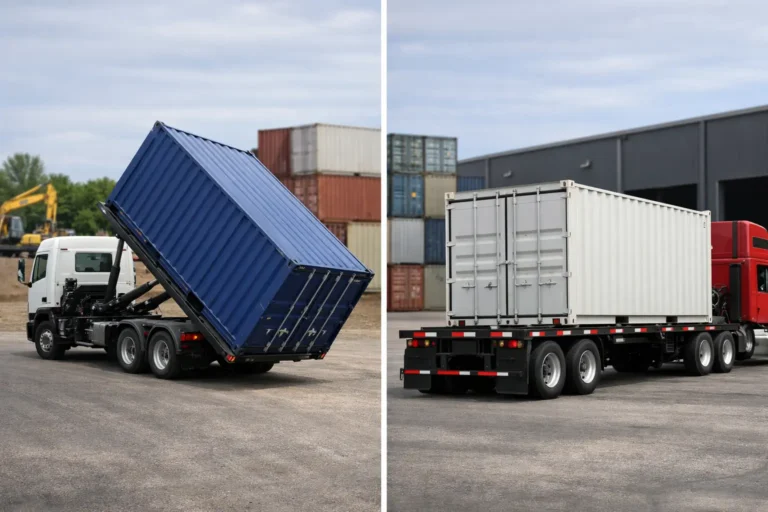
Tilt-bed delivery is often the best fit for standard placements because it allows the container to slide off the truck at ground level. It is efficient, but it requires enough straight-line clearance for the truck to enter, tilt, and unload. Ground-level placement is convenient for immediate use, especially on construction sites and private property, but the access route has to support the truck’s size and weight.
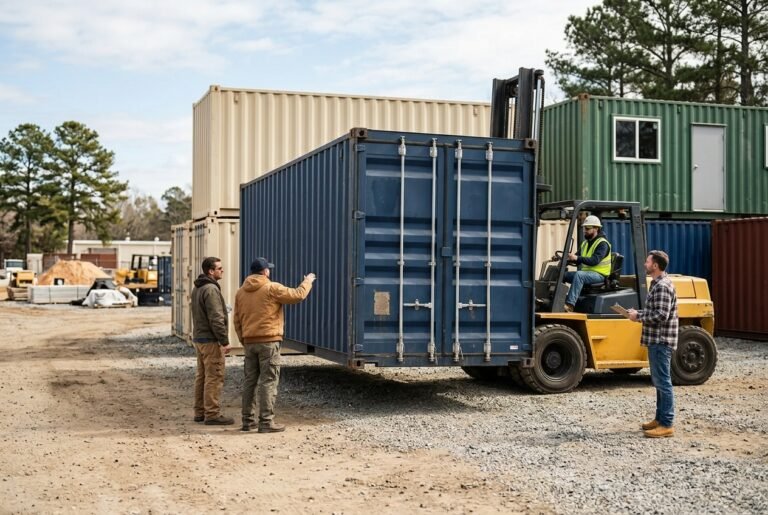
Before delivery, buyers should think through gate width, overhead power lines, tree branches, slope, soil condition, and turning radius. A container truck needs more room than many first-time buyers expect. Soft ground after heavy rain can also turn a simple drop into a failed delivery attempt.
In Raleigh and the broader Triangle area, site conditions can vary a lot from one property to the next. Urban and suburban lots often have tighter access, while rural properties may have more room but less stable ground. A dependable supplier should ask the right questions before dispatching a truck, because guessing on delivery day usually costs the customer time and money.
Site preparation for Raleigh shipping containers
A level base protects the container’s frame and helps the doors open correctly. Containers are designed to bear weight at the corner castings, so support at those points is essential. Depending on the application, common base options include compacted gravel, concrete pads, railroad ties, and piers or blocks designed to carry the load properly.
The right base depends on how permanent the placement is and what you plan to store inside. A homeowner using a container for seasonal storage may be fine with a well-prepared gravel base. A contractor storing heavy materials or a business installing a modified office may need a more engineered foundation.
Drainage matters too. Water pooling under or around a container accelerates corrosion and creates muddy access conditions. Good placement usually means slightly elevated ground, proper runoff, and enough surrounding space for doors to swing fully open.
Matching the container to the job
Contractors often prioritize immediate availability, lockable steel security, and predictable delivery windows. For them, a used Wind and Watertight 20-foot or 40-foot container is often the practical choice, provided the doors seal properly and the floor is sound.
Agricultural operators may need durable storage for feed, tools, parts, or seasonal equipment. In those cases, ventilation, door reliability, and the ability to place the unit on stable ground matter more than cosmetic appearance. If the container will sit for years, paying a little more for better steel condition can make sense.
Homeowners and rural property owners often care about both function and appearance. A container used as a workshop, hobby space, or future conversion shell should have straight structural lines, a dry interior, and a floor condition that supports finishing work later. A one-trip or quality refurbished unit often reduces headaches in these projects.
Retail and logistics users usually focus on clean presentation and efficient access. If the container supports customer-facing use, overflow inventory, or a pop-up setup, exterior condition and layout become more important than they would be for a back-of-site storage box.
Questions worth asking before you buy
Ask for the exact size, grade, and container type in writing. Ask whether the unit is standard height or high-cube, whether it is one-trip, used, or refurbished, and what that label means according to the seller’s own grading process.
You should also ask how delivery is priced. Some quotes look competitive until fuel, mileage, equipment fees, or difficult-site charges appear later. Clear pricing means understanding what is included before scheduling.
Finally, ask what the delivery team needs from you. A professional seller should be able to tell you the required clearance, surface conditions, and placement limitations in plain language. That kind of communication is often the difference between a smooth delivery and an expensive reschedule.
Lease Lane Containers LLC serves many customers who want exactly that level of clarity – verified specs, straightforward grading, and delivery planning that accounts for real site conditions instead of assumptions.
The best container purchase is rarely the one with the lowest headline price. It is the one that arrives as described, fits the site, and performs the job for years without forcing you into repairs or workarounds. If you start with the right grade and a realistic delivery plan, the rest of the decision gets much easier.