Used Freight Containers for Sale: Avoid Costly Mistakes
Searching for used freight containers for sale can feel simple at first: find a 20ft or 40ft steel box, compare prices, schedule delivery, and start using it. In reality, the expensive problems usually happen in the details. A container that looks fine in photos may have weak door seals, roof pinholes, twisted rails, poor flooring, or the wrong grade for your actual use.
For contractors, homeowners, farms, small businesses, and logistics teams around Raleigh, North Carolina, the right used container can be a smart, durable investment. The wrong one can create delivery delays, leaks, repair bills, compliance issues, or a unit that cannot be used for cargo movement.
This guide explains the most common mistakes buyers make when shopping for used freight containers, how to avoid them, and what to confirm before you pay for delivery.
Mistake 1: Treating Every Used Freight Container as the Same
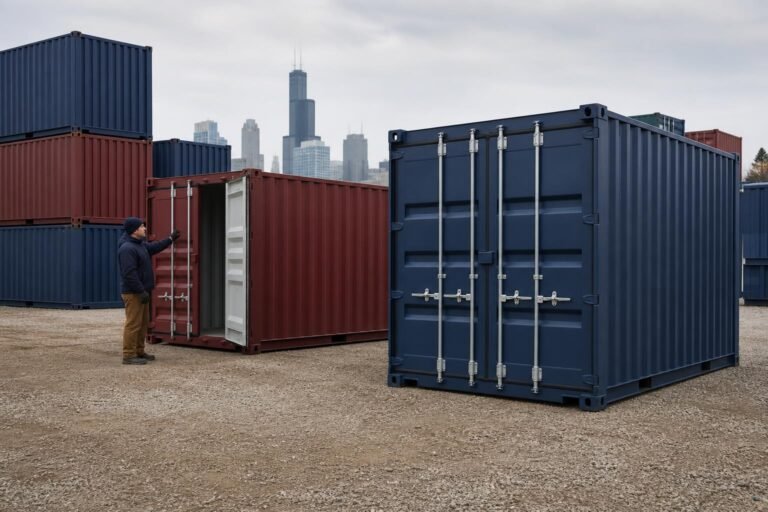
The word “used” is not a grade. It simply means the container has been in service before. A used freight container may still be suitable for international shipping, or it may only be suitable for stationary storage. The difference matters.
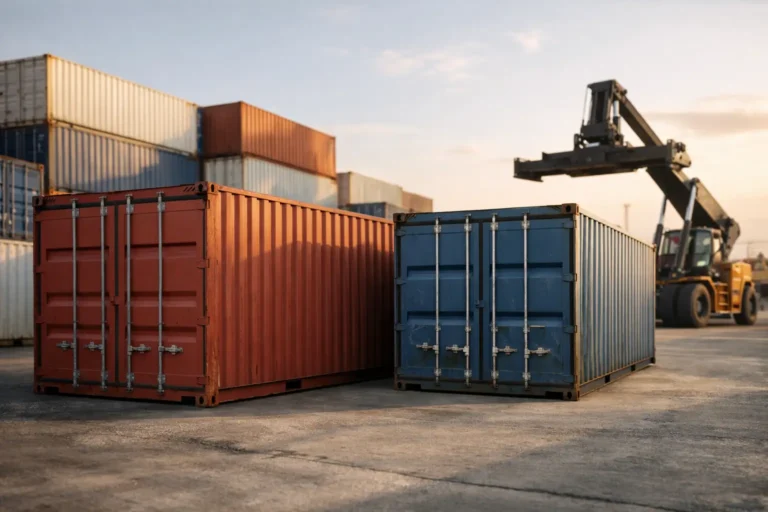
Most ISO shipping containers are built with corrugated Corten Steel, standardized corner castings, heavy-duty doors, and marine-grade plywood flooring. However, years of cargo use, port handling, stacking, and weather exposure affect each unit differently.
Before comparing prices, compare grades.
| Grade | What it means | Best fit | Costly mistake to avoid |
|---|---|---|---|
| One-Trip | A nearly new container that has typically made one loaded trip from the factory | Customer-facing projects, offices, retail pop-ups, high-end storage, long-term ownership | Assuming it will be cosmetically flawless, minor handling marks are still normal |
| Cargo Worthy, or CW | Structurally sound and suitable for cargo transport when properly inspected and documented | Export, intermodal use, logistics, heavy storage, resale value | Assuming CW means “pretty,” it often has dents, paint wear, and prior service marks |
| Wind and Watertight, or WWT | Keeps out wind and rain under normal storage conditions but is not necessarily certified for transport | Jobsite storage, farm equipment, household storage, inventory overflow | Using WWT for ocean export, stacking, or structural modifications without further inspection |
| As-Is | Sold with no meaningful condition promise | Non-critical projects, parts, low-value storage, repair projects | Buying unseen for valuables or long-term storage |
For a deeper breakdown of grading language, see Lease Lane’s guide to used shipping container grades.
Mistake 2: Buying WWT When You Really Need Cargo Worthy
A Wind and Watertight container can be an excellent choice for stationary storage. If you need to store tools, construction materials, farm supplies, seasonal business inventory, or household goods, a properly inspected WWT container often provides strong value.
But WWT does not mean the container is certified for ocean freight. If you are shipping cargo internationally, moving loaded goods by rail, or need a unit that meets transport requirements, you should be looking at Cargo Worthy or better.
A Cargo Worthy unit is inspected for structural integrity, including key areas such as corner castings, frame members, flooring, doors, locking gear, and overall ability to handle cargo movement. For international use, buyers should ask about the CSC plate and whether current documentation or a survey is required by the carrier.
The reverse mistake is also common. Some buyers overpay for Cargo Worthy when they only need ground-level storage in Raleigh, Durham, Cary, Apex, Garner, or elsewhere in the Southeast. If the container will never move loaded and will sit on private property, WWT may be the more practical choice.
Mistake 3: Shopping by Price Before You Know the Total Delivered Cost
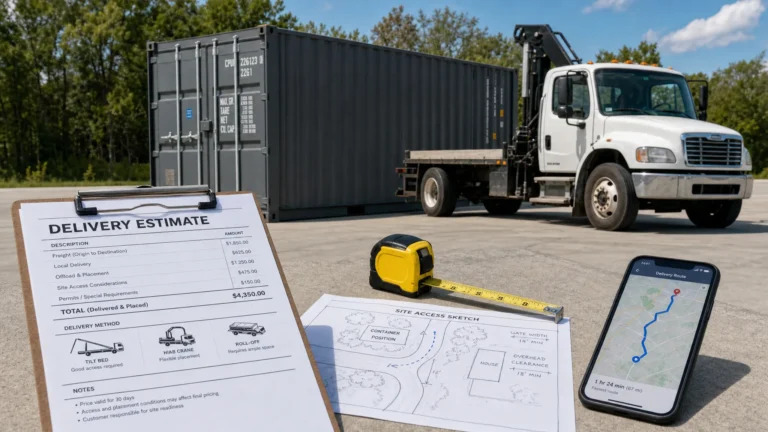
The cheapest advertised container is not always the least expensive container. Delivery distance, truck access, site preparation, offloading method, and repair needs can quickly erase any savings.
A fair quote should be specific. “Used 40ft container” is not enough information. You want size, height, grade, delivery assumptions, and condition details in writing.
| Quote detail | Why it matters |
|---|---|
| Exact size | A 20ft unit, 40ft unit, and 40ft High Cube have different pricing, delivery needs, and usable space |
| Standard vs. High Cube | High Cube containers add one foot of exterior height, which helps shelving and conversions but affects overhead clearance |
| Grade | One-Trip, Cargo Worthy, WWT, and As-Is are not interchangeable |
| Delivery ZIP code | Inland delivery costs can vary significantly across North Carolina and the wider Southeast |
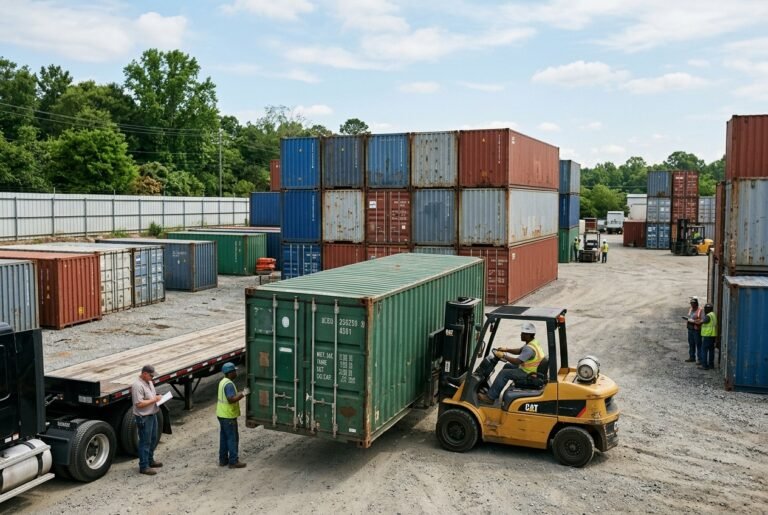
| Offloading method | Tilt-bed, flatbed with crane, side-loader, or other methods can affect cost and site requirements |
| Photos or inspection notes | You need proof of door condition, roof condition, flooring, rust, and structural areas |
| Payment terms | Reputable sellers should provide clear written terms and avoid vague pressure tactics |
If you are specifically comparing smaller units, Lease Lane’s guide on where to buy a 20ft shipping container in Raleigh, NC can help you understand local buying factors. For larger storage needs, review the guide to finding a 40ft shipping container for sale in Raleigh, NC.
Mistake 4: Ignoring the Roof, Doors, and Floor
Many buyers focus on side-wall dents because they are easy to see in photos. In practice, the roof, doors, and floor often tell you more about whether a used freight container will perform well.
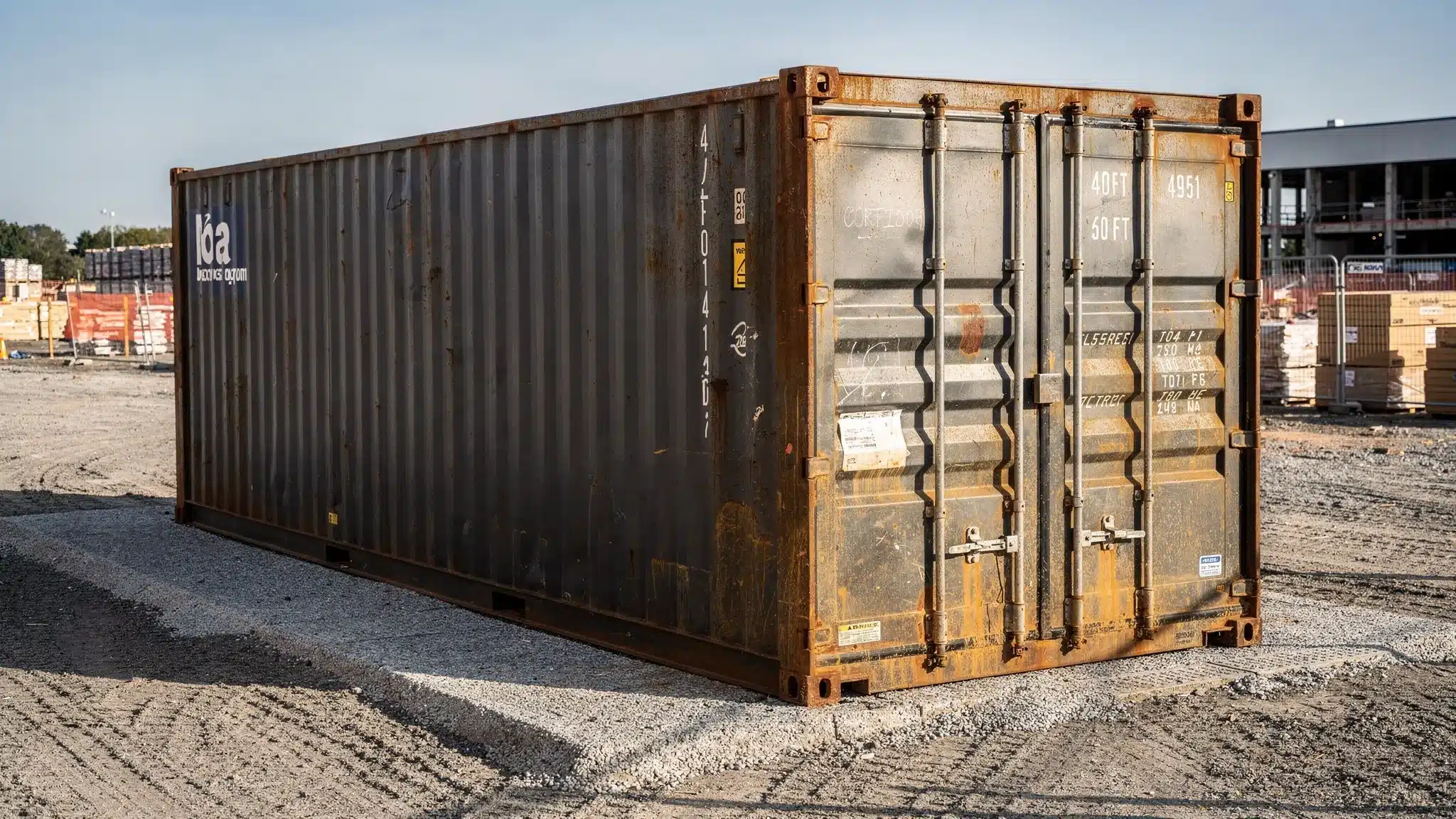
The roof should be inspected for deep dents, standing-water pockets, rust lines, patchwork, and pinholes. Even small roof issues can become expensive if water reaches your tools, furniture, seed, feed, retail inventory, or building materials.
Doors matter because containers are designed to seal tightly. If the container is out of square, placed on uneven ground, or has damaged hinges and locking bars, the doors may become difficult to open or may not seal properly. Door gaskets should be flexible, continuous, and seated correctly against the frame.
Floors are another major checkpoint. Most standard freight containers use thick plywood flooring over steel crossmembers. Look for soft spots, delamination, heavy oil staining, chemical odors, rot, and patchwork. If you plan to store clean inventory, household goods, or anything odor-sensitive, floor condition matters as much as exterior condition.
A simple inspection sequence should cover these areas:
| Area to inspect | What to look for | Why it matters |
|---|---|---|
| Roof | Dents that hold water, rust, pinholes, patches | Roof leaks are one of the most costly storage failures |
| Doors | Locking bars, hinges, gasket contact, frame alignment | Poor doors affect security and weather protection |
| Floor | Soft spots, chemical smells, delamination, severe stains | Flooring affects usability, safety, and stored goods |
| Corner castings | Cracks, deformation, obvious impact damage | Corner castings are critical for ISO handling and structural integrity |
| Bottom rails and crossmembers | Heavy corrosion, bends, missing sections | The understructure supports the container and affects lifespan |
| Interior light test | Visible daylight through roof or walls | Daylight usually means water can enter |
If you cannot inspect the unit in person, ask for recent photos of these specific areas, not just four exterior corner shots.
Mistake 5: Assuming Fresh Paint Means a Better Container
Fresh paint can be useful when it is part of a proper refurbishment process. It can also hide problems.
A repainted container should still be described by grade. Ask whether rust was treated before painting, whether patches were welded or sealed, whether the roof was inspected, and whether the doors were tested after placement. Paint improves appearance, but it does not automatically restore structural integrity.
This is especially important in North Carolina’s humid climate. Around Raleigh and the Southeast, condensation, standing water, and poor drainage can accelerate corrosion. Corten Steel is designed to resist weathering better than ordinary steel, but it still needs air circulation and proper placement to perform well over time.
A good rule: inspect structure first, appearance second.
Mistake 6: Choosing the Wrong Size for the Job
Used freight containers are most commonly purchased in 20ft and 40ft lengths. Standard units are typically 8ft wide and 8ft 6in tall on the exterior. High Cube containers are typically 9ft 6in tall, giving you roughly one extra foot of vertical space.
A 20ft container is often best for tight job sites, residential driveways, farms with limited access roads, or small business overflow storage. It is easier to place and easier to fit into constrained areas.
A 40ft container offers more storage volume and is often more cost-effective per square foot. It works well for contractors, home builders, larger farms, real estate developers, and businesses storing palletized inventory.
A 40ft High Cube is often the better choice when you need vertical clearance for shelving, equipment, insulation, framing, HVAC, lighting, or future conversion into a workspace. The extra height is valuable, but it also increases the importance of overhead clearance during delivery.
If temperature control is required, do not buy a standard dry freight container and hope it can behave like a cold room. Refrigerated containers, also called reefers, have their own power, maintenance, airflow, and site requirements.
Mistake 7: Forgetting That Delivery Is Part of the Purchase
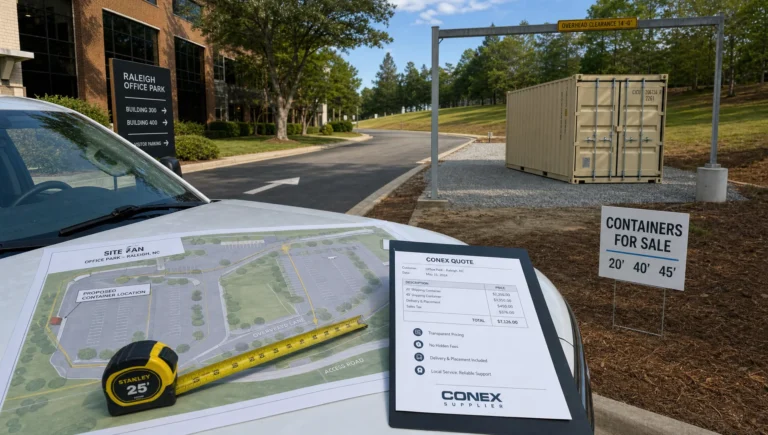
A container can be in excellent condition and still become a problem if the delivery plan is wrong. Delivery failures usually happen because the site was not measured, the approach was too tight, the ground was too soft, or overhead obstructions were missed.
For Raleigh-area deliveries, common site challenges include narrow driveways, low tree limbs, soft clay soils, sloped lots, HOA restrictions, and limited turning room on residential streets. Across the Southeast, heavy rain can also make a site that looked firm last week unsuitable for a loaded truck today.
Before delivery, confirm the following with your supplier:
- The truck route from the street to the drop spot is wide enough for the delivery equipment.
- The site has adequate overhead clearance from power lines, branches, building eaves, and signs.
- The landing area is level enough to keep container doors operating properly.
- The ground can support the truck and the container without rutting or sinking.
- The container door orientation is marked clearly before the driver arrives.
- Permits, HOA approvals, or zoning checks are handled before scheduling.
Lease Lane has a detailed guide on how to prepare your site for container delivery if you want a step-by-step planning checklist.
Pro-Tip: Build the Pad Before You Book the Truck
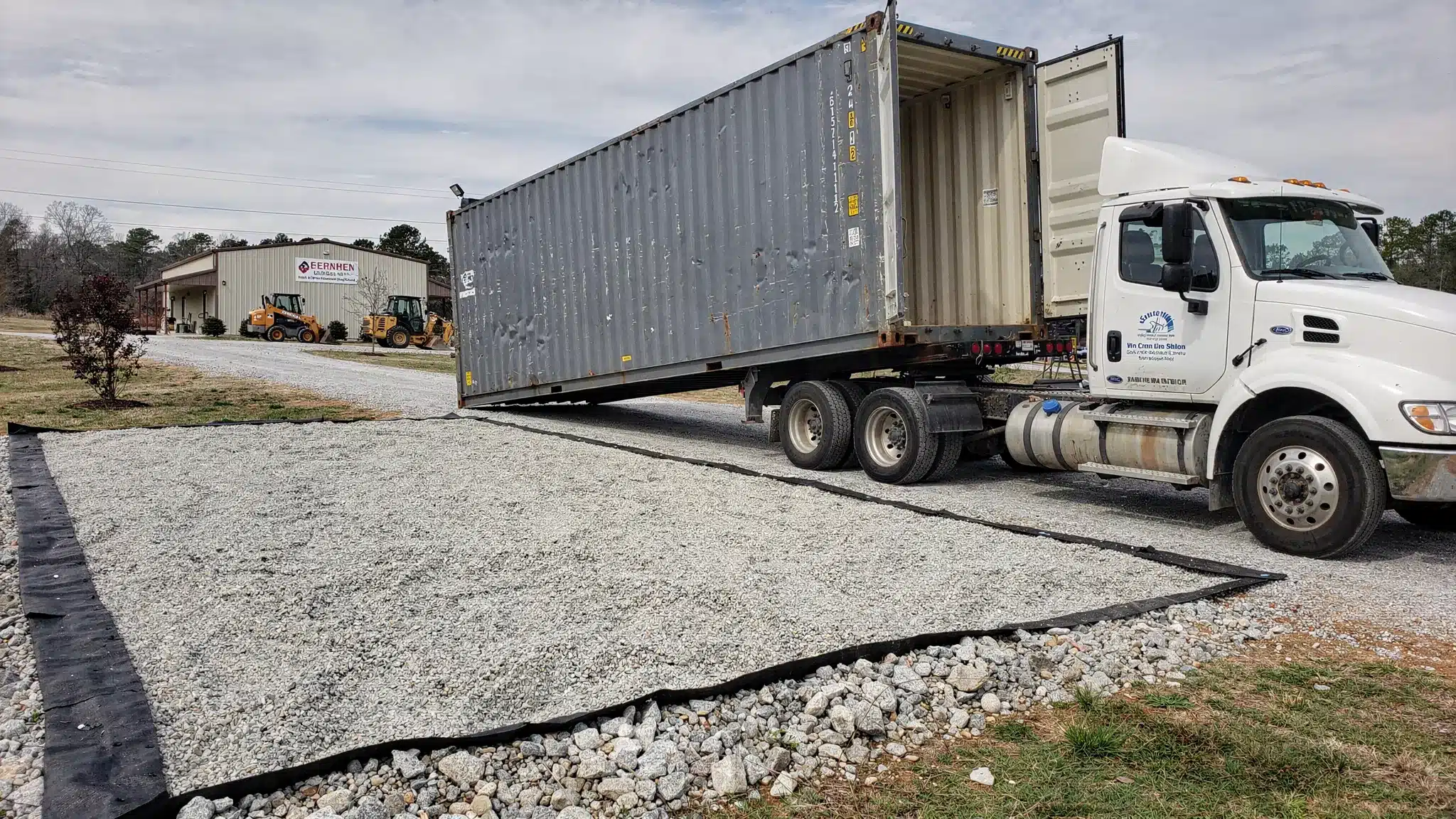
For most long-term placements, a compacted gravel pad is one of the most practical options. It helps with drainage, reduces mud, allows airflow under the container, and can be adjusted more easily than a poured slab. In many Raleigh and Wake County settings, a geotextile fabric under compacted crushed stone can also help separate stone from clay soil.
The container should sit level, especially at the corners. ISO containers are designed to carry load through their corner castings, so corner support matters. If the unit twists because one corner is low, the doors may bind, the frame may rack, and the gasket seal may suffer.
Plan drainage before delivery. Water should move away from the container, not pool against the side rails or under the floor. If the area needs grading, trenching, drainage work, paving, or utility coordination, use qualified local professionals. The same principle applies anywhere regulated groundwork is involved, including property owners who rely on an authorized drainage contractor for compliant drainage and hardscape work in their region.
For North Carolina buyers, also check local rules before placement. Raleigh, Wake County, surrounding municipalities, and HOAs can treat containers differently depending on location, duration, visibility, business use, and whether the unit is being modified or occupied.
Mistake 8: Buying From a Seller Who Cannot Explain Grades Clearly
A trustworthy container seller should be able to explain the difference between One-Trip, Cargo Worthy, and Wind and Watertight without vague language. If a seller says “good condition” but will not define the grade, slow down.
Watch for red flags such as unclear photos, no inspection details, inconsistent pricing, refusal to discuss delivery constraints, or pressure to pay before you receive written specifications. If export use is involved, the seller should understand CSC plates, Cargo Worthy expectations, and whether further survey documentation may be needed.
For storage buyers, the seller should help you match the container grade to the stored contents. A contractor storing lumber and tools may not need the same container as a small business storing retail merchandise or a homeowner storing furniture.
Mistake 9: Overlooking Security and Future Modifications
Used freight containers are naturally secure because of their steel shell, cargo doors, and locking rods, but security depends on condition and setup. A weak door, damaged hasp, or poor placement can create vulnerabilities.
If you are storing tools, equipment, or inventory, ask about lockbox compatibility, door condition, lighting placement, and whether the unit can be positioned so doors face a visible or controlled area. Contractors in Raleigh and the broader Southeast often benefit from placing the container where it supports both security and workflow.
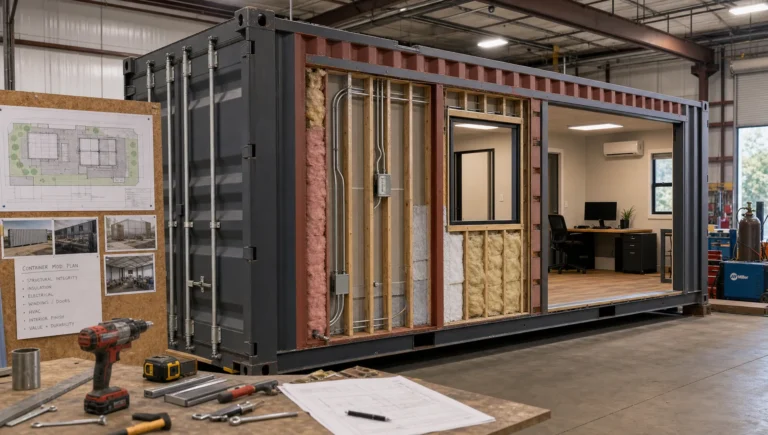
If you may modify the container later, buy with that future in mind. Cutting large openings into a heavily worn WWT unit may require more reinforcement than expected. One-Trip and Cargo Worthy containers are often better starting points for offices, retail pop-ups, workshops, and modular builds because their structure and appearance are typically more predictable.
Quick Recommendations by Buyer Type
The best container is the one that matches your use, not the one with the lowest starting price.
| Buyer type | Common use | Recommended grade to consider |
|---|---|---|
| General contractors and home builders | Tools, materials, jobsite storage | WWT for static storage, CW if moving loaded or storing higher-value materials |
| Small business owners | Inventory overflow, retail pop-up, mobile workspace | One-Trip for customer-facing use, CW or clean WWT for storage |
| Homeowners and agriculture | Household storage, feed, equipment, seasonal supplies | WWT for value, One-Trip for long-term clean storage or visible placement |
| Real estate developers | Modular projects, offices, container-based builds | One-Trip or strong CW, especially if cutting openings or adding finishes |
| Logistics managers | Regional transport, export, cargo movement | Cargo Worthy or better, with documentation requirements confirmed |
Questions to Ask Before You Buy
Before committing to any used freight container, get clear answers in writing.
| Question | Good answer should include |
|---|---|
| What is the container grade? | One-Trip, Cargo Worthy, WWT, or As-Is, not just “used” |
| Is it standard or High Cube? | Exterior height, interior height, and door opening details |
| Can I see current photos? | Roof, doors, gaskets, interior floor, corner castings, and side panels |
| Is it suitable for export? | Cargo Worthy status, CSC plate details, and any needed survey information |
| What is included in delivery? | Delivery method, ZIP code, site assumptions, and any limitations |
| What site prep is required? | Leveling, gravel pad, clearance, access route, and ground stability guidance |
| What happens if the site is not ready? | Clear policy on failed delivery, rescheduling, or additional equipment |
Frequently Asked Questions
Are used freight containers for sale the same as used shipping containers? In most buyer conversations, yes. “Freight container” and “shipping container” usually refer to ISO intermodal containers used to move cargo by ship, rail, and truck. The important detail is the grade, size, and condition of the specific unit.
What grade is best for basic storage? For many stationary storage uses, a properly inspected Wind and Watertight container is a strong value. If you are storing higher-value goods, need better resale value, or may move the container loaded, Cargo Worthy may be worth the upgrade.
Can a Wind and Watertight container be used for international shipping? Not automatically. WWT means the container should keep out wind and rain for storage, but it does not mean it is certified or accepted for ocean freight. For export, ask for Cargo Worthy or better and confirm documentation requirements with your carrier.
Is a 20ft or 40ft used container better? A 20ft container is easier to place in tight spaces and works well for smaller storage needs. A 40ft container provides more usable volume and is often more cost-effective per square foot if you have enough site access and room.
Should I buy a used container without seeing it first? You can, but only if the seller provides current photos, clear grading, written specifications, and delivery details. Avoid listings that use generic photos or refuse to show the roof, floor, doors, and gaskets.
Do I need a permit for a used container in Raleigh or North Carolina? It depends on your municipality, zoning, property type, duration, and intended use. Storage, commercial use, residential placement, and modified or occupied containers may be treated differently. Always check local requirements and HOA rules before delivery.
Ready to Buy the Right Used Freight Container?
Lease Lane Containers LLC helps buyers in Raleigh, across North Carolina, throughout the Southeast, and nationwide choose the right container size, grade, and delivery plan. Whether you need a 20ft WWT unit for jobsite storage, a 40ft High Cube for business inventory, a Cargo Worthy container for transport, or a One-Trip unit for a cleaner long-term project, our team can help you compare options clearly.
For current availability, site preparation guidance, and transparent pricing, contact the sales team at sales@leaselanecontainers.com or visit the Raleigh office to speak with a local container specialist.