

How Much Room Do You Need to Deliver a Container?
Table of Contents
- Table of Contents
- Essential Space Requirements for Standard Container Sizes
- Dimensions for 20-Foot Container Clearances
- Extended Space Needs for 40-Foot Units
- Vertical and Horizontal Clearance Limits
- Accounting for Overhead Obstructions
- Width Requirements for Safe Truck Maneuvering
- The Impact of Delivery Truck Types on Space
- Tilt-Bed vs. Side-Loader Equipment Needs
- Surface Preparation and Ground Stability
- Ideal Pad Surfaces for Heavy Loads
- Navigating Delivery Path Obstacles
- Turning Radius and Cornering Clearance
- Managing Soft Ground and Slopes
- Final Checklist for a Seamless Drop-Off
Table of Contents
- Essential Space Requirements for Standard Container Sizes
- Dimensions for 20-Foot Container Clearances
- Extended Space Needs for 40-Foot Units
- Vertical and Horizontal Clearance Limits
- Accounting for Overhead Obstructions
- Width Requirements for Safe Truck Maneuvering
- The Impact of Delivery Truck Types on Space
- Tilt-Bed vs. Side-Loader Equipment Needs
- Surface Preparation and Ground Stability
- Ideal Pad Surfaces for Heavy Loads
- Navigating Delivery Path Obstacles
- Turning Radius and Cornering Clearance
- Managing Soft Ground and Slopes
- Final Checklist for a Seamless Drop-Off
A shipping container sitting in a depot is one thing. Getting it from that depot to your property, down your driveway, and placed exactly where you want it is an entirely different challenge. The question of how much room is needed to deliver a shipping container trips up more first-time buyers than almost any other part of the process. A container that fits perfectly on your lot can still be undeliverable if the truck can’t access the site, turn around, or find enough overhead clearance to tilt the bed.
Most failed deliveries aren’t caused by the container itself. They’re caused by a tree branch 13 feet off the ground, a neighbor’s fence that narrows the lane to 9 feet, or soft ground that swallows a rear axle. The delivery vehicle and its method of placement dictate the space you need far more than the container’s own footprint. Whether you’re a homeowner adding backyard storage, a contractor staging equipment, or a farm owner setting up a workshop off a gravel road, understanding the spatial requirements before the truck arrives saves you time, money, and a frustrating rescheduled delivery. Lease Lane Containers helps buyers across the U.S. plan for exactly these scenarios through delivery planning guidance that addresses access, clearance, and placement before anything ships.
Essential Space Requirements for Standard Container Sizes
The container itself is only part of the equation. You need enough space for the container’s footprint, the truck that carries it, and the room the driver needs to maneuver during placement. These requirements change significantly depending on whether you’re receiving a 20-foot or 40-foot unit, and whether you’re placing it in an open field or a tight residential lot.
A useful rule of thumb: plan for roughly three times the container’s length in total delivery depth. That accounts for the truck cab, the trailer or tilt-bed, and the space behind the placement spot where the truck needs to pull forward or back up. Width requirements stay relatively consistent regardless of container size, but length is where most buyers underestimate.
Dimensions for 20-Foot Container Clearances
A standard 20-foot shipping container measures 20 feet long, 8 feet wide, and 8 feet 6 inches tall. A high cube shipping container adds another foot of height, coming in at 9 feet 6 inches. The container’s footprint is manageable for most properties, but the delivery vehicle changes the math entirely.
For a tilt-bed delivery of a 20-foot container, you need a minimum straight-line distance of approximately 60 feet. That breaks down to roughly 25 feet for the truck cab and chassis, 20 feet for the container itself, and 15 feet of clearance behind the drop point so the container can slide off the tilted bed without obstruction. Width clearance should be at least 12 feet along the entire delivery path, giving the driver about 2 feet of margin on each side of the truck.
If your placement area sits at the end of a driveway or behind a building, measure the full path from the street to the final spot. A 20-foot container delivery on a residential lot in Wake County, for example, often requires navigating a 10-to-12-foot-wide driveway with mailboxes, landscaping, and parked cars on either side. Clear the path completely before the truck arrives.
Extended Space Needs for 40-Foot Units
A 40-foot shipping container doubles the length challenge. The container itself is 40 feet long, 8 feet wide, and either 8 feet 6 inches or 9 feet 6 inches tall for high cube models. A loaded 40-foot container weighs between 8,000 and 8,500 pounds empty, and the combined weight of the truck, trailer, and container can exceed 50,000 pounds.
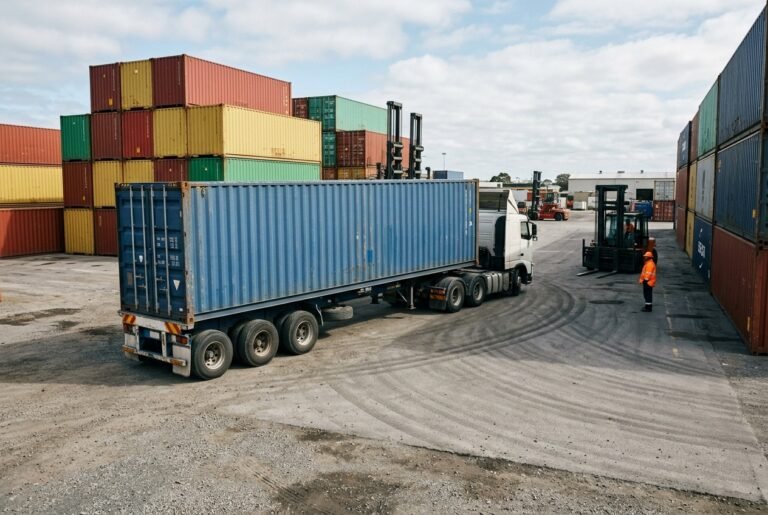
Straight-line delivery depth for a 40-foot unit jumps to approximately 100 to 120 feet. The truck and trailer combination stretches to 65 or 70 feet on its own, and you still need room behind the drop zone for the container to clear the bed. Width requirements remain at 12 feet minimum, though 14 feet provides a much more comfortable margin for the driver.
The 40-foot delivery is where rural properties and farm sites actually have an advantage. Open land with a wide gravel approach gives the driver room to position the truck without the constraints of curbs, fences, or neighboring structures. Urban and suburban lots frequently lack the depth for a 40-foot delivery, which is why many buyers in tighter spaces opt for 20-foot containers instead.
Vertical and Horizontal Clearance Limits
Ground-level space gets most of the attention, but overhead and side clearances cause just as many delivery problems. A truck carrying a shipping container stands significantly taller than a standard delivery vehicle, and branches, wires, or overhangs that seem high enough from the ground often aren’t.
Accounting for Overhead Obstructions
A tilt-bed truck with a container loaded on top typically stands between 13 and 14 feet tall during transport. During the actual tilt and slide-off process, the rear of the container rises to approximately 16 to 18 feet as the bed angles upward. This is the critical measurement most people miss.
Power lines running across a driveway or access road are the most common overhead obstacle. Residential power lines in the U.S. typically hang between 15 and 18 feet above ground, but sag increases in hot weather and with age. A line that clears at 16 feet in January might hang at 14.5 feet in August. If power lines cross your delivery path, contact your local utility provider for exact measurements. In the Raleigh area, Duke Energy can provide line height information and, if needed, schedule a temporary lift.
Tree branches are the second most frequent problem. Walk the entire delivery route and check for any branches below 16 feet. Trimming a few limbs before delivery day costs far less than a rescheduled delivery fee. Carport overhangs, building eaves, and decorative arches over driveways also need verification. Measure with a tape measure rather than estimating by eye: a 2-foot miscalculation can halt a delivery.
Width Requirements for Safe Truck Maneuvering
The delivery truck itself is approximately 8.5 feet wide, matching standard highway trailer width. With mirrors extended, the total width reaches about 10.5 feet. This means any gate, fence opening, or narrow section of road must be at least 11 feet wide, and 12 feet is the practical minimum for a driver to feel confident bringing the rig through.
Fences with gates are a frequent bottleneck. A standard residential gate opening is often only 10 feet, which technically allows the truck body through but leaves zero margin for mirrors or minor steering corrections. If your property has a gated entrance, measure the clear opening between posts, not the gate span itself. Posts, hinges, and latches can reduce the usable width by several inches.
For properties accessed via shared driveways or narrow lanes, check for any pinch points where walls, fences, or parked vehicles reduce the available width below 12 feet. A single tight spot anywhere along the route can prevent delivery.
The Impact of Delivery Truck Types on Space
Not all container deliveries use the same equipment. The type of truck determines how much space you need, how the container gets placed, and what kind of surface the delivery site requires. Understanding the differences helps you prepare your site correctly.
Tilt-Bed vs. Side-Loader Equipment Needs
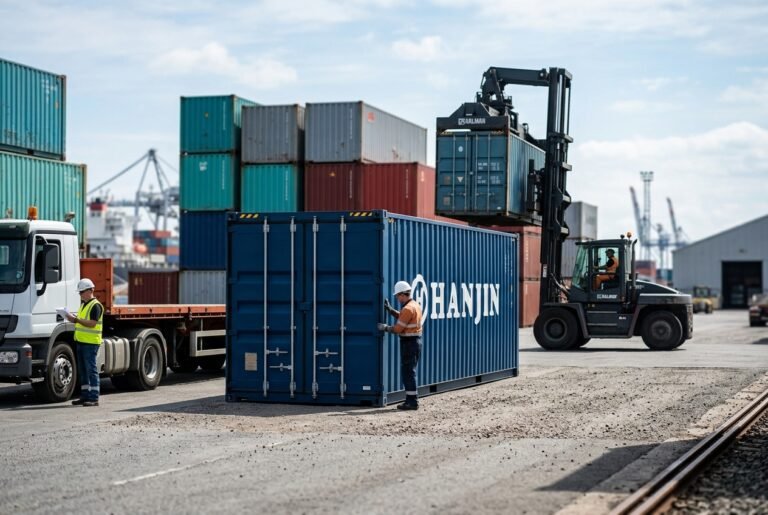
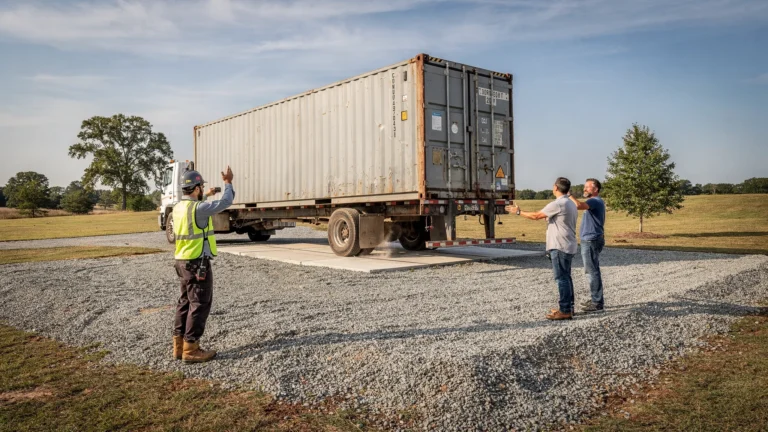
Tilt-bed trucks are the most common delivery method for residential and small commercial sites. The truck tilts its flatbed hydraulically, and the container slides off the back onto the ground. This method requires significant length behind the truck because the container needs a clear runway to slide into position. Plan for at least 15 feet of clear, level ground behind the intended placement spot.
The tilt-bed method also means the container lands where gravity and momentum take it. Precise placement to within a few inches isn’t realistic with a tilt-bed. If you need the container positioned exactly against a wall or within a specific footprint, you may need to hire a crane or forklift for secondary positioning after the initial drop.
Side-loader trucks use hydraulic arms mounted on the truck’s chassis to lift the container off the side and place it on the ground. This method requires less length but significantly more width: typically 25 to 30 feet of clear lateral space on the side where the container will be placed. Side-loaders offer more precise placement than tilt-beds and work well on sites where length is restricted but width is available.
Roll-off trucks, similar to dumpster delivery vehicles, require the most length of any method: often 130 feet or more of straight-line space for a 40-foot container. These are primarily used for commercial and industrial sites with large staging areas. For most residential and small business deliveries, a tilt-bed or side-loader is the standard equipment. When you’re working with Lease Lane Containers on delivery planning, the team can help match the right truck type to your site conditions.
Surface Preparation and Ground Stability
The ground beneath your container matters as much as the space around it. A shipping container concentrates thousands of pounds onto a relatively small footprint, and the delivery truck adds significantly more weight during the drop-off process.
Ideal Pad Surfaces for Heavy Loads
Concrete is the gold standard for container placement. A 4-inch-thick concrete pad easily supports the weight of any standard shipping container, and it provides a flat, stable surface that prevents settling over time. For a 20-foot container, a pad measuring 22 feet by 10 feet gives adequate margin. For a 40-foot unit, size the pad at 42 feet by 10 feet.
Compacted gravel is the most popular alternative and works well for the vast majority of applications. A gravel pad should be at least 6 inches deep, using crushed stone (not round river rock, which shifts under load). The gravel base distributes weight effectively and allows drainage, which prevents water from pooling under the container and accelerating corrosion on the floor.
Bare earth is acceptable for temporary placements but creates problems over time. Soil compresses unevenly, causing the container to lean or settle into soft spots. If you’re placing directly on soil, use railroad ties, concrete blocks, or treated timber runners under the container’s corner castings and along the bottom rails. This lifts the container off the ground, improves airflow underneath, and prevents moisture damage.
The delivery truck itself needs stable ground along the entire approach path, not just at the placement spot. A fully loaded delivery rig can weigh 40,000 to 60,000 pounds. Asphalt driveways in good condition handle this weight without issue. Older or thinner asphalt, decorative pavers, and septic system drain fields can crack or collapse under that load. If your delivery path crosses a septic field, reroute the truck or reinforce the path with steel plates.
Navigating Delivery Path Obstacles
The space between the public road and your placement site is where most delivery complications occur. Straight, wide, flat approaches are ideal but rare, especially on residential properties and rural land with winding access roads.
Turning Radius and Cornering Clearance
A tilt-bed truck hauling a 20-foot container has a turning radius of approximately 35 to 40 feet. For a 40-foot container, that radius increases to 45 to 55 feet depending on the specific truck configuration. These aren’t numbers you can fudge. If the truck can’t make a turn, the delivery doesn’t happen.
Measure any turns along your delivery route by standing at the inside corner and measuring the distance to the outside edge the truck would need to swing through. A 90-degree turn from a residential street onto a driveway is one of the tightest scenarios. For a 40-foot delivery, the truck often needs to swing wide into the opposite lane or use a neighbor’s driveway apron to complete the turn. Confirm with your neighbors and check for any obstacles like mailboxes, fire hydrants, or utility poles at the corner.
T-intersections, cul-de-sacs, and dead-end roads present their own challenges. If the truck can’t turn around at your site, it needs to back in from the road, which requires a clear line of sight and enough road width for the truck to angle into your driveway. Properties off I-40 or rural routes south of Raleigh frequently have narrow two-lane access roads where oncoming traffic complicates backing maneuvers. Plan deliveries for low-traffic times when possible.
Managing Soft Ground and Slopes
Soft ground is the silent delivery killer. A property that looks firm and dry in summer can turn into a mud pit after a week of rain. Clay soils common throughout central North Carolina are particularly deceptive: they look solid on the surface but lose structural integrity quickly when saturated.
If your delivery path or placement area has any soft spots, address them before scheduling delivery. Laying 6 inches of compacted gravel along the truck’s path is the most reliable fix. For temporary solutions, heavy plywood sheets or steel road plates can bridge soft sections, though these work better for the truck’s path than for the final placement area.
Slopes add another layer of complexity. A tilt-bed truck needs relatively level ground to safely slide a container off the back. A grade steeper than 5% (roughly a 3-inch rise over 5 feet) makes tilt-bed delivery risky because the container can slide unpredictably. If your site has a slope, you may need to grade the delivery area flat or use a crane for placement. Side-loaders handle mild slopes better than tilt-beds, but anything beyond 8% grade typically requires specialized equipment.
Final Checklist for a Seamless Drop-Off
Getting a container delivered successfully comes down to preparation. Use this checklist in the days before your scheduled delivery to confirm everything is ready.
- Measure the delivery path width at every point from the street to the placement spot: minimum 12 feet clear
- Confirm overhead clearance of at least 16 feet along the entire route, including the tilt zone at the placement area
- Check the turning radius at every corner or bend: 40 feet minimum for 20-foot containers, 55 feet for 40-foot units
- Remove vehicles, equipment, landscaping features, and debris from the delivery path
- Verify ground stability along the full route, especially after recent rain
- Prepare the placement pad with concrete, compacted gravel, or timber runners
- Confirm the placement area is level with no more than a 5% grade
- Photograph the delivery path and placement area to share with your delivery coordinator
- Contact your utility provider if power lines cross the delivery route below 16 feet
- Notify neighbors if the truck will need to use adjacent road space for turning
Each of these items takes minutes to verify but can save hours of delay and hundreds of dollars in rescheduling fees. The room needed to deliver a shipping container depends on your specific truck type, container size, and site layout, but these minimums apply across nearly every scenario.
If you’re still in the planning phase and want to confirm which container size fits your site, browse our inventory to compare 20-foot, 40-foot, standard, and high cube shipping container options. And if you have questions about your specific delivery path or need help figuring out whether your site can accommodate the truck, contact us directly. The Lease Lane Containers team based in Raleigh works with buyers across the country to sort out these details before the truck rolls, so your container lands exactly where it should on the first try.

2 Comments