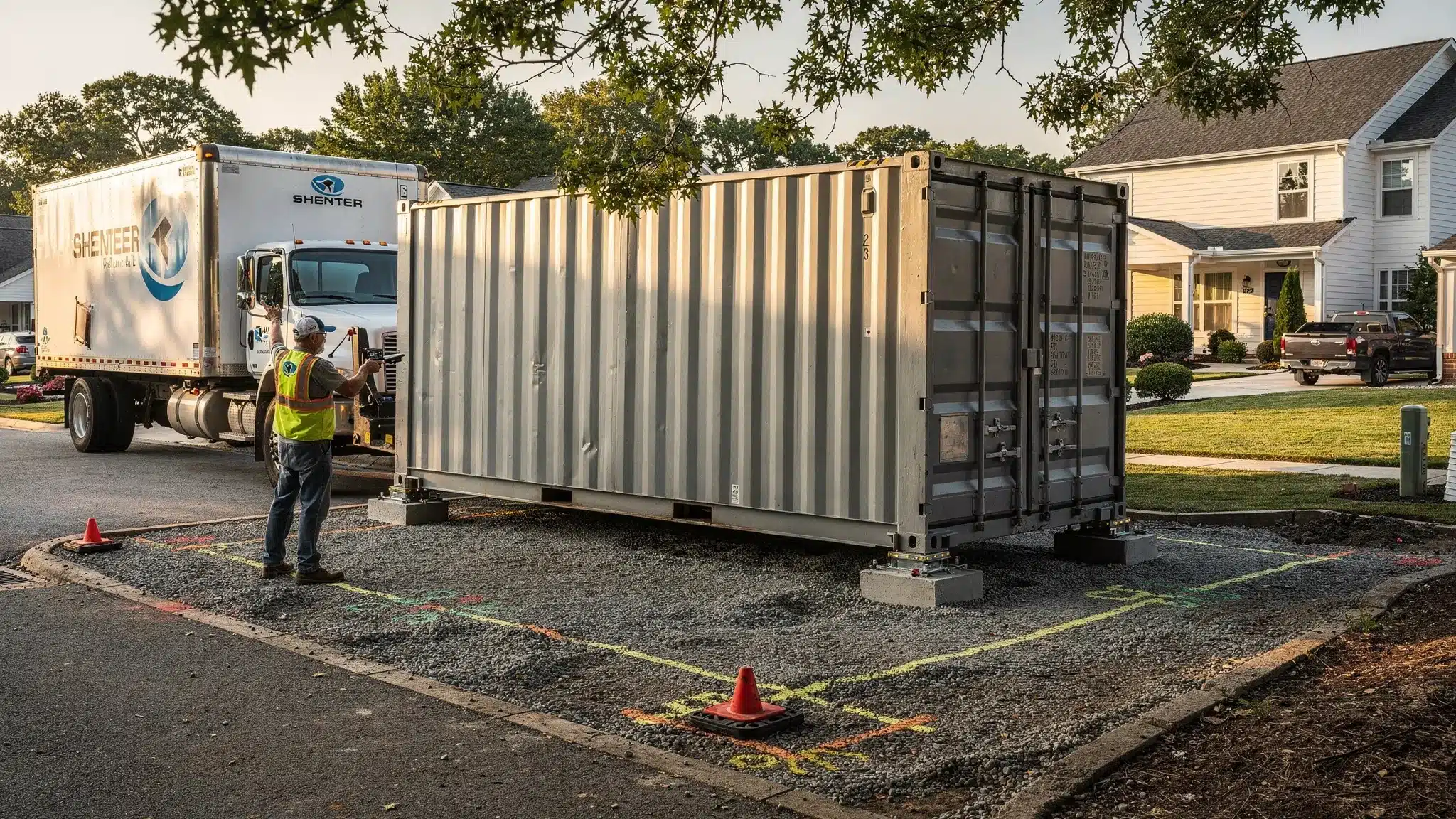
“We Do Deliver” Claims: Questions to Ask Before You Order
A lot of container sellers will confidently say, “we do deliver.” That sounds reassuring, but it is not a specification.
In the shipping container industry, “delivery” can range from curbside drop-off to a precision set on prepared footings, and the difference matters. If you are in Raleigh, North Carolina (or anywhere in the Southeast where tight subdivisions, soft soils, and overhead tree canopy are common), delivery details can be the deciding factor between a smooth placement and an expensive failed attempt.
Below are the most important questions to ask before you order, so you can confirm scope, avoid surprise fees, and make sure the container you buy actually works for your site and use case.
First, confirm what you are ordering (because delivery depends on it)
Before you talk trucks and access, make sure you and the seller are aligned on container grade, size, and height. These directly affect weight, handling method, and clearance.
Container grades (use these exact terms)
A legitimate quote should clearly state the grade, not just “used” or “good condition.”
- One-Trip (new, one voyage): Typically the closest thing to new. Great for customer-facing projects, clean storage, and modifications where appearance and remaining life matter.
- Cargo Worthy (CW): Suitable for intermodal transport and export when properly documented (often tied to CSC requirements). Structurally sound, built to ISO container standards, but may show heavy cosmetic wear.
- Wind & Watertight (WWT): Intended for stationary storage where keeping out wind and water is the priority. Not the same as cargo-worthy certification for shipping.
If you want a deeper breakdown, Lease Lane’s grading guides are worth reviewing before you request delivery pricing: Used shipping container grades explained and the company’s Buyers Guide.
Size and height (ISO footprint, real-world constraints)
Most dry containers are built from Corten steel and follow ISO conventions for footprint and corner castings, but the delivery realities change by size:
- 20ft containers are often easier for residential driveways and tighter Raleigh-area lots. If you are still deciding, start with a 20ft baseline: 20ft container pricing and considerations.
- 40ft containers require more turning room and a longer, straighter approach. See: 40ft container prices and delivery factors.
- High Cube units (typically 9'6" tall vs. 8'6") raise the risk of overhead conflicts (trees, service drops, building eaves), especially in established neighborhoods.
What “delivery” can mean (and what it should mean in writing)
When someone says “we deliver nationwide” or “we do deliver,” ask them to define delivery in one sentence on your quote:
- Is it delivery only, or delivery plus placement?
- Is it curbside, driveway, or final position on your pad?
- Is offloading included, and with what equipment?
A professional supplier should be comfortable stating the delivery method (tilt-bed, flatbed with crane, chassis drop, side-loader where available) and the assumptions behind it.
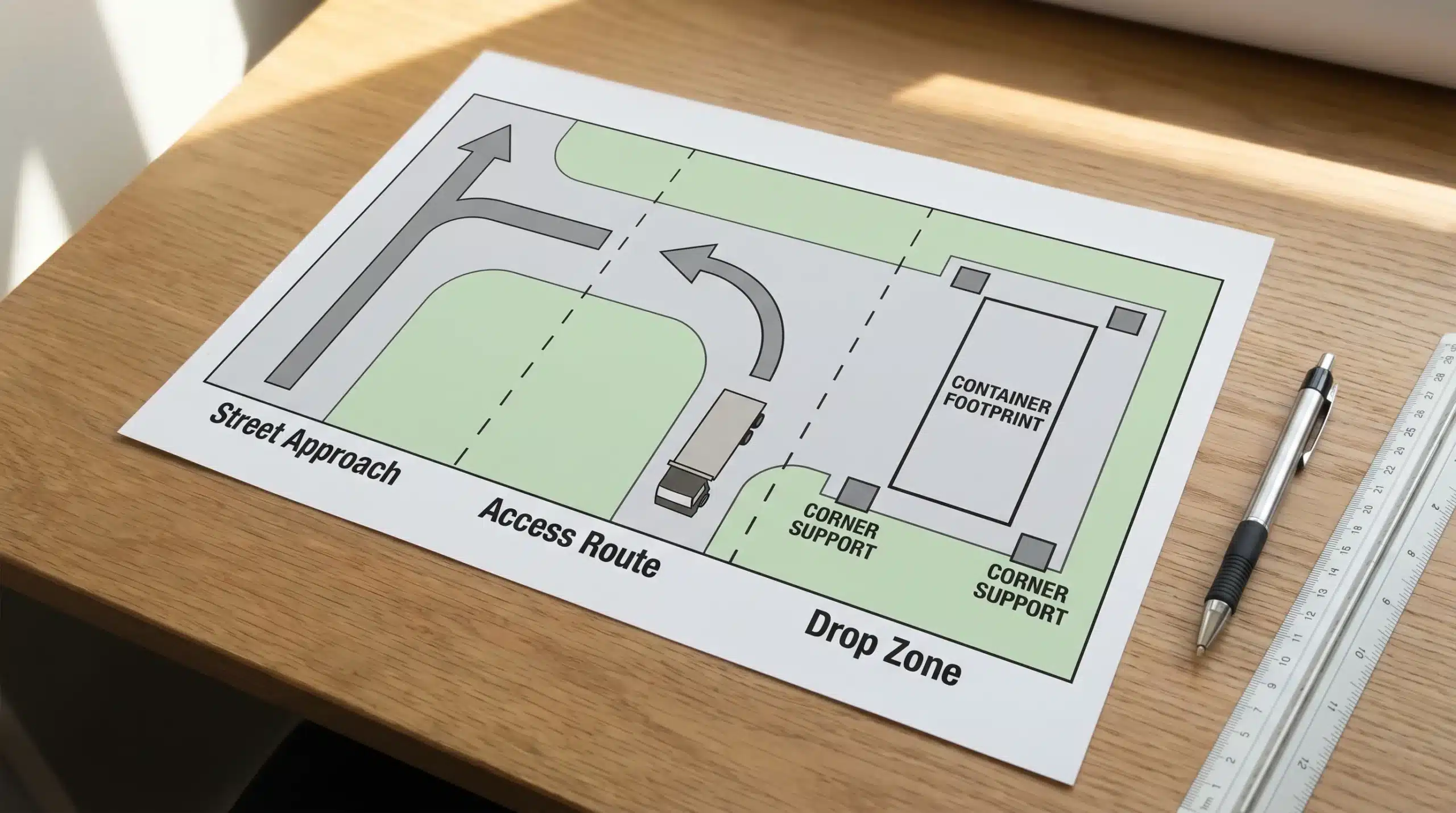
The questions to ask before you order (use this as your script)
If you want to quickly separate a reliable operator from a vague broker, ask the questions below and insist on clear, written answers.
1) “What delivery method are you quoting, and why is it the right one for my site?”
A correct method depends on your container size and site constraints:
- Tilt-bed (roll-off): Common for 20ft and 40ft deliveries where there is enough straight-line room to slide the container off.
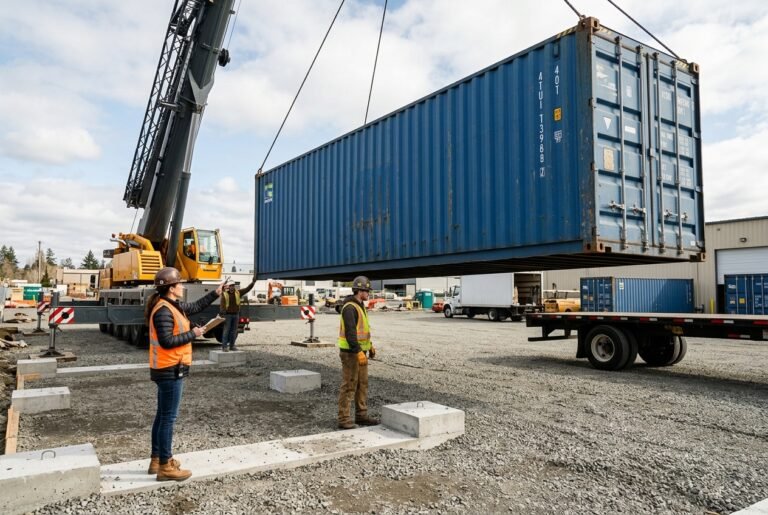
- Flatbed plus crane: Used when you need placement over obstacles, behind buildings, or on sites with limited roll-off space.
- Chassis delivery (ground-level vs. on-chassis): Sometimes used for logistics and port-related moves, but you need clarity on whether the container is being left on the chassis or set on the ground.
If the seller cannot explain the method and requirements, they are not really managing delivery, they are only repeating that delivery exists.
2) “Is delivery priced as a flat rate or mileage, and what exactly is included?”
Get a line-item understanding of what is included:
- Line-haul transport to your address
- Offload and placement (or delivery only)
- Any fuel or remote-area surcharges
- Appointment scheduling requirements
Also ask what triggers additional fees. Two common examples are failed delivery (no safe access) and redelivery.
For a detailed overview of typical requirements that influence cost, compare your quote to this checklist: Shipping container delivery requirements.
3) “What are the minimum access measurements for the truck you plan to use?”
Do not accept “it should fit.” Ask for numbers. At minimum, confirm:
- Access width (gates, fence lines, tight driveways)
- Turning constraints (cul-de-sacs, narrow subdivision streets common around Raleigh)
- Overhead clearance (trees, power lines, carports)
- Straight-line room for a tilt-bed unload, if tilt-bed is the plan
If you are unsure about overhead clearance, measure first. High Cube deliveries in wooded parts of Wake County often fail because branches are only noticed when the truck arrives.
4) “Do you need photos, and what angles do you want?”
Reputable delivery coordination usually includes a quick site review. Offer:
- A photo from the street looking toward the driveway/access route
- A photo of the planned drop zone
- A photo showing overhead obstacles (tree canopy, lines)
If a seller does not want any site details, that is not a positive sign. It often means they are not accountable for first-time success.
5) “Who is responsible if the container cannot be placed where I want it?”
This is one of the most important “we do deliver” follow-ups.
Ask whether the driver can attempt alternate placement on-site, and what happens if:
- The ground is too soft
- The approach is too steep
- Overhead clearance is insufficient
- The truck cannot safely turn around
Get the policy in writing. Many delivery problems are not about distance, they are about access risk.
6) “How do you protect my property, and what is your damage policy?”
Containers are heavy, and delivery trucks concentrate loads on pavement edges and shoulders.
Ask:
- Do you recommend driveway protection (mats, timber, or an alternate drop location)?
- What surfaces are most risky (asphalt in heat, soft shoulders after rain)?
- How is damage handled if it occurs?
A professional team will discuss risk upfront rather than after the fact.
7) “What is the lead time, and how tight is the delivery window?”
In Raleigh and the Southeast, lead times can tighten during peak construction months. National delivery also varies based on routing and carrier availability.
Clarify:
- Earliest possible delivery date
- Whether you receive a call-ahead window
- What happens if weather affects access (rain can quickly soften unprepared ground)
If you need time-sensitive delivery for a jobsite, this question should be asked before you pay.
8) “Will the container arrive level, and what should I have ready for leveling?”
Even a good container can have door problems if it is twisted on uneven ground. A slight rack can cause doors to bind.
Ask:
- Does the driver assist with final placement adjustments?
- What supports do you need at the corners (blocks, footings, compacted gravel pad)?
This is especially important for used WWT and CW containers, which may already have minor frame wear from service.
9) “How do you confirm the container I receive matches the grade quoted?”
This is where grade transparency matters.
Ask the seller to confirm:
- The grade (One-Trip vs CW vs WWT) is stated on the invoice
- You can receive photos of the actual unit (or units) prior to dispatch when feasible
- For Cargo Worthy uses, what documentation is provided or required (especially if your plan involves export or intermodal moves)
If your primary goal is stationary storage, WWT may be perfect. If your goal is shipping cargo, WWT is usually the wrong answer.
10) “Is there anything on my site that would require permits or approvals?”
Permit and HOA rules vary widely. In Raleigh, Wake County, and surrounding towns, approvals can depend on zoning, duration, and intended use (storage vs. office conversion).
Your container seller cannot replace the local authority, but a knowledgeable Raleigh-based team should at least prompt the right questions:
- Do you have an HOA approval requirement?
- Is the container temporary or permanent?
- Is it accessory storage, a business use, or a modified habitable structure?
If a seller insists “no one needs permits” without asking what you are doing, treat that as a red flag.
Quick reference table: match the question to the risk it prevents
| Question category | Ask this before ordering | What it prevents |
|---|---|---|
| Scope of delivery | “Is this curbside, driveway, or final placement?” | Surprise fees, unrealistic expectations |
| Method and equipment | “Tilt-bed, crane, or chassis, and why?” | Failed delivery, unsafe unload attempts |
| Access requirements | “What minimum width, height, and straight-line distance?” | Same-day cancellation, property damage |
| Grade verification | “Is One-Trip, CW, or WWT written on the invoice?” | Wrong container for your use case |
| Scheduling | “What is the delivery window and call-ahead process?” | Missed delivery, jobsite downtime |
| Risk management | “What happens if placement is not possible?” | Redelivery charges and delays |
Pro-Tip (site prep): build a drop zone that makes delivery easy
If you want the best chance of a smooth first-time placement in Raleigh and across the Southeast, prepare the site like you are prepping for heavy equipment, because you are.
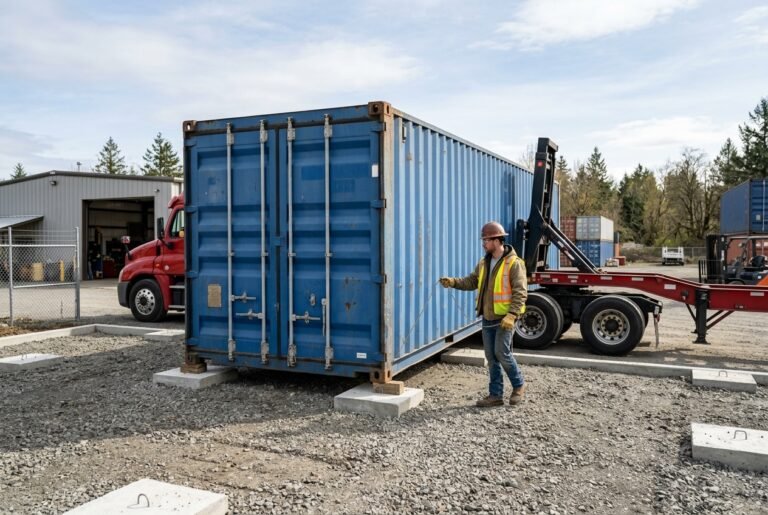
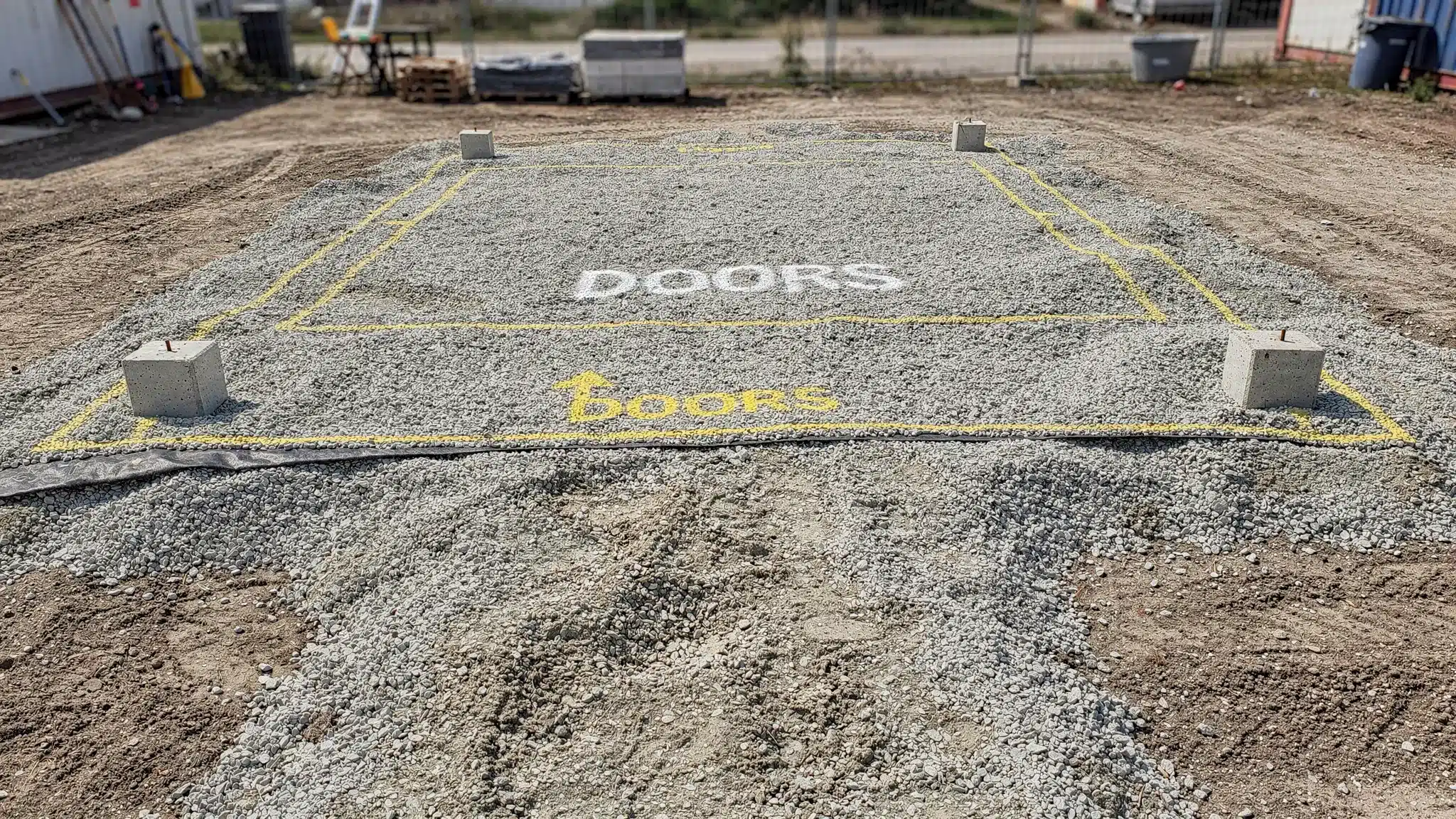
- Create a firm, level base: a compacted gravel pad is a common, cost-effective option for most storage installs.
- Support the corners: use properly rated blocks or footings at the corner castings, not random scrap lumber.
- Plan drainage: keep water from pooling under the container to reduce corrosion risk, even with Corten steel.
- Mark the footprint and door direction: tell the driver exactly where you want doors facing for access and security.
- Call 811 before you dig or place: avoid underground utility surprises.
For a deeper foundation walkthrough, see: 5 steps for proper shipping container ground preparation.
Frequently Asked Questions
If a seller says “we do deliver,” what should I ask first? Ask what delivery method they are quoting (tilt-bed, crane, or chassis) and whether the price includes placement in your final spot or only drop-off.
Does container grade affect delivery, or just price? It affects both. Grade influences expected condition, but delivery planning changes most with size, High Cube height, and specialty units like reefers (which are heavier and can require more careful placement).
Is a Wind & Watertight (WWT) container okay for my backyard storage in North Carolina? Often yes, if your goal is stationary storage and you prepare a level, well-drained base. If your goal is international shipping, you usually need Cargo Worthy (CW) or better documentation.
Can you deliver a 40ft container to a residential driveway in Raleigh? Sometimes, but it depends on turning room, overhead clearance, and driveway strength. Many residential sites are better suited to a 20ft container unless access is unusually open.
What causes the most failed deliveries? Tight turns, low branches or power lines, soft ground after rain, and not having enough straight-line distance for a tilt-bed unload.
Ready for a delivery quote that is specific (not vague)?
If you are comparing sellers and keep hearing “we do deliver,” let’s turn that into a real plan. Lease Lane Containers LLC can help you choose the right grade (One-Trip vs Cargo Worthy vs WWT), confirm the best size for your site, and coordinate delivery in Raleigh, North Carolina, throughout the Southeast, and nationwide.
Email our team at sales@leaselanecontainers.com or visit our Raleigh office to discuss your project and get clear delivery guidance before you order.