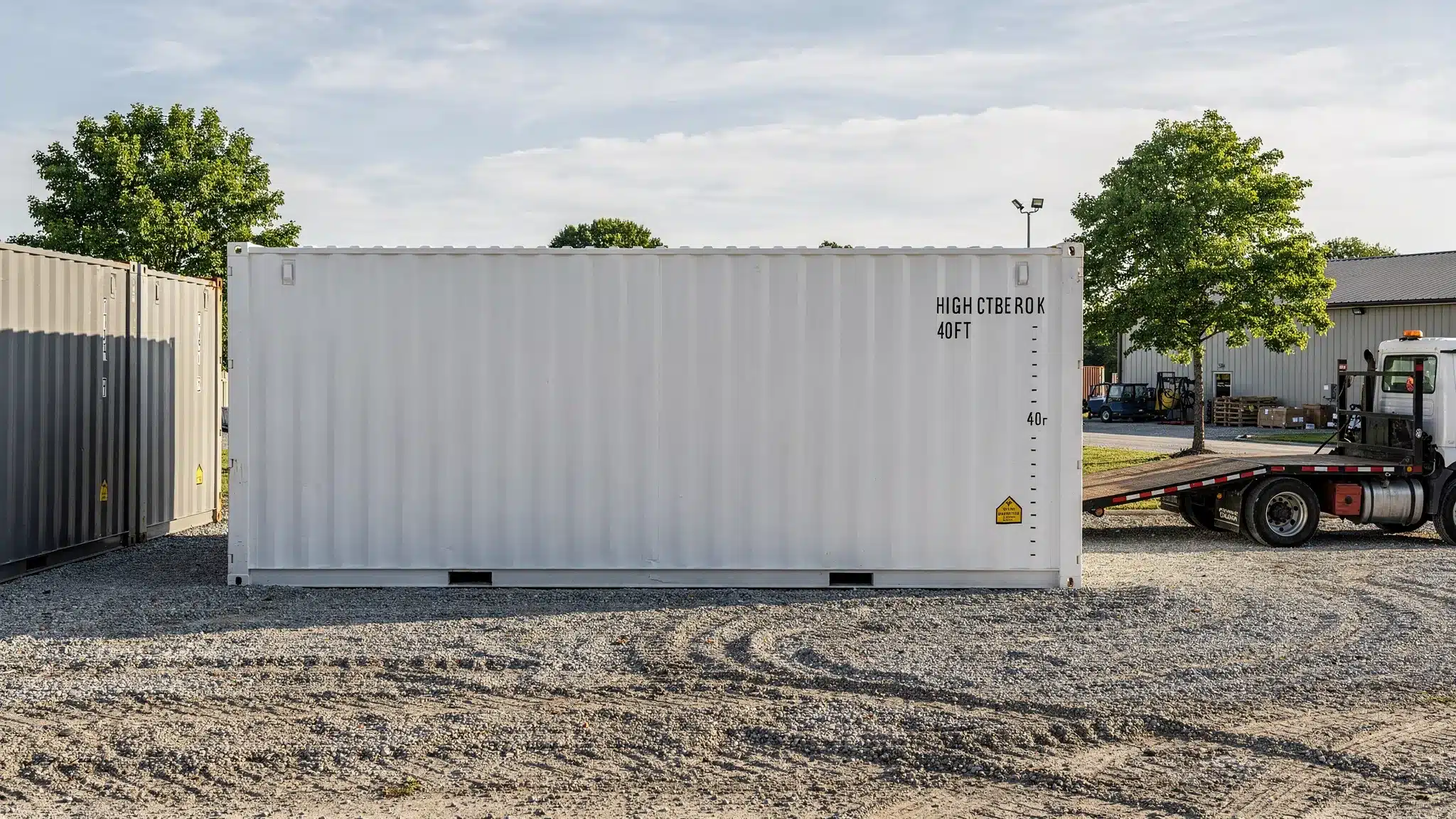
High Cube Shipping Container Dimensions: 40ft HC Quick Specs
If you are comparing container sizes for storage, racking, or a conversion project, 40ft High Cube (40ft HC) is the most common “big and tall” dry container you will see in the U.S. market. It follows ISO standards for footprint (40 feet long, 8 feet wide), but adds extra height for better cubic capacity. That extra headroom is often the difference between “it fits” and “we need a different plan”, especially for contractors and small businesses around Raleigh, North Carolina where jobsite storage, equipment staging, and build-outs are everyday use cases.
Below is a quick-reference spec sheet for high cube shipping container dimensions for a typical 40ft HC, plus what the numbers mean for delivery, interior build-outs, and which container grade you should buy.
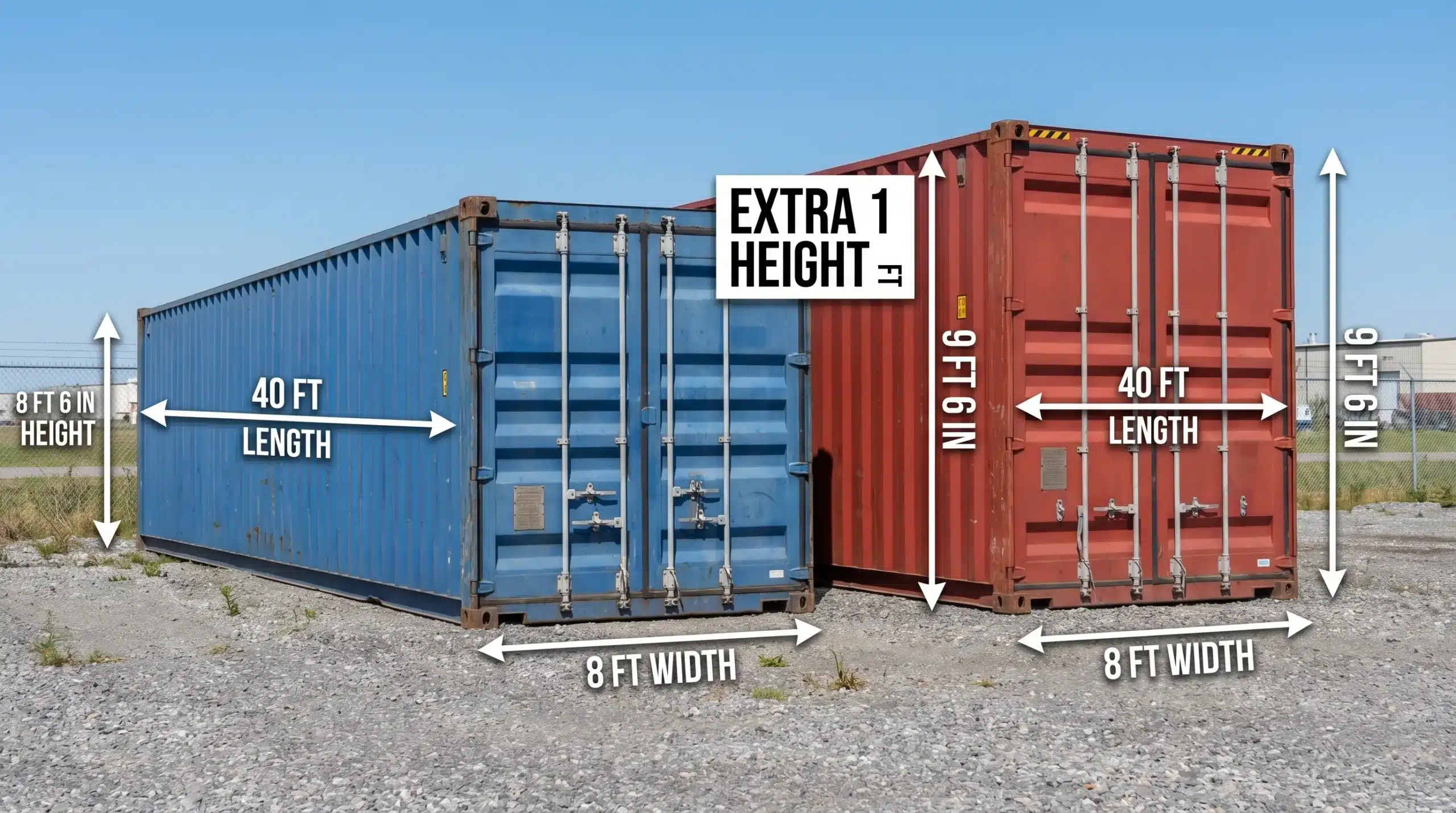
40ft High Cube quick specs (dimensions that matter)
A 40ft High Cube container is still an ISO intermodal container, typically built from Corten steel (weathering steel) with standardized corner castings and forklift pockets (where applicable). Many projects fail because buyers only look at exterior length, then discover door opening height, interior width, or delivery clearance is the real constraint.
40ft HC dimensions at a glance (typical)
These are the typical measurements for a 40ft High Cube dry storage container. Exact measurements can vary slightly by manufacturer and production run, so confirm your specific unit (especially for engineered builds).
| Spec (40ft High Cube) | Typical measurement (imperial) | Typical measurement (metric) | Why it matters |
|---|---|---|---|
| Exterior length | 40' 0" | 12.19 m | Sets the footprint and delivery approach space |
| Exterior width | 8' 0" | 2.44 m | Determines driveway/gate fit and pad width |
| Exterior height | 9' 6" | 2.90 m | Impacts overhead clearance, HOA concerns, and stacking |
| Interior length | ~39' 5" | ~12.03 m | Usable layout length for storage or build-outs |
| Interior width | ~7' 8" | ~2.35 m | Affects pallet/rack planning and interior framing |
| Interior height | ~8' 10" | ~2.69 m | Big advantage for tall storage and conversions |
| Door opening width | ~7' 8" | ~2.34 m | Determines equipment clearance (mowers, pallet jacks) |
| Door opening height | ~8' 5" | ~2.58 m | Critical for forklifts, tall pallets, and roll-in gear |
Reference note: ISO container external dimensions are standardized under ISO 668. For background, see the ISO overview page for the standard. For safety and international transport rules, the International Maritime Organization’s container safety information is a helpful starting point.
What “High Cube” really adds (and what it does not)
A common misconception is that a high cube adds width or door width. It does not. The main change is height.
- Standard 40ft container exterior height: typically 8'6"
- 40ft High Cube exterior height: typically 9'6" (about 1 foot taller)
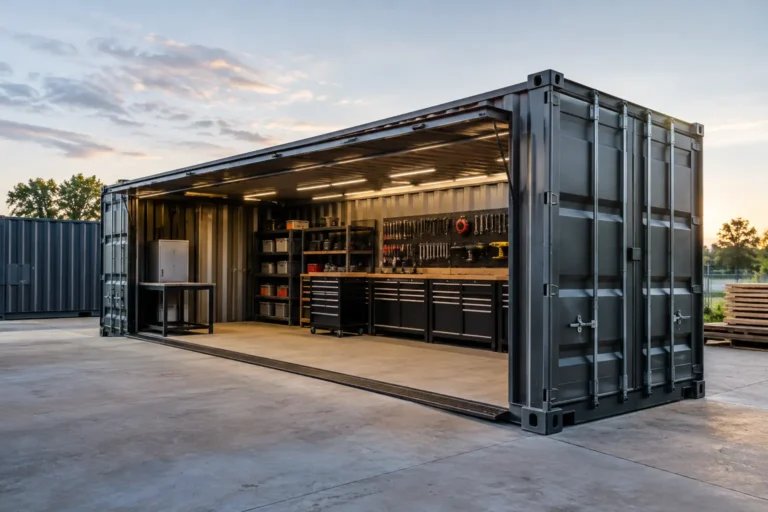
That additional height translates into more vertical storage options (taller shelving, better air space above stored goods, easier interior framing and insulation for office builds). For many Raleigh-area contractors, it also means you can store taller materials upright (where safe) and keep more floor space clear.
Capacity and weight (useful, but always verify)
Weights vary by manufacturer, container type, and whether the unit is modified. For quick planning, it is reasonable to use typical ranges, then confirm the exact numbers on the unit’s markings and CSC plate if applicable.
| Weight spec (40ft HC) | Typical range | What to check |
|---|---|---|
| Tare weight (empty container) | ~8,000 to 9,500 lb | Manufacturer markings and CSC plate |
| Max gross weight (container + cargo) | Often up to ~67,200 lb | CSC plate and transport requirements |
| Payload capacity (max cargo weight) | Depends on tare and rating | Your hauling plan, axles, permits |
If you are buying for export or intermodal use, make sure you understand container certification and inspection requirements. A good deep dive is Lease Lane Containers’ guide on Cargo Worthy vs Wind and Watertight containers.
Choose the right grade first (One-Trip vs CW vs WWT)
Dimensions help you plan space, but grade determines whether the container is appropriate for your job. At Lease Lane Containers LLC (Raleigh, NC), we emphasize grading transparency because it directly affects cost, lifespan, and performance.
One-Trip (new, “one voyage”)
A One-Trip container has made a single loaded voyage from the factory and is typically the closest thing to new you can buy in the resale market. Expect minimal wear and a long service life, making it ideal for customer-facing projects, high-end conversions, and long-term storage.
Learn more: What is a One Trip container?
Cargo Worthy (CW)
A Cargo Worthy container is suitable for transport and meets structural criteria for shipping (and may be used for export, subject to documentation and inspection). CW is a smart choice when structural integrity and stacking strength matter.
More detail: What is a Cargo Worthy container?
Wind and Watertight (WWT)
A WWT container is intended for stationary storage. It should keep wind and water out, but it is not automatically certified for ocean transport. WWT is often the value pick for farms, homeowners, and many jobsites when you want weather protection without paying for cargo certification.
Local context: Wind and Watertight shipping containers in Raleigh, NC
Practical planning: measuring for a 40ft HC delivery in Raleigh (and anywhere in the U.S.)
In Wake County and across the Southeast, the biggest delivery failures are not about the container itself, they are about access and clearance.
At a minimum, plan for:
- Overhead clearance: trees, power lines, carports, and eaves (high cubes add height, and delivery trucks add more height)
- Turning space: cul-de-sacs, tight gates, and narrow driveways
- Stable ground: soft shoulders and wet clay soils can sink under the weight
If you want a step-by-step guide, start with Shipping Container Delivery Requirements and use the measurement method in How to Measure Shipping Container Overhead Clearance.
Pro-Tip (site preparation): prevent door bind and frame twist
A shipping container is a steel box, but it is not immune to twisting. If the foundation is not level and well supported, the frame can rack slightly, and doors can become hard to open or seal. This is one of the most common issues we see after placement around Raleigh and the broader North Carolina region.
For most 40ft HC placements, a dependable approach is:
- Build a compacted gravel pad with drainage, or use concrete/paver supports at the corners (and additional support points if your soil is soft).
- Confirm the pad is level corner-to-corner, not just “looks flat.”
- Keep the container off direct soil contact to reduce under-container corrosion and standing water.
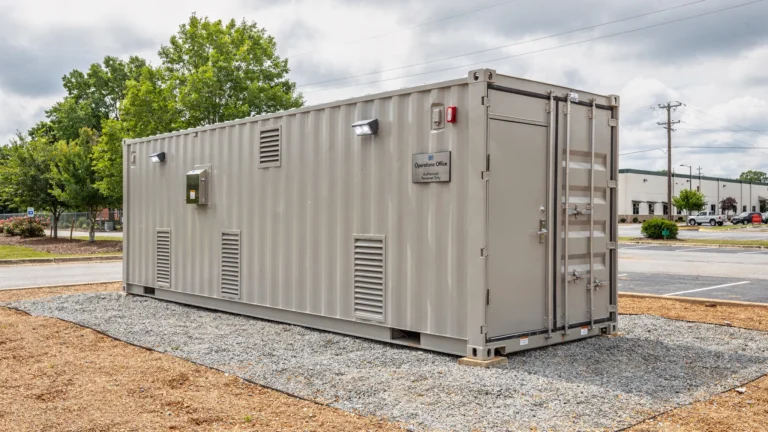
- Check local requirements before permanent setups, especially if the container is used as a workspace or modified structure. Raleigh and nearby municipalities can have zoning, setbacks, and permit rules depending on use.
For a detailed walkthrough, see 5 Steps for Proper Shipping Container Ground Preparation and the more in-depth guide on choosing the right base for a shipping container.
When a 40ft HC is the right size (and when it is not)
A 40ft high cube is popular because it balances footprint and capacity, but it is not always the easiest to place.
A 40ft HC is usually a strong choice if you need:
- Maximum cubic storage for construction materials, farm supplies, or business inventory
- More interior height for shelving, racking, or a conversion (office, workshop, studio)
- A container that “feels less cramped” for frequent in-and-out access
Consider a 20ft container instead if you have tight access, limited yard space, or only need simple on-site storage. If you are comparing sizes locally, this guide is a good starting point: How to choose shipping container size. If you want to price and source locally, see Where to buy a 20ft shipping container in Raleigh, NC.
If you are actively shopping for 40ft inventory, this local buying resource can help you set expectations: Find a 40ft shipping container for sale in Raleigh, NC.
Quick checklist: confirm before you buy
Before you purchase any 40ft HC, confirm these items with your supplier:
- Exact exterior height (high cube is typically 9'6", but confirm)
- Door opening height and width (especially for equipment roll-in)
- Grade and intended use match (One-Trip vs CW vs WWT)
- Floor type and condition (important for storage and conversions)
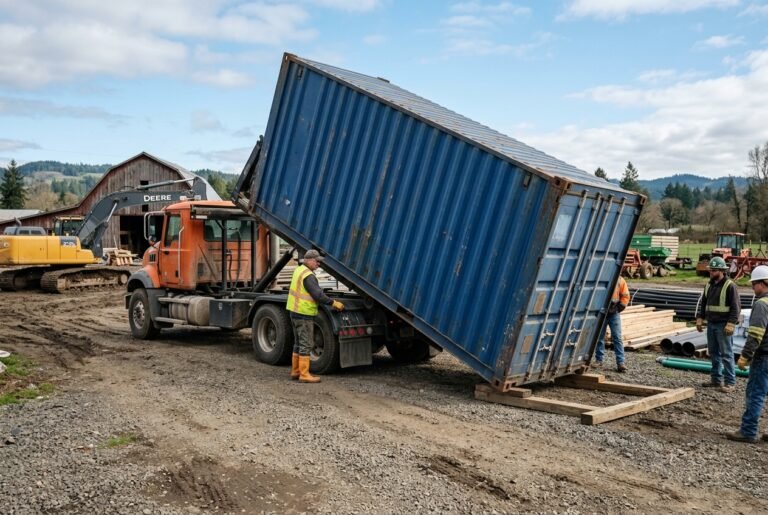
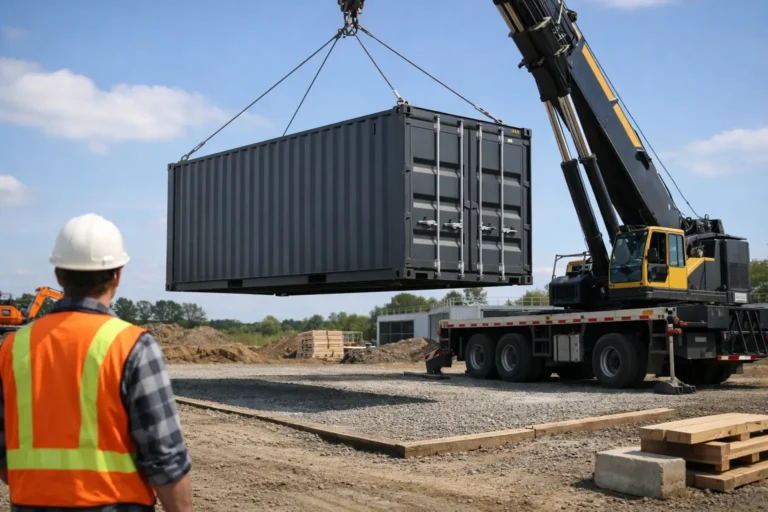
- Delivery plan (tilt-bed vs flatbed/crane), access measurements, and drop orientation
If you are shopping used, this inspection guide is worth bookmarking: How to spot quality containers before you buy. For local used sourcing, see Best used shipping containers for sale in Raleigh, NC.
Frequently Asked Questions
What are the standard high cube shipping container dimensions for a 40ft HC? Typical exterior dimensions are about 40' long x 8' wide x 9'6" tall. Interior and door opening dimensions vary slightly by manufacturer, so verify the specific unit.
How tall is a 40ft high cube container inside? Interior height is typically around 8'10" (about 2.69 m), which is roughly 1 foot taller than a standard 40ft container.
Is the door opening bigger on a high cube container? The door opening is usually taller than a standard container door opening, but width is typically the same. Always confirm door opening height if you plan to roll in equipment.
Should I buy One-Trip, Cargo Worthy, or WWT for a 40ft high cube? One-Trip is best for premium projects and long-term value, Cargo Worthy is best when transport certification and structural standards matter, and WWT is often best for stationary storage on a budget.
Do I need a permit for a 40ft high cube container in Raleigh? It depends on placement duration, zoning, and how you use the container (storage vs occupied space, commercial vs residential). Check local rules, and plan early if you expect inspections or utility tie-ins.
Get the right 40ft HC delivered and placed the first time
Lease Lane Containers LLC helps buyers in Raleigh, North Carolina and across the Southeast, plus nationwide delivery customers, choose the right 40ft High Cube grade, confirm dimensions, and plan a safe, clean drop spot.
Email our team at sales@leaselanecontainers.com to request current availability and a delivered quote, or visit our Raleigh office to talk through your site plan and container specs before you buy.