How to Find Storage Containers for Sale Near You
Searching for storage containers for sale near me is usually the first step when you need secure, weather-resistant space fast. But the best container is not always the cheapest listing closest to your ZIP code. The right purchase depends on container grade, size, delivery access, site preparation, seller transparency, and whether the unit is meant for static storage, export, a jobsite, a farm, a retail project, or a modular build.
For buyers in Raleigh, Wake County, and across the Southeast, proximity matters because delivery logistics can affect both cost and scheduling. Still, a reputable supplier with regional inventory and nationwide delivery support may be a better choice than an anonymous marketplace listing with vague photos and unclear grading.
This guide explains how to find a storage container near you, compare options like 20ft, 40ft, High Cube, One-Trip, Cargo Worthy, and Wind & Watertight units, and avoid common buying mistakes before the truck arrives.
Start by Defining What You Need the Container to Do
Before comparing listings, get clear on the job your container has to perform. A general contractor storing tools on a Raleigh construction site has different needs than a homeowner creating long-term backyard storage or a logistics manager buying a Cargo Worthy unit for transport.
For static storage, the key priorities are weather protection, door function, security, and floor condition. For export or intermodal transport, structural certification and ISO compatibility matter more. For customer-facing uses, such as retail pop-ups or modular offices, appearance and modification potential become more important.
A good supplier should ask questions before quoting, including what you plan to store, how often you need access, where the container will sit, whether it needs to be moved later, and whether you need standard height or extra vertical clearance.
Understand Container Grades Before You Compare Listings
Container grade is one of the biggest reasons two similar-looking units can have very different prices. If a listing simply says used container, storage box, or cargo container without a condition grade, ask for clarification before paying a deposit.
Most storage container buyers will encounter these grades:
| Grade | What it means | Best fit | Key question to ask |
|---|---|---|---|
| One-Trip | A newer container that has typically made one loaded trip from the factory before resale | Premium storage, conversions, retail, offices, long-term ownership | Are there recent photos of the exact unit or a representative unit from the same batch? |
| Cargo Worthy | A used container that is structurally suitable for cargo service when properly inspected | Export, intermodal use, stacking, high-value storage | Is the CSC plate valid and is a survey available if needed? |
| Wind & Watertight | A used container that should not leak and should keep wind and rain out, but is not necessarily certified for ocean transport | Jobsite storage, farm storage, household storage, business overflow | Has the unit passed a light test and door gasket inspection? |
| As-Is | A lower-grade unit sold with known or unknown defects | Limited budgets, non-critical uses, parts or repair projects | Can I inspect it in person before purchase? |
One-Trip containers usually offer the cleanest appearance and longest service life. Cargo Worthy containers are often a smart choice when structural integrity and transport eligibility matter. Wind & Watertight containers are often the value option for stationary storage, provided the roof, doors, gaskets, and floors are sound.
Lease Lane Containers LLC prioritizes transparent grading for new One-Trip and used units, including Wind & Watertight and Cargo Worthy options, so buyers know what condition they are actually purchasing.
Choose the Right Size Before You Shop
The most common storage containers are 20ft and 40ft ISO dry containers. Both are built from durable Corten Steel, use standardized corner castings, and are designed around ISO standards for transport and handling. High Cube containers add extra height, usually 9 ft 6 in exterior height instead of the standard 8 ft 6 in, which can be valuable for taller equipment, pallet stacking, shelving, or conversion projects.
| Container type | Typical use | Why buyers choose it |
|---|---|---|
| 20ft standard | Residential storage, small jobsites, tools, farm supplies | Easier to place on tighter sites and driveways |
| 40ft standard | Construction materials, business inventory, large household storage | More storage capacity per delivered unit |
| 40ft High Cube | Equipment, workshops, office builds, modular projects | Extra interior height for comfort and access |
| Refrigerated container | Cold storage, food, floral, pharmaceutical, agricultural use | Temperature-controlled storage when power is available |
If you are deciding between sizes, review Lease Lane’s guide to 20ft containers or compare options for 40ft containers. If budget is the top concern, start with the guide to used containers and focus on verified condition rather than the lowest advertised price.
Where to Look for Storage Containers Near You
There are four common places buyers search for local storage containers: local suppliers, container depots, online marketplaces, and national brokers. Each can work, but the buying experience varies significantly.
Local or regional suppliers are often the best starting point because they understand local delivery routes, soil conditions, zoning concerns, and access constraints. In the Raleigh area, that can include tight residential streets, wooded properties, rural drives, and commercial sites where delivery needs to be timed around other contractors.
Container depots can have strong inventory, especially near ports and rail hubs, but they may not always provide the same level of buyer guidance or site planning help. Online marketplaces can be useful for research, but photos and grading are often inconsistent. National brokers may offer broad reach, but buyers should confirm who actually owns the unit, where it is located, and who handles delivery if a problem occurs.
If you are searching from Raleigh, Durham, Cary, Garner, Wake Forest, Fayetteville, or elsewhere in North Carolina, look for a seller that can explain both the container and the delivery plan. The cheapest nearby listing is not a bargain if the truck cannot safely access your property.
How to Vet a Container Seller Before You Pay
A trustworthy seller should be able to explain the difference between One-Trip, Cargo Worthy, and Wind & Watertight containers without using vague language. They should also provide realistic delivery guidance and clear pricing assumptions.
Before paying, ask for:
- The container grade in writing: Confirm whether the unit is One-Trip, Cargo Worthy, Wind & Watertight, refurbished, or As-Is.
- Recent photos: Ask for exterior, interior, roof, door, floor, corner casting, and lockbox photos.
- The exact size and height: Verify 20ft vs 40ft, standard vs High Cube, and any special configuration.
- Delivery method: Confirm whether placement will use a tilt-bed, flatbed, chassis, side-loader, crane, or other equipment.
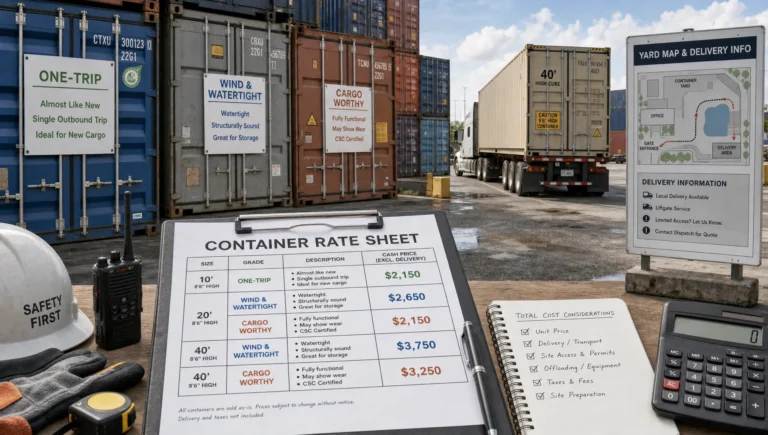
- Total delivered cost: Compare the unit price, delivery fee, taxes, site access assumptions, and any special offloading requirements.
- Payment terms and business identity: Be cautious with sellers who demand unusual payment methods or cannot verify their company details.
You can also review Lease Lane’s Ultimate Shipping Container Buyers Guide for a more complete pre-purchase checklist.
Compare the Total Delivered Cost, Not Just the Listing Price
When buyers search for storage containers nearby, many compare only the advertised container price. That can lead to surprises. The delivered cost is what matters.
Delivery distance, equipment type, ground conditions, waiting time, blocked access, crane requirements, and difficult placement can all affect the final number. A container that looks cheaper online may cost more once delivery is added, especially if it is located far from your site or requires special handling.
A clear quote should state what size and grade you are buying, where the unit is coming from, how it will be delivered, what type of site access is assumed, and whether the quote includes placement or only transportation. For Raleigh and the Southeast, seasonal weather can also matter. Soft ground after heavy rain can delay delivery or require additional site preparation.
Inspect the Container Like a Buyer, Not a Browser
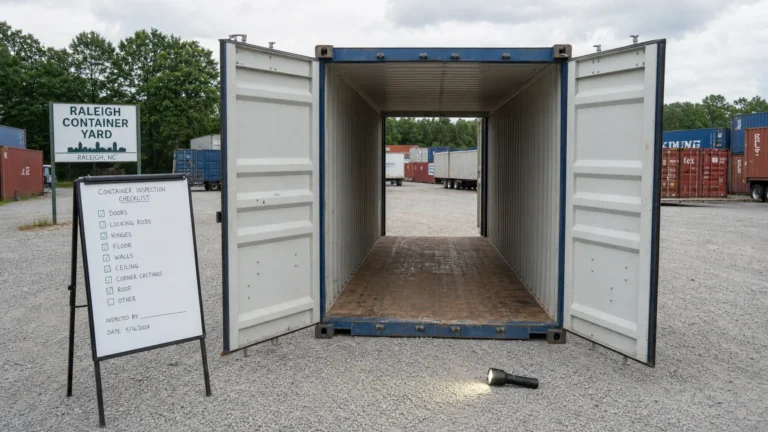
Even if you cannot inspect the container in person, you can still evaluate quality through photos, videos, and seller documentation. Focus on structural and weatherproofing details first, then cosmetics.
Check the roof for heavy dents, ponding areas, patched holes, and rust-through. Inspect doors for smooth operation, intact locking bars, functional hinges, and full-contact gaskets. Look inside for daylight, soft flooring, strong odors, water staining, or evidence of chemical spills. Examine lower side rails and corner posts for corrosion, since those areas carry structural load.
Corten Steel is designed to resist weathering better than ordinary steel, but it is not immune to neglect. Standing water, poor drainage, coastal exposure, and damaged paint can accelerate corrosion. Cosmetic surface rust is common on used containers, but deep scaling, holes, and distorted frame members are warning signs.
For Cargo Worthy units, ask about the CSC plate and whether inspection documentation is available for your intended use. For Wind & Watertight units, ask whether the seller performed a light test, which involves closing the doors and checking inside for visible daylight through holes or gaps.
Pro-Tip: Prepare the Drop Site Before the Truck Arrives
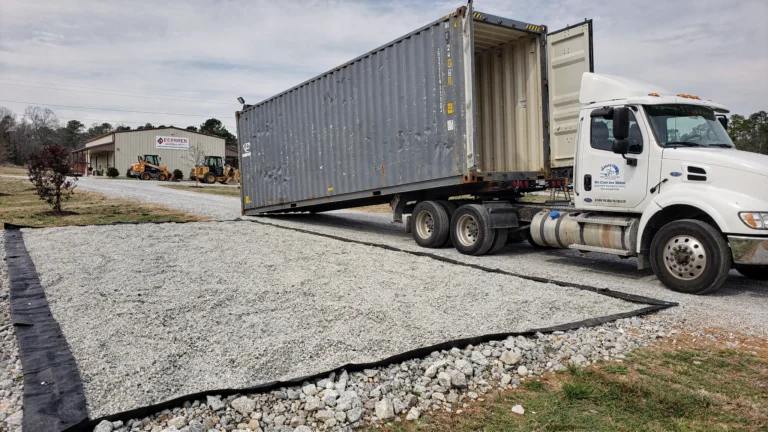
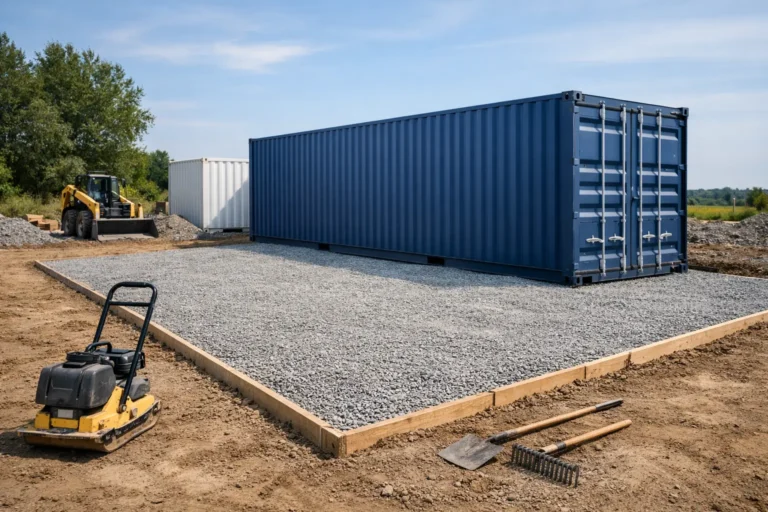
A storage container performs best when it sits level, drains properly, and is accessible for delivery. Poor site preparation can cause door misalignment, standing water, sinking corners, and premature corrosion.
For most properties in Raleigh, North Carolina, and the broader Southeast, a compacted gravel pad is often a practical choice because it promotes drainage and creates a stable base. Concrete pads, piers, and block supports can also work when designed and leveled properly. The container should be supported at the corners, not left twisted across uneven ground.
Before delivery, mark the exact drop location, decide which direction the doors should face, remove overhead branches, measure gate openings, and check for low utility lines. If ground disturbance is involved, contact 811 before digging. For local rules, verify zoning, HOA, and permit requirements with your municipality or start with the City of Raleigh permits information if your project is within city limits.
For more detail on clearance, truck access, and delivery planning, see Lease Lane’s guide to shipping container delivery requirements.
Local Buying Considerations in Raleigh and the Southeast
Raleigh buyers often need a balance of local responsiveness and regional logistics. North Carolina’s humid climate makes drainage, ventilation, and roof condition especially important. Contractors in the Triangle may prioritize fast delivery and lockable jobsite storage, while homeowners may need help understanding driveway access, HOA restrictions, and long-term placement.
Agricultural buyers across rural North Carolina and the Southeast should pay close attention to ground stability, runoff, and pest prevention. Small business owners using containers for inventory overflow or retail pop-ups should consider appearance, security, customer access, and whether a One-Trip or refurbished unit is worth the premium.
For logistics managers, the word storage may not be enough. If the container may travel internationally, the unit likely needs to be Cargo Worthy and documentation may be required. If it is only sitting on-site for overflow inventory, a Wind & Watertight unit may be more cost-effective.
Red Flags When Searching for Storage Containers Online
The container industry has legitimate local suppliers, but it also attracts questionable listings. Be careful if a seller cannot define the grade, refuses to provide photos, advertises unusually low prices, uses only stock images, or pressures you to pay immediately.
Also watch for listings that describe every unit as new. In the container market, many units called new are actually One-Trip containers, meaning they are the closest common resale option to new but may have minor handling marks from transport. That is normal, but it should be explained clearly.
The best sellers educate you before they invoice you. They should help match the container to the use case, explain trade-offs, and identify delivery issues before the driver is on the way.
Quick Buyer Checklist
Use this checklist before choosing a storage container near you:
- Confirm the use case: Static storage, export, business inventory, construction, agriculture, or conversion.
- Choose the size: 20ft for tighter sites, 40ft for capacity, High Cube for extra height.
- Verify the grade: One-Trip, Cargo Worthy, Wind & Watertight, or As-Is.
- Review condition evidence: Photos of roof, doors, floor, walls, gaskets, and corner castings.
- Compare delivered pricing: Include freight, placement method, taxes, and site access assumptions.
- Prepare the site: Level pad, drainage, clearance, door orientation, and permits.
- Inspect at delivery: Document condition with photos before the driver leaves if possible.
Frequently Asked Questions
What is the best grade for a storage container? For most stationary storage, a Wind & Watertight container is often sufficient if it has solid floors, functioning doors, and no leaks. For premium appearance or modification projects, One-Trip is usually better. For export or transport, choose Cargo Worthy when documentation and structural standards are required.
Should I buy a 20ft or 40ft storage container? A 20ft container is easier to place on residential lots, small jobsites, and tight driveways. A 40ft container offers more capacity and often better value per square foot, but it requires more delivery space and a larger prepared pad.
Are High Cube containers worth it for storage? High Cube containers are worth considering when you need extra vertical clearance for shelving, equipment, pallet stacking, or a future office or workshop conversion. The added height can make the interior easier to use.
Can a storage container be delivered to a residential property in Raleigh? Often yes, but it depends on access, clearance, surface strength, neighborhood rules, and local zoning. Check Raleigh, Wake County, or HOA requirements before scheduling delivery.
How do I avoid scams when searching storage containers for sale near me? Work with a verifiable supplier, ask for written grade definitions, request recent photos, confirm delivery details, and avoid sellers who pressure you to pay with unusual methods or cannot explain the container’s condition.
Ready to Find the Right Storage Container Near You?
Lease Lane Containers LLC helps homeowners, contractors, small businesses, farms, developers, and logistics teams choose clean, high-quality storage containers with transparent grading and reliable delivery planning. Whether you need a 20ft Wind & Watertight unit for a jobsite, a 40ft High Cube for inventory, a One-Trip container for a conversion, or a Cargo Worthy unit for transport, our team can help you compare options and plan the drop site.
To check current availability, discuss delivery to Raleigh, North Carolina, the Southeast, or another U.S. location, contact the sales team at sales@leaselanecontainers.com or visit the Raleigh office to speak with a local container specialist.