Storage Container Dimensions: Picking the Right Footprint
When people search storage container dimensions, they usually want a simple answer like “20ft or 40ft?” But in the real world (especially around Raleigh, North Carolina where lots can be tight, trees hang low, and clay soils move when wet), picking the right footprint is about more than the container’s length and width.
Your best choice is the one that:
- Fits your usable space and your delivery path
- Leaves room to open doors, stage materials, and work safely
- Matches the right grade (One-Trip vs Cargo Worthy vs Wind & Watertight) for how you’ll use it
Below is a practical, contractor-friendly way to choose a container footprint that works the first time.
“Dimensions” can mean 4 different things
Before you choose a size, make sure you’re comparing the right measurement.
Exterior dimensions: The outside length, width, and height. This drives whether the container fits on your site.
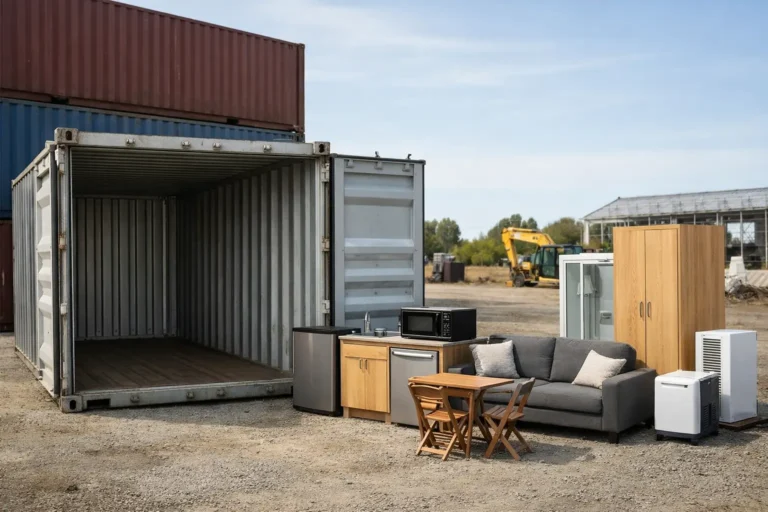
Interior dimensions: The usable space inside. This is affected by wall corrugation and, for conversions, framing and insulation.
Door opening dimensions: The clear opening at the doors. This matters for pallets, equipment, and anything you need to roll in.
Footprint (what this article focuses on): The ground area the container occupies, plus the space you should plan around it for access, drainage, and door swing.
Most ISO shipping containers are built to standardized footprints under ISO standards, using durable Corten steel (a weathering steel designed for harsh marine environments). But small variations exist by manufacturer and container type, so it’s smart to confirm exact specs for the unit you’re buying.
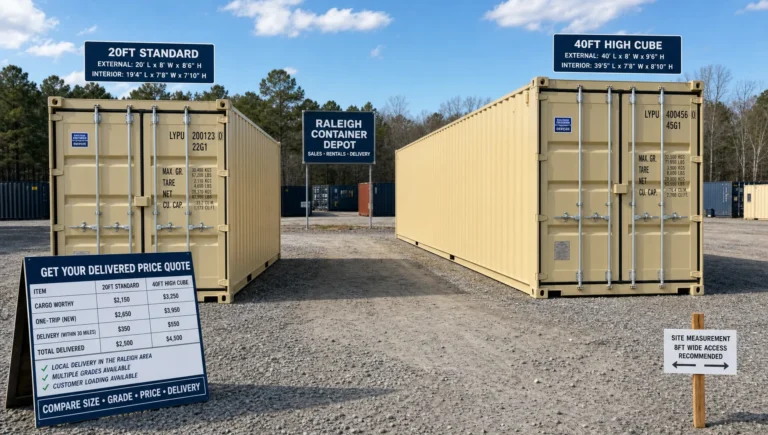
Quick reference: common footprints (20ft, 40ft, High Cube)
Here are the most common “yard storage” footprints you’ll see across Raleigh and the Southeast.
| Container type | Typical exterior footprint (L x W) | Typical exterior height | Footprint takeaway |
|---|---|---|---|
| 20ft Standard | 20' x 8' | 8'6" | Easiest to place on tighter residential and job sites |
| 40ft Standard | 40' x 8' | 8'6" | Best value per square foot, needs more delivery room |
| 40ft High Cube | 40' x 8' | 9'6" | Same footprint as 40', but taller (more clearance planning) |
If you want a deeper side-by-side on interior vs exterior measurements, see our guide: Shipping Containers Dimensions: 20ft vs 40ft vs High Cube.
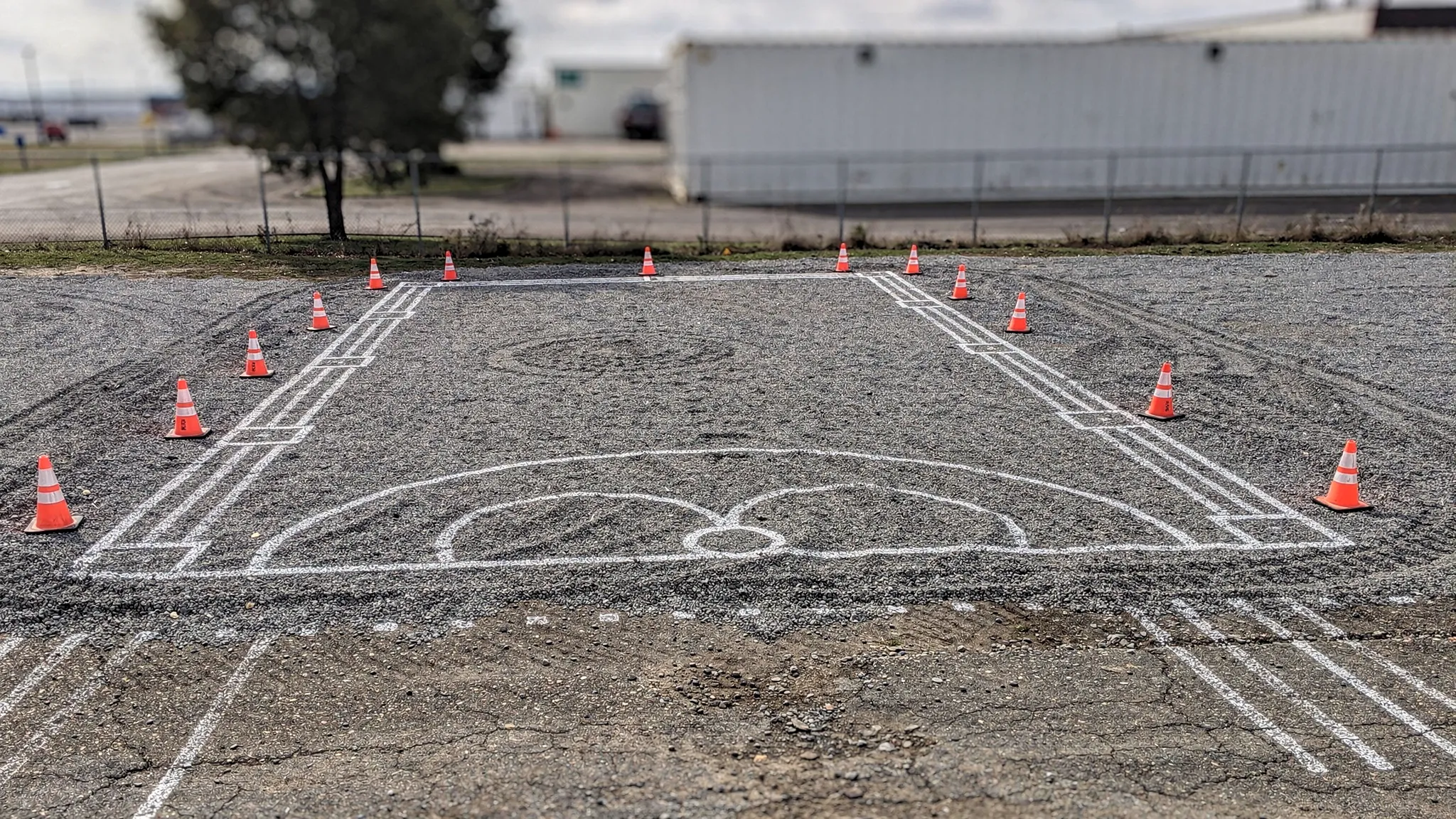
Step 1: Start with your “usable rectangle,” not your property line
A common mistake is measuring the open space where the container will sit, but skipping everything that makes that space usable:
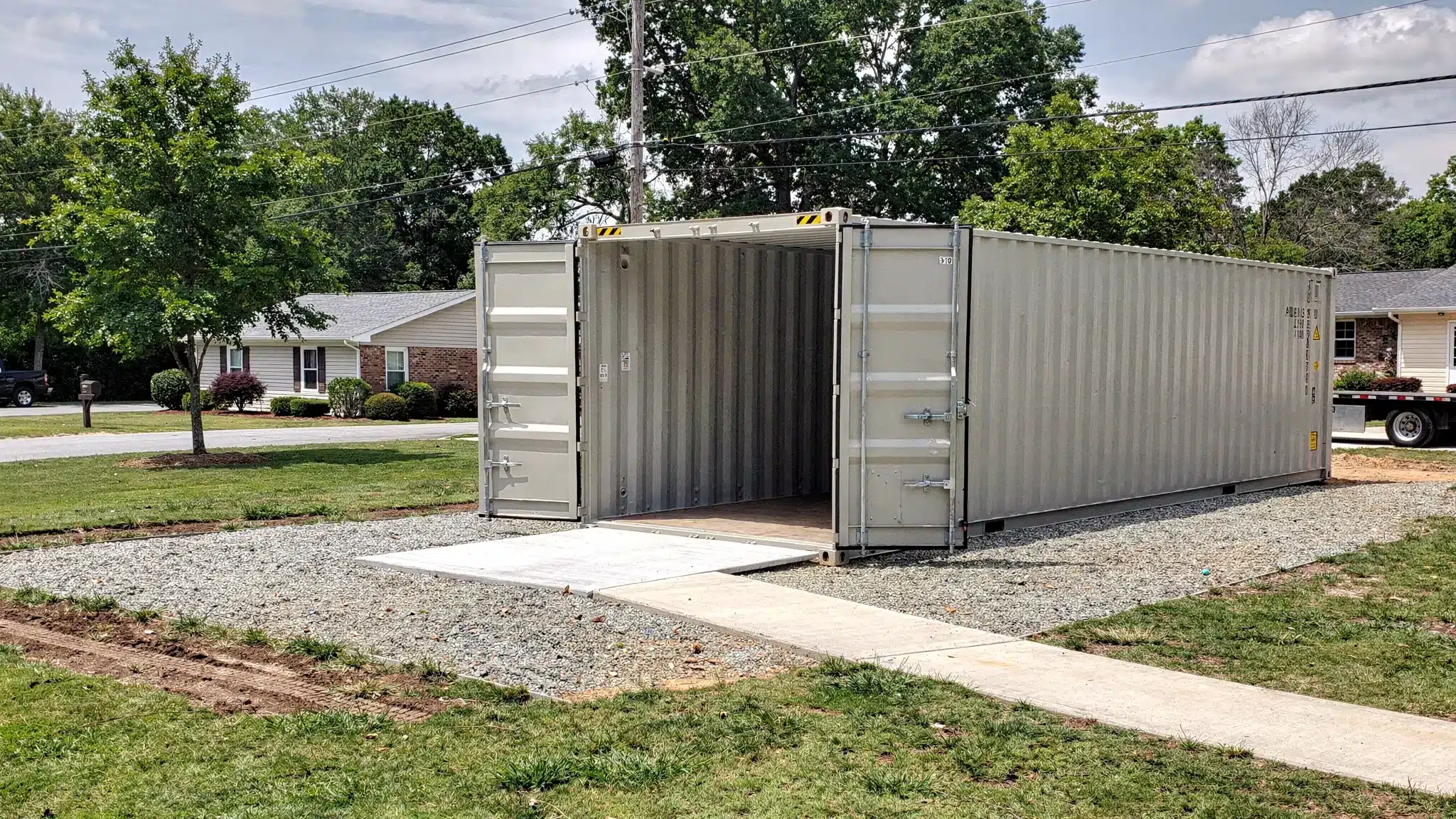
- Door swing and walk space: You need room to open both doors fully and still move items safely.
- Service access: Even if you only visit weekly, you’ll want space for a dolly, pallet jack, or mower.
- Drainage space: In North Carolina, pooling water is a real enemy. Standing water accelerates corrosion and can soften ground under the corner castings.
- Setbacks and HOA rules: Raleigh-area neighborhoods and Wake County parcels may have placement rules, especially for long-term installs.
A good rule of thumb is to plan extra clearance around the container so you can functionally use it, not just “fit it.” If you’re unsure, Lease Lane Containers’ team can help you map a drop spot based on real delivery constraints.
Step 2: Confirm you can actually deliver the footprint you want
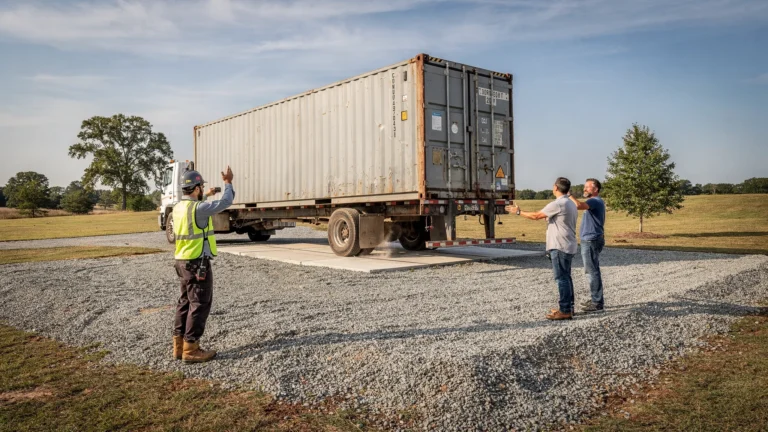
The container’s footprint is only half the story. The delivery truck needs a path, turning room, and overhead clearance.
If you’re in Raleigh (or anywhere with mature trees and overhead lines), measure clearance early. Two helpful resources:
Raleigh and Southeast reality check
In the Southeast, these issues drive footprint decisions as much as storage volume:
- Soft shoulders and wet clay: After rain, a heavy truck can sink or rut edges of driveways and yards.
- Tight subdivisions: Mailboxes, cul-de-sacs, parked cars, and street trees reduce turning options.
- Overhead canopy: A 40ft High Cube is still 8 feet wide, but the added height changes the clearance game.
If your access is borderline, a 20ft unit can be the difference between a smooth tilt-bed placement and a failed delivery.
Step 3: Pick the footprint that matches how you’ll use the doors
Most people underestimate how much the doors influence the “real” footprint.
Ask yourself:
Will you load from the doors like a closet, or like a warehouse?
- If you want “closet-style” access (grab-and-go tools, seasonal items), a 20ft footprint is often more efficient because you can reach everything without deep walking lanes.
- If you want “warehouse-style” access (pallets, shelving rows, staged materials), a 40ft footprint makes sense, but you should plan a clear working zone at the doors.
If you’re considering double-end access for faster retrieval, a tunnel container can change your layout needs. (You’ll want door clearance at both ends.)
20ft footprint: when it’s the smarter choice
A 20ft footprint is the most forgiving on residential lots and compact job sites in Raleigh.
It’s a strong fit when:
- You have limited delivery access (short driveways, narrow gates)
- You want storage close to a building without blocking traffic lanes
- You’re storing dense items (tools, hardware, feed, small equipment)
- You want to reposition later without major site work
If you’re actively shopping, start here: Where to Buy a 20ft Shipping Container in Raleigh, NC.
40ft footprint: when the bigger rectangle saves money
A 40ft container is often the best cost per square foot, but it’s less forgiving on placement.
It’s a strong fit when:
- You have room to stage materials or build shelving zones
- You’re storing long items (lumber packs, pipe, staging for renovations)
- You’re supporting a multi-trade job site (GC storage with separate areas)
- You have solid truck access and a planned drop zone
If you’re comparing options locally, see: Find a 40ft Shipping Container for Sale in Raleigh, NC.
High Cube: same footprint, different clearance planning
A High Cube container keeps the same 8-foot width and (usually) the same 40-foot length, but adds height. That’s valuable when you need:
- Taller shelving
- Standing-room comfort for a workshop or office conversion
- More cubic storage for bulky items
But the extra height means you need to be more careful about:
- Tree limbs and overhead lines on the delivery path
- Carports, eaves, and low-hanging utility drops
- Local placement rules when visibility is a concern
If you want the exact measurements and door opening details, use this reference: High Cube Container Dimensions: Interior Height and Door Specs.
Step 4: Don’t ignore grade when planning footprint and placement
Footprint tells you what fits, but grade helps determine what will stay functional after months or years outdoors.
Lease Lane Containers focuses on transparent grading. Here’s the practical difference:
One-Trip: A nearly-new container that has made a single loaded voyage from the factory. Best when appearance matters (customer-facing retail, offices, high-end storage) or when you want maximum remaining service life. Learn more: What Is a One Trip Container?
Cargo Worthy (CW): Structurally sound for transport, typically with a valid CSC plate for intermodal use. Great for logistics managers, export, and many modification builds where structural integrity is critical. Reference: What Is a Cargo Worthy Container? Key Standards Explained
Wind & Watertight (WWT): Weather-resistant for static storage, but not intended to be certified for ocean shipping. Ideal for job sites, farms, and property storage where cosmetics are secondary.
If you’re deciding between CW and WWT, use this comparison (so you don’t pay for a grade you don’t need): Cargo Worthy vs. Wind and Watertight Containers: Which to Buy?
Step 5: Footprint planning by audience (real-world scenarios)
General contractors and home builders
In Raleigh and across the Southeast, container placement often fails because the “open area” was measured, but the job site flow wasn’t.
A 20ft container footprint often wins when you need:
- Quick access near the active work zone
- Less interference with deliveries and dumpsters
- Easy repositioning as phases change
A 40ft footprint is usually better when you need separate zones (tools, trim, electrical, staging), but only if your site can support clean truck access.
Small business owners
If the container is serving as inventory overflow or a pop-up support unit, your footprint decision should prioritize:
- Door-side workflow (where do shipments arrive?)
- Lighting and security lines of sight
- Parking and customer access (if applicable)
Often, a 40ft footprint is operationally better, but a One-Trip grade may be the right look for customer-facing use.
Homeowners and agriculture
For rural properties outside Raleigh, a 40ft footprint can be easy to place, but the ground prep matters more than people expect.
If you’re putting it near a driveway or barn, confirm you have:
- A firm approach path for the delivery truck
- A stable base that won’t settle seasonally
- Drainage away from the container
Real estate developers and modular planners
Footprint selection for modular builds is less about “what fits today” and more about what aligns with setbacks, utilities, and future phases.
If you’re evaluating container-based projects as part of a broader real estate strategy, it can help to look at how investment-focused firms approach feasibility and site context, for example Azimira’s real estate investment approach (different market, but useful perspective on disciplined project selection).
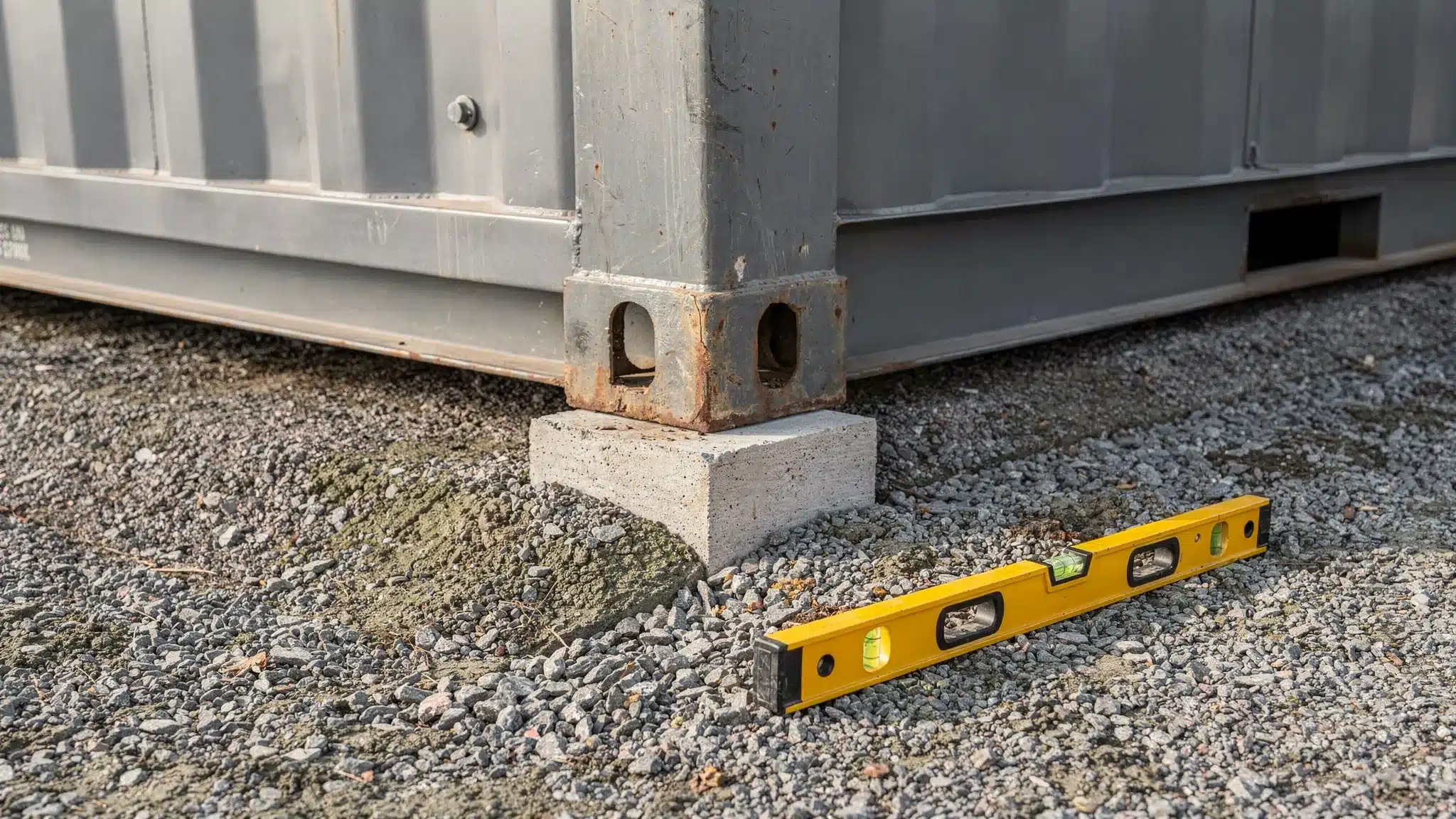
Pro-Tip (Site Prep): Build the pad to the footprint you want to keep
The fastest way to turn a great footprint choice into a frustrating one is poor site prep. Containers are rigid steel structures. If the base twists or settles, doors can bind.
For Raleigh and much of North Carolina, a practical approach is:
- Clear and level the drop zone (don’t “eyeball” it, small slopes matter)
- Use a compacted gravel pad for many storage installs (it drains better than bare soil)
- Support the corner castings so the load is carried correctly
- Plan for drainage so water doesn’t pool under the container
- Check permits and HOA requirements before delivery (rules vary by neighborhood and use)
If you want a step-by-step method, start here: 5 Steps for Proper Shipping Container Ground Preparation.
Common footprint mistakes (and how to avoid them)
Measuring only the container, not the access
A 40ft container may fit perfectly in your yard, but if the truck can’t turn in, you’ll be forced into alternate equipment or alternate placement.
Forgetting door swing and “working space”
If the doors open into a fence line, a slope, or a busy driveway, the container becomes annoying to use quickly.
Placing on unprepared ground
In the Raleigh area, wet seasons can soften soil and create uneven settling. That’s when doors stop closing smoothly.
Buying the wrong grade for the job
- For premium storage or a client-facing project, a One-Trip unit often justifies its cost.
- For export, don’t gamble, go Cargo Worthy with the right documentation.
- For basic on-site storage, WWT is often the best value.
If you’re shopping used, this guide helps you compare condition honestly: Used Shipping Container Grades Explained: A Buyer’s Guide.
Frequently Asked Questions
What are the standard storage container dimensions for shipping containers? Most ISO containers are 8 feet wide. The most common lengths are 20 feet and 40 feet, and typical heights are 8'6" (standard) or 9'6" (High Cube). Always confirm the exact unit specs.
Is a High Cube container a bigger footprint than a standard container? No. A High Cube is typically the same length and width as the standard version (for example, 40' x 8'), but it is 1 foot taller, which affects overhead clearance planning.
Should I choose a 20ft or 40ft container if my driveway is tight? A 20ft container is usually easier to deliver and place on tight residential sites in Raleigh and nearby areas. A 40ft often requires more turning room and a longer, straighter approach.
Does container grade change the dimensions? The external footprint is generally the same, but grade affects performance and suitability. One-Trip is close to new, Cargo Worthy meets structural shipping standards, and WWT is best for stationary weather-resistant storage.
How much extra space should I leave around a container footprint? Plan for door swing, safe walking space, and drainage. The right buffer depends on your use case and site constraints, but leaving functional clearance is key to avoiding daily frustration.
Get the right footprint (and the right grade) with help from a Raleigh team
If you want to choose storage container dimensions that actually work on your property, Lease Lane Containers LLC can help you match the footprint, delivery plan, and container grade (One-Trip, Cargo Worthy, or Wind & Watertight) to your exact use case.
Contact our team at sales@leaselanecontainers.com or visit our Raleigh, NC office to get clear pricing and practical drop-spot guidance before you buy.