Used Storage Containers for Sale: Smart Buyer Checklist
When you search for used storage containers for sale, the best value is rarely the cheapest unit on the page. The right container is the one that matches your storage risk, delivery site, budget, and expected lifespan without surprise repairs after it lands on your property.
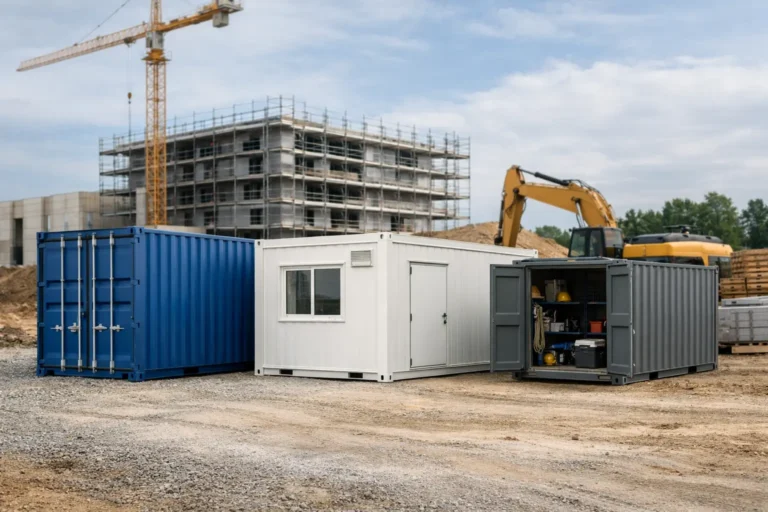
For contractors in Raleigh, a used container can protect tools, lumber, fixtures, and jobsite equipment. For small businesses, it can solve inventory overflow. For homeowners and farms across North Carolina and the Southeast, it can provide long-term, secure property storage without building a permanent structure. But used containers vary widely in condition, and the terms sellers use are not always consistent.
Use this smart buyer checklist to compare containers with confidence before you commit.
First, Know What You Are Actually Buying
A storage container is typically an ISO shipping container made from corrosion-resistant Corten Steel. These units were built to global freight standards, with structural corner castings, steel side panels, locking cargo doors, and heavy-duty floors. After time in the shipping network, many are retired from active cargo service and sold for ground storage.
That is where grading matters.
| Container grade | What it usually means | Best use case | What to watch |
|---|---|---|---|
| One-Trip | A near-new container that has usually made one loaded voyage from the factory | Premium storage, modifications, offices, retail, clean residential projects | Higher price, but often best appearance and longest remaining life |
| Cargo Worthy | Structurally suitable for transport and typically able to pass export-related inspection standards when properly certified | International shipping, stacking, high-value storage, logistics use | Confirm documentation, CSC plate status, and inspection details |
| Wind & Watertight | Used container that should keep out normal wind and rain, but may not be certified for ocean cargo | Jobsite storage, farm storage, residential storage, inventory overflow | Check roof, door gaskets, floor, rust, and light leaks carefully |
| As-Is | Sold with no strong condition promise | Parts, rough storage, short-term low-value use | Highest risk of leaks, door issues, structural problems, or costly repairs |
A Wind & Watertight (WWT) unit can be a smart buy when you need stationary storage. A Cargo Worthy (CW) unit is the better choice if the container needs to move through freight channels or hold higher-value assets. A One-Trip unit is often the best starting point for customer-facing projects, modular builds, and clean conversions.
If you are comparing broader condition options, Lease Lane Containers also offers guidance on used containers so buyers can match grade to purpose instead of guessing from photos alone.
Smart Buyer Checklist for Used Storage Containers
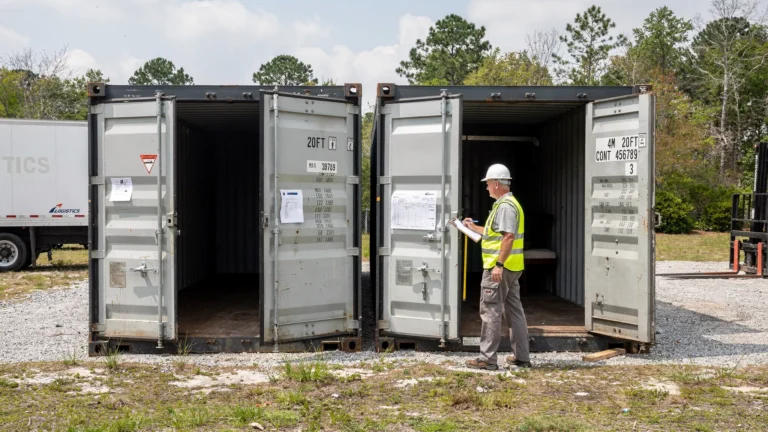
Before you buy, slow down and inspect the unit like an asset, not just a box. A quality used storage container should protect your contents, operate safely, and sit properly on your site for years.
| Checkpoint | What to inspect | Why it matters |
|---|---|---|
| Grade confirmation | Ask whether the unit is WWT, Cargo Worthy, One-Trip, or As-Is | Prevents paying CW pricing for a basic storage-grade unit |
| Roof condition | Look for dents, standing-water areas, patches, pinholes, and rust clusters | Roof leaks are one of the most common storage failures |
| Door operation | Open and close both doors fully, test locking bars and handles | Poor door alignment can signal racking, twisting, or uneven placement |
| Door gaskets | Check rubber seals for cracking, gaps, brittleness, or missing sections | Failed seals allow wind-driven rain, dust, and pests inside |
| Floor condition | Look for soft spots, delamination, chemical odor, stains, or rot | Floors carry the load and affect safety for storage and walking |
| Corner posts and castings | Inspect structural corners for heavy impact, cracks, or distortion | These are critical for ISO handling, stacking, and structural strength |
| Side walls and rails | Check dents, cuts, welds, corrosion, and lower rail rust | Surface rust may be cosmetic, but rail corrosion can be structural |
| Interior light test | Stand inside with doors closed and look for daylight through holes | Daylight often indicates potential water intrusion points |
| Security readiness | Look for a lockbox, solid hasps, straight doors, and clean locking gear | A strong shell still needs a practical theft-deterrent setup |
| Delivery plan | Confirm truck access, placement method, orientation, and surface prep | A good container can become a problem if it is dropped on poor ground |
The checklist is especially important in humid regions like Raleigh and the broader Southeast. Moisture, tree cover, clay soil, and summer storms can reveal weak door seals or roof problems quickly if the container was not inspected properly.
Choose the Right Size Before You Negotiate Price
Most buyers start with the price, but size should come first. A container that is too small becomes frustrating, while an oversized unit can create delivery challenges or waste usable property space.
A 20ft container is popular for residential storage, jobsite tools, farms, and smaller commercial inventory. It is easier to place on tight lots and may be more practical for driveways, smaller construction sites, and rural pads. If you are leaning toward this size, review what affects 20ft containers before comparing delivered quotes.
A 40ft container works well when you need maximum storage capacity for materials, equipment, palletized inventory, or long-term business overflow. However, it requires more delivery clearance and a better-prepared drop zone. Buyers comparing larger units should review 40ft containers with delivery space in mind, not just cubic footage.
A High Cube container adds extra interior height, usually with a 9 ft 6 in exterior height instead of the standard 8 ft 6 in. That extra foot can matter for shelving, equipment, insulation, lighting, or conversion projects. It also increases overhead clearance requirements during delivery.
Match the Grade to the Use Case
The best grade depends on what you plan to store and where the container will sit.
For general contractors and home builders, a WWT or Cargo Worthy container often makes sense for tools, fasteners, lumber, and materials on active Raleigh jobsites. If the site is highly visible, customer-facing, or expected to run for a long time, a cleaner One-Trip unit may justify the premium.
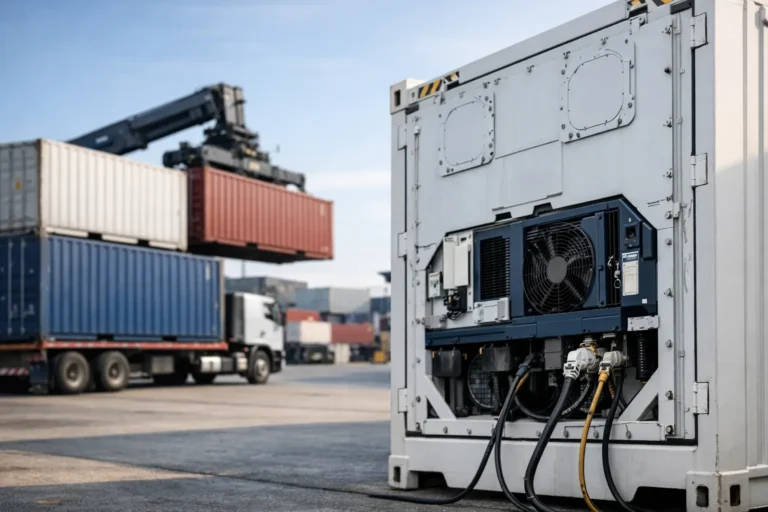
For small business owners, the decision depends on what is inside. Durable retail stock, event equipment, and seasonal displays may do well in a WWT unit. Higher-value inventory, documents, electronics, or climate-sensitive goods may require better ventilation, insulation, or even a refrigerated option depending on the product.
For homeowners and agriculture, WWT units often provide practical storage for equipment, feed supplies, ATVs, furniture, and tools. In rural North Carolina settings, consider placement away from low, wet ground and add ventilation if humidity is a concern.
For logistics managers, Cargo Worthy is usually the minimum grade to discuss if the container may re-enter transportation service. Ask about CSC plate status, inspection history, and whether a current survey is required for your shipping lane or carrier.
For developers and modular projects, One-Trip or strong Cargo Worthy units are usually better starting shells. Modifications such as windows, doors, framing, insulation, and electrical work are easier to justify on a container with strong structural integrity and a longer expected service life.
Inspect the Doors Like a Professional
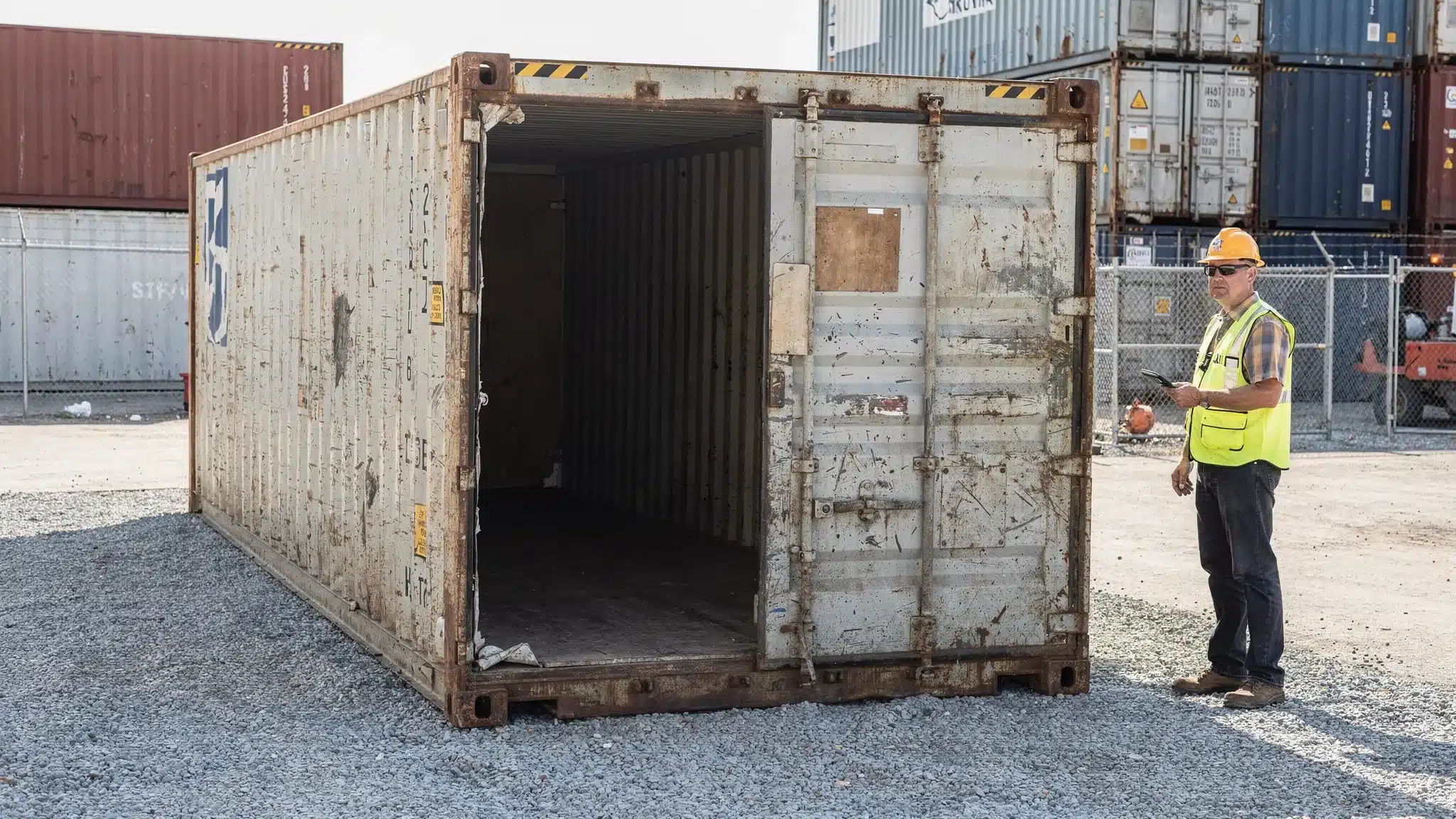
Doors tell you a lot about a used container. They should swing without excessive force, latch correctly, and seal evenly. If the doors are difficult to close while the container is sitting on level ground, there may be frame distortion, hinge problems, worn locking gear, or structural racking.
Look closely at the vertical locking bars, cam keepers, hinges, handles, and gaskets. Heavy rust around the lower door area is common on older containers, but deep corrosion around the sill or frame can become expensive. For storage use, the doors do not need to look new, but they must close securely and keep weather out.
If you cannot inspect in person, ask for current photos of the doors open and closed, close-ups of the gaskets, the locking bars, the roofline, and the interior floor. A reputable seller should be able to explain what grade is being offered and what that grade does, and does not, guarantee.
Look Beyond Paint
Fresh paint can improve appearance, but it does not automatically mean the container is structurally sound. Paint can cover surface rust, old patches, and inconsistent repairs. That does not make it bad, but it means you should ask what was repaired before painting.
Corten Steel is designed to resist corrosion better than ordinary steel, but it is not immune to rust. The key distinction is surface rust versus structural corrosion. Surface rust is common on used containers and can often be managed with cleaning, primer, and touch-up paint. Structural corrosion may weaken rails, corner posts, roof panels, or door frames.
Pay special attention to the bottom rails and underside if visible. Containers stored directly on wet soil or poor supports may experience accelerated corrosion underneath, especially in humid or poorly drained environments.
Compare Total Delivered Cost, Not Just Container Price
When evaluating used storage containers for sale, the quoted container price is only one part of the total cost. Delivery, placement method, site access, permits, surface preparation, accessories, and modifications can all change the final number.
A complete quote should clarify the grade, size, delivery ZIP code, unloading method, taxes or fees, and any limits on placement. A low advertised price may become less attractive if delivery is vague, photos are unavailable, or the seller cannot explain the unit condition.
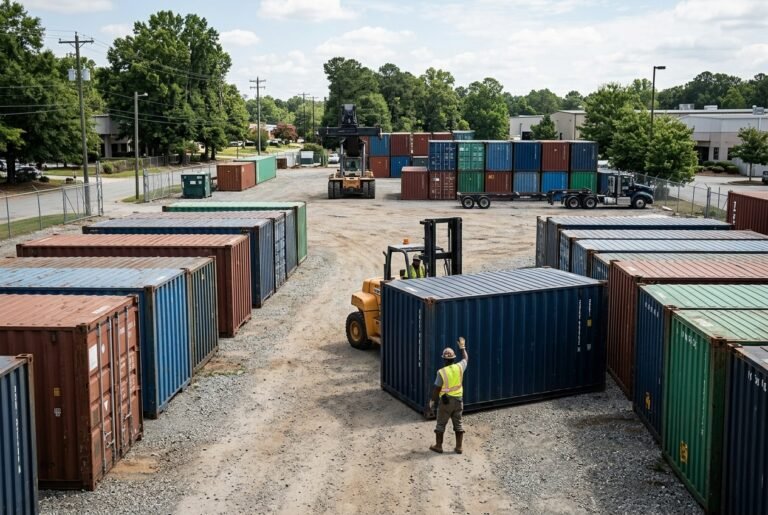
For Raleigh and Southeast buyers, delivery planning is especially important because sites vary widely. A downtown contractor lot, a suburban driveway in Wake County, and a rural farm lane all present different access requirements. Nationwide buyers should also compare local delivery capability and depot distance, not just the unit price.
If you are storing sensitive business records, customer files, or regulated materials, think beyond the container shell. Physical storage should fit within your broader governance and security practices, and organizations handling sensitive information may benefit from outside governance, risk, and compliance guidance before designing long-term storage processes.
Pro-Tip: Prepare the Site Before the Truck Arrives
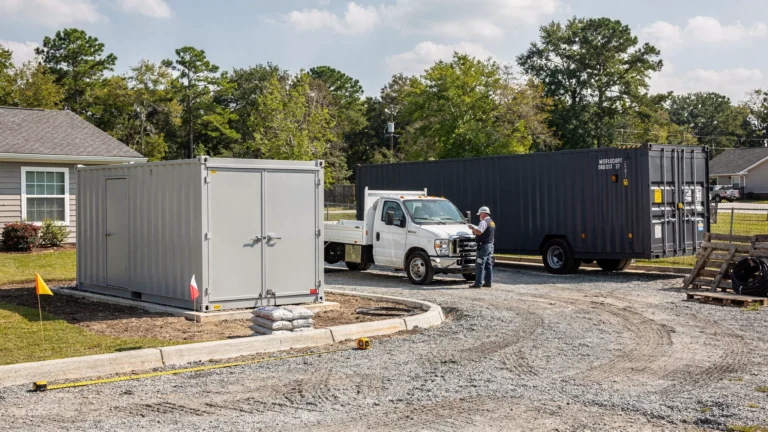
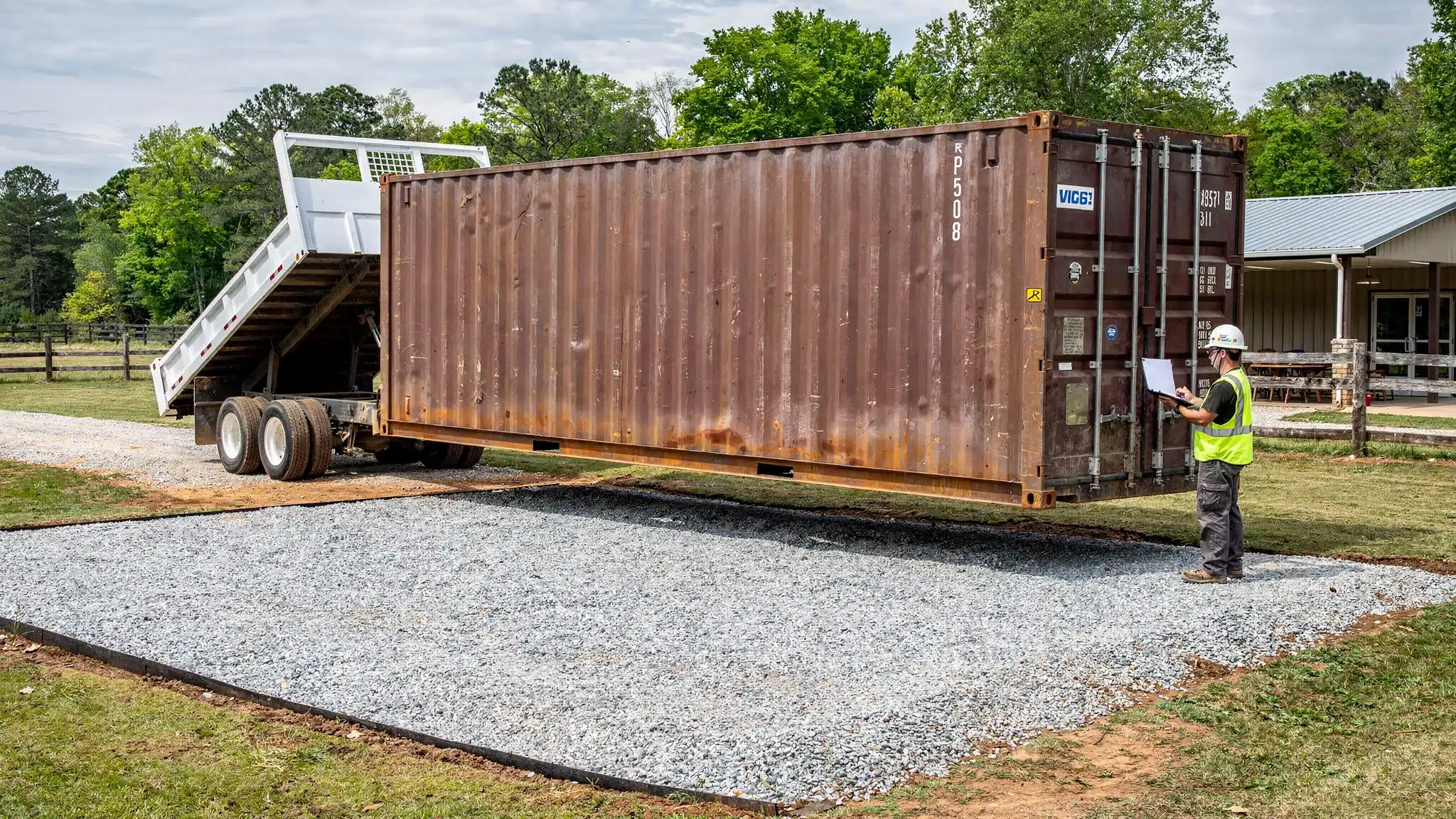
A level, well-drained site protects your container and makes the doors work properly. A container can twist slightly if placed on uneven ground, which may cause doors to bind even if the unit was in good condition before delivery.
For most storage uses in Raleigh, North Carolina, and across the Southeast, a compacted gravel pad is a practical choice. Gravel improves drainage, reduces mud, and helps keep the steel base away from standing water. Concrete pads, concrete piers, railroad ties, or engineered footings may be appropriate for heavier loads, permanent placements, or modified containers.
Before delivery, confirm these site basics:
- The pad is level from side to side and end to end.
- Water drains away from the container footprint.
- The truck route is clear of low branches, wires, soft shoulders, parked vehicles, and tight turns.
- The container doors will face the correct direction for loading, security, and daily access.
- Local zoning, HOA rules, and permit requirements have been checked.
- Underground utilities have been marked when digging, grading, or installing footings.
For a deeper look at access and placement, review Lease Lane Containers’ guide to shipping container delivery requirements before scheduling your drop.
Questions to Ask Before You Buy
The right questions can reveal whether a seller understands containers or is simply moving inventory. Before paying a deposit, ask for clear answers in writing.
- What exact grade is the container, One-Trip, Cargo Worthy, Wind & Watertight, or As-Is?
- Is the unit suitable for storage only, or is it certified for cargo transport?
- Are photos current and specific to the actual container, or only representative?
- Are there known repairs, patches, floor issues, door problems, or leaks?
- Is delivery included, and what type of truck will be used?
- What happens if the delivery truck cannot access the site?
- Can the seller advise on site preparation, leveling, and door orientation?
A professional supplier should be comfortable discussing ISO standards, Corten Steel construction, High Cube options, delivery constraints, and grade differences. If a seller cannot explain WWT versus Cargo Worthy, proceed carefully.
Red Flags When Shopping Used Containers
Be cautious if a listing offers a price far below the local market without explaining grade, condition, delivery, or documentation. Extremely cheap units may be damaged, inaccessible, heavily corroded, or sold with vague terms.
Another warning sign is pressure to pay quickly without photos, inspection details, or a proper invoice. Used containers are durable assets, but scams and misleading listings do exist. Local presence matters, especially if you need support after delivery.
For Raleigh-area buyers, working with a supplier that understands North Carolina delivery conditions can save time and money. A container that looks good at a depot still needs to be delivered safely, placed correctly, and matched to your actual use.
Quick Maintenance After Delivery
Once the container is on site, inspect it again before loading valuable items. Take photos of all sides, the roof if safely accessible, the doors, the floor, and the locking gear. Confirm that doors open and close smoothly after placement. If the doors bind, the site may need shimming or leveling adjustments.
Basic maintenance can extend the life of a used storage container. Keep vegetation away from the walls, prevent soil from building up against the base rails, touch up exposed steel, lubricate hinges and locking bars, and check door gaskets after major storms. If the container is used for business inventory, add shelving to improve airflow and keep goods off the floor.
Frequently Asked Questions
Are used storage containers worth buying? Yes, used storage containers can be an excellent value when the grade matches the use case. WWT units are often cost-effective for stationary storage, while Cargo Worthy or One-Trip units are better for transport, high-value storage, or modifications.
What is the best grade for a used storage container? For most ground storage, Wind & Watertight is usually sufficient if it passes inspection. Choose Cargo Worthy if you need stronger structural assurance or shipping capability. Choose One-Trip if appearance, longevity, and modification quality are priorities.
Can a used container leak? It can if the roof has pinholes, door gaskets are worn, patches fail, or the container sits twisted on uneven ground. Always perform a light test, inspect the roof and seals, and place the unit on a level, drained pad.
Is a High Cube container better for storage? A High Cube can be better if you need extra interior height for shelving, equipment, insulation, or workspace conversion. It may cost more and requires additional overhead clearance during delivery.
Do I need a permit for a storage container in Raleigh, NC? Permit and zoning requirements depend on your property, use, duration, and local rules. Check with the City of Raleigh, Wake County, your municipality, or HOA before delivery, especially for long-term or visible placements.
Ready to Compare Used Storage Containers for Sale?
Lease Lane Containers LLC helps buyers in Raleigh, North Carolina, across the Southeast, and nationwide choose the right container grade, size, and delivery plan. Whether you need a 20ft jobsite unit, a 40ft High Cube for inventory, a Cargo Worthy container for logistics, or a clean One-Trip unit for a conversion, our team can help you evaluate options clearly.
For current availability, transparent grading, and delivery planning support, contact the sales team at sales@leaselanecontainers.com or visit the Raleigh office to speak with a local container specialist.