When a High Cube Shipping Container Is Worth It
A high cube shipping container is often the right choice when the extra vertical space solves a real operational problem. It is not automatically better for every buyer. The value depends on what you plan to store, whether you are modifying the unit, how much height your delivery site can handle, and which container grade fits your risk level.
For contractors in Raleigh, small businesses across the Southeast, farm owners, home builders, and logistics teams, the decision usually comes down to one question: will the extra foot of height reduce labor, prevent damage, or make the container usable for a project that a standard unit cannot handle? If the answer is yes, the upgrade can pay for itself quickly.
What Makes a High Cube Container Different?
A standard dry shipping container is typically 8 feet 6 inches tall on the exterior. A High Cube container is typically 9 feet 6 inches tall on the exterior, giving you about one additional foot of height. That extra height improves usable interior clearance and makes the door opening taller as well.
Most High Cube units are 40ft containers, although 20ft High Cube units exist and may be available depending on market supply. If you are comparing sizes, Lease Lane Containers has separate guidance on 20ft containers in Raleigh and 40ft containers for sale in Raleigh to help you decide which footprint fits your site.
Typical dimensions vary slightly by manufacturer, age, flooring, and door hardware, so always confirm the exact unit before purchase. As a general guide:
| Container type | Exterior height | Typical interior height | Typical door opening height | Best fit |
|---|---|---|---|---|
| Standard container | 8'6" | About 7'10" | About 7'5" | General storage, tools, household goods, low-profile inventory |
| High Cube container | 9'6" | About 8'10" | About 8'5" | Taller equipment, pallet racking, conversions, workshops, offices |
Like standard ISO shipping containers, High Cube containers are built with corrugated Corten steel, corner castings, crossmembers, marine-grade plywood or bamboo flooring, and lockable cargo doors. They are designed around international container handling standards, and export-grade units are tied to CSC safety requirements. The International Maritime Organization provides background on the Convention for Safe Containers, which helps govern safe use of freight containers in international transport.
When a High Cube Shipping Container Is Worth the Upgrade
The extra height is most valuable when it changes how efficiently you can use the container. If you are simply storing boxes on the floor, a standard unit may be enough. If you need upright clearance, vertical stacking, or room for interior build-out, a High Cube often makes better long-term sense.
1. You Need to Store Tall Equipment or Materials
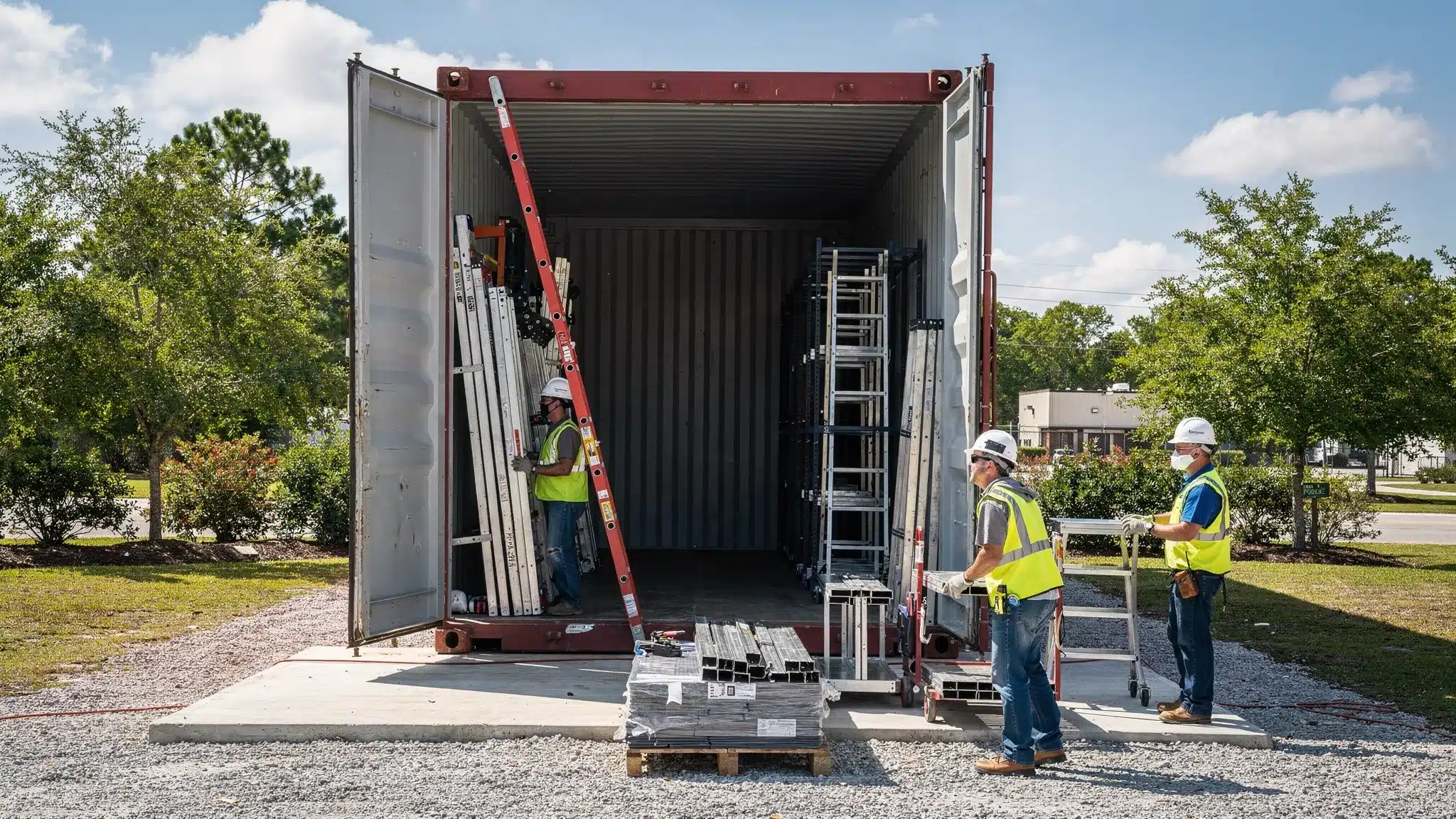
General contractors, mechanical trades, landscapers, and home builders often benefit from High Cube storage because not all jobsite materials fit neatly into standard-height space. Tall shelving, scaffolding components, pipe racks, ladders, HVAC units, cabinet assemblies, and bundled building materials can become awkward in a standard container.
A High Cube gives crews more clearance to stand, move, and organize inventory. On Raleigh jobsites where time is tight and weather can change quickly, better vertical access can reduce wasted labor and prevent equipment damage.
For many contractors, the value is not just cubic footage. It is less double-handling, fewer damaged materials, and a safer layout inside the unit.
2. You Plan to Add Insulation, Framing, HVAC, or Electrical
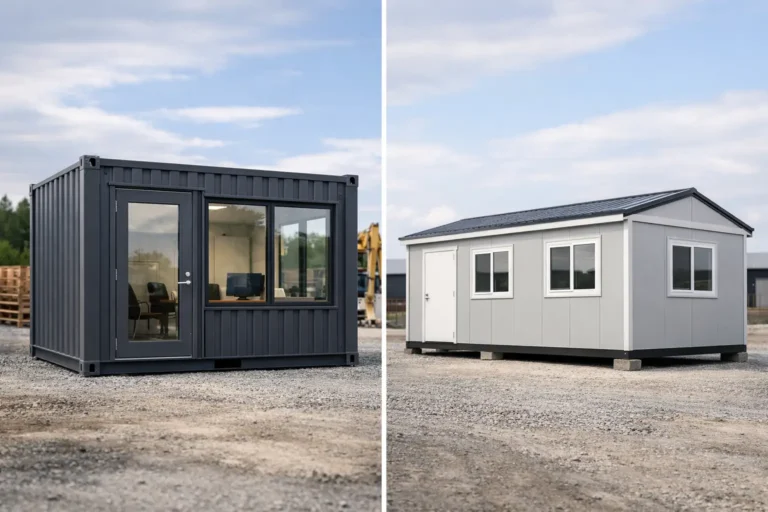
If you are converting a container into a mobile office, workshop, retail pop-up, cabin, or modular space, High Cube height becomes especially important. Interior modifications reduce headroom. Ceiling insulation, furring strips, lighting, HVAC ducts, finished flooring, and framing can take several inches from the interior height.
In a standard container, that loss can make the finished space feel tight. In a High Cube, the finished interior usually feels more practical and comfortable. This is why developers, small business owners, and homeowners often prefer High Cube units for conversions.
If the container will be customer-facing, a One-Trip High Cube is often worth considering because the exterior condition is cleaner and the steel has seen minimal service wear.
3. You Want Better Vertical Storage Density
A High Cube can increase storage efficiency without increasing the footprint. This matters when the property has limited space, such as a contractor yard, retail back lot, farm lane, or small commercial site.
The extra height allows for taller shelving and stacked pallet storage, depending on the goods and loading method. For inventory overflow, seasonal retail storage, and agricultural supplies, this can be more valuable than buying a longer unit.
A 40ft High Cube is especially useful when you have enough length available but want maximum cubic capacity in one container. For businesses comparing options, this is often where High Cube value becomes clear.
4. Your Cargo Is Tall but Not Heavy Enough to Fill the Weight Capacity
Many storage users fill a container by volume before they come close to the maximum payload. Furniture, packaging, insulation, light fixtures, retail fixtures, farm supplies, and bulky construction materials often take up air space before they reach weight limits.
In those cases, High Cube height provides meaningful capacity. You gain usable room without needing a second container, provided you can access and organize the higher space safely.
5. You Need a Better Base for a Workshop or Mobile Office
For a container workshop, tool room, field office, or mobile operations space, headroom directly affects usability. Standing, lighting, storage cabinets, and overhead ventilation all become easier in a High Cube.
This is especially relevant for small businesses and contractors in the Southeast who want a container that can serve multiple roles over time. A High Cube can start as storage, later become a workshop, and eventually be modified into an office or retail unit.
When a High Cube Container May Not Be Worth It
A High Cube is not always the best buy. In some situations, the extra cost and delivery constraints outweigh the benefit.
Your Items Are Low and Dense
If you are storing tools, boxed inventory, tile, hardware, household items, or other dense goods that do not require vertical clearance, a standard container may be more cost-effective. You may be better served by choosing the right grade rather than paying more for height you will not use.
For example, a Wind and Watertight standard container may be a smart choice for stationary storage if the priority is keeping equipment dry and secure at the lowest practical cost.
Your Site Has Overhead Restrictions
The extra foot matters during delivery. A High Cube on a tilt-bed trailer or chassis may require more overhead clearance than a standard unit. Low tree limbs, utility lines, building eaves, tight gates, and sloped driveways can all complicate placement.
This is especially important on residential properties around Raleigh and Wake County where driveways, cul-de-sacs, and wooded lots may limit access. If your site is tight, review shipping container delivery requirements before committing to a High Cube.
Permitting or HOA Rules Limit Height
Some municipalities, counties, industrial parks, and homeowners associations restrict accessory structures, temporary storage, or visible container height. Rules vary by property type and jurisdiction, so do not assume approval based on a neighbor’s setup.
In Raleigh and across North Carolina, buyers should check local zoning, HOA covenants, and permit requirements before delivery. A standard-height container may be easier to approve in some residential settings.
Your Budget Is Better Spent on Condition
If you must choose between a taller container in poor condition and a standard-height unit in better condition, grade should usually come first. Roof integrity, door seals, floor condition, corner castings, and structural rails affect the container’s actual performance.
A clean, structurally sound standard container is often better than a cheaper High Cube with hidden rust, difficult doors, or floor damage.
High Cube Grades: One-Trip, Cargo Worthy, and Wind and Watertight
The word “High Cube” describes the height, not the condition. You still need to choose the correct grade. This is where many buyers make costly mistakes.
| Grade | What it means | When it makes sense for a High Cube |
|---|---|---|
| One-Trip | A newer container that has typically made one loaded trip from the factory and shows minimal wear | Best for offices, retail, modular builds, premium storage, and customer-facing projects |
| Cargo Worthy (CW) | Structurally suitable for cargo transport, often with inspection documentation when required | Best for export, stacking, regional transport, or high-value storage where structural condition matters |
| Wind and Watertight (WWT) | Used container that keeps out wind and water but is not certified for ocean cargo | Best for stationary jobsite, farm, and property storage when budget matters |
| As-Is | No reliable condition guarantee | Usually not recommended unless you are prepared for repairs and risk |
A One-Trip High Cube offers the cleanest starting point. It is commonly preferred for conversions because there is less time spent repairing dents, flooring, seals, or corrosion. The factory coating is also newer, which can be valuable in the humid Southeast.
A Cargo Worthy High Cube is the better choice for logistics managers and exporters who need a container suitable for intermodal movement. If you intend to ship internationally, confirm CSC plate status, survey requirements, and documentation before purchase.
A Wind and Watertight High Cube is often the best value for stationary storage. Contractors, farms, and property owners can save money while still getting a container that protects tools, feed, equipment, and materials from rain and wind.
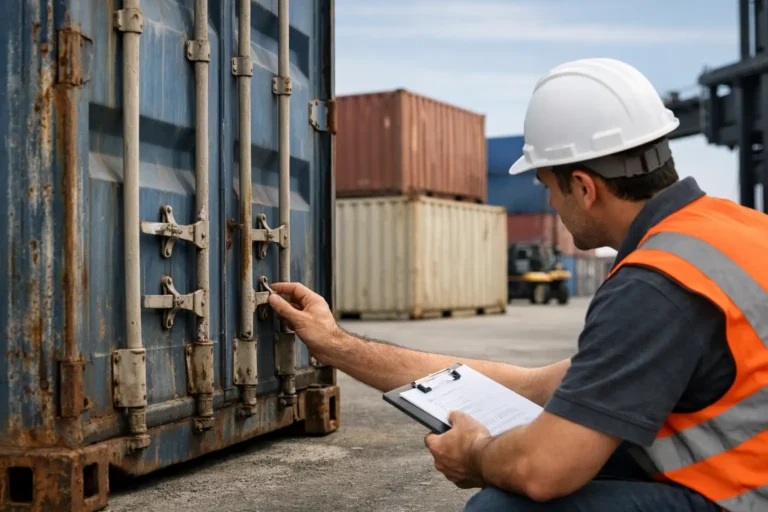
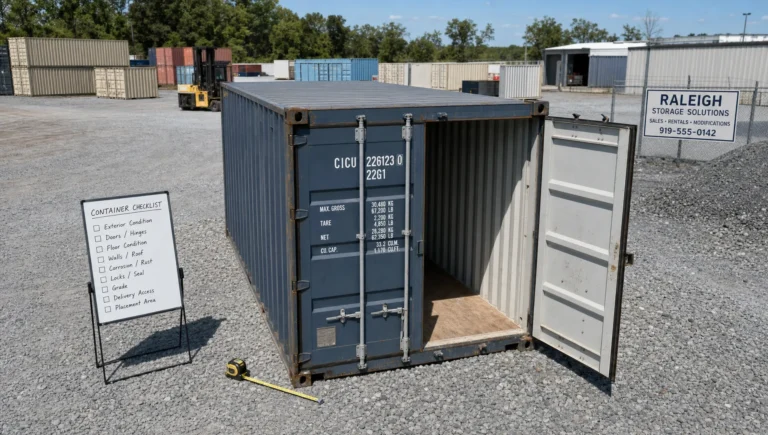
If you are evaluating used containers, ask for the grade in writing and request photos of the roof, doors, gaskets, floor, corner castings, and underside if available.
How to Decide If the Extra Height Pays Off
A High Cube is worth it when the additional height creates measurable utility. Think beyond the purchase price and compare the total value over the life of the container.
Use this practical decision framework:
| Your situation | Is a High Cube likely worth it? | Why |
|---|---|---|
| Storing tall equipment, ladders, racks, or oversized materials | Yes | Extra door and interior height improve access and reduce damage |
| Building an office, workshop, retail unit, or cabin | Usually yes | Insulation, lighting, and finishes reduce headroom |
| Storing household goods or small tools only | Maybe not | Standard height may be sufficient |
| Exporting cargo that requires extra height | Yes, if Cargo Worthy or One-Trip | Height helps only if the unit also meets shipping requirements |
| Tight driveway, low branches, or limited clearance | Maybe not | Delivery and placement may be more difficult |
| Budget is the main concern | Depends | A better-grade standard unit may be smarter than a lower-grade High Cube |
A useful rule: if the extra height helps you avoid buying a second container, reworking a modification plan, or damaging tall materials, the High Cube premium is easier to justify.
Raleigh and Southeast Considerations
In North Carolina and the broader Southeast, moisture, clay soils, summer heat, and tree cover all affect container performance. High Cube units are durable, but the site still matters.
Raleigh-area buyers should think carefully about drainage. A Corten steel container is designed to resist corrosion better than ordinary mild steel, but standing water, soil contact, and poor airflow under the floor can shorten service life. The added value of a High Cube can be undermined if it is placed on soft, uneven ground that causes the frame to twist and the doors to bind.
For contractors and builders, delivery timing also matters. A container placed before rough grading is complete may need to be moved later. A container placed without a firm pad may settle after heavy rain. For farms and rural properties, delivery routes may involve narrow lanes, wet shoulders, and overhead limbs that should be cleared before the truck arrives.
Pro-Tip: Prepare the Drop Spot Before You Pay for the Upgrade
Before ordering a High Cube, prepare the site as if you are protecting a long-term asset. Build a level, well-drained pad using compacted gravel, concrete, or properly placed corner supports. Keep the container slightly elevated so air can move under the floor and water can drain away from the steel rails.
Mark the door orientation in advance, clear overhead limbs and utility conflicts, and verify that the delivery truck has enough room to approach, tilt, and exit safely. For residential properties, check HOA rules and local permit requirements before scheduling delivery. In North Carolina, call 811 before any digging or grading that could affect underground utilities.
The best container can still become frustrating if the base is uneven. Level support protects the frame, keeps the doors operating correctly, and helps prevent premature rust.
Questions to Ask Before Buying a High Cube
Before you decide, ask the supplier direct questions about both the unit and the delivery plan.
- Is the container One-Trip, Cargo Worthy, or Wind and Watertight?
- What are the exact interior height and door opening measurements?
- Are recent photos available of the roof, floor, doors, seals, and corner castings?
- Is the unit suitable for export, stationary storage, or modification?
- What delivery method will be used, and how much overhead clearance is needed?
- Will the site require gravel, blocks, a concrete pad, or crane placement?
- Are there local permit or HOA issues to check before delivery?
These questions help separate a good purchase from a costly mismatch. They also make it easier to compare quotes because you are evaluating the same grade, size, delivery assumptions, and site requirements.
Frequently Asked Questions
What is a high cube shipping container? A high cube shipping container is typically one foot taller than a standard container. Most have a 9'6" exterior height and about 8'10" of interior height, depending on the specific unit.
Is a High Cube container worth it for storage? It is worth it if you need vertical clearance, taller shelving, pallet stacking, or room for bulky materials. If you only store low, dense items, a standard container may be more cost-effective.
Is a 40ft High Cube more common than a 20ft High Cube? Yes. 40ft High Cube containers are generally more common in the resale market. 20ft High Cube units exist, but availability varies by region and supply.
Can a High Cube container be used for international shipping? Yes, but only if the unit is Cargo Worthy or better and has the required documentation and CSC status for the shipment. A Wind and Watertight container is generally for stationary storage, not export.
Does a High Cube cost more to deliver? Sometimes. The container itself is taller, so delivery may require more overhead clearance. If the site has low branches, wires, slopes, or tight access, special equipment or extra preparation may be needed.
Do I need a permit for a High Cube container in Raleigh? It depends on your property, use, duration, zoning, and HOA rules. Always verify requirements with the applicable local authority before scheduling delivery.
Get the Right Container Height, Grade, and Delivery Plan
A High Cube container is worth it when the extra height improves storage efficiency, supports a conversion, or makes tall cargo practical. The key is matching height with the right grade, whether that is One-Trip, Cargo Worthy, or Wind and Watertight, and preparing the site before the truck arrives.
Lease Lane Containers LLC helps buyers in Raleigh, across North Carolina, throughout the Southeast, and nationwide compare High Cube and standard containers with clear grading and delivery guidance. For help choosing the right unit, contact the sales team at sales@leaselanecontainers.com or visit the Raleigh office to discuss your site, container grade, and delivery plan.