Best shipping containers for sale in Atlanta, Georgia | 2026 Guide
Table of Contents
- Table of Contents
- Atlanta shipping containers for sale Quick Facts
- shipping containers for sale in Atlanta: What You Need to Know
- Top shipping containers for sale Options in Atlanta
- Budget-Friendly: Wind and Watertight Grade
- Mid-Range: Cargo Worthy Grade
- Premium: One-Trip Containers
- How to Choose the Right shipping containers for sale in Atlanta
- Size and Dimensions
- Grade Selection
- Delivery Access and Site Prep
- Questions to Ask Any Supplier
- Red Flags
- Atlanta shipping containers for sale Market in 2026
- Atlanta shipping containers for sale FAQ
- How much does a shipping container cost in Atlanta in 2026?
- Do I need a permit to put a shipping container on my property in Atlanta?
- What size shipping container should I buy?
- How long does delivery take in Atlanta?
- Can a shipping container be delivered to a residential neighborhood?
- What should I inspect on a used shipping container?
- Get shipping containers for sale in Atlanta Today
- Final Checklist
Table of Contents
- Atlanta Shipping Containers for Sale: Quick Facts
- Shipping Containers for Sale in Atlanta: What You Need to Know
- Top Shipping Container Options in Atlanta
- How to Choose the Right Shipping Container in Atlanta
- Atlanta Shipping Container Market in 2026
- Atlanta Shipping Containers for Sale FAQ
- Get Shipping Containers for Sale in Atlanta Today
- Final Checklist
Atlanta has become one of the Southeast’s busiest markets for shipping containers, driven by a construction boom, growing small business demand, and a logistics corridor that stretches from the Port of Savannah through the heart of Georgia. Whether you need a 20-foot steel box for backyard storage or a 40-foot high cube shipping container for a job site office conversion, your options in the metro area are broader than they were even two years ago. But broader options also mean more chances to overpay, buy the wrong grade, or get stuck with a container that can’t be delivered to your property. This 2026 guide to the best shipping containers for sale in Atlanta breaks down pricing, grades, local delivery factors, and the specific questions you should be asking before you spend a dollar. Lease Lane Containers, a Raleigh-based supplier with nationwide delivery, works with Atlanta-area buyers regularly and offers practical buying guidance that applies directly to the Georgia market. The goal here is simple: help you pick the right container, at the right price, with fewer surprises on delivery day.
Atlanta shipping containers for sale Quick Facts
Here’s what you need to know before reading any further:
- Typical pricing in the Atlanta metro ranges from $1,800 to $3,200 for a used 20-foot shipping container in cargo worthy condition, and $3,500 to $6,500 for a one-trip (new) 40-foot high cube shipping container. Prices fluctuate with steel costs and port inventory.
- Delivery lead times average 5 to 14 business days depending on whether the container ships from a Savannah depot, a local Atlanta yard, or a supplier’s out-of-state inventory.
- Service area coverage is strong across the metro, including Fulton, DeKalb, Gwinnett, Cobb, and Clayton counties. Rural properties south of the city toward Macon or east toward Athens may require additional delivery planning for access roads and overhead clearance.
- Local providers stand out by offering on-site delivery consultations, transparent container grading (one-trip, cargo worthy, or wind and watertight), and the ability to inspect units before purchase. Suppliers who provide delivery planning support for turning radius, gate width, and ground conditions tend to have significantly fewer failed delivery attempts.
- Georgia does not require a special permit to place a shipping container on private residential property in most unincorporated areas, but city of Atlanta zoning codes and some HOA restrictions apply. Always verify with your local planning office before buying.
These figures reflect Q1 2026 market conditions. Prices shift quarterly, so treat them as a baseline rather than a guarantee.
shipping containers for sale in Atlanta: What You Need to Know
Atlanta’s shipping container market benefits from its proximity to the Port of Savannah, the largest single-terminal container port in North America. Containers that arrive at Savannah are frequently repositioned to depots across Georgia, and Atlanta sits at the intersection of I-75 and I-85, making it a natural distribution point. This geographic advantage means Atlanta buyers often have access to fresher inventory and lower transport costs compared to buyers in landlocked states.
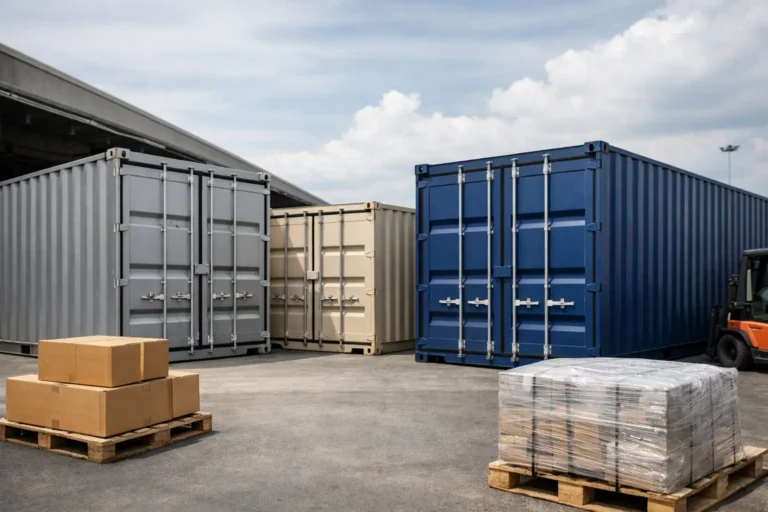
The types of services available go well beyond simple box sales. Atlanta buyers can find standard dry storage containers in 20-foot and 40-foot lengths, high cube shipping containers with an extra foot of interior height (9’6″ vs. the standard 8’6″), refrigerated units (reefers), open-top containers, and modified containers set up as offices, workshops, or retail spaces. The container office segment has grown particularly fast in Atlanta’s Westside and Old Fourth Ward neighborhoods, where pop-up retail and creative workspace demand has surged.
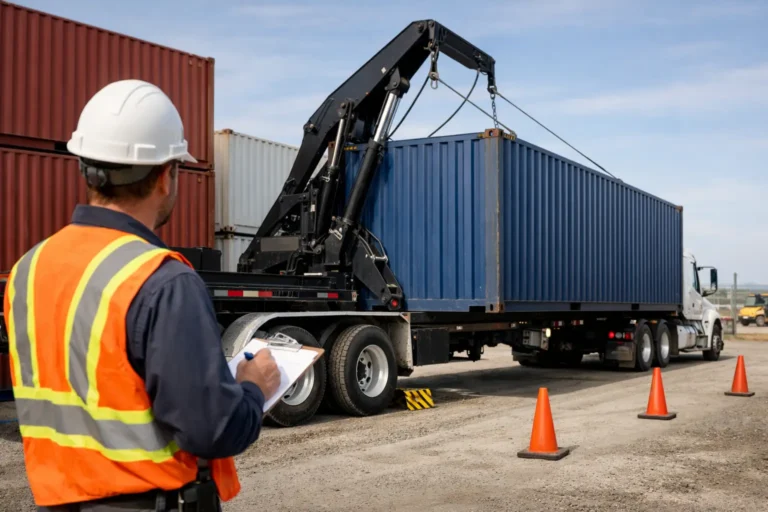
Location matters for two practical reasons. First, delivery cost is directly tied to distance from the depot. A container delivered from a yard in Forest Park to a site in Buckhead might cost $300 to $500 in transport, while the same container delivered to a property in Dahlonega could run $800 or more. Second, Atlanta’s older neighborhoods often have narrow streets, low-hanging power lines, and tight driveways that require a tilt-bed truck rather than a standard chassis delivery. A tilt-bed needs roughly 100 feet of straight clearance to drop a 40-foot container, so properties in areas like Grant Park, Virginia-Highland, or Inman Park need careful site assessment before ordering.
Contractors working on commercial builds in Midtown or along the BeltLine corridor should also factor in city permit timelines. The City of Atlanta’s Office of Buildings may require a temporary use permit for containers placed on commercial lots, and processing can take 2 to 4 weeks.
Top shipping containers for sale Options in Atlanta
Budget-Friendly: Wind and Watertight Grade
Wind and watertight containers are the most affordable option, typically priced between $1,400 and $2,500 for a 20-foot unit in the Atlanta market. These containers show visible wear: surface rust, dents, patched panels, and older door gaskets. They are structurally sound enough to keep rain and wind out, but they won’t pass a cargo worthy inspection for international shipping.
This grade works well for on-site storage at construction projects, farm equipment shelters, or seasonal inventory overflow. If you’re a homeowner storing lawn equipment and holiday decorations, a wind and watertight container does the job at a fraction of the cost. Just inspect the door seals and floor condition before buying. Soft spots in the marine-grade plywood flooring are a common issue with older units.
Mid-Range: Cargo Worthy Grade
Cargo worthy containers have been inspected and certified for ocean transport, which means they meet a higher structural and weatherproofing standard. In Atlanta, expect to pay $2,200 to $3,500 for a 20-foot cargo worthy unit and $2,800 to $4,500 for a 40-foot standard height. These containers have functional doors, intact floor panels, and no significant structural damage.
For small businesses using containers as permanent storage, retail pop-ups, or workshop shells, cargo worthy is the sweet spot. The condition is reliable enough for long-term use without the premium price of a new unit. Lease Lane Containers provides transparent grading guidance on cargo worthy versus other grades, which helps buyers avoid paying one-trip prices for cargo worthy condition.
Premium: One-Trip Containers
One-trip containers are manufactured overseas (typically in China), loaded with a single cargo shipment, and delivered to the U.S. They arrive with minimal wear: clean paint, fresh door gaskets, no dents, and pristine flooring. Pricing in Atlanta runs $4,000 to $5,200 for a 20-foot unit and $5,500 to $6,800 for a 40-foot high cube shipping container.
One-trip units are the right choice for container offices, retail builds, residential conversions, or any project where appearance and long-term durability matter. If you’re modifying a container into a home office or a BeltLine-adjacent retail space, starting with a one-trip unit saves money on prep work and paint.
How to Choose the Right shipping containers for sale in Atlanta
Picking the right container comes down to five decisions: size, grade, delivery access, intended use, and supplier credibility. Here’s a practical framework.
Size and Dimensions
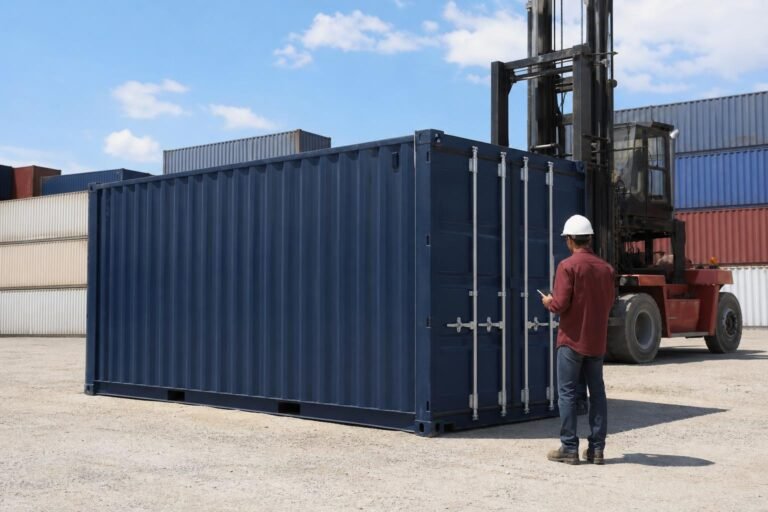
Standard shipping container dimensions are 20 feet or 40 feet in length, 8 feet wide, and either 8’6″ (standard) or 9’6″ (high cube) tall. A 20-foot container provides roughly 160 square feet of floor space and holds about 1,170 cubic feet of cargo. A 40-foot container doubles that. High cube shipping containers add an extra 344 cubic feet in the 40-foot size, which matters for stacking pallets or standing comfortably inside a converted workspace. If you’re unsure about container sizing, measure your intended contents and add 15% to 20% buffer space.
Grade Selection
Match the grade to your use case. Wind and watertight works for temporary or utility storage. Cargo worthy handles most permanent storage and light modification projects. One-trip is the standard for any build-out or public-facing application. Condition matters as much as size, so don’t buy based on price alone.
Delivery Access and Site Prep
This is where Atlanta buyers run into the most problems. Before ordering, measure the following at your delivery site:
- Gate or driveway width (minimum 10 feet for a standard container, 12 feet preferred)
- Overhead clearance along the delivery path (minimum 14 feet for a tilt-bed truck)
- Straight-line distance from the street to the placement spot (100 feet minimum for a tilt-bed dropping a 40-foot container)
- Ground surface and slope (containers need level, firm ground; a 6-inch gravel pad is the most common foundation for residential sites)
Properties in Atlanta neighborhoods with mature tree canopy, like Druid Hills or Morningside, frequently have overhead clearance issues. A site visit or photo assessment before purchase prevents costly failed deliveries.
Questions to Ask Any Supplier
- What grade is this container, and can you provide photos of the actual unit?
- What’s included in the delivery price, and what type of truck will be used?
- Do you offer any warranty on the container’s weather seal or structural integrity?
- Can I inspect the container before purchase or at delivery?
- What happens if the delivery truck can’t access my site?
Red Flags
Avoid suppliers who won’t provide photos of the specific container you’re buying, who quote prices significantly below market without explanation, or who can’t answer basic questions about container grades. In Georgia, there’s no state licensing requirement for container sellers, so due diligence falls entirely on the buyer.
Atlanta shipping containers for sale Market in 2026
The Atlanta container market in 2026 reflects several converging trends. Steel prices stabilized in late 2025 after two years of volatility, which brought container pricing down roughly 8% to 12% from the 2023 peak. One-trip container availability has improved as global shipping patterns normalized post-pandemic, and Savannah’s continued expansion as a port hub means Georgia depots are well-stocked.
Demand in metro Atlanta has shifted noticeably toward modified containers. The city’s planning department reported a 34% increase in temporary structure permit applications between 2024 and 2025, many of which involved shipping container builds for food service, retail, and creative office space. The BeltLine corridor and Westside Provisions District have become hotspots for container-based commercial projects.
Seasonal patterns matter for pricing. Spring and summer see the highest demand from contractors and homeowners, which pushes prices up 5% to 10% between March and August. Buying in late fall or winter typically gets you better pricing and faster delivery, since depot inventory is higher and delivery schedules are less congested.
Compared to the rest of Georgia, Atlanta commands a slight premium on container prices due to higher delivery costs within the metro (traffic, access restrictions, permit requirements). Buyers in Savannah or Augusta often pay $200 to $400 less for the same container grade because of proximity to port depots. However, Atlanta buyers benefit from more supplier competition and a wider selection of modified or specialty containers.
One regulatory development worth tracking: Fulton County updated its zoning ordinance in early 2026 to allow shipping containers as accessory structures on residential lots of one acre or more without a special use permit. This change has opened the door for more homeowners in unincorporated Fulton County to use containers for storage, workshops, and home offices without navigating the special exception process.
Atlanta shipping containers for sale FAQ
How much does a shipping container cost in Atlanta in 2026?
A used 20-foot wind and watertight container runs $1,400 to $2,500. Cargo worthy 20-foot units cost $2,200 to $3,500. One-trip 20-foot containers range from $4,000 to $5,200. For 40-foot high cube shipping containers, expect $5,500 to $6,800 for one-trip grade. Delivery within the metro typically adds $300 to $600. These prices reflect Q1 2026 and shift with steel costs and seasonal demand.
Do I need a permit to put a shipping container on my property in Atlanta?
Within the city of Atlanta limits, yes: you’ll likely need a temporary use permit or a building permit depending on how the container is classified. Unincorporated areas of Fulton, DeKalb, and Gwinnett counties have different rules. Fulton County’s 2026 zoning update allows containers as accessory structures on lots of one acre or more. Always call your local planning department before purchasing. The City of Atlanta’s Office of Buildings can be reached at (404) 330-6170.
What size shipping container should I buy?
A 20-foot container fits most residential storage needs and fits on standard driveways. A 40-foot container is better for commercial storage, workshops, or job site use. If you plan to work inside the container or stack pallets, a high cube shipping container (9’6″ tall) gives you meaningful extra headroom. Measure your contents and your site before deciding. Lease Lane Containers offers container size comparison guidance that walks through the trade-offs.
How long does delivery take in Atlanta?
Most suppliers deliver within 5 to 14 business days. Containers sourced from local Atlanta or Forest Park depots can arrive in as few as 3 business days. Containers shipped from out-of-state may take 10 to 21 days depending on distance and truck availability.
Can a shipping container be delivered to a residential neighborhood?
Yes, but site access is the critical factor. Tilt-bed trucks need 100 feet of straight clearance and at least 14 feet of overhead space. Narrow streets in neighborhoods like East Atlanta Village or Candler Park can be challenging. Always provide your supplier with site photos and measurements before scheduling delivery.
What should I inspect on a used shipping container?
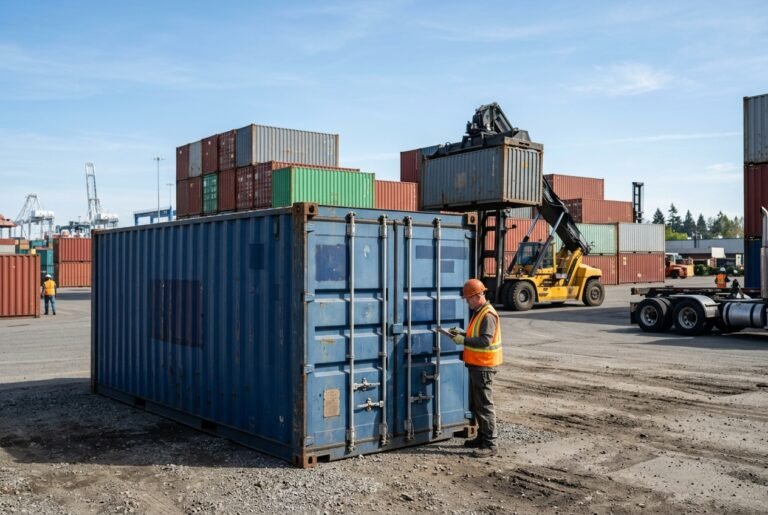
Check the door operation (both doors should swing freely and seal tightly), floor condition (look for soft spots, holes, or water damage in the plywood), wall and ceiling panels (patch welds are fine, but heavy rust or holes are not), and the roof (standing water or deep rust pits indicate structural weakness). If you can’t inspect in person, request detailed photos of all four sides, the interior, the roof, and the door gaskets.
Get shipping containers for sale in Atlanta Today
If you’ve read this far, you have a solid understanding of what the Atlanta market looks like, what grades and sizes are available, and what to watch out for. The next step is straightforward.
Before contacting any supplier, have these details ready: your delivery address, the intended use for the container, your preferred size and grade, and photos of your delivery site showing the access path, gate or driveway width, and any overhead obstructions. This information lets a supplier give you an accurate quote and flag potential delivery issues before they become expensive problems.
Lease Lane Containers works with Atlanta buyers from their Raleigh, North Carolina base, providing delivery planning support that covers turning radius, overhead clearance, and ground conditions specific to your site. Their team can help you compare grades and sizes so you’re not guessing about what fits your project.
Expect the process from first contact to delivery to take 7 to 21 days depending on container availability and your location within the metro. Buying during the fall or winter months can shorten that timeline and save you money.
Final Checklist
Before you purchase a shipping container in Atlanta, confirm every item on this list:
- Verified local zoning and permit requirements with your county or city planning office
- Measured delivery path width (minimum 10 feet), overhead clearance (minimum 14 feet), and straight-line drop distance (100 feet for 40-foot containers)
- Selected the right container grade for your use case (wind and watertight, cargo worthy, or one-trip)
- Confirmed container dimensions match your space and storage needs, with 15% to 20% buffer
- Requested photos of the actual unit you’re buying, not stock images
- Asked about delivery truck type (tilt-bed vs. chassis) and confirmed it works for your site
- Prepared a level foundation: gravel pad, concrete piers, or compacted ground
- Confirmed total cost including delivery fees, not just the container price
- Checked door seals, floor condition, and roof integrity (for used units)
The right container, properly delivered and placed, will serve you for 15 to 25 years with minimal maintenance. Getting the details right upfront is what separates a smooth project from an expensive headache. To compare sizes, grades, and current availability, browse Lease Lane Containers’ inventory and find the right fit for your project. If you have questions about delivery logistics or need help choosing a grade, contact the Lease Lane team for straightforward guidance.