10-Point Container Delivery Access Checklist
A shipping container delivery can be straightforward, but only when the truck can safely reach the placement area and complete the unload. This container delivery access checklist helps homeowners, contractors, farm operators, and site managers identify issues before delivery day – when correcting a tight gate, soft driveway, or low branch is still manageable.
Container dimensions are only part of the plan. The delivery equipment needs room to turn, level ground to work from, and a clear path free of overhead obstructions. A 20-foot container may fit comfortably on a property, while the truck and tilt-bed trailer needed to deliver it may not. Confirming access in advance prevents delays, re-delivery charges, site damage, and unsafe unloading conditions.
Container Delivery Access Checklist for Your Site
1. Confirm the route from the public road
Start at the public road, not at the intended container pad. Review the entire route the delivery truck will travel, including private roads, long driveways, construction entrances, field lanes, culverts, bridges, and sharp turns.
A loaded container truck is heavy and needs a stable travel surface. Gravel is often suitable when it is well-compacted and properly maintained. Loose stone, deep mud, rutted soil, steep washouts, and soft shoulders can prevent access or create a recovery risk. If the route crosses a private bridge or culvert, verify its posted or engineered weight capacity before scheduling delivery.
For rural and job-site deliveries, weather matters. A route that is accessible during dry conditions can become unsuitable after sustained rain. If there is any doubt, take recent photos or video from the road entrance through the drop location and provide them during delivery planning.
2. Measure gates, driveway width, and pinch points
Measure the narrowest point on the route. This may be a gate opening, stone entrance columns, parked equipment, a fence corner, or the space between a building and a utility pedestal. Do not estimate by looking at it from a passenger vehicle.
A container truck generally needs more clearance than the container itself. The required width depends on the truck, trailer, container length, and the turning conditions at your site. Straight access requires less room than a turn through a gate or around a structure. Open both gate leaves fully, remove temporary barriers, and relocate vehicles, trailers, pallets, or equipment before the driver arrives.
If a gate is too narrow, do not assume the driver can unload at the entrance and maneuver the container by hand afterward. Containers weigh several thousand pounds even when empty. A separate plan and equipment may be required.
3. Check vertical clearance from the road to the drop site
Low branches are one of the most common delivery-day obstacles. Check for tree limbs, utility lines, service drops, security cables, building overhangs, and decorative archways along the full route. A high-cube container and the trailer carrying it require greater vertical clearance than a standard-height unit.
Trim branches back well before the delivery window. Do not cut, move, or work near energized power lines. If utility lines appear low or the route passes beneath a service line, contact the utility provider or arrange an alternate access path. The driver cannot take a truck under an obstruction that may contact the container or delivery equipment.
Remember that the container rises higher as it slides off a tilt-bed. Clearance at the final placement area must account for the unloading angle, not just the container sitting on the ground.
4. Allow turning space for the truck and trailer
Long containers need long equipment. A 40-foot or 45-foot container commonly requires a larger turning radius and a longer, straighter approach than a 20-foot unit. Tight residential cul-de-sacs, narrow job-site entrances, and tree-lined farm drives deserve special attention.
The driver needs room to enter, position the truck, complete the unload, and leave without backing across unsafe ground or through a restricted area. Backing may be possible in some locations, but it is not a substitute for a workable delivery plan. Limited turning room can affect the delivery method, container orientation, or final placement location.
When access is limited, send photos showing the entrance, turns, and intended approach from several angles. A simple site sketch with approximate measurements can also help identify a practical solution before dispatch.
5. Prepare a stable, level container foundation
Containers are engineered to carry loads through their corner castings. The strongest support points are the four bottom corners, not the thin center sections of the floor rails. A proper base helps keep the doors aligned, reduces the risk of settling, and allows rainwater to drain away from the Corten steel structure.
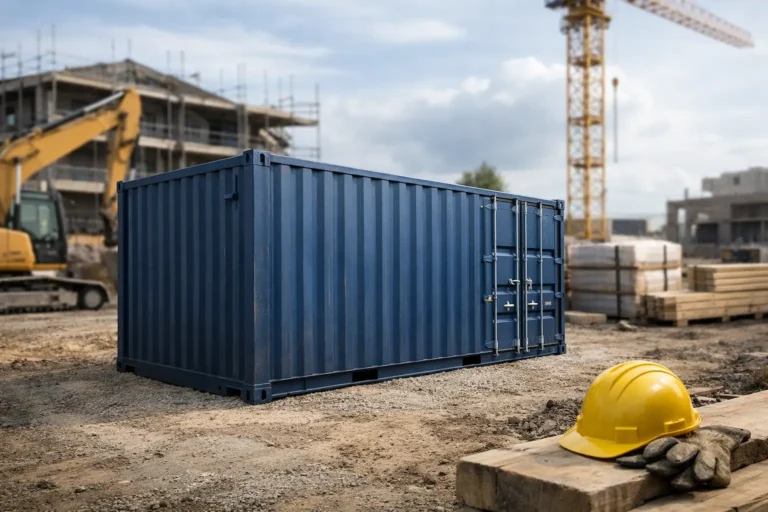
Suitable foundations vary by use and soil conditions. Compacted gravel, concrete pads, concrete piers, railroad ties, or purpose-built container blocks can work when correctly installed. For long-term storage, a level, well-drained pad is usually the best investment. On a construction site, temporary blocking may be appropriate if it provides firm, even support and will not shift under the container’s weight.
Avoid placing a container directly on soft ground, fresh fill, or an area where water collects. A container that twists after placement can develop difficult doors, uneven floor loading, and drainage problems. If the site has a visible slope, discuss it before delivery rather than asking the driver to compensate on arrival.
6. Mark the exact placement and door direction
Use stakes, paint, flags, or other visible markers to show the desired container location. Confirm where the cargo doors should face before the truck is positioned. Reorienting a container after it is unloaded generally requires additional equipment and cost.
Door direction affects daily use more than many buyers expect. A contractor may want doors facing the job-site entrance for fast tool access. An agricultural operator may need doors toward a barn aisle. A homeowner might prefer the doors facing away from the street for a cleaner appearance. Also leave enough room to open both doors fully and operate equipment such as a pallet jack, forklift, or lawn tractor.
Consider future access as well. Keep adequate space around the container for inspection, repainting, roof work, and drainage maintenance. Do not place it so close to a fence, retaining wall, or building that the doors or locking gear cannot operate properly.
7. Clear the unloading zone for a tilt-bed delivery
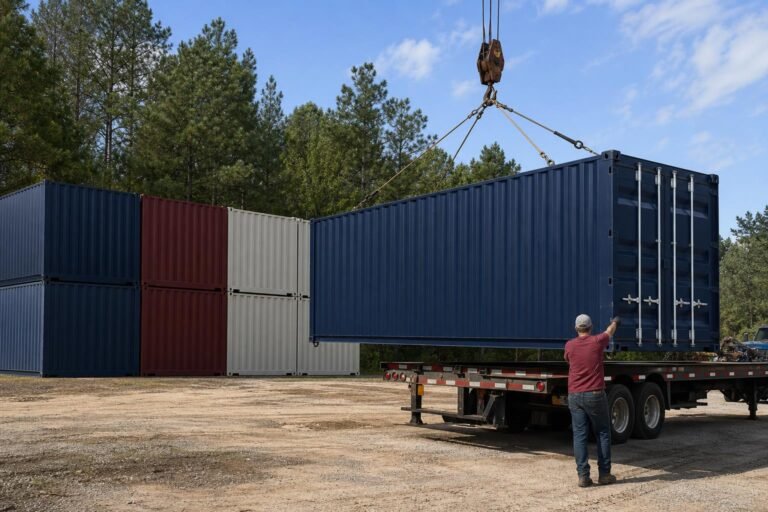
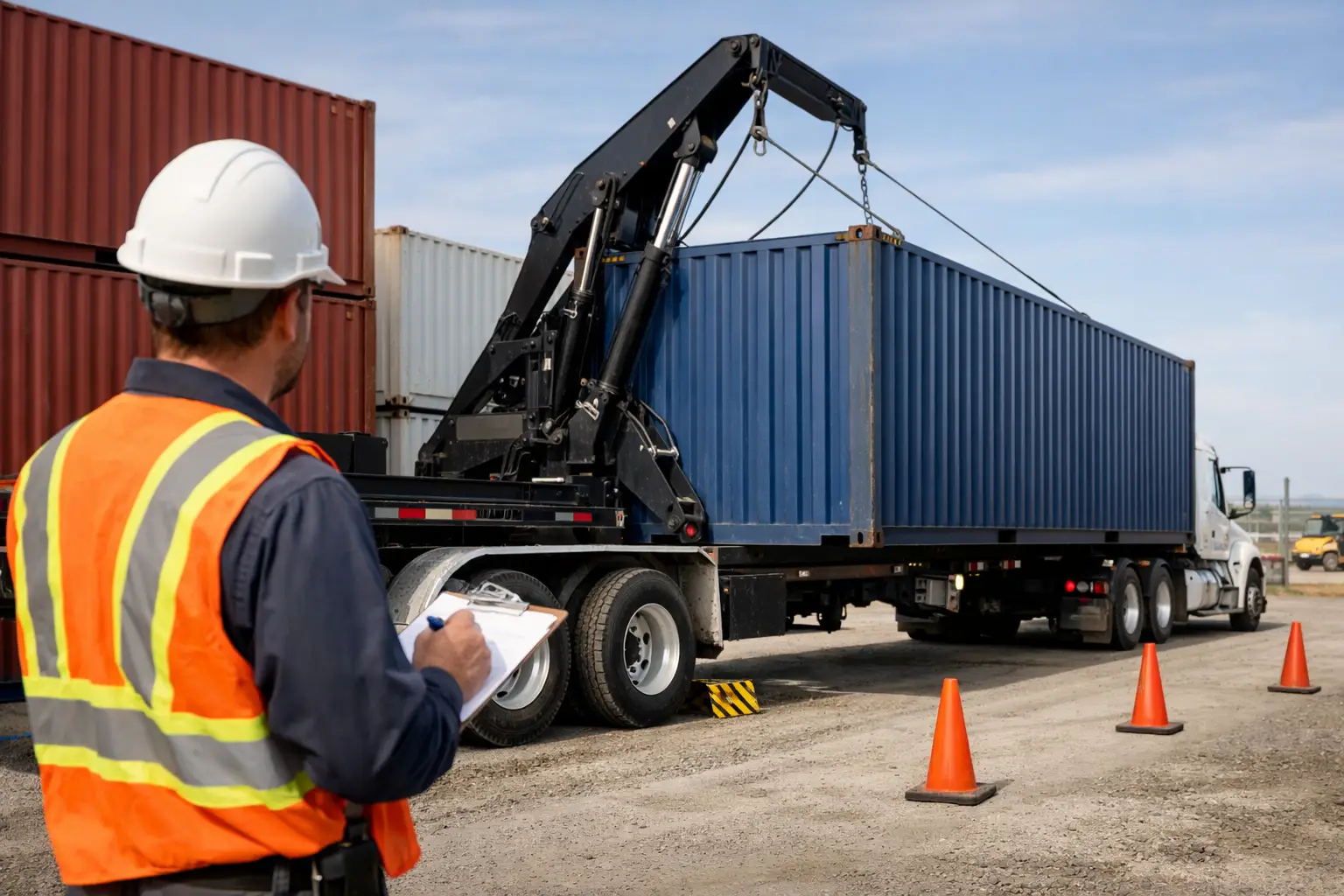
Tilt-bed delivery is a common ground-level unloading method. The truck backs into position, raises the bed, and the container slides onto the prepared area. This process requires a clear, straight unloading path behind the truck.
The necessary space varies by container length and delivery equipment, but the unloading area must be longer than the container itself. There must also be room for the bed to tilt upward. Low branches, overhead lines, slopes, ditches, parked machinery, and uneven ground can make an otherwise open area unsuitable.
Keep people, pets, and unnecessary vehicles away from the delivery zone. The driver must be able to work without pedestrians entering the path of the container. On an active construction site, assign one informed contact to control access and communicate with the crew.
8. Identify slopes, drainage features, and soft edges
Walk the site after rain if possible. Look for standing water, drainage swales, septic fields, irrigation heads, shallow utility boxes, and areas where the edge of a driveway drops away. A heavy truck can damage soft ground or become unstable near an unsupported shoulder.
Slopes require a site-specific assessment. A slight grade may be manageable with preparation, while a steep or cross-sloped unloading area may not be safe for a ground-level drop. Never rely on loose lumber, stacked blocks, or improvised ramps to correct a major grade. These materials can shift under load.
If a finished gravel pad is not yet available, prepare a firm temporary staging area or schedule delivery after the site work is complete. Moving a container twice is rarely the most economical plan.
9. Verify permits, property rules, and utility requirements
Delivery access does not replace local compliance. Depending on the property and intended use, you may need approval for a driveway crossing, right-of-way occupancy, zoning, container placement, electrical work, or a permanent foundation. Some neighborhoods, business parks, and managed communities also have rules on exterior storage and delivery hours.
Call 811 before digging for footings, utility connections, drainage work, or anchoring. Marked utilities do not necessarily prevent container placement, but they should inform the foundation and access plan. If the container will become a mobile office, workshop, or modular build, confirm the applicable building and occupancy requirements before modifying it.
10. Share accurate information before dispatch
The most useful delivery planning tool is honest site information. Provide the container size and type, delivery address, preferred placement, gate and driveway measurements, photos of the route, and any known concerns. Mention steep grades, overhead lines, narrow turns, wet ground, or restricted delivery hours early.
At Lease Lane Containers, delivery planning is handled as a logistics question, not an afterthought. Verified measurements and clear photos allow the right delivery approach to be considered before a truck is assigned. That is the practical meaning of no surprises: the customer, dispatcher, and driver are working from the same site conditions.
A final check the day before delivery
Walk the route one last time. Move vehicles, unlock gates, secure animals, clear the unloading zone, and make sure the on-site contact can answer the driver promptly. If rain, new construction activity, or a fallen branch has changed access, report it before the truck is en route.
Good container delivery preparation is not about making a site look perfect. It is about giving a heavy vehicle and a durable steel container the stable, unobstructed path they need. A few measurements and an honest review of the property can protect your schedule, your site, and your container investment from the first day it arrives.