Refrigerated Containers for Sale: What Buyers Should Ask
Buying a refrigerated container is different from buying a standard dry storage container. You are not only evaluating a steel box. You are also evaluating insulation, airflow, electrical requirements, refrigeration performance, delivery access, and the seller’s ability to explain the condition honestly.
That matters even more for buyers in Raleigh, North Carolina and across the Southeast, where humid summers, clay soils, stormwater, and long operating hours can expose weak site planning quickly. Whether you need cold storage for food, flowers, agriculture, events, pharmaceuticals, or temperature-sensitive inventory, the best purchase starts with the right questions.
Below is a practical buyer’s guide to use when comparing refrigerated containers for sale, with a focus on what to ask before you commit to a quote.
Start With the Use Case, Not the Container
Before you ask for a price, define what the container must do every day. A reefer used for temporary event beverage storage has a different risk profile than a unit storing frozen product for a distributor. A floral business may need steady chilled conditions, while a farm may need seasonal cooling during harvest. A logistics manager may need a Cargo Worthy reefer for movement, not just a stationary cold room.
Ask yourself and your seller these questions first:
- What product will be stored, and how sensitive is it to temperature swings?
- Will the unit be stationary cold storage, regional transport support, or international cargo?
- How often will doors open during the day?
- Will product be palletized, hand-stacked, or moved by forklift or pallet jack?
- Is the container expected to cool warm product, or only hold product that is already at temperature?
That last question is often overlooked. Refrigerated containers are designed to maintain controlled conditions, but loading warm product can create recovery-time problems. If you need blast chilling or rapid pull-down, ask very specific questions about the refrigeration unit’s capacity and test results.
If the container will support food storage or transport, compliance is also part of the conversation. The FDA’s FSMA sanitary transportation rule highlights the importance of temperature control and sanitary conditions in food transportation. Your container purchase should fit your operating procedures, not replace them.
Ask What the Container Grade Actually Covers
Container grades matter, but with reefers, the grade of the shell and the condition of the refrigeration machinery are not the same thing. A used reefer can have a solid Corten steel frame and weather-tight doors, but still need mechanical service. A clean-looking box can still have weak door gaskets, blocked drains, or a refrigeration unit with unknown history.
Here is how to think about common grades when reviewing refrigerated containers for sale.
| Grade | What it means for the shell | What to verify on a reefer | Best fit |
|---|---|---|---|
| One-Trip | Usually the closest condition to new, with minimal handling wear after one loaded voyage | Confirm refrigeration unit condition, hours if available, PTI results, door seals, controller function, and interior cleanliness | Premium stationary cold storage, visible business use, long-term ownership |
| Cargo Worthy | Used container inspected for structural suitability for cargo movement, often tied to CSC condition and transport standards | Confirm valid documentation if shipping, plus refrigeration test records and machine condition | Logistics, export, regional transport, high-value cold storage |
| Wind and Watertight (WWT) | Used container that should keep out wind and water for stationary use, but is not certified for cargo movement | Do not assume WWT means the reefer machinery works. Ask for cooling verification and photos of seals, drains, floors, and unit display | Stationary cold storage when budget matters and the refrigeration system is tested |
A standard ISO shipping container is built around predictable dimensions, corner castings, and handling requirements. Refrigerated units follow ISO concepts, but the refrigeration machinery and insulated panels reduce usable interior space compared with dry containers. The exterior frame and Corten steel components still matter because they support the container, doors, corner castings, and lifting points.
For export or intermodal use, ask about the CSC plate, survey status, and whether the container is truly Cargo Worthy. For stationary storage in Raleigh or anywhere in North Carolina, a WWT shell may be sufficient if the refrigeration system has been tested and the site is prepared correctly. The key is not to let grade language hide the mechanical questions.
Ask for Refrigeration Testing, Not Just Photos
Photos help, but they cannot prove performance. A reefer should be evaluated as both a container and a machine. Ask whether the unit has had a recent Pre-Trip Inspection, commonly called a PTI. In the refrigerated container industry, a PTI checks refrigeration operation, controller function, alarms, sensors, fans, and other performance indicators before the unit is used for temperature-sensitive cargo.
A seller should be able to explain what has been tested and what has not. If a listing only says “runs cold,” ask for more detail.
| Buyer question | Why it matters | What a clear answer should include |
|---|---|---|
| Has the reefer passed a recent PTI? | Verifies the refrigeration system was tested, not just powered on | Date of test, pass or fail status, and any noted issues |
| What temperature range can this unit maintain? | Different products need different setpoints | Seller should give tested performance or manufacturer-related capability, not a vague claim |
| What voltage and phase does it require? | Many ISO reefers require commercial electrical service | Exact electrical requirement and whether a transformer or electrician is needed |
| Are there current or past alarm codes? | Alarm history can reveal sensor, compressor, or fan problems | Explanation of alarms, repairs, and controller status |
| What is the condition of the door gaskets? | Poor seals cause temperature loss and energy waste | Photos or inspection notes for gaskets, hinges, cams, and locking bars |
| Are drains and T-floor channels clear? | Airflow and drainage affect performance and sanitation | Confirmation that the floor, drains, and interior airflow path are clean and unobstructed |
| Is the unit suitable for transport or stationary storage only? | Avoids buying the wrong grade for logistics use | Clear distinction between WWT, Cargo Worthy, and any applicable documentation |
Do not treat the refrigeration unit as an afterthought. Compressors, evaporator fans, condenser coils, controllers, sensors, and electrical components are central to the value of the container. If you will rely on the container for revenue-generating inventory, ask whether local service providers can work on that unit model in your area.
Ask About Power Before You Buy
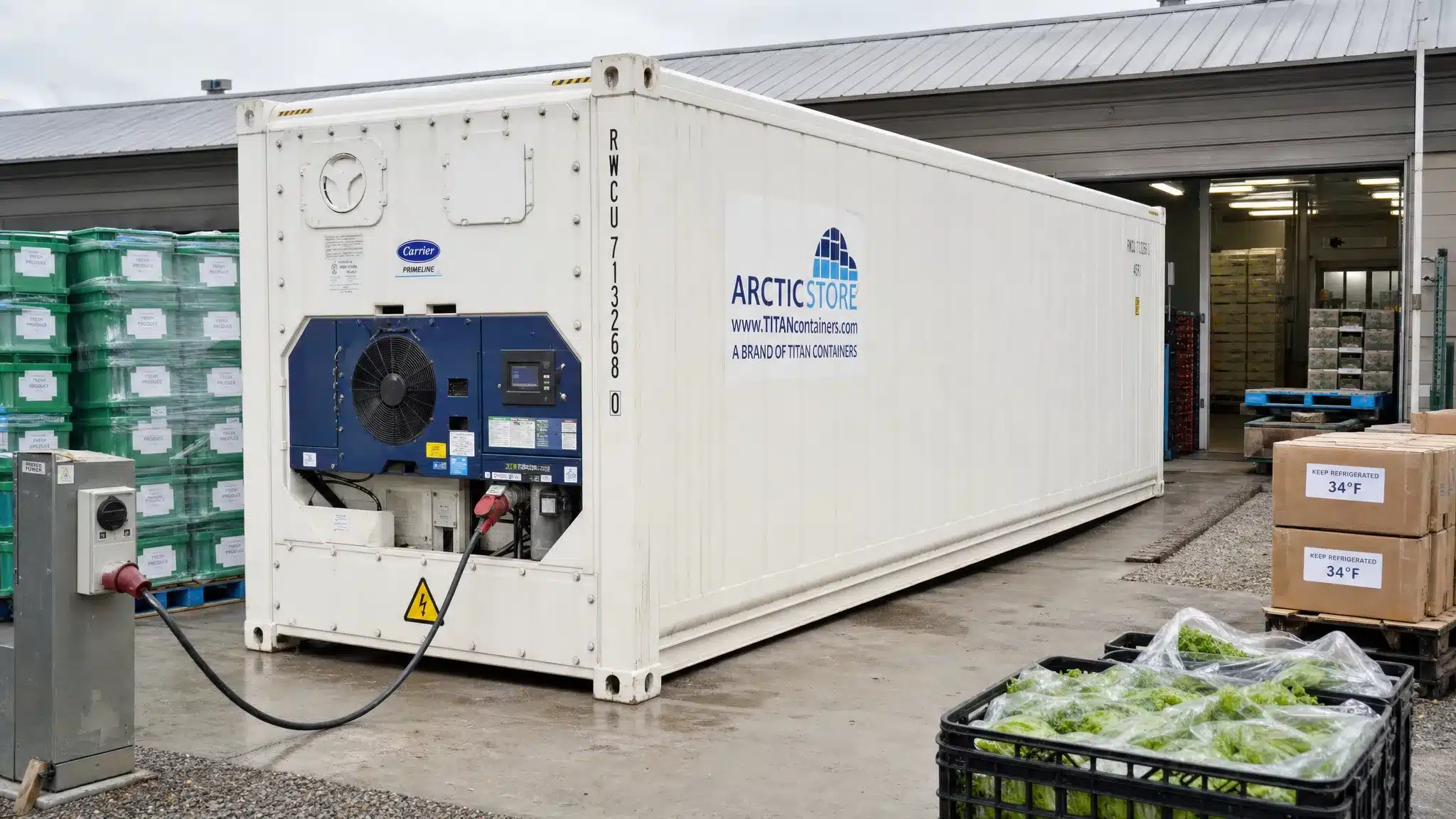
Power planning can make or break a reefer project. Many marine refrigerated containers are designed for high-voltage three-phase power, often used in port, warehouse, and industrial settings. Some sites may need a transformer, dedicated electrical service, or a generator rated for continuous operation. Do not assume a standard residential outlet can run a refrigerated container.
Before ordering, ask:
- What voltage, phase, and amperage does this specific unit require?
- Is the plug configuration compatible with the site?
- Will a licensed electrician need to install a dedicated circuit or disconnect?
- If using a generator, is it sized for continuous reefer operation, startup loads, and site conditions?
- Where will the power source be located relative to the machinery end of the container?
For small businesses in Raleigh, this is especially important when placing a reefer behind a restaurant, retail store, floral shop, or warehouse. The delivery team can place the container, but electrical readiness is usually a site responsibility. Plan that work before delivery day so the unit is not sitting idle while you wait on power.
Ask Which Size Fits the Product and the Site
Refrigerated containers are commonly purchased in 20ft and 40ft configurations, with High Cube options available in many markets. A 20ft reefer may fit better on tight urban lots, small farms, restaurant pads, and limited warehouse yards. A 40ft reefer provides more capacity for distributors, contractors, grocery overflow, agriculture, and bulk pallet storage. A High Cube reefer adds exterior height and can improve vertical storage potential, but always verify actual interior dimensions because insulation and refrigeration machinery reduce usable space.
If you are comparing refrigerated units against dry storage options, review footprint and access planning for 20ft containers and 40ft containers before deciding. The same ground access rules apply, but reefers add power access, service clearance, and airflow concerns around the machinery end.
Also ask how the product will be loaded. Pallet dimensions, aisle space, door opening size, and airflow clearance are not minor details. Blocking the return air path or stacking product too tightly can reduce performance. Ask the seller to confirm interior dimensions, door opening, floor type, and any load-line markings before you design your storage layout.
Ask What Is Included in the Delivered Price
The cheapest listing is rarely the best comparison point. Refrigerated containers have more cost variables than dry containers because mechanical condition, testing, electrical needs, and site placement all affect the real project budget.
A complete quote should make the following clear:
| Cost item | Question to ask | Why it changes the budget |
|---|---|---|
| Container grade | Is it One-Trip, Cargo Worthy, WWT, refurbished, or sold as-is? | Grade affects structural confidence, appearance, documentation, and resale value |
| Reefer testing | Is a PTI or cooling test included? | Mechanical verification is central to value |
| Delivery | Is delivery included, and what method will be used? | Tilt-bed, flatbed, crane, or specialized equipment can change cost |
| Placement | Does the quote include setting the unit in the final location? | Difficult access can add equipment or labor requirements |
| Electrical | Is power equipment included or separate? | Transformers, disconnects, cords, and electrician work may be needed |
| Site prep | Is the pad ready, level, and accessible? | Poor ground conditions can cause failed delivery, drainage problems, and door issues |
| Documentation | Are photos, serial numbers, and inspection details provided? | Documentation helps avoid misunderstandings and supports compliance planning |
If you are evaluating used containers, compare the total delivered and operational cost, not just the purchase price. A lower-price unit may cost more if it needs refrigeration repairs, electrical upgrades, door gasket replacement, or special offloading. For a broader view of how condition affects value, see this guide to used shipping containers in Raleigh, NC.
Pro-Tip: Prepare the Site Before the Reefer Arrives
A refrigerated container needs the same stable foundation as a dry container, plus additional planning for power, drainage, airflow, and service access. In Raleigh and across the Southeast, heavy rain and humid conditions make site preparation especially important.
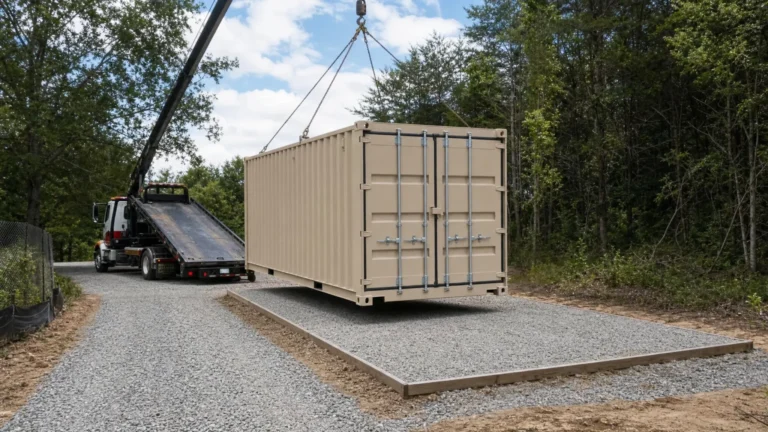
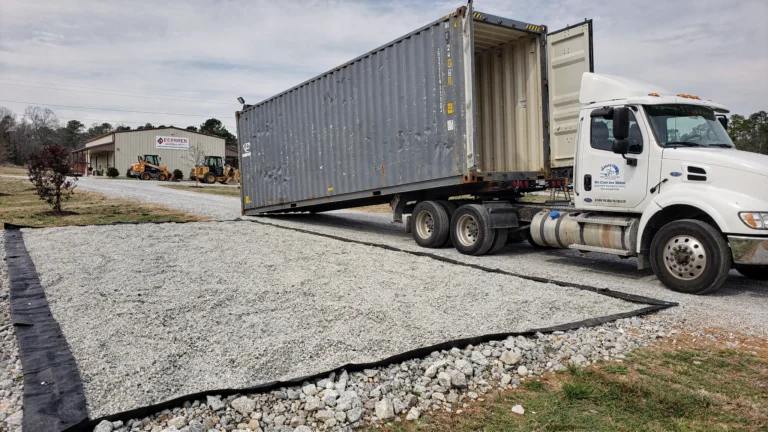
Start with a level pad. Compacted gravel is often a practical choice for drainage and load distribution, while a concrete pad may be preferred for permanent commercial installations. The container should be supported so the frame stays square. If the unit twists because the ground is uneven, doors may become difficult to operate and gaskets may not seal properly.
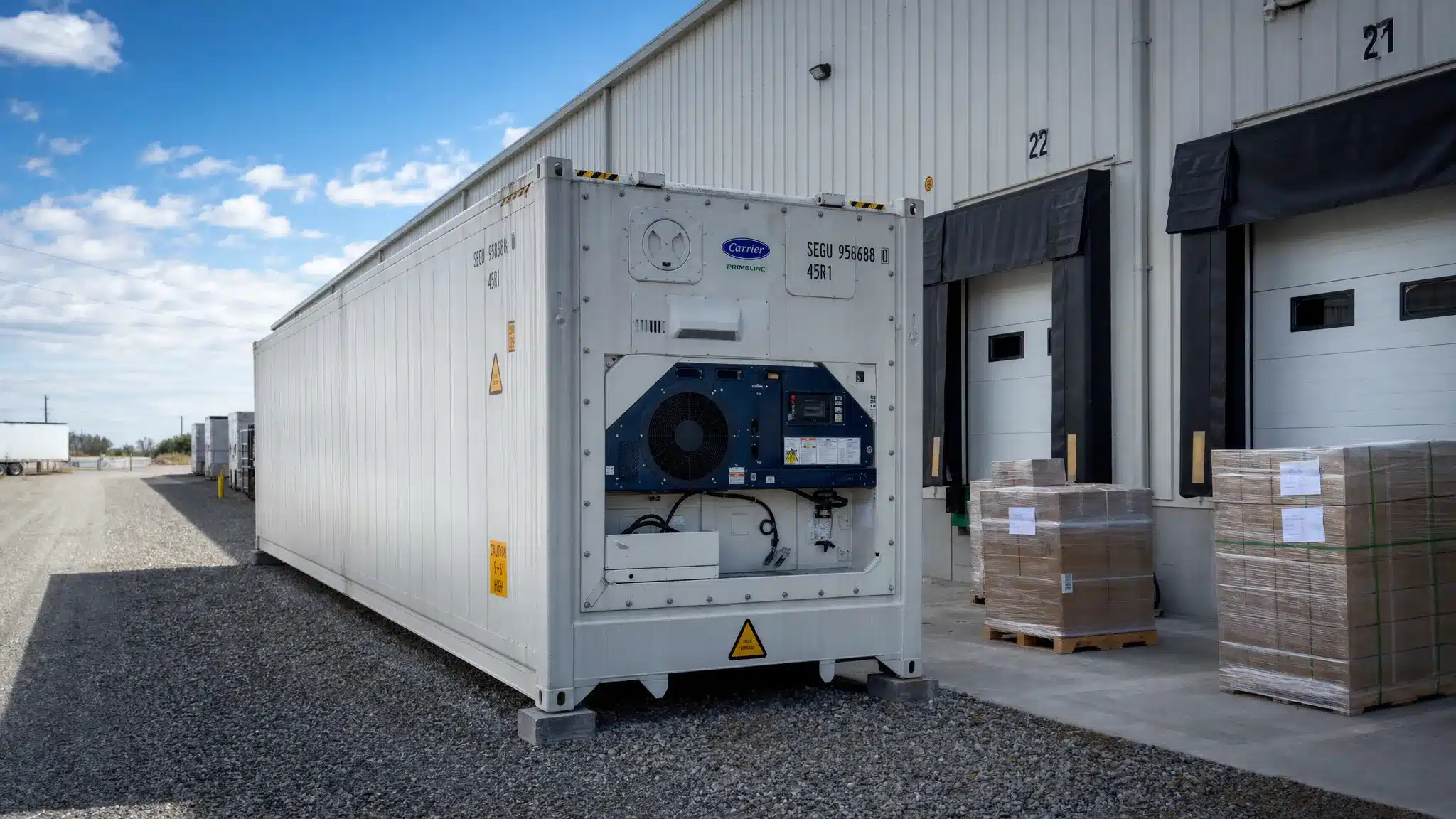
Leave clearance at the refrigeration machinery end. Technicians need space to inspect, clean, and service the unit. The condenser also needs airflow. Do not place the machinery end tight against a wall, fence, brush line, or other equipment.
Check permits and local rules before delivery. Raleigh, Wake County, nearby municipalities, commercial landlords, and HOAs may treat containers differently depending on zoning, duration, visibility, utilities, and whether the unit is used for business operations. Refrigerated units may also trigger electrical inspection requirements when tied into site power.
Finally, walk the delivery route. Confirm overhead clearance from trees, wires, signs, and building overhangs. Confirm width, turning room, slope, and ground firmness. If a tilt-bed truck is used, it needs more straight-line room than the container length alone. A successful drop begins before the truck arrives.
Ask About Maintenance and Operating Responsibility
A reefer container is not a passive storage box. It is a working refrigeration asset. Buyers should understand what ongoing maintenance looks like before purchasing.
Ask who will clean condenser coils, inspect gaskets, monitor alarms, verify setpoints, and keep drains clear. Ask whether the unit should be serviced before peak summer loads in North Carolina. Ask how often temperatures should be logged and whether your business needs monitoring for product or insurance reasons.
For food, floral, agriculture, and other sensitive inventory, temperature monitoring may be as important as the container itself. A good container protects your product only when it is powered, loaded correctly, maintained, and checked regularly.
Red Flags When Shopping Refrigerated Containers for Sale
Most problems can be avoided by asking for specifics. Be careful when a seller cannot explain grade, testing, power, or delivery assumptions.
Watch for these warning signs:
- The listing says WWT but implies the unit is certified for shipping without documentation.
- The seller says the unit “gets cold” but cannot provide PTI details or test information.
- Photos do not show the refrigeration unit, controller display, data plate, interior floor, door gaskets, or underside condition.
- The quote does not specify delivery method, site requirements, or placement limitations.
- The container has fresh paint but no explanation of rust repair, panel condition, or structural inspection.
- The seller does not ask about your power source, product type, or site access.
A knowledgeable seller should ask questions too. If nobody asks what you are storing, where the container is going, what power is available, and how the site will be prepared, the quote may be incomplete.
Quick Buyer Checklist
Before you sign off on a refrigerated container purchase, confirm these items in writing:
| Confirm before purchase | Why it matters |
|---|---|
| Container size and exact interior dimensions | Reefers have less usable space than dry containers because of insulation and machinery |
| Shell grade | One-Trip, Cargo Worthy, and WWT mean different things for structure and use |
| Refrigeration test status | PTI or cooling verification supports confidence in the machinery |
| Electrical requirements | Avoids delivery before the site can power the unit |
| Delivery method and access | Prevents failed delivery and extra equipment costs |
| Foundation and drainage plan | Protects doors, frame alignment, and long-term performance |
| Permit or zoning requirements | Reduces risk of fines, relocation, or forced removal |
| Service access | Keeps the machinery end reachable for maintenance |
The right reefer is the one that matches the product, site, power, and operating plan. A clean shell matters, but refrigeration performance and site readiness matter just as much.
Frequently Asked Questions
Are refrigerated containers for sale the same as regular shipping containers? No. Refrigerated containers, often called reefers, have insulated walls, a refrigeration unit, specialized flooring for airflow, and electrical requirements. They usually have less interior space than dry containers of the same exterior length.
Do I need a Cargo Worthy refrigerated container for stationary cold storage? Not always. If the unit will stay on your property, a WWT shell with verified refrigeration performance may be suitable. If you plan to ship cargo, stack the unit, or use intermodal transport, ask for Cargo Worthy documentation and CSC status.
What is the difference between One-Trip, Cargo Worthy, and WWT reefers? One-Trip reefers are typically the newest and cleanest option. Cargo Worthy reefers are used units that should meet structural requirements for cargo movement when properly documented. WWT reefers are intended for stationary weather-protected use, but WWT does not automatically prove the refrigeration system works.
What power does a reefer container need? Many ISO refrigerated containers require commercial-grade electrical service, often three-phase power. Requirements vary by unit, so confirm voltage, phase, amperage, plug type, and whether a transformer or licensed electrician is needed before delivery.
Can a refrigerated container be delivered to a home or small business in Raleigh? Often yes, but the site must have adequate access, clearance, ground support, drainage, and power. Buyers should also check Raleigh, Wake County, landlord, or HOA rules before scheduling delivery.
Should I buy a 20ft or 40ft refrigerated container? Choose a 20ft reefer when footprint and access are limited. Choose a 40ft or 40ft High Cube reefer when capacity, pallet count, or future growth matter more. Always confirm interior dimensions and airflow needs before deciding.
Talk With Lease Lane Containers Before You Buy
If you are comparing refrigerated containers for sale in Raleigh, North Carolina, the Southeast, or anywhere in the USA, Lease Lane Containers LLC can help you ask the right questions before you commit. Our team can discuss current reefer options, container grades, delivery planning, site preparation, and clear next steps based on your use case.
For help choosing the right refrigerated container, email sales@leaselanecontainers.com or visit our Raleigh office to speak with a local team that understands container buying, delivery, and site planning.