What to Check Before Shipping Containers Are Delivered
Once you choose a container, the next big question is not just what arrives. It is whether the truck can safely place it where you need it, whether the ground will support it, and whether the unit delivered matches the grade you paid for.
When you need shipping containers delivered to a construction site, farm, business lot, warehouse, or residential property, a few checks before delivery day can prevent failed drops, extra trip charges, stuck trucks, door alignment problems, and frustrating surprises. This is especially true in Raleigh, North Carolina and across the Southeast, where clay soils, heavy rain, tree cover, tight driveways, and local zoning rules can all affect placement.
Use this checklist before the driver arrives so your container is delivered cleanly, safely, and in the right condition.
Start by Confirming the Container You Ordered
Before you prepare the site, confirm the exact container being delivered. A 20 ft standard unit, a 40 ft High Cube, and a refrigerated container all require different planning. Even small misunderstandings about height, grade, door orientation, or delivery method can create major problems on delivery day.
Standard shipping containers are built around ISO standards, including dimensional standards such as ISO 668, which helps make them compatible with intermodal transportation. Most standard dry containers are built from weathering steel, commonly called Corten Steel, with corner castings designed for lifting and stacking. That structure is what makes containers durable, but it does not eliminate the need for a level, well-drained foundation.
If you are still comparing sizes, review guidance on 20ft containers or 40ft containers before finalizing delivery. The right size is not only about storage capacity. It is also about truck access, turning room, ground conditions, and how often you will need to access stored items.
| Container type | Typical exterior size | What to verify before delivery |
|---|---|---|
| 20 ft standard | 20 ft long x 8 ft wide x 8 ft 6 in high | Fits smaller jobsites and tighter residential lots, but still needs truck clearance |
| 40 ft standard | 40 ft long x 8 ft wide x 8 ft 6 in high | Requires more straight-line unloading space and a larger turning area |
| 40 ft High Cube | 40 ft long x 8 ft wide x 9 ft 6 in high | Adds interior height, but needs more overhead clearance during transport and placement |
| Reefer container | Varies by size and insulation | Requires power planning, drainage, airflow, and access to the refrigeration machinery end |
Dimensions can vary slightly by manufacturer and container condition, so always confirm the final specifications on your quote or order paperwork.
Verify the Grade: One-Trip, Cargo Worthy, or WWT
The grade of the container affects what you should inspect before delivery and what documentation should come with the unit. A professional supplier should use clear grading language, not vague descriptions like good shape or storage grade without explanation.
| Grade | What it means | Best fit |
|---|---|---|
| One-Trip | A near-new container that has typically made one loaded trip from the factory before resale. It should have strong structural integrity, factory paint, clean flooring, and only minor handling marks. | Visible business use, container offices, retail conversions, long-term storage, modular projects |
| Cargo Worthy (CW) | A used container inspected or repaired to be suitable for cargo transport. For export, it should have appropriate CSC documentation or inspection status. | Logistics, international shipping, high-value storage, projects needing stronger structural confidence |
| Wind and Watertight (WWT) | A used container that keeps out wind and rain for stationary storage, but is not certified for ocean cargo movement. | Jobsite storage, farm storage, residential storage, inventory overflow |
| As-Is | A container sold without a strong condition promise. It may have leaks, floor damage, door issues, or structural problems. | Only for buyers who can inspect, repair, or repurpose it safely |
If you are purchasing used containers, ask for recent photos of the roof, doors, door gaskets, floor, corner posts, and side panels before the truck is dispatched. For Cargo Worthy units used in export, confirm the CSC plate and inspection requirements. The International Maritime Organization explains the role of the International Convention for Safe Containers, which is relevant when a container will be used in international transport.
For stationary storage in Raleigh, WWT may be perfectly appropriate. For a customer-facing container office or retail pop-up, a One-Trip unit often makes more sense because cosmetic condition and remaining service life matter more. For export or intermodal use, Cargo Worthy is the practical baseline.
Check the Delivery Method Before the Truck Is Scheduled
The delivery method determines how much room you need and what kind of site access is acceptable. Do not assume every truck can place every container in the same way.
A tilt-bed trailer is common for ground-level delivery. The trailer tilts, the container slides back, and the driver pulls forward as the unit is lowered into place. This method is efficient, but it needs straight-line clearance because the truck and trailer must move forward during unloading.
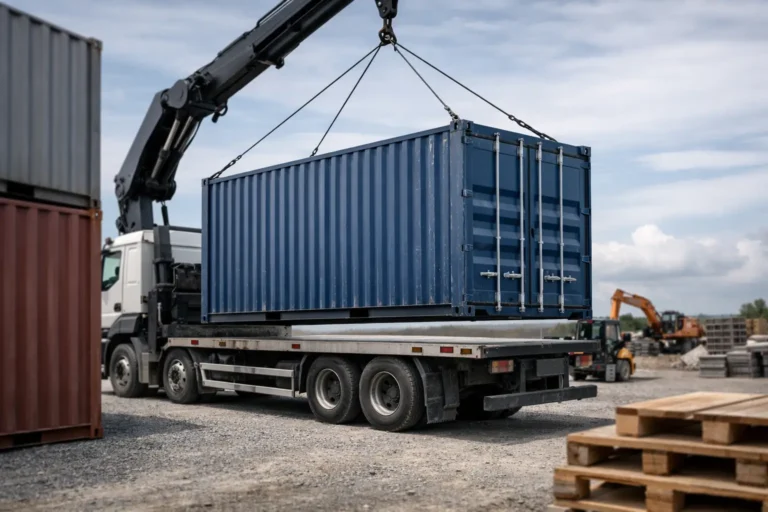
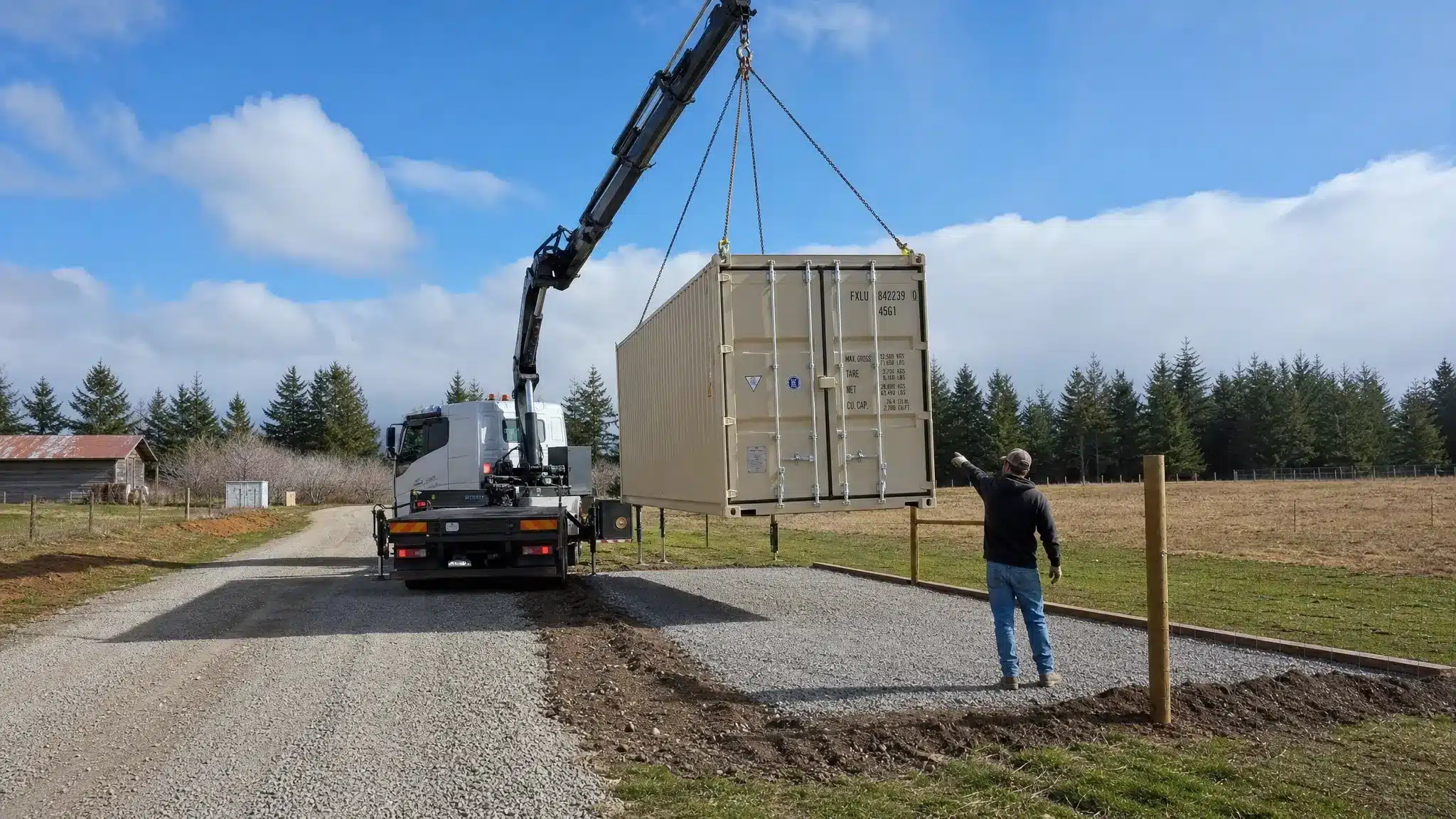
A flatbed may be used when a crane, forklift, or other lifting equipment is available on site. This can help when access is tight, but it adds coordination and cost. A crane or specialized lift may be necessary for placements over fences, behind buildings, or on sites where a tilt-bed cannot safely align with the drop zone.
| Delivery question | Why it matters |
|---|---|
| Is the truck using a tilt-bed, flatbed, crane, side-loader, or chassis? | Each method has different clearance, surface, and equipment needs |
| Will the container be loaded doors-first or doors-rear? | Door orientation affects where the doors face after unloading |
| How much straight-line clearance does the driver need? | A 40 ft container usually needs substantially more unloading room than a 20 ft unit |
| Is the route suitable for the truck weight and length? | Narrow roads, soft shoulders, steep driveways, and tight turns can block access |
| Is delivery included in the quote, or billed separately? | Total delivered cost matters more than container price alone |
For a deeper planning reference, see Lease Lane Containers’ guide to shipping container delivery requirements. Your delivery team should be able to review photos, measurements, and site notes before dispatch.
Measure Access, Turning Room, and Overhead Clearance
A container can fit on your property and still fail delivery if the truck cannot reach the placement area. Before delivery, walk the entire path from the public road to the drop spot.
Check the entrance width, gate opening, driveway slope, turning radius, ground firmness, and overhead clearance. Look for low tree limbs, power lines, building overhangs, signs, fences, parked equipment, septic covers, sprinkler heads, curbs, and soft shoulders.
As a general planning guideline, many tilt-bed deliveries need a long straight approach, often around 60 ft to 75 ft or more for a 20 ft container and 100 ft or more for a 40 ft container, depending on truck type and site layout. Ask your delivery provider for exact clearance requirements before scheduling. High Cube containers also require added attention to overhead obstructions because they are 9 ft 6 in tall before the trailer height is added.
Never estimate power line clearance casually. If overhead utility lines are near the route or drop zone, contact the utility provider. For underground utilities, North Carolina customers can start with NC 811, and buyers outside North Carolina can use Call 811 before digging, grading, driving stakes, or setting piers.
Confirm the Ground Can Support the Container
Shipping containers are strong, but they are not magic. A loaded container placed on unstable or uneven ground can twist, settle, hold water underneath, or develop door problems. The corner castings carry much of the load, which means those points need stable support.
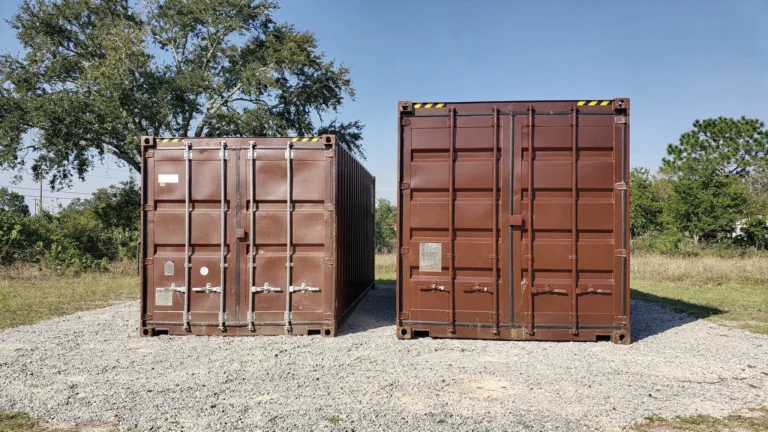
A good delivery surface should be firm, level, accessible to the truck, and able to drain water away. In Raleigh and much of the Southeast, compacted gravel is often a practical choice because it handles rain better than bare soil and is more forgiving than asphalt in hot weather. Concrete slabs, concrete piers, compacted stone pads, and properly placed blocks can also work when designed for the load.
Avoid placing a container directly on soft grass, loose fill, muddy soil, or low areas where water pools. Corten Steel is designed to resist corrosion better than ordinary steel, but standing moisture and poor airflow underneath the container can still accelerate rust over time.
Pro-Tip: Build the Pad Slightly Bigger Than the Container
For long-term storage, make the prepared base wider and longer than the container footprint. A common approach is a compacted gravel pad over geotextile fabric, with the pad extending beyond the container edges so water can drain and the delivery truck has a stable approach.
Keep the pad level from corner to corner, but plan drainage around it so water moves away from the container. If the container will be used for a mobile office, workshop, retail space, or refrigerated storage, plan utility paths, door swing, ventilation, and service access before delivery. In Raleigh, Wake County, and many North Carolina municipalities, permit and zoning requirements can vary depending on whether the container is temporary storage, permanent storage, commercial use, or an occupied structure. Check local rules and HOA restrictions before the truck arrives.
Mark the Exact Drop Spot and Door Orientation
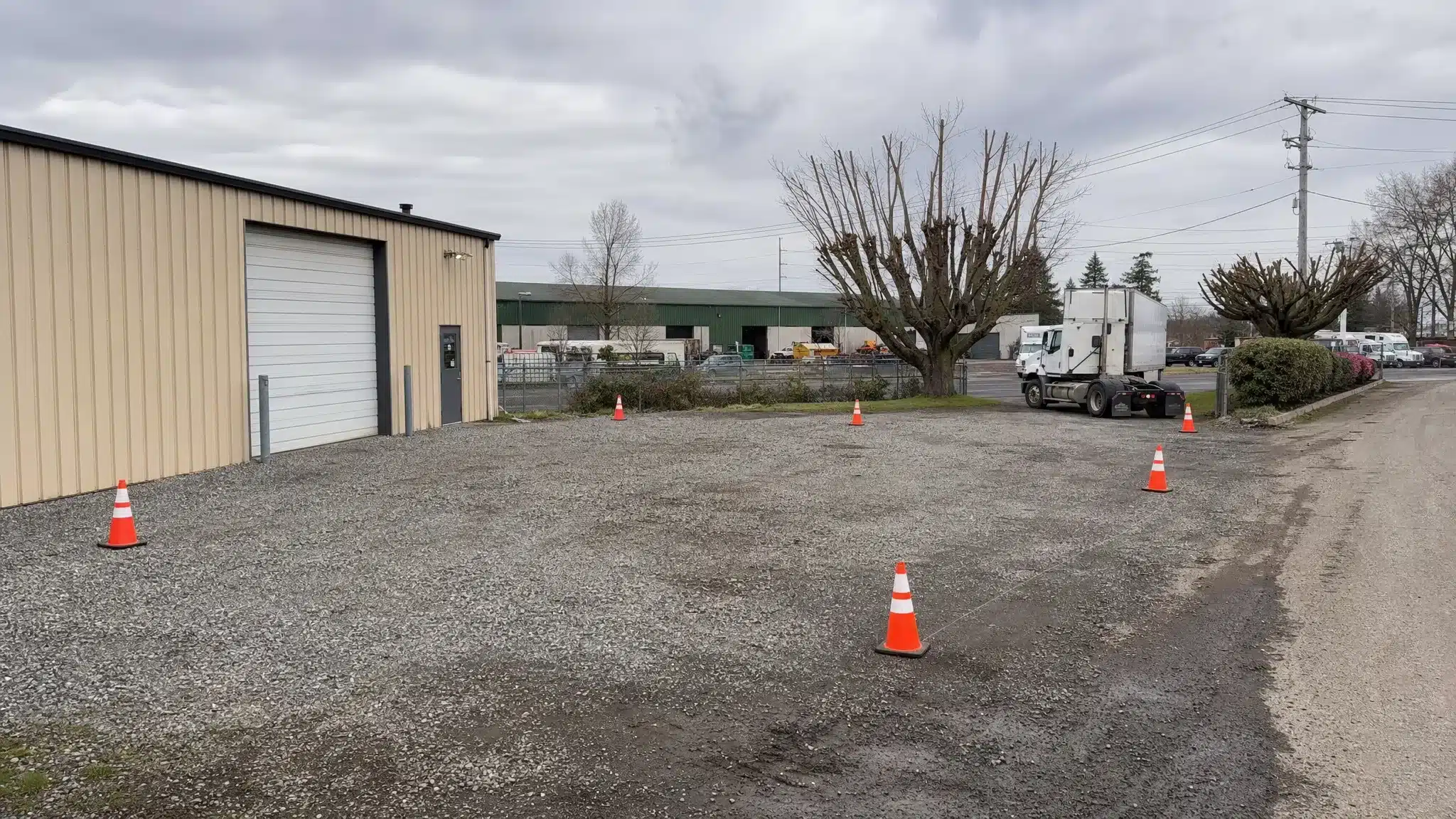
A driver cannot read your mind once the truck is on site. Before delivery day, physically mark the container footprint and door location. Use cones, stakes, spray paint, flags, or boards to show the four corners and the direction the doors should face.
Door orientation is one of the most common delivery-day regrets. Think about how you will actually use the container. A contractor may want doors facing the jobsite entrance for faster tool access. A farmer may want doors facing a lane or equipment path. A small business may need doors facing a loading area. A homeowner may want doors away from the street for privacy.
Also check door swing. Standard container cargo doors need room to open fully. If you place the container too close to a fence, wall, tree, parked trailer, or slope, the doors may be difficult to use even if the container itself fits.
Review Permits, HOA Rules, and Site Restrictions
Permitting is not the most exciting part of buying a container, but it can be the difference between a smooth project and an expensive relocation. In Raleigh and surrounding communities, requirements can depend on zoning district, property type, visibility from the street, duration of placement, foundation type, and whether the container is used for storage or converted into occupied space.
For temporary construction storage, rules may differ from long-term residential placement. For a modified office, retail unit, cabin, or container-based structure, building code, electrical, insulation, egress, and foundation requirements may apply. Rural properties may have fewer restrictions, but setbacks, environmental rules, flood zones, and utility easements can still matter.
Before scheduling delivery, confirm:
- Whether your city, county, jobsite owner, landlord, or HOA allows the container
- Whether a permit is required for temporary or permanent placement
- Whether setbacks from property lines, roads, septic systems, or easements apply
- Whether the container can be visible from the street or must be screened
- Whether modifications change the permitting category
If you are unsure, ask before delivery. It is easier to adjust placement on paper than to move a container after it is set.
Ask for Final Photos and Paperwork Before Dispatch
Before the container leaves the yard or depot, confirm that the final unit matches your quote. This is particularly important when buying used units, Cargo Worthy containers, or specialty units like reefers, open-side containers, or High Cube containers.
Ask for photos of the container number, exterior sides, roof condition, interior floor, door gaskets, locking bars, and any visible repairs. For One-Trip units, minor scrapes and handling marks are normal, but there should not be major structural damage. For WWT units, the key questions are whether the unit keeps out wind and rain, whether the doors seal properly, and whether the floor is sound for your intended use. For Cargo Worthy units, documentation matters because the grade should support the claimed transport use.
Your invoice or delivery confirmation should clearly state the size, grade, delivery address, delivery method, taxes or fees, and any placement limitations. If the quote says curbside delivery only, that is different from placed exactly behind a building. Clarify expectations early.
Prepare the Site the Day Before Delivery
The day before delivery, walk the site again. Rain, parked vehicles, landscaping crews, dumpsters, and jobsite materials can change access overnight.
Clear the route. Move cars, trailers, pallets, portable toilets, scrap piles, dumpsters, and low-hanging temporary lines. Unlock gates. Confirm someone authorized to make placement decisions will be on site. If the driver has to wait, reposition, or reschedule because the site is not ready, additional costs may apply.
For active jobsites in Raleigh, Durham, Chapel Hill, or across the Southeast, communicate the delivery window to subcontractors. Keep the drop zone clear of workers, equipment, and materials. For residential deliveries, keep children and pets inside and away from the truck path.
Inspect the Container When It Arrives
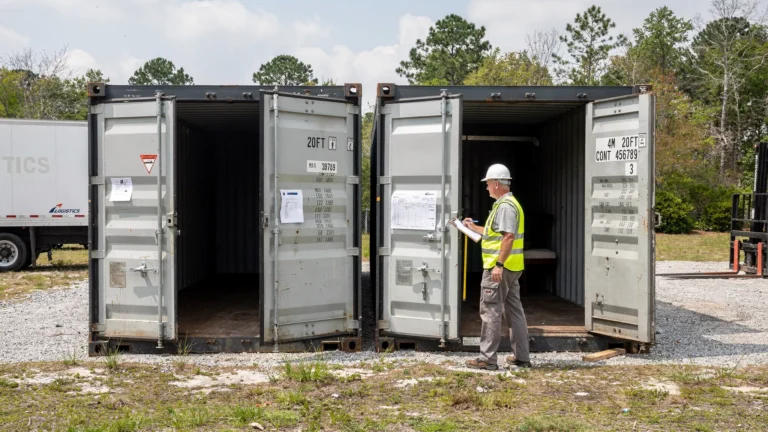
Even if you reviewed photos beforehand, inspect the container on delivery day before final acceptance whenever possible. Delivery can reveal issues that were not obvious in photos, and documentation protects both buyer and seller.
Check that the container number and grade match your paperwork. Open and close the doors. Look at the roof, side walls, corner posts, bottom rails, floor, door gaskets, and locking gear. Step inside and perform a basic light check by closing the doors safely and looking for daylight through holes or gaps. For WWT storage, visible daylight through the roof or walls is a red flag. For Cargo Worthy use, confirm any required documentation is in order before the unit is loaded for export.
Take photos from all four sides after placement. If the container is not level and the doors bind, note whether the problem is the unit or the base. Sometimes a container that worked properly on level ground will bind after being set on an uneven pad.
Do Not Forget Post-Delivery Adjustments
Delivery is not finished the moment the truck leaves. After placement, verify that the container is level, the doors operate freely, and the base is draining properly. If the unit sits low at one end or rocks at a corner, address it early with proper shimming or base adjustment.
Add locks, lighting, ventilation, shelving, ramps, or security cameras after the container is stable. For long-term use, keep vegetation trimmed away from the walls, maintain airflow under the floor, and inspect roof seams and door gaskets periodically after storms.
For refrigerated containers, confirm power connection, airflow around the machinery end, condensate drainage, and access for service. For office or modular conversions, confirm the container is placed according to the design plan before cutting openings or running utilities.
Quick Pre-Delivery Checklist
Use this as a final review before the delivery truck is dispatched:
- Confirm the container size, type, height, and grade on your paperwork
- Verify One-Trip, Cargo Worthy, or WWT condition and ask for supporting photos
- Confirm delivery method, truck access needs, and door orientation
- Measure driveway width, turning space, straight-line clearance, and overhead clearance
- Prepare a firm, level, well-drained base with stable corner support
- Mark the exact footprint and door direction before the driver arrives
- Check local permits, HOA rules, setbacks, and temporary storage restrictions
- Locate underground utilities before grading, digging, or setting supports
- Clear vehicles, debris, branches, gates, and jobsite materials from the route
- Inspect the container on arrival and photograph it after placement
Frequently Asked Questions
How level does the ground need to be before a shipping container is delivered? The container should be supported on a firm, level surface, especially at the corners. Significant unevenness can twist the frame and make the cargo doors hard to open or close.
Can a shipping container be delivered on grass or dirt? Sometimes, but it is risky if the ground is soft, wet, sloped, or recently disturbed. For long-term use in Raleigh and the Southeast, compacted gravel, concrete, piers, or properly placed blocks are usually better than bare soil.
Do I need a permit before having a container delivered in Raleigh, NC? It depends on location, zoning, use, duration, and whether the container is modified or occupied. Check with the local municipality, Wake County where applicable, and any HOA or property owner before scheduling delivery.
What is the difference between a One-Trip, Cargo Worthy, and WWT container for delivery purposes? One-Trip containers are near-new and often best for visible or modified projects. Cargo Worthy containers are used units suitable for cargo transport when properly documented. WWT containers are used units intended for stationary storage that keep out wind and rain but are not certified for ocean shipping.
What happens if the driver cannot safely place the container? The delivery may be rescheduled, changed to a different method, or placed in an alternate location. Failed delivery can create extra costs, so share photos, measurements, and access concerns with the delivery team before dispatch.
Ready to Get Your Container Delivered the Right Way?
Lease Lane Containers LLC helps homeowners, contractors, farmers, small businesses, developers, and logistics teams choose the right container, verify the right grade, and plan delivery before the truck arrives. From Raleigh, North Carolina to sites across the Southeast and nationwide, our team can help you think through size, placement, access, and site preparation.
For help selecting a One-Trip, Cargo Worthy, WWT, High Cube, 20 ft, 40 ft, or reefer container, contact our sales team at sales@leaselanecontainers.com or visit our Raleigh office to discuss your delivery plan with a local container specialist.