Best 20ft shipping container in Houston, Texas | 2026 Guide
Table of Contents
- Table of Contents
- Houston 20ft Shipping Container Quick Facts
- 20ft Shipping Container in Houston: What You Need to Know
- What Services Are Available
- Why Location Matters
- Top 20ft Shipping Container Options in Houston
- Budget-Friendly: Wind and Watertight
- Mid-Range: Cargo Worthy
- Premium: One-Trip Containers
- How to Choose the Right 20ft Shipping Container in Houston
- Start with Your Use Case
- Verify the Container’s Condition
- Ask the Right Questions
- Texas-Specific Considerations
- Houston 20ft Shipping Container Market in 2026
- Supply and Demand Dynamics
- Seasonal Patterns
- How Houston Compares to the Rest of Texas
- Houston 20ft Shipping Container FAQ
- How much does a 20ft shipping container cost in Houston in 2026?
- Do I need a permit to place a shipping container on my property in Houston?
- What’s the difference between cargo worthy and wind and watertight?
- How much space do I need for delivery?
- How long does a 20ft shipping container last in Houston’s climate?
- Can I modify a 20ft shipping container?
- Get 20ft Shipping Container in Houston Today
- Final Checklist
Table of Contents
- Houston 20ft Shipping Container Quick Facts
- 20ft Shipping Container in Houston: What You Need to Know
- Top 20ft Shipping Container Options in Houston
- How to Choose the Right 20ft Shipping Container in Houston
- Houston 20ft Shipping Container Market in 2026
- Houston 20ft Shipping Container FAQ
- Get 20ft Shipping Container in Houston Today
- Final Checklist
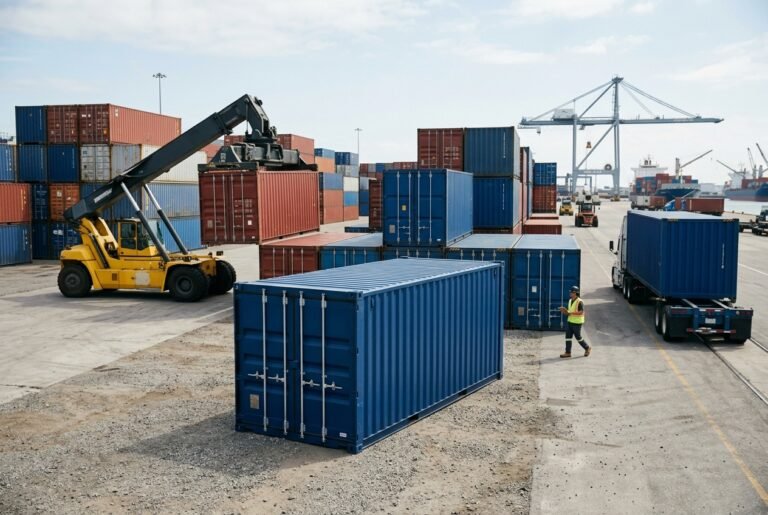
Houston’s shipping container market moves fast. With the Port of Houston ranking as the largest port in the U.S. by foreign waterborne tonnage and a construction sector that shows no signs of slowing, demand for 20ft shipping containers across the metro area has stayed consistently high through 2025 and into 2026. Whether you’re a contractor needing secure job site storage in Katy, a small business owner handling inventory overflow near the Energy Corridor, or a homeowner in The Heights looking to add backyard storage, the 20ft container remains one of the most practical and cost-effective solutions available. This guide breaks down pricing, grading, delivery logistics, and the specific factors that make buying a container in Houston different from anywhere else in Texas. If you’re comparing shipping container sizes or trying to figure out what grade fits your budget, you’ll find the specifics here.
Houston 20ft Shipping Container Quick Facts
Here’s what you need to know before reading further:
- Typical pricing for a 20ft shipping container in Houston ranges from $1,800 to $4,500 depending on condition, with one-trip containers sitting at the top of that range and wind and watertight units at the lower end.
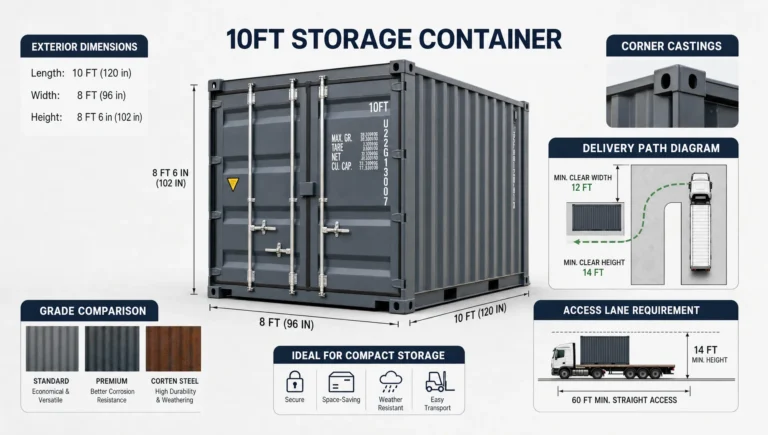
- Standard exterior dimensions are 20ft long x 8ft wide x 8ft 6in tall (approximately 6.1m x 2.4m x 2.6m), with a usable interior space of roughly 1,170 cubic feet.
- Delivery lead times in the Houston metro area typically run 3 to 10 business days from order confirmation, though availability of specific grades can shift that timeline.
- Houston’s proximity to the Port of Houston means container supply is generally stronger here than in inland Texas cities like Austin or San Antonio, which keeps prices competitive.
- Local providers stand out based on transparent grading, delivery planning support, and honest condition reporting. The difference between a smooth purchase and an expensive headache often comes down to whether the supplier clearly explains the container’s grade before you commit.
20ft Shipping Container in Houston: What You Need to Know
Houston’s geography and economy create a unique container market. The city sprawls across roughly 670 square miles, and that footprint means delivery logistics vary dramatically depending on whether your site is in a dense neighborhood like Montrose or on a rural lot outside Cypress. Understanding these local dynamics saves time and money.
What Services Are Available
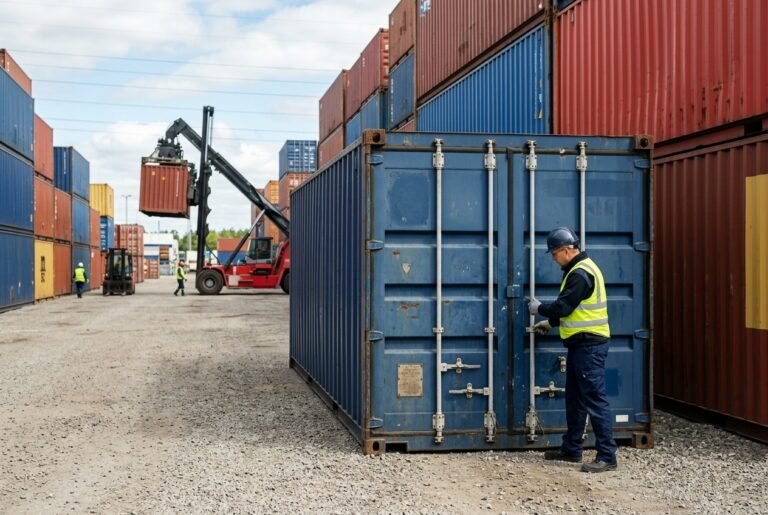
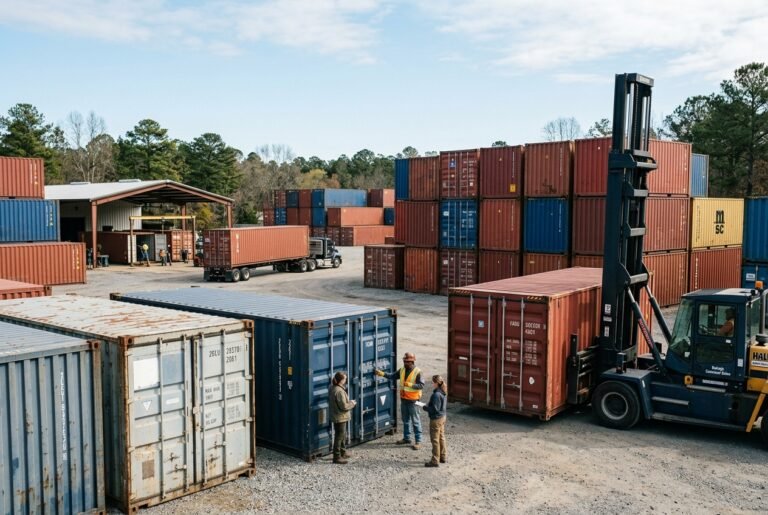
Houston buyers can purchase new (one-trip) or used shipping containers in several grades: one-trip, cargo worthy, and wind and watertight. One-trip containers have made a single ocean voyage and arrive in near-new condition with minimal cosmetic wear. Cargo worthy units have been inspected and certified for ocean transport, showing moderate use but solid structural integrity. Wind and watertight containers are retired from active shipping but still provide reliable weather protection for storage purposes.
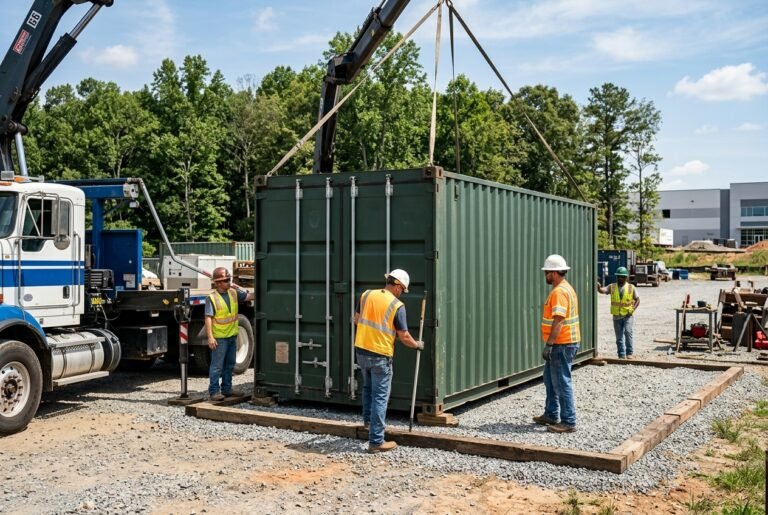
Beyond the container itself, most reputable suppliers offer delivery planning support that covers site access evaluation, turning radius requirements, and overhead clearance checks. In Houston, this matters more than people expect. Mature live oaks, power lines running low across residential streets, and narrow driveways in older neighborhoods like Garden Oaks or Meyerland can create real delivery challenges.
Why Location Matters
Houston sits in Harris County, but the metro area bleeds into Fort Bend, Montgomery, Brazoria, and Galveston counties. Each jurisdiction handles permits and zoning slightly differently. If you’re placing a container on a residential property inside Houston city limits, you may need to check with the City of Houston’s Planning and Development Department (832-394-8854) about any applicable restrictions. Properties in unincorporated Harris County or in smaller municipalities like Pearland or Sugar Land follow their own rules.
The city’s flat terrain and generally accessible road network work in your favor for delivery. Most sites in Houston can accommodate a tilt-bed truck, which needs roughly 100 feet of straight-line clearance to offload a 20ft container. Roll-off delivery requires less space but isn’t available everywhere.
Top 20ft Shipping Container Options in Houston
Not every buyer needs the same container. Breaking down your options by tier helps match your budget to your actual requirements.
Budget-Friendly: Wind and Watertight
Price range in Houston: $1,800 to $2,500
These containers have been retired from ocean service. Expect surface rust, dents, and cosmetic wear. The floors are intact, the doors open and close properly, and the roof doesn’t leak. They’re the right fit for on-site storage where appearance doesn’t matter: think construction yards in Pasadena, farm equipment storage outside Tomball, or overflow inventory behind a warehouse in the Greenspoint area.
What you get: functional weather protection, working doors, and a solid steel structure. What you don’t get: a pretty exterior or a current CSC plate for ocean transport.
Mid-Range: Cargo Worthy
Price range in Houston: $2,500 to $3,500
Cargo worthy containers have been inspected and certified as structurally sound enough for international shipping. They show moderate use but are in noticeably better condition than wind and watertight units. This is the most popular tier for Houston buyers who want a balance between cost and condition.
Best for: small business owners needing presentable storage, contractors who move containers between job sites, and homeowners who want something that looks decent on their property. A cargo worthy 20ft container placed on a gravel pad in a backyard in Spring or Humble serves most residential storage needs perfectly.
Premium: One-Trip Containers
Price range in Houston: $3,500 to $4,500
One-trip containers are manufactured overseas (typically in China) and shipped to the U.S. loaded with cargo on their maiden voyage. They arrive with fresh paint, minimal wear, and factory-installed features. If you’re planning a container office conversion, a workshop build-out, or any project where appearance and long-term durability matter, this is the grade to choose.
Houston’s climate adds another consideration here. The combination of heat, humidity, and salt air (especially closer to the coast near Galveston Bay) accelerates corrosion on older containers. Starting with a one-trip unit gives you the longest usable lifespan before maintenance becomes a concern.
How to Choose the Right 20ft Shipping Container in Houston
Picking the right container isn’t just about price. A structured decision process prevents the most common buyer mistakes.
Start with Your Use Case
Storage-only buyers can often save money with a wind and watertight container. If you’re storing lawn equipment, seasonal inventory, or construction materials, cosmetic condition is irrelevant. Buyers planning modifications, conversions, or long-term placement on visible property should start with cargo worthy or one-trip grades.
Ask yourself three questions: How long will this container be on site? Does anyone other than me need to see it? Am I planning to modify it? Your answers determine which grade makes financial sense.
Verify the Container’s Condition
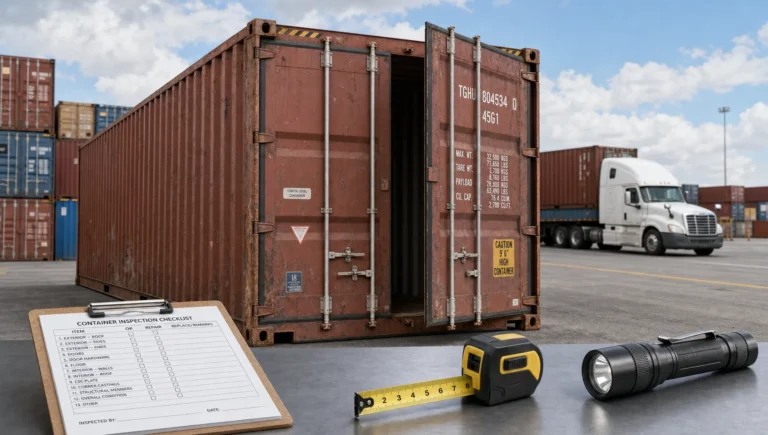
Never buy a container you haven’t seen photos of, or better yet, inspected in person. Here’s what to check:
- Doors: Open and close both doors fully. Check the rubber gaskets for cracks or gaps. Test the locking bars.
- Floor: Walk the entire interior. Look for soft spots, water damage, or patched areas. Original container floors are marine-grade plywood over steel crossmembers.
- Roof: Look for dents that could pool water. Even small depressions collect Houston’s frequent rainfall and accelerate rust.
- Walls: Surface rust is normal on used containers. Holes, deep pitting, or visible light through the walls are not.
- Undercarriage: Check the steel crossmembers for corrosion. Houston’s clay soil retains moisture, which can accelerate bottom-side rust if the container sits directly on the ground.
Ask the Right Questions
Before committing to a purchase, ask the supplier these specific questions:
- What grade is this container, and how do you define that grade?
- Can I see dated photos of the actual unit I’m buying?
- What does delivery include, and who handles placement?
- What’s the delivery vehicle type, and what clearance does my site need?
- Is there a return policy or condition guarantee?
Suppliers who provide transparent grading guidance and clear answers to these questions are worth your business. Suppliers who dodge specifics or use vague language like “good condition” without defining what that means are a red flag.
Texas-Specific Considerations
Texas doesn’t require a special license to sell shipping containers, which means the barrier to entry for sellers is low. That’s both good and bad: it keeps prices competitive but also means some sellers operate without consistent quality standards. Verify that any used container marketed as “cargo worthy” actually carries a current CSC (Convention for Safe Containers) inspection plate if that certification matters for your use case.
Houston 20ft Shipping Container Market in 2026
The Houston container market in 2026 reflects broader national trends, but local factors create distinct pricing and availability patterns.
Supply and Demand Dynamics
Houston benefits from direct access to one of the busiest ports in the Western Hemisphere. The Port of Houston handled over 4.5 million TEUs (twenty-foot equivalent units) in recent years, and that throughput means a steady supply of retired containers enters the local market. This keeps Houston prices 10-15% lower than landlocked Texas cities for equivalent container grades.
Demand remains strong across multiple sectors. Houston’s construction industry, driven by ongoing residential development in areas like Fulshear, Bridgeland, and League City, consumes containers for job site storage at a steady clip. The oil and gas sector, while cyclical, continues to use containers for equipment storage at remote well sites and staging areas.
Seasonal Patterns
Houston’s container market follows a predictable seasonal curve. Demand peaks from March through June as construction activity ramps up and homeowners tackle spring projects. Prices soften slightly from October through January, making late fall and winter the best time to buy if your timeline is flexible.
Hurricane season (June through November) creates a secondary demand spike. Buyers in coastal areas from Kemah to Bolivar Peninsula purchase containers for storm-resistant storage, and that seasonal urgency can tighten supply temporarily.
How Houston Compares to the Rest of Texas
Dallas-Fort Worth, Austin, and San Antonio all sit further from major port infrastructure. Containers reaching those markets incur higher transportation costs, which get passed to the buyer. A 20ft one-trip container that costs $4,000 in Houston might run $4,400 to $4,800 in Austin. Houston buyers consistently get better pricing on equivalent grades, and that advantage holds across all container conditions.
Lease Lane Containers, based in Raleigh, North Carolina, ships containers nationwide and can provide container buying guidance for Houston buyers looking to compare grades and pricing across markets. Having a supplier that understands both local delivery logistics and national pricing trends gives you better data for your purchase decision.
Houston 20ft Shipping Container FAQ
How much does a 20ft shipping container cost in Houston in 2026?
Expect to pay between $1,800 and $4,500 depending on condition. Wind and watertight containers start around $1,800. Cargo worthy units typically fall between $2,500 and $3,500. One-trip containers range from $3,500 to $4,500. Delivery fees within the Houston metro area usually add $200 to $500 depending on distance and site accessibility.
Do I need a permit to place a shipping container on my property in Houston?
It depends on your location and intended use. Inside Houston city limits, the city’s permitting requirements vary based on whether the container is temporary or permanent, and whether it’s on residential or commercial property. Contact the City of Houston Planning and Development Department at 832-394-8854 for specifics. In unincorporated Harris County, restrictions are generally lighter, but HOA covenants may still apply.
What’s the difference between cargo worthy and wind and watertight?
A cargo worthy container has been inspected and certified as structurally sound enough for ocean transport. It carries a valid CSC plate. A wind and watertight container keeps weather out but hasn’t been certified for shipping. If you only need storage, wind and watertight saves you money. If you need the container to be transportable by ocean freight, cargo worthy is the minimum requirement.
How much space do I need for delivery?
A tilt-bed truck delivering a 20ft container needs approximately 100 feet of straight-line clearance in front of the placement spot. Overhead clearance of at least 14 feet is necessary to clear the truck and container during offloading. The delivery path should be at least 10 feet wide. If your site has tight access, discuss alternative delivery methods with your supplier before ordering.
How long does a 20ft shipping container last in Houston’s climate?
A one-trip container in Houston’s humid, subtropical climate will typically last 20 to 25 years with minimal maintenance. Cargo worthy and wind and watertight containers have already used some of that lifespan, so expect 10 to 15 years of remaining service life depending on condition at purchase. Placing the container on a gravel pad or concrete piers (rather than directly on soil) and applying rust-preventive coating every few years extends longevity significantly.
Can I modify a 20ft shipping container?
Yes. Common modifications include adding ventilation, electrical wiring, insulation, roll-up doors, windows, and interior partition walls. Houston has numerous fabrication shops that specialize in container modifications. Starting with a one-trip container gives you the cleanest canvas for modifications and the longest post-modification lifespan.
Get 20ft Shipping Container in Houston Today
Getting a 20ft shipping container delivered to your Houston property is straightforward when you approach it with the right preparation.
Start by confirming your site is ready. Measure the delivery path for width (minimum 10 feet) and overhead clearance (minimum 14 feet). Identify where the container will sit and prepare a level surface: a compacted gravel pad at least 2 inches deep works well for most Houston soil conditions. The city’s expansive clay soil shifts with moisture changes, so a proper foundation prevents the container from settling unevenly over time.
Decide on your grade before contacting suppliers. Knowing whether you need a one-trip, cargo worthy, or wind and watertight container narrows your options immediately and speeds up the quoting process. Have your delivery address, preferred placement location, and any site access concerns ready to share.
If you’re comparing options across multiple suppliers, ask each one for photos of the specific unit they’re quoting, not stock photos. Condition matters as much as size, and the difference between two “used” containers can be dramatic.
Lease Lane Containers provides delivery planning support for Houston buyers, including guidance on site access, turning radius, and placement logistics. Their Raleigh-based team works with buyers nationwide and understands the specific delivery challenges that come with Houston’s mix of urban density and suburban sprawl.
Final Checklist
Before you finalize your 20ft shipping container purchase in Houston, run through these steps:
- Confirm your use case and select the appropriate container grade (one-trip, cargo worthy, or wind and watertight)
- Measure your delivery path: 100 feet of straight clearance, 14 feet overhead, 10 feet wide minimum
- Prepare your foundation: compacted gravel pad or concrete piers, level surface
- Check local permit requirements with your city or county planning department
- Review HOA restrictions if applicable
- Request photos of the specific container you’re buying
- Ask the supplier about delivery vehicle type and placement process
- Verify the container’s grade definition and any applicable certifications
- Budget for delivery fees ($200 to $500 within Houston metro)
- Plan for long-term maintenance: rust treatment every 2 to 3 years in Houston’s humid climate
Finding the right 20ft shipping container for your Houston project comes down to matching grade to purpose, preparing your site correctly, and working with a supplier who gives you straight answers. If you’re ready to compare sizes, conditions, and pricing, browse available inventory to see what’s in stock. For questions about delivery planning, site prep, or choosing the right grade, contact us and the team will walk you through it.