Custom Shipping Containers: Popular Mods That Pay Off
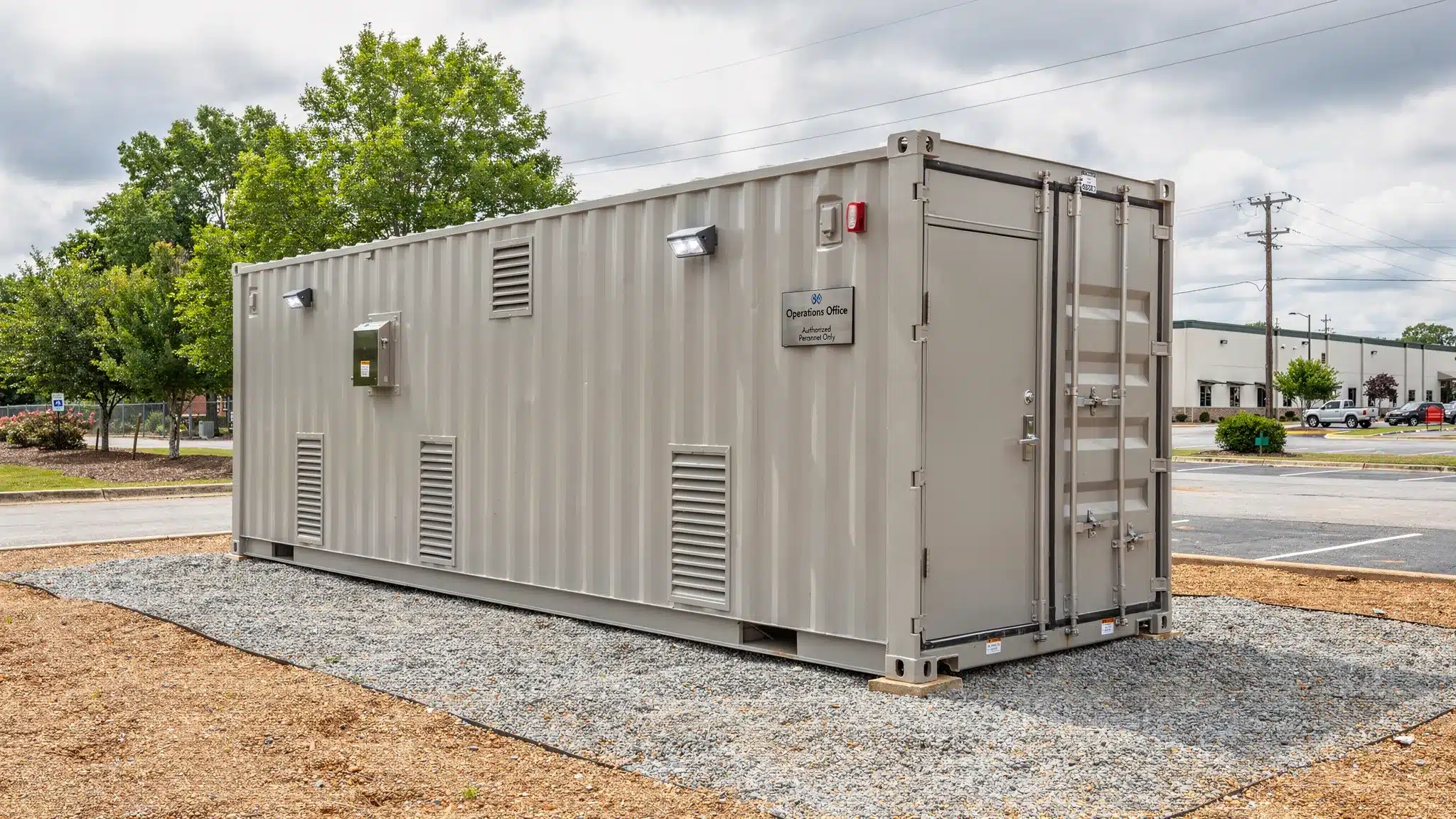
Custom shipping containers can be simple storage units, but the right modifications can turn them into jobsite offices, mobile retail spaces, farm workshops, inventory overflow rooms, cold storage, or modular building blocks. The key is knowing which upgrades create measurable value and which ones look good on paper but make the project harder to permit, deliver, maintain, or resell.
For buyers in Raleigh, North Carolina, and across the Southeast, that value calculation matters. Humidity, heavy rain, red clay soils, jobsite security risks, and local zoning rules can all affect whether a container modification pays off over time. A well-planned build starts with a structurally sound ISO container, usually made from corrosion-resistant Corten Steel, then adds only the features that improve security, usability, comfort, or long-term durability.
Start With the Right Container Grade Before You Modify
The most expensive mistake in a custom container project is modifying the wrong base unit. A fresh coat of paint or new door hardware cannot compensate for a weak roof, twisted frame, soft floor, or heavily corroded bottom rail.
Here is how the main grades should guide your modification plan.
| Container grade | What it means | Best modification fit | Key caution |
|---|---|---|---|
| One-Trip | A nearly new container that has typically made one loaded voyage from the factory | Offices, retail units, showrooms, cabins, premium storage, customer-facing builds | Higher upfront cost, but cleaner shell and longer service life |
| Cargo Worthy, or CW | A used container that can be certified for cargo transport when properly inspected and documented | Export, regional transport, heavy-duty storage, workshops, industrial builds | Verify CSC plate, inspection status, and whether planned cuts affect cargo use |
| Wind and Watertight, or WWT | A used container that keeps out wind and rain but is not certified for ocean shipping | Static storage, farm use, construction storage, basic modifications | Cosmetic wear is common, and it may not be ideal for complex occupied-space conversions |
A One-Trip unit is often the best choice when appearance, clean floors, tight door seals, and long-term resale value matter. A Cargo Worthy container makes sense when structural performance and transport use are priorities. A Wind and Watertight unit can be a smart budget option for stationary storage, especially if the modifications are limited to security, ventilation, shelving, and access improvements.
Because shipping containers are built to ISO standards, their corner castings, frame geometry, and load paths are not random. Cutting walls, roofs, or end frames without reinforcement can reduce structural integrity. This is especially important for High Cube containers, which provide extra interior height and are popular for offices, workshops, and modular builds.
Popular Custom Shipping Container Mods That Usually Pay Off
A modification pays off when it reduces operating costs, protects higher-value contents, improves daily workflow, extends the life of the unit, or helps the container serve a higher-value purpose. For contractors, that might mean fewer stolen tools. For a small business, it might mean faster inventory access. For a homeowner, it might mean a dry, secure outbuilding that lasts for years.
| Modification | Best for | Why it pays off |
|---|---|---|
| Lockbox and upgraded locking system | Contractors, farms, retail inventory, equipment storage | Reduces theft risk and protects the most common attack point |
| Personnel door | Offices, workshops, retail pop-ups, frequent-access storage | Improves daily access without opening heavy cargo doors |
| Roll-up or overhead door | Contractors, landscapers, equipment users, small businesses | Speeds loading and makes pallet, mower, or tool access easier |
| Vents and condensation control | Storage in Raleigh and the humid Southeast | Helps manage moisture, odors, heat buildup, and container rain |
| Insulation and climate control | Offices, finished interiors, sensitive inventory | Makes the space usable year-round and protects contents |
| Electrical and lighting | Jobsite offices, workshops, retail, farms | Improves safety, productivity, and usability after dark |
| Interior shelving and partitions | Inventory, tools, parts, agricultural supplies | Saves labor time and increases usable storage density |
| Exterior paint or coating | Customer-facing projects, long-term outdoor storage | Protects steel, improves appearance, and supports branding |
| Windows and storefront openings | Retail, offices, showrooms, studios | Creates a better user experience when properly reinforced |
| Reefer or cold-storage setup | Food, floral, pharmaceutical, agricultural products | Maintains temperature control when cold chain performance matters |
The best modification plan is usually not the longest list of upgrades. It is the shortest list that solves the real problem.
Security Mods: Lockboxes, Lighting, and Door Planning
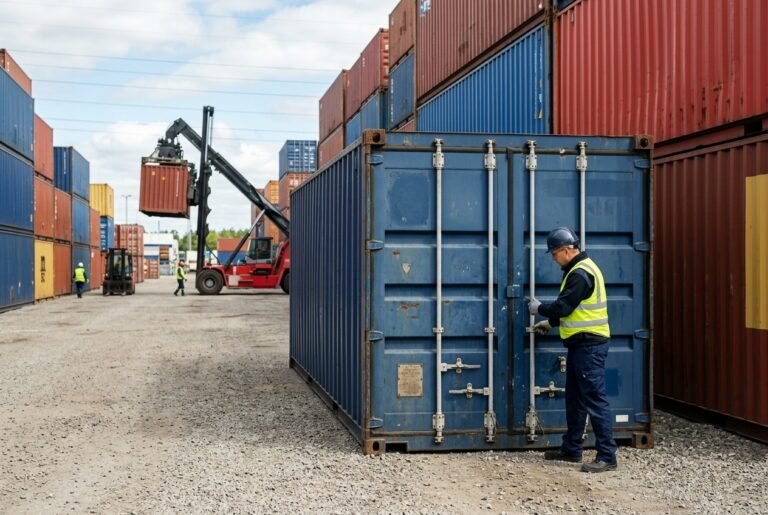
Security upgrades are often the first modifications that pay for themselves. A standard container is already difficult to break into because of its Corten Steel shell and heavy cargo doors, but the lock remains the obvious target.
A welded lockbox shields the padlock from bolt cutters and pry tools. Paired with a puck lock or high-security shrouded padlock, it gives contractors and property owners a much stronger first line of defense. For job sites in Raleigh, Durham, Cary, and across North Carolina, this is one of the highest-value upgrades for tool storage and material staging.
Lighting also matters. Motion lighting near the doors, clear sightlines from the street or building, and smart placement can discourage tampering. If the container will sit at a remote farm, laydown yard, or development site, think about visibility before delivery, not after the unit is already on the ground.
Door orientation can be just as important as the lock. A container placed with doors facing away from traffic may be easier to access privately, but it may also be easier for thieves to work unnoticed. For retail or office conversions, a personnel door may be more practical than using the original cargo doors every day.
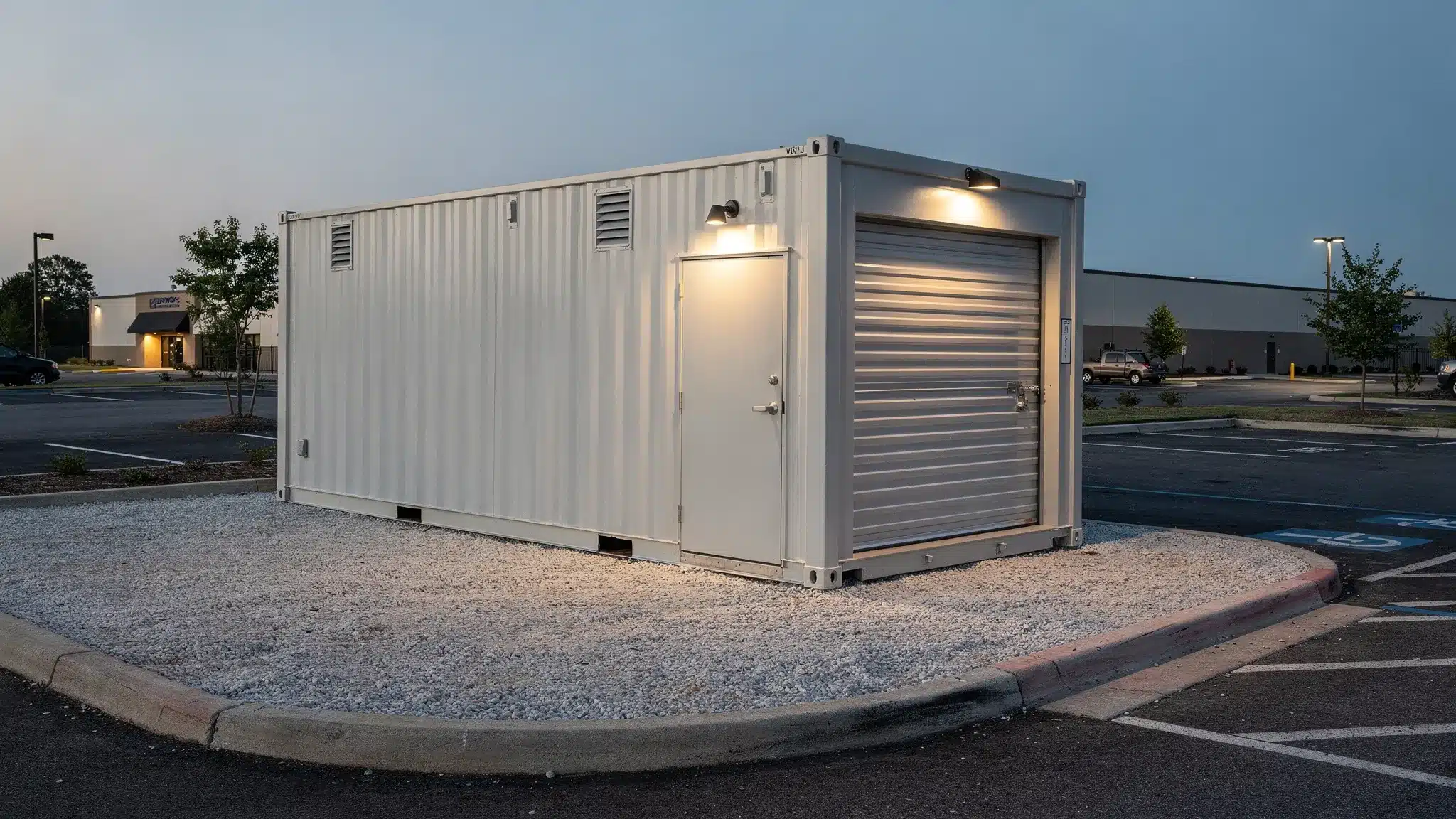
Access Mods: Personnel Doors, Roll-Up Doors, and Ramps
Access modifications are valuable when they reduce wasted motion. If your crew opens the container ten times per day, a personnel door can save time and reduce wear on the cargo door hardware. If you move palletized inventory, mowers, ATVs, or construction materials, a roll-up door or overhead door may be worth the investment.
A few practical rules help avoid regret:
- Put doors where the delivery truck can place the container safely and where people will naturally approach it.
- Reinforce large cutouts so the sidewall does not lose structural integrity.
- Match ramps, thresholds, and floor transitions to the equipment you actually use.
- Confirm whether the container will remain static or be moved after modification.
A large side opening can be excellent for retail or equipment access, but it changes the structural behavior of the shell. That does not mean you should avoid it. It means the cutout should be planned, framed, and fabricated correctly.
Ventilation and Moisture Control: A Must in the Southeast
Moisture control is one of the most overlooked upgrades for custom shipping containers. In Raleigh and the broader Southeast, high humidity and temperature swings can create condensation inside a sealed steel box. This is often called container rain, and it can affect cardboard boxes, tools, furniture, documents, feed, and unfinished materials.
Basic louver vents, turbine vents, or passive cross-ventilation can help. For high-value storage, finished interiors, or office use, ventilation should be considered together with insulation, vapor control, and HVAC. Adding vents without thinking about airflow can help a little, but it may not solve the whole problem.
For storage-only projects, simple ventilation plus a raised, well-drained pad can be enough. For occupied spaces, the right answer often includes insulation, a vapor strategy, sealed penetrations, and a properly sized heating and cooling system.
Insulation, HVAC, and High Cube Value
Insulation is one of the most important upgrades for container offices, workshops, cabins, mobile retail units, and modular buildings. Steel transfers heat quickly, so an uninsulated container can become uncomfortable in summer and cold in winter.
This is where High Cube containers often pay off. A standard container has limited interior height once you add framing, insulation, ceiling finishes, lights, and flooring. A High Cube unit gives you an extra foot of exterior height, which can preserve a more comfortable finished interior.
Spray foam, mineral wool, rigid foam, and framed wall systems can all work, but the best choice depends on budget, climate, code requirements, and interior use. A storage container for tools does not need the same wall assembly as a year-round office. A retail unit with customers inside needs a more finished plan than a farm storage unit with seasonal access.
Insulation also affects door selection, electrical planning, and ventilation. If you plan to add HVAC later, it is usually cheaper to plan the penetrations, panel location, and wall cavities before interior finishes go in.
Electrical, Lighting, and Data Upgrades
Electrical work can turn a container from a storage box into a productive workspace. Interior LED lighting, exterior security lights, outlets, panel service, data conduit, and HVAC circuits all support higher-value uses.
For construction companies, electrical upgrades can support charging stations, document review, small tools, and jobsite communication. For small businesses, they can support point-of-sale equipment, lighting, refrigeration, or office equipment. For farms, they can support lighting, fans, small pumps, or equipment charging.
Electrical modifications should be planned with permitting and inspection in mind. In North Carolina, requirements can vary by municipality, county, and intended use. A container used as temporary jobsite storage is treated differently than a permanent occupied office or retail structure. Work with licensed trades where required, and confirm expectations with the local authority having jurisdiction.
Interior Organization: Shelving, Workbenches, and Partitions
Interior organization is not the flashiest modification, but it is one of the most practical. Shelving, tool racks, parts bins, workbenches, and partitions can turn unused cubic footage into real working space.
For general contractors and home builders, this may mean separating power tools from consumables and keeping high-value equipment behind a secondary locked cage. For small businesses, it may mean separating backstock by SKU, season, or delivery route. For agricultural users, it may mean organizing feed, irrigation parts, fencing supplies, and equipment fluids safely.
The payoff comes from time saved. If employees spend less time searching, unloading, and restacking, the container becomes more than storage. It becomes an operational tool.
Exterior Finishes, Paint, and Branding
Exterior work pays off in two ways: protection and perception. For a purely industrial site, a weathered WWT container may be perfectly acceptable. For a retail pop-up, mobile office, event booth, or residential project, appearance has real value.
A quality exterior coating can help protect exposed steel and improve the way the container fits into its site. Brand colors, signage areas, awnings, and window layouts can make a container feel intentional rather than temporary.
In the Southeast, paint condition matters because humidity and rain can accelerate corrosion where coatings are damaged. Surface preparation is critical. Painting over loose rust or contaminated steel may look good briefly, but it rarely holds up.
Special-Use Mods: Retail, Backyard Projects, and Cold Storage
Some custom shipping containers pay off because they replace a more expensive structure. Retail pop-ups, coffee kiosks, ticket booths, farm stands, and mobile offices can be compelling when the container is designed around customer flow, electrical demand, HVAC, service windows, and permitting.
Backyard projects are similar. A container can become a pool house, hobby shop, storage room, or equipment room, but the container shell is only one part of the budget. If you are planning a larger outdoor living project, compare the full installed cost of the container, utility work, landscaping, and amenities. For example, an independent resource like the Hot Tub Value Guide can help homeowners evaluate spa purchases before committing to the surrounding container enclosure or backyard layout.
For cold storage, do not assume a standard container can be cheaply converted into a reliable refrigerated unit. Refrigerated containers, often called reefers, are built for temperature control and include specialized machinery, insulation, and power requirements. If your product depends on a true cold chain, start the conversation with reefer options rather than trying to retrofit a basic dry container beyond its practical limits.
Choosing the Right Size for a Custom Build
Size affects every modification decision. A 20ft unit is easier to place on tight residential lots, small business sites, and urban infill projects. It can be ideal for compact offices, secure tool storage, small retail booths, and backyard workshops. If that footprint sounds right, review your options for 20ft containers before finalizing the layout.
A 40ft unit gives you more linear space and better flexibility for partitions, work zones, retail counters, or combined storage and office layouts. For contractors, developers, and businesses with growing inventory, 40ft containers often provide a better cost-per-square-foot value.
Used containers can also be a smart starting point when the project is practical rather than customer-facing. A WWT or Cargo Worthy unit may be enough for jobsite storage, farm storage, or a basic workshop, provided the roof, floor, doors, gaskets, corner castings, and lower rails are sound. If budget is a priority, compare available used containers and match the condition to the modification plan.
When Custom Mods Do Not Pay Off
Not every upgrade is worth doing. Some modifications add cost without improving function, and others can reduce resale value or create permitting problems.
Be cautious with major roof cuts, excessive sidewall openings, poorly planned plumbing, bargain electrical work, and cosmetic upgrades that hide structural problems. A cheap window cut into a weak wall can lead to leaks and flex. A poorly sealed roof penetration can become a long-term maintenance issue. A finished interior built over a damp floor can trap odors and moisture.
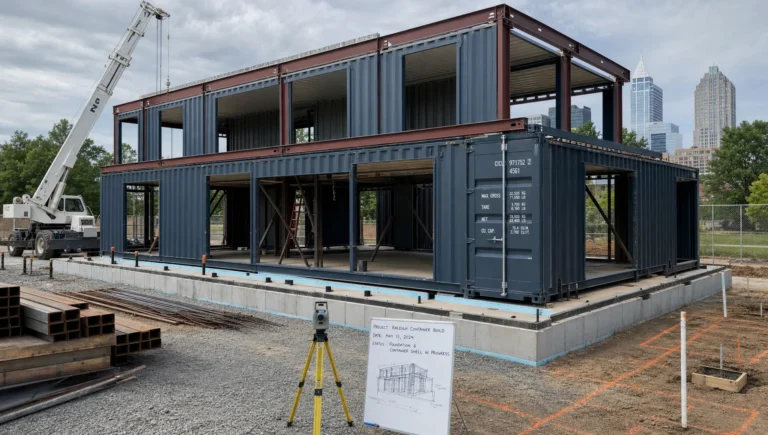
The biggest warning sign is a modification plan that ignores the original ISO structure. Containers are strong because the frame, corner posts, rails, corrugated panels, and corner castings work together. Once you remove parts of that system, reinforcement becomes part of the project, not an optional detail.
Pro-Tip: Site Preparation Determines Whether Mods Keep Paying Off
Before you spend money on custom doors, insulation, electrical, or interior finishes, prepare the drop site correctly. A modified container is often heavier and more valuable than a plain storage unit, so poor placement can create expensive problems.
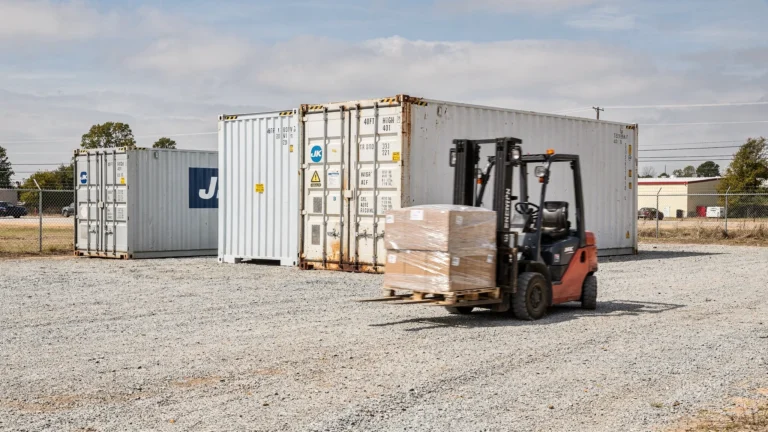
For most Raleigh and Southeast properties, a compacted gravel pad with good drainage is a strong, cost-effective starting point. The container should be level, with support at the corners and drainage that moves water away from the steel. Soft soil, standing water, or uneven blocking can twist the frame, cause cargo doors to bind, and accelerate corrosion under the unit.
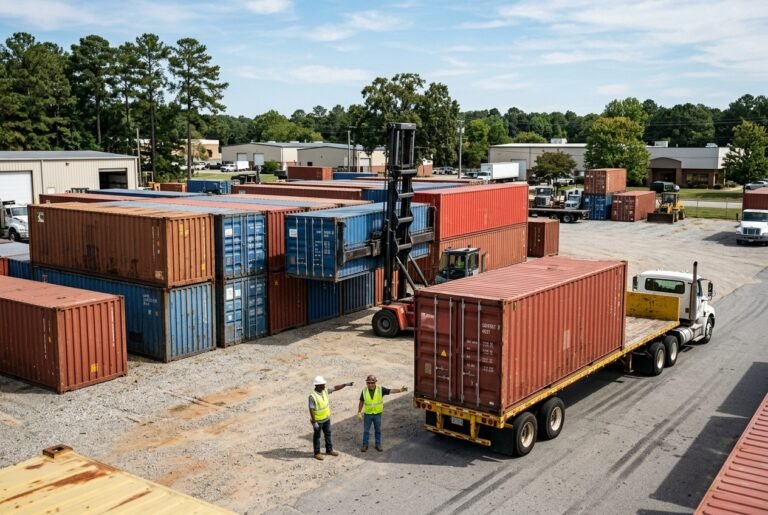
Also check access for the delivery truck. Tilt-bed delivery requires room in front of the drop zone, overhead clearance from trees and power lines, and stable ground. If the container has large custom openings, windows, or finished interiors, you want the delivery and placement plan to be right the first time.
Permits and approvals matter too. In Raleigh, Wake County, and surrounding municipalities, requirements can vary depending on whether the container is temporary storage, a commercial structure, an office, a residential accessory building, or part of a larger modular project. HOA rules may also apply. For a deeper planning checklist, review Lease Lane Containers LLC’s guide to proper shipping container ground preparation before scheduling delivery.
A Simple Value Test Before You Approve a Modification
Before approving any custom shipping container modification, ask five questions:
- Does this upgrade reduce risk, labor, maintenance, or future build cost?
- Does the base container grade match the intended use?
- Will the modification affect structural integrity, cargo-worthiness, or resale value?
- Is the site ready for delivery, drainage, leveling, and access?
- Are permits, utilities, and inspections understood before fabrication begins?
If the answer is unclear, pause and refine the plan. The best custom container projects are not rushed. They are matched to the use case, the site, the grade, and the budget.
Frequently Asked Questions
Are custom shipping containers worth it? Yes, when the modifications solve a real operational need. Security upgrades, better access, ventilation, insulation, electrical, and interior organization often pay off by protecting contents, saving time, or creating usable workspace.
Should I choose a One-Trip, Cargo Worthy, or WWT container for modifications? Choose One-Trip for premium, customer-facing, or occupied builds. Choose Cargo Worthy for structurally strong used units, export-related use, or heavy-duty applications. Choose WWT for cost-effective stationary storage and basic modifications where certification for shipping is not required.
Is a High Cube container better for custom builds? Often, yes. A High Cube container provides extra height, which is valuable after adding insulation, lighting, flooring, and ceiling finishes. It is especially useful for offices, workshops, retail spaces, and modular interiors.
Do I need permits for a modified shipping container in Raleigh, NC? It depends on location, use, utilities, duration, and whether the unit is considered temporary or permanent. Check with the City of Raleigh, Wake County, your municipality, and any HOA before ordering major modifications.
Can a Wind and Watertight container be converted into an office? Sometimes, but it is not always the best value. WWT containers can have more cosmetic wear, older floors, and more repair needs. For a long-term occupied office, a One-Trip or carefully inspected Cargo Worthy unit is usually a better starting point.
Plan Your Custom Container With a Local Team
The modifications that pay off are the ones built around your site, your use case, and the right container grade. Lease Lane Containers LLC helps buyers in Raleigh, across North Carolina, throughout the Southeast, and nationwide choose clean One-Trip and used shipping containers, compare WWT and Cargo Worthy options, plan delivery, and think through practical custom modular solutions.
For help choosing the right container and modification path, contact the sales team at sales@leaselanecontainers.com or visit the Raleigh office to discuss your project with a local container specialist.