How to Choose a Refrigerated Storage Container
A refrigerated storage container can protect inventory, reduce spoilage, and create flexible cold storage without building a permanent cooler. For restaurants, farms, florists, event companies, grocery distributors, pharmaceutical handlers, and construction teams that need climate-controlled staging, the right reefer container can be a practical, ground-level solution.
The key is choosing it like equipment, not just like a steel box. A standard dry container is mainly about size, grade, and delivery. A refrigerated unit adds temperature performance, insulation, airflow, electrical requirements, mechanical service history, and operating cost. In Raleigh, North Carolina and across the Southeast, where summer heat and humidity put extra strain on cooling systems, those details matter even more.
What a refrigerated storage container actually does
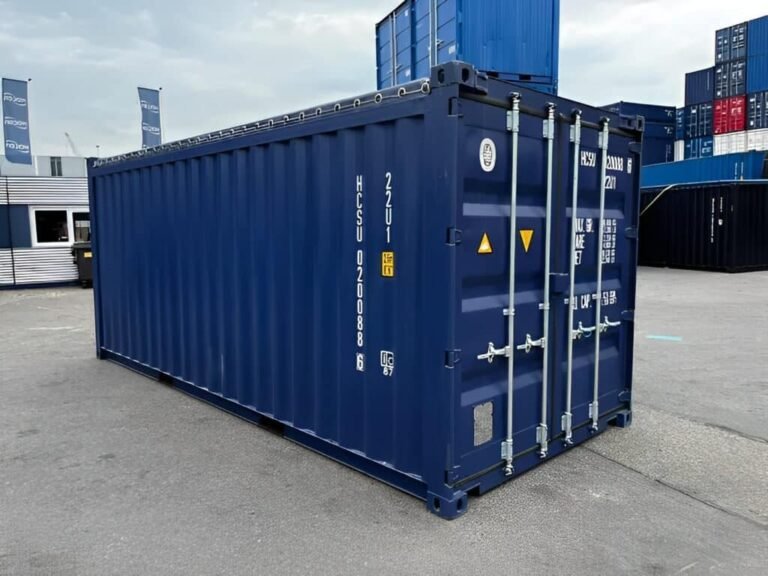
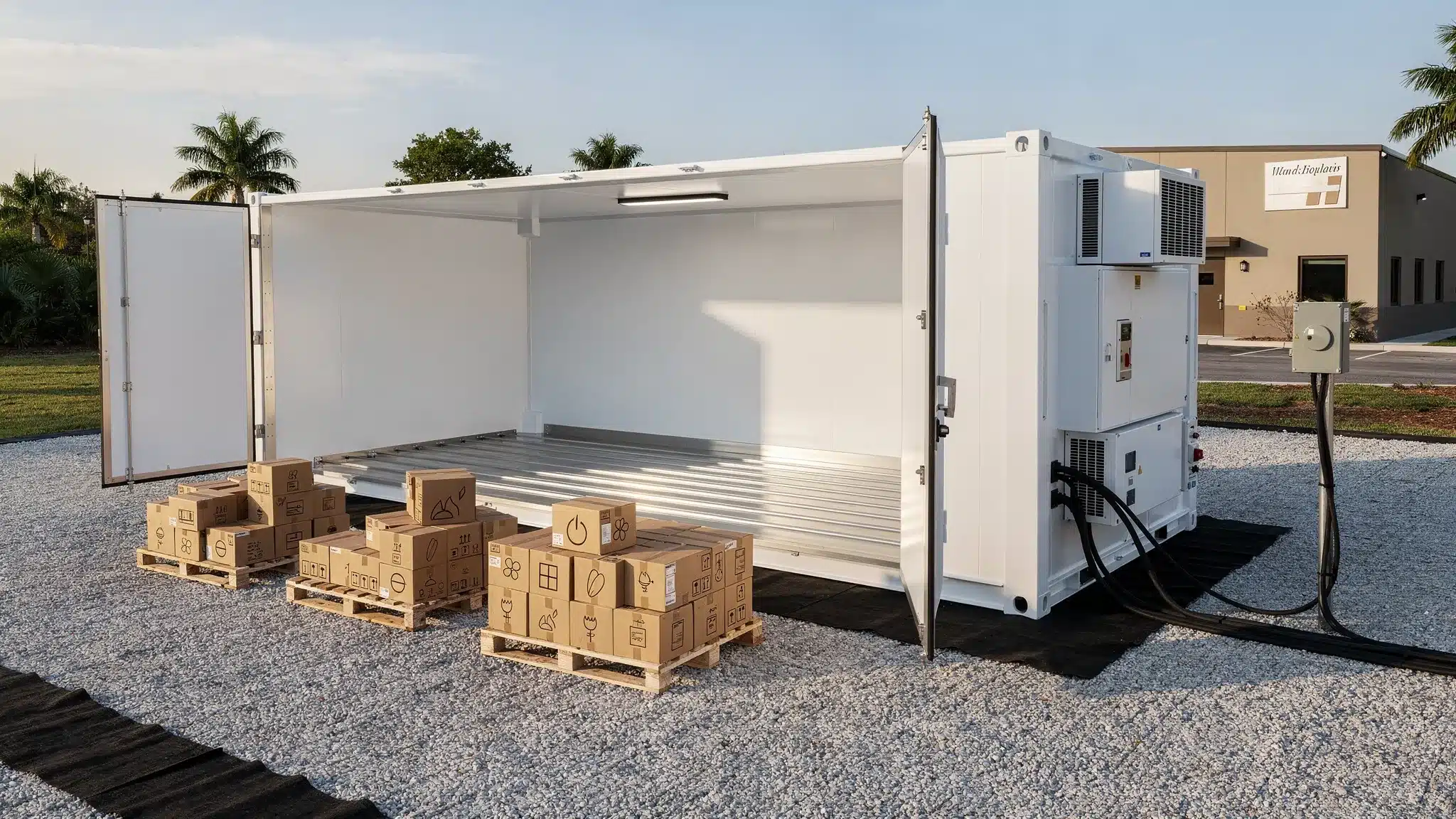
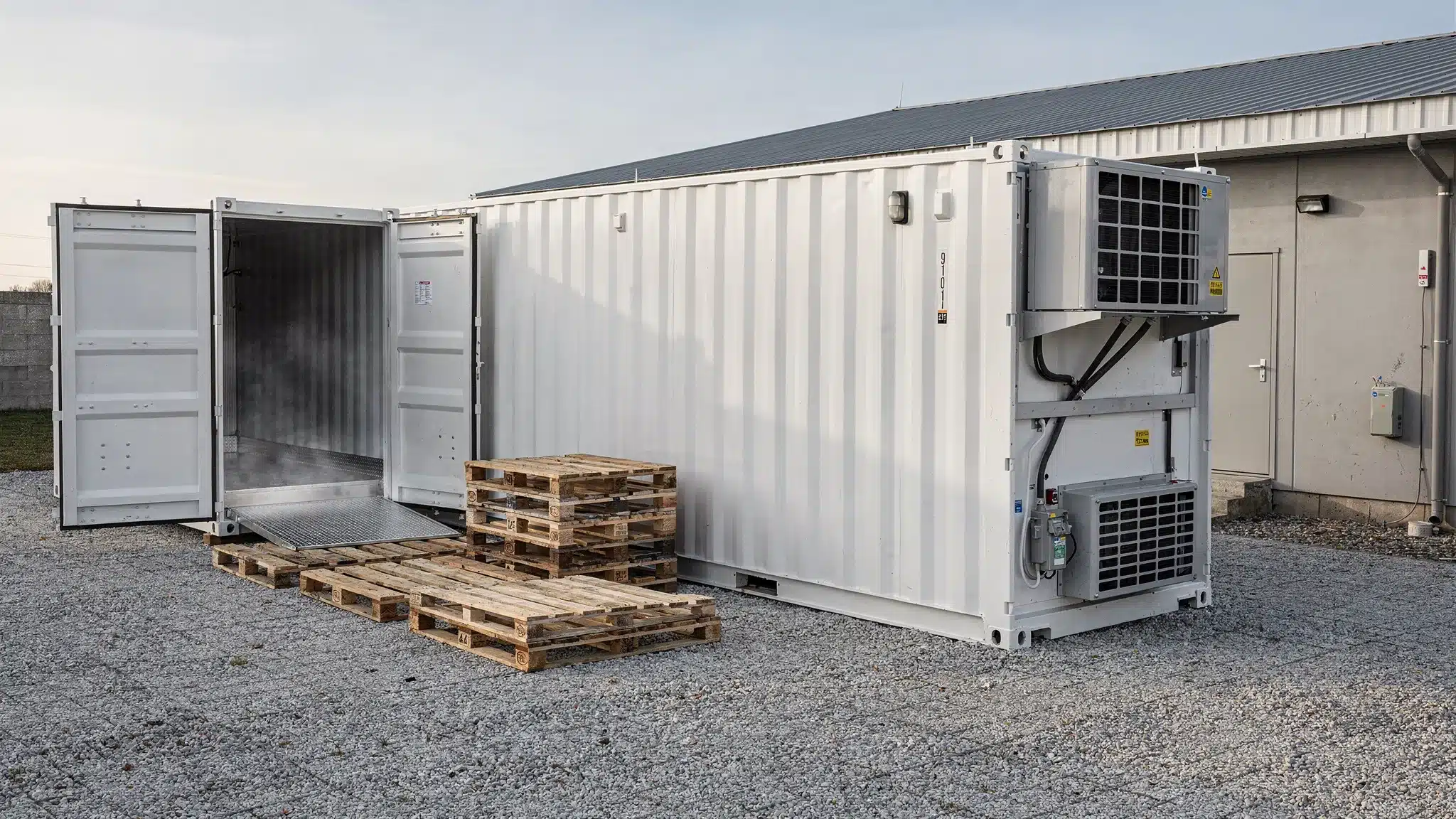
A refrigerated storage container, commonly called a reefer container, is an ISO-style shipping container fitted with an integrated refrigeration unit, insulated walls, an insulated floor system, and interior airflow channels. Unlike a regular Corten Steel dry container, a reefer is designed to maintain a controlled temperature inside the box while the mechanical system removes heat and manages airflow.
Most reefer containers are built around ISO standards for dimensions, corner castings, structural handling, and intermodal compatibility. The steel frame and exterior components are designed for durability, while the interior is typically finished with washable panels and a T-floor that helps air circulate beneath product loads. Exact specifications vary by manufacturer and unit age, so always verify the specific container before purchase.
It is also important to separate active refrigeration from simple insulation. An insulated but non-working reefer may be useful for dry insulated storage, but it will not maintain cold chain temperatures without a functioning refrigeration unit. If you are storing temperature-sensitive food, flowers, frozen goods, medical materials, or specialty chemicals, you need a working unit that has been tested under realistic conditions.
For food businesses, temperature control is not just a convenience. The FDA Food Code sets cold holding guidance for many time and temperature control foods, often at 41°F or below. Your exact requirement depends on your product, local regulations, and operating procedures, but the point is clear: the container must hold the required temperature consistently, not just cool down when empty.
Start with what you need to store
Before comparing prices, define the product, target temperature, loading pattern, and access frequency. A refrigerated storage container used for sealed beverage overflow has different demands than one used for frozen seafood or pharmaceutical inventory.
| Storage need | Typical temperature goal | What to confirm before buying |
|---|---|---|
| Produce, dairy, prepared foods | Often 33°F to 41°F | Product-specific requirements, airflow, sanitation, door traffic |
| Frozen goods | Often 0°F or below | Freezer capability, defrost performance, pull-down time, backup power |
| Flowers and nursery products | Often controlled cool range | Humidity sensitivity, gentle airflow, frequent access needs |
| Beverage and event storage | Often 35°F to 55°F | Fast loading, ramps, door curtains, temporary placement rules |
| Pharmaceuticals or specialty materials | Product-specific | Monitoring, documentation, calibrated data loggers, compliance requirements |
A reefer container is usually designed to maintain temperature, not to rapidly freeze warm product. If you need blast freezing, rapid pull-down, or validated pharmaceutical storage, say that early in the buying process. The supplier, electrician, and operations team need to know whether the container is supporting general cold storage or a regulated cold-chain process.
Choose the right size and configuration
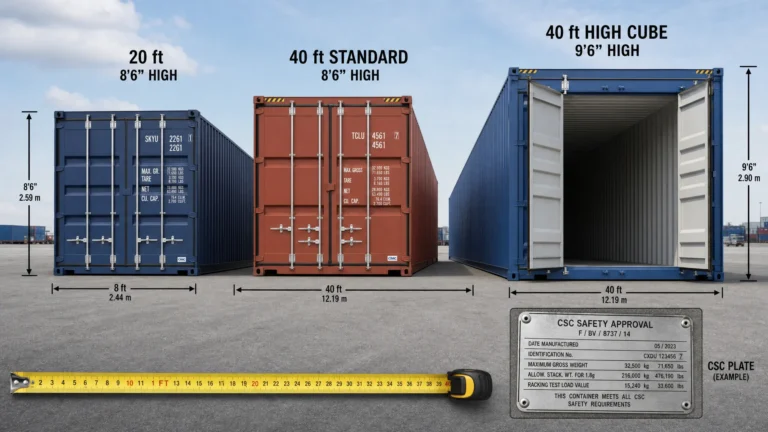
Reefers are commonly available in 20ft and 40ft formats, with High Cube options often preferred when extra internal height is useful. Because refrigeration insulation and airflow systems reduce interior space compared with dry containers, do not assume a reefer has the same usable dimensions as a standard dry storage unit.
If your site is tight, 20ft containers are easier to place, easier to access on many residential or small commercial properties, and practical for farms, restaurants, caterers, and event teams with moderate cold storage needs. If you need palletized storage, distributor overflow, or a more cost-efficient cost per cubic foot, 40ft containers are often the better fit.
| Reefer size | Best fit | Practical considerations |
|---|---|---|
| 20ft refrigerated container | Restaurants, farms, florists, smaller inventory overflow | Smaller footprint, easier placement, lower capacity |
| 40ft refrigerated container | Grocery overflow, distribution, jobsite staging, high-volume storage | More room for pallets, requires more access space for delivery |
| 40ft High Cube reefer | Taller product loads, better headroom, operational comfort | Extra exterior height affects delivery clearance and placement planning |
When comparing dimensions, look at exterior footprint, interior length, door opening, floor load, and airflow space. Product should not be packed tightly against the evaporator, doors, or air return path. Blocking airflow can create warm spots even if the controller shows the correct setpoint.
For a broader comparison of dry and specialty container dimensions, Lease Lane Containers also maintains a guide to 20ft, 40ft, and High Cube shipping container dimensions.
Understand grades: One-Trip vs. Cargo Worthy vs. WWT
Container grade still matters with refrigerated units, but reefer buying requires an additional layer of mechanical inspection. The steel structure, doors, corner castings, and roof must be sound, and the refrigeration system must perform properly.
| Grade | What it usually means | When it makes sense for refrigerated storage |
|---|---|---|
| One-Trip | A newer unit that has typically made one loaded voyage from the factory | Best for premium storage, customer-facing sites, long-term use, and projects where appearance and remaining life matter |
| Cargo Worthy | Structurally suitable for cargo transport when properly certified | Good for logistics, export-related uses, and buyers who need stronger documentation than basic storage grade |
| Wind & Watertight | Used container that keeps out wind and water for stationary storage | Acceptable for some static storage, but WWT alone does not prove the refrigeration system works |
| Refurbished or used working reefer | A used unit that may have repairs, paint, or mechanical servicing | Can be a strong value if the cooling system, insulation, doors, and electrical components are verified |
With used containers, cosmetic wear is normal. Surface rust, dents, patching, and older paint may not be deal breakers. Structural corrosion, poor door seals, water intrusion, damaged insulation panels, and refrigeration alarms are much more serious.
For active cold storage, ask about both the container grade and the reefer unit status. A Cargo Worthy box with a weak refrigeration unit may be a poor storage choice. A Wind & Watertight insulated box with no working refrigeration may be useful for non-refrigerated insulated storage, but it is not a true refrigerated storage container.
If you want a deeper grade comparison before buying, review Lease Lane Containers guide on choosing the right shipping container grade.
Inspect the refrigeration system, not just the shell
The refrigeration machinery is the heart of the unit. A clean exterior and fresh paint do not prove the system can hold temperature in July heat in Raleigh or on a humid farm site in eastern North Carolina.
Ask for a recent pre-trip inspection, often called a PTI, or a documented run test. A credible inspection should confirm that the unit powers on, pulls down toward the setpoint, cycles properly, displays no active critical alarms, and runs through defrost and fan operation as expected. For regulated storage, you may also need your own calibrated temperature logger inside the container.
Key areas to review include:
- Door gaskets, hinges, locking rods, and threshold condition
- Interior panels, seams, punctures, and insulation damage
- T-floor condition, drains, and signs of standing water
- Evaporator fans, condenser area, controller display, and alarm history
- Power cable condition, plug type, and electrical compatibility
- Roof, corner posts, undercarriage, and Corten Steel frame condition
Do not skip the smell test. Persistent chemical odors, moldy interiors, or unknown cargo residue can create problems for food, floral, or clean inventory storage. A reefer container should be easy to clean and appropriate for the product you plan to store.
Match the unit to your power supply
Power planning is one of the biggest differences between buying a dry container and buying a reefer. Many marine reefer units are designed around 460V or 480V three-phase power. Some sites use step-up transformers, generator power, or modified electrical setups, but those choices must be planned with a qualified electrician.
Do not assume a refrigerated container can plug into a standard household outlet. It usually cannot. Before ordering, confirm the voltage, phase, amperage, plug type, breaker requirements, disconnect location, cord length, and whether your site can support startup load. If the unit is going to a farm, jobsite, pop-up retail location, or temporary event site, backup power planning may be just as important as the container itself.
In the Southeast, storms and summer grid interruptions can put cold inventory at risk. If the stored product has high replacement value, budget for a generator plan, remote monitoring, or a standard operating procedure for moving inventory quickly if power fails.
Think about workflow, not just cubic feet
A refrigerated storage container needs space inside and around it to work correctly. If employees are entering the unit throughout the day, door traffic can drive up energy use and create temperature swings. If pallets are loaded too tightly, airflow suffers. If the unit is placed too far from receiving or kitchen operations, labor costs increase.
For frequent access, consider a ramp, lighting, strip curtains, shelving that does not block airflow, and a clear aisle. For palletized storage, confirm forklift approach, pallet jack compatibility, door opening size, and floor condition. If the container is customer-facing or near a retail area, a One-Trip or professionally refurbished unit may be worth the premium because appearance, door function, and long-term reliability are more important.
Cold storage buying should follow the same transparency standard you would expect from other high-value purchases. Online marketplaces such as transparent car pricing platforms have trained buyers to compare condition, verification, location, and total cost instead of relying on one headline price. Apply that same approach to reefers: compare grade, test documentation, photos, delivery terms, electrical needs, and expected operating cost before choosing a unit.
Plan delivery and placement early
Refrigerated containers are heavier and more operationally sensitive than standard dry containers. Delivery planning should happen before money changes hands, especially in Raleigh, Wake County, and surrounding North Carolina communities where driveways, tree canopy, wet ground, and HOA rules can complicate placement.
A ground-level reefer is convenient for storage access, but the delivery truck still needs enough straight-line space, turning room, and overhead clearance. A 40ft unit may require a tilt-bed, flatbed with crane, side-loader, or other equipment depending on the site. The machinery end also needs service access and clear airflow around the condenser.
Before delivery, confirm:
- The final placement direction and which way doors should open
- Access width, turning radius, slope, and overhead clearance
- Ground strength for the delivery truck and loaded container
- Electrical service location and safe cable routing
- Local zoning, HOA, building, and electrical permit requirements
- Drainage so water does not collect under the unit
Lease Lane Containers has a detailed resource on shipping container delivery requirements that can help you measure your site before scheduling a drop.
Pro-Tip: Build the pad before the reefer arrives
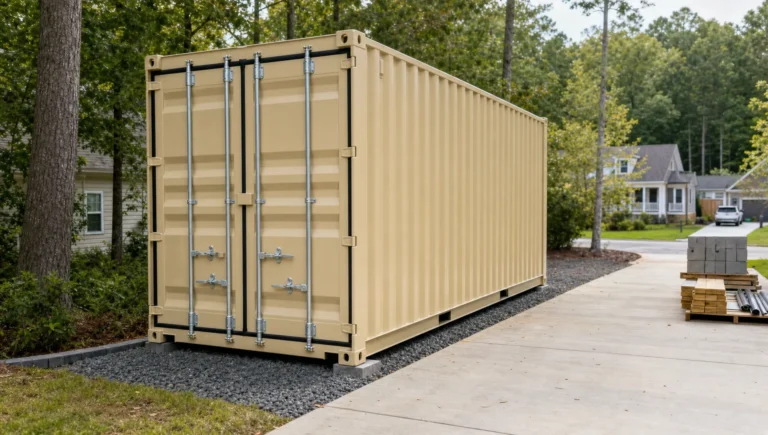
A refrigerated storage container should sit level, stable, and slightly elevated from surrounding ground. Poor leveling can twist the frame, make doors difficult to operate, trap water under the unit, and increase vibration at the refrigeration end.
For many Raleigh and Southeast properties, a compacted gravel pad over geotextile fabric is a practical foundation. Extend the pad beyond the container footprint, compact it properly, and support the container at the corner castings. Concrete slabs, concrete piers, and engineered pads may be better for long-term commercial installations or high-traffic sites.
Do not place a reefer directly on soft soil, wet clay, fresh asphalt, or an uneven yard. North Carolina rain can turn a marginal site into a failed delivery or a sinking container. If electrical work is required, coordinate the electrician before delivery so the disconnect, conduit, and power cable route are safe and code-compliant. For underground utilities, call 811 before digging or installing supports.
For a step-by-step placement plan, use Lease Lane Containers guide on how to prepare your site for container delivery.
Compare quotes by total cost, not just purchase price
The lowest quote is not always the lowest-cost choice. A refrigerated storage container with poor insulation, weak door seals, missing documentation, or incompatible power can cost more in repairs, spoilage, failed delivery, or electrical upgrades than a better unit would have cost upfront.
| Quote item | Why it matters |
|---|---|
| Container size and High Cube status | Determines capacity, clearance, and delivery requirements |
| Grade and condition | Affects lifespan, appearance, structural integrity, and resale value |
| Refrigeration test or PTI status | Helps verify cooling performance before delivery |
| Delivery method and placement | Prevents surprise fees and failed delivery attempts |
| Electrical requirements | Determines site readiness and installation cost |
| Warranty or support terms | Clarifies what happens if the unit has issues after delivery |
| Site preparation needs | Reduces door problems, corrosion, water pooling, and safety risks |
Ask whether the quoted price includes delivery, whether taxes or permits are separate, and whether the unit shown in photos is the actual unit being delivered. For high-value inventory, it is often smarter to buy the right unit once than to lose product because the reefer could not hold temperature.
When a refrigerated container is the right choice
A refrigerated storage container is often a strong fit when you need flexible, durable, movable cold storage without committing to permanent construction. It is especially useful for seasonal agricultural harvests, restaurant renovations, grocery overflow, event catering, floral inventory, disaster response, and temporary distribution support.
It may not be the right fit if your site lacks proper power, your product requires validated cleanroom-level controls, or you need rapid freezing rather than temperature maintenance. In those cases, a specialized cold room, engineered freezer system, or purpose-built facility may be better.
For many buyers, the best path is to start with a clear operating plan, then match the container to the job. Lease Lane Containers can help buyers compare reefers with standard storage units, High Cube dry containers, and other modular options. If you are still narrowing your options, the Lease Lane Containers buyers guide is a useful next step.
Frequently Asked Questions
What is the difference between a reefer and a refrigerated storage container? In everyday use, the terms often refer to the same type of unit. A reefer is a shipping container with an integrated refrigeration system, insulation, and airflow design. When used on land for inventory, food, floral, or medical storage, it is commonly called a refrigerated storage container.
Can a refrigerated container be used as a freezer? Many reefers can maintain frozen temperatures, but capability depends on the specific unit, condition, ambient temperature, loading pattern, and power supply. Always verify the target temperature and test documentation before relying on a container for frozen inventory.
Is a Wind & Watertight reefer good enough for cold storage? Wind & Watertight describes the container shell, not the refrigeration performance. A WWT insulated box may keep out rain and wind, but it is only suitable for active cold storage if the refrigeration unit works and has been tested.
Do I need a permit for a refrigerated container in Raleigh, NC? It depends on the property, placement duration, zoning, utility work, and whether the unit is temporary or permanent. Check with the City of Raleigh, Wake County, your local authority having jurisdiction, and any HOA before delivery. Electrical work may require a licensed electrician and permit.
How much power does a refrigerated container need? Many marine reefers require 460V or 480V three-phase power, though some sites use transformers or generators. Requirements vary by unit, so confirm voltage, phase, amperage, plug type, and breaker needs before purchase.
Should I buy a 20ft or 40ft refrigerated container? Choose a 20ft reefer when space is limited or inventory volume is moderate. Choose a 40ft or 40ft High Cube reefer when you need more pallet capacity and have enough delivery access, electrical capacity, and pad space.
Choose your reefer with local support and clear answers
A refrigerated storage container is a major operational asset. The right choice should match your product, temperature range, container grade, mechanical condition, power supply, delivery access, and long-term site plan. Lease Lane Containers LLC supplies new one-trip and used containers, including refrigerated options, with support for Raleigh, North Carolina, the Southeast, and nationwide delivery planning.
To discuss inventory, delivery, power planning, and site preparation, contact the Lease Lane Containers sales team at sales@leaselanecontainers.com or visit our Raleigh office to speak with a local team before you schedule delivery.