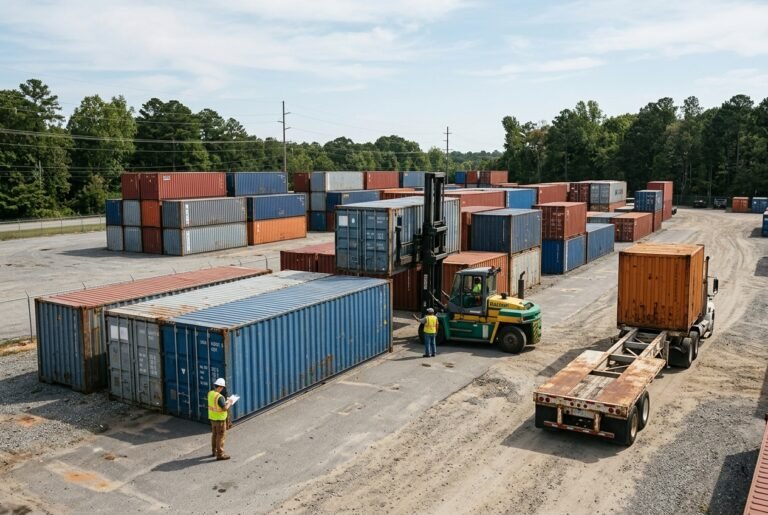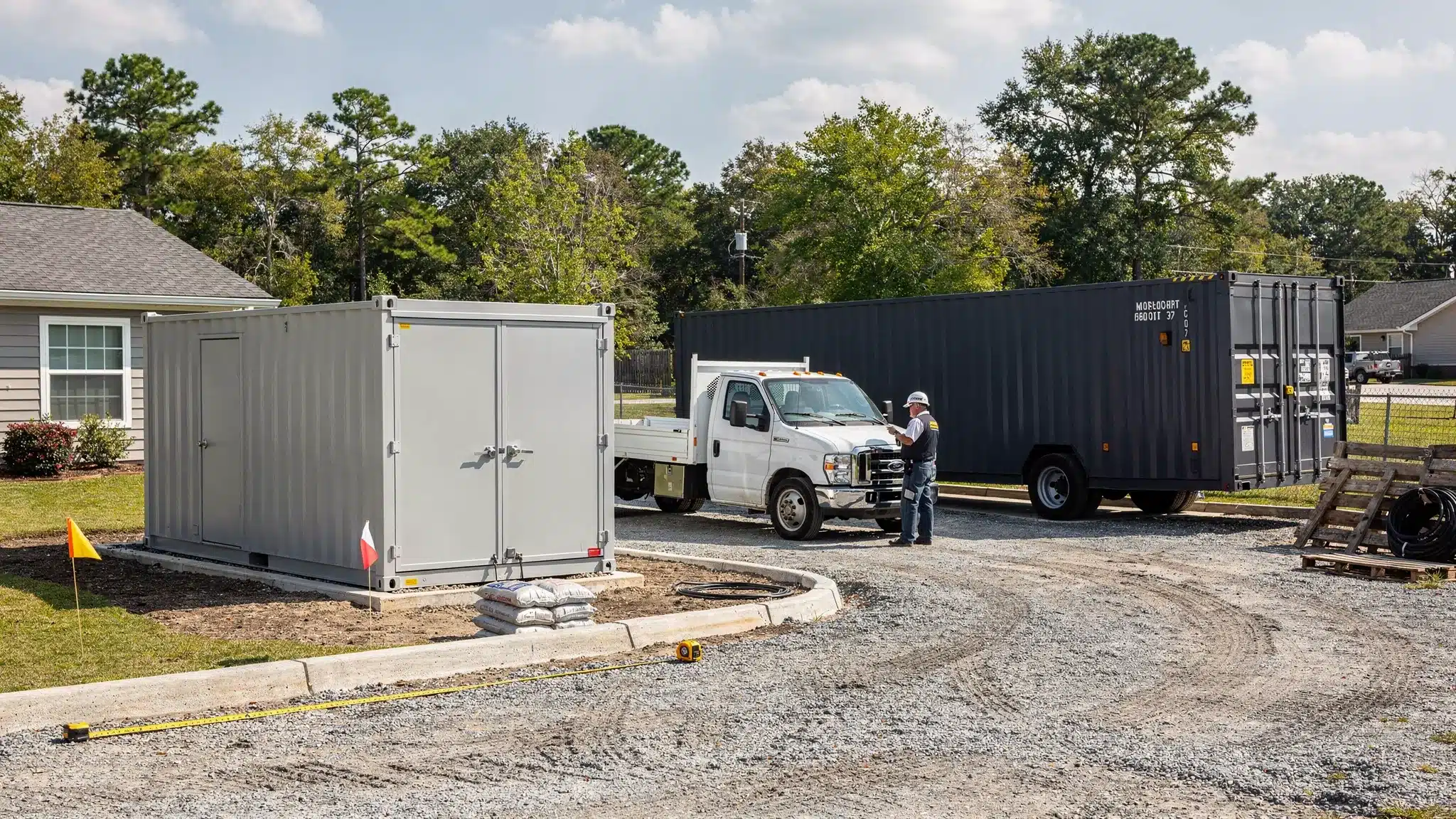
Shipping Container Rental Cost vs Buying in 2026
Many buyers start with the same question: is the 2026 shipping container rental cost low enough to justify renting, or is buying the smarter move? The honest answer depends on how long you need the unit, what grade you need, where it is being delivered, and whether you plan to modify it.
For a short remodel, retail overflow season, or temporary jobsite in Raleigh, renting can be the right call. For long-term storage, repeat construction projects, agricultural use, or container modifications, buying often becomes more cost-effective because you own a durable ISO container made from Corten Steel and can recover resale value later.
This guide breaks down rental cost versus buying in practical 2026 terms, with special attention to Raleigh, North Carolina, the Southeast, and nationwide delivery planning.
The short answer: rent for temporary use, buy for long-term control
Renting is usually best when your need is temporary, your site may change, or you do not want to manage resale. Buying is usually best when the container will stay on-site for a year or more, when you need modifications, or when you want to choose a specific grade such as One-Trip, Cargo Worthy, or Wind and Watertight.
The mistake many buyers make is comparing only the monthly rental rate against the purchase price. That misses delivery, pickup, damage terms, site preparation, permit requirements, and the value of owning an asset.
| Situation | Usually better choice | Why |
|---|---|---|
| 1 to 6 month remodel or event storage | Rent | Lower commitment and no resale process |
| Seasonal inventory overflow | Rent | Useful when demand spikes temporarily |
| 12 to 24 month jobsite storage | Compare both | Delivery, pickup, and monthly fees can approach purchase value |
| Permanent farm, shop, or home storage | Buy | Long-term use favors ownership and resale value |
| Mobile office or retail conversion | Buy | Rental contracts usually restrict modifications |
| Export or intermodal shipping | Buy Cargo Worthy or better | A suitable CSC plate and structural condition matter |
| Premium customer-facing project | Buy One-Trip | Cleaner appearance, better floors, and fewer unknowns |
If you are still early in the decision process, Lease Lane’s shipping container buyers guide is a useful next step for comparing sizes, grades, and delivery requirements.
What affects shipping container rental cost in 2026?
Shipping container rental cost varies by market, container size, grade, delivery distance, rental term, and seasonal availability. Raleigh and the broader Southeast have strong demand from contractors, home builders, farms, small businesses, and logistics users, so availability can shift during busy construction and storm-preparation seasons.
The container itself is only one part of the rental cost. Most rental agreements include or separately charge for delivery, pickup, minimum term, relocation, damage, cleaning, and sometimes administrative fees. If the site is not ready and the truck cannot safely drop the container, a failed delivery charge may apply.
The table below gives broad U.S. planning ranges for standard storage containers in 2026. These are not Lease Lane quotes, and actual pricing depends on location, availability, term, delivery access, and grade.
| Rental cost item | Common 2026 planning range | What changes the price |
|---|---|---|
| Standard 20ft container rental | About $75 to $200 per month | Grade, local inventory, term length, security features |
| Standard 40ft container rental | About $100 to $300 per month | Size, delivery complexity, seasonal demand |
| High Cube rental | Often higher than standard height | Extra interior height and limited availability |
| Refrigerated container rental | Often several hundred dollars to over $1,000 per month | Tested cooling performance, power requirements, term, maintenance |
| Delivery and pickup | Often $150 to $600 each for local or regional moves | Distance, fuel, truck type, access, failed delivery risk |
| Relocation during rental | Quote-specific | Mileage, scheduling, crane or tilt-bed needs |
| Damage or cleaning fees | Contract-specific | Floor gouges, door damage, dents, debris, unauthorized changes |
A 20ft container can be attractive for residential driveways, tight urban lots, and smaller contractor sites. If that is your likely size, review our guide to 20ft containers and pricing factors before comparing rental and purchase quotes.
A 40ft container gives more storage per linear foot of delivery cost, but it needs more room for placement and turning. For larger job sites or business inventory, compare rental quotes against the total cost of owning a 40ft shipping container.
Buying cost: what you are really paying for
When you buy a shipping container, you are paying for more than a steel box. You are paying for grade, structural integrity, remaining service life, floor condition, doors, gaskets, roof condition, corner castings, and delivery to your property.
Most standard containers are built to ISO standards, using Corten Steel designed to resist corrosion better than ordinary steel when maintained properly. That is why containers can serve for many years as secure jobsite storage, farm storage, mobile workshops, retail pop-ups, and modular building shells.
The grade matters because it determines what the container is suitable for.
| Grade | What it means | Best use |
|---|---|---|
| One-Trip | Typically made overseas, used for one loaded voyage, then sold into the resale market. It is usually the closest practical option to new. | Premium storage, offices, retail, modular builds, customer-facing projects |
| Cargo Worthy, or CW | Structurally suitable for cargo transport when properly inspected and documented. It may have cosmetic wear but should meet key transport requirements. | Export, intermodal use, stacking, high-value storage, tougher industrial use |
| Wind and Watertight, or WWT | Keeps out wind and rain under normal conditions but is generally not certified for ocean transport. | Stationary storage, jobsites, farms, home storage, tool and material protection |
| As-Is | Sold with known or unknown defects and usually no strong condition assurance. | Limited budget uses where repairs and risk are acceptable |
For most Raleigh-area contractors, homeowners, and farms that need static storage, a WWT unit can be a strong value. For logistics managers moving cargo internationally, a Cargo Worthy unit is usually the better starting point. For offices, pop-ups, and modifications, One-Trip containers provide cleaner walls, better floors, and fewer surprises.
If you are evaluating used containers, look carefully at the grade definition, not just the word used. A used Cargo Worthy unit and a used WWT unit can both be useful, but they are not the same product.
Rental versus buying: the break-even math
The simplest way to compare rental versus buying is to calculate total cost over the period you expect to use the container.
Rental total is usually:
Rental total = monthly rent x number of months + delivery + pickup + relocations + fees + taxes
Purchase total is usually:
Purchase total = container price + delivery + site preparation + modifications + maintenance – resale value
The resale value is important. A well-maintained ISO container, especially a One-Trip or solid Cargo Worthy unit, may retain meaningful value. A lower-grade or poorly maintained unit may be harder to resell.
The table below uses simplified examples to show how the decision can change. The numbers are illustrative planning examples only, not a quote.
| Use case | Rental example | Buying example | Likely decision |
|---|---|---|---|
| 4 month home renovation | $150/month plus delivery and pickup could stay near $1,000 to $1,300 | Buying may require several thousand dollars upfront | Rent is often simpler |
| 14 month contractor project | Monthly rent plus two-way transport can approach $2,500 to $4,500 | A used WWT or CW container may be competitive, especially if resold | Compare both carefully |
| 36 month farm storage | Long rental term can exceed the cost of a used container | Ownership provides continued use after payoff | Buy is often better |
| Modified mobile office | Rental usually restricts cutting, welding, insulation, windows, and electrical work | Buying gives control over modifications | Buy |
| Export shipment | Rental may not fit the shipment model | Cargo Worthy purchase or export-ready unit is usually needed | Buy CW or better |
In many 2026 storage scenarios, buying starts to look competitive around the 12 to 24 month mark. The exact point depends on monthly rent, delivery and pickup fees, the purchased container grade, local availability, and resale expectations.
How container size changes the rental-versus-buy decision
Size affects both cost and site logistics. A 20ft container is easier to place on tight lots in Raleigh neighborhoods, small commercial yards, farms, and residential driveways. It is also easier to reposition if access is limited. The downside is that the cost per square foot of storage can be higher than a larger unit.
A 40ft container typically offers better storage capacity for the money, especially for contractors storing lumber, scaffolding, fixtures, equipment, or palletized inventory. The tradeoff is delivery space. A 40ft unit on a tilt-bed truck needs significantly more straight-line clearance than the container footprint alone.
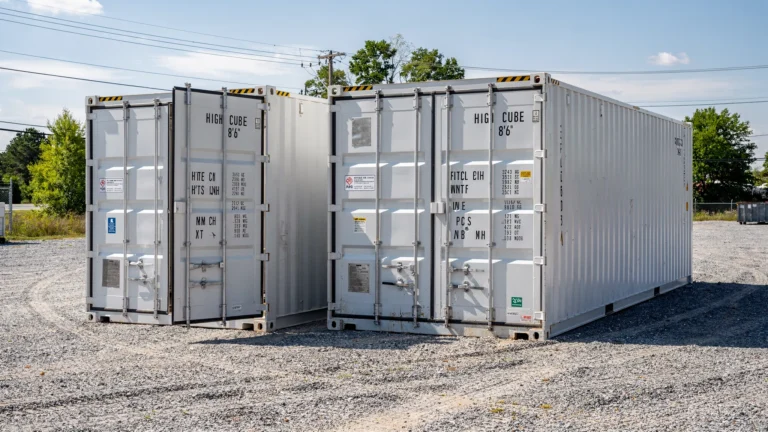
A High Cube container adds about one extra foot of exterior height compared with a standard unit. That extra height matters for shelving, tall equipment, insulation, lighting, HVAC, and office conversions. High Cube units can cost more to rent or buy because demand is strong and availability is more limited.
Refrigerated containers, also called reefers, are a separate category. A reefer includes an insulated container body and refrigeration machinery, so the economics depend on temperature requirements, power access, service condition, and operating cost. Renting can make sense for short-term cold storage, while buying may be better for a permanent cold-chain operation.
When renting makes the most sense
Renting is a good fit when the container solves a temporary problem and you do not need to alter the unit. In Raleigh and throughout North Carolina, common rental uses include home renovation storage, seasonal retail inventory, short-term construction projects, emergency equipment staging, and temporary warehouse overflow.
Renting can also help when you are testing a site. For example, a small business might rent a 20ft unit for three months to see whether on-site inventory storage improves operations before committing to a purchase. A general contractor may rent when a jobsite has a firm end date and no next project ready to receive the container.
The main advantage is flexibility. The main disadvantage is that rental payments do not build equity. If the project extends, delivery and pickup costs are already sunk, and monthly rent continues.
Before signing, review the rental agreement carefully. Confirm the minimum term, delivery charge, pickup charge, failed delivery policy, damage rules, acceptable locks, relocation cost, and whether the container can be used for your specific materials. For a deeper look at terms, see our guide to rental containers, included fees, and term lengths.
When buying makes the most sense
Buying is usually stronger when you expect long-term use, want a specific grade, need modifications, or plan to use the container across multiple projects. Contractors and home builders often buy containers because tools, fasteners, fixtures, and equipment are needed from site to site. Farms and rural property owners often buy because storage needs rarely disappear after six months.
Buying also gives you control. You can add shelving, vents, lockboxes, personnel doors, windows, insulation, lighting, electrical rough-ins, or roll-up doors, subject to code and engineering requirements. Those changes are typically not allowed on rentals.
For modular construction, retail pop-ups, workshops, and offices, One-Trip containers are often worth considering because they offer cleaner Corten Steel panels, less wear, and better presentation. For ground-level storage, WWT can deliver strong value. For export, Cargo Worthy is usually the relevant grade because structural fitness and CSC plate status matter.
Ownership also protects you from long-term rental creep. If your 6 month project becomes 18 months, the cost advantage of renting can disappear quickly.
Pro-Tip: prepare the site before you compare quotes
A cheap quote can become expensive if the truck cannot safely deliver the container or if the unit settles after placement. Site preparation matters whether you rent or buy.
In the Southeast, including Raleigh and much of North Carolina, wet clay soil and heavy rain can cause settling. A container that is not level can twist slightly, which may make the cargo doors difficult to open and close. That can lead to frustration, service calls, or damage disputes on rentals.
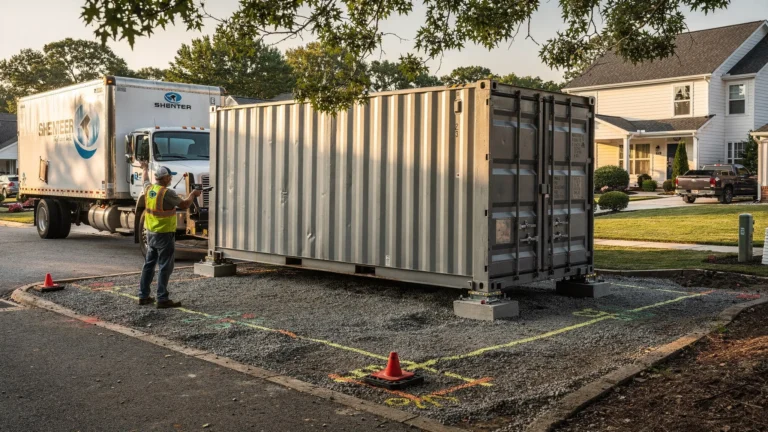
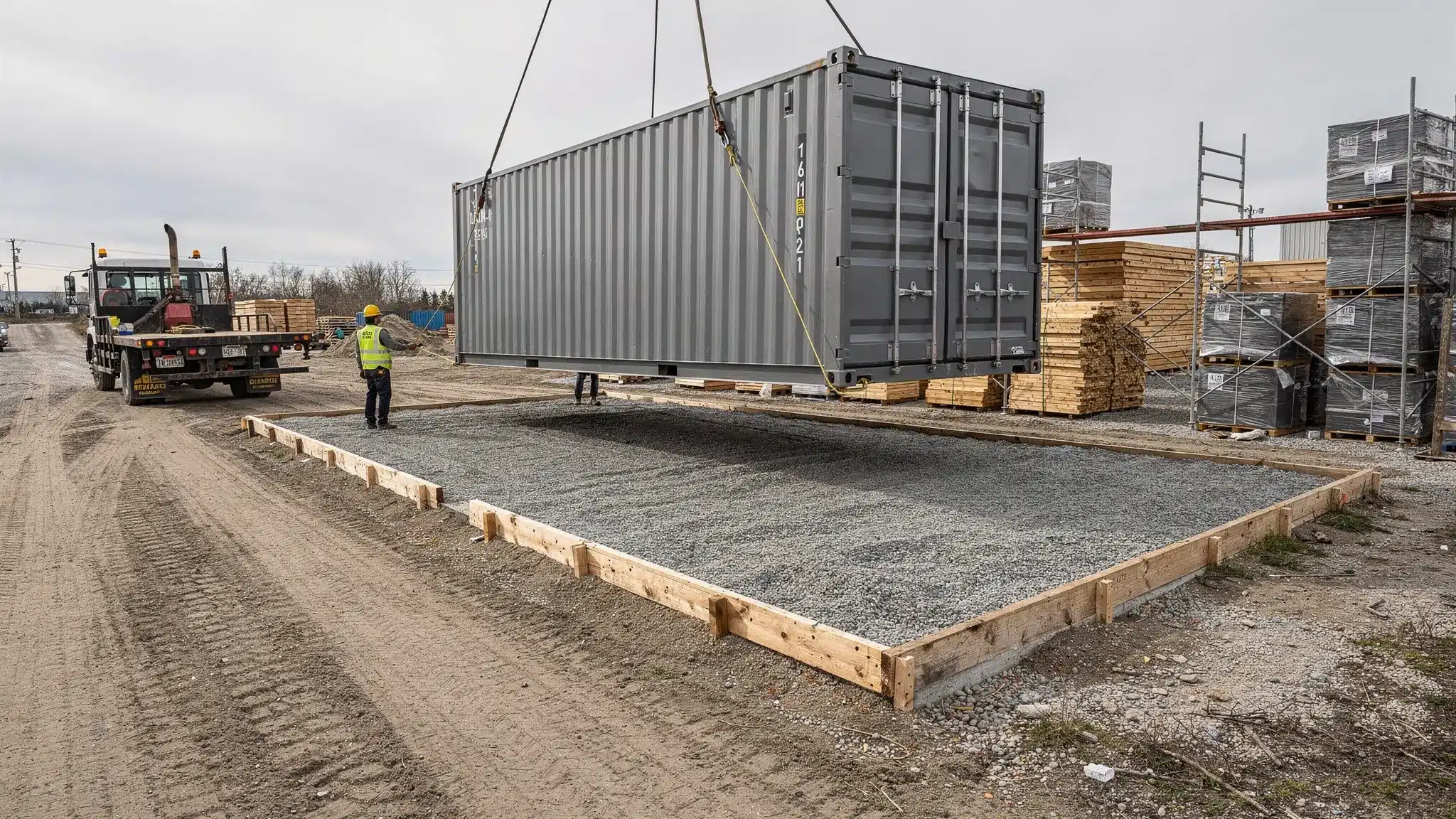
For most static storage applications, plan a level base before delivery. A compacted gravel pad over geotextile fabric is often a practical choice because it supports drainage and reduces mud. Concrete slabs, concrete piers, railroad ties, or engineered footings may be better for permanent installations, offices, heavy loads, or soft soils.
At a minimum, prepare for these site factors:
- Level support at the four corner castings, not just the middle of the container floor.
- Drainage that moves water away from the container instead of letting it pool underneath.
- Clear truck access with enough width, turning room, and overhead clearance.
- Door orientation that leaves room to open both cargo doors fully.
- Utility awareness, including underground lines and overhead power lines.
- Local zoning, HOA, and permit checks before delivery day.
For underground utilities, contact 811 before digging if you are installing piers, trenching utilities, or changing the site grade. For access and clearance planning, use Lease Lane’s shipping container delivery requirements and site preparation guide before the truck is scheduled.
Raleigh and Southeast considerations in 2026
Raleigh, Wake County, and the surrounding Triangle region have a mix of residential driveways, wooded lots, commercial yards, active subdivisions, farms, and industrial sites. That variety makes delivery planning especially important.
A downtown or neighborhood site may have tight turns, tree canopies, sloped driveways, HOA restrictions, or limited street staging. A rural site may have long gravel drives, soft shoulders, low branches, or wet ground after rain. A commercial jobsite may have room for a 40ft High Cube but still need coordination around trades, dumpsters, cranes, and material deliveries.
Permits and zoning rules vary by municipality, property type, duration, and use. A temporary storage container for a construction project may be treated differently than a permanent accessory structure or a modified office. Before renting or buying, check with the local authority having jurisdiction, and confirm any HOA requirements if the container will be placed on residential property.
The best quote is not always the lowest container price. The best quote is the one that correctly accounts for grade, delivery method, site access, placement, and your actual use case.
How to compare rental and purchase quotes apples to apples
To make a fair comparison, collect the same information from each supplier. Ask for the delivered cost, not just the container rate. Ask what grade is being quoted and what proof is available. Ask whether the delivery method matches your site.
A strong quote comparison should include container size, height, grade, delivery ZIP code, delivery and pickup charges, minimum rental term, taxes, relocation fees, damage policy, and site access assumptions. For purchase quotes, include condition photos, grade definition, delivery cost, any lockbox or add-ons, and whether the unit is One-Trip, Cargo Worthy, or WWT.
Be especially careful with vague grade language. Terms like good condition or storage grade do not always mean the same thing from one seller to another. A transparent supplier should be able to explain the roof, doors, gaskets, floor, corner castings, and structural condition in plain language.
For buying, also consider long-term value. A cleaner One-Trip or Cargo Worthy unit may cost more upfront but can be easier to modify and resell. A WWT unit may be the best value for stationary storage if it is structurally solid and passes a light test. An As-Is unit may look cheap but can become expensive if doors, floors, leaks, or rust need repair.
Practical recommendations by buyer type
General contractors and home builders should compare rental cost against project pipeline. If you have one short job, rent. If you regularly need secure tool and material storage across Raleigh, Durham, Cary, or the broader Southeast, buying a WWT or Cargo Worthy unit can reduce repeated rental costs.
Small business owners should rent for seasonal overflow and buy when the container becomes part of the operation. If the unit will support a workshop, inventory hub, pop-up retail concept, or mobile office, ownership gives you more freedom to finish the interior.
Homeowners and agricultural users often benefit from buying because storage needs tend to be ongoing. A WWT container can be a cost-effective long-term option for equipment, feed, tools, furniture, and property storage, provided the site drains well and the doors remain serviceable.
Real estate developers and modular builders should focus less on the lowest cost and more on shell quality. One-Trip and High Cube units are often better for conversions because they provide more predictable condition and interior height.
Logistics managers should prioritize Cargo Worthy units when international shipping, rail, or intermodal use is involved. For export, a WWT container is not enough simply because it keeps rain out. Structural suitability, CSC plate status, and inspection documentation matter.
Frequently Asked Questions
What is the average shipping container rental cost in 2026? Standard storage container rentals commonly range from about $75 to $300 per month depending on size, grade, term, and market. Delivery, pickup, relocation, damage, and cleaning fees can significantly change the total cost.
Is it cheaper to rent or buy a shipping container? Renting is usually cheaper for short-term needs under several months. Buying often becomes more cost-effective for long-term storage, repeat jobsite use, modifications, or projects where resale value matters.
What container grade is best for storage? Wind and Watertight is often a strong value for stationary storage. Cargo Worthy is better when structural certification or transport suitability matters. One-Trip is best for premium appearance, modifications, offices, and customer-facing uses.
Can I modify a rental shipping container? Usually no. Most rental agreements restrict cutting, welding, painting, electrical work, insulation, windows, vents, and other permanent changes. If you need modifications, buying is typically the better path.
Do I need a permit for a shipping container in Raleigh, NC? It depends on location, duration, property type, and intended use. Check Raleigh, Wake County, or your local municipality, and confirm HOA rules before scheduling delivery.
Does a High Cube container cost more than a standard container? Often, yes. High Cube containers provide extra interior height, which is valuable for storage racks, equipment, insulation, HVAC, and conversions. Demand and availability can make them more expensive to rent or buy.
Get a clear rental-versus-buy recommendation
If you are comparing shipping container rental cost versus buying in 2026, Lease Lane Containers LLC can help you evaluate the full picture: size, grade, delivery, site preparation, and long-term value.
Email the sales team at sales@leaselanecontainers.com with your ZIP code, desired size, expected term, site photos, and whether you need WWT, Cargo Worthy, One-Trip, High Cube, or refrigerated options. You can also visit the Raleigh office to speak with a local team about clean shipping containers, delivery planning, and nationwide container solutions.