Tilt Bed vs Chassis Delivery Explained
A container can be the right size, the right grade, and the right price – and still become a problem on delivery day if the unloading method does not match the site. That is why tilt bed vs chassis delivery is one of the most important decisions in any container order. For contractors, property owners, and facility managers, the real question is simple: how do you get the container on the ground, in the right spot, without delays, damage, or extra equipment?
The answer depends on your site conditions, the container size, and how precise the placement needs to be. Both delivery methods are common in container logistics, but they solve different problems.
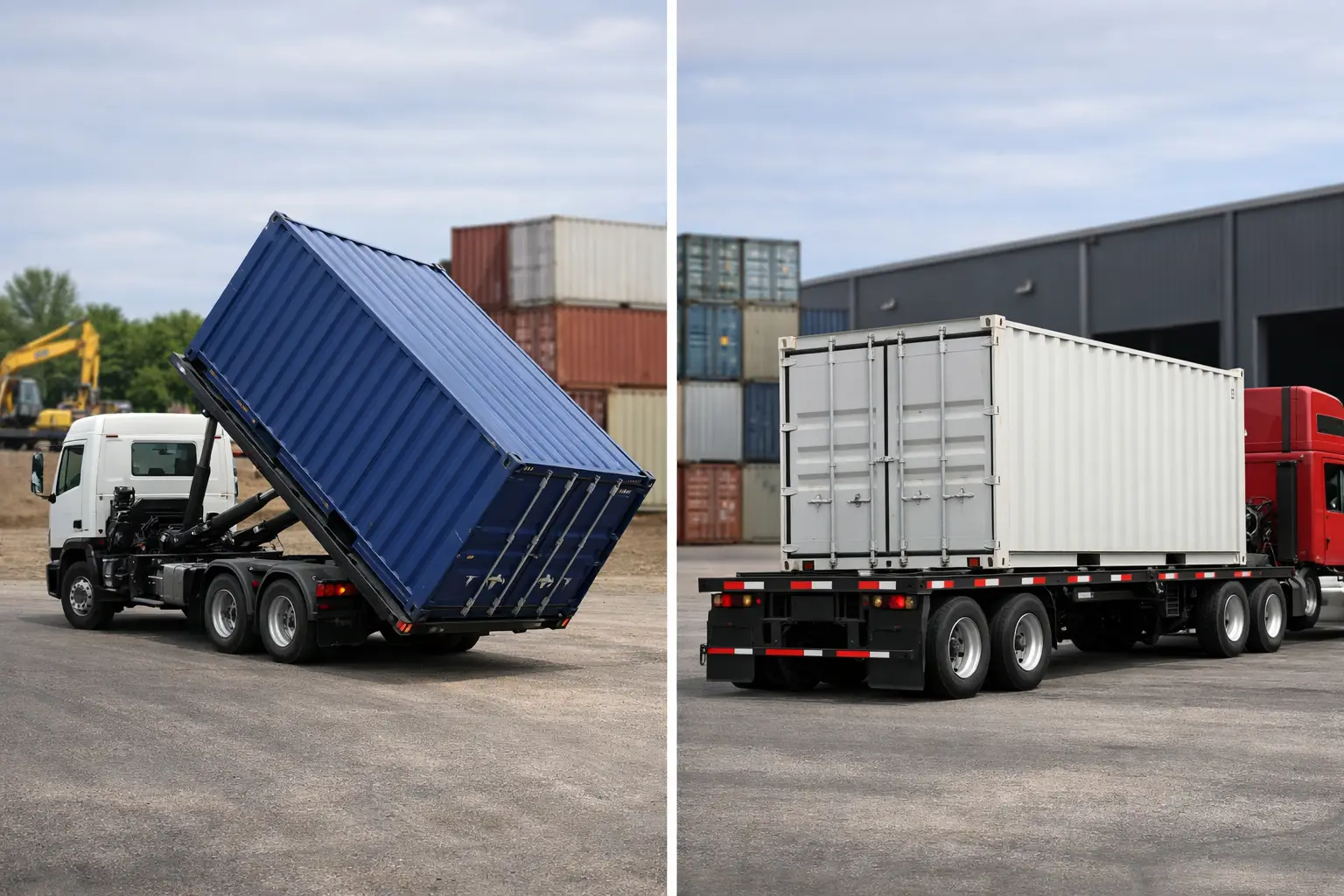
Tilt bed vs chassis delivery: the basic difference
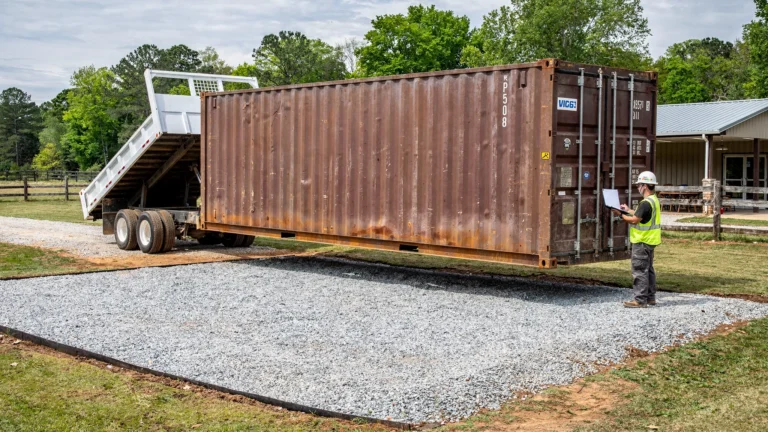
A tilt bed truck carries the container on a hydraulic bed. At delivery, the bed tilts and the container slides off directly onto the ground. This is the method most buyers picture when they want a ground-level drop-off. It is straightforward, efficient, and often the best fit for residential properties, farms, and job sites that need the container ready to use immediately.
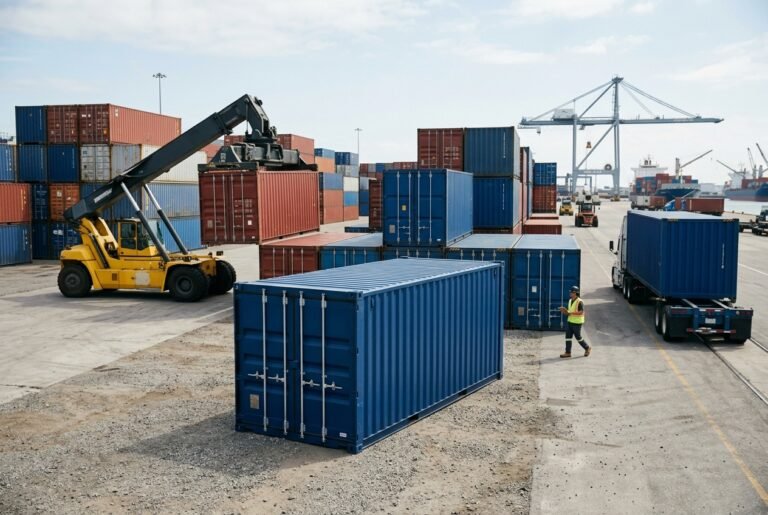
A chassis delivery uses a container chassis, which is the wheeled trailer frame designed to transport ISO containers. With this method, the container stays on the chassis unless the receiving site has equipment to unload it, such as a forklift, crane, reach stacker, or side loader. In some cases, the chassis may be used for staging or transport to a facility that already has lifting equipment in place.
That distinction matters. If you need the container placed on the ground and you do not have unloading machinery on site, tilt bed is usually the practical choice. If you already run a yard with heavy equipment or a loading operation built around container handling, chassis delivery may make more sense.
When tilt bed delivery is the better fit
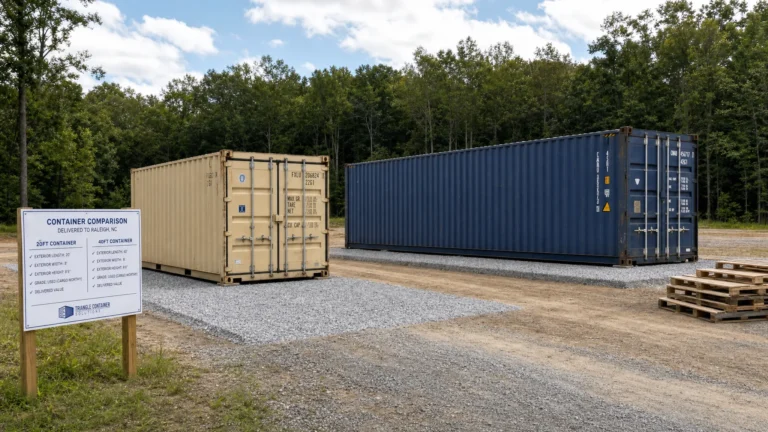
Tilt bed delivery works well when convenience and direct placement matter more than dock-style handling. It is often the preferred method for customers buying 20ft or 40ft containers for storage, workshops, mobile offices, or rural property use.
The main advantage is that the truck does the unloading. You do not need to source separate lifting equipment, schedule another subcontractor, or coordinate multiple arrival times. That reduces moving parts and usually reduces risk. For many first-time buyers, it is also the least complicated option because the container arrives and is set down in one visit.
Tilt bed is especially useful when the container will remain in one long-term location. Contractors placing secure job-site storage, agricultural operators adding equipment storage near a field, and homeowners creating a workshop pad often want a simple drop with minimal setup. A properly prepared surface and adequate truck access are usually all that is required.
That said, tilt bed delivery needs room to operate. The truck requires enough linear space to maneuver, tilt, and slide the container off safely. Overhead clearance is a major issue. Trees, wires, carports, and low rooflines can all interfere with the unloading arc. Ground conditions also matter. Soft soil, steep grades, or tight turns can limit whether a tilt bed truck can access the intended placement area.
When chassis delivery makes more sense
Chassis delivery is often the better choice for commercial and industrial sites that already have unloading capability. If your operation regularly handles freight containers, the chassis is part of a system you already understand. A warehouse with a crane, a distribution yard with a forklift rated for container unloading, or an industrial facility with dedicated lift support may prefer chassis because it can fit their workflow.
This method can also be useful when the final destination is not the first delivery point. Some buyers move containers from a port-adjacent yard, transload facility, or equipment lot to another location using their own handling resources. In those cases, chassis delivery keeps the move aligned with standard freight operations.
The trade-off is responsibility. With chassis delivery, the site must be ready to unload the container safely and promptly. That includes the right equipment capacity, trained operators, and enough working space. If any part of that is uncertain, the initial savings or convenience can disappear fast through detention charges, rescheduling, or equipment rental.
Site access is often the deciding factor
Most delivery issues are not caused by the container itself. They come from site access assumptions that were never verified.
A tilt bed truck needs room not only to enter and turn, but also to straighten out for the drop. The longer the container, the more important this becomes. A 40ft container requires substantially more clearance than a 20ft unit, both for approach and unloading. If a driveway is narrow, tree-lined, sharply sloped, or bordered by fences or buildings, that can limit placement options.
Chassis delivery still requires truck access, but its unloading constraints shift to your equipment and yard layout. You may not need the vertical clearance required for a tilt operation, but you do need enough room to safely lift, pull, or transfer the container from the chassis. That can be easier in a commercial yard and harder on a mixed-use property or active construction site.
This is why verified site photos, gate width measurements, surface details, and notes on overhead obstructions matter. Clear delivery planning prevents expensive guesswork.
Placement precision and surface requirements
If your goal is to place a container exactly where it will stay, tilt bed usually offers more direct placement. The driver can often slide the container onto a prepared gravel pad, concrete surface, or compacted base with good control. It will not place a container with crane-level precision, but for most storage and site-use applications, it is accurate enough.
Chassis delivery may be less direct unless your unloading equipment allows for controlled positioning. A forklift can work for some container handling environments, but not every forklift is rated for every container size or loaded condition. A crane or specialized handler can provide excellent placement, but that adds cost and coordination.
Surface condition matters with both methods. Containers should rest on stable, level support points to protect door alignment and structural integrity. Even a durable Corten Steel container can develop functional issues if it is set on uneven ground and allowed to twist over time. Delivery method gets the container there. Site prep determines how well it performs after delivery.
Cost is not just the delivery rate
Buyers sometimes compare tilt bed and chassis delivery as if it is only a line-item pricing question. It is not. The lower quoted delivery method is not always the lower total cost.
Tilt bed delivery may carry a higher transport charge in some lanes, but it can eliminate the need for rented unloading equipment, separate labor, or follow-up repositioning. It also reduces coordination risk. That has real value when a delayed container affects job-site operations or material security.
Chassis delivery may look efficient on paper if the site already has the right equipment and personnel. In that setting, it can be the smarter option. But if you need to bring in a crane, wait on a forklift crew, or pay for chassis time while sorting out site readiness, the cost picture changes quickly.
The practical way to compare these options is to ask one question: what will it take to get this container safely onto its final supports, on the first attempt, with no surprises?
Common scenarios in tilt bed vs chassis delivery
For a residential buyer placing a 20ft storage container beside a detached garage, tilt bed is usually the more reliable choice if the driveway is open and overhead clearance is adequate. The container can be dropped and ready for use the same day.
For a general contractor using secure site storage on an active commercial project, tilt bed often works well if access roads are stable and placement is at grade. If the project already has crane operations scheduled and the container must be set into a tighter footprint, chassis plus crane may fit better.
For an agricultural operator with open land but uneven terrain, tilt bed is often preferred, but only after the pad is properly prepared. Open space helps the truck, but soft ground can still create problems.
For a logistics or industrial facility with container-handling infrastructure, chassis delivery may be the natural fit because it aligns with existing yard operations and equipment.
How to choose the right method before you order
The best delivery decisions are made before the container is dispatched. That means confirming four things early: container size, final placement location, site access, and whether unloading equipment is available on site.
If you need a ground-level drop and do not operate heavy lifting equipment, tilt bed is typically the right starting point. If your team already handles containers and the site is built for that process, chassis delivery may be more efficient.
A dependable supplier will ask for site details instead of making assumptions. That is not red tape. It is how delivery stays on schedule and how buyers avoid failed drop attempts, surprise fees, and preventable damage.
If you are deciding between the two, choose the method that fits the real site conditions, not the ideal ones. Delivery works best when the plan matches the ground in front of the driver.