Open Side Shipping Containers: Best Uses and Tradeoffs
Open side shipping containers solve a practical access problem: you need to reach cargo, tools, inventory, or display materials from the long side of the container instead of working through one narrow set of end doors. For contractors, small businesses, farms, event crews, and modular builders, that difference can save time every day.
They are not the right fit for every project. Open side units usually cost more than standard dry containers, availability can be tighter, and the extra door hardware needs more attention over time. The key is matching the container design, grade, size, and delivery plan to the way you actually plan to use it.
What Is an Open Side Shipping Container?
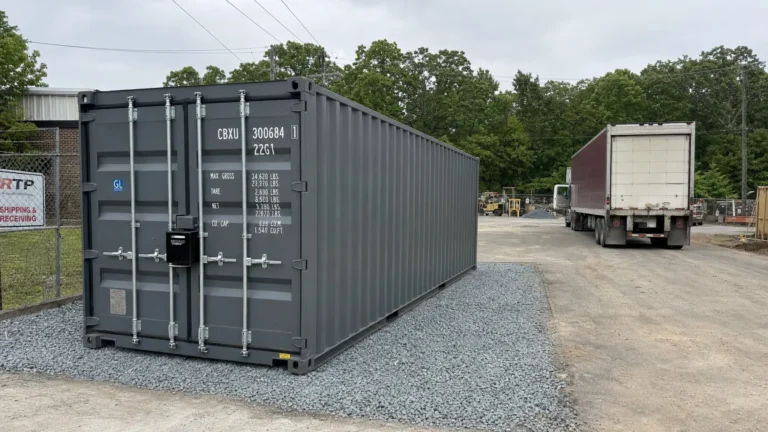
An open side shipping container is an ISO-style steel container built with large doors along one of the long side walls. Instead of accessing the interior only through the standard end doors, you can open a much wider section of the side wall for loading, unloading, staging, or customer-facing use.
Most open side containers are built from Corten Steel, the weathering steel commonly used in shipping container construction. Corten Steel is valued because it resists atmospheric corrosion better than ordinary mild steel, although it still needs proper drainage, paint maintenance, and rust monitoring, especially in humid regions like Raleigh and the wider Southeast.
Because a side wall is part of the container’s structural system, a purpose-built open side unit is not simply a standard container with a large hole cut into it. Quality units use reinforced frames, headers, posts, hinges, locking rods, and door seals to preserve strength and weather resistance. If you are considering a modified unit, ask how the side opening was reinforced and whether the container remains suitable for your intended use.
Open side containers are available in common lengths such as 20ft and 40ft, with High Cube options available in some markets. A High Cube container is typically 9 ft 6 in tall externally, giving roughly one extra foot of interior height compared with a standard-height unit. That extra height can matter for shelving, taller equipment, insulation, lighting, HVAC, or modular buildouts.
Open Side vs. Standard, Tunnel, and Open Top Containers
Open side shipping containers are often confused with other specialty containers. The right choice depends on how you load, how often you access the contents, and whether the container must be moved or shipped after purchase.
| Container type | Best access point | Best fit | Main tradeoff |
|---|---|---|---|
| Standard dry container | End doors | General storage, jobsite tools, household goods, export cargo | End-door access can make deep storage less efficient |
| Open side container | Long side doors | Retail, staging, jobsite materials, workshops, organized inventory | Higher cost and more door hardware to maintain |
| Tunnel container | Doors at both ends | FIFO inventory, construction sites, walk-through access | No full-length side access |
| Open top container | Removable top | Over-height machinery, scrap, crane-loaded cargo | More exposure and tarp maintenance |
If your main challenge is loading over-height cargo with a crane, an open side unit may not be the best answer. In that case, review the differences in our open top container guide before deciding.
Why Container Grade Matters More on Open Side Units
Container grade is always important, but it is especially important with open side units because they have more hinges, more gaskets, more locking points, and a larger weather-sealing surface than a standard container.
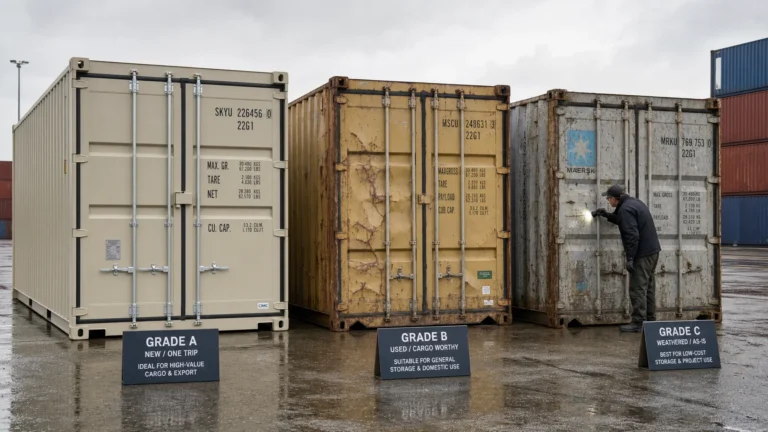
Lease Lane Containers LLC regularly helps buyers compare new one-trip and used container options. Here is how the main grades apply to open side shipping containers.
| Grade | What it means | Best use for open side containers | What to verify |
|---|---|---|---|
| One-Trip | A container that has made one loaded voyage from the factory and is the closest commonly available option to new | Retail, mobile offices, clean storage, customer-facing projects, long-term ownership | Minor handling marks are normal, but doors, seals, paint, and flooring should be in very strong condition |
| Cargo Worthy (CW) | A used container inspected as structurally suitable for cargo transport, typically with valid CSC considerations when required | Logistics, export-related use, heavier storage, projects needing stronger documentation | Confirm the inspection includes the side doors, frame, floor, corner castings, and locking gear |
| Wind and Watertight (WWT) | A used container that should keep wind and rain out for stationary storage but is not certified for ocean transport | Ground storage for tools, farm supplies, equipment, and non-export use | Perform a light test, inspect all side-door gaskets, check roof condition, and test every locking bar |
For open side containers, avoid buying purely on price. A cheaper unit with stiff side doors, torn gaskets, bent locking rods, or an uneven frame can become frustrating quickly. If you are evaluating used containers, start with a grade-first approach and review our used shipping container grades buyer’s guide before comparing quotes.
Best Uses for Open Side Shipping Containers
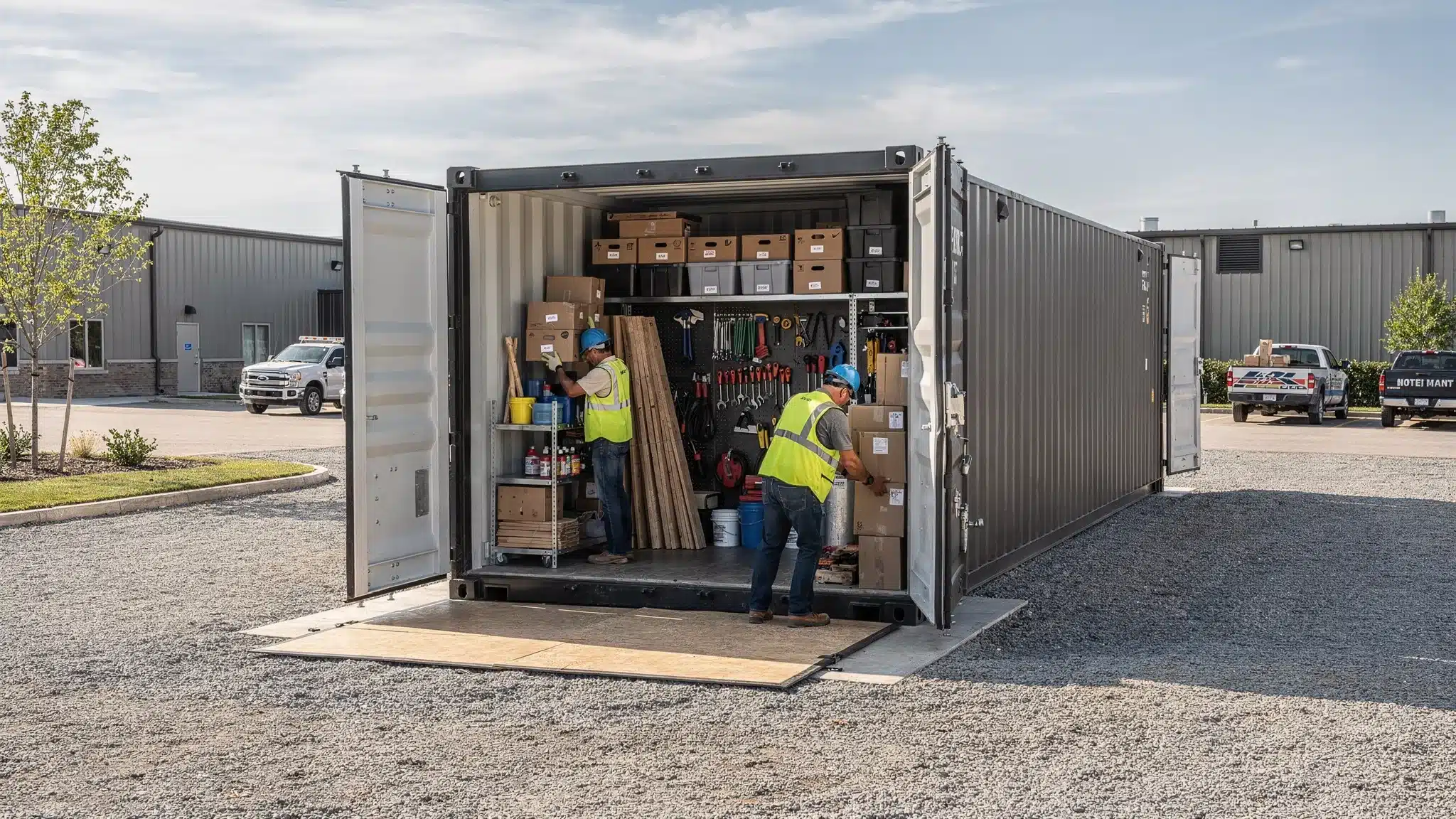
Open side containers shine when the workflow depends on wide, fast, repeatable access. They are often chosen not because they hold more than a standard container, but because they make the space easier to use.
Construction Jobsite Storage
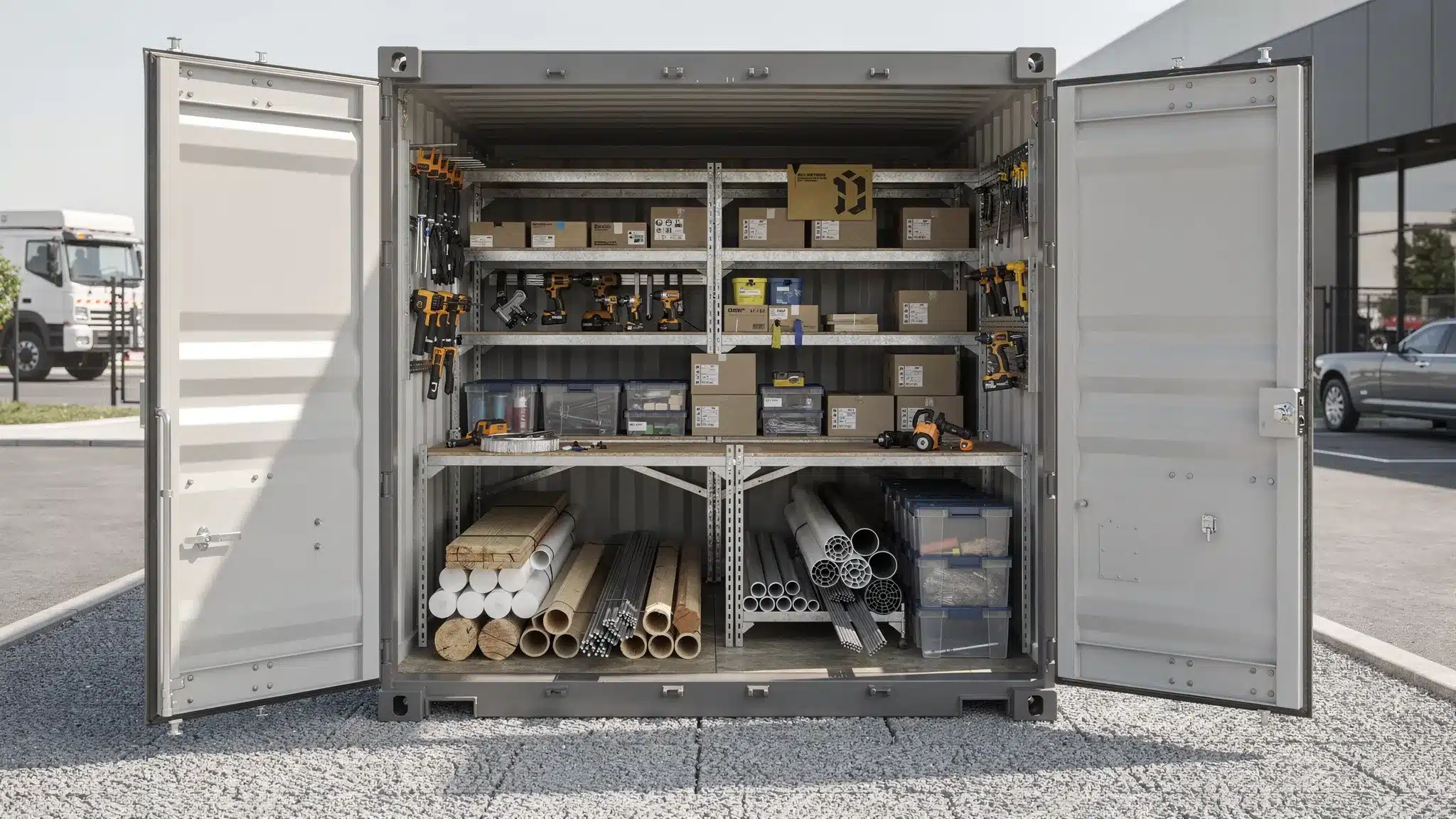
General contractors and home builders often need secure storage for lumber, pipe, conduit, tools, windows, doors, and jobsite consumables. A standard container works well for many sites, but long materials can be awkward when every item must move through the end doors.
With an open side container, crews can access materials along the length of the unit. That can reduce digging through stacked inventory and help foremen organize materials by trade, phase, or project zone.
For Raleigh-area jobsites, a WWT open side unit may be enough for static storage if the container is inspected properly. A Cargo Worthy or one-trip unit may be better for higher-value materials, longer projects, or sites where the container will be relocated more often.
Retail Pop-Ups and Customer-Facing Displays
Open side containers are popular for retail because the side opening can function like a storefront. With the doors open, customers can view merchandise from a wide frontage instead of walking into a dark box through narrow end doors.
Small business owners use this format for seasonal retail, farmers market storage, brand activations, mobile showrooms, and outdoor sales points. One-trip units are typically preferred for customer-facing projects because they offer cleaner cosmetics, better paint condition, and fewer visible dents.
Event Staging and Production Support
Events depend on speed, organization, and protected staging space. Open side containers can hold cases, signage, lighting equipment, decor, food service supplies, or display components while giving crews fast side access during setup and teardown.
For high-visibility productions, wide side access is valuable because crews can stage materials in sequence and retrieve them without unloading the entire container. Large event specialists working on complex, visually demanding productions, such as record-setting event installations, illustrate why efficient staging and protected storage can be essential to execution.
Warehouse Overflow and Inventory Control
For small businesses, distributors, and e-commerce operators, an open side container can function as overflow space near a loading area. The wide side opening makes it easier to organize pallets, shelves, bins, and seasonal inventory.
A 40ft open side unit can be useful when you need linear access to many SKUs. A 20ft unit may be easier to place near a shop, warehouse, or parking area where turning radius and available ground space are limited. If you are still deciding between 20ft containers, 40ft containers, and High Cube units, compare usable space and delivery requirements before choosing the specialty door configuration.
Agriculture and Rural Property Storage
Farm owners and rural property owners often store feed, fencing, irrigation parts, small implements, seed, tools, and seasonal equipment. Open side access helps when multiple people need to reach different sections of the container without unloading everything from one end.
For agricultural use in North Carolina and the Southeast, pay close attention to moisture management. Even a wind and watertight container can develop condensation if ventilation, air gaps, and drainage are ignored. A gravel pad, proper elevation at the corners, and routine inspections are especially important in humid climates.
Workshops, Mobile Offices, and Modular Conversions
Open side containers can be attractive for workshops, mobile offices, concession units, and modular builds because the side opening creates design flexibility. The opening can support wide access, display areas, roll-up service concepts, or larger entry points.
For occupied spaces, one-trip units usually make the most sense because they start with better cosmetic condition, stronger floor condition, and fewer unknowns. If you plan to cut additional windows, doors, vents, or utility penetrations, get professional guidance. Removing steel from the side wall can affect structural behavior, even when the container already has reinforced side doors.
Tradeoffs to Consider Before You Buy
Open side containers are useful, but they come with real compromises. Understanding those tradeoffs helps you avoid paying for a feature that does not match your use case.
Higher Cost and Lower Availability
Open side units are specialty containers, so they are usually more expensive than standard dry containers of the same size and grade. They may also be less available in local depot inventory. In Raleigh, Charlotte, Wilmington, and other Southeast markets, standard 20ft and 40ft containers are typically easier to source than side-opening units.
That does not mean open side containers are hard to buy, but it does mean timing matters. If your project has a deadline, ask early about availability, lead time, grade options, and delivery method.
More Door Hardware to Inspect and Maintain
A standard container has one main set of cargo doors. An open side container has much more hardware. That includes extra hinges, locking rods, keepers, gaskets, handles, and door panels.
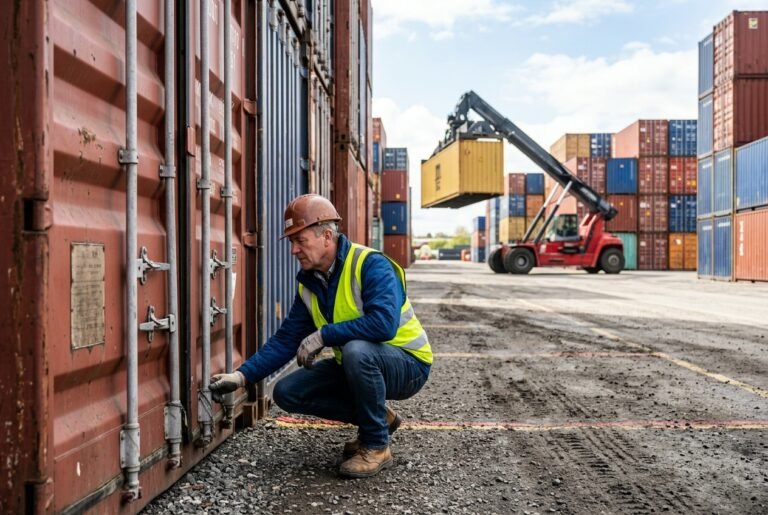
This additional hardware is the reason side access is so useful, but it also means there are more points that can wear, bind, leak, or require adjustment. In North Carolina’s humid climate, regular lubrication and inspection are not optional. Check for torn gaskets, bent rods, rust around hinges, and doors that do not sit flush.
Security Requires a Better Plan
Open side access can improve workflow, but it also creates a longer access face to secure. A quality lockbox, heavy-duty padlocks, proper door alignment, lighting, and smart placement all matter.
For jobsites and retail applications, position the open side where it is useful during the day but harder to attack at night. If the container will store expensive tools, equipment, or inventory, think through lock placement, camera sightlines, and whether the doors should face a building, fence line, or controlled access area.
Structural Limits Still Apply
Open side containers are reinforced, but they are still engineered steel structures with defined load paths. Corner castings, top and bottom rails, crossmembers, roof bows, and side frames all contribute to performance.
If the container will be stacked, shipped, heavily modified, or used in a modular building project, do not assume any open side unit is automatically suitable. Verify its grade, frame condition, documentation, and intended use. Cargo Worthy status matters for transport. One-trip condition matters for clean, long-term modification projects. WWT may be acceptable for static storage, but it is not the same as transport certification.
Door Swing and Site Layout Can Be a Dealbreaker
The feature that makes an open side container valuable also requires physical space. You need room along the side for the doors to open and for people, pallets, carts, forklifts, or customers to move safely.
A tight driveway, fence line, tree row, retaining wall, or building setback can limit the usefulness of the side doors. Before ordering, measure the container footprint and the working aisle along the opening side. Also confirm the exact side-door configuration, because door swing and clear opening dimensions vary by model.
Choosing the Right Size: 20ft, 40ft, or High Cube
A 20ft open side container is often the better fit for residential properties, compact jobsites, small retail activations, and dense materials. It is easier to place than a 40ft unit and can be practical when access roads, driveways, or tight lots limit delivery.
A 40ft open side container gives more linear access and more storage capacity. It is better for longer materials, warehouse overflow, event equipment, retail displays, and organized shelving. The tradeoff is delivery space. A 40ft unit typically needs more room for truck access, turning, and placement.
A High Cube open side unit adds vertical clearance. That can be valuable for racking, taller equipment, walk-in workspaces, insulation, lighting, and mechanical systems. The extra height can also affect overhead clearance during delivery, so measure trees, wires, rooflines, and gates before scheduling.
For exact delivery planning, review our guide to shipping container delivery requirements and share site photos with your supplier before the truck is dispatched.
Pro-Tip: Prepare the Pad Before You Choose Door Orientation
Open side containers are less forgiving of uneven placement than many buyers expect. If the container twists because one corner settles, the side doors can become harder to open, latch, or seal.
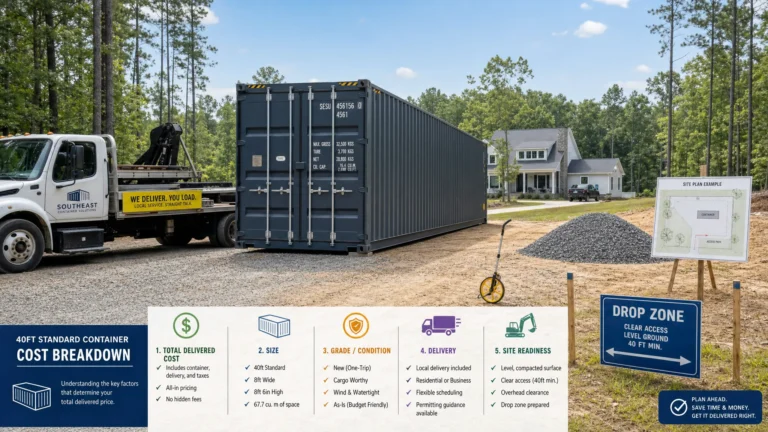
Before delivery, prepare a firm, level base. A compacted gravel pad is often a practical choice for Raleigh and Southeast properties because it supports drainage and helps reduce standing water under the container. Concrete pads, piers, and properly placed blocks can also work when designed for the load and site conditions.
Use this site-prep checklist before delivery:
- Confirm the container footprint, door side, and end-door direction before the truck arrives.
- Level the support points, especially under the corner castings.
- Plan a clear working aisle along the open side, with extra room for door swing and loading.
- Improve drainage so rainwater does not pool against the doors or under the floor.
- Check overhead clearance for trees, power lines, building overhangs, and the delivery truck.
- Verify local zoning, HOA rules, and permit requirements with the relevant Raleigh, Wake County, or local authority.
If the site has soft clay, recent rain, steep slope, or a narrow driveway, do not guess. Send measurements and photos to your container supplier before scheduling delivery.
What to Ask Before Buying an Open Side Container
A good quote should define more than the container length and price. For specialty units, the details matter.
Ask these questions before you commit:
- Is the container one-trip, Cargo Worthy, or Wind and Watertight?
- Is the unit built as an open side container, or was a standard container modified later?
- What are the exact side-door opening dimensions?
- Do all hinges, locking rods, handles, and gaskets operate properly?
- Are photos available for the roof, floor, side doors, corner castings, and underside?
- If used for transport, is the CSC plate and cargo-worthiness documentation current and appropriate?
- What delivery method will be used, and how much room does the truck need?
- Does the quote include delivery, or is delivery priced separately?
For Raleigh buyers, it is also smart to compare total delivered cost rather than just container price. A low container price can become expensive if the delivery route is difficult, the site is not ready, or a crane is needed after a failed placement attempt.
Frequently Asked Questions
What are open side shipping containers best used for? Open side shipping containers are best for projects that need wide side access, such as construction material storage, retail pop-ups, event staging, warehouse overflow, farm storage, workshops, and modular conversions.
Are open side containers waterproof? A properly maintained open side container can be wind and watertight, but the larger door system creates more seals and hardware to inspect. Always test for daylight leaks, check gaskets, and confirm the container grade before buying.
Can an open side container be Cargo Worthy? Yes, an open side container can be Cargo Worthy if it meets the required structural and inspection standards for cargo transport. For export or intermodal use, verify documentation, CSC plate status, frame condition, and side-door integrity.
Is a one-trip open side container worth the higher price? A one-trip unit is often worth it for customer-facing, long-term, or modified projects because it usually has cleaner cosmetics, better paint, stronger flooring, and fewer repairs. For basic static storage, a properly inspected WWT or Cargo Worthy used unit may be more cost-effective.
Do open side containers need a special foundation? They do not always need a complex foundation, but they do need a level, stable base. Uneven support can twist the frame and make side doors difficult to operate. Compacted gravel, concrete, piers, or properly supported blocks can work depending on the site.
Are open side containers available in Raleigh, NC? Availability changes by size, grade, and market conditions. Lease Lane Containers LLC is based in Raleigh and helps customers in North Carolina, the Southeast, and across the U.S. evaluate container options, delivery requirements, and site preparation needs.
Talk With a Local Container Team Before You Order
Open side containers can be an excellent solution when access matters as much as storage capacity. The right unit depends on your size requirements, grade expectations, site layout, delivery access, and long-term plans.
Lease Lane Containers LLC supplies high-quality new one-trip and used shipping containers, trailers, and modular solutions, with practical guidance on 20ft, 40ft, High Cube, refrigerated, WWT, and Cargo Worthy options. If you are comparing open side shipping containers for a project in Raleigh, North Carolina, the Southeast, or anywhere nationwide, contact our sales team at sales@leaselanecontainers.com or visit our Raleigh office for clear pricing and delivery planning help.