
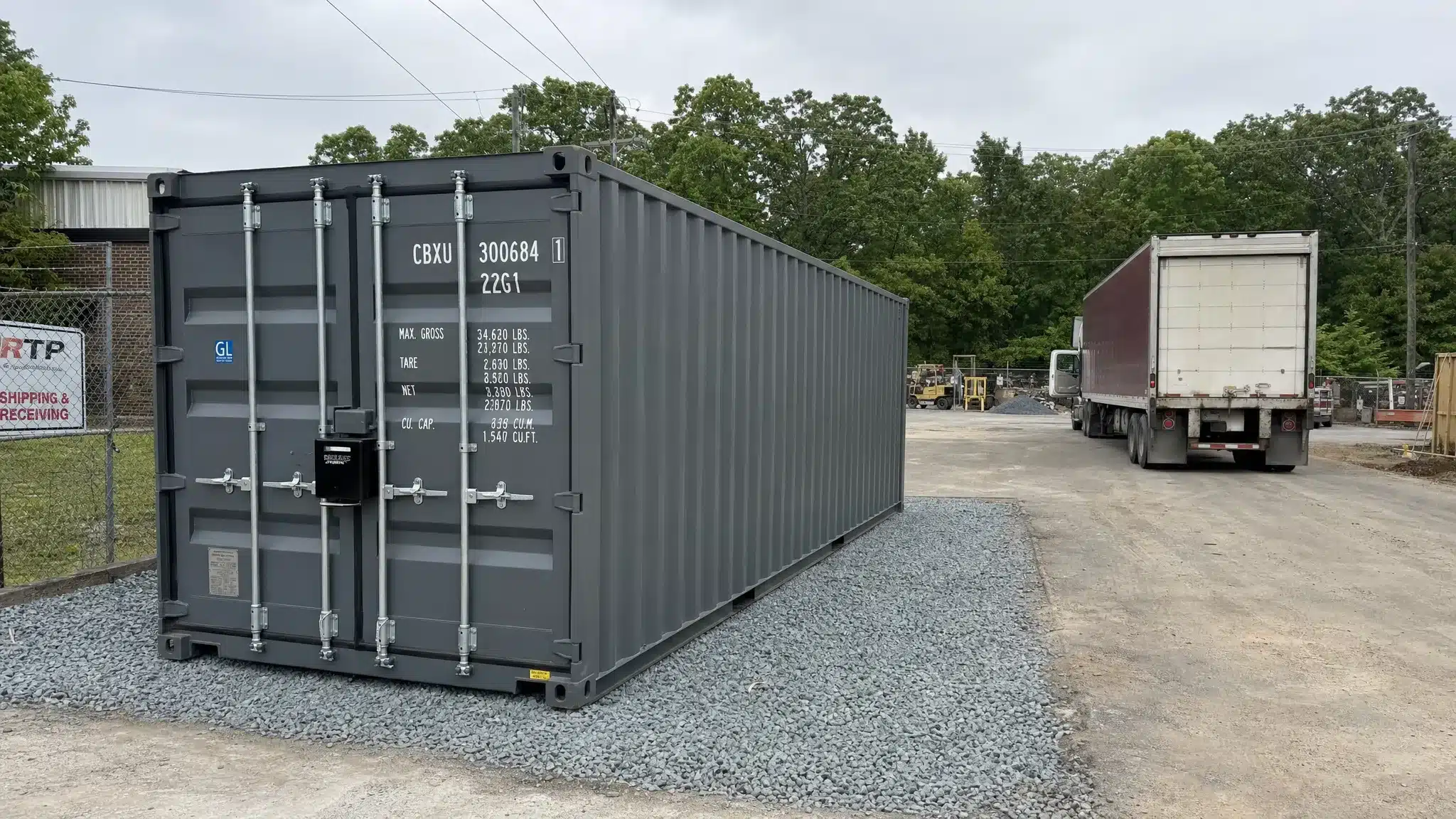
20ft Shipping Container Price Guide for 2026 Buyers
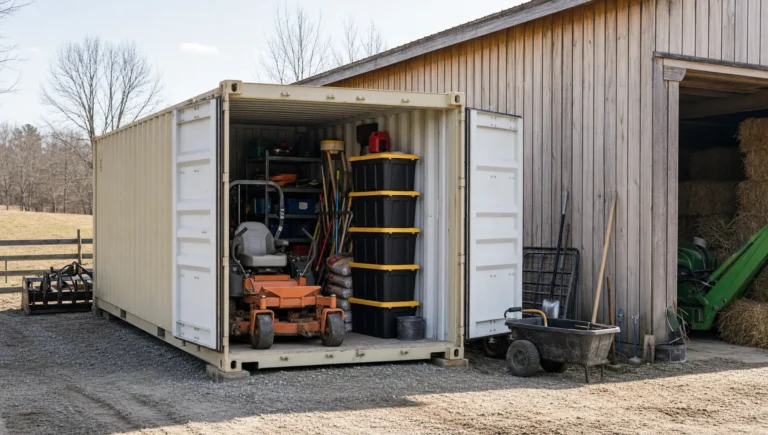
A 20ft container is often the practical middle ground for buyers who need secure storage without dedicating half a property to a 40ft unit. It fits many residential driveways, construction sites, farms, retail back lots, and small business yards, while still offering about 160 square feet of floor space in a steel, lockable shell.
The part that confuses buyers is price. A low listing price may not include delivery, the grade may not match the use case, and a cheap container can become expensive if the doors do not seal or the site is not ready. This 2026 guide breaks down the real factors behind 20ft shipping container price ranges so you can compare quotes correctly in Raleigh, across North Carolina, and nationwide.
Quick 2026 price snapshot for 20ft containers
For most U.S. buyers in 2026, the price of a standard 20ft dry shipping container depends primarily on condition grade. Delivery, taxes, permits, site work, and modifications are usually separate unless your quote clearly says they are included.
| 20ft container grade | Typical 2026 U.S. planning range | Best fit | What to verify |
|---|---|---|---|
| As-Is | $1,200 to $2,000+ | Non-critical use, parts, short-term projects | No guarantee of being leak-free or structurally sound |
| Wind and Watertight (WWT) | $1,800 to $3,200 | Stationary storage for tools, equipment, farm supplies, household goods | Door seals, roof condition, floor, rust, light leaks |
| Cargo Worthy (CW) | $2,200 to $3,800 | Export, intermodal transport, high-value storage, resale-sensitive use | CSC plate status, structural condition, survey needs |
| One-Trip | $3,500 to $5,800 | Long-term ownership, visible sites, offices, retail, conversions | Factory paint, flooring, cosmetic handling marks, documentation |
| 20ft High Cube or specialty unit | Often above standard 20ft pricing | Extra height, modifications, reefer or specialty use | Availability, exact dimensions, power needs for reefers |
These are budgeting ranges, not guaranteed quotes. A delivered-and-placed price in Raleigh, Wake County, or the broader Southeast may be higher or lower depending on inventory, fuel, route distance, offloading method, and access conditions.
What you are paying for in a 20ft shipping container
A standard 20ft dry container is built to ISO standards for global freight use. Typical exterior dimensions are approximately 20 feet long, 8 feet wide, and 8 feet 6 inches high. Interior dimensions vary slightly by manufacturer, but many standard units offer roughly 19 feet 4 inches of interior length, 7 feet 8 inches of width, and about 7 feet 10 inches of interior height.
The steel shell is usually made from Corten Steel, a weathering steel designed to resist corrosion better than mild steel when properly maintained. The container’s strength comes from its structural frame, corner castings, crossmembers, roof bows, side panels, doors, and marine-grade plywood floor. That is why a container can look rough cosmetically but still be structurally valuable, or look freshly painted while hiding a weak floor or poor door seal.
Price is not just about size. It is about the remaining useful life of that steel structure, the condition of the doors and gaskets, the grade assigned by the seller, and whether the unit is suitable for storage, export, modification, or customer-facing use.
If you are still comparing sizes, Lease Lane’s shipping container buyers guide is a useful next step before you lock in a quote.
Container grades explained: One-Trip vs. Cargo Worthy vs. WWT
The fastest way to understand a quote is to understand the grade. A 20ft container listed at a low price may not be comparable to another 20ft container listed at a higher price if the grades are different.
One-Trip containers
A one-trip container is the closest practical option to new for most buyers. It has typically made one loaded ocean trip from the factory before entering the resale market. It may have small dents, forklift marks, or handling scratches, but it should have strong structural integrity, cleaner paint, better door function, and a longer expected service life than most used units.
One-trip units cost more upfront, but they are often the right choice for visible business locations, container offices, retail pop-ups, modular projects, long-term residential storage, and conversions where starting with a cleaner shell reduces repair work.
Cargo Worthy containers
A Cargo Worthy container is a used container that is structurally sound enough for cargo transport when properly inspected and documented. For export or ocean shipping, buyers may need a valid CSC safety approval plate and, in many cases, a current survey from a qualified inspector.
Cargo Worthy units usually show more cosmetic wear than one-trip containers, but they are typically stronger and more certifiable than basic WWT storage units. Logistics managers, exporters, and buyers who may move the container again should pay close attention to CW status.
Wind and Watertight containers
A Wind and Watertight container should keep out normal wind and rain when the doors are closed. WWT is a common value grade for stationary storage, especially for contractors, farms, homeowners, and small businesses that do not need export certification.
WWT does not automatically mean pretty, dent-free, rust-free, or Cargo Worthy. It means the container should protect contents from weather under normal storage conditions. Buyers should still inspect the roof, door gaskets, floor, vents, and interior for light leaks or signs of water intrusion.
For a deeper breakdown, see Lease Lane’s guide to used shipping container grades and the comparison of one-trip shipping containers vs used.
Why 20ft container prices move in 2026
The 20ft shipping container price you receive this month may not match a quote from six months ago. Containers are physical assets tied to steel, port flows, inland freight, and regional inventory. In Raleigh and the Southeast, buyers may see different pricing than buyers near major coastal depots or dense inland rail hubs.
| Price factor | Why it changes the quote | Buyer takeaway |
|---|---|---|
| Grade and condition | Cleaner, stronger, certified units cost more | Compare WWT to WWT and CW to CW, not just 20ft to 20ft |
| Regional inventory | Local shortages can raise prices | Ask what is available near Raleigh or your delivery ZIP code |
| Delivery distance | Fuel, driver time, and equipment affect final cost | Request a delivered-and-placed quote, not only a shell price |
| Placement method | Tight sites may need a crane, side-loader, or special trailer | Send site photos before scheduling delivery |
| Seasonality | Construction and retail demand can increase competition | Book early for busy project windows |
| Modifications | Doors, vents, lockboxes, paint, insulation, and electrical add cost | Separate must-have upgrades from nice-to-have upgrades |
A 20ft unit is usually easier to deliver than a 40ft unit, but that does not make every site simple. Narrow driveways, soft ground, overhead wires, steep grades, low tree limbs, and tight turning radiuses can change the delivery plan and the final price.
Delivery often decides the real cost
Many buyers focus on the container shell and underestimate delivery. A 20ft container may be compact compared with a 40ft unit, but it still requires heavy equipment and a safe access path.
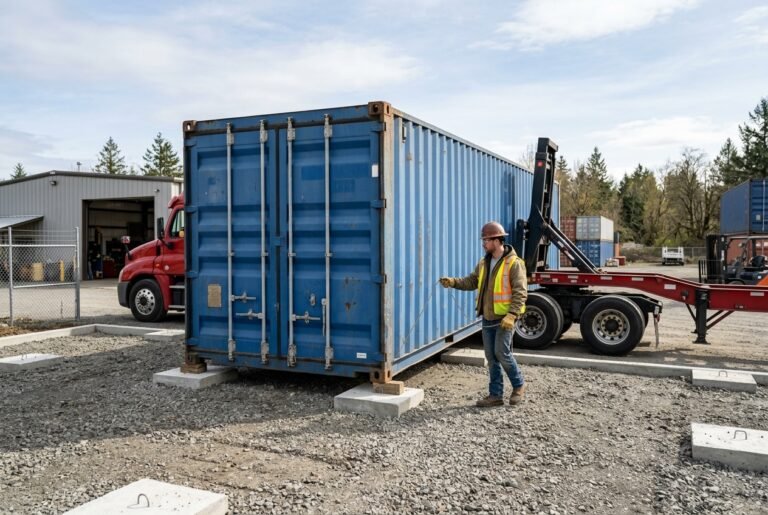
Common delivery methods include tilt-bed delivery, flatbed delivery with separate offloading, side-loader delivery, and crane placement. Tilt-bed delivery is common for many residential, farm, and jobsite placements because the truck tilts the trailer and slides the container into position. However, it needs enough straight-line space to unload safely.
In Raleigh, Cary, Durham, Chapel Hill, and surrounding North Carolina communities, delivery cost can vary based on driveway access, urban traffic, jobsite congestion, and distance from the container yard. Across the Southeast, rural properties may have more room but can introduce challenges like soft soil, narrow lanes, unmarked utilities, or limited turnaround space.
Before comparing quotes, ask whether the price includes:
- The container shell
- Delivery to your ZIP code
- Placement on the prepared pad
- Fuel or mileage surcharges
- Taxes and administrative fees
- Any failed-delivery or waiting-time charges
- Modifications such as lockboxes, vents, paint, or doors
Lease Lane covers these details in more depth in the guide to shipping container delivery cost and the article on how to prepare your site for container delivery.
20ft vs. 40ft: which is the better value?
A 40ft container often offers a lower cost per square foot because it provides twice the floor space while not always costing twice as much as a 20ft unit. That said, the best value is not always the largest container.
A 20ft container is often the better choice when you have limited space, need easier placement, want storage near a building entrance, or expect to access tools and inventory frequently. General contractors often prefer a 20ft unit on tighter residential builds because it can fit closer to the work area. Homeowners and farms may prefer a 20ft footprint because it is easier to screen, pad, and maintain.
If you need bulk storage, warehouse overflow, large equipment, or a future workshop, compare the total delivered cost of 40ft containers before deciding. If access is tight, a well-placed 20ft unit may deliver better day-to-day utility than a 40ft unit that is difficult to position.
Best 20ft container grade by buyer type
The right container is the one that matches your risk level, site, and intended use. The cheapest option can be a good buy for some projects and a mistake for others.
| Buyer type | Recommended 20ft grade | Why it usually fits |
|---|---|---|
| General contractors and home builders | WWT or Cargo Worthy | Secure jobsite storage with practical durability and controlled cost |
| Small business owners | WWT, Cargo Worthy, or One-Trip | Inventory overflow may suit WWT, while visible retail uses often justify One-Trip |
| Homeowners | WWT or One-Trip | WWT works for storage, One-Trip is better for long-term visible placement |
| Agriculture and rural properties | WWT or Cargo Worthy | Good balance for feed, tools, parts, and seasonal equipment |
| Real estate developers | One-Trip or Cargo Worthy | Better starting point for modular concepts, offices, and structural modifications |
| Logistics managers | Cargo Worthy or One-Trip | Better fit for transport, export, and documentation needs |
| Cold storage buyers | Reefer container | Requires separate evaluation of refrigeration system, power, and service history |
For stationary storage, many buyers do not need to pay for Cargo Worthy certification. For export, stacking, or intermodal use, WWT is usually not enough. For customer-facing projects, the cleaner appearance and longer service life of a one-trip unit often justify the premium.
Raleigh and Southeast considerations for 2026 buyers
North Carolina buyers should think beyond the container itself. The Raleigh area has humid summers, periodic heavy rain, clay soils in many locations, and a mix of urban, suburban, and rural delivery conditions. A Corten Steel container can perform well in this environment, but only if it is placed on a stable, well-drained base and maintained properly.
For Wake County and nearby municipalities, zoning and permitting can vary by property type and intended use. A temporary jobsite storage container may be treated differently than a permanent backyard storage structure or a modified office. HOAs may also restrict visibility, placement duration, or exterior appearance.
National buyers face similar questions, but local climate changes priorities. In humid regions, ventilation and drainage matter. In snow regions, roof condition and load exposure matter. In coastal areas, salt air can accelerate corrosion. In hot regions, shade and ventilation can help reduce interior heat.
If you are buying in the Southeast, ask your supplier how the container will be sourced, delivered, and inspected. A local Raleigh-based team can often help you avoid mismatched grades, unrealistic delivery assumptions, and surprise placement issues.
Pro-Tip: prepare the site before you chase the lowest price
A low container price can disappear quickly if the truck cannot access the drop spot or the container settles after delivery. Before ordering, plan the landing area as carefully as the purchase.
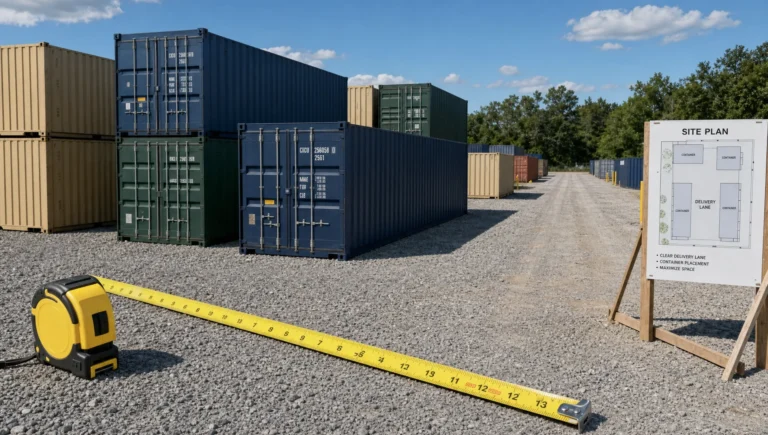
For a 20ft container, prepare a level pad that is slightly larger than the container footprint. Compacted gravel is a strong option for many residential, farm, and jobsite applications because it supports drainage and reduces direct ground contact. Concrete pads, concrete piers, or properly placed block supports may be better for permanent installations or heavier loads.
The container must sit level, especially at the corners. If the frame twists, the cargo doors can become difficult to open or may not seal correctly. Good drainage also protects the underside from standing water and reduces corrosion risk over time.
Before delivery day, clear low branches, move vehicles, mark the drop location, and confirm overhead clearance. If you plan to trench for power, lighting, or drainage, contact NC 811 or your local 811 service before digging. Also confirm zoning, HOA rules, and permit requirements before the truck arrives, not after the container is sitting in the driveway.
How to compare quotes without overpaying
The best quote is the one that clearly explains what you are buying. A vague listing with a low number can lead to expensive surprises, especially if grade, delivery, and placement are not defined.
When requesting quotes, provide your ZIP code, desired size, intended use, site photos, access notes, and whether the container must be WWT, Cargo Worthy, or one-trip. If you are unsure, describe what you plan to store and how long the container will remain on site.
Ask each seller these questions before you pay:
- What grade is the container, and what does that grade mean in writing?
- Is the unit standard height or High Cube?
- Are photos of the actual container available?
- Does the price include delivery and placement?
- What delivery method will be used?
- What site conditions could trigger extra fees?
- Are the doors, gaskets, roof, floor, and lock rods inspected?
- Is a lockbox included or optional?
- Is the container suitable for export, storage, or modification?
- What happens if the site is not accessible on delivery day?
Be cautious with prices that are far below market, sellers who cannot explain grades, and listings that use new, one-trip, Cargo Worthy, and WWT interchangeably. These terms are not the same.
Should you buy now or wait?
For most buyers, timing matters less than matching the container to the project. If you need secure jobsite storage next month, waiting for a small price drop can cost more in theft risk, rental costs, or project delays. If you are planning a future conversion or development project, you may have more flexibility to compare inventory and choose a better-grade unit.
In 2026, buyers should budget based on total delivered value. That means the container grade, delivery route, site readiness, expected lifespan, and modification plan all matter. A WWT unit may be the best value for a contractor storing tools on a Raleigh jobsite. A one-trip unit may be the better financial decision for a small business building a customer-facing pop-up or a homeowner who wants a cleaner long-term storage solution.
Frequently Asked Questions
What is the average 20ft shipping container price in 2026? Most standard 20ft dry containers fall into broad planning ranges of about $1,800 to $3,200 for WWT used units, $2,200 to $3,800 for Cargo Worthy units, and $3,500 to $5,800 for one-trip units. Delivery, taxes, and site work are usually separate.
Is a used 20ft container cheaper than a one-trip container? Yes. Used WWT and Cargo Worthy containers usually cost less upfront than one-trip containers. The tradeoff is more cosmetic wear, possible repair needs, and a shorter remaining service life depending on condition.
Do I need a Cargo Worthy container for storage? Not always. If the container will stay on your property for stationary storage, a good WWT unit is often enough. Choose Cargo Worthy if you need export suitability, stronger resale value, stacking potential, or transport documentation.
What is the difference between a standard 20ft and a 20ft High Cube container? A standard 20ft container is typically 8 feet 6 inches tall outside. A High Cube is typically 9 feet 6 inches tall, giving about one extra foot of height. 20ft High Cube units can be less common than 40ft High Cube units, so pricing and availability vary.
How much does delivery add to the price? Delivery cost depends on distance, equipment, site access, and placement difficulty. A nearby, easy tilt-bed delivery costs less than a long-distance delivery or a tight placement requiring a crane or side-loader. Always request a delivered-and-placed quote.
Can I put a 20ft shipping container in my driveway in Raleigh? Often, yes, but it depends on driveway strength, slope, clearance, HOA rules, and local zoning. Confirm access, overhead clearance, and any permit requirements before scheduling delivery.
Get a current 20ft container quote from Lease Lane Containers
If you are comparing 2026 prices, Lease Lane Containers LLC can help you choose the right 20ft container grade, plan your drop spot, and understand the full delivered cost before you commit. Our Raleigh-based team supports buyers across North Carolina, the Southeast, and nationwide with clear grading, delivery planning, and practical site-prep advice.
For current inventory and pricing, email sales@leaselanecontainers.com or visit the Lease Lane Containers Raleigh office. Include your ZIP code, intended use, preferred grade, and a few site photos so the sales team can help you price the right container the first time.


5 Comments