Storage Cargo Containers: Which Grade Fits Your Needs?
When buyers compare storage cargo containers, the biggest mistake is shopping by size and price alone. Grade matters just as much as footprint because it tells you how the unit should perform, how long it may last, whether it can travel, and how much maintenance you should expect.
For a contractor in Raleigh protecting tools through a humid summer, a Wind & Watertight container may be the best value. For a logistics manager planning export, that same unit may be the wrong choice because it is not certified for ocean transport. For a small business building a customer-facing pop-up, a One-Trip unit may justify the higher upfront cost because the exterior, doors, floors, and coatings are cleaner.
This guide breaks down the main container grades, how they apply to real storage and transport needs, and what to check before you buy in North Carolina or anywhere in the U.S.
What container grade really means
A shipping container grade is a condition category. It is not just a cosmetic label. A proper grade should describe the container’s structural integrity, weather resistance, suitability for transport, and expected appearance.
Most dry storage cargo containers are built from Corten steel, a weathering steel designed to resist corrosion better than ordinary mild steel. They are manufactured to standard intermodal dimensions under ISO standards, which is why a 20ft or 40ft container can move by ship, rail, and truck. However, once a container enters the used market, its condition depends on age, cargo history, handling, repairs, and storage environment.
Key areas that affect grade include:
- Corner posts, corner castings, top rails, and bottom rails
- Roof panels, side walls, and end walls
- Door gaskets, locking bars, hinges, and cam keepers
- Plywood or bamboo flooring condition
- Undercarriage, crossmembers, and forklift pockets
- CSC plate status when transport certification is required
If you are new to container buying, start with a full overview in Lease Lane’s shipping container buyers guide. It explains how size, grade, delivery, and site preparation work together.
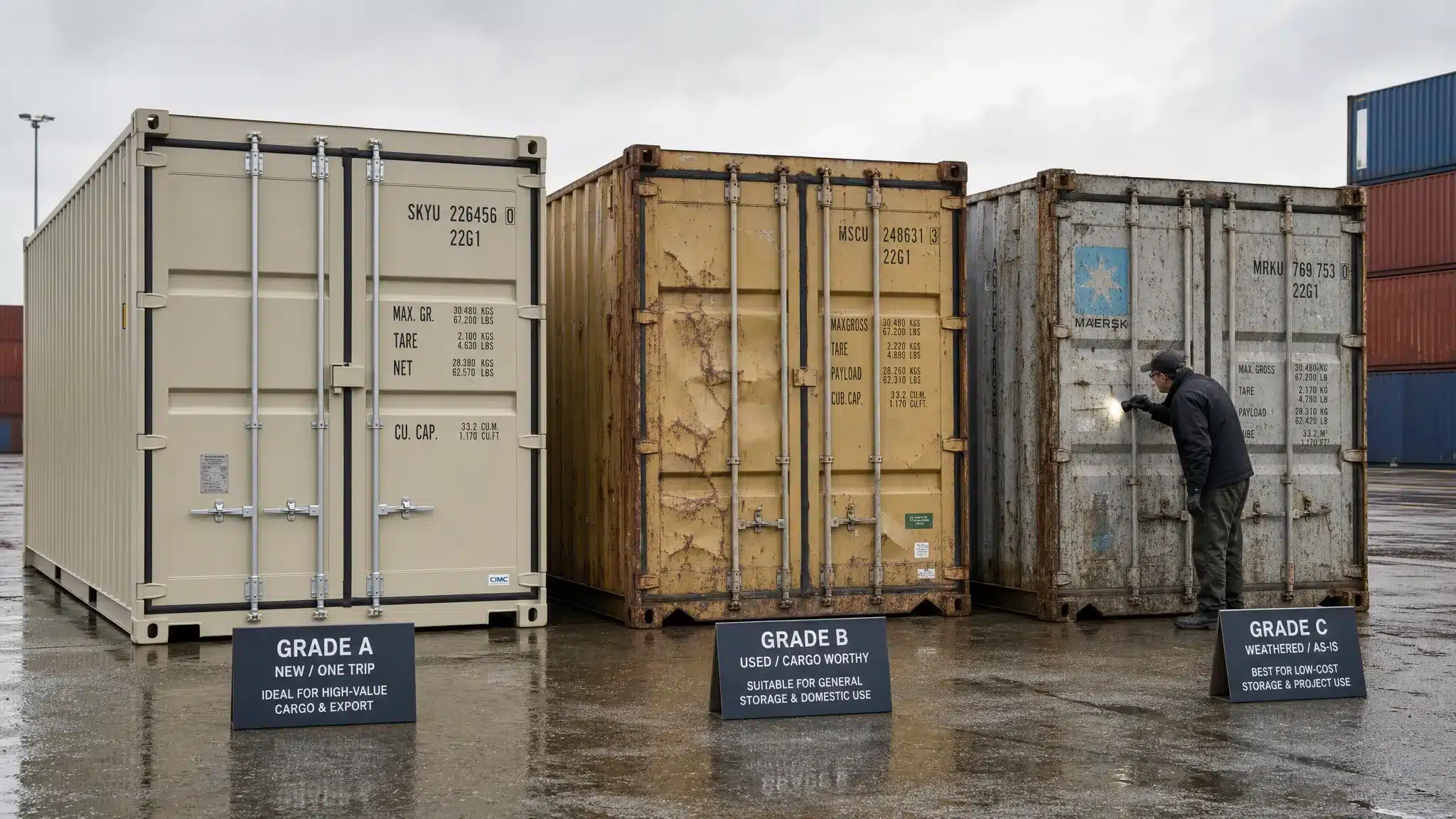
Quick comparison of storage cargo container grades
The right grade depends on whether the container will sit still, move by truck, go overseas, store high-value materials, or become part of a modified structure.
| Grade | Typical condition | Best fit | Key limitation |
|---|---|---|---|
| One-Trip | Nearly new, used for one loaded voyage, minor handling marks possible | Premium storage, modifications, offices, retail, long-term visible use | Higher upfront cost |
| Cargo Worthy | Used but structurally suitable for cargo transport when properly certified | Export, regional transport, heavy storage, high-value jobsite use | More cosmetic wear than One-Trip |
| Wind & Watertight | Used, weather-resistant for stationary storage, not certified for shipping | Tools, equipment, household goods, farm supplies, overflow inventory | Not intended for ocean export or stacking certification |
| As-Is | Unverified or damaged condition, may have leaks or structural issues | Scrap, non-sensitive materials, budget temporary use | High risk without inspection |
| Refurbished | Used unit repaired, sealed, or repainted to improve function and appearance | Budget-conscious storage with cleaner presentation | Quality depends on the scope of refurbishment |
These grade names are widely used, but sellers do not always apply them consistently. Ask for photos, condition notes, inspection details, and delivery assumptions before comparing quotes.
One-Trip containers: best for clean, long-term storage and modifications
A One-Trip container is typically the closest option to new in the resale market. It is manufactured overseas, loaded once, shipped to the U.S., then sold rather than kept in long-term fleet circulation. It can still have forklift scuffs, minor dents, and handling marks, but the roof, doors, gaskets, paint, and flooring are usually in much better condition than older used units.
For storage cargo containers, One-Trip units make the most sense when appearance, longevity, or modification quality matters. A Raleigh builder storing high-end finish materials, a real estate developer planning a modular project, or a retailer creating a mobile storefront may benefit from the cleaner shell and more predictable structure.
One-Trip containers are also a strong choice for conversions because cutting openings for windows, personnel doors, roll-up doors, or HVAC is easier to plan when the steel condition is consistent. If you are considering a workshop, home office, or modular build, One-Trip or high-quality Cargo Worthy units are usually better candidates than lower-grade used containers.
Common One-Trip use cases include premium jobsite storage, customer-facing business storage, container offices, retail pop-ups, farm workshops, and long-term residential storage. They are available in standard heights and High Cube configurations, which add an extra foot of exterior height for more headroom and easier modifications. If height matters, review Lease Lane’s guide to High Cube container dimensions.
The tradeoff is cost. One-Trip containers command a premium because they have fewer years of wear and usually require less immediate repair. For buyers who need a basic unit behind a barn or on a short-term jobsite, that premium may not be necessary.
Cargo Worthy containers: best for transport, export, and structural confidence
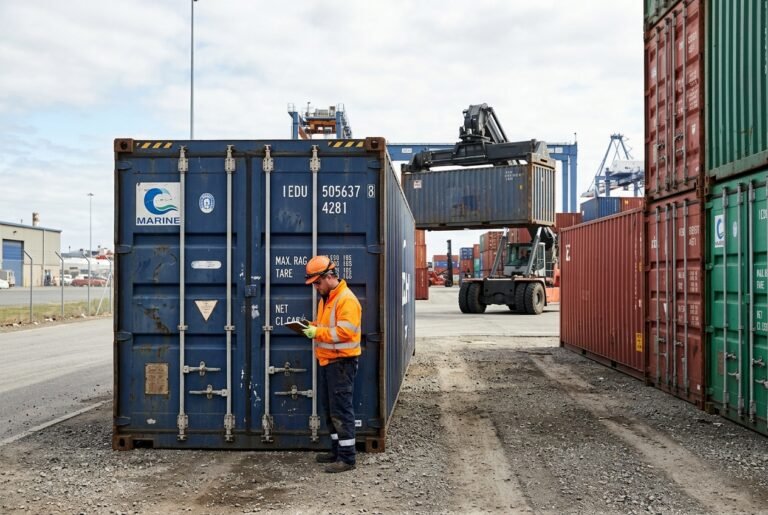
A Cargo Worthy container, often abbreviated CW or CWO, is a used container that meets structural requirements for carrying cargo. For international shipping, the container must have appropriate certification, often involving a valid CSC plate or inspection documentation. The CSC system is tied to the International Maritime Organization’s Convention for Safe Containers, which supports safety standards for containers used in intermodal transport.
Cargo Worthy does not mean pretty. A CW unit may have dents, surface rust, patched areas, old decals, and faded paint. What matters is that the frame, corner castings, rails, floor, doors, and weather seals are sound enough for cargo use.
This grade is often the best middle ground for buyers who want stronger assurance than WWT but do not need a nearly new One-Trip unit. Logistics managers, exporters, equipment dealers, and contractors storing expensive machinery often choose Cargo Worthy containers because the grade indicates a higher structural threshold.
A Cargo Worthy unit is a smart fit when the container may be transported again, used in a demanding industrial setting, stacked in a yard where permitted, or loaded with heavier inventory. It can also be a practical base for certain modifications, provided the specific unit is inspected before cutting or welding.
If your project involves international shipping, do not rely on the words Cargo Worthy alone. Ask whether the CSC plate is valid, whether a survey is included, and whether the container is accepted for your intended route and carrier. For a deeper breakdown, read Lease Lane’s explanation of what a Cargo Worthy container is.
Wind & Watertight containers: best value for stationary storage
A Wind & Watertight container, usually called WWT, is a used container that should keep wind and water out under normal conditions. It should have functioning doors, intact seals, no active roof leaks, and no daylight coming through the walls or roof when inspected from the inside.
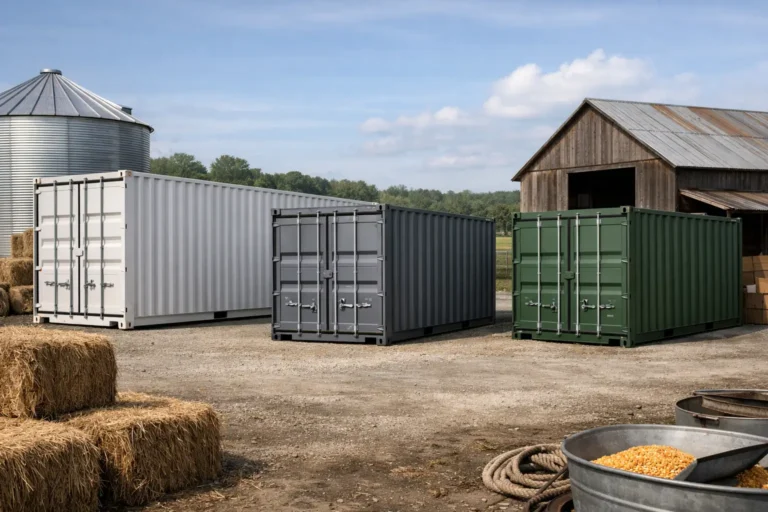
WWT is one of the most popular grades for stationary storage because it offers a strong balance of cost and function. If the container will sit on a construction site in Raleigh, beside a shop in Durham, behind a farm building in Johnston County, or at a small business in the Southeast, WWT may be all you need.
Typical WWT storage uses include tools, landscaping equipment, building materials, seasonal inventory, household goods, farm supplies, event equipment, and non-perishable retail overflow. A WWT container can still have dents, faded paint, rust patches, previous repairs, and cosmetic wear. That is normal. The key is whether it stays dry and secure.
WWT is not the right grade if the container needs to travel internationally, meet export requirements, or serve as a high-end visible conversion. It can be modified in some cases, but buyers should inspect carefully because older units may need rust treatment, floor repair, door work, or reinforcement before major alterations.
For most static storage cargo containers, a properly inspected WWT unit is often the best value. Just make sure the seller is clear about what WWT means and provides recent photos or inspection details. Lease Lane’s guide to used shipping container grades covers the differences in more detail.
As-Is containers: only for buyers who can accept risk
An As-Is container is exactly what it sounds like. The seller is making limited or no promises about weather resistance, structure, doors, floors, or certification. These units may have leaks, heavy corrosion, holes, floor damage, twisted frames, hard-to-open doors, or missing components.
As-Is containers can make sense for scrap storage, non-sensitive materials, temporary barriers, parts projects, or buyers who can repair steel themselves. They are not recommended for household goods, tools, inventory, documents, electronics, agricultural feed, or any item that must stay dry.
The lower price can be tempting, but the total cost may rise quickly if you need welding, roof repair, new gaskets, floor replacement, or equipment to move a damaged unit later. If you are comparing As-Is against WWT, get specific about the repairs required and the cost of making the container useful.
Refurbished containers: useful, but ask what was actually repaired
A refurbished container is usually a used unit that has been repaired, sealed, repainted, or upgraded. Refurbishment can be valuable, but the term is broad. A quick exterior repaint is not the same as structural repair, gasket replacement, rust remediation, floor work, and a fresh weatherproofing inspection.
Ask the seller what refurbishment included. Was rust removed or just painted over? Were door gaskets replaced? Was the roof patched? Was the floor repaired? Was the container tested for leaks after the work?
A refurbished WWT or Cargo Worthy unit can be a practical choice for small businesses and homeowners who want cleaner appearance without paying for One-Trip condition. Just make sure the grade underneath the paint is clearly documented.
Matching grade to your use case
Grade selection is easier when you start with the job the container needs to do. A container that is perfect for stationary storage may be wrong for export. A container that is excellent for a modular office may be more than you need for storing fencing supplies.
| Buyer need | Recommended grade | Common size fit | Why it works |
|---|---|---|---|
| General contractor tool storage | WWT or Cargo Worthy | 20ft or 40ft | Secure, weather-resistant, cost-effective for jobsites |
| Homeowner property storage | WWT or refurbished WWT | 20ft | Good value for furniture, seasonal items, and equipment |
| Farm and agriculture storage | WWT or Cargo Worthy | 20ft, 40ft, or High Cube | Handles tools, parts, feed-related supplies, and machinery support items |
| Retail pop-up or visible business use | One-Trip | 20ft or 40ft High Cube | Cleaner exterior and better base for doors, windows, and finish work |
| International cargo movement | Cargo Worthy with proper certification | 20ft or 40ft | Suitable for transport when documentation is current |
| Mobile office or modular conversion | One-Trip or high-quality Cargo Worthy | 20ft, 40ft, or High Cube | Better structure and cleaner shell for modifications |
| Cold storage | Reefer, grade depends on unit condition and refrigeration test | 20ft or 40ft | Maintains controlled temperature when power and refrigeration are verified |
Size also matters. 20ft containers are easier to place on tighter residential lots, smaller jobsites, and farms with limited access. 40ft containers offer more cubic storage for inventory, building materials, equipment, and larger commercial operations. High Cube containers are often worth considering when you need vertical clearance for shelving, insulation, lighting, or office buildouts.
Storage factors that matter in Raleigh and the Southeast
Raleigh, North Carolina and the broader Southeast bring specific storage challenges. Humidity, heavy rain, summer heat, clay soil, and stormwater runoff can all affect container performance. Even a good WWT or Cargo Worthy unit can develop problems if it is placed directly on wet ground or allowed to sit out of level.
Moisture control should be part of the buying decision. For sensitive contents, consider vents, desiccants, shelving that keeps items off the floor, and proper airflow. Containers are steel boxes, so temperature swings can create condensation if air and moisture are trapped inside. This is sometimes called container rain.
Security is another factor. Most storage cargo containers have heavy steel cargo doors, but the lock setup matters. A welded lockbox and a quality puck lock or shrouded padlock can significantly improve theft resistance. Contractors storing tools near active Raleigh construction sites should also think about lighting, visibility, and door orientation.
Finally, consider access. A great container is frustrating if you cannot open both doors fully, load pallets, or reach stored items safely. For frequently accessed inventory, a 40ft unit with shelving zones may outperform a smaller unit packed too tightly. For a residential driveway or small farm lane, a 20ft unit may be the more practical choice.
How to inspect a grade before you commit
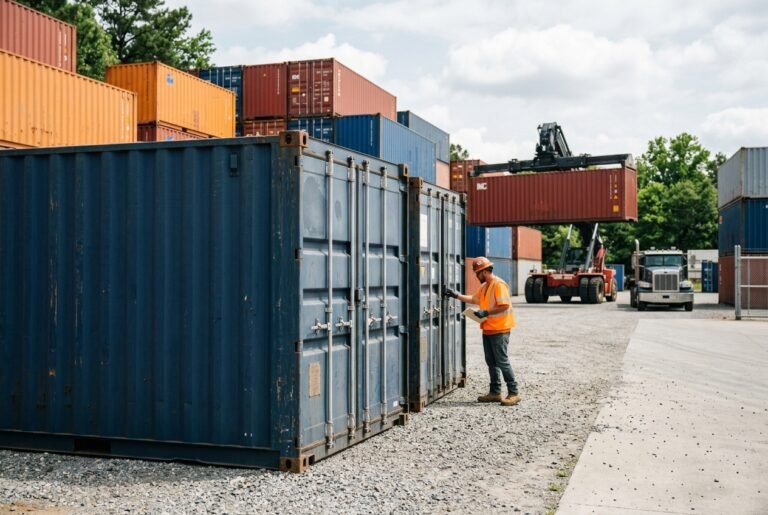
Even when buying from a reputable seller, ask for clear photos and condition details. If you inspect in person, bring a flashlight, gloves, and enough time to check the container with the doors open and closed.
Use this simple pre-purchase checklist:
- Check the roof for dents that hold water, rust-through, and poor patch work.
- Open and close both cargo doors to confirm the locking bars, hinges, and seals work properly.
- Step inside and perform a light test by closing the doors and looking for daylight through the roof, walls, and corners.
- Inspect the floor for soft spots, delamination, chemical odors, holes, and major oil staining.
- Review corner castings, rails, and posts for structural damage, especially on Cargo Worthy units.
- Confirm documentation, grade, delivery method, and whether the quoted price includes placement at your site.
For more inspection detail, Lease Lane’s article on how to spot quality containers before you buy gives a practical walkthrough.
Pro-Tip: prepare the site before delivery day
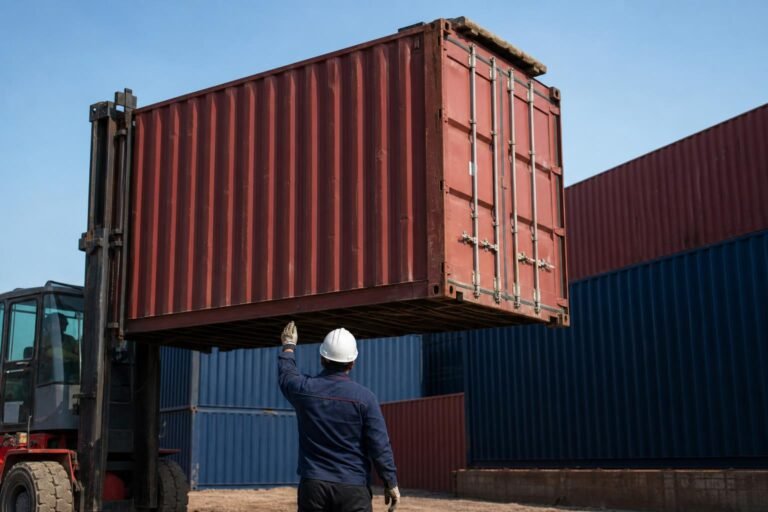
A container’s grade will not matter much if the unit is dropped on unstable, uneven, or poorly drained ground. Before delivery, prepare a level pad that supports the container at the corners and keeps the underside off standing water. A compacted gravel pad is a strong option for many Raleigh and Southeast properties because it improves drainage and reduces settling. Concrete slabs, concrete piers, and heavy-duty blocking can also work when designed for the load.
Avoid placing a container directly on soft soil, low spots, or fresh fill that has not been compacted. If the container twists as it settles, the doors may become difficult to open. Plan the door orientation, leave room for the delivery truck, trim low branches, check overhead utility lines, and verify HOA, zoning, or permit requirements before scheduling delivery.
In Raleigh, Wake County, and surrounding municipalities, rules can vary by property type, zoning district, visibility from the street, and intended use. A temporary jobsite storage unit may be treated differently than a permanent residential accessory structure or a modified office. When in doubt, check with the local authority before the container is dispatched.
For a delivery-specific checklist, see Lease Lane’s guide to shipping container delivery requirements.
Buy for total value, not just the lowest sticker price
The cheapest container is not always the best deal. A low-cost unit that leaks, requires repairs, or cannot be delivered where you need it may cost more than a properly graded container with a clear delivery plan.
When comparing quotes, ask for the total delivered and placed cost. Confirm the grade, size, High Cube or standard height, door orientation, delivery method, tax, fuel surcharges, and any failed-delivery fees. If you need export, ask about CSC status and survey requirements. If you need modifications, ask whether the grade is suitable before you cut into the shell.
A transparent seller should help you match grade to use case rather than pushing the lowest available unit. That matters whether you are buying one container for a backyard in Raleigh or multiple units for projects across the Southeast and nationwide.
Frequently Asked Questions
Are Wind & Watertight containers good enough for storage? Yes, WWT containers are often the best value for stationary storage if they are properly inspected. They should keep out normal wind and rain, but they are not certified for ocean shipping.
Do I need a Cargo Worthy container for backyard storage? Usually no. If the container will stay in one place and store non-perishable items, a quality WWT unit may be enough. Choose Cargo Worthy if you want stronger structural assurance or may transport the unit later.
Is a One-Trip container worth the extra cost? It can be worth it for visible locations, long-term use, sensitive storage, retail projects, mobile offices, and modifications. For basic tool or farm storage, a WWT or Cargo Worthy unit may provide better value.
What grade should contractors choose for jobsite storage? Many general contractors choose WWT containers for tools and materials because they are secure and cost-effective. Cargo Worthy is a smart upgrade for heavier equipment, frequent relocation, or higher-value contents.
Can used storage cargo containers be modified? Yes, but the grade and specific condition matter. One-Trip and strong Cargo Worthy units are usually better candidates for offices, windows, doors, and structural modifications than older WWT or As-Is units.
Do storage containers need permits in Raleigh, NC? Permit and zoning requirements depend on location, duration, use, and property type. Check Raleigh, Wake County, municipal, and HOA rules before delivery, especially for long-term placement or modified units.
Get the right grade before you buy
Choosing between One-Trip, Cargo Worthy, WWT, refurbished, and As-Is storage cargo containers comes down to use case, risk tolerance, budget, and delivery conditions. If you want clean long-term storage or a modification-ready shell, consider One-Trip. If you need transport capability or extra structural confidence, look at Cargo Worthy. If you need practical stationary storage, a well-inspected WWT unit may be the best value.
Lease Lane Containers LLC helps buyers in Raleigh, across North Carolina, throughout the Southeast, and nationwide choose the right container grade, size, and delivery plan. Contact sales@leaselanecontainers.com or visit the Raleigh office to get started.