Best One-Trip Shipping Containers in Raleigh, NC
Buying a shipping container that’s only crossed the ocean once is one of the smartest moves you can make for a long-term storage or building project. If you’re searching for a one-trip shipping container in Raleigh, NC, you’re already looking at the highest-grade option on the market: steel that’s still factory-fresh, paint that hasn’t been battered by years of saltwater exposure, and doors that seal tight without fighting you. Raleigh’s mix of hot summers, humid air, and occasional ice storms makes container quality more than a cosmetic concern. A single-voyage unit arrives with its original anti-corrosion coating intact, which matters when your container will sit outdoors for years. Whether you’re a contractor staging materials near a Research Triangle Park job site or a homeowner building a backyard workshop, understanding what separates these premium units from used alternatives will save you money and headaches down the road.
Table of Contents
- Understanding the Value of One-Trip Containers in the Raleigh Market
- The Difference Between One-Trip and Used Units
- Why Raleigh’s Climate Demands High-Quality Steel
- Popular Sizes and Configurations for North Carolina Projects
- Standard 20ft vs. 40ft High Cube Options
- Top Local Use Cases for Premium Shipping Containers
- Secure On-Site Storage for Research Triangle Park Construction
- Residential ADUs and Backyard Workshops
- Key Features to Inspect Before Purchasing Locally
- Lockbox Security and Door Gasket Integrity
- Navigating Delivery and Site Preparation in Wake County
- Ground Leveling and Clearance Requirements
- Where to Find Reputable Container Suppliers in the Triangle
- Cost Breakdown and Long-Term Investment Benefits
Understanding the Value of One-Trip Containers in the Raleigh Market
One-trip containers are manufactured overseas, typically in China, loaded with a single export cargo, and shipped to the U.S. Once they arrive at port and get unloaded, they’re sold as “new” or “one-trip” units. That single voyage means the container has spent roughly four to six weeks at sea rather than the five to fifteen years a typical used unit endures. The result is a box with minimal wear, consistent structural integrity, and a clean interior free of cargo residue or patching.
For buyers in the Raleigh area, this matters because you’re often investing in a container that will serve a fixed purpose for a decade or more. You don’t want to discover rust-through panels or failing door hinges two years into a project. The one-trip grade gives you the closest thing to a blank canvas in the container world.
The Difference Between One-Trip and Used Units
Used shipping containers fall into two main grades: Cargo Worthy (CW) and Wind and Watertight (WWT). A Cargo Worthy unit has passed inspection for international shipping and holds a valid CSC plate. A Wind and Watertight container keeps weather out but may not meet ocean transport standards. Both grades show visible wear: dents, surface rust, faded paint, and repaired patches are common.
A one-trip container, by contrast, has original factory paint (usually a uniform gray or beige), clean corrugated steel walls, and hardware that operates smoothly. Floor boards are undamaged marine-grade plywood, typically 28mm thick. You won’t find weld repairs or mismatched panels. If you’re planning a conversion project like a container office or living space, starting with one-trip steel means less prep work and fewer surprises during the build.
Why Raleigh’s Climate Demands High-Quality Steel
Raleigh sits in USDA Hardiness Zone 7b/8a, which translates to hot, humid summers that regularly push past 90°F with relative humidity above 70%. That combination accelerates corrosion on exposed steel. Winter brings occasional freezing rain and ice, which can exploit any compromised seam or gasket.
A used container with existing surface rust and worn paint will degrade faster in this environment. One-trip units arrive with a full factory-applied primer and topcoat system designed to resist marine conditions, which means they’re well-suited for the Southeast’s moisture-heavy climate. If you plan to keep your container outdoors without additional coatings, starting with one-trip steel gives you the longest maintenance-free lifespan.
Popular Sizes and Configurations for North Carolina Projects
Most buyers in the Triangle region choose between two standard sizes: 20-foot and 40-foot containers. A standard 20ft unit offers roughly 160 square feet of floor space with an interior height of about 7 feet 10 inches. A 40ft standard container doubles that footprint to approximately 320 square feet. Both sizes are 8 feet wide externally.
High cube variants add an extra foot of interior height, bringing the ceiling to about 8 feet 10 inches. That additional headroom matters more than most buyers expect, especially for projects involving insulation, lighting, or HVAC ductwork that eats into vertical space. High cube containers have become the default choice for residential conversions, workshops, and container offices across North Carolina.
Standard 20ft vs. 40ft High Cube Options
A 20ft container works well for residential storage, small equipment staging, and compact workshops. It fits on most residential lots without requiring special delivery equipment, and it weighs roughly 5,070 pounds empty, making placement straightforward with a standard tilt-bed truck.
A 40ft high cube shipping container is the go-to for larger projects: construction site storage, inventory overflow for small businesses, or ADU conversions. Empty weight runs around 8,775 pounds, and you’ll need a clear delivery path of at least 100 feet in a straight line for the truck to offload safely. If your property has a tight driveway or low-hanging power lines, the 20ft option might be the practical choice regardless of how much space you need. Lease Lane Containers’ delivery planning support can help you figure out which size your site can actually accommodate before you commit.
Top Local Use Cases for Premium Shipping Containers
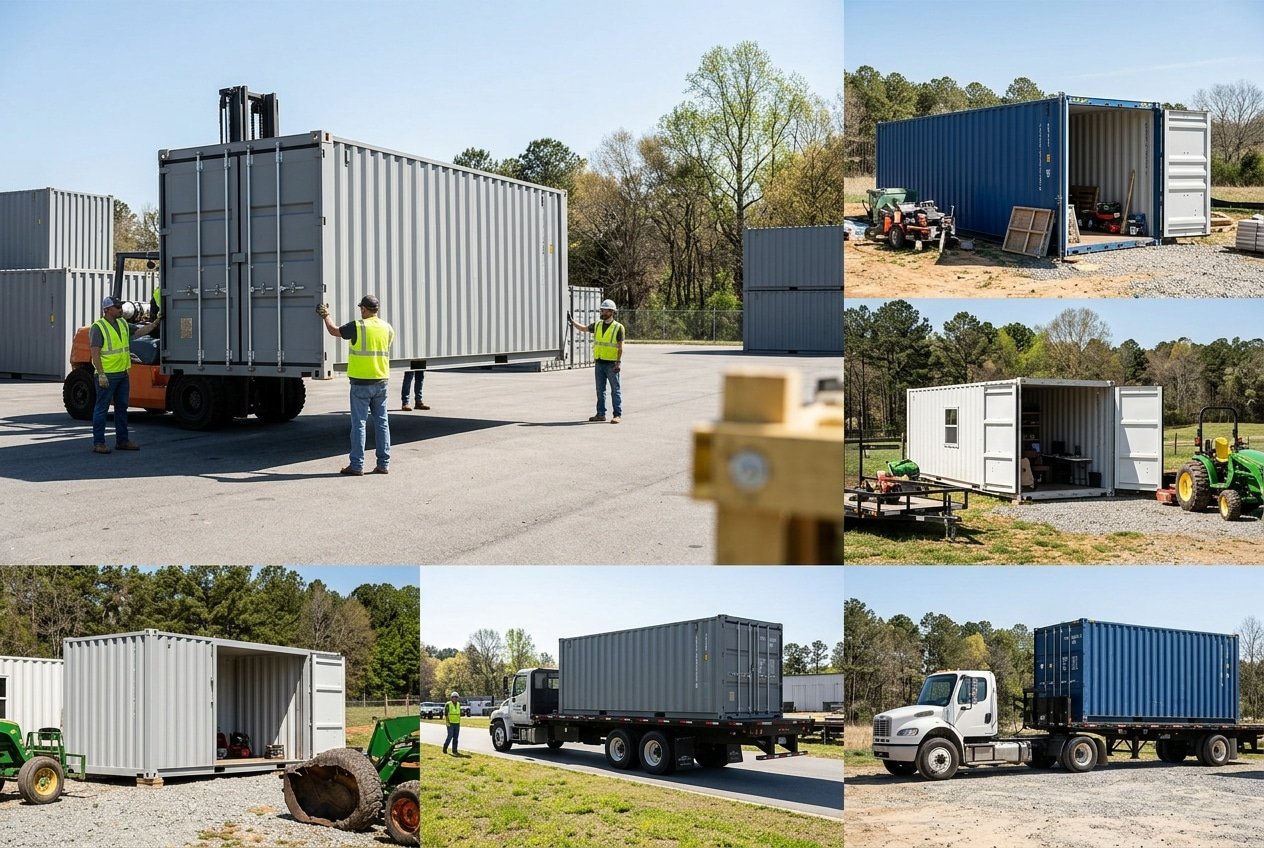
The Raleigh-Durham metro area has a diverse economy that creates demand for containers across multiple sectors. From biotech firms expanding lab storage to homeowners adding functional square footage, one-trip containers serve purposes that go well beyond basic storage.
Secure On-Site Storage for Research Triangle Park Construction
Construction projects in and around RTP often run for 12 to 24 months. Contractors need secure, weather-tight storage for tools, materials, and sensitive equipment. A one-trip container provides a lockable steel enclosure that resists break-in attempts far better than a wooden shed or temporary fence enclosure.
Job site theft costs the U.S. construction industry an estimated $1 billion annually, according to the National Equipment Register. A steel container with a puck-lock system and reinforced lockbox is one of the most practical deterrents available. Because one-trip units have factory-fresh door seals, they also keep moisture away from stored drywall, electrical components, and finish materials that can’t tolerate humidity.
Residential ADUs and Backyard Workshops
Wake County has seen growing interest in accessory dwelling units and backyard structures. A 40ft high cube one-trip container provides a solid structural shell for a home office, art studio, or guest suite. The clean interior walls and undamaged flooring reduce the prep work needed before framing out insulation and interior finishes.
Raleigh’s zoning regulations for accessory structures vary by district, so check with Wake County’s planning department before placing a container on residential property. Most residential projects require a building permit if the structure includes electrical, plumbing, or HVAC systems. Starting with a one-trip unit simplifies the inspection process because the steel shell is in documented, factory-original condition.
Key Features to Inspect Before Purchasing Locally
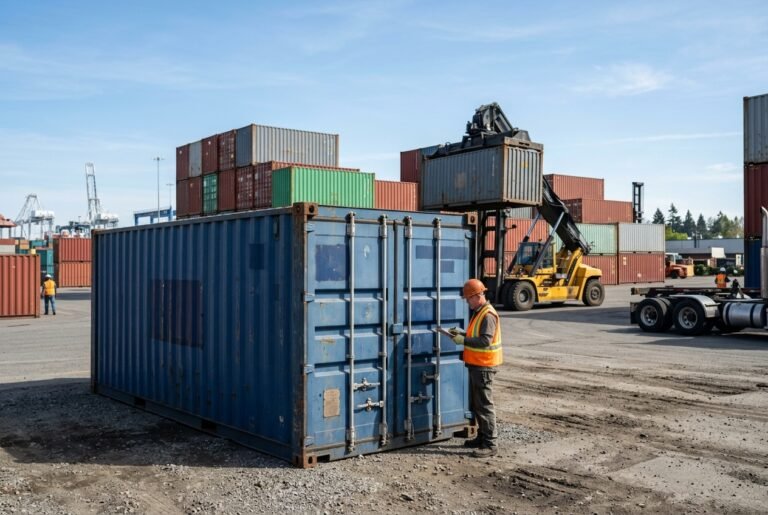
Even with a one-trip container, a quick inspection protects your investment. Shipping damage can occur during transport from port to your local supplier. Look for dents deeper than one inch, any signs of floor warping, and verify that both cargo doors open and close smoothly without binding.
Check the roof for standing water or dimples that could pool rainwater. Examine the corner castings for cracks, as these are the structural connection points that bear the container’s weight during lifting and stacking. Run your hand along the interior walls to feel for any moisture or condensation that might indicate a compromised seal.
Lockbox Security and Door Gasket Integrity
The lockbox is a welded steel shroud that protects the padlock from bolt cutters and pry bars. On a one-trip container, this should be factory-welded with clean seams and no gaps. If the lockbox has been retrofitted, inspect the welds for quality and ensure the shroud fully covers the lock shackle.
Door gaskets are the rubber seals that run along the door edges. They’re your primary defense against water intrusion. On a one-trip unit, these gaskets should be pliable and uniform with no cracking, compression marks, or gaps. Close both doors and check for daylight around the edges from inside. Any visible light means the seal isn’t doing its job, and you should flag it before accepting delivery.
Navigating Delivery and Site Preparation in Wake County
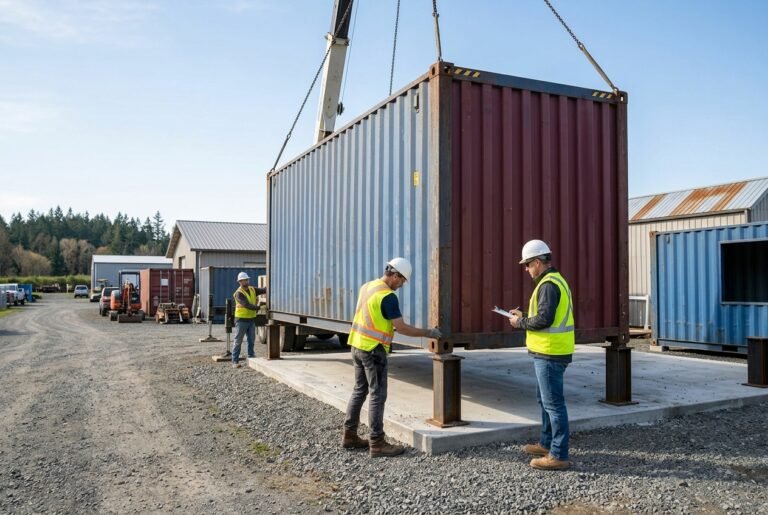
Getting a container to your property involves more than just scheduling a truck. The delivery process requires planning around access roads, overhead clearance, ground conditions, and placement logistics. A failed delivery attempt costs time and money, so preparation is worth every minute.
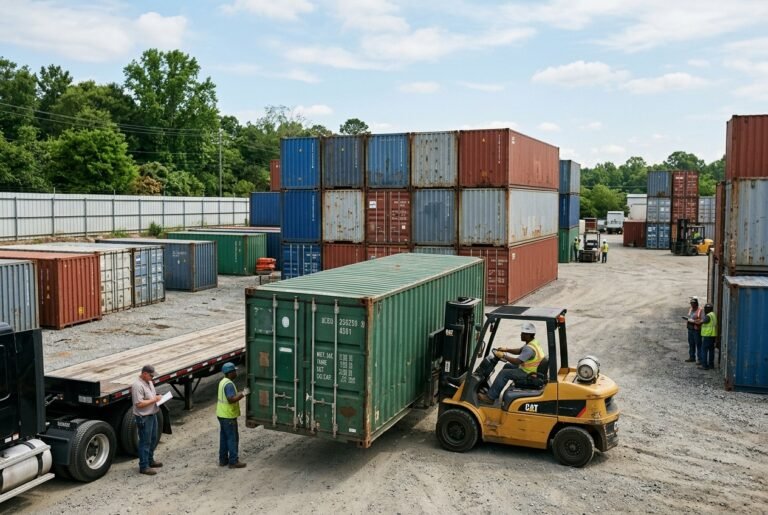
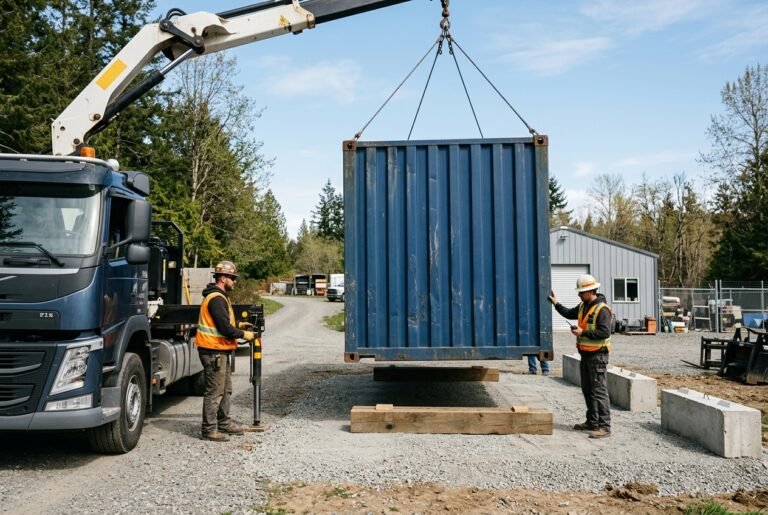
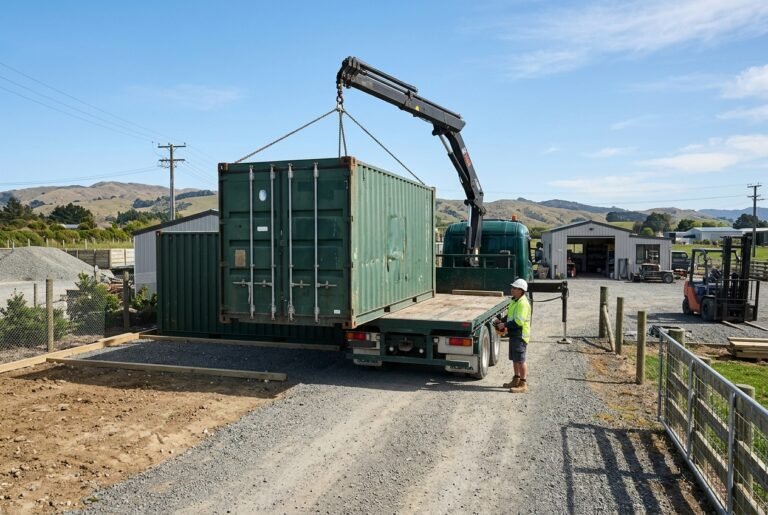
Most one-trip containers ship to Raleigh from East Coast ports like Wilmington, Norfolk, or Savannah. Delivery to Wake County typically uses a tilt-bed truck or a chassis with a side-lifter, depending on the supplier. Confirm the delivery method with your supplier so you can prepare your site accordingly.
Ground Leveling and Clearance Requirements
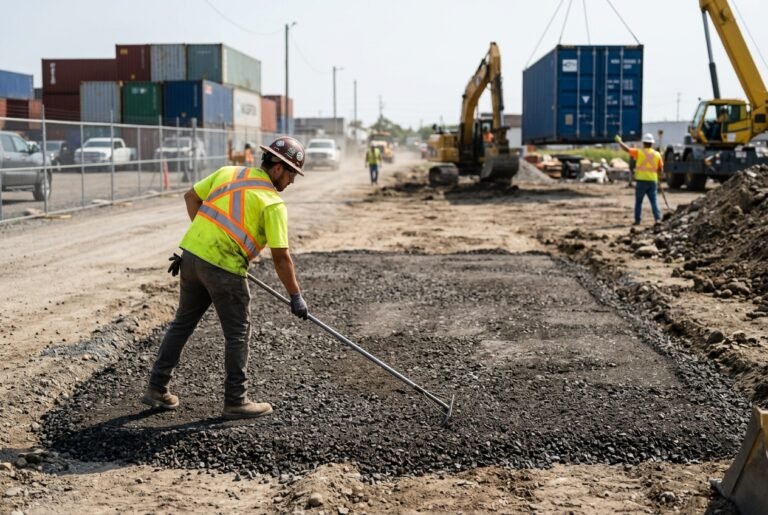
Your container needs a level surface. A slope of more than two inches across the container’s length can cause door alignment issues and structural stress over time. Compacted gravel pads are the most common foundation for ground-level placement. A 20ft container pad should be at least 10 feet wide by 22 feet long; a 40ft pad needs 10 by 42 feet minimum.
Overhead clearance is a frequent problem in residential areas. The delivery truck with a container on its bed can reach 14 feet or higher. Check for power lines, tree branches, and carport overhangs along the entire delivery path, not just at the placement spot. Side clearance matters too: the truck needs roughly 12 feet of width to maneuver. Lease Lane Containers provides delivery planning guidance that covers turning radius, overhead clearance, and ground prep so you can avoid surprises on delivery day.
Where to Find Reputable Container Suppliers in the Triangle
The Raleigh-Durham market has several container suppliers, but quality and transparency vary. When evaluating a supplier, ask these questions:
- Do they clearly explain container grades (one-trip, Cargo Worthy, Wind and Watertight) and what each grade includes?
- Can they provide photos of the specific unit you’ll receive, not just stock images?
- Do they offer delivery planning support, including site access assessment?
- Are pricing and delivery fees transparent before you commit?
- Will they walk you through inspection criteria so you know what to look for on arrival?
A local supplier with Raleigh-area knowledge understands the specific delivery challenges in Wake County neighborhoods: narrow cul-de-sacs, HOA restrictions, and seasonal ground conditions after heavy rain. That local expertise can make the difference between a smooth delivery and a costly reschedule.
Cost Breakdown and Long-Term Investment Benefits
A one-trip 20ft container typically costs between $3,200 and $4,800, depending on market conditions and delivery distance. A 40ft high cube one-trip unit generally runs $4,500 to $6,800. These prices fluctuate based on global shipping demand and port inventory levels.
Compared to used containers priced between $1,800 and $3,500, one-trip units carry a premium of roughly 40% to 60%. That premium buys you a container with a 25-plus year usable lifespan before significant maintenance is needed. A used container in Cargo Worthy condition might need repainting, gasket replacement, and floor repair within the first five years, which can easily add $800 to $1,500 in costs.
If you’re using the container for a conversion project, the math shifts even further in favor of one-trip steel. Clean walls, undamaged floors, and functioning hardware reduce labor hours during the build phase. For a contractor billing $50 to $75 per hour, saving 10 to 15 hours of prep work offsets a significant portion of the price difference.
One-trip containers also hold their resale value better. A well-maintained one-trip unit retains roughly 60% to 70% of its purchase price after ten years, while used containers depreciate faster due to accumulated wear.
If you’re ready to compare options for your next project, browse Lease Lane Containers’ current inventory to see available sizes, grades, and pricing. Their Raleigh-based team can help you match the right container to your site conditions and project goals, so reach out with questions before you buy.