
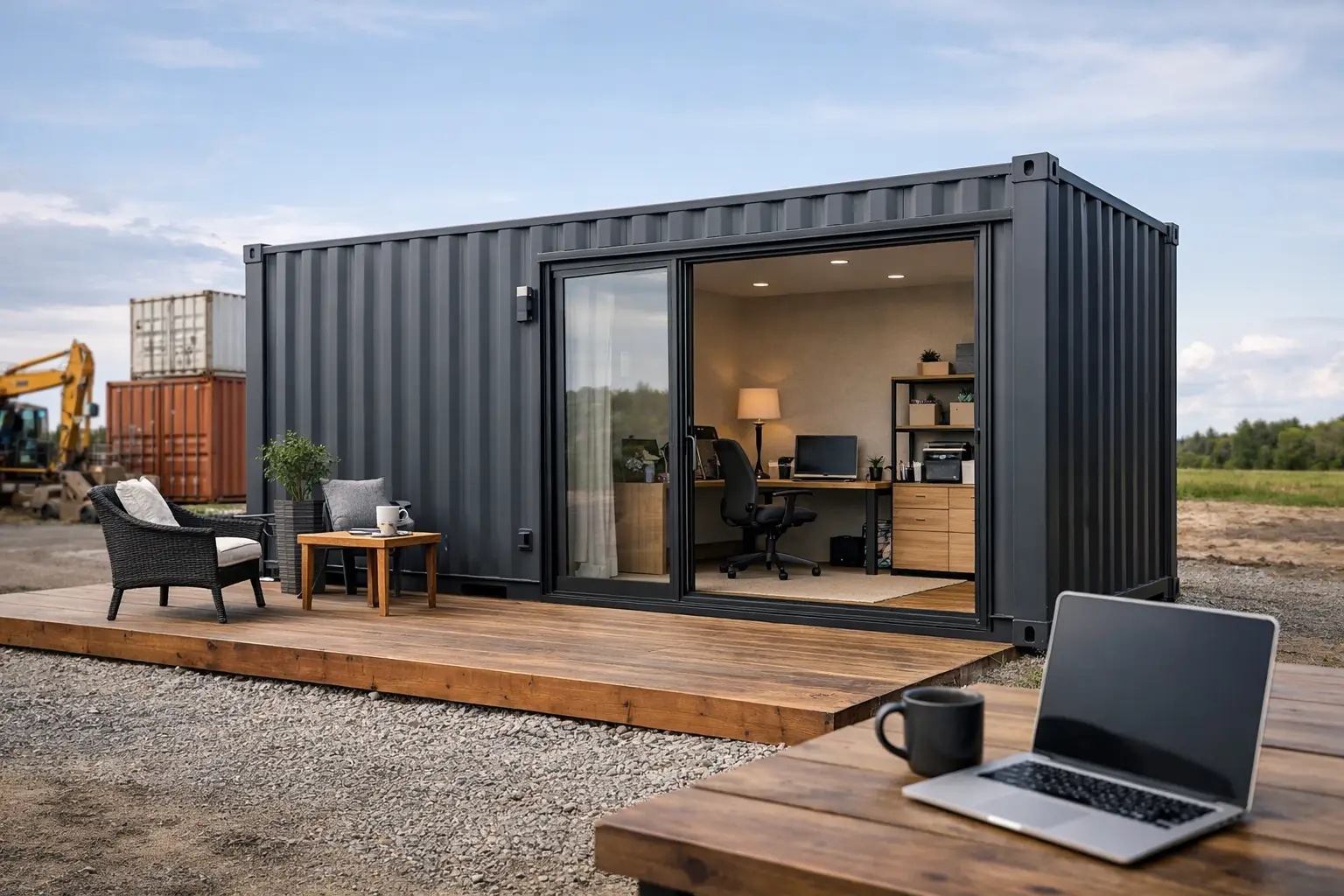
Is a Shipping Container Home Office Worth It?
A spare bedroom works until it does not. Once video calls start competing with family traffic, pets, deliveries, or job-site paperwork spread across the kitchen table, a dedicated workspace becomes less of a luxury and more of an operational need. That is where a shipping container home office starts to make sense – not as a novelty build, but as a durable, secure structure with a predictable footprint.
For buyers who care about clear pricing and no surprises, the appeal is straightforward. A container gives you a steel shell built to handle transport, stacking, and harsh weather. But whether it is the right solution depends on how you plan to use it, what condition you buy, and how well you prepare the site before delivery.
If you are still comparing office-ready options, read our guide on flat pack container office: what to know.
When a shipping container home office makes sense
A container office works best when you need separation, speed, and structure. Homeowners use them to create a quiet backyard workspace without adding onto the main house. Contractors and small business owners use them as on-site admin offices that can also protect equipment, plans, and tools after hours. Rural property owners often like them because they hold up well in open exposure and can be placed where a traditional stick-built outbuilding would take more time.
For a broader look at how containers are used beyond backyard offices, see container solutions for jobsites, farms, and small business.
The biggest advantage is the shell itself. Standard ISO shipping containers are made from Corten steel, a corrosion-resistant steel designed for long service life. That does not mean every used container is ready to become an office on day one, but it does mean the base structure is typically stronger and more secure than many lightweight sheds marketed as office space.
The trade-off is that a container is not finished space. You are starting with an industrial box. To make it comfortable for year-round work, you need to think through insulation, power, ventilation, windows, doors, and interior finishing. If you skip those steps, the structure will feel more like a metal storage unit than a usable office.
Choosing the right container for a home office
The right size depends on how you actually work. A 20-foot container is the most common choice for a single-person office.
If you are still weighing layout options, our guide to shipping containers dimensions: 20ft vs 40ft vs high cube makes the size differences easier to visualize.
It gives you enough room for a desk, storage, lighting, and HVAC equipment without overwhelming a residential lot. A 40-foot unit works better if you want a larger office, a meeting area, or a split-use layout with office space on one end and secure storage on the other.
High-cube containers are often worth a serious look for office conversions. They provide about one extra foot of interior height compared to standard units. That may not sound like much, but once you add insulation, wall framing, flooring, and ceiling finish, that extra headroom improves comfort.
For a closer look at usable headroom and clearance, review high cube container dimensions: interior height and door specs.
Condition matters as much as size. A one-trip container usually offers the cleanest exterior appearance and fewer cosmetic compromises, which matters for backyard placement or customer-facing use. A used Wind & Watertight container can still be a good office shell if budget is the priority, but expect more visible dents, patches, and surface wear.
To understand the trade-offs between appearance, lifespan, and function, compare what is a one trip container before choosing new versus used.
If appearance matters, ask for verified photos and grading details instead of assuming all used units are the same.
For many buyers, this is where hidden costs start. A lower-priced used container can make sense, but only if you are comfortable with the condition and understand what repairs or prep may still be needed before modification.
Site prep is where good projects stay on budget
Most container office problems do not start with the container. They start with the site. Delivery access, ground conditions, drainage, and local setbacks all affect whether the project goes smoothly.
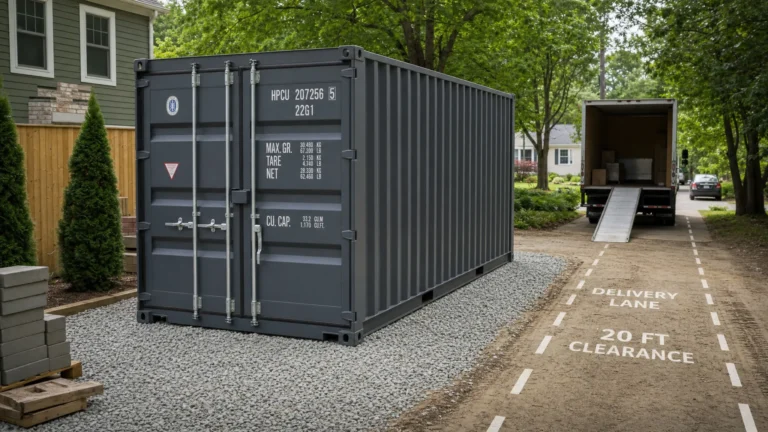
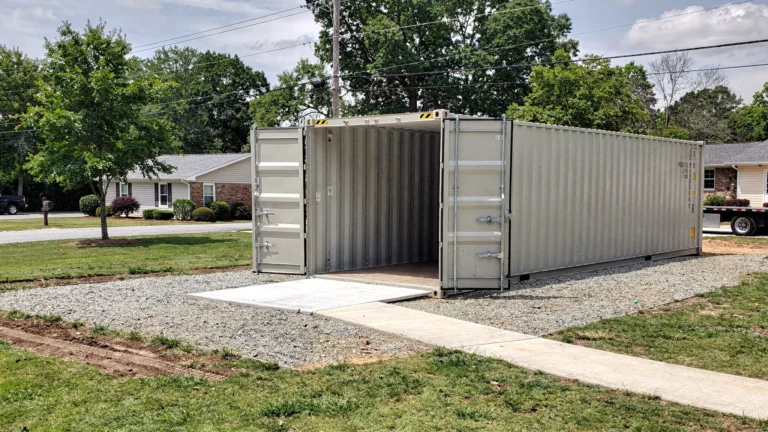
A shipping container home office needs stable support. That can mean gravel, concrete piers, a slab, or another engineered foundation depending on soil conditions and local code requirements. The goal is simple: keep the container level, supported at the right points, and out of standing water. Poor drainage creates long-term problems, especially around doors, cut openings, and finished interiors.
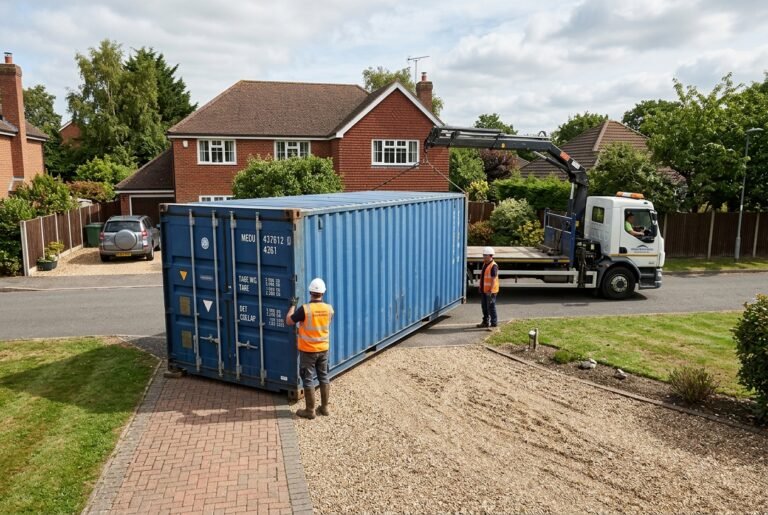
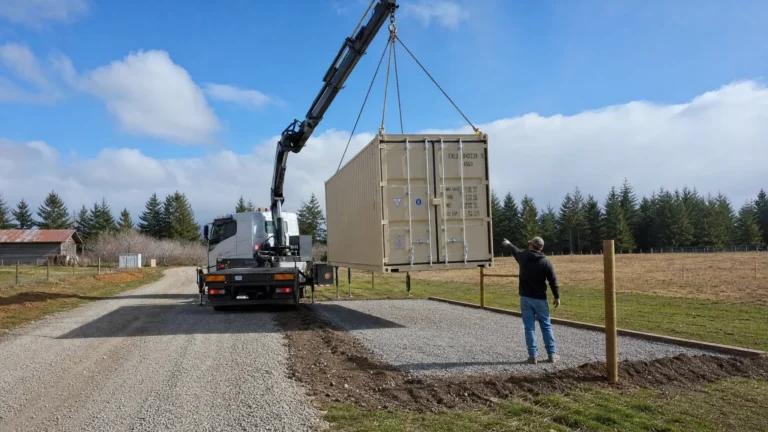
Delivery access matters just as much. Containers are not placed like small sheds. The truck needs enough room to approach, unload, and clear the site safely. Tilt-Bed delivery is common for residential placement, but it still requires adequate straight-line access, overhead clearance, and room to maneuver. Trees, soft ground, fences, and tight driveways can all complicate placement.
For a full placement checklist, see our guide on shipping container delivery requirements.
This is why clear pre-delivery planning matters. If you know your access is tight, say so early. It is far easier to solve a delivery issue on paper than after a truck arrives.
Insulation, ventilation, and comfort are not optional
Steel is durable, but it transfers heat and cold quickly. In a shipping container home office, insulation is what turns a steel box into usable workspace. Without it, summer heat and winter temperature swings can make the space uncomfortable fast.
Spray foam is a common choice because it insulates well and helps manage condensation. Framed wall systems with rigid board or batt insulation can also work, but they take up more interior space and need careful moisture control. The best option depends on your climate, budget, and finish goals.
Ventilation matters for the same reason. Once you tighten up the envelope, you need controlled airflow. A mini-split HVAC system is often the practical answer for heating and cooling a container office. It is efficient, compact, and well suited to smaller footprints. If you plan to work in the office daily, do not treat climate control as an upgrade. Treat it as core infrastructure.
If you are building a workspace that needs more headroom after insulation and ceiling finish, compare a standard office shell with a 40ft high cube container setup.
Windows help with natural light, but every cut into the steel shell needs to be done correctly. Large openings can affect structural performance if they are not reinforced. The same goes for upgraded personnel doors, roll-up access points, and pass-through openings. Containers are strong, but they are engineered around their original structure. Modification should respect that.
Permits and code: ask early, not late
This part varies by county, city, and use case. Some jurisdictions treat a backyard office like an accessory structure. Others focus on occupancy, electrical work, setbacks, and permanent foundation requirements. If plumbing is involved, review gets more detailed.
The mistake buyers make is assuming the container itself is the hard part. In reality, permitting often drives the timeline. Before you commit to a design, confirm what your local building department requires for detached office space. Ask about zoning, foundation standards, electrical permits, energy code expectations, and whether engineered drawings will be needed after modifications.
Site fit matters just as much as code review, so it helps to understand container shipping prices: a real-world cost breakdown before you budget the full project.
If you are using the office for business operations with client visits or employees, requirements may be stricter than for a personal backyard workspace. It depends on use, not just structure.
Budgeting for the full project, not just the box
The container is only one line item. A realistic budget for a home office should include the unit itself, delivery, foundation or supports, insulation, framing, electrical, HVAC, doors and windows, interior finishes, and permitting.
If you are pricing a smaller office shell, start with 20ft shipping container price: what to expect to set a realistic baseline.
This is why clear scope matters. A basic office shell with one door, a few windows, insulation, lights, and a mini-split is very different from a fully finished workspace with custom siding, built-ins, upgraded glazing, and architectural detailing. Both can be valid projects. They just belong in different budget ranges.
If your priority is speed, keep the design simple. If your priority is appearance, especially in a residential backyard, expect to spend more on finish work. Neither approach is wrong. The key is aligning the container grade and build scope with the result you actually want.
A container office should still look professional
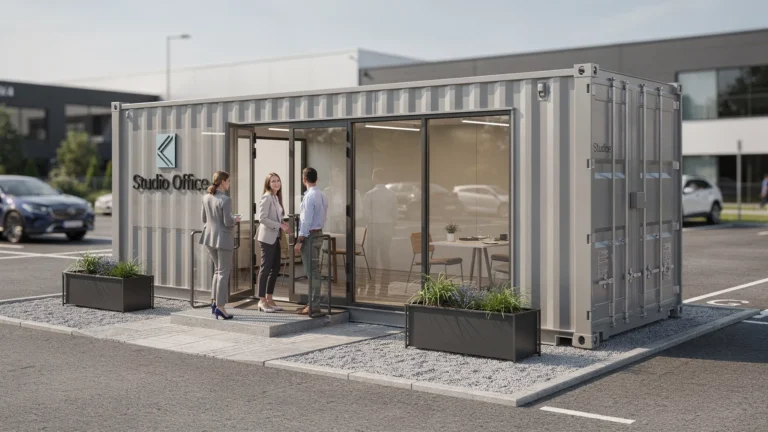
Function comes first, but appearance matters. For homeowners, that means choosing a unit with a cleaner exterior or adding cladding, paint, or landscaping so the office fits the property. For commercial users, it means presenting a professional workspace that does not look temporary unless temporary is exactly the point.
A good office conversion usually balances industrial durability with a more refined interior. Drywall or plywood wall panels, durable flooring, proper lighting, and acoustic control can make a major difference in day-to-day use. The shell may be steel, but the experience inside should support focused work.
If you want a more direct comparison between modular and steel-box offices, review flat pack container office: what to know before finalizing your design.
For buyers who want a container office without unnecessary guesswork, the practical path is to start with verified container specs, honest grading, and a delivery plan that matches the site. That is the kind of upfront clarity companies like Lease Lane Containers build around, because the best project is rarely the one with the lowest starting price. It is the one that arrives as expected, fits the site, and performs the way you need it to.
If you are considering a shipping container office, think less about the trend and more about the workload. When the structure, site, and build scope are aligned, it can be one of the most dependable ways to create dedicated workspace without adding surprises to the job.
Whether you are still exploring ideas or ready to buy, browse our inventory page to view available containers and reach out through our contact us page for help choosing the right office setup, container grade, and delivery plan for your property.

3 Comments