Best shipping containers for sale in Dallas, Texas | 2026 Guide
Table of Contents
- Table of Contents
- Dallas shipping containers for sale Quick Facts
- shipping containers for sale in Dallas: What You Need to Know
- Top shipping containers for sale Options in Dallas
- Budget-Friendly: Wind and Watertight (WWT) Containers
- Mid-Range: Cargo Worthy (CW) Containers
- Premium: One-Trip Containers
- How to Choose the Right shipping containers for sale in Dallas
- 1. Define Your Use Case First
- 2. Verify the Grade, Not Just the Price
- 3. Measure Your Site Before Ordering
- 4. Check Local Permit Requirements
- 5. Watch for Red Flags
- Dallas shipping containers for sale Market in 2026
- Dallas shipping containers for sale FAQ
- How much does a shipping container cost in Dallas in 2026?
- Do I need a permit to put a shipping container on my property in Dallas?
- How long does delivery take?
- What size container do most Dallas buyers choose?
- Can I modify a shipping container in Dallas?
- Get shipping containers for sale in Dallas Today
- Final Checklist
Table of Contents
- Dallas Shipping Containers for Sale: Quick Facts
- Shipping Containers for Sale in Dallas: What You Need to Know
- Top Shipping Container Options in Dallas
- How to Choose the Right Shipping Container in Dallas
- Dallas Shipping Container Market in 2026
- Dallas Shipping Containers for Sale FAQ
- Get Shipping Containers for Sale in Dallas Today
- Final Checklist
Dallas has become one of the strongest markets for shipping containers in the entire Southwest. Between rapid commercial growth, a booming construction sector, and thousands of rural properties across the surrounding counties, demand for containers here has outpaced most Texas metros since 2024. Whether you need on-site storage for a contracting business in Deep Ellum, a climate-controlled workspace on a Collin County ranch, or overflow inventory space for a retail operation near the Design District, buying the right container starts with understanding what’s actually available, what it costs, and how to get it delivered without surprises. This 2026 guide breaks down everything Dallas buyers need to make a confident purchase, from grading standards and pricing tiers to delivery logistics and local permit requirements. If you’re comparing shipping container sizes for the first time or upgrading from a rented unit, the information here will save you time and money.
Dallas shipping containers for sale Quick Facts
Here’s what Dallas buyers should know before spending an hour researching:
- Pricing ranges from roughly $1,800 for a used 20-foot wind and watertight unit to $6,500 or more for a 40-foot high cube one-trip container. Condition and grade drive most of the price difference.
- Delivery lead times in the DFW metro typically run 5 to 14 business days after purchase, depending on inventory availability and whether you’re buying locally stocked or depot-shipped units.
- Service area coverage spans the entire DFW metroplex and surrounding counties, including Tarrant, Collin, Denton, Ellis, and Kaufman. Rural deliveries outside the metro may require additional site prep and scheduling flexibility.
- Local providers stand out when they offer transparent grading guidance. Terms like “cargo worthy” and “wind and watertight” have specific meanings, and reputable sellers explain exactly what condition you’re getting rather than hiding behind vague descriptions like “good shape.”
- Delivery access matters as much as the container itself. Dallas properties vary widely: a tight alley behind a Deep Ellum warehouse is a completely different delivery scenario than an open pasture in Waxahachie. Confirming turning radius, overhead clearance, and ground conditions before ordering prevents costly rescheduling.
shipping containers for sale in Dallas: What You Need to Know
The Dallas-Fort Worth area sits at a logistics crossroads, with major rail lines, interstate highways (I-30, I-35E, I-20, I-45), and proximity to intermodal depots that keep container supply relatively strong compared to smaller Texas cities. This infrastructure means Dallas buyers typically have access to a broader selection of grades and sizes than someone shopping in, say, Lubbock or Amarillo.
Container services available in Dallas fall into three main categories: direct purchase of new or used units, modified containers (offices, workshops, pop-up retail), and rental programs. For most buyers reading this guide, outright purchase makes the most financial sense if you need the container for more than 12 months. Rental costs in the DFW area currently run $125 to $250 per month for a standard 20-foot unit, which means the break-even point against buying a used container arrives faster than many people expect.
Location within the metro affects your buying experience in practical ways. Buyers in downtown Dallas, Uptown, or Oak Lawn face tighter delivery windows and more restrictive placement options due to narrow streets and overhead utility lines. Properties in Mesquite, Lancaster, Cedar Hill, or Forney generally have easier access for the tilt-bed or roll-off trucks used for container delivery. If you’re placing a container on a commercial site in Richardson or Plano, check with the city’s code enforcement office before ordering: some municipalities require a site plan even for temporary storage.
Lease Lane Containers, based in Raleigh, North Carolina, delivers shipping containers nationwide, including throughout the DFW metro. Their delivery planning guidance helps buyers think through access requirements, placement logistics, and overhead clearance before the truck arrives, which is especially useful for first-time buyers in urban Dallas neighborhoods where space is tight.
Top shipping containers for sale Options in Dallas
Budget-Friendly: Wind and Watertight (WWT) Containers
Wind and watertight containers are the most affordable option for buyers who need functional storage without cosmetic perfection. These units show visible wear: surface rust, dents, patched areas, and faded paint are typical. What matters is that they keep moisture out and protect contents from the elements.
Expect to pay $1,800 to $2,800 for a 20-foot WWT unit and $2,200 to $3,500 for a 40-foot version in the Dallas market as of early 2026. These prices fluctuate based on depot inventory and seasonal demand. WWT containers work well for storing equipment on construction sites, keeping hay and feed dry on farms in Ellis or Johnson County, or holding seasonal inventory for small businesses.
The trade-off is clear: you save money upfront, but the container may not pass inspection for international shipping, and cosmetic issues can matter if the unit is visible to customers or neighbors.
Mid-Range: Cargo Worthy (CW) Containers
Cargo worthy containers have been inspected and certified as structurally sound enough for ocean transport. They’re in better overall condition than WWT units: fewer dents, functional door seals, and intact flooring. For Dallas buyers using containers as semi-permanent storage or workshop space, CW represents the sweet spot between cost and condition.
Pricing for cargo worthy units in Dallas currently runs $2,500 to $3,800 for a 20-foot container and $3,200 to $4,800 for a 40-foot high cube. The high cube option adds about a foot of interior height (9’6″ vs. 8’6″), which makes a real difference if you’re standing inside the container regularly or stacking pallets.
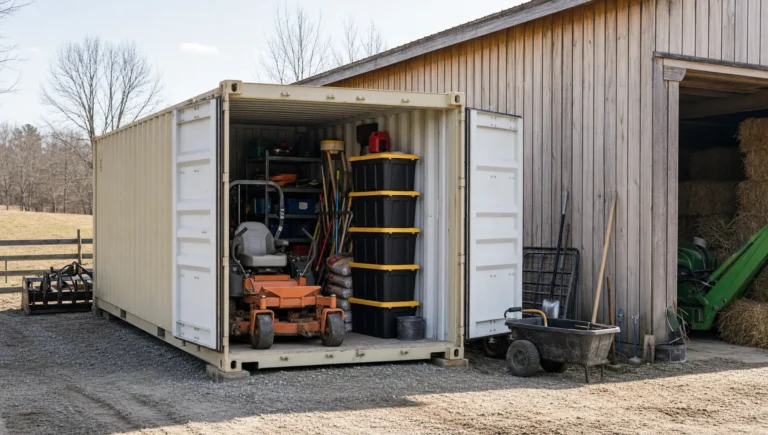
CW containers suit contractors who need job site storage that looks professional, small business owners setting up a secure workspace, and homeowners building a backyard workshop or studio.
Premium: One-Trip Containers
One-trip containers are manufactured overseas (typically in China) and shipped to the U.S. with a single cargo load. They arrive in near-new condition: minimal wear, factory paint, clean floors, and tight door seals. For buyers who want a container that looks clean, performs reliably for decades, and requires zero immediate maintenance, one-trip is the right choice.
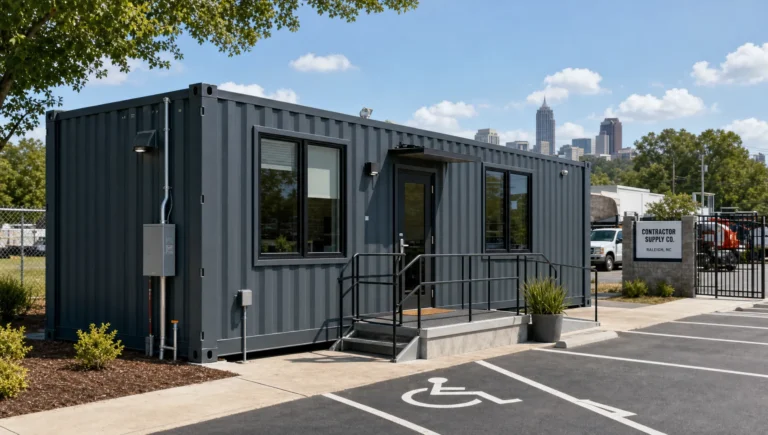
Dallas pricing for one-trip containers ranges from $3,800 to $5,200 for a 20-foot unit and $5,000 to $6,800 for a 40-foot high cube. These containers are the preferred starting point for modification projects: container offices, pop-up retail, or residential builds. The clean condition means fewer surprises during fabrication.
You can compare container grades and sizes through Lease Lane Containers’ inventory to see what’s currently available for Dallas delivery.
How to Choose the Right shipping containers for sale in Dallas
Choosing the right container comes down to five decisions, and getting any one of them wrong creates headaches.
1. Define Your Use Case First
A container for storing lawn equipment on a residential property in Garland has completely different requirements than one destined to become a container office on a commercial lot in Irving. Storage-only applications can tolerate more cosmetic wear. Anything involving human occupancy, electrical systems, or customer-facing visibility demands a higher-grade unit.
2. Verify the Grade, Not Just the Price
The container industry uses specific grading terms, and not every seller uses them honestly. Here’s what to confirm:
- One-trip: manufactured new, single ocean voyage, near-new condition
- Cargo worthy: inspected and certified for intermodal transport, structurally sound
- Wind and watertight: keeps weather out but may have significant cosmetic wear and won’t pass a CW inspection
- As-is: no guarantees on condition, buyer assumes all risk
Ask for photos of the actual unit you’re purchasing, not stock images. Reputable suppliers like Lease Lane Containers provide transparent grading guidance so buyers understand exactly what condition they’re getting.
3. Measure Your Site Before Ordering
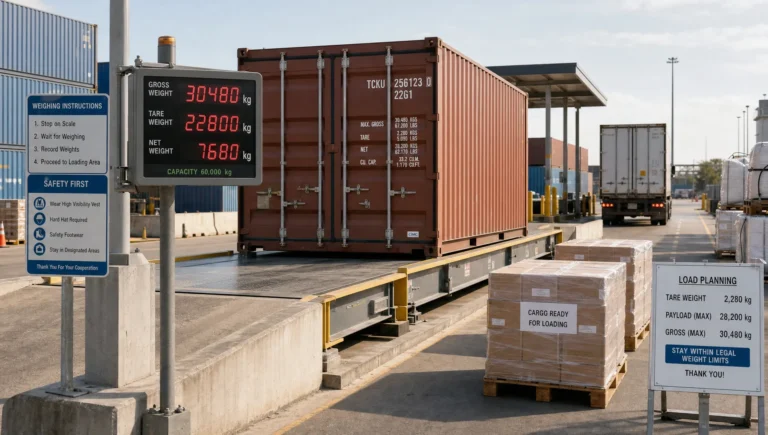
A 40-foot container is 40 feet long, 8 feet wide, and either 8’6″ or 9’6″ tall. That’s straightforward on paper, but delivery requires significantly more space. Tilt-bed trucks need roughly 100 feet of straight clearance to set a container down. Roll-off delivery requires less length but more overhead clearance. Measure your site, check for overhead power lines, confirm the ground is level and firm enough to support the weight (a loaded 40-foot container can exceed 67,200 lbs), and verify that the delivery truck can actually reach the placement spot.
4. Check Local Permit Requirements
Texas doesn’t have a statewide shipping container building code, which means permit requirements vary by municipality. In Dallas proper, placing a container on a commercial property typically requires a building permit if the container is permanent. Residential placement may fall under accessory structure rules. Call the Dallas Development Services office at (214) 948-4480 to confirm requirements for your specific address. Cities like Frisco, McKinney, and Allen each have their own rules, so don’t assume what works in one DFW city applies in another.
5. Watch for Red Flags
Avoid sellers who won’t provide photos of the specific container you’re buying, refuse to discuss grading standards, or quote prices dramatically below market rates. A 40-foot one-trip container listed at $2,500 isn’t a deal: it’s likely a bait-and-switch or a misrepresented grade.
Dallas shipping containers for sale Market in 2026
The DFW container market has tightened since late 2024. Several factors are driving this shift.
Global shipping patterns have redirected container flow away from some U.S. inland depots. Dallas, despite its strong logistics infrastructure, has seen periodic inventory shortages for specific sizes, particularly 20-foot one-trip units and 40-foot high cube containers. Buyers who need a specific size and grade should expect to order 2 to 3 weeks ahead rather than assuming same-week availability.
Construction activity across the metroplex remains intense. The Texas Department of Licensing and Regulation reported over $14 billion in new construction starts in the DFW area during 2025, and 2026 projections are tracking similarly. Contractors account for a significant share of container purchases, using them for secure tool and material storage on active job sites. This demand creates seasonal pressure: spring and summer months see higher prices and longer lead times as construction activity peaks.
Compared to Houston, which benefits from direct port access and larger depot inventories, Dallas typically runs $200 to $400 higher per unit for equivalent grades. Austin and San Antonio fall somewhere in between. The price difference reflects transportation costs from coastal depots to inland distribution points.
One regulatory trend worth watching: several DFW suburbs have updated their zoning codes in 2025-2026 to specifically address shipping container structures. Prosper, Celina, and Forney have all introduced or revised ordinances governing container placement on residential and agricultural properties. Before purchasing, confirm that your intended use complies with current local zoning. A quick call to your city’s planning department can save you from buying a container you can’t legally place.
Temperature is another Dallas-specific consideration. Summer heat regularly pushes interior container temperatures above 130°F without ventilation or insulation. Buyers planning to use a container as a workspace or for storing heat-sensitive materials should budget for ventilation modifications, reflective roof coatings, or spray foam insulation. These additions typically cost $800 to $2,500 depending on the container size and insulation method.
Dallas shipping containers for sale FAQ
How much does a shipping container cost in Dallas in 2026?
Prices depend on size, grade, and current inventory levels. A 20-foot wind and watertight container starts around $1,800, while a 40-foot high cube one-trip container can reach $6,800. Mid-range cargo worthy units fall between $2,500 and $4,800. Delivery fees within the DFW metro typically add $250 to $600 depending on distance from the depot and site accessibility.
Do I need a permit to put a shipping container on my property in Dallas?
In most cases, yes. Dallas requires permits for permanent structures, and a shipping container placed on a property for extended use generally qualifies. Temporary placement on construction sites may have different rules. Contact Dallas Development Services at (214) 948-4480 or your suburb’s planning department for specific guidance. Properties in unincorporated areas of Dallas County may have fewer restrictions, but it’s still worth verifying with the county.
How long does delivery take?
For containers in local DFW depot inventory, delivery can happen within 5 to 10 business days. Units shipped from coastal depots or other regions may take 10 to 21 days. Confirming site readiness before scheduling delivery prevents delays: the truck driver won’t place a container if the ground is too soft, the access is too narrow, or overhead lines are in the way.
What size container do most Dallas buyers choose?
The 40-foot high cube is the most popular size for commercial and contractor use because it offers roughly 2,390 cubic feet of interior space with enough headroom to stand comfortably. Homeowners and small businesses with limited space often prefer the 20-foot standard, which fits on most residential driveways and provides about 1,170 cubic feet of storage. You can review shipping container dimensions to compare options side by side.
Can I modify a shipping container in Dallas?
Yes. Container modifications are common in DFW, including adding roll-up doors, windows, electrical systems, HVAC, and insulation. Starting with a one-trip container gives fabricators the cleanest surface to work with. If you’re planning a container office or retail build, confirm that your modification plans comply with local building codes before starting work.
Get shipping containers for sale in Dallas Today
If you’ve read this far, you have a solid understanding of what the Dallas container market looks like in 2026 and what to expect when buying. Here’s how to move forward efficiently.
Start by confirming three things: your intended use, your site dimensions and access conditions, and your local permit requirements. Having these answers ready before contacting a supplier speeds up the quoting process and prevents mismatches between what you order and what actually works on your property.
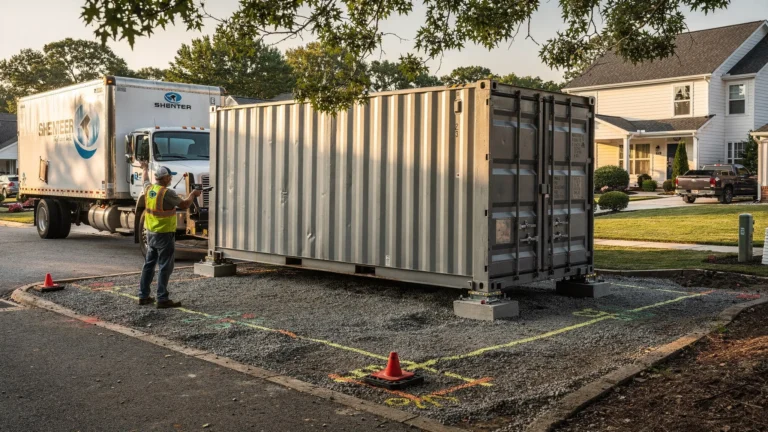
Prepare your site before scheduling delivery. A level gravel pad (4 to 6 inches deep, extending 2 feet beyond the container footprint on all sides) provides proper drainage and prevents the container from settling unevenly. For properties with soft soil, common in parts of southern Dallas County after heavy rain, concrete footings or railroad tie supports may be necessary.
Gather these details for your supplier: the container size and grade you want, your delivery address, any access restrictions (gate width, overhead lines, unpaved roads), and your preferred placement orientation (which direction should the doors face). This information helps the delivery team plan the right truck type and approach path.
Lease Lane Containers’ Raleigh-based team supports buyers across the country, including throughout the Dallas-Fort Worth metro. Their delivery planning support covers site access, turning radius, overhead clearance, and placement logistics so the container arrives and gets set correctly on the first attempt.
Final Checklist
Use this before placing your order:
- Confirmed the container grade (one-trip, cargo worthy, or wind and watertight) matches your intended use
- Measured the delivery path: minimum 12 feet wide, 14 feet of overhead clearance, and 100 feet of straight approach for tilt-bed delivery
- Checked with your local municipality or county about permit requirements for container placement
- Verified ground conditions: level, firm, and properly drained
- Requested photos of the actual unit, not stock images
- Compared pricing across at least two suppliers to confirm you’re paying market rate
- Budgeted for delivery fees ($250 to $600 in DFW) and any site prep costs
- Planned for ventilation or insulation if using the container as a workspace during Dallas summers
Getting the right container for your Dallas project doesn’t require guesswork. The key is matching the grade and size to your actual needs, preparing your site properly, and working with a supplier who gives you clear information before you commit. You can browse available inventory to compare sizes, grades, and current options, or contact us to talk through your specific project requirements with someone who can help you plan the details.