Best Uses for 20ft Containers on Homes and Jobsites
A 20ft shipping container is often the “just right” size for property storage, construction staging, and compact workspace projects. It is large enough to hold tools, materials, furniture, retail inventory, farm supplies, or a small workshop, yet compact enough to fit many residential driveways, urban lots, and active jobsites around Raleigh, North Carolina.
For contractors and homeowners in the Southeast, that balance matters. A 40ft unit offers more volume, but it also needs more delivery space, a larger pad, and a longer access path. A 20ft container gives you secure steel storage without taking over the entire property.
Below, we’ll break down the best uses for 20ft containers, the grades to consider, and the site-planning details that help avoid delivery problems.
Why 20ft Containers Work So Well for Homes and Jobsites
A standard 20ft ISO shipping container is typically about 20 feet long, 8 feet wide, and 8 feet 6 inches tall on the exterior. Interior dimensions vary slightly by manufacturer and floor condition, but a standard unit usually provides roughly 1,100 to 1,170 cubic feet of usable space.
That compact footprint is the biggest advantage. A 20ft container can often be placed where a longer unit would be impractical, including side yards, compact construction entrances, small commercial lots, farms, church properties, and residential driveways. It also provides a strong security upgrade compared with sheds, enclosed trailers, or temporary job boxes.
Most ISO shipping containers are built with corrugated Corten steel, a weathering steel designed to resist corrosion better than ordinary carbon steel. The structural frame, corner castings, crossmembers, steel doors, and marine-grade plywood floor are designed for intermodal transport, which is why these units remain useful long after their ocean shipping life.
For buyers in Raleigh and across North Carolina, a 20ft unit is especially useful because it is manageable on tighter lots while still durable enough for humid summers, heavy rain, red clay soil conditions, and active construction environments.
Best Residential Uses for 20ft Containers
Homeowners use 20ft containers for more than basic storage. With the right grade, placement, ventilation, and security, a container can become a long-term property asset.
1. Garage Overflow and Seasonal Storage
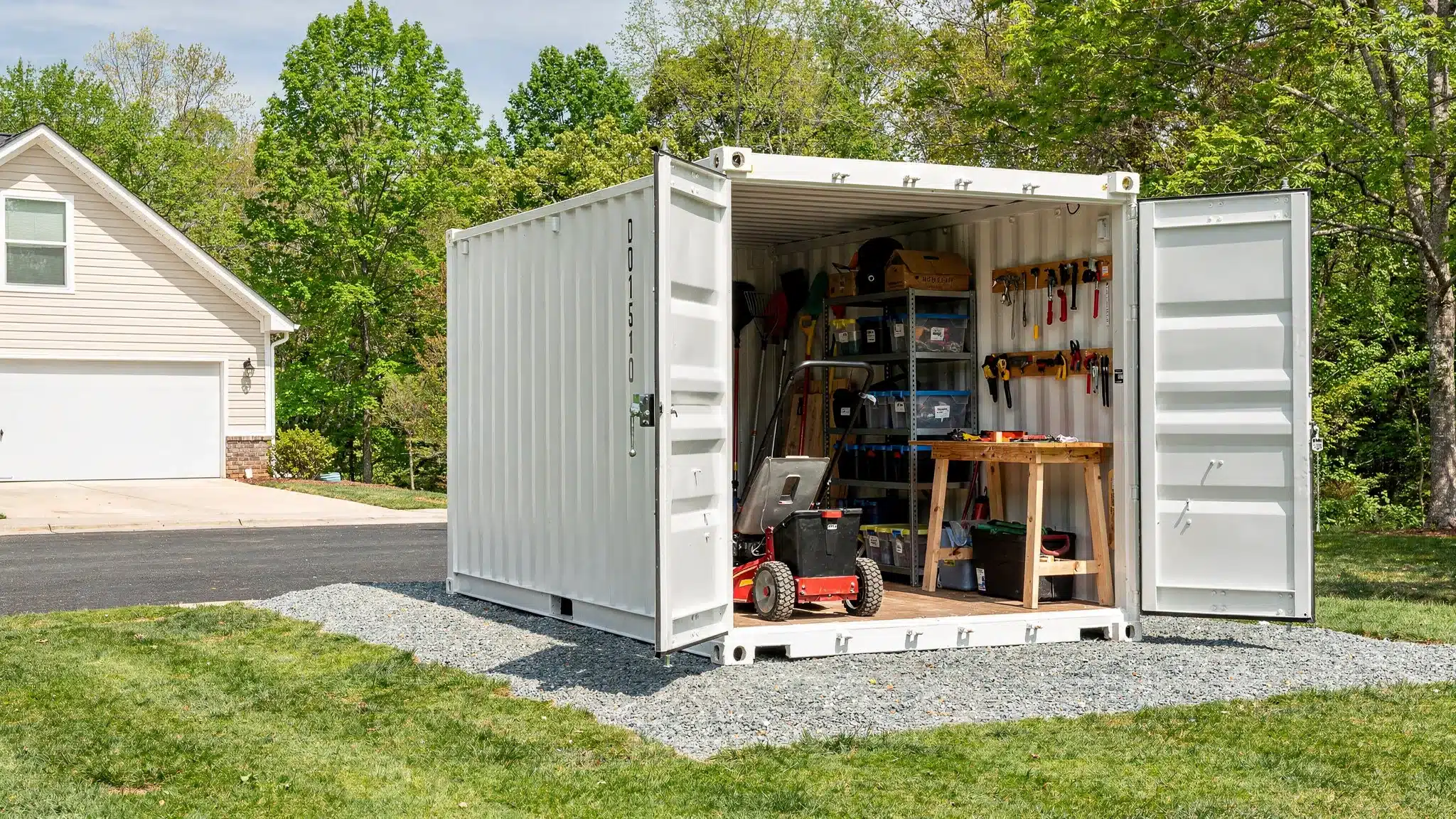
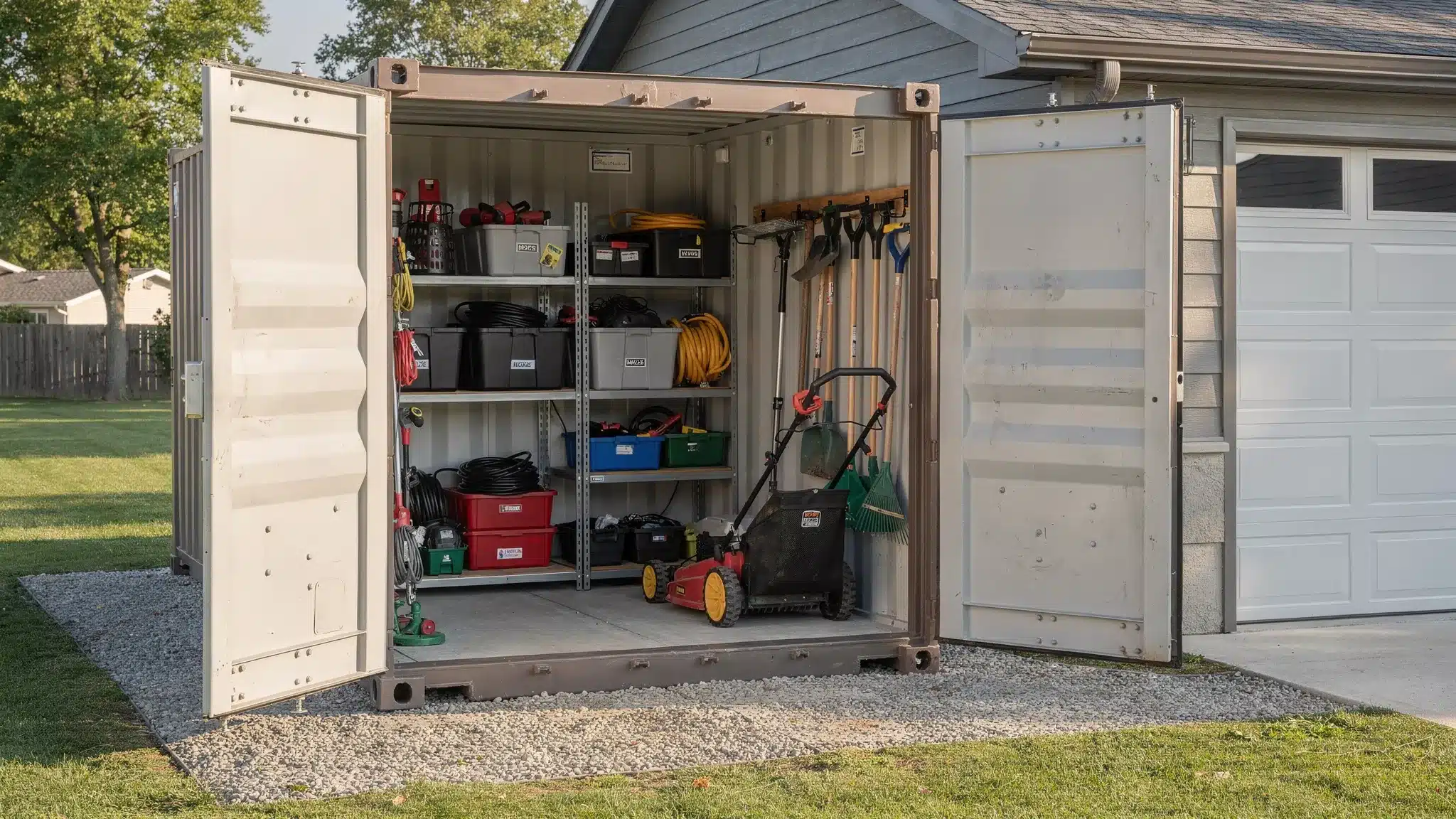
A 20ft container is ideal when the garage has become too crowded for vehicles, equipment, and household storage. It can hold lawn equipment, patio furniture, holiday decorations, bikes, camping gear, kayaks, and renovation materials while keeping them out of the weather.
For this use, a Wind and Watertight unit is often a cost-effective choice. WWT means the container should keep out wind and rain when stationary, assuming the doors, gaskets, roof, and seams are in acceptable condition. It may show dents, surface rust, patches, or cosmetic wear, but it should be suitable for non-sensitive property storage.
If you are storing furniture, documents, textiles, or valuables, consider a cleaner Cargo Worthy or One-Trip unit, plus ventilation or moisture-control measures. In North Carolina’s humidity, condensation can be a bigger concern than rain leakage.
2. Temporary Storage During Remodels and Moves
During kitchen remodels, flooring projects, roof replacements, or whole-home renovations, a 20ft unit gives you secure storage without renting off-site space. Contractors can access materials on the property, and homeowners avoid repeated trips to a storage facility.
Because remodeling projects often involve frequent access, door function matters. Before buying or renting, check that the locking bars turn smoothly, the doors close evenly, and the gasket seals are intact. A slightly twisted or poorly leveled container can make the doors hard to operate, even if the unit itself is structurally sound.
For short-term remodeling storage, WWT may be sufficient. For longer projects or higher-value interior finishes, Cargo Worthy or One-Trip may provide better peace of mind.
3. Backyard Workshop or Hobby Space
A 20ft container can be converted into a compact workshop for woodworking, small-engine repair, gardening, art, or general home projects. For workshop use, condition matters more than it does for basic storage because you may add lighting, shelving, ventilation, electrical service, insulation, or a personnel door.
A One-Trip container is usually the best starting point for cleaner conversions. One-Trip units have made a single loaded trip from the factory and are typically the closest option to new in the resale market. They usually have fewer dents, cleaner floors, better paint condition, and stronger resale appeal.
A Cargo Worthy container can also work well for a workshop if the structure is solid and the floor is in good condition. Cargo Worthy units meet standards for shipping cargo and should be structurally suitable for transport, subject to inspection and certification. They may have more cosmetic wear than One-Trip containers but can offer strong value.
4. Farm, Garden, and Rural Property Storage
On farms and rural properties around Wake County, Johnston County, Franklin County, and throughout the Southeast, 20ft containers are commonly used to store feed, tack, seed, fencing supplies, irrigation parts, tools, and compact equipment.
Compared with wood sheds, steel containers offer better resistance to pests, wind, and unauthorized access. They can also be relocated if your property layout changes. For agricultural storage, WWT is often the practical budget grade, while Cargo Worthy is a better choice if the unit may be moved, stacked, or used for higher-value inventory.
If you plan to store feed or moisture-sensitive supplies, discuss ventilation and condensation control before delivery. Even a container that is wind and watertight can develop interior humidity if warm, moist air is trapped inside.
Best Jobsite Uses for 20ft Containers
For general contractors, home builders, roofers, electricians, plumbers, landscapers, and site supervisors, a 20ft container is one of the most practical jobsite assets available. It creates a secure, ground-level storage area that can be delivered directly to the project.
1. Tool and Equipment Storage
The most common jobsite use is secure tool storage. A 20ft container can hold power tools, compressors, ladders, saws, fasteners, PPE, pumps, temporary fencing parts, and small machinery. With a lockbox and a high-quality puck lock or shrouded padlock, it provides a stronger security profile than many job boxes or enclosed trailers.
For active jobsites, a Cargo Worthy or WWT unit is usually adequate, depending on budget and expected duration. If the container will be highly visible on a premium residential build or commercial site, a cleaner One-Trip unit may present better to clients and inspectors.
2. Material Staging for Home Builders
Builders often lose time when materials are delivered too early, stored off-site, or scattered across a project. A 20ft container creates a controlled staging area for doors, windows, cabinets, tile, fasteners, fixtures, and trim packages.
The biggest advantage is workflow. Crews can organize materials by phase, lock them up overnight, and reduce damage from rain or foot traffic. For Raleigh-area residential construction, where infill lots and tight subdivisions are common, a 20ft unit is often easier to place than a 40ft container.
When storing finish materials, choose the cleanest grade your budget allows. A One-Trip or higher-quality Cargo Worthy unit is typically better for cabinets, flooring, millwork, and boxed fixtures than a heavily worn storage-grade unit.
3. Compact Mobile Office or Site Command Center
A 20ft container can be modified into a simple jobsite office, plan room, or supervisor station. Common additions may include insulation, wall framing, electrical, HVAC, windows, personnel doors, lighting, and desks. The container shell itself provides a durable base, but modification quality and code compliance determine whether it functions well as occupied space.
For office conversions, One-Trip is the preferred grade in most cases. The cleaner structure, straighter panels, better floor condition, and newer coatings reduce prep time and help create a more professional finished result. Cargo Worthy may be acceptable for budget-conscious builds if it passes structural inspection, but WWT is usually better reserved for non-occupied storage unless carefully evaluated.
If height matters, ask whether a High Cube option is available. A High Cube container is typically 9 feet 6 inches tall on the exterior, giving roughly one extra foot of height compared with a standard container. That additional space can be valuable after adding insulation, ceiling panels, ducting, or lighting.
4. Trade-Specific Storage by Crew or Phase
On larger jobsites, several 20ft containers can be used instead of one large unit. This is useful when different subcontractors need separate access, or when materials need to be organized by trade.
For example, a builder might use one unit for electrical and plumbing rough-in supplies, one for finish materials, and one for tools and safety equipment. This approach reduces clutter and can make accountability easier because each crew has a defined storage zone.
It also provides flexibility. Smaller containers can often be placed closer to where crews are working, especially on phased developments or tight commercial sites.
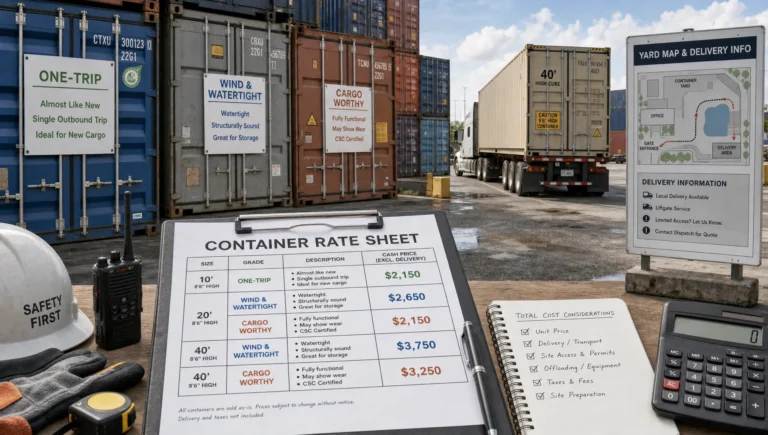
20ft Container Use Cases by Grade
Choosing the right grade is just as important as choosing the right size. A lower-cost unit may be perfect for static storage, while a cleaner or certified unit may be necessary for export, modifications, or customer-facing projects.
| Use case | Recommended grade | Why it fits |
|---|---|---|
| Basic household storage | WWT or Cargo Worthy | Good weather protection when stationary, with better value than One-Trip |
| Construction tool storage | WWT or Cargo Worthy | Durable, secure, and practical for active jobsites |
| Finish material storage | Cargo Worthy or One-Trip | Better floor, door, and structural condition for higher-value materials |
| Workshop conversion | Cargo Worthy or One-Trip | Stronger base for modifications and longer service life |
| Mobile office conversion | One-Trip preferred | Cleaner shell, better appearance, and fewer repair concerns |
| Export or transport use | Cargo Worthy or One-Trip | Must meet applicable shipping standards and documentation requirements |
| Retail pop-up or public-facing use | One-Trip | Better appearance and easier finish-out |
If you are unsure which grade matches your project, review Lease Lane Containers’ guide on how to choose the right shipping container grade. Matching grade to use case helps prevent overpaying for unnecessary condition or underbuying a unit that needs costly repairs.
20ft vs. 40ft: When the Smaller Unit Is the Better Choice
A 40ft container provides more storage volume, but that does not always make it the better option. On homesites and active jobsites, access can be more important than capacity.
Choose a 20ft container when you need easier placement, tighter turning access, lower visual impact, or separate storage zones. It is also easier to fit in driveways, compact lots, smaller farms, and crowded construction sites.
Choose a 40ft unit when you need to store long materials, large equipment, bulk inventory, or enough contents to justify the larger footprint. For some projects, two 20ft units may be more useful than one 40ft unit because they can be placed in different areas and assigned to different crews or uses.
If you are comparing sizes, Lease Lane Containers’ shipping container buyers guide is a helpful next step before requesting a quote.
Security Upgrades That Make 20ft Containers More Effective
A steel container is already a strong storage shell, but jobsite and residential security depend on the full setup. Door condition, lock style, lighting, visibility, and placement all matter.
A welded lockbox helps protect the padlock from bolt cutters. Puck locks and shrouded padlocks are often preferred because they expose less shackle. Crossbar locks can add another layer of protection, especially on remote sites or farms.
Placement also affects security. Position the doors where they are visible from the house, site trailer, camera, or main access point. Avoid placing the doors in a hidden corner if theft is a concern. On jobsites, keep the container away from soft shoulders, drainage ditches, and areas where equipment could accidentally strike the doors.
Lighting is another simple upgrade. Motion-activated lights or area lighting can deter unauthorized access while making it safer for crews entering the container early in the morning or after dark.
Pro-Tip: Prepare the Site Before the Container Arrives
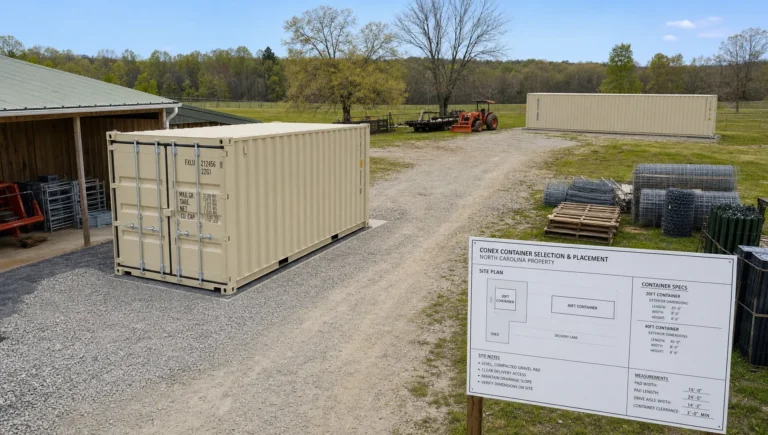
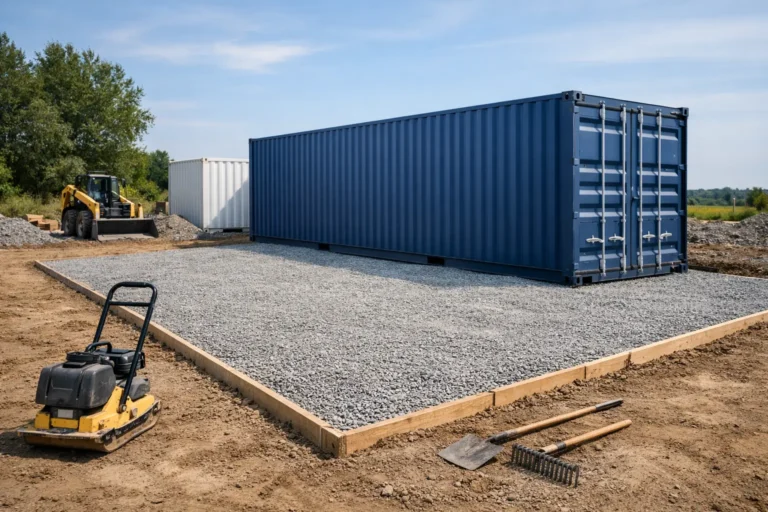
A 20ft container is compact, but it still needs a stable, level base. Poor site prep can cause the container to rack slightly, which may make the doors hard to open and accelerate water pooling or corrosion beneath the unit.
For most Raleigh-area residential and jobsite placements, a compacted gravel pad is a practical option. Gravel helps with drainage, reduces mud, and creates a more stable landing zone than bare soil. Concrete pads, concrete piers, railroad ties, or heavy-duty pavers may also work, depending on the site and intended duration.
Before delivery, confirm three things: the access route, the drop zone, and the legal requirements. The truck needs enough room to enter, turn, align, and unload. The drop zone should be level from side to side and end to end. You should also check HOA rules, zoning restrictions, and permit requirements, especially inside Raleigh city limits, Wake County jurisdictions, and planned residential communities.
If you are not sure how much clearance you need, review Lease Lane Containers’ guide to shipping container delivery requirements before scheduling the drop.
What to Check Before Buying a 20ft Container
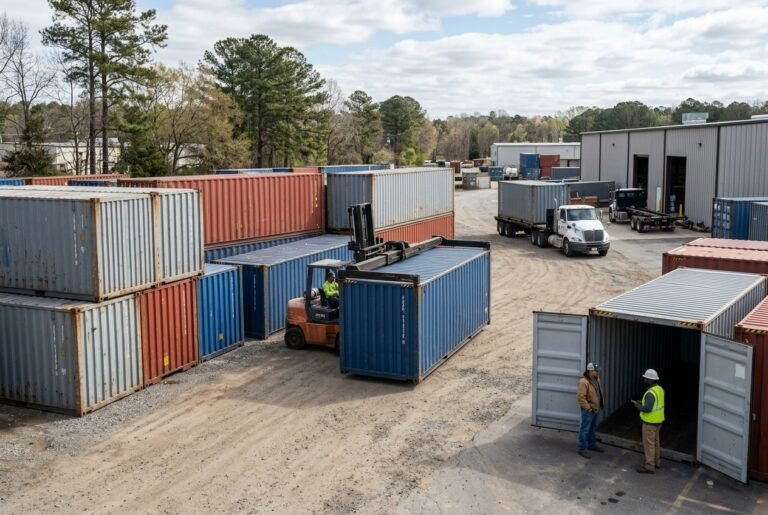
Before you commit to a container, verify that the condition matches the description and the intended use. Grade names should not be vague. Ask whether the unit is One-Trip, Cargo Worthy, Wind and Watertight, refurbished, or sold as-is.
For used units, inspect the roof, sidewalls, corner posts, bottom rails, doors, gaskets, locking rods, vents, and floor. Surface rust is common on used containers, especially in humid climates, but deep corrosion, holes, soft flooring, severe door damage, or structural distortion can turn a bargain into a repair project.
Also confirm the container number, delivery method, door orientation, total delivered price, and whether placement conditions are included in the quote. A low container price is not always the best deal if delivery, difficult access, or site corrections add unexpected costs.
For a deeper inspection checklist, see Lease Lane Containers’ guide on how to spot quality containers before you buy.
Frequently Asked Questions
Are 20ft containers good for residential storage? Yes. A 20ft container is often a strong fit for residential storage because it provides meaningful capacity in a manageable footprint. It can work well for garage overflow, renovation storage, lawn equipment, furniture, and seasonal items when properly placed and ventilated.
What grade is best for a 20ft jobsite container? For most jobsite storage, Wind and Watertight or Cargo Worthy is usually practical. WWT works for stationary tool and material storage, while Cargo Worthy offers stronger structural assurance and may be better if the unit will be moved, transported, or used for higher-value materials.
Should I choose a One-Trip 20ft container for a workshop or office? One-Trip is usually the best choice for workshops, mobile offices, retail pop-ups, and customer-facing projects. These containers are cleaner, newer, and easier to modify than many used units, although a well-inspected Cargo Worthy container may also work for some conversions.
Can a 20ft container fit in a driveway? Often, yes, but it depends on the driveway width, slope, overhead clearance, turning access, and surface strength. A 20ft unit is easier to place than a 40ft unit, but delivery still requires planning for the truck and trailer, not just the container footprint.
Do 20ft containers need a foundation? They do not always need a full concrete foundation, but they should sit on a stable, level, well-drained base. Compacted gravel, concrete piers, pavers, or a slab can help prevent sinking, door misalignment, and corrosion under the container.
Ready to Plan Your 20ft Container Setup?
Whether you need secure storage for a Raleigh jobsite, extra space at home, a farm storage solution, or a starting point for a compact workshop, Lease Lane Containers LLC can help you choose the right size, grade, and delivery plan.
Our team supplies high-quality One-Trip and used containers, including Wind and Watertight and Cargo Worthy options, with practical guidance for site preparation and placement in North Carolina, the Southeast, and nationwide.
To discuss available 20ft containers, delivery options, and the best grade for your project, contact the Lease Lane Containers sales team at sales@leaselanecontainers.com or visit our Raleigh office for local support.