Container Company vs Marketplace: Who’s Safer to Buy From?
Buying a shipping container online has never been easier, and that convenience is exactly why scams, misrepresented grades, and surprise delivery problems are so common. If you are deciding between a container company and an online marketplace (Facebook Marketplace, Craigslist, random “broker” listings, auction sites), the safest choice usually comes down to one thing: accountability.
For buyers in Raleigh, North Carolina and across the Southeast, accountability matters even more because humidity, soft soils, and tight residential access can turn a “good deal” into a door that will not open, a container that twists, or a redelivery fee you did not budget for.
What “safe to buy from” really means in the container world
Safety is not just about avoiding fraud. It is also about avoiding a container that fails your use case.
A “safe” purchase typically includes:
- Accurate grading that matches how you will use the unit (storage vs export vs modification).
- Verification that the container is structurally sound, not just freshly painted.
- Clear, written pricing that includes delivery assumptions (tilt-bed vs crane, access limits, distance).
- A real point of contact if something is wrong on delivery.
And because shipping containers are standardized under ISO conventions (buyers often say “ISO standards”), a legitimate seller should be comfortable discussing basics like corner castings, door gear, and what a CSC plate means for international shipment.
Quick grade refresher (One-Trip vs Cargo Worthy vs WWT)
Marketplaces get risky fast when sellers use grade terms loosely. Here is the simplified reality:
- One-Trip: A container that has typically made a single loaded voyage from the factory and is sold into the resale market. It is usually the closest thing to “new,” with minimal wear and a long remaining life. Learn more in What Is a One Trip Container?
- Cargo Worthy (CW): A used container that meets requirements for ocean shipping under the Convention for Safe Containers (CSC), typically evidenced by a valid CSC safety approval plate when applicable for export. This is the right lane for international movement and higher-demand structural use cases. See What Is a Cargo Worthy Container? Key Standards Explained
- Wind and Watertight (WWT): A used container intended for stationary storage that keeps wind and water out, but may not meet cargo-worthy requirements for ocean transit. It is often the value choice for jobsite, farm, and property storage. Start with What Is a Wind and Watertight Shipping Container?
If a marketplace listing says “like new,” “refurbished,” or “cargo worthy” without explaining the inspection basis, assume you still need to verify.
Container company vs marketplace: the real safety differences
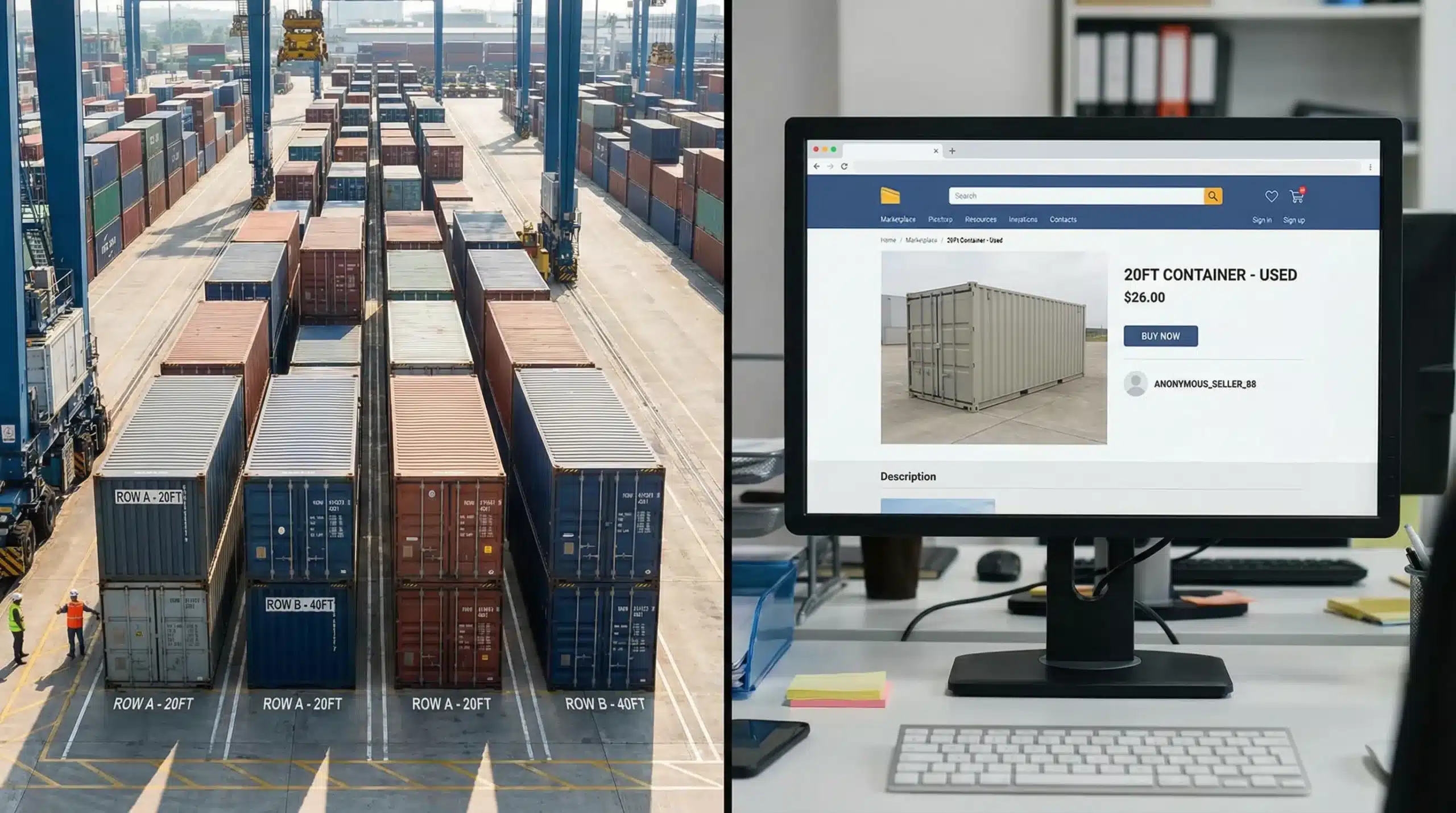
A marketplace is a listing platform, not a quality system. A container company (when reputable) is a supply chain with standards, processes, and local delivery coordination.
| Category | Buying from a container company | Buying from a marketplace listing |
|---|---|---|
| Grade definitions | Typically uses defined grades (One-Trip, CW, WWT) and can explain limitations | Terms are often inconsistent, “CW” may just mean “good enough” |
| Inspection evidence | Can provide photos, checklists, and condition notes | Photos may be old, edited, or not the actual unit |
| Documentation | More likely to provide invoice, bill of sale, and written terms | Often informal, sometimes no paperwork beyond a message thread |
| Delivery coordination | Can help match site constraints to delivery method | Delivery is frequently outsourced with vague assumptions |
| Pricing transparency | Better odds of an apples-to-apples quote (unit + delivery + offload assumptions) | Low sticker price can hide transport, placement, or “gate” fees |
| Recourse if there is a problem | You have a company to call, and reputational risk keeps them responsive | The seller can disappear, delete the listing, or blame the hauler |
| Fit for Raleigh and the Southeast | More likely to advise for drainage, leveling, and humidity realities | Many sellers do not account for site prep failures common in the region |
Why marketplaces are where most container buying mistakes happen
Marketplaces are not automatically “bad,” but they are structurally designed for speed, not verification. These are the most common failure points.
1) Misrepresented grade and condition
A common pattern is a listing that calls a unit “WWT” when it actually has roof pinholes, compromised door seals, or floor damage. Another is “cargo worthy” used as marketing language, even when the unit is not suitable for export.
If you need a real Cargo Worthy unit, you should understand the role of the CSC plate and inspection expectations (Lease Lane breaks this down in Cargo Worthy vs. Wind and Watertight Containers: Which to Buy?). For official background on CSC, the International Maritime Organization’s CSC overview.aspx) is a good reference.
2) “Fresh paint” that hides problems
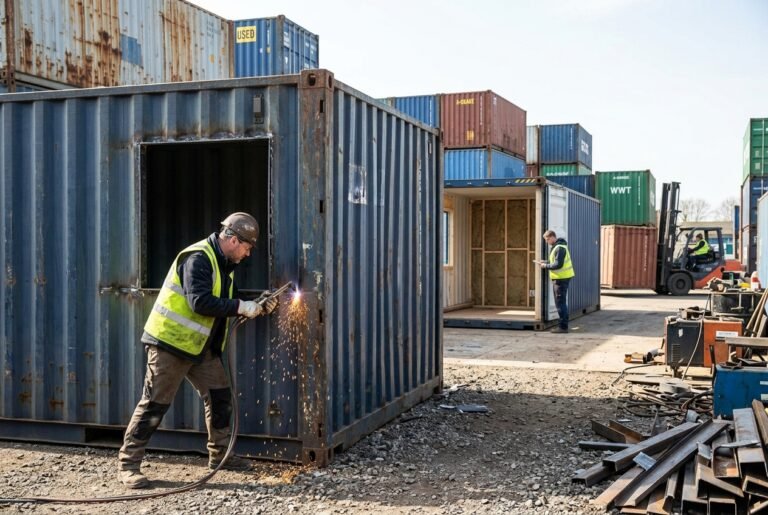
Containers are commonly made from Corten steel (weathering steel). Surface rust is normal on used units, but structural corrosion, bad patches, roof dents that hold water, or twisted frames are not.
A quick paint job can mask welded repairs, heavy filler, or active corrosion. That is why you want inspection photos of the roof, corner castings, and door gear, not just a pretty side shot.
For a practical inspection approach, use How to Spot Quality Containers Before You Buy.
3) Deposit and payment scams
Marketplaces are a prime environment for “pay a deposit to hold it” scams, especially when the seller claims limited inventory or says they are “out of state but can ship anywhere.”
The FTC has a helpful overview of common patterns in online shopping scams. In container sales, the risk spikes when:
- The seller refuses a verifiable business address.
- You cannot confirm where the container is staged.
- The only payment method offered is wire, crypto, or “friends and family.”
4) Delivery surprises (this is where good deals die)
Even if the container itself is fine, delivery is where buyers lose money.
Common marketplace problems include:
- A quote that does not specify tilt-bed vs flatbed vs crane.
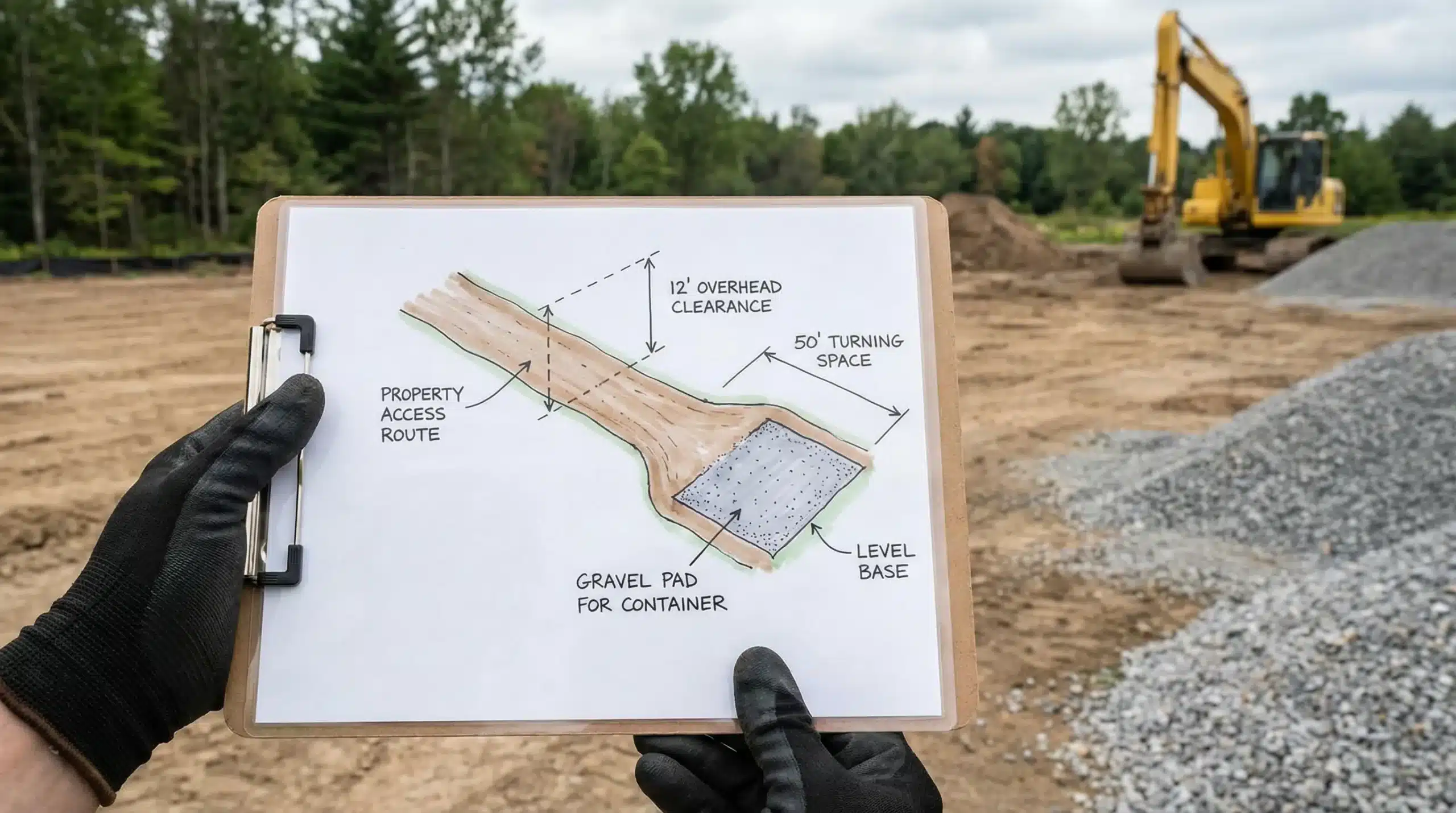
- No discussion of turning radius, overhead clearance, or soft shoulders.
- “Curb drop” language that ignores what you actually need.
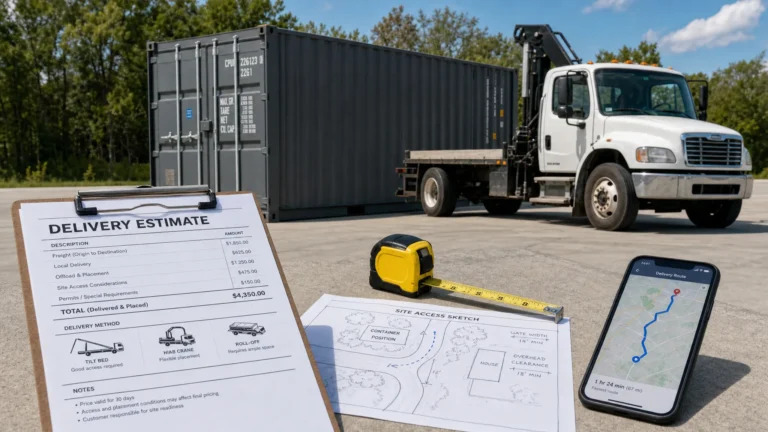
If you want to understand what a real delivery plan looks like, start with Shipping Container Delivery Requirements and How to Prepare Your Site for Container Delivery.
What a reputable container company should do that a marketplace cannot
A trustworthy container company earns trust by making verification easy.
Clear grades and use-case matching
A professional seller should steer you toward the right grade for the job, even when that means talking you out of the wrong option.
Examples:
- A Raleigh homeowner storing furniture long-term often does well with WWT, but needs guidance on condensation control and pad prep.
- A logistics manager shipping internationally generally needs Cargo Worthy (and should verify documentation expectations).
- A contractor building a customer-facing pop-up or office often prefers One-Trip for appearance and longevity.
If you want the full framework, Lease Lane’s Ultimate Shipping Container Buyers Guide is a strong baseline.
Unit-specific evidence, not generic photos
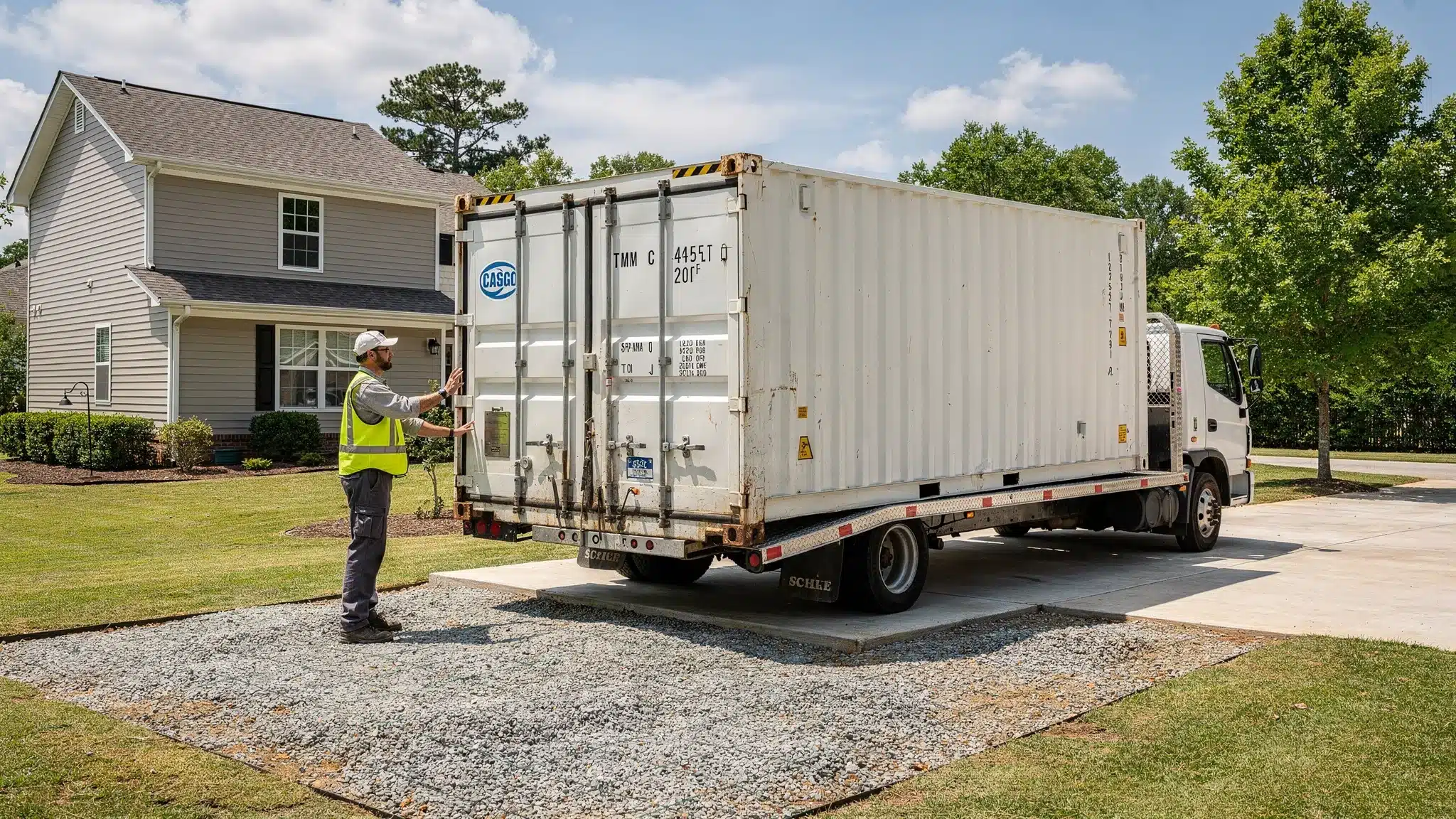
Ask for photos or video of the actual container you will receive when possible, including:
- Door end (locking bars, cam keepers, gaskets)
- Interior floor (common issue area)
- Roof line (dents and ponding risk)
- Corner castings and rails (structural integrity)
Lease Lane also publishes detailed inspection guidance in How to Check Used Shipping Container Conditions.
Written delivery assumptions and site questions
A container company should ask about:
- Container size (20ft vs 40ft, standard vs High Cube)
- Placement surface (gravel, concrete, asphalt, soil)
- Overhead obstructions (trees, service drops, power lines)
- Access path width and turning space
This is where local knowledge helps in Raleigh and the Triangle. Tight subdivisions, sloped driveways, and soft yard edges are common.
Choosing the right size also affects safety (and total cost)
Bigger is not always safer.
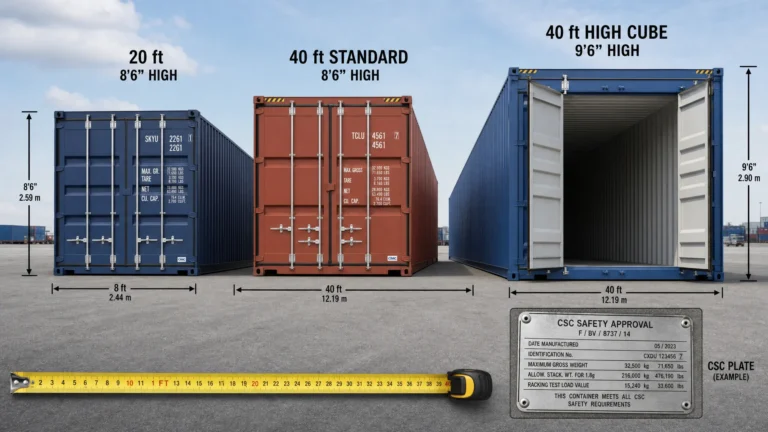
- 20ft containers are often easier for residential delivery and tight urban access, and they fit many jobsite storage needs. If you are shopping locally, use Where to Buy a 20ft Shipping Container in Raleigh, NC
- 40ft containers maximize storage per foot but raise delivery complexity, turning radius requirements, and placement risk, especially in developed neighborhoods. See Find a 40ft Shipping Container for Sale in Raleigh, NC
If you are leaning toward a pre-owned unit for budget reasons, it is worth reading Used Shipping Container Grades Explained: A Buyer’s Guide before you compare quotes.
Pro-Tip: Site preparation is part of “buying safely”
A seller can be legitimate and you can still end up with a problem container if the site is not prepared. Containers are rigid steel boxes, and if they are set on uneven support they can twist, causing doors to bind or leak.
For Raleigh and the Southeast (where heavy rain and clay soils are common), protect your purchase with these basics:
- Use a stable, level base: A compacted gravel pad is often the best value for long-term placement because it improves drainage and reduces corrosion risk. Start with 5 Steps for Proper Shipping Container Ground Preparation
- Support the container correctly: Plan for corner support and proper leveling to prevent frame twist.
- Plan for drainage: Keep water from pooling under the unit, especially in humid climates.
- Confirm permits and HOA rules early: In parts of Wake County and surrounding communities, container placement rules can vary.
- Call 811 before you place: If you are doing any grading or bringing in gravel, confirm utilities.
A safer buying workflow (company or marketplace)
If you want the safest path from “shopping” to “delivered and usable,” follow this sequence:
- Pick size and configuration based on access and use case (20ft, 40ft, High Cube, reefer).
- Choose the grade that matches your use (One-Trip, CW, WWT), then confirm the seller uses those terms correctly.
- Request unit-specific evidence (photos, video walk-through, CSC details if export matters).
- Get a written quote that states delivery method assumptions.
- Prep the site before delivery day and re-check overhead clearance.
- Inspect on delivery (doors, floor, roof, gasket seal, light test if appropriate) and document condition immediately.
When a marketplace can be acceptable (and how to reduce risk)
A marketplace purchase can be fine if you treat it like buying a used truck from a stranger: inspect, verify, and do not rely on promises.
Marketplace buys tend to be safest when:
- You can inspect the exact unit in person before paying.
- The seller is local, verifiable, and provides an invoice or bill of sale.
- You are buying for low-stakes storage (often WWT), not export or high-end modifications.
If you cannot inspect, need a specific grade, or need reliable delivery coordination, a container company is generally the safer lane.
Bottom line: who is safer to buy from?
For most buyers, especially homeowners, contractors, and small businesses in Raleigh and across North Carolina, a reputable container company is safer than a marketplace because you get clearer grading, better documentation, fewer delivery surprises, and real recourse if something goes wrong.
If you want help selecting the right grade (One-Trip vs Cargo Worthy vs WWT), choosing between a 20ft and 40ft unit, or planning delivery to your property, contact Lease Lane Containers LLC at sales@leaselanecontainers.com or visit the Raleigh office to speak with the local team.