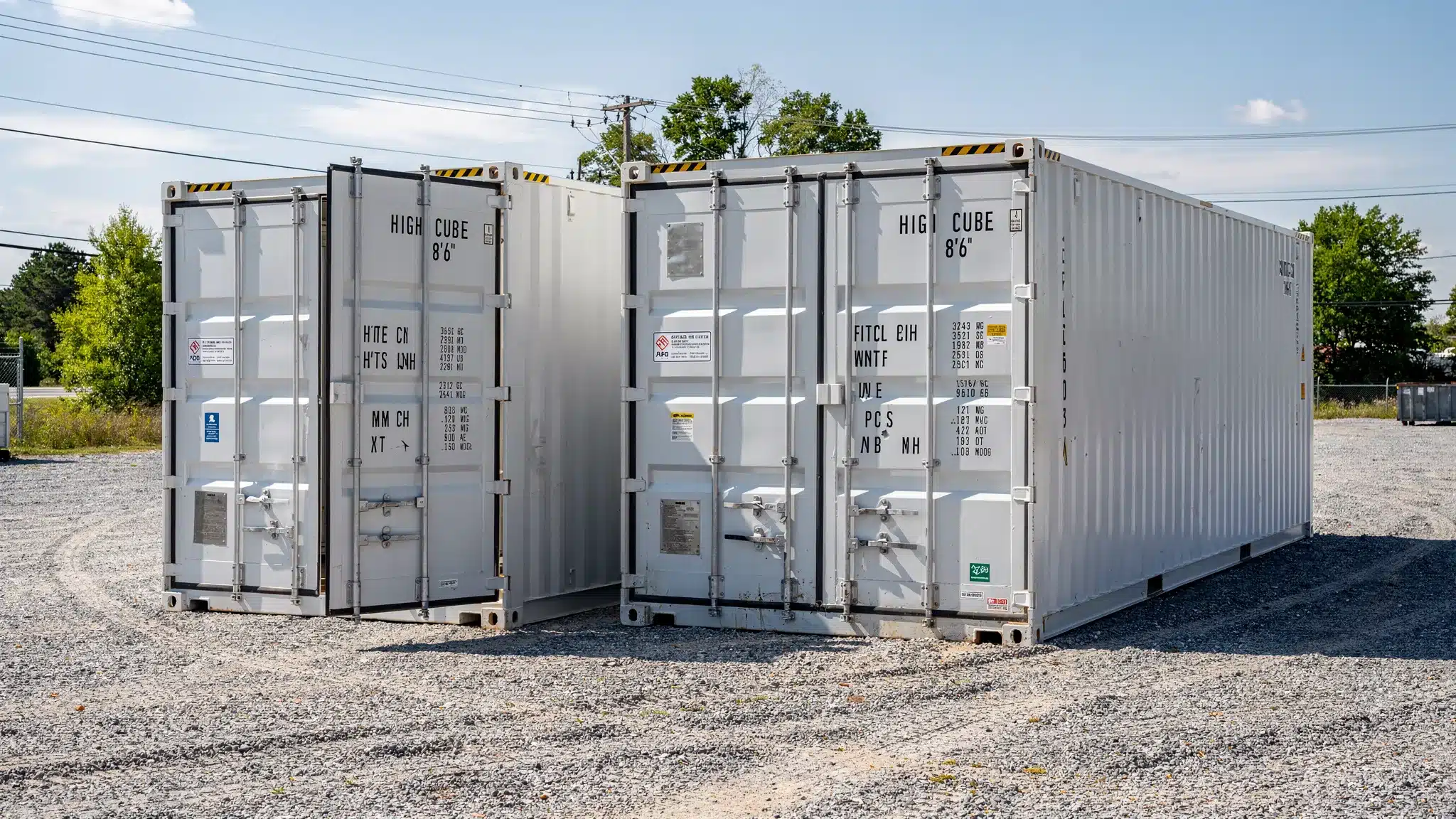
High Cube Container Dimensions: Interior Height and Door Specs
When someone asks for high cube container dimensions, they usually mean one thing, “How much usable height do I actually get, and will my equipment fit through the doors?” That extra foot of height can be the difference between stacking pallets safely, fitting racking, or clearing a forklift mast without scraping the header.
Below is a technical, practical breakdown of high cube interior height and door opening specs, with the details contractors, business owners, and homeowners in Raleigh, North Carolina (and buyers nationwide) should verify before ordering.
What makes a container “High Cube” (HC)?
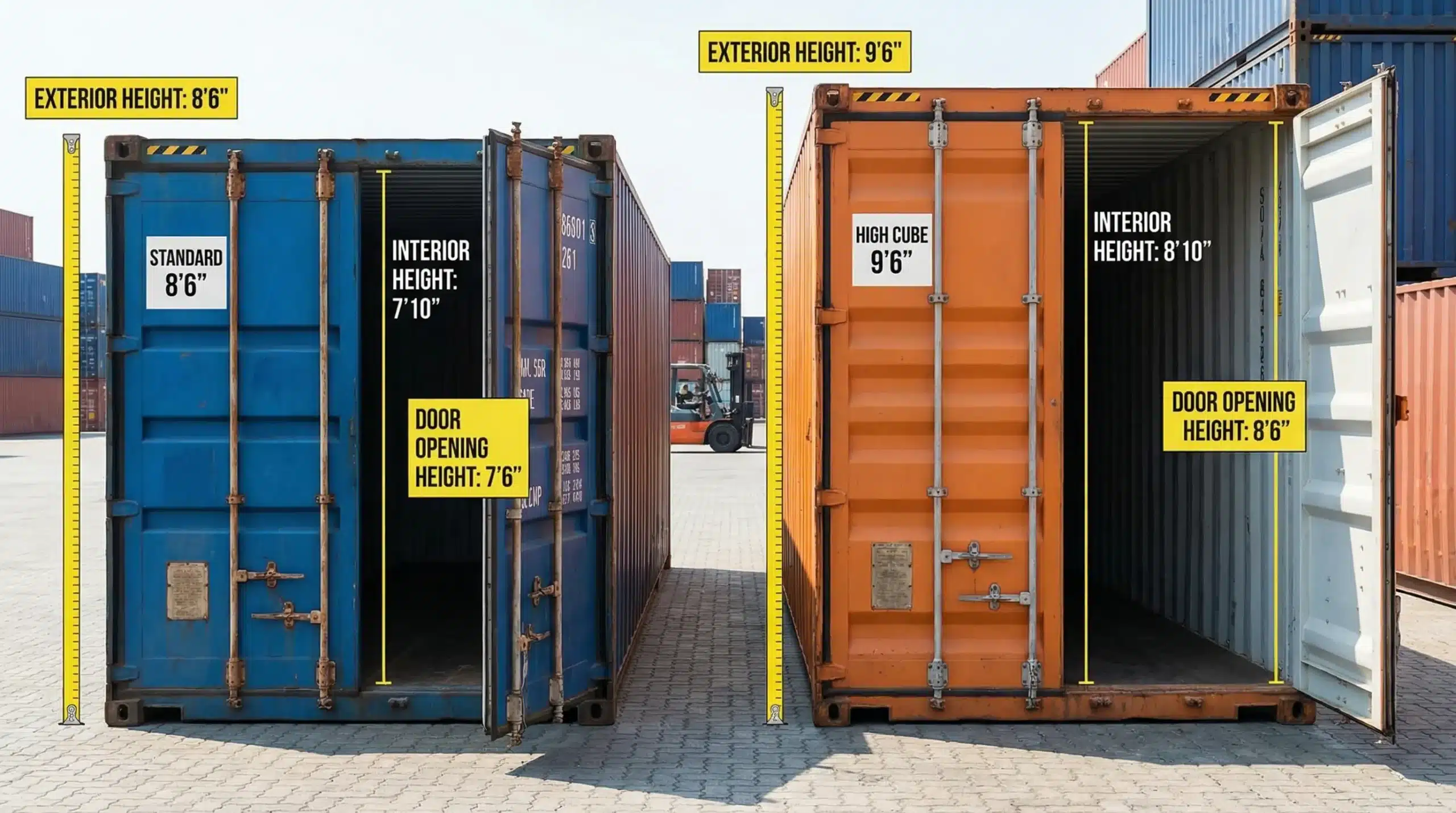
A High Cube (HC) shipping container is built to ISO standards with an exterior height of 9 ft 6 in, compared to the standard container height of 8 ft 6 in. Most High Cubes are still 8 ft wide externally, and the most common lengths are 20 ft and 40 ft.
High cube units are typically constructed from Corten steel (weathering steel) with reinforced corner castings and a corrugated shell designed for stacking and transport. The bigger height is the main differentiator, but it affects more than just storage volume, it changes loading ergonomics, door clearance, and modification options.
For a broader side-by-side overview, see our guide on 40ft high cube container dimensions explained.
The three dimensions that matter (and why buyers get surprised)
When comparing high cube container dimensions, you need three separate measurement categories:
-
Exterior dimensions: What determines delivery clearances, site fit, and transport legality.
-
Interior dimensions: What determines usable storage and build-out space.
-
Door opening dimensions: What determines what can actually enter, even if it fits inside.
A common “gotcha” in Raleigh jobsites and farm deliveries across the Southeast is assuming the interior height equals exterior height. It does not. The floor structure (often marine-grade plywood over steel crossmembers) and roof framing reduce usable interior height.
Typical high cube container dimensions (20ft and 40ft)
The table below reflects typical ISO high cube measurements used in the U.S. resale market. Exact numbers vary slightly by manufacturer, age, and container type, so always confirm on the container’s data plate or spec sheet.
| High Cube size | Typical exterior (L x W x H) | Typical interior height | Typical door opening (W x H) |
|---|---|---|---|
| 20ft High Cube | 20' x 8' x 9'6" | ~8'10" | ~7'8" x ~8'5" |
| 40ft High Cube | 40' x 8' x 9'6" | ~8'10" | ~7'8" x ~8'5" |
If you are pricing smaller units first, compare these measurements with our breakdown of 20ft shipping container price: what to expect.
Key takeaway: The extra foot of exterior height usually translates to roughly an extra foot of interior height and door opening height versus standard-height containers.
Why interior height matters more than you think
In real projects around Raleigh and across North Carolina, interior height affects:
-
Pallet stacking and racking: High cubes can be the difference between 2-high and 3-high stacking, depending on pallet height and safe clearance.
-
Jobsite storage efficiency: Better vertical organization means less time moving tools and materials to reach what you need.
-
Conversions: If you plan to insulate, add electrical, or install a finished ceiling, you lose additional headroom. Starting with ~8'10" interior height gives you more flexibility.
If your main goal is better vertical clearance for shelving, HVAC, or finished interiors, read shipping containers dimensions: 20ft vs 40ft vs high cube.
High cube door specs, what “fits through the doors” really means
Most dry high cube containers use standard cargo doors on one end, built with:
-
Two swinging door leaves
-
Heavy-duty locking bars and cams
-
Rubber gaskets designed to seal when properly aligned
Even if your item fits the interior width or height, it must clear the door opening and often the door frame lip.
That is also why some buyers end up choosing specialty equipment instead, such as units covered in our open top container guide.
Door opening height: the most common clearance constraint
A frequent issue we see with contractor equipment and business deliveries is assuming “9'6" tall container” means “9'6" tall door.” High cube doors are taller than standard, but the opening is still smaller than the exterior height.
Practical examples:
-
Forklifts and skid steers: It is not just the machine height, it is mast height, canopy height, and whether the tires compress on uneven ground during loading.
-
Appliances and crated equipment: Packaging often adds height and width beyond the unit dimensions.
Door opening width: why 8 feet wide is not an 8-foot door
High cubes are typically 8' wide externally, but the door opening is usually around 7'8". If you have a wide pallet, a UTV, or a piece of shop equipment close to 90 inches wide, the door becomes the limiting factor.
“Tall door” and specialty configurations
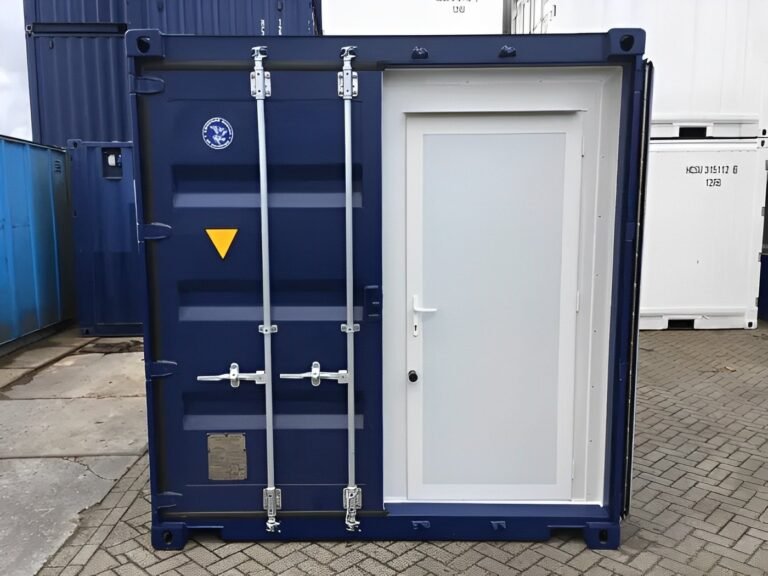
Some high cube containers exist with modified or specialty door systems (for example, custom openings for modular builds). Those are not the default in standard ISO dry containers. If door clearance is critical, treat it like a spec requirement, not an assumption.
If access is the bigger problem rather than pure interior volume, you may also want to compare tunnel shipping container benefits.
How container grade affects what you should inspect (even though dimensions stay similar)
Dimensions do not change much between grades, but condition absolutely affects usability, especially doors.
Here is how Lease Lane Containers LLC defines common grades in plain terms:
-
One-Trip (new): A container that has made a single loaded voyage from the factory. Best choice when you want cleaner interiors, smoother door operation, and fewer unknowns for conversions, retail-facing projects, or long-term asset life.
-
Cargo Worthy (CW): Suitable for transport, typically with a valid structure for shipping service (requirements can vary depending on documentation like CSC status). Expect cosmetic wear, but the container should be structurally sound with working doors.
-
Wind & Watertight (WWT): Designed to keep wind and water out for storage use. It may not meet cargo certification needs for international shipping, and it can show more wear, dents, or repairs.
Door operation is where grade differences show up fastest. A WWT container can be watertight but still have stiffer doors, worn gaskets, or hardware that needs maintenance.
If you are buying used, pair this article with our inspection checklist: How to Spot Quality Containers Before You Buy.
High cube vs standard container, when the extra height is worth it
A high cube is usually the right call when:
-
You want better vertical storage for jobsite materials in Raleigh and the Triangle.
-
You plan to add insulation and interior finishing and still want comfortable headroom.
-
You are storing taller items like shelving, retail fixtures, or crated machinery.
A standard-height container can be sufficient when:
If you are still working from the basics, our standard shipping container size guide gives a simpler starting point before comparing specialty heights.
-
Your inventory is mostly low-profile, and you care more about footprint than headroom.
-
Your site has tight overhead clearance (trees, wires, carports) where 9'6" exterior height complicates placement.
If you are still deciding between sizes, start with our broader comparison guide: Shipping Containers Dimensions: 20ft vs 40ft vs High Cube.
Picking the right length: 20ft High Cube vs 40ft High Cube
Interior height and door openings are similar across 20ft HC and 40ft HC, so the decision usually comes down to footprint, layout, and how you will access items.
-
For tighter properties and shorter driveways (common in parts of Raleigh neighborhoods), a 20ft container is often easier to place and organize.
-
For contractors staging materials or businesses dealing with inventory overflow, a 40ft container reduces the need to “shuffle” pallets to reach the back.
If budget is the priority and you can accept cosmetic wear, many buyers look at used containers in WWT or CW grades, depending on whether the container will be used for storage or transport.
Reefer note: High cube exterior does not guarantee high cube interior
Many refrigerated containers (reefers) are high cube externally, but their interior dimensions and door openings are reduced due to insulation thickness and refrigeration components. If you are considering a reefer for cold storage or temperature-controlled overflow, always request the exact spec sheet for the specific unit.
For cold storage buyers, our refrigerated container guide explains why insulated walls and machinery reduce usable interior space.
Pro-Tip (site preparation in Raleigh and the Southeast): plan for height and door swing
High cube dimensions are only helpful if your delivery can be completed safely and your doors can open fully.
-
Level the drop zone: A high cube with a twist can bind doors, especially on used units. A compacted gravel pad or properly supported corner blocks reduces frame racking.
-
Account for door swing clearance: You need space beyond the end of the container for both doors to swing open, plus room to stand and operate locking bars.
-
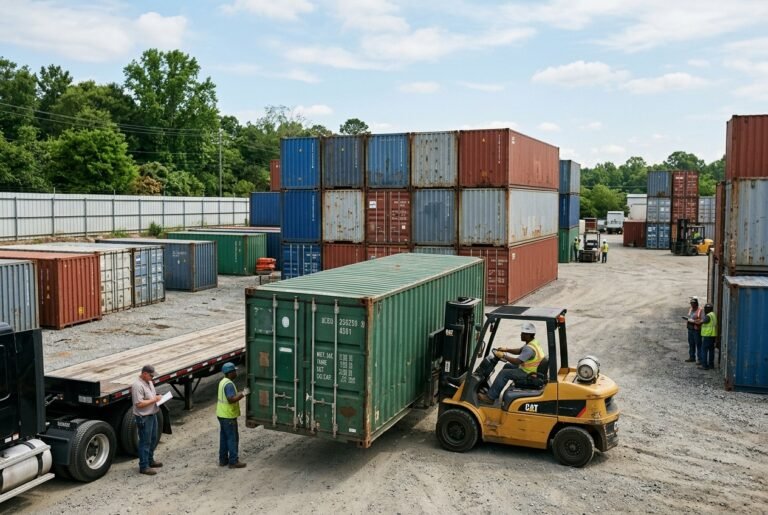
Measure overhead clearance on the route: Tree limbs and utility lines are common constraints in Raleigh, Wake County, and rural NC driveways. The truck and container together need safe clearance during approach and tilt-bed unloading.
-
Think about drainage: Keep the container out of standing water, and slope the pad slightly so water runs away from the doors.
For a deeper walkthrough of access, turning radius, and placement methods, read: Shipping Container Delivery Requirements.
Why some fast-growing teams use containers, and what they forget to plan for
High cubes are increasingly used for pop-up storage, temporary workspace, and modular expansion because they are fast to deploy and built on proven ISO geometry. One overlooked piece is staffing. If your container project is part of a larger expansion (new sites, new regions, new operations), hiring the right leadership early matters. Some companies lean on an international recruitment agency when they need experienced commercial and operational leaders to scale quickly.
Frequently Asked Questions
What are the high cube container dimensions for height? High cube containers are typically 9'6" tall externally (ISO standard). Interior height is usually around 8'10", but verify the exact unit.
How tall is a high cube container door opening? Typical high cube door opening height is about 8'5". This is taller than standard containers, but still less than the exterior height.
Are 20ft and 40ft high cube door openings the same? In most standard dry high cube containers, yes, door opening width and height are typically similar. Always confirm on the specific unit.
Does container grade change the dimensions? Usually no, but grade affects usability. One-Trip containers typically have smoother door operation and cleaner interiors, while used WWT or CW units may have more wear.
Do I need permits for a high cube container in Raleigh, NC? Sometimes. Rules can depend on zoning, HOA requirements, placement duration, and intended use (storage vs occupied space). When in doubt, check local guidance before delivery.
If you are weighing dimensions against budget, our container shipping prices: a real-world cost breakdown helps connect specs to actual project cost.
Get exact specs and a clear delivery plan (Raleigh-based team, nationwide delivery)
If you want help confirming high cube container dimensions, interior height, and door specs for your exact use case (jobsite storage, business inventory, farm equipment, or a build-out), our Raleigh, North Carolina team can walk you through the options and the right grade (One-Trip vs Cargo Worthy vs Wind & Watertight).
Contact Lease Lane Containers LLC at sales@leaselanecontainers.com or visit our Raleigh office to get clear pricing and delivery planning support.

One Comment