Shipping Container Dimensions in Raleigh, NC
Table of Contents
- Table of Contents
- Standard Shipping Container Sizes for Raleigh Businesses
- Dimensions of 20-Foot Standard Units
- Dimensions of 40-Foot Standard Units
- High Cube vs. Standard Container Heights
- Vertical Clearance and Interior Volume Benefits
- Specialized Container Dimensions for North Carolina Projects
- Open-Top and Flat-Rack Measurements
- Refrigerated Container (Reefer) Internal Specs
- Raleigh Site Preparation and Delivery Space Requirements
- Truck Clearance and Drop-Off Footprints
- Zoning and Permitting for Container Footprints in Wake County
- Modifying Dimensions for Container Homes and Offices
- Net Square Footage After Insulation and Framing
- Choosing the Right Container Size for Your Raleigh Storage Needs
Table of Contents
- Standard Shipping Container Sizes for Raleigh Businesses
- Dimensions of 20-Foot Standard Units
- Dimensions of 40-Foot Standard Units
- High Cube vs. Standard Container Heights
- Vertical Clearance and Interior Volume Benefits
- Specialized Container Dimensions for North Carolina Projects
- Open-Top and Flat-Rack Measurements
- Refrigerated Container (Reefer) Internal Specs
- Raleigh Site Preparation and Delivery Space Requirements
- Truck Clearance and Drop-Off Footprints
- Zoning and Permitting for Container Footprints in Wake County
- Modifying Dimensions for Container Homes and Offices
- Net Square Footage After Insulation and Framing
- Choosing the Right Container Size for Your Raleigh Storage Needs
Whether you’re a contractor staging equipment near a job site off Capital Boulevard or a homeowner adding backyard storage in Cary, getting the dimensions right matters before you spend a dollar. Exterior measurements tell you if a container fits your lot. Interior measurements tell you how much you can actually store inside. Door openings tell you whether your equipment, pallets, or furniture will clear the threshold. These three numbers are different, and mixing them up is one of the most common mistakes buyers make.
If you’re comparing shipping container dimensions in Raleigh, NC, the specs below cover every standard, high cube, and specialty size you’re likely to encounter. Each section breaks down the real-world numbers so you can plan your site, estimate your usable space, and avoid delivery headaches. Raleigh’s mix of residential neighborhoods, commercial parks, and rural Wake County properties means your placement constraints will vary, and the right container size depends as much on your site as on your storage needs.
Standard Shipping Container Sizes for Raleigh Businesses
Most shipping containers sold or delivered in the Raleigh area fall into two categories: 20-foot and 40-foot standard units. These are ISO-standardized sizes, meaning the exterior dimensions are consistent regardless of manufacturer. That consistency is what makes them stackable, transportable, and easy to plan around.
For small businesses storing seasonal inventory, a 20-foot unit often provides enough room without dominating a parking lot. Contractors running multi-phase builds or retail operators managing overflow stock tend to lean toward 40-foot units. The choice comes down to how much cubic footage you need and how much ground space you can give up.
Dimensions of 20-Foot Standard Units
A standard 20-foot shipping container measures 20 feet long by 8 feet wide by 8 feet 6 inches tall on the exterior. Interior dimensions shrink slightly to roughly 19 feet 4 inches long, 7 feet 8 inches wide, and 7 feet 10 inches tall. That gives you approximately 1,170 cubic feet of internal volume.
The cargo door opening is about 7 feet 8 inches wide and 7 feet 5 inches tall. If you’re loading riding mowers, ATVs, or bulky furniture, that door height is the limiting factor, not the ceiling inside. Empty tare weight sits around 4,850 pounds, and the maximum payload capacity is roughly 47,900 pounds, though most storage applications won’t come close to that limit.
Dimensions of 40-Foot Standard Units
A 40-foot standard container doubles the length: 40 feet long, 8 feet wide, 8 feet 6 inches tall exterior. Inside, you’re looking at about 39 feet 5 inches long, 7 feet 8 inches wide, and 7 feet 10 inches tall. That translates to roughly 2,390 cubic feet of usable space.
Door openings match the 20-foot specs: 7 feet 8 inches wide by 7 feet 5 inches tall. Tare weight runs around 8,160 pounds. If you’re a farm operator in eastern Wake County storing hay, feed, and equipment, a 40-foot unit essentially gives you a small barn without the construction timeline.
High Cube vs. Standard Container Heights
The single biggest difference between a high cube shipping container and a standard container is one foot of extra height. That foot changes what you can do inside.
Standard containers stand 8 feet 6 inches tall on the outside. High cube containers stand 9 feet 6 inches. If you’re only stacking boxes, the standard height works fine. But if you’re framing out a container office, adding insulation to the ceiling, or installing shelving that needs headroom, that extra 12 inches is the difference between a comfortable space and a cramped one.
Vertical Clearance and Interior Volume Benefits
Inside a 40-foot high cube, you get roughly 8 feet 10 inches of vertical clearance compared to 7 feet 10 inches in a standard unit. That extra foot adds about 300 cubic feet of total volume, bringing the interior capacity to approximately 2,700 cubic feet.
For Raleigh-area contractors converting containers into mobile offices or homeowners building accessory dwelling units, the high cube is almost always the better starting point. Once you add spray foam insulation and ceiling framing, a standard container’s interior height can drop below 7 feet, which feels tight and may not meet local building code minimums. A high cube gives you the buffer to insulate properly and still maintain livable ceiling height. Lease Lane Containers stocks both standard and high cube options in one-trip and used grades, so you can compare the height difference before committing.
Specialized Container Dimensions for North Carolina Projects
Not every project calls for a sealed steel box. Some loads are too tall, too wide, or too temperature-sensitive for a standard container. Specialized units solve those problems with modified dimensions and features.
Open-Top and Flat-Rack Measurements
Open-top containers share the same footprint as standard units: 20 or 40 feet long, 8 feet wide. The difference is the roof. Instead of a fixed steel top, open-tops use a removable tarpaulin or no cover at all. This lets you load oversized cargo from above using a crane or forklift.
A 20-foot open-top has an interior length of about 19 feet 4 inches and a width of 7 feet 8 inches. The open top clearance is unrestricted, which makes these containers popular for transporting machinery, large HVAC units, or construction materials that won’t fit through a standard door.
Flat-rack containers go even further, removing the side walls entirely. A 20-foot flat rack has a loading platform roughly 19 feet 5 inches long and 7 feet 3 inches wide between the end walls. These are used for heavy, awkward loads like boats, industrial generators, or pre-fabricated building components.
Refrigerated Container (Reefer) Internal Specs
Reefer containers maintain temperature-controlled environments, but the insulation and refrigeration unit eat into your usable space. A 40-foot reefer’s interior dimensions are roughly 37 feet 8 inches long, 7 feet 5 inches wide, and 7 feet 5 inches tall. That’s noticeably smaller than a standard 40-foot dry container.
Internal volume drops to about 2,065 cubic feet. The refrigeration unit mounts at one end and requires a dedicated power supply, typically a 460-volt, three-phase connection or a generator. Raleigh-area restaurants, caterers, and food distributors use reefers for overflow cold storage, especially during peak seasons. If you’re evaluating a reefer, pay close attention to the compressor hours and the condition of the interior walls, since damaged insulation panels reduce cooling efficiency.
Raleigh Site Preparation and Delivery Space Requirements
Getting the right container is only half the job. Getting it onto your property without problems is the other half.
Truck Clearance and Drop-Off Footprints
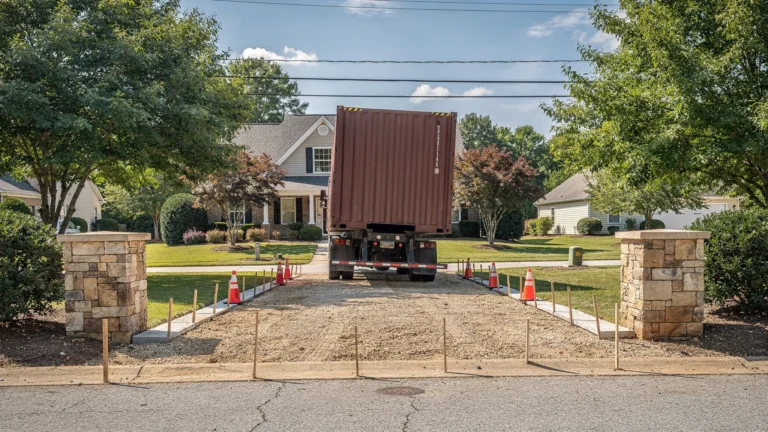
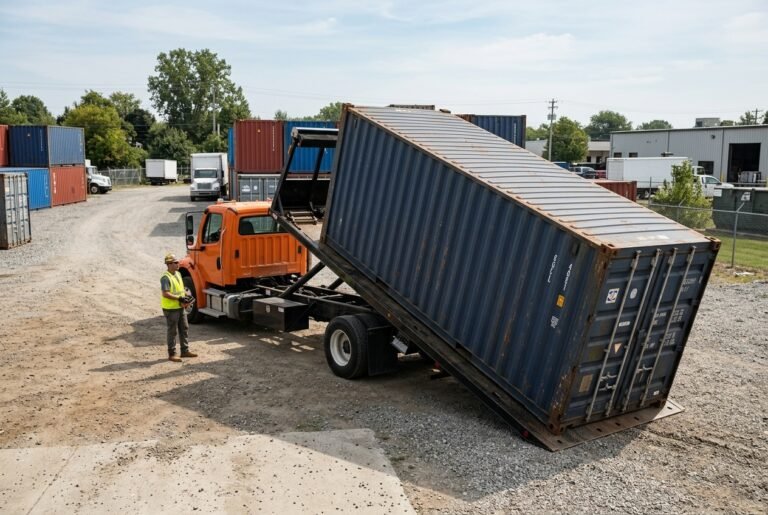
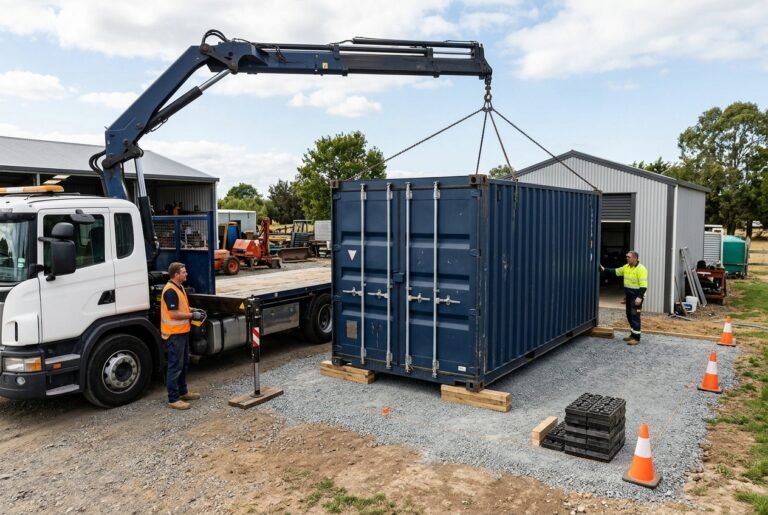
A 40-foot container arrives on a truck that stretches over 65 feet in total length. The delivery vehicle, usually a tilt-bed or roll-off truck, needs a straight, level approach with at least 100 feet of clearance for safe drop-off. Overhead wires, tree branches, and low-hanging utility lines need to clear at least 14 feet 6 inches.
For properties in Raleigh’s tighter residential neighborhoods, a 20-foot container on a smaller tilt-bed is often more practical. The truck still needs roughly 60 feet of straight space, but the turning radius is more forgiving.
Here’s a quick site prep checklist:
- Confirm the ground is level and firm: gravel pads, compacted earth, or concrete work best
- Measure the driveway width: you need at least 12 feet for the truck to pass
- Check for overhead obstructions within 15 feet of the ground
- Verify that the truck can back in straight or has room for a three-point turn
- Remove any temporary obstacles like parked cars, dumpsters, or fencing
Lease Lane Containers provides delivery planning support to help you confirm your site access before the truck rolls. A five-minute phone call about your driveway grade and overhead clearance can prevent a costly failed delivery.
Zoning and Permitting for Container Footprints in Wake County
Wake County and the City of Raleigh treat shipping containers differently depending on how you use them and where you place them. A container used for temporary construction storage on a permitted job site typically falls under a different set of rules than one placed permanently on a residential lot.
For residential properties inside Raleigh city limits, you’ll likely need a zoning permit if the container is staying longer than 30 days. The City of Raleigh’s Development Services office handles these permits, and you can reach them at (919) 996-2626 or through raleighnc.gov. They’ll want to know the container’s footprint dimensions, setback distances from property lines, and whether it’s considered a permanent accessory structure.
In unincorporated Wake County, the rules may differ. County zoning typically requires containers to meet setback requirements and may restrict placement in front yards. If you’re converting a container into a habitable structure like a home office or guest house, expect to meet building code requirements for insulation, egress, electrical, and plumbing. Check with the Wake County Inspections office at (919) 856-6430 before purchasing.
Modifying Dimensions for Container Homes and Offices
Raw container dimensions are your starting point. Once you begin modifying a container for habitation or office use, the usable interior shrinks.
Net Square Footage After Insulation and Framing
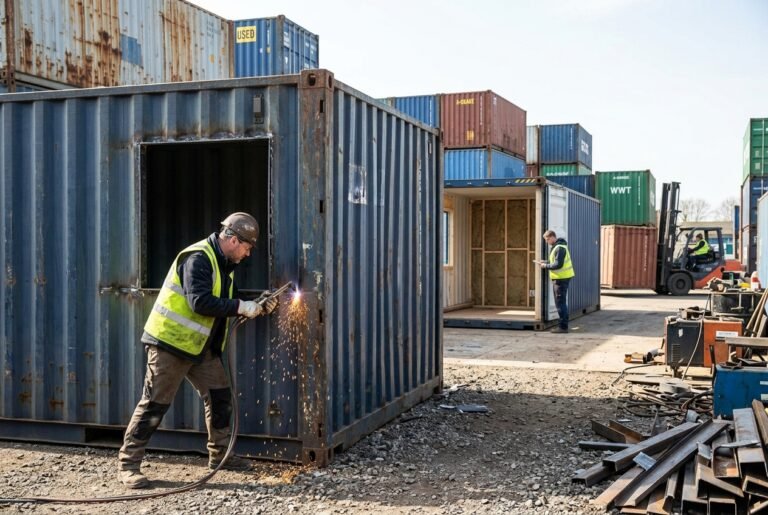
A standard 40-foot container offers roughly 320 square feet of gross floor area (40 feet by 8 feet). After you add 2-inch closed-cell spray foam insulation on all walls and the ceiling, plus steel stud framing, you lose about 4 to 6 inches on each wall and the ceiling. Your net interior width drops from 7 feet 8 inches to approximately 6 feet 8 inches. The net interior height drops from 7 feet 10 inches to around 7 feet 2 inches.
That brings your usable floor area down to roughly 270 to 280 square feet in a standard container. A 40-foot high cube fares better: the extra foot of height means your finished ceiling can still clear 8 feet after insulation, which meets most residential building codes.
For a 20-foot container office, expect net usable space of about 130 to 140 square feet after insulation and framing. That’s enough for a desk, shelving, and a small meeting area, but not much more. If you need a reception area or separate rooms, two 20-foot units joined side by side are a common approach in the Raleigh area.
Choosing the Right Container Size for Your Raleigh Storage Needs
Your ideal container size depends on three things: what you’re storing, how much space your site allows, and how you plan to access the contents. A 20-foot unit holds the equivalent of a one-bedroom apartment’s worth of furniture. A 40-foot unit handles a three-bedroom home or a full season of commercial inventory.
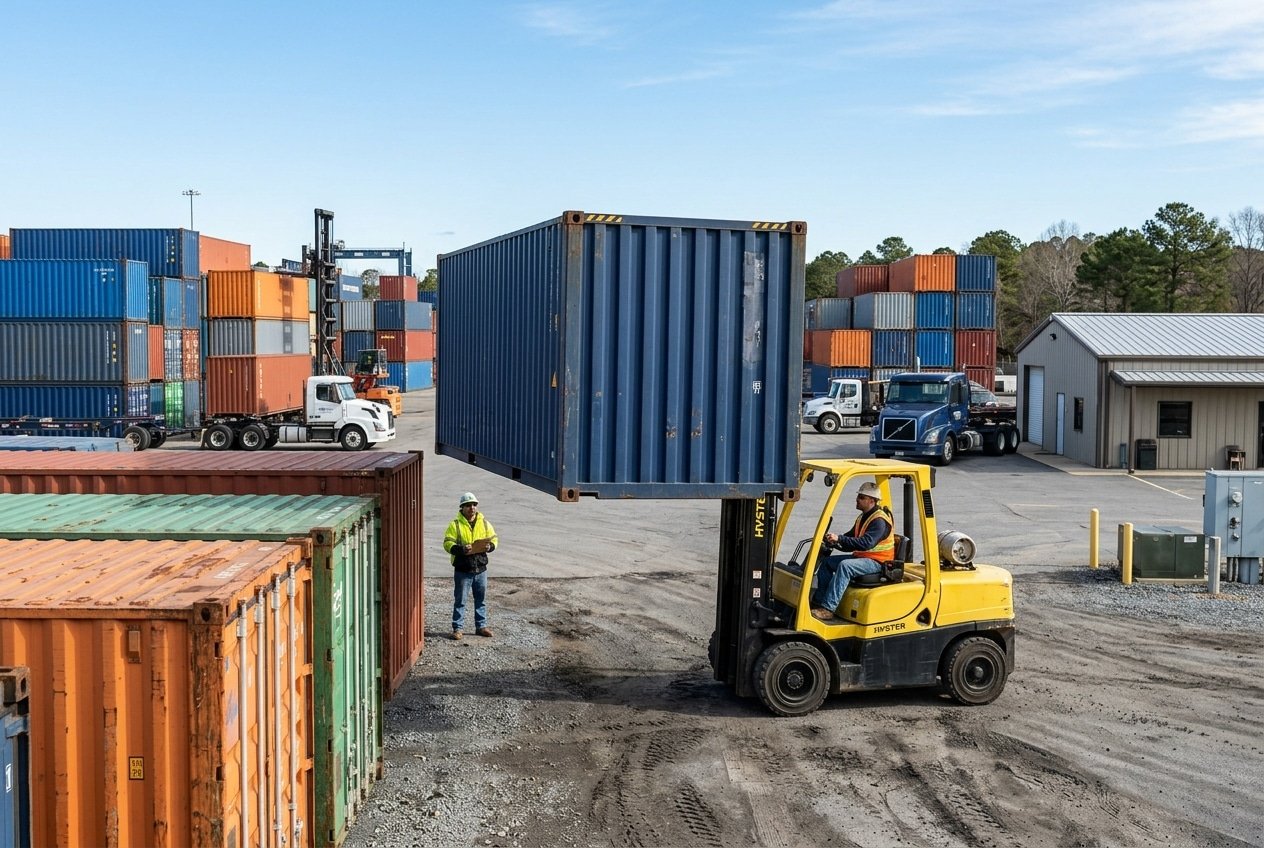
If you’re a contractor cycling tools and materials on and off a job site, a 20-foot one-trip container gives you a clean, secure unit that fits most residential driveways. If you’re a small business owner near the Triangle storing palletized goods, a 40-foot high cube gives you the volume and the forklift clearance to work efficiently.
Here’s a practical rule of thumb: if you think you need a 20-foot container but you’re not sure, measure your items and add 20% for access aisles and airflow. If that total exceeds 1,100 cubic feet, step up to the 40-foot.
Raleigh buyers benefit from being able to compare container sizes, grades, and conditions before committing. You can browse current inventory from Lease Lane Containers to see what’s available in one-trip, cargo worthy, and wind and watertight grades. If you’re unsure which dimensions fit your project, the Raleigh-based team at Lease Lane can walk you through your options and help you plan for delivery at (984) 313-6158.