Standard Container Guide: ISO Specs, Materials, and Tolerances
A “standard container” sounds simple until you need it to do something specific: stack safely, ship internationally, fit through a gate in Raleigh, sit level on Carolina clay, or line up cleanly for a modular build. That’s where ISO specs, materials, and tolerances matter.
This guide breaks down what makes a standard ISO shipping container “standard,” what it’s made from (including Corten steel), and where real-world variations show up, especially when you’re buying used units for storage, job sites, or conversions across North Carolina and the Southeast.
What counts as a “standard container” in the ISO world?
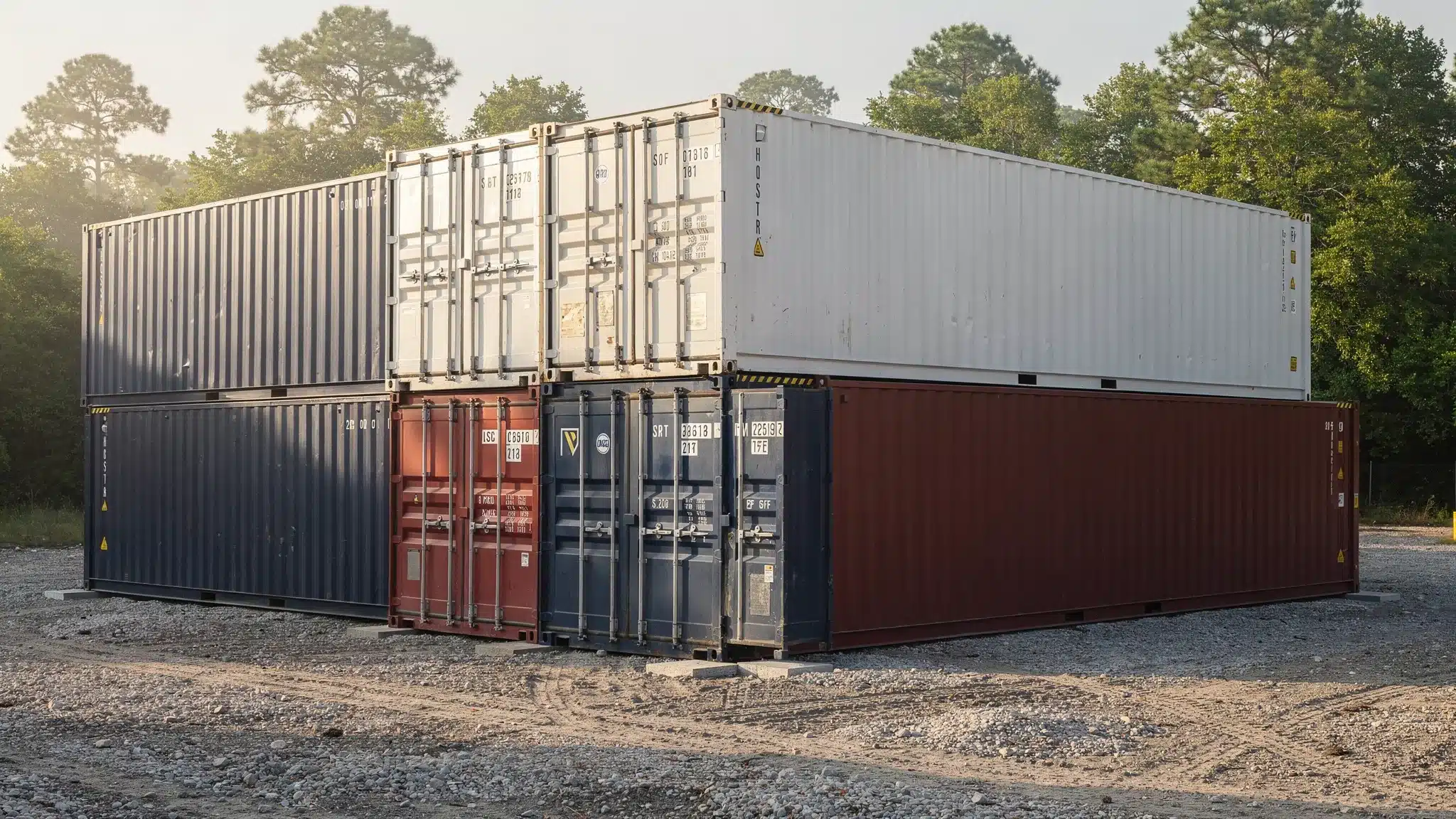
In most buying conversations, standard container means a general-purpose (dry) ISO container. It’s the classic steel box used for intermodal freight and later repurposed for storage, jobsite tool cribs, pop-ups, and construction projects.
A standard dry container is defined more by ISO compatibility than by a single brand or factory. ISO compatibility ensures it can be handled by common equipment and interfaces correctly with ships, rail, chassis, and stacking systems.
Common “standard” variants you’ll see on the resale market:
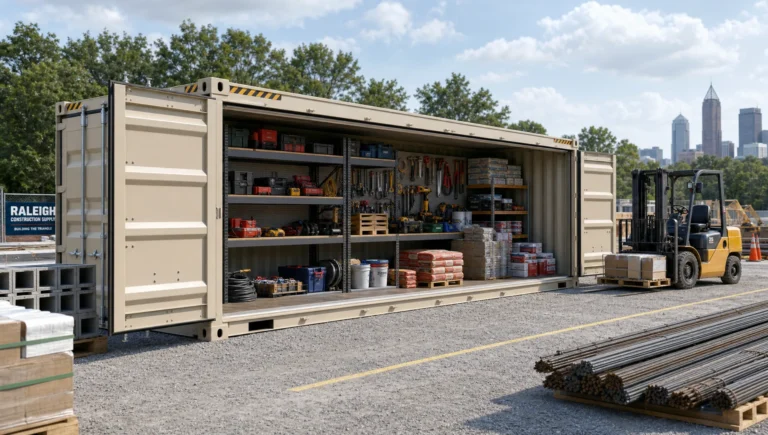
- 20ft standard (GP): A go-to for Raleigh-area contractors and homeowners who need secure storage without dedicating a huge footprint.
- 40ft standard (GP): Better cost per square foot for long-term storage or inventory overflow.
- 40ft High Cube (HC): Same footprint as a 40ft standard, but taller (commonly used for conversions and bulkier storage).
If you’re deciding between lengths, start with your use case and access constraints, then compare typical footprints and door clearances. Lease Lane’s sizing resources are a helpful next step, including their guide on shipping container dimensions (20ft vs 40ft vs High Cube) and the buyer-focused walkthrough in the Ultimate Shipping Container Buyers Guide.
The key standards: ISO and CSC (what they control)
“ISO container” is often used casually, but a few standards and conventions are doing the real work behind the scenes.
ISO standards you’ll hear referenced
- ISO 668: Establishes the classification, external dimensions, and basic ratings for Series 1 freight containers.
- ISO 1496 (general purpose series): Covers testing requirements (stacking, racking, lifting, restraint points, etc.) for freight containers.
- ISO 1161: Defines corner castings, the standardized lifting and stacking interfaces that make intermodal handling possible.
- ISO 6346: Defines container identification codes (owner code, serial number, check digit).
You do not need to memorize these to buy a container in Raleigh. You do need to know what they affect: fit, handling, stacking, and transport compatibility.
CSC and the CSC plate (especially important for shipping)
The Convention for Safe Containers (CSC) is a global safety framework for containers used in international transport. A container intended for export typically needs a valid CSC plate and condition appropriate for intermodal handling.
If you’re buying for shipping or for projects where structural performance matters, grade becomes crucial. Lease Lane breaks down the practical implications in their article on what a cargo worthy container is.
Materials: what a standard container is actually made of
A container’s performance is mostly about steel quality, structural geometry, and corrosion protection, not paint color.
Corten steel (weathering steel)
Most dry freight containers are built using weathering steel, often referred to as Corten steel (a common industry shorthand). Weathering steel is alloyed to improve atmospheric corrosion resistance compared to ordinary carbon steel.
Important nuance for buyers in Raleigh and the Southeast:
- Weathering steel helps, but it does not make a container “rust-proof.”
- Humidity, standing water, and trapped debris (especially under the container) are what accelerate corrosion.
- Roof condition and drainage are more important than many people expect.
Structural components (and why they matter)
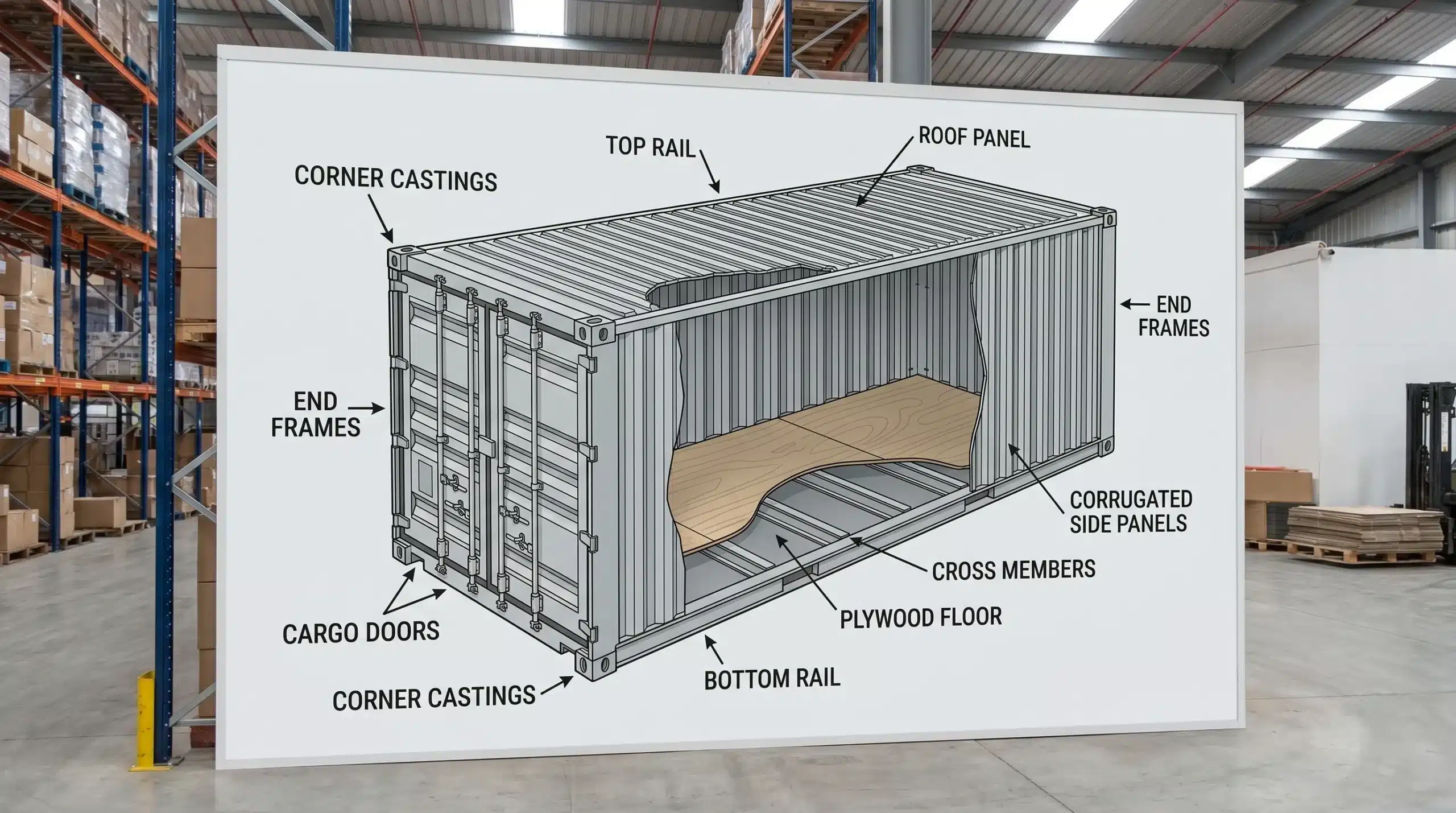
A standard container is a structural system, not just sheet metal:
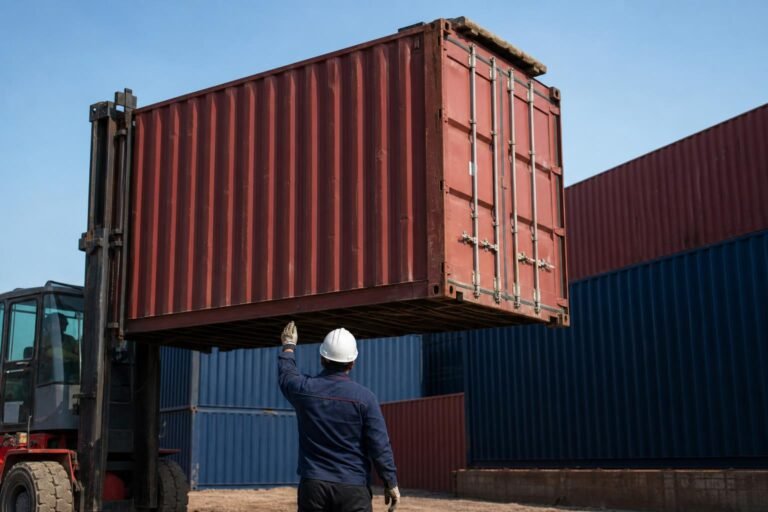
- Corner castings (ISO 1161): Critical for lifting and stacking. Damage here is a major red flag.
- Top rails and bottom rails: Form the perimeter frame.
- End frames: Handle much of the stacking and racking load.
- Corrugated side panels and roof panel: Corrugation adds stiffness.
- Cross members: Support the floor and distribute loads.
- Cargo doors: Heavy-duty door gear, locking bars, and gaskets.
Flooring: plywood, bamboo, and what to verify
Many containers on the resale market have marine-grade plywood floors, often originally treated for pest control. Newer builds may use bamboo or composite-style flooring depending on manufacturer.
For storage, flooring condition affects safety and odor control. For conversions, it affects indoor air quality and build time.
If you’re shopping used, it’s smart to review Lease Lane’s inspection guidance in How to Spot Quality Containers Before You Buy and their deeper dive on used shipping container grades.
ISO dimensions: exterior, interior, and door openings (what’s “standard” vs “typical”)
ISO standards define nominal sizes and interfaces. Real containers vary by manufacturer, age, and repairs, so treat dimensions as typical unless you are verifying a specific unit.
Here are common reference dimensions buyers use when planning a site, a slab, or a layout (all approximate):
| Container type | Typical exterior (L x W x H) | Typical interior (L x W x H) | Typical door opening (W x H) |
|---|---|---|---|
| 20ft Standard (GP) | ~20' x 8' x 8'6" | ~19'4" x 7'8" x 7'10" | ~7'8" x 7'5" |
| 40ft Standard (GP) | ~40' x 8' x 8'6" | ~39'5" x 7'8" x 7'10" | ~7'8" x 7'5" |
| 40ft High Cube (HC) | ~40' x 8' x 9'6" | ~39'5" x 7'8" x 8'10" | ~7'8" x 8'5" |
Two planning rules that save time and money in the Raleigh area:
- Plan around door opening size, not just interior width. Pallet jacks, equipment, and shelving need clearance at the doors.
- Assume interior dimensions shrink with modifications. Insulation, studs, and interior finishes reduce usable width and height.
If you’re actively choosing a length, see Lease Lane’s pages for 20ft containers and 40ft containers in Raleigh. If you’re comparing standard vs taller units, their High Cube reference is also useful: High Cube container dimensions and door specs.
Tolerances: where “real containers” differ from the spec sheet
Tolerances are the acceptable variations around a nominal dimension or geometry. ISO standards allow tolerances, but buyers usually feel tolerances in more practical ways:
- Doors that are “tight” or difficult to latch
- Light leaks at gaskets
- A container that rocks because the frame is twisted
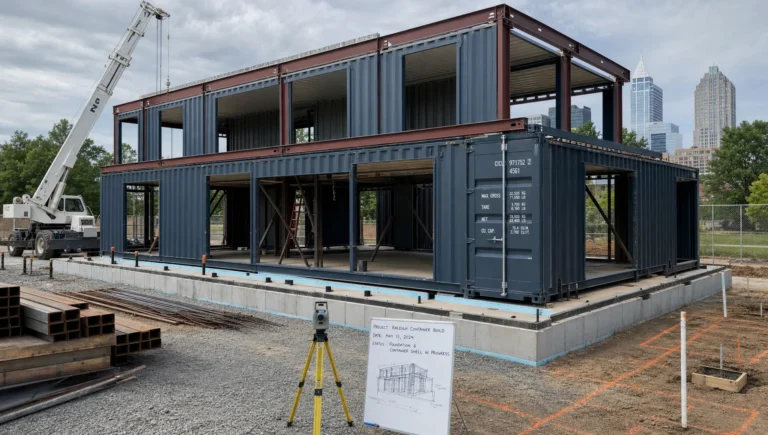
- Misalignment when trying to set containers side-by-side for a build
The biggest tolerance problem in the resale market: frame twist
The most common real-world issue is racking or frame twist, typically caused by rough handling over a container’s life or by improper placement on uneven ground.
A twisted frame can still be wind and watertight, but it may:
- Stress door hardware and gaskets
- Make doors hard to open (a big operational issue for contractors accessing tools daily)
- Complicate modifications (cutouts for windows and roll-up doors need a square starting point)
A practical “tolerance check” you can do as a buyer
You don’t need a lab, but you do need a systematic approach:
- Check door operation first. Doors should swing, latch, and seal without forcing.
- Look along the rails (top and bottom) for waves or visible bends.
- Inspect corner castings for cracks, heavy deformation, or poor weld repairs.
- Do a light test inside if possible, especially at roof seams and door perimeter.
Lease Lane’s inspection checklist content goes deeper on these exact checks, which is why many buyers use it as a standard reference before ordering.
Tolerance and project impact (quick reference)
| Variation you see on-site | Common cause | Why it matters |
|---|---|---|
| Doors hard to latch | Frame twist, hinge wear, mis-set container | Slows daily access, damages door gear over time |
| Roof dents or low spots | Handling impacts | Can hold water and accelerate corrosion |
| Floor soft spots | High traffic, moisture intrusion, delamination | Safety risk, higher remediation cost for conversions |
| “Out of square” corners | Past stacking impacts, repairs | Harder to align containers for modular builds |
Grades still matter, even when you’re buying a “standard” container
A standard container refers to type and form factor, not condition. In the U.S. resale market, condition is usually communicated using grades. At Lease Lane, you’ll see transparent grading terms like One-Trip, Cargo Worthy (CW), and Wind & Watertight (WWT).
Here’s how to think about grades in relation to ISO specs and tolerances:
- One-Trip: Closest to “like new,” typically the best option when appearance, minimal repairs, and predictable geometry matter (common for customer-facing builds and cleaner Raleigh office conversions). Learn more in What Is a One Trip Container?.
- Cargo Worthy (CW): Intended for intermodal shipping use, structural integrity is the point. Often the right choice when you need a container that can handle transportation demands. See what cargo worthy means.
- Wind & Watertight (WWT): Best for stationary storage where budget matters and cosmetic dents are acceptable, as long as it seals and protects contents.
If you want the deeper side-by-side grading comparison, Lease Lane’s dedicated guide covers it in detail: Cargo Worthy vs. Wind and Watertight Containers: Which to Buy?.
Standard vs High Cube vs Reefer: choosing the right “standard” for the job
In Raleigh and across North Carolina, most buyers start with a standard dry container, then realize a different variant fits better.
When a standard height container is the right call
- General jobsite storage for tools and materials
- Farm storage where you want a lower profile near barns or tree lines
- Inventory overflow where you’re mostly shelving and hand-carrying items
When High Cube is worth it
- You want more vertical clearance for racking or bulky items
- You’re planning a conversion (offices, studios, retail) where finished ceilings reduce height
- You need breathing room for ventilation and insulation assemblies
When a reefer is not optional
If you need temperature control, a refrigerated container is a different machine with different internal dimensions and power requirements. Start with Lease Lane’s refrigerated container guide if cold chain is part of your operation.
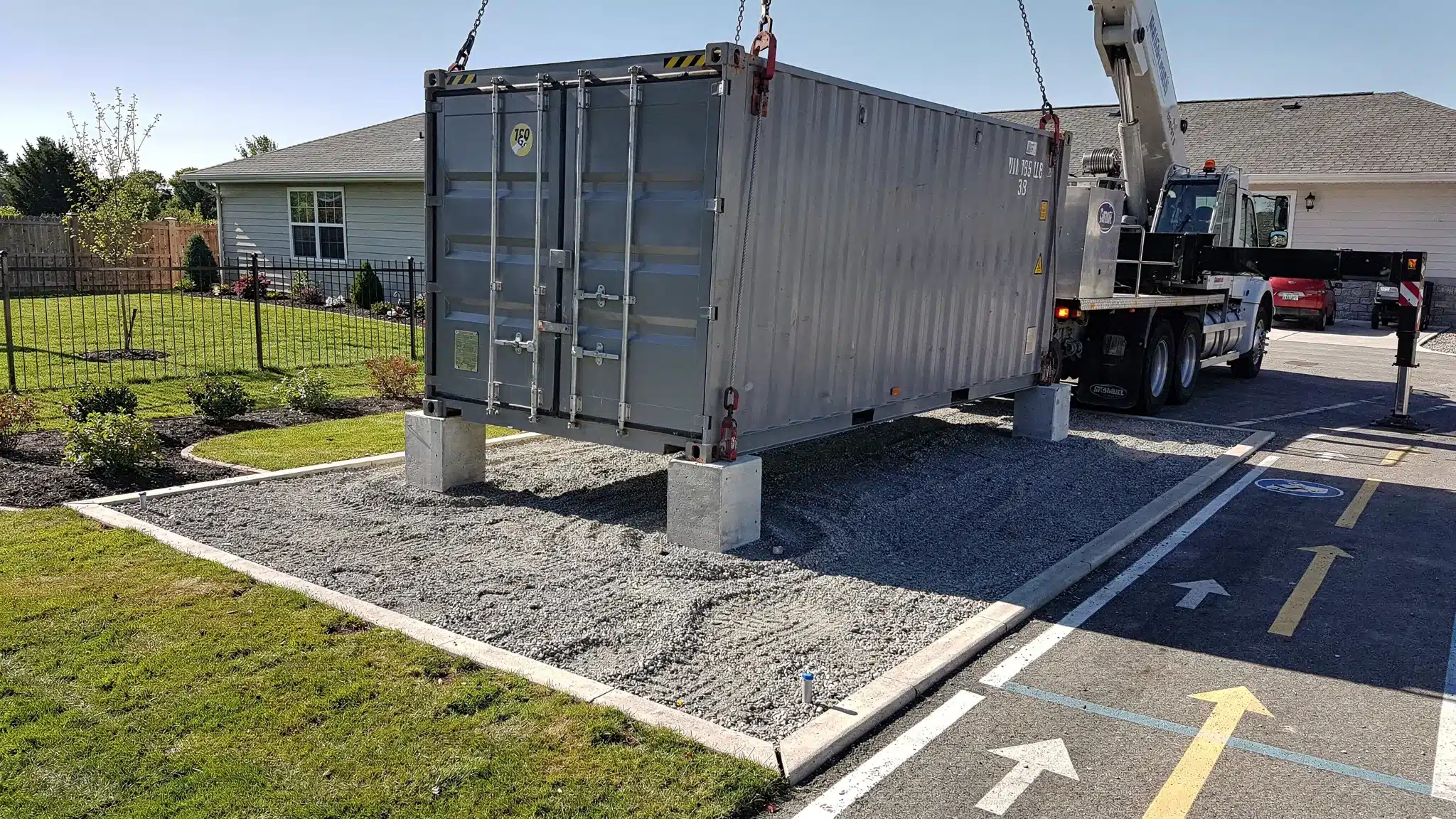
Pro-Tip (Site Prep): build to the container’s corners, not to the dirt
If you remember one thing about container tolerances, remember this: a container can only be as square as the surface you set it on.
For Raleigh and the Southeast, site prep issues often come from soft soils, poor drainage, and “almost level” pads that twist the frame over time.
Pro-level prep principles that prevent door problems and premature corrosion:
- Support the container at the corner castings (and planned intermediate points if your load demands it), not on random high spots.
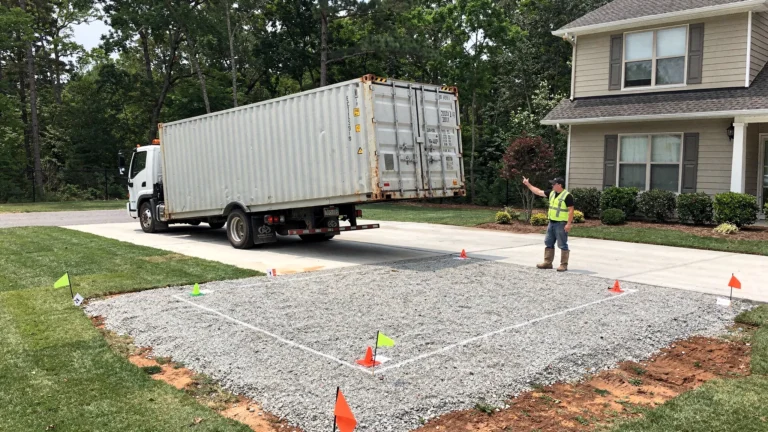
- Use a compacted gravel pad with drainage in most non-permanent installs. Standing water under the container is the enemy.
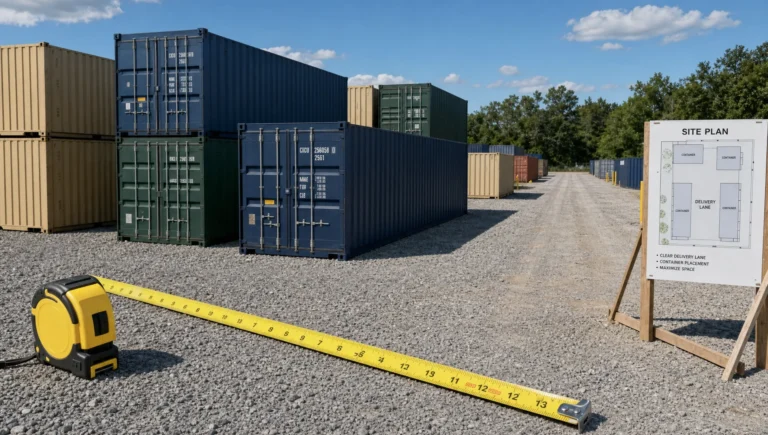
- Plan truck access and overhead clearance before delivery day, especially in neighborhoods with tree canopy or tight driveways.
- Confirm permit, HOA, or zoning constraints when applicable, especially for long-term placement or converted structures in Wake County.
For step-by-step instructions, see Lease Lane’s practical resources: 5 Steps for Proper Shipping Container Ground Preparation and Shipping Container Delivery Requirements.
Budgeting the whole project (not just the box)
Even for a standard container, total cost is usually driven by more than the container itself:
- Delivery method and distance (tilt-bed vs flatbed with crane)
- Site preparation (gravel, grading, drainage)
- Security upgrades (lockbox, puck lock)
- Electrical, insulation, and cutouts for conversions
If you’re tracking a container project across multiple vendors (site work, electrician, fabrication), using a single dashboard can prevent scope creep. Some buyers use a dedicated tool like this free expense tracker and budgeting app to keep delivery fees, pad materials, and modification invoices organized.
Quick checklist: verifying a standard container will fit your plan
Use this checklist when planning a purchase in Raleigh or ordering nationwide delivery:
- Confirm type and height: standard vs High Cube, and dry vs reefer.
- Confirm grade: One-Trip vs CW vs WWT, based on shipping needs and appearance standards.
- Verify door opening fits your largest item (not just the interior length).
- If exporting or transporting, verify CSC plate status and overall structural condition.
- Plan your drop zone: drainage, corner support, and a clear approach path for the truck.
Frequently Asked Questions
Are all standard containers ISO compliant? Many are built to ISO Series 1 standards, but “standard” in resale listings can be informal. Verify dimensions, corner castings, markings, and grade with a reputable supplier.
What is the difference between a standard container and a High Cube? A High Cube is typically 1 foot taller (commonly 9'6" exterior height vs 8'6"), giving more interior headroom and often a taller door opening.
Do used containers still match standard dimensions? The footprint is generally consistent, but used containers can have dents, repairs, or frame twist that affect door alignment and real-world fit. Inspection and proper placement are key.
Which grade is best if I care about tolerances for a build? One-Trip is usually the most predictable starting point. Cargo Worthy can also be strong structurally, but may have more cosmetic repairs. WWT is often fine for storage, but less ideal for precision modification work.
What material are shipping containers made from? Most dry freight containers use weathering steel (often called Corten steel) for the shell and structural members, with steel corner castings and a heavy-duty wood or bamboo floor system.
Talk to a Raleigh container expert before you order
Whether you need a standard 20ft unit for a Raleigh jobsite, a 40ft High Cube for a conversion, or a Cargo Worthy container for transport, Lease Lane Containers LLC can help you match ISO expectations, grade, and delivery realities.
Contact our team at sales@leaselanecontainers.com or visit our Raleigh, North Carolina office to get clear pricing, the right size, and site-prep guidance before delivery.