The Average Cost of a New 20ft Shipping Container
Table of Contents
- Table of Contents
- Current Market Pricing for New 20ft Shipping Containers
- Standard Price Ranges for ‘One-Trip’ Units
- Price Differences Between Standard and High-Cube Models
- Key Factors Influencing the Final Purchase Price
- Raw Material Costs and Steel Market Fluctuations
- Global Supply Chain and Inventory Availability
- Regional Price Variations and Port Proximity
- Associated Costs Beyond the Sticker Price
- Delivery Fees and Site Preparation Requirements
- Sales Tax and Import Duties
- Specialty Configurations and Add-On Expenses
- Double Door and Side-Opening Premiums
- Comparing New vs. Used 20ft Container Value
- Best Practices for Budgeting and Procurement
Table of Contents
- Current Market Pricing for New 20ft Shipping Containers
- Standard Price Ranges for ‘One-Trip’ Units
- Price Differences Between Standard and High-Cube Models
- Key Factors Influencing the Final Purchase Price
- Raw Material Costs and Steel Market Fluctuations
- Global Supply Chain and Inventory Availability
- Regional Price Variations and Port Proximity
- Associated Costs Beyond the Sticker Price
- Delivery Fees and Site Preparation Requirements
- Sales Tax and Import Duties
- Specialty Configurations and Add-On Expenses
- Double Door and Side-Opening Premiums
- Comparing New vs. Used 20ft Container Value
- Best Practices for Budgeting and Procurement
Buying a new 20ft shipping container is one of the most common purchases for contractors, homeowners, small businesses, and rural property owners across the United States. But the sticker price you see online rarely tells the full story. Between steel market swings, delivery logistics, regional availability, and optional upgrades, the true cost of a new 20ft container can vary by thousands of dollars depending on where you are, what you need, and who you’re buying from.
If you’re budgeting for a storage project, job site setup, or inventory overflow solution, understanding the full cost picture before you commit is the smartest move you can make. The price tag on the container itself is only one piece. Delivery fees, site preparation, taxes, and specialty configurations all factor into your final spend. This guide breaks down each of those cost layers so you can plan accurately and avoid surprises. Whether you’re placing a container on a rural property in North Carolina or shipping one to a commercial lot in the Midwest, the numbers below reflect real market conditions heading into 2025.
Current Market Pricing for New 20ft Shipping Containers
The term “new” in the shipping container world almost always refers to a one-trip unit. These containers are manufactured overseas, typically in China, loaded with cargo for a single voyage, and then sold at their destination port. They arrive with minimal wear: maybe a few scuffs from transit, but structurally and cosmetically near-perfect.
As of early 2025, the average new 20ft shipping container cost falls between $3,200 and $5,500, depending on your location, the seller, and current inventory levels. That’s a wide range, and the sections below explain exactly why prices fluctuate so much within it.
Standard Price Ranges for ‘One-Trip’ Units
A standard-height one-trip 20ft container (8’6″ tall exterior) typically runs between $3,200 and $4,800. Units closer to major port cities like Houston, Savannah, or Los Angeles tend to land on the lower end of that range. Buyers in landlocked states or areas far from container depots should expect prices closer to $4,500 or above, partly because delivery costs get baked into the asking price.
One-trip containers carry an ISO certification, original factory paint, intact rubber door seals, and floors free of damage. They’re the closest thing to a factory-fresh container you’ll find domestically. For buyers who plan to keep a container for 10 to 20 years, or who need a clean, presentable unit for a customer-facing business, the one-trip grade is typically the right call.
Price Differences Between Standard and High-Cube Models
High cube shipping containers stand one foot taller than standard units: 9’6″ versus 8’6″ exterior height. That extra 12 inches of interior headroom makes a noticeable difference for workspace conversions, container offices, or storing tall equipment. It also adds $300 to $800 to the price.
Expect a one-trip 20ft high cube to run between $3,800 and $5,500. The premium reflects both higher material costs and lower production volumes compared to standard-height units. If your intended use involves people working inside the container or you need clearance for shelving and racking, the high cube option pays for itself quickly. For basic ground-level storage, a standard-height unit does the job at a lower cost.
Key Factors Influencing the Final Purchase Price
No single number captures the cost of a 20ft container for every buyer. Several market-level forces push prices up or down throughout the year, and understanding them helps you time your purchase better.
Raw Material Costs and Steel Market Fluctuations
Shipping containers are built primarily from Corten steel, a weathering steel alloy that resists corrosion. When global steel prices rise, container manufacturing costs follow within a few months. The hot-rolled coil steel index, tracked by organizations like the World Steel Association, is a reliable leading indicator.
Between 2020 and 2022, steel prices spiked dramatically, and new container prices surged past $6,000 in many markets. Prices have since corrected, but they remain sensitive to tariff policies, energy costs in manufacturing regions, and demand from the construction sector. A 10% swing in steel prices can translate to a $300 to $500 shift in the cost of a new 20ft unit.
Global Supply Chain and Inventory Availability
Container availability depends heavily on trade volume and shipping lane patterns. When global trade slows, surplus containers stack up at ports, and prices soften. When demand spikes, as it did during the pandemic-era shipping crunch, inventory dries up and prices climb fast.
Seasonal patterns also play a role. Late summer and early fall tend to see tighter inventory as retailers stock up for the holiday season, consuming shipping capacity. Spring and early summer often offer better selection and slightly lower prices. Watching these cycles can save you several hundred dollars if your timeline is flexible.
Regional Price Variations and Port Proximity
Your distance from a major container depot or port city is one of the biggest cost variables. A buyer in Savannah, Georgia, might pay $3,400 for the same one-trip 20ft container that costs $4,600 delivered to a property in western Kansas. That difference reflects transportation costs from the depot to your site.
The Southeast offers a pricing advantage for many buyers. Ports in Savannah, Charleston, and Norfolk funnel a steady supply of one-trip containers into the region. Buyers in Raleigh, North Carolina, and the surrounding Triangle area benefit from proximity to these ports, which keeps both container prices and delivery fees competitive.
Inland markets like Denver, Minneapolis, or Salt Lake City consistently see higher prices because containers must be trucked or railed from coastal depots. If you’re in one of these areas, it’s worth comparing quotes from multiple suppliers and asking whether the listed price includes delivery or is quoted as a depot pickup.
Associated Costs Beyond the Sticker Price
The number on the invoice for the container itself is only part of your budget. Delivery, site preparation, and taxes can add $500 to $2,500 or more to your total project cost.
Delivery Fees and Site Preparation Requirements
Shipping container delivery typically uses either a tilt-bed truck or a roll-off chassis. A tilt-bed needs roughly 100 feet of straight clearance to slide the container off the back, while a roll-off requires less length but more overhead clearance. Delivery fees within 50 miles of a depot usually range from $200 to $500. Beyond that, expect to pay $3 to $5 per mile.
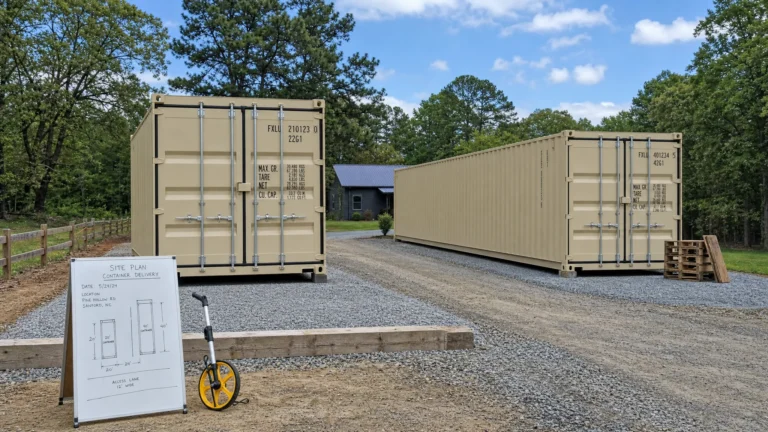
Site preparation matters just as much as the delivery method. Your placement area needs to be level, firm, and accessible. A gravel pad at least 2 inches deep is the most common foundation for residential and farm placements. Concrete piers or railroad ties work well for longer-term installations. If the ground is soft, muddy, or sloped, you may need grading work before the truck arrives. Lease Lane Containers provides delivery planning support that covers access requirements, turning radius, overhead clearance, and placement logistics, helping you get it right on the first attempt.
Sales Tax and Import Duties
Sales tax on shipping containers varies by state. In North Carolina, for example, you’ll pay the standard state sales tax rate on a container purchase. Some states exempt containers used for agricultural purposes, while others treat them as personal property subject to annual property tax.
Import duties are typically factored into the price by the time a one-trip container reaches a domestic seller. You won’t usually see a separate line item for customs fees unless you’re importing directly from a manufacturer overseas, which most individual buyers and small businesses don’t do. Still, it’s worth confirming with your supplier that the quoted price is all-inclusive so there are no surprises at closing.
Specialty Configurations and Add-On Expenses
A basic box with double cargo doors on one end covers most storage needs. But if your project calls for easier access, ventilation, or specific door placements, specialty configurations are available at a premium.
Double Door and Side-Opening Premiums
Double-door containers, sometimes called tunnel containers, feature standard cargo doors on both ends. This layout is useful for drive-through access on job sites or for placing a container between two work areas. Expect to pay an additional $500 to $1,200 over a standard one-trip unit for double-door configuration.
Side-opening containers replace one long wall with a set of bi-fold or swing-out doors, giving you full access to the container’s width. These are popular for retail pop-ups, equipment staging, and any situation where you need to load wide items without maneuvering them through a standard 7’8″ door opening. The premium for a side-opening 20ft container typically runs $1,000 to $2,000 above the base price. Other common add-ons include ventilation panels ($100 to $300), lockboxes ($75 to $150), and custom paint ($300 to $800).
Comparing New vs. Used 20ft Container Value
Used 20ft shipping containers in Cargo Worthy condition typically sell for $1,800 to $3,000, while Wind and Watertight units can go as low as $1,200 to $2,200. The savings are real, but so are the trade-offs.
A Cargo Worthy container has passed a structural inspection and is certified for ocean transport. It will have dents, surface rust, and patched areas, but it’s sound. Wind and Watertight units keep weather out but may have more visible wear and aren’t certified for shipping. Both grades work well for on-site storage where appearance isn’t a priority.
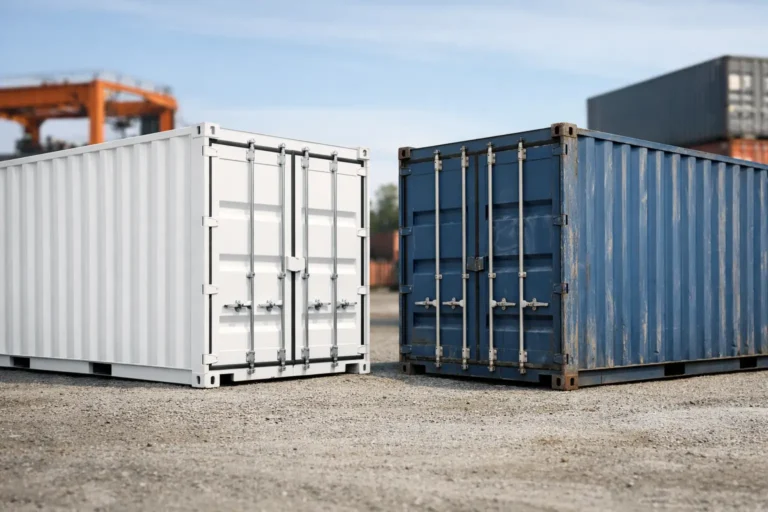
One-trip containers, by contrast, offer a 20-plus year usable lifespan with minimal maintenance. Their factory paint and intact seals mean you won’t need to address rust or gasket issues for years. If you’re placing a container where customers or neighbors will see it, or if you plan to convert it into a workspace, the one-trip premium pays off in longevity and appearance. For a short-term job site or back-of-property storage, a used unit at half the price may be the smarter financial choice. Lease Lane Containers offers transparent grading guidance to help you compare grades side by side and pick the option that fits your actual use case and budget.
Best Practices for Budgeting and Procurement
Planning your container purchase with a complete budget prevents the most common frustrations buyers face. Here’s a practical approach:
- Start with your total budget, not just the container price. Add 20% to 30% on top of the sticker price to cover delivery, site prep, and taxes.
- Get quotes from at least two or three suppliers. Ask each one whether their price includes delivery or is a depot-pickup price.
- Confirm your site is ready before scheduling delivery. Check for overhead power lines, tree branches, soft ground, and adequate clearance for the delivery truck. A 20ft container needs a minimum of 60 feet of straight-line access for a tilt-bed drop.
- Verify the container grade in writing. “New” should mean one-trip with original paint and intact seals. Ask for photos if you’re buying remotely.
- Check local zoning and permit requirements. Some municipalities in Wake County and across North Carolina require permits for containers placed on residential or commercial property.
A realistic budget for a new 20ft shipping container, fully delivered and placed on a prepared site, runs between $4,000 and $7,000 depending on your location, configuration, and site conditions. Knowing that number upfront keeps your project on track.
If you’re ready to compare options, browse Lease Lane Containers’ current inventory to see available sizes, grades, and pricing. The Raleigh-based team can help you match the right container to your project and walk you through delivery planning before you commit.