How to Prepare a Container Delivery Site
A container delivery can fail for reasons that have nothing to do with the container itself. The most common problems are site-related – soft ground, tight turns, low overhead lines, or not enough room for the truck to unload safely. If you are asking how to prepare container delivery site conditions the right way, the goal is simple: give the driver a clear path, a stable landing area, and enough working space to place the unit exactly where you need it.
That matters whether you are receiving a 20-foot storage container for a job site, a 40-foot high-cube for farm equipment, or a one-trip unit for a workshop build. Good site prep prevents delays, avoids redelivery charges, and reduces the risk of twisting the container frame during placement.
How to prepare container delivery site access
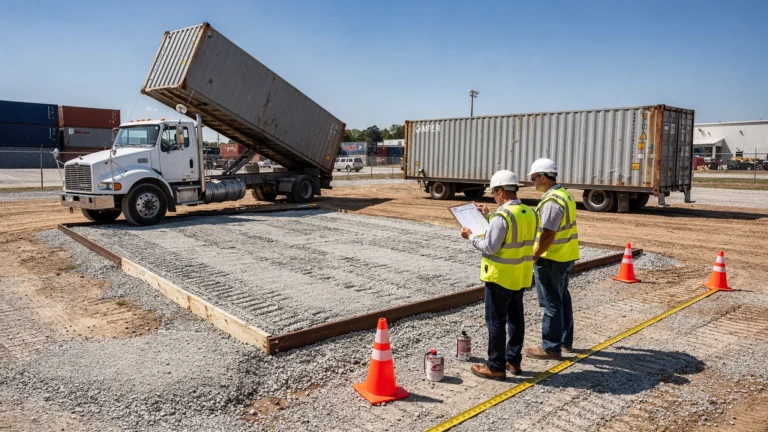
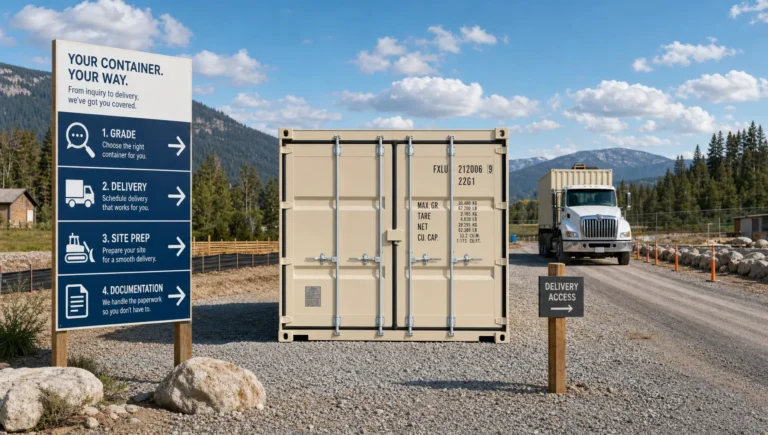
Start with the route, not the pad. A container may fit on your property, but the delivery truck still has to get there, turn, and unload. For most deliveries, especially tilt-bed service, you need enough straight-line space for both the truck and the container as it slides off the bed.
A standard 20-foot container usually requires less room than a 40-foot or 45-foot unit, but every delivery still depends on truck length, trailer type, and site layout. If the entrance is narrow, the driveway has a sharp bend, or there are trees close to the road edge, delivery can become difficult fast. Rural properties often have another issue: soft shoulders that look usable until a loaded truck drops a tire off the gravel.
Before delivery day, walk the route from the road to the final placement area. Look for gates, fence openings, parked equipment, dumpsters, building corners, and low branches. Overhead clearance is just as important as width. Utility lines, carports, and tree limbs can stop a delivery even when the ground looks wide open.
If your site has any tight points, measure them. Do not estimate. Drivers need real dimensions to plan approach angle and unloading method. A good rule is to over-communicate early rather than hope the driver can “make it work” on arrival.
Know the delivery method
The equipment used for delivery affects the space required. Tilt-bed trucks need room to raise the bed and slide the container off from the rear. That means overhead clearance and a longer straight unloading zone matter more than many buyers expect. Ground-level placement is convenient, but it is not magic – the truck still needs enough room to line up safely.
In some cases, especially commercial or industrial sites, alternate equipment may be used. That can help with tighter layouts, but it does not remove the need for stable access and clear communication. If you are unsure, provide photos and measurements before scheduling the drop.
Build a stable base before the truck arrives
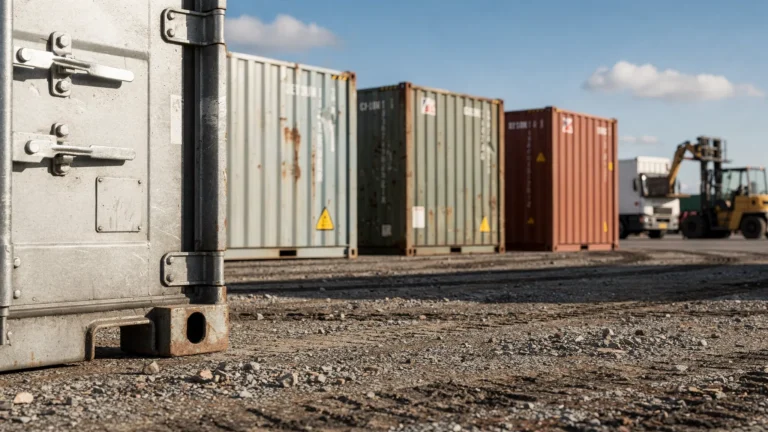
The container does not need a decorative foundation, but it does need support that can handle the weight. Even an empty container is heavy, and once loaded with tools, inventory, or machinery, the stress increases. Uneven support can lead to sticking doors, floor deflection, and unnecessary strain on the corner castings and frame.
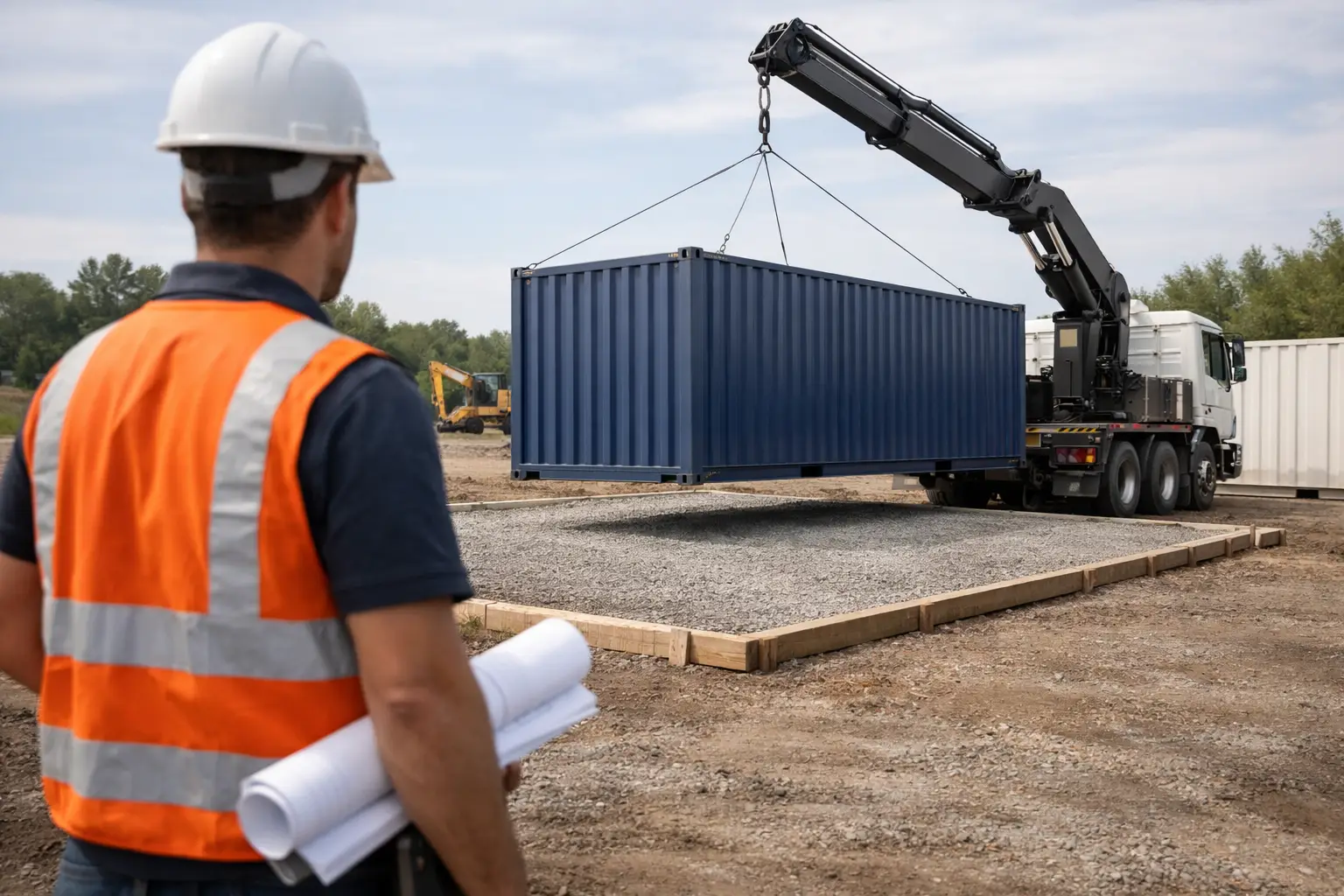
The best base depends on how you plan to use the container and how long it will stay in place. For short-term job-site storage, compacted gravel is often the most practical option. It drains well, is cost-effective, and can be graded quickly. For long-term placement, concrete piers, railroad ties in some applications, or a full slab may be appropriate depending on soil conditions and intended use.
The key is level, compact, and well-drained support. Containers are engineered to bear weight at the corners. That does not mean you should ignore the center span, especially on softer ground or for heavy static loads. If the site stays wet after rain, solve that before delivery day. Mud under a truck or beneath the container usually turns into a placement problem.
Gravel, concrete, or blocks?
Compacted gravel works well for many buyers because it balances cost and performance. It is especially common for construction sites, farms, and overflow storage yards. The gravel should be spread over properly prepared subgrade, not dumped onto topsoil and left loose.
Concrete offers the cleanest finish and the most predictable support, which is useful for offices, retail pop-ups, and residential workshop conversions. It also helps if appearance matters. The trade-off is higher cost and more lead time.
Concrete blocks or piers can work when they are properly placed and level, but they are not a shortcut for poor grading. If blocks settle unevenly, the container can rack out of square. For long-term use, this is where cheap site prep often becomes expensive later.
Level matters more than most buyers expect
A container can tolerate minor variation, but it should not be placed on a slope and left to “settle in.” If the frame twists, the cargo doors may become difficult to open and close. That is not just inconvenient – it can affect security and weather resistance.
Check both side-to-side and end-to-end level. On residential or rural sites, the ground may look flat until measurements say otherwise. On active job sites, recent grading work can leave hidden soft spots where heavy equipment has churned the soil. A container should sit with corner support that is even and planned, not improvised after the truck arrives.
If you are placing a refrigerated container, level preparation becomes even more important. Reefers have mechanical components and often need electrical planning as well. If the unit will be used for temperature-sensitive storage, stable placement is part of protecting the equipment and the contents.
Make room for doors, use, and future access
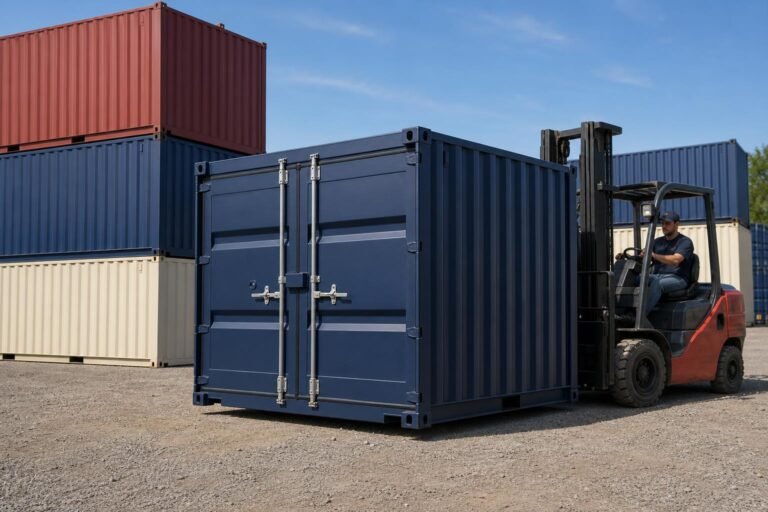
Many site prep mistakes happen after placement, not during delivery. The container fits, but the doors cannot swing fully open. Or there is no room for forklifts, pallet jacks, mowers, or service technicians to work around it.
Think beyond the footprint. A 40-foot container needs room not just to sit, but to function. If you are storing long materials, loading from the end, or planning future modifications such as roll-up doors, windows, or electrical service, leave the working space now. Moving a container later is possible, but it adds cost and coordination.
This is especially relevant for tunnel containers and custom builds. A unit with doors on both ends gives you flexibility, but only if both ends remain accessible. If your use case involves frequent loading, plan the traffic flow around the container before placement, not after.
Check ground conditions on delivery week, not just at scheduling
A site that was ready two weeks ago may not be ready on delivery day. Rain changes everything. Gravel can wash out, topsoil can soften, and new construction activity can block access that was clear when you first ordered the unit.
Do a final inspection within 24 to 48 hours of delivery. Confirm the route is open, the placement area is still level, and no new obstacles have appeared. This is one of the simplest ways to avoid delays. For contractors, it also helps to notify the superintendent or site lead so other trades are not occupying the drop area when the truck arrives.
If weather has compromised the site, say so early. Rescheduling is usually better than forcing a risky delivery. A dependable logistics provider would rather adjust the plan than damage the truck, the container, or your property.
Photos and measurements reduce surprises
If there is one step that saves the most time, it is sending accurate site information before dispatch. Photos from the road entrance, driveway approach, overhead conditions, and final placement area help identify issues that are easy to miss in a phone call.
Measurements matter just as much. Include gate width, narrowest access point, turning radius concerns, slope changes, and distance available for unloading. If you already know whether you need a 20-foot, 40-foot, high-cube, or reefer container, share that up front so the delivery requirements can be matched to the unit.
This is where experienced providers like Lease Lane Containers add value. Clear grading standards and verified specifications are important, but so is asking the right delivery questions before the truck is on the road. That is how you avoid fine-print problems and keep the project moving.
How to prepare container delivery site details that people forget
A few small details cause oversized headaches. One is overhead power. Another is underground utilities if you are improving the pad or adding anchors. Drainage is often ignored until water starts pooling under one end of the container. On rural land, low tree limbs and soft shoulders are repeat offenders.
Security and visibility also deserve attention. If the container is for tools, copper, or equipment storage, place it where access is practical but not exposed unnecessarily. If it is for a customer-facing use such as retail overflow or a modular office, think about appearance, signage, and how delivery orientation affects the final setup.
The right site prep is not about overbuilding. It is about matching the ground, access, and unloading space to the container size and the way you plan to use it. A few careful measurements and a properly prepared base usually solve most delivery problems before they start.
The easiest container deliveries are the ones that look uneventful. That usually means someone took the time to prepare the site like the container was part of the operation, not an afterthought.