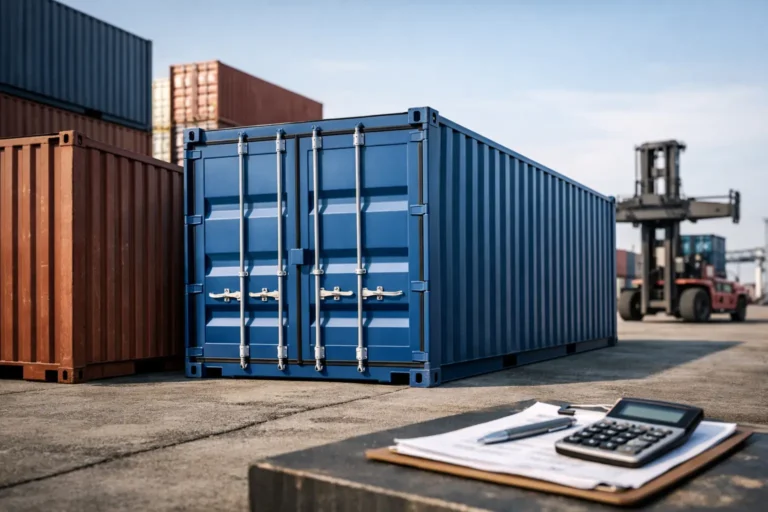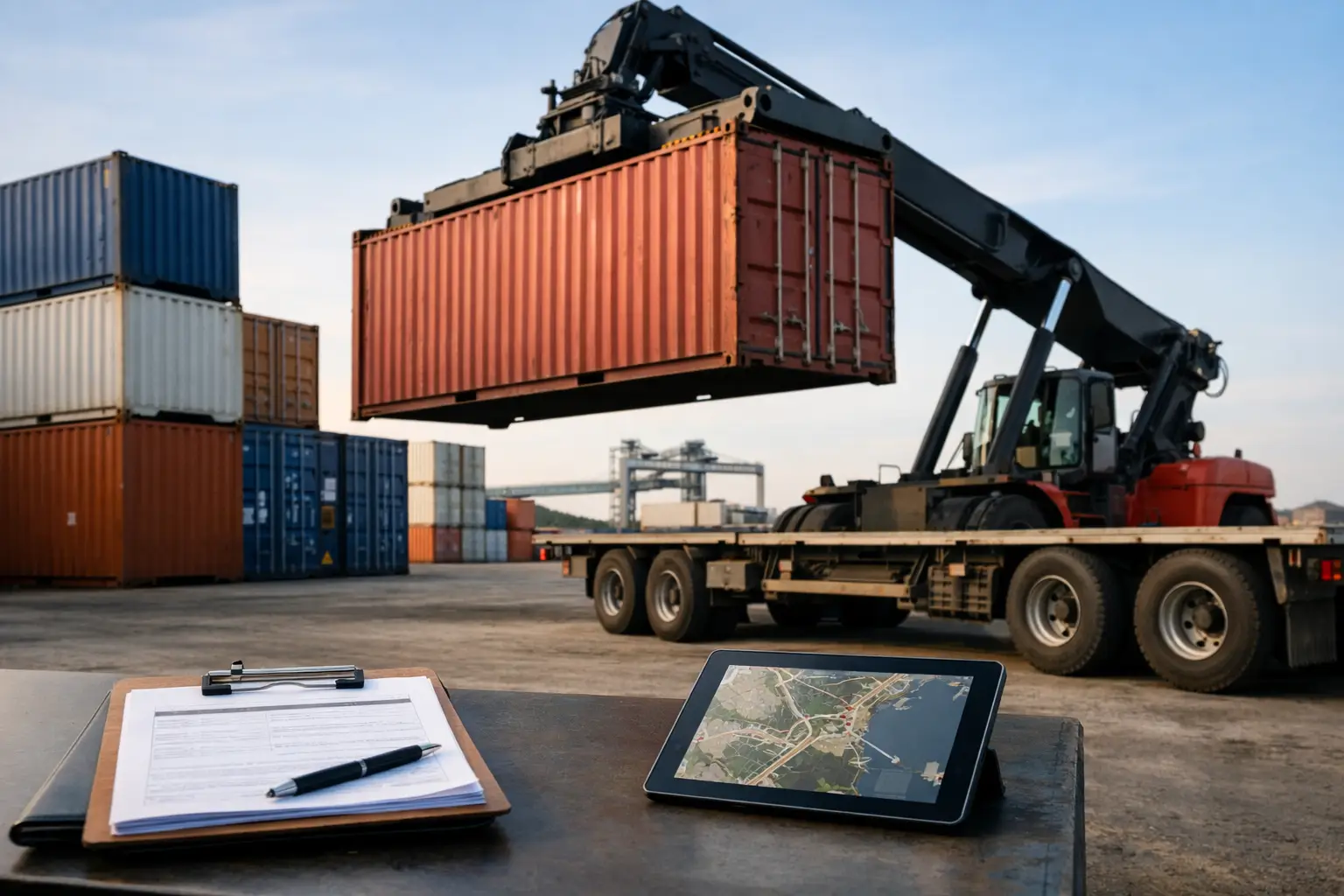
Container Delivery Planning Guide
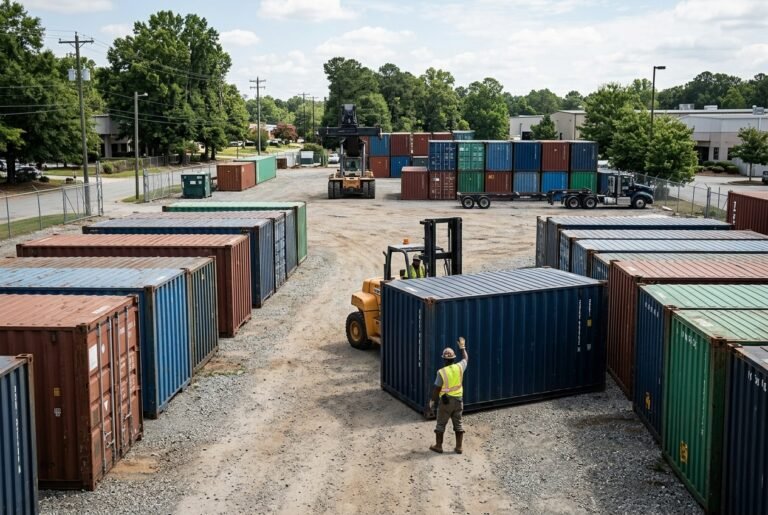
A container order can go sideways before the truck ever leaves the yard. Most delivery problems come from site access, not the container itself. That is why a solid container delivery planning guide matters – especially when you need secure storage on a job site, a farm, or residential property and cannot afford delays, redelivery fees, or a unit dropped in the wrong spot.
The good news is that container delivery is predictable when you plan around the equipment actually used to place it. A 20ft or 40ft container is simple enough on paper, but the delivery truck needs room to turn, room to line up, and room to unload safely. Ground conditions, overhead clearance, slope, and even the direction the doors should face all affect whether the drop goes smoothly.
What a container delivery planning guide should cover
The first question is not just what size container you want. It is whether your site can receive it without extra equipment or added handling. A one-trip 40ft high-cube container may be the right storage solution, but if your entrance is tight or your surface is soft, the cheapest listed price can stop being the real cost.
For most buyers, delivery planning comes down to five practical decisions: container size, access route, unloading method, final placement, and surface conditions. Get those right early and the rest is mostly scheduling.
There is also a difference between buying for appearance and buying for use. A homeowner adding a workshop shell may care more about exterior cosmetic condition, while a contractor usually cares most about structural integrity, lockable doors, and quick placement. Both need the same delivery discipline because the truck does not care why you bought the box.
Start with the delivery method, not just the container
Two common delivery methods are tilt-bed and ground-level placement. They sound similar, but they do not require the same amount of room.
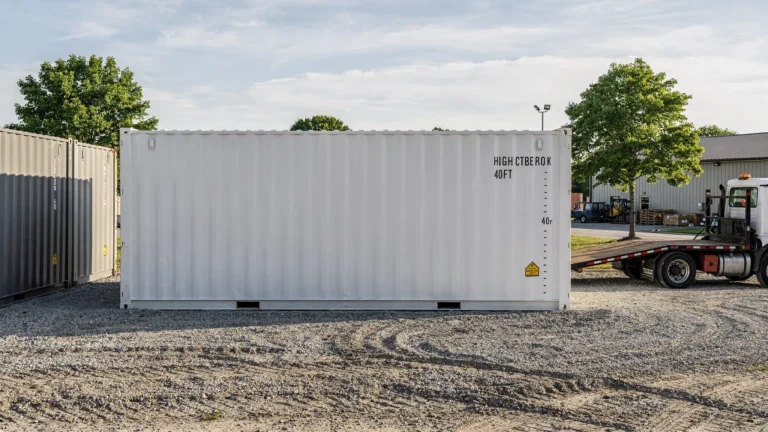
A tilt-bed truck rolls the container off the rear as the bed lifts. This is often the most efficient method for standard site deliveries, but it needs clear linear space in front of the drop area. The truck has to pull forward while the container slides back into place. If trees, fences, parked equipment, or a short driveway cut that space down, delivery may not be possible even if the container would physically fit once placed.
Ground-level drop-offs are popular because they let the container rest directly on the site without cranes in many situations. But ground-level does not mean low-clearance. The truck still needs enough vertical and horizontal room to unload safely.
If your site has tight access, soft terrain, or a placement area behind structures, you may need a different truck configuration or secondary handling. That can still work, but it should be discussed before dispatch day. No fine print, no surprises starts with matching the delivery method to the site.
Why 20ft containers are easier to place
A 20ft container is usually more forgiving for residential properties, smaller job sites, and rural access roads. It requires less turning room and less straight-line unloading space. If you are deciding between one 40ft unit and two 20ft units, delivery constraints may be the deciding factor rather than storage volume alone.
That said, two smaller deliveries can cost more than one larger one. It depends on freight distance, scheduling, and whether the site can receive multiple trucks efficiently.
When 40ft and 45ft containers change the plan
Longer containers increase the challenge at the entrance and at the drop location. The issue is not only length. The truck and trailer combination has a larger turning footprint, and small elevation changes become more important. A dip at the gate, a narrow bend, or an uneven pad that would not matter for a 20ft unit can create problems for a 40ft or 45ft delivery.
High-cube containers add one more variable: height. That extra foot is useful for storage volume and custom builds, but overhead wires, tree limbs, and carport roofs become harder limits.
Measure the access route like a truck driver would
Buyers often measure the final pad and stop there. The access route matters just as much. Start at the road entrance and follow the full path to the placement area.
Check gate width, driveway width, turning radius, and the swing area needed at corners. Look at overhead utility lines, tree canopies, building eaves, and signs. Then check the ground itself. A dry gravel lane may be fine for a loaded truck, while wet soil or recently filled ground may not support the weight.
If a driver has to back down a long, narrow lane with no turnaround, that should be identified early. It is not always a problem, but it changes the delivery plan. The more exact the site information, the more accurate the scheduling and equipment choice.
Photos help, but clear measurements are better. If you can provide both, even better.
Prepare the container pad before the truck arrives
A container does not need a full concrete foundation for every use, but it does need a stable, level bearing surface. This is where many avoidable issues start.
For job-site storage, compacted gravel is often a practical choice because it drains well and supports the container corners. For longer-term placement, especially for workshops, offices, or modified units, buyers often want a more finished base. Concrete piers, railroad ties in some settings, or a full slab may be appropriate depending on the intended use and local code requirements.
The key point is that shipping containers are designed to bear weight at the corner castings. If the support points are uneven, the frame can twist. That makes doors harder to open and can affect long-term structural performance. Even a Wind and Watertight unit should sit properly if you want it to stay easy to use.
If your site has a slope, plan for leveling before delivery day. Trying to correct a poor pad after placement is slower and usually more expensive.
Choose placement with the next five years in mind
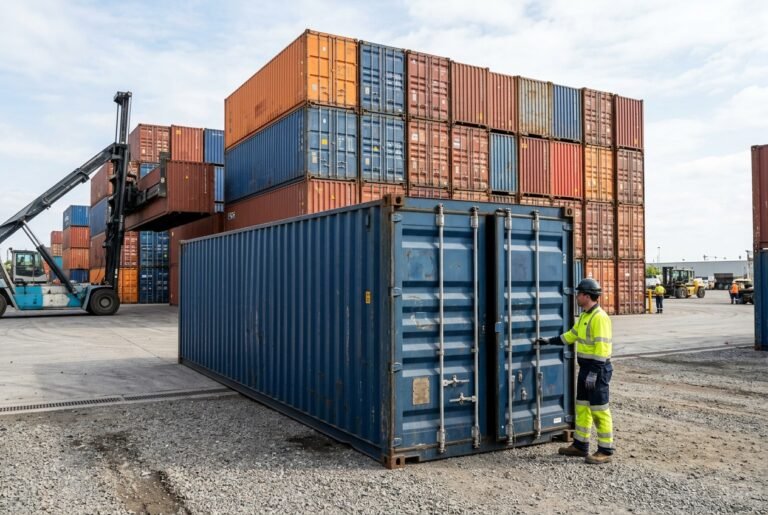
A container is easy to use when the doors open where your workflow happens. It is inconvenient when it blocks traffic, drains water toward the threshold, or forces people to carry materials farther than necessary.
Contractors usually benefit from placing doors toward the active work area, with enough clearance for forklifts, carts, or crew access. Agricultural buyers often need room for tractors and seasonal loading patterns. Homeowners may care more about visual impact, drainage, and future conversion potential.
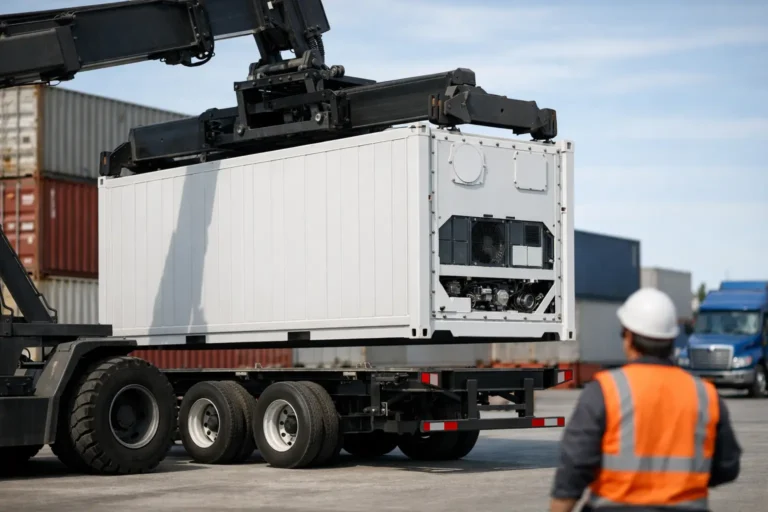
Think through swing clearance at the doors and whether both doors need to open fully. If you are considering a tunnel container with doors at both ends, access patterns become even more important. The same is true for reefers and custom office conversions, where power access and service clearance may affect final orientation.
It is also smart to consider future retrieval. A container that barely fits on day one may be difficult to remove or relocate later if fencing, landscaping, or new structures go up around it.
Match container condition to the actual use case
Delivery planning is not only about trucks. It is also about making sure the container grade fits the job so you are not solving the wrong problem.
A one-trip container is usually the best fit when appearance matters, when you want minimal dents, or when the unit is being modified into an office, retail pop-up, or finished exterior project. Used containers are often the practical choice for secure storage when cosmetic wear is acceptable. The real priority should be structural integrity, working doors, and a verified condition such as Wind and Watertight or Cargo Worthy, depending on your use.
This is where transparency matters. Buyers should know whether they are paying for cleaner paint and fewer surface blemishes or for a specific functional standard. That clarity helps you budget correctly and avoid paying new-container pricing for a use case that does not require it.
Common delivery issues that cause delays or added cost
Most expensive mistakes are preventable. The usual culprits are soft ground after rain, low tree limbs that looked higher from the ground, vehicles or equipment blocking the approach, and underestimating how much room a truck needs to straighten out.
Another common issue is last-minute changes to door orientation. Once the container is on the truck, repositioning options may be limited by the site. If door direction matters, confirm it before dispatch.
Timing matters too. Construction sites with active crews, concrete pours, or material staging may not have a clear path when the truck arrives. Residential buyers run into similar trouble when utility work, fencing, or landscaping overlaps with the delivery window. A precise delivery window only helps if the site is actually ready.
Container delivery planning guide for zero-surprise delivery
If you want a smooth drop, think like an operator. Confirm the container size and grade, verify the path from road to pad, prepare a level base, clear overhead obstacles, and decide door orientation before the truck is scheduled. For more complex sites, share measurements and site photos early so the delivery method fits the real conditions, not the hoped-for ones.
That approach is especially valuable for buyers managing expensive tools, seasonal inventory, or active project timelines. Whether the unit is a basic WWT storage container or a one-trip high-cube for a custom build, reliable delivery starts with accurate planning and honest site assessment.
A good container should solve a storage or space problem, not create a logistics problem on arrival. When the planning is done right, the delivery day feels straightforward – and that is usually the best sign you prepared well.