Storage Container Measurements: Door, Interior, and Payload
When people search for storage container measurements, they usually need three answers fast:
- Will it fit on my site? (exterior footprint and height)
- Will my stuff fit through the doors and inside? (door opening and interior dimensions)
- How much weight can it legally and safely carry? (payload, tare, and gross weight)
Those answers are also where buyers get tripped up, especially in Raleigh and across the Southeast where tight driveways, soft soil, and humid conditions can create expensive delivery and door-alignment problems.
Below is a practical, technical guide to door specs, interior space, and payload ratings for the most common ISO shipping containers, including 20ft, 40ft, and High Cube units.
First, a quick note on what “storage containers” usually are
Most “storage containers” sold for job sites, farms, and properties in North Carolina are ISO intermodal shipping containers built to global standards (commonly referenced as ISO standards). They’re typically made from Corten steel (weathering steel) and designed around standardized corner castings for lifting and stacking.
That standardization is why dimensions are predictable, but there’s a catch: interior and door opening dimensions can vary by manufacturer, age, and container type, even when the exterior is “standard.” For conversions or tight-clearance equipment moves, always verify the exact unit.
The three measurements that matter most (and why)
1) Door opening size (the “bottleneck”)
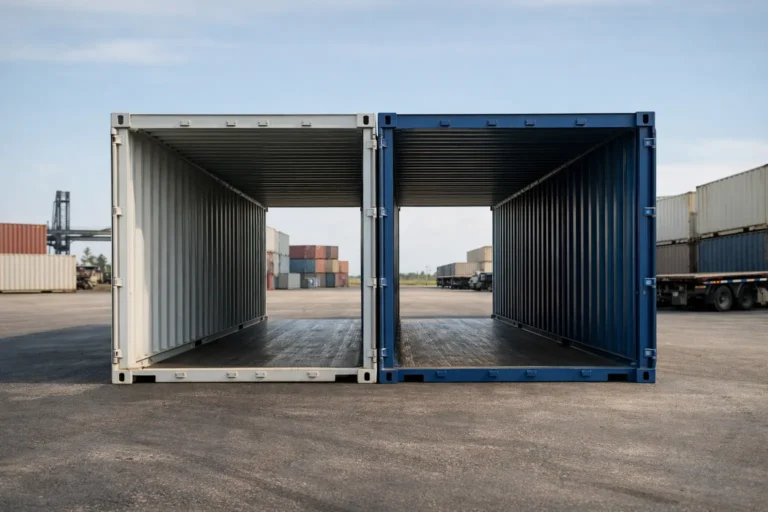
Your door opening is almost always smaller than the interior cross-section because of the door frame, gasket channel, and locking gear. If something won’t pass through the doors, the interior size won’t matter.
2) Interior dimensions (your usable space)
Interior length, width, and height determine whether you can:
- Stage materials with an aisle for access
- Fit pallets two-wide
- Install shelving or racking
- Add insulation and still meet clearance needs
3) Payload and weight ratings (capacity vs legal limits)
Payload is about more than “how strong the floor is.” It also affects:
- Whether you can move the loaded container on a chassis legally
- Whether you need an overweight permit
- How much ground prep you need if you’re storing dense materials (tile, paper, metal stock) on your property
Standard storage container measurements (20ft, 40ft, High Cube)
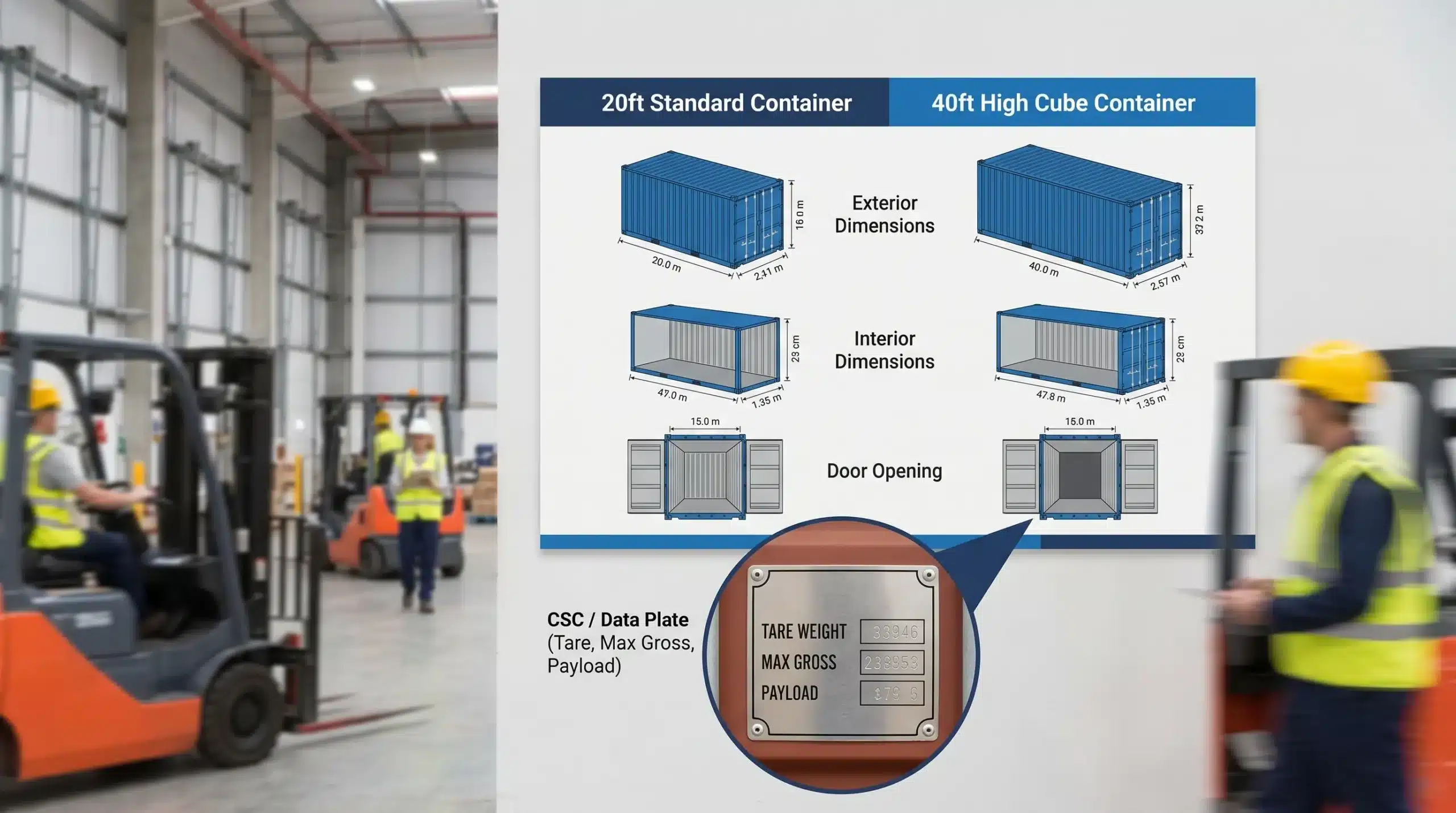
The exterior dimensions are standardized closely across the industry, while interior and door opening sizes are “typical” ranges.
Typical dimensions for dry (standard) containers
| Container type | Exterior (L x W x H) | Typical interior (L x W x H) | Typical door opening (W x H) |
|---|---|---|---|
| 20ft Standard | 20' x 8' x 8'6" | ~19'4" x 7'8" x 7'10" | ~7'8" x 7'5" |
| 40ft Standard | 40' x 8' x 8'6" | ~39'5" x 7'8" x 7'10" | ~7'8" x 7'5" |
| 40ft High Cube | 40' x 8' x 9'6" | ~39'5" x 7'8" x 8'10" | ~7'8" x ~8'5" |
Why these are “typical” and not absolute: interior length can vary slightly due to end wall construction, floor thickness, and repairs. Door openings also vary by manufacturer and door hardware condition.
If you’re comparing sizes for a purchase, start with:
- How to Choose Shipping Container Size
- 20ft options (common for driveways and tighter Raleigh sites): Where to Buy a 20ft Shipping Container in Raleigh, NC
- 40ft options (best value per square foot for many contractors): Find a 40ft Shipping Container for Sale in Raleigh, NC
Door measurements: what to check before delivery day
Standard door openings vs High Cube door openings
Most standard-height 20ft and 40ft dry containers have door openings around 7'8" wide by 7'5" high.
A High Cube (9'6" exterior height) usually gives you a taller door opening, commonly around 8'5" high. That extra door height is one of the most practical reasons High Cubes are popular for:
- Tall racking
- Restaurant equipment
- Pallet stacks that need overhead clearance
- Conversions (office framing, insulated ceilings)
For a deeper High Cube-specific breakdown, see: High Cube Container Dimensions: Interior Height and Door Specs
Measure the “real” pass-through, not the brochure spec
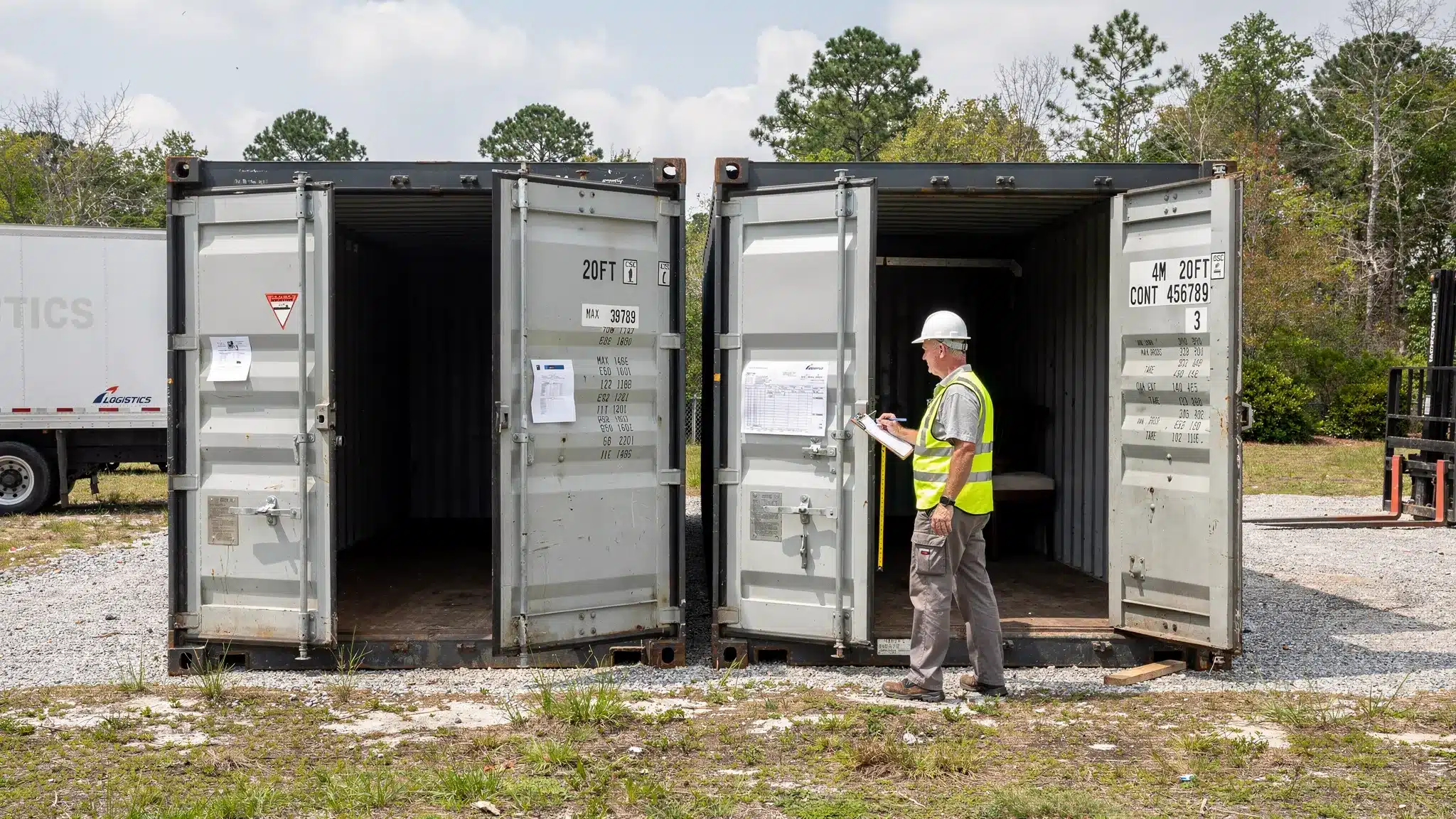
When you’re moving equipment or building materials, measure the tightest point:
- Door opening width between the vertical frame members
- Door opening height from the threshold to the lowest obstruction
- Threshold lip (important for pallet jacks and roll-in carts)
Also confirm the doors can open fully. A container can be structurally sound but still be frustrating on a jobsite if:
- The frame is twisted from poor placement
- Door gaskets are damaged
- Locking bars are bent
That’s one reason grade and site prep matter, even for “just storage.”
Interior measurements: what reduces usable space in the real world
Interior dimensions are always smaller than exterior because of corrugated walls and the structural frame.
Two common real-world reducers are:
1) Insulation and framing (for offices, workshops, retail)
If you plan to insulate, remember you will lose interior width and height. Even a modest build-out (framing plus insulation plus interior sheathing) can meaningfully reduce clearance.
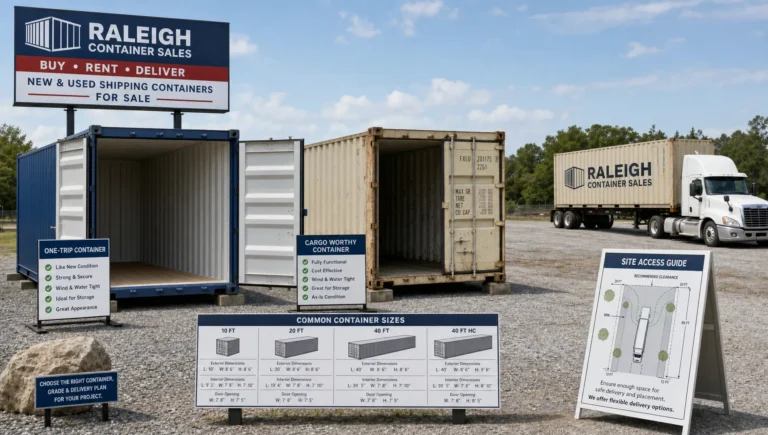
If you’re considering a conversion project, choosing a One-Trip or Cargo Worthy unit often reduces surprises because you’re starting with a straighter frame and cleaner interior.
2) Refrigerated containers (reefers)
Reefer containers have insulated walls and a refrigeration unit, which reduces interior dimensions compared with dry containers. The exact interior measurements vary widely by brand and model year.
If your project requires reefer space, treat published measurements as a starting point, then confirm the exact spec sheet for the unit you’re buying.
Payload, tare, and gross: how to read container weight ratings
Key terms (the ones you should actually use)
- Tare weight: the empty container weight
- Max gross weight: maximum allowed weight of the container plus cargo
- Payload: how much cargo weight the container is rated to carry
The relationship is simple:
Payload = Max gross weight − Tare weight
Where the numbers live: the CSC plate
Many intermodal containers have a CSC plate (safety approval plate) that lists these ratings and other data. Cargo Worthy containers are commonly expected to have current documentation for transport uses.
For the official convention background, see the IMO overview of the Container Safety Convention (CSC).
Typical weight ranges (dry containers)
These numbers vary by manufacturer and configuration, so use them for planning only.
| Container type | Typical tare (empty) | Typical max gross | Typical payload |
|---|---|---|---|
| 20ft Standard | ~4,800 to 5,200 lb | commonly up to ~67,200 lb | often ~62,000 lb (varies) |
| 40ft Standard | ~8,000 to 9,000 lb | commonly up to ~67,200 lb | often ~58,000 to 59,000 lb (varies) |
| 40ft High Cube | ~8,500 to 9,500 lb | commonly up to ~67,200 lb | often slightly less than 40ft standard (varies) |
Important: payload rating is not the same as road-legal transport weight
Even if the container itself is rated for a high payload, highway legal limits (truck, trailer, axle limits) often become the real constraint in the U.S. If you are a logistics manager moving loaded boxes regionally, confirm:
- Gross weight of the loaded container
- Chassis/tandem axle ratings
- State permitting rules for overweight loads
For many Raleigh-area buyers using containers as stationary storage, the bigger risk is different: ground bearing and settlement. Dense loads can cause corner settlement, twist the frame, and make doors bind.
Why container grade matters for measurements (and door performance)
Measurements on paper don’t help if the container doesn’t operate properly. Grade is your best shorthand for expected condition.
One-Trip (new, one voyage)
A One-Trip container has typically made a single loaded trip from the factory and is the closest thing to “new” in the resale market. You generally get:
- Straighter frames and smoother door operation
- Cleaner floors and less odor risk
- Better appearance for customer-facing sites
If you want the best baseline for conversions and long service life, start here: What Is a One Trip Container?
Cargo Worthy (CW)
A Cargo Worthy container is intended to meet requirements for transport and intermodal handling. It’s the right grade when you need a structurally compliant unit for shipping or high-demand industrial use.
If transport is part of your plan, read: What Is a Cargo Worthy Container? Key Standards Explained
Wind and Watertight (WWT)
A WWT container is typically chosen for stationary storage. It should keep out wind and water, but it may have dents, surface rust, and other cosmetic wear. The key measurement-related issue is operational, not dimensional: doors and seals must still function correctly.
For a Raleigh-focused WWT overview: Wind and Watertight Shipping Containers in Raleigh, NC
If you’re shopping used inventory broadly, also see: Best Used Shipping Containers for Sale in Raleigh, NC
Pro-Tip (site preparation): prevent door bind and measurement surprises
In Raleigh, Wake County, and much of the Southeast, the most common “my container doesn’t fit” problem is not a dimension issue, it’s a site prep and leveling issue.
A container that is out of level can twist just enough that:
- Doors won’t latch
- Lock rods scrape and bind
- The “measured” door opening becomes unusable in practice
Pro-Tip: Build a simple, drain-friendly base before delivery.
- Use a compacted gravel pad (often the best balance of cost and performance for many properties)
- Support the container at the corners (and midpoints for 40ft, if needed) on stable footings
- Aim for a level surface so the frame does not rack
- Plan drainage so water does not pool under the steel rails (Corten steel resists corrosion better than mild steel, but it is not rust-proof)
Practical walkthroughs:
If you’re placing a container inside city limits or under an HOA in the Triangle region, factor in permit and setback requirements early. That’s often the real schedule risk.
A quick “fit check” workflow before you buy
Use this process whether you’re a contractor staging tools, a small business storing inventory, or a homeowner clearing garage space.
Confirm your bottleneck measurement
Start with the largest item you must move through the door. Measure it at its widest and tallest points, including:
- Pallet overhang
- Fork pockets
- Handles, hinges, or casters
- Packaging
Then compare to the door opening, not the interior.
Confirm usable interior for access
If you need to walk inside and access items regularly, plan an aisle. Many people buy a container based on cubic feet and then regret losing usability due to tight packing.
Confirm payload and ground loading
If you are storing dense materials (masonry, tile, paper goods, machine parts), tell your supplier what you’re storing. You may need a better base than a simple dirt pad.
Get exact measurements for the exact unit (what to ask your supplier)
Because interior and door sizes can vary, especially on used units, ask for:
- The container’s type (standard dry, High Cube, reefer)
- The grade (One-Trip vs CW vs WWT)
- Photos of the door opening and door seals
- The tare and max gross from the data plate (or a clear photo of the plate)
If you want a structured purchasing approach, Lease Lane’s guide is a solid starting point: The Ultimate Shipping Container Buyers Guide
Frequently Asked Questions
What are the standard storage container measurements? Most ISO dry containers are 8 feet wide. Common exterior sizes are 20' x 8' x 8'6" (standard) and 40' x 8' x 8'6" (standard), plus 40' x 8' x 9'6" for High Cube.
How wide is a shipping container door opening? A typical dry container door opening is about 7'8" wide. Exact width can vary slightly by manufacturer and door condition.
How tall is a High Cube container door opening? High Cube door openings are typically taller than standard containers, commonly around 8'5" high, but you should verify the exact unit.
What is payload on a storage container? Payload is the maximum cargo weight a container is rated to carry. It is calculated as max gross weight minus tare (empty) weight, and it is usually listed on the container’s data/CSC plate.
Do One-Trip, Cargo Worthy, and WWT containers have different dimensions? Exterior dimensions are generally standardized, but door operation and usable interior space can differ due to repairs, wear, and container type. Grade mainly affects condition (doors, seals, floors, structure), not nominal size.
Need help choosing the right container size and specs in Raleigh?
Lease Lane Containers LLC can help you confirm door clearance, interior usability, and payload ratings before you commit, and we’ll also walk you through site prep so delivery goes smoothly in Raleigh, across North Carolina, and nationwide.
Contact our sales team at sales@leaselanecontainers.com or visit our Raleigh office to get clear pricing and the right container for your use case.