How a 20ft Container Delivered Process Works
When people search for a 20ft container delivered, they usually want two things: a predictable timeline and a drop-off that goes smoothly the first time. The “container” part is straightforward. The “delivered” part is where most surprises happen, especially on residential driveways, tight commercial lots, or active jobsites around Raleigh and the broader Southeast.
Below is a clear, field-tested walkthrough of how the delivery process works, what you need to decide before the truck rolls, and how to prevent the most common (and expensive) delivery-day problems.
First, what exactly is being delivered?
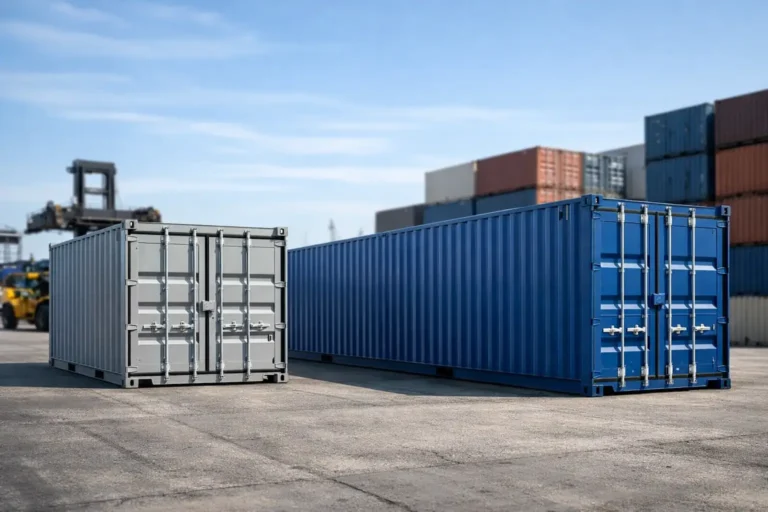
A 20ft shipping container is an ISO intermodal container built to standardized handling and transport requirements. Most are constructed from Corten steel (weathering steel designed to resist atmospheric corrosion) and are engineered to be lifted at the corner castings.
In practical terms, a 20ft unit is often the “sweet spot” for Raleigh-area homeowners, general contractors, and small businesses because it provides serious secure storage without the footprint or delivery complexity of a 40ft.
If you are still deciding between sizes, it helps to compare both upfront because delivery access is often the deciding factor. See how to choose shipping container size and browse 40ft containers if you suspect your needs will grow.
Choose the right grade before you schedule delivery
Your delivery plan should match the container’s grade and intended use. This is especially important in North Carolina’s humidity, where long-term moisture control and door alignment matter.
Here are the three grades buyers ask about most:
- One-Trip (new, “one-trip”): A near-new container that has made a single loaded voyage from the factory. Best when appearance matters (customer-facing retail, offices, conversions) and for buyers who want maximum remaining service life.
- Cargo Worthy (CW): A used container that meets cargo-worthy criteria for transport use cases. CW is typically the right choice if you need a structurally sound unit for active logistics or projects where stacking, lifting, and structural integrity are priorities.
- Wind & Watertight (WWT): A used container intended for stationary storage. WWT means it should keep out wind and water, but it may not meet cargo-worthy certification requirements for international shipment.
If you want a deeper explanation (and how to match grade to budget), start with the Lease Lane guide on used shipping container grades or the more specific breakdown of Cargo Worthy vs Wind and Watertight.
Quick grade-to-use table
| Grade | Best for | What to expect | Typical delivery risk if site prep is poor |
|---|---|---|---|
| One-Trip | Offices, conversions, premium storage | Cleaner appearance, fewer repairs | Cosmetic damage if placed on uneven or rocky ground |
| Cargo Worthy (CW) | Export, intermodal use, higher structural demand | Strong frame, transport-ready intent | Door binding if container twists during placement |
| Wind & Watertight (WWT) | On-site storage, farms, jobsite storage | Weather-tight storage value | Water intrusion over time if not kept level and drained |
How a 20ft container delivered process works (step by step)
Delivery is not just “shipping.” It is a coordinated handoff between container selection, trucking method, and site readiness.
1) You define the use case and placement constraints
Before quoting and dispatch, a reputable supplier will want to know:
- Where the container is going (jobsite, driveway, yard, farm, retail lot)
- Whether access is tight (gates, cul-de-sacs, narrow lanes, soft shoulders)
- Whether the container must be placed in a specific orientation (door direction matters for daily usability)
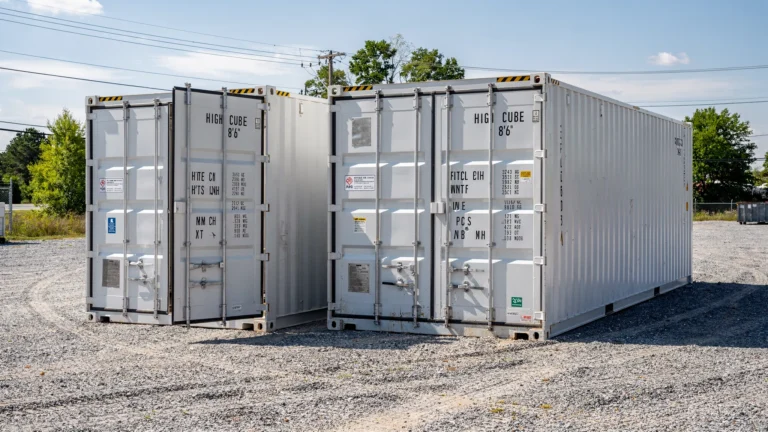
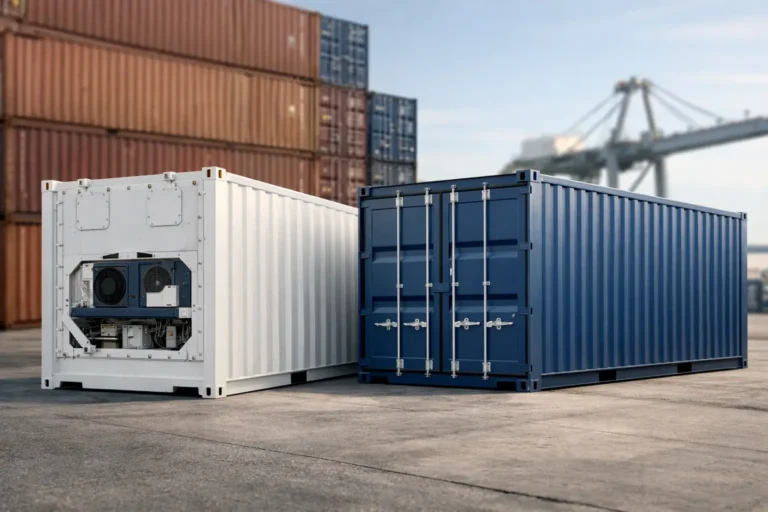
- Whether you need a standard container, High Cube (typically more common in 40ft than 20ft), or a specialty unit like a refrigerated container
This is also the time to decide whether you want used containers for value or One-Trip for appearance and longevity. If you are exploring used options, start here: used shipping containers in Raleigh.
2) You receive an apples-to-apples quote that includes delivery assumptions
A real delivery quote should clarify what is included, especially:
- Your delivery area (Raleigh, the Triangle, the Southeast, or nationwide)
- The expected offload method (tilt-bed vs flatbed and crane)
- Any access constraints that could change the delivery plan
If you are comparing multiple quotes, confirm the grade is the same (One-Trip vs CW vs WWT) and that delivery is based on the same assumptions. Many “cheap” quotes become expensive when the truck arrives and cannot place the unit.
3) Site review happens before scheduling (photos and measurements)
For a smooth 20ft container delivered experience, suppliers often request site photos. In the Raleigh area, common issues include tree canopy clearance, soft ground after rain, and narrow approach angles in older neighborhoods.
A simple habit that helps is documenting the approach path and drop zone like a checklist. If you appreciate the value of real-world checklists and hard-earned lessons, the personal essays over at Raw Life Thoughts are a reminder that planning beats improvisation in almost every high-stakes situation.
4) Delivery is scheduled based on truck type, route, and ground conditions
Even when inventory is available, scheduling is influenced by:
- Routing and driver availability
- Weather (especially after heavy rain in clay-heavy soil areas common across the Southeast)
- Special equipment coordination (crane bookings, escorts in rare cases)
Good suppliers will also confirm where you want the container set and which side the doors should face.
5) Delivery day: placement and offload
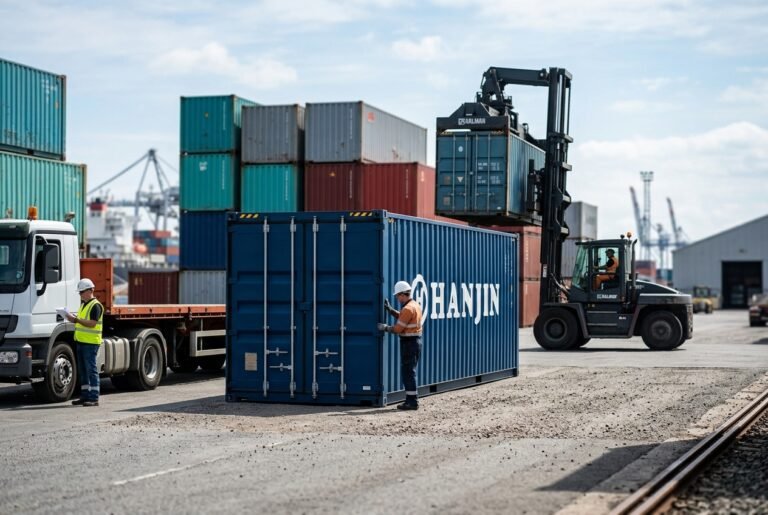
Most 20ft containers are delivered by tilt-bed or flatbed depending on access and placement requirements.
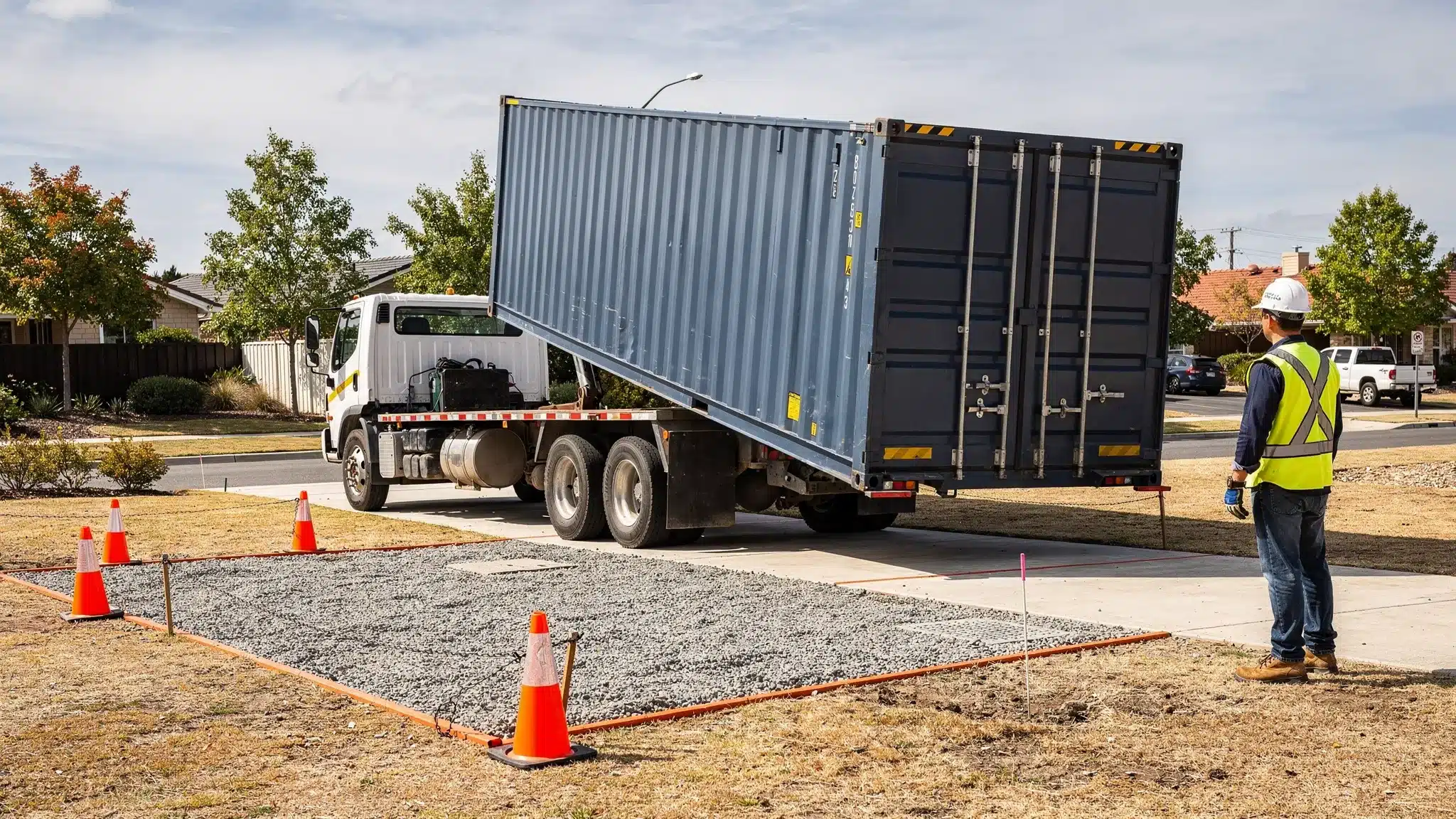
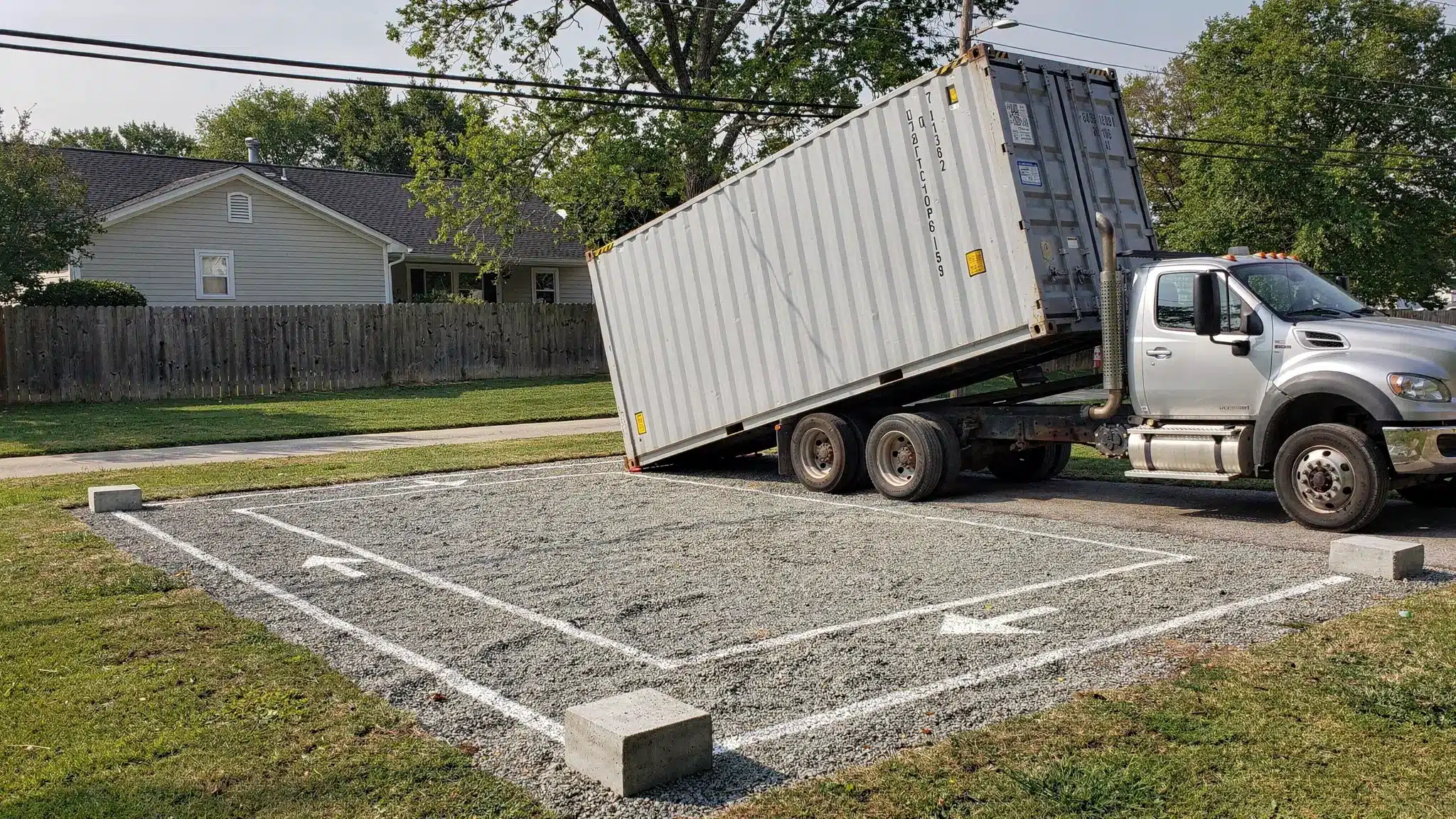
- With a tilt-bed, the truck uses a hydraulic bed to slide the container down onto your prepared pad.
- With a flatbed, offloading typically requires customer-provided equipment (often a crane or forklift rated appropriately) or coordinated third-party support.
Your role on delivery day is mainly to keep the route clear, keep people back, and confirm the placement point. If you are unsure what your site can handle, review Lease Lane’s shipping container delivery requirements before the appointment.
6) After set-down: inspect, level-check, and confirm door operation
Once the container is down, do a quick verification before the driver leaves:
- Confirm the container is sitting on stable supports (ideally at the corners)
- Check doors for smooth operation (binding doors often signal twist from an uneven base)
- Look for obvious transit damage and document with photos
This is also when you confirm drainage. Standing water under a container accelerates corrosion and increases humidity-driven condensation issues.
Delivery method options for a 20ft container
The “best” delivery method depends on access, terrain, and precision placement needs.
| Delivery method | Why it is used | Best for | Key limitation |
|---|---|---|---|
| Tilt-bed (roll-off style) | Simple, common, efficient | Most homes, small businesses, many jobsites | Needs adequate straight-line space and stable ground |
| Flatbed + crane | Most control over exact placement | Tight backyards, obstacles, precise set | Requires crane access, coordination, and added cost |
| Chassis or yard positioning | Common in logistics contexts | Transport-focused or staging scenarios | Not ideal for final placement without equipment |
If tilt-bed delivery is likely for your property, this dedicated explainer is useful: Can a tilt bed deliver a shipping container?
Pro-Tip: set your site up like a professional (even if it’s your backyard)
A successful delivery is mostly decided before the truck arrives. This is where experienced contractors have an advantage, but homeowners in Raleigh can follow the same principles.
Pro-Tip (site preparation that prevents 80% of delivery problems):
- Build a level base first: A compacted gravel pad is one of the most common, practical foundations in North Carolina because it handles drainage well.
- Support the corners: Containers are designed to bear load at the corner castings. Proper corner support reduces twist and door issues.
- Plan for drainage: Grade the area so water runs away from the container, not under it.
- Check overhead and underground hazards: Look for tree limbs, service drops, and lines. Call 811 before any digging or grading.
- Confirm local rules early: In Raleigh, Wake County, and many HOAs, placement rules can vary by zoning and visibility. When in doubt, verify before delivery day.
For a detailed walkthrough, use Lease Lane’s guide on how to prepare your site for container delivery and the step-by-step foundation approach in 5 steps for proper shipping container ground preparation.
Common reasons a “20ft container delivered” appointment fails
Most failed deliveries come down to one of these predictable issues:
- The driver cannot make the turn into the property (tight angles, parked cars, narrow gates)
- Overhead clearance is insufficient (tree canopy and lines are frequent culprits in established Raleigh neighborhoods)
- The ground is too soft (especially after storms), risking the truck sinking or rutting
- The drop zone is not level, leading to a twisted set and doors that will not shut correctly
- The buyer expected the carrier to provide offloading equipment when the quote assumed tilt-bed placement only
Avoiding these problems is exactly why working with a supplier that provides real delivery planning support matters.
Next steps: choosing inventory that matches your delivery plan
Once you understand the delivery method and your site constraints, you can shop confidently:
- If you want a standard storage-friendly footprint, start with 20ft containers in Raleigh.
- If you expect long-term use and want the best appearance and remaining life, consider One-Trip (new) inventory and compare it to used options.
- If you are still building your spec sheet, keep the master reference open: The Ultimate Shipping Container Buyers Guide.
Frequently Asked Questions
How long does it take to get a 20ft container delivered? Scheduling depends on inventory availability, trucking schedules, and your delivery region. The fastest deliveries happen when the site is ready and the offload method is confirmed upfront.
Do I need a permit to place a shipping container in Raleigh, NC? Sometimes. Requirements vary by zoning, use (temporary storage vs permanent structure), and HOA rules. Verify with your local jurisdiction before delivery, especially for long-term placement.
What grade is best if I just need on-site storage? For most stationary storage needs, a WWT unit can be a strong value if you confirm it is truly wind and watertight. If you want stronger transport intent and structural confidence (and sometimes better resale), consider Cargo Worthy.
Why do shipping container doors sometimes stick after delivery? The most common cause is twist from an uneven base. Even a strong container frame can rack slightly if it is not supported and leveled correctly at the corners.
Can a 20ft container be delivered to a driveway? Often yes, but it depends on driveway condition, slope, overhead clearance, and whether the approach allows the truck to line up safely. Confirm delivery requirements and protect surfaces as needed.
Talk to the Lease Lane Containers team before you schedule
If you want a 20ft container delivered without surprises, start with a quick site conversation before you commit to a delivery date. Lease Lane Containers LLC can help you choose the right grade (One-Trip vs Cargo Worthy vs WWT), confirm access, and plan a clean set-down.
Contact the sales team at sales@leaselanecontainers.com or visit the Raleigh, North Carolina office to discuss inventory and delivery planning.