How to Prepare Ground for Shipping Container
A shipping container can handle ocean crossings, rail transfers, and heavy stacking loads, but it still needs the right support once it reaches your property. If you are figuring out how to prepare ground for shipping container delivery, the main goal is simple: create a level, stable, well-drained base that supports the container at its load-bearing points and avoids problems later.
That last part matters more than many buyers expect. A container set on poor ground may develop twisted door frames, standing water underneath, premature corrosion, or settling that turns a straightforward storage solution into an ongoing site issue. For contractors, that means job-site delays. For homeowners, it means extra cost and frustration that could have been avoided before delivery day.
Why ground prep matters more than the container itself
Shipping containers are engineered with structural strength concentrated in the corner castings and perimeter frame. In plain terms, they are strongest where the corners meet the ground. That is why the surface beneath the container matters so much. If one corner settles lower than the others, the steel frame can rack slightly, and even a durable Corten Steel container may start showing symptoms like hard-to-open doors or uneven flooring.
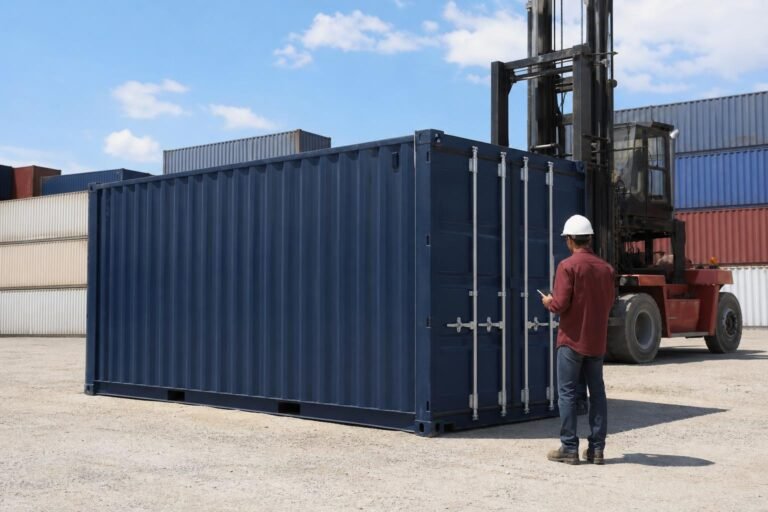
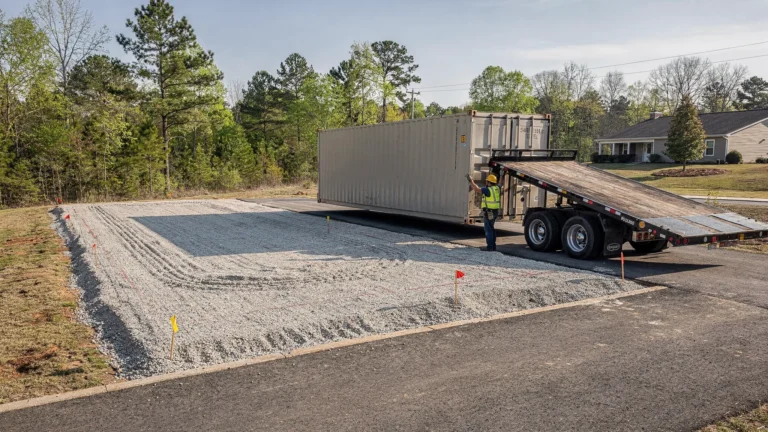
Ground preparation also affects delivery logistics. Tilt-Bed and Ground-Level delivery methods need enough room to approach, unload, and place the unit safely. A site can look usable from a distance but still fail on soft soil, slope, overhead obstructions, or tight access. Good preparation is not just about where the container sits. It is also about how the truck gets it there without damage to the unit, the property, or the surrounding work area.
How to prepare ground for shipping container placement
The right base depends on the container size, intended use, soil condition, and whether the installation is temporary or long term. A 20-foot storage container on firm rural ground is different from a 40-foot high-cube unit being used for retail overflow or a mobile office.
In most cases, the best first step is to identify four things: the exact container dimensions, the loaded weight, the drainage pattern of the site, and the delivery path. Without those details, it is easy to prepare a pad that looks clean but does not actually support the container properly.
Start with a level, accessible site
Choose a location that is as naturally level as possible. Minor grading is normal, but if the area has a significant slope, preparing it may require excavation, fill, compaction, or retaining work. The more correction the site needs, the more important it becomes to involve an experienced site contractor.
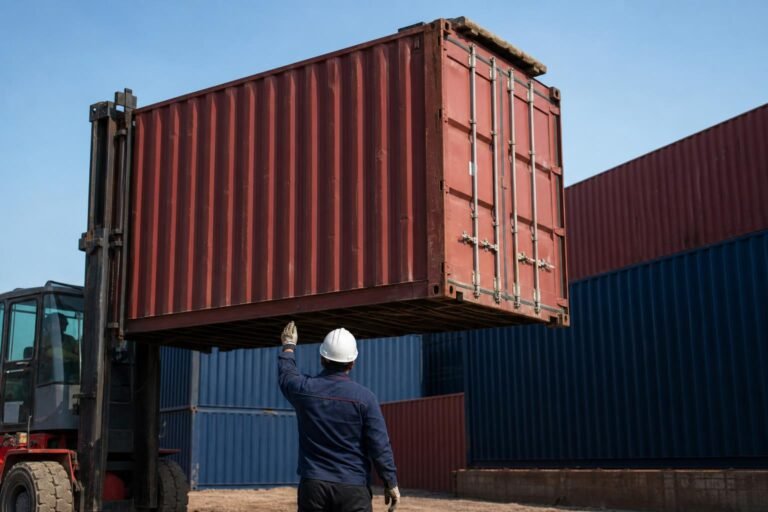
Access is just as important as the final resting spot. Delivery trucks need enough width, turning radius, and overhead clearance to place the container safely. Tree limbs, power lines, soft shoulders, low eaves, fences, and narrow gates regularly create problems. For many deliveries, especially 40-foot units, a straight and stable approach is the difference between a smooth drop-off and a rescheduled job.
Remove topsoil and organic material
Do not place a container directly on grass, loose topsoil, mulch, or recently filled dirt that has not been compacted. Organic layers hold moisture and shift over time. That movement may be slow, but it is enough to affect level and drainage.
A proper site usually starts with stripping away soft surface material until you reach firmer subgrade. If the underlying soil is weak or saturated, you may need additional excavation and imported base material. This is especially common in areas with clay-heavy soils or sites that stay wet after rain.
Build for drainage, not just support
A container base should shed water, not trap it. Standing water under the container creates ongoing moisture exposure that can shorten the life of the steel understructure and make the surrounding area muddy and difficult to use.
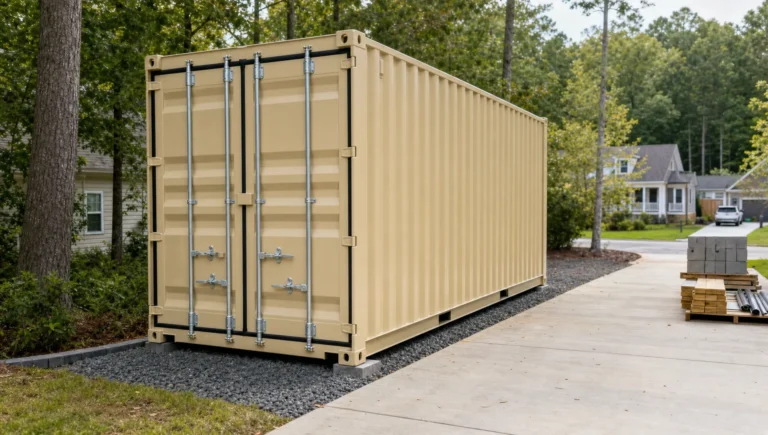
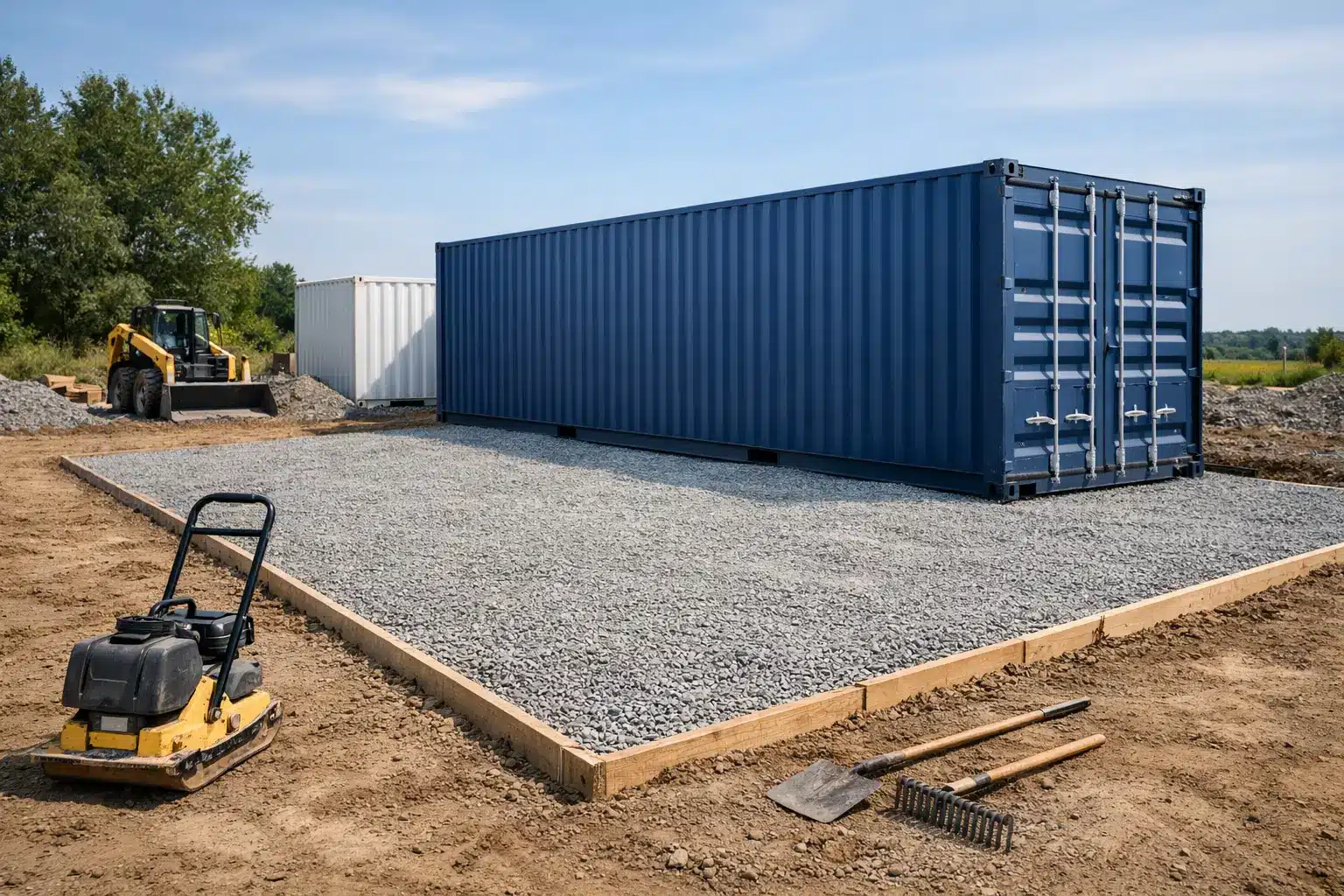
For many storage applications, a compacted gravel pad works well because it provides both drainage and flexibility. The pad should extend beyond the container footprint so water does not collect right at the edges. In some cases, a slight crown or carefully controlled slope around the pad helps direct runoff away from the container.
Concrete can also be a good solution, especially for long-term commercial use, container offices, or modular builds. It provides excellent support and a clean finished look, but it costs more and usually makes the installation less flexible if you plan to relocate the unit later. The trade-off is straightforward: gravel is often faster and more economical, while concrete offers a more permanent, finished platform.
Best base options for a shipping container
There is no single universal answer for every site, but most container installations use one of three approaches.
Gravel pads are the most common for general storage. A compacted crushed stone base offers good drainage, reasonable cost control, and easier site adjustment if the ground settles slightly. This is often the practical choice for contractors, farms, and residential storage.
Concrete piers or footings are often used when buyers want to support the container at the corner castings and keep the steel frame elevated off the ground. This can be an efficient option, but spacing, elevation, and soil bearing capacity need to be accurate. If the piers are out of level, the container will tell you quickly through misaligned doors.
Full concrete slabs are common for finished installations, offices, workshops, and higher-end custom builds. They can provide excellent support and clean access around the unit, but only if the slab is properly designed for the intended load and local soil conditions.
For temporary placements, railroad ties or similar materials are sometimes used under the corners and midpoints. This can work in limited situations, but it is not usually the best long-term solution because wood shifts, degrades, and does not solve drainage by itself.
How much support does a container need?
A standard empty container carries its weight through the corner castings, but real-world use is not always that simple. If the container will be heavily loaded with dense equipment, pallets, tools, or agricultural supplies, the sub-base needs to remain stable under that total weight. A lightly used backyard container and a fully loaded job-site storage unit place very different demands on the ground.
Longer containers also increase the margin for error. A 40-foot or 45-foot unit is less forgiving on uneven ground than a 20-foot container. If the site is not consistently level, the frame can twist enough to affect door operation. That is one reason precise leveling matters so much before delivery, not after.
Check level in both directions
When preparing the base, confirm level side to side and end to end. Slight variation may be manageable, but the closer to true level, the better the container will perform over time. This is especially important for refrigerated containers, office conversions, and any unit with interior build-outs where floor alignment and door seals matter.
If you are using blocks, piers, or footings, measure each support point carefully. Guesswork at this stage creates expensive adjustments later.
Common mistakes that cause delivery-day problems
The most common issue is underestimating how much space the truck needs. Buyers often focus on the container footprint and forget the unloading angle, truck length, and clear approach path. That can stop a delivery even when the pad itself is ready.
Another frequent mistake is building a base that is too small. The pad should extend beyond the container dimensions enough to support placement and improve drainage around the perimeter. A pad that ends exactly at the container walls often erodes faster and leaves the edges vulnerable.
Soft fill is another problem. A site may look flat and compacted, but if it was recently graded and not properly compacted in lifts, the container can settle after the first heavy rain. That settlement usually shows up first at the doors.
Finally, many buyers overlook future use. If you plan to access the container daily with carts, pallet jacks, or heavy equipment, the surrounding ground matters almost as much as the base itself. Muddy approaches, uneven thresholds, and poor runoff can make a good container harder to use than it should be.
When to bring in a professional
If the site has notable slope, poor drainage, uncertain soil conditions, or a long 40-foot-plus container, professional site prep is usually worth it. The same applies if the unit will support a modular build, refrigeration equipment, or frequent commercial access. A qualified contractor can evaluate compaction, drainage, and support points before the container arrives.
This is also where a dependable supplier helps. Delivery planning should include the container size, condition, placement method, and site constraints upfront. Clear specifications and verified delivery requirements reduce the chance of surprises, which is exactly what most buyers want to avoid.
If you are preparing for container delivery, think beyond the drop-off. A well-prepared base protects door alignment, limits corrosion risk, supports the rated structure correctly, and makes the container easier to use every day after the truck leaves. That is the kind of prep work that pays for itself quietly, which is usually the best kind.