Best used shipping containers in Houston, Texas | 2026 Guide
Table of Contents
- Table of Contents
- Houston used shipping containers Quick Facts
- used shipping containers in Houston: What You Need to Know
- What Services Are Available
- Why Location Matters
- Top used shipping containers Options in Houston
- Budget-Friendly: Wind and Watertight Grade
- Mid-Range: Cargo Worthy Grade
- Premium: One-Trip Containers
- How to Choose the Right used shipping containers in Houston
- Match the Grade to the Job
- Questions to Ask Any Supplier
- Red Flags to Watch For
- Texas-Specific Considerations
- Houston used shipping containers Market in 2026
- Demand Trends
- Seasonal Considerations
- How Houston Compares to the Rest of Texas
- Houston used shipping containers FAQ
- How much does a used shipping container cost in Houston?
- Do I need a permit to put a shipping container on my property in Houston?
- How long does delivery take in the Houston area?
- What should I inspect on a used shipping container before buying?
- Can I get a container delivered to a rural property outside Houston?
- Get used shipping containers in Houston Today
- Final Checklist
Table of Contents
- Houston Used Shipping Containers Quick Facts
- Used Shipping Containers in Houston: What You Need to Know
- Top Used Shipping Container Options in Houston
- How to Choose the Right Used Shipping Containers in Houston
- Houston Used Shipping Container Market in 2026
- Houston Used Shipping Containers FAQ
- Get Used Shipping Containers in Houston Today
- Final Checklist
Houston is one of the largest container markets in the United States, and for good reason. The Port of Houston ranks as the busiest port in the country by total tonnage, which means a constant flow of shipping containers cycling through the region. For buyers looking for the best used shipping containers in Houston, Texas, this 2026 guide breaks down pricing, condition grades, delivery logistics, and the specific factors that make the Houston market different from anywhere else in the country.
Whether you need on-site storage for a contracting business, overflow inventory space for a retail operation, or a container for a rural property build-out, Houston’s proximity to major port infrastructure gives buyers more options and better pricing than most inland cities. The key is knowing how to evaluate what you’re buying and who you’re buying from. That’s exactly what this guide covers, section by section, with the kind of practical detail that helps you make a confident purchase.
Houston used shipping containers Quick Facts
Here’s a snapshot of what Houston buyers should expect in 2026:
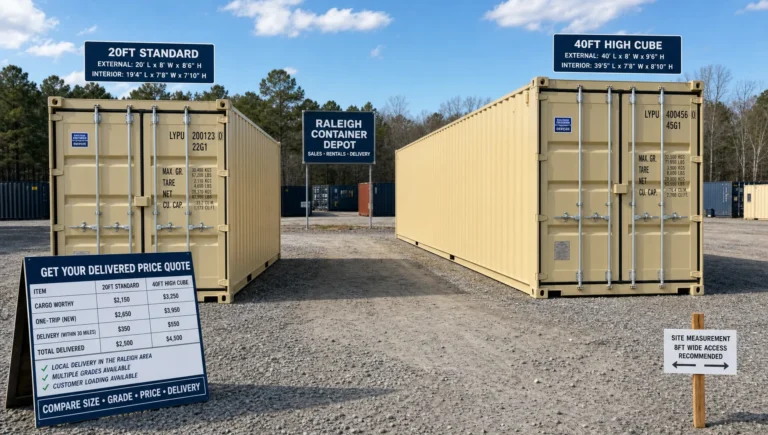
- Typical pricing for a 20ft used shipping container in cargo worthy condition runs between $1,800 and $3,200, depending on grade and availability. A 40ft unit in similar condition ranges from $2,400 to $4,500.
- Delivery lead times in the greater Houston metro area average 3 to 10 business days from order confirmation. Rural locations outside Harris County may add 2 to 5 days depending on road access and site readiness.
- Service area coverage from Houston-based depots extends across Southeast Texas, with most suppliers delivering within a 150-mile radius as a standard service zone. Beyond that, freight surcharges typically apply.
- Houston stands apart from other Texas markets because of the Port of Houston’s container throughput. This creates a larger pool of available inventory at any given time, which keeps prices more competitive than markets in Austin, San Antonio, or the Dallas-Fort Worth corridor.
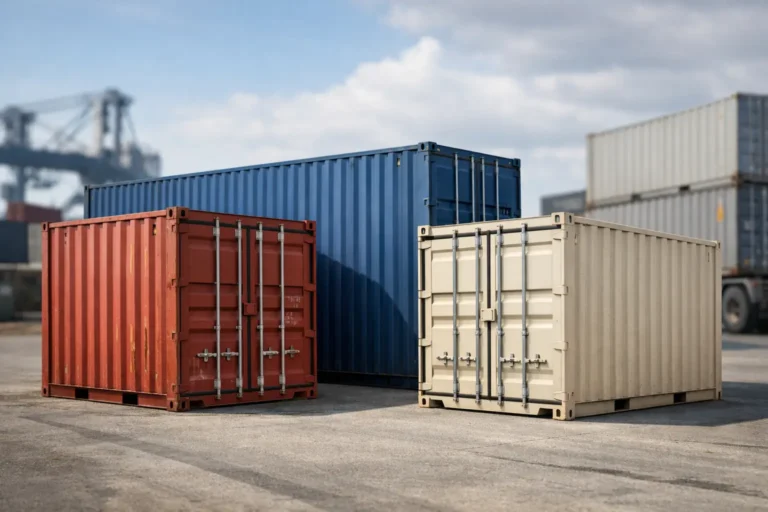
- Container grades commonly available include one-trip, cargo worthy, and wind and watertight. Understanding the differences between these grades is the single most important factor in getting the right container for your project. Lease Lane Containers offers transparent grading guidance that explains each condition level in plain terms.
used shipping containers in Houston: What You Need to Know
Houston’s container market benefits from geography in a way that few other U.S. cities can match. The Port of Houston handles roughly 4 million TEUs (twenty-foot equivalent units) annually, and a percentage of those containers are retired from international shipping service each year. These retired units enter the secondary market as used shipping containers, available for storage, workspace conversions, agricultural use, and construction projects.
The practical result for Houston buyers is access to a deeper inventory pool. Depots along the Houston Ship Channel, in Pasadena, and near Baytown maintain large stocks of containers in various grades. Buyers in neighborhoods and suburbs like Katy, Sugar Land, Cypress, Spring, and Pearland can typically receive delivery within a week. For those farther out in areas like Conroe, Galveston County, or Brazoria County, delivery timelines stretch slightly but remain manageable.
What Services Are Available
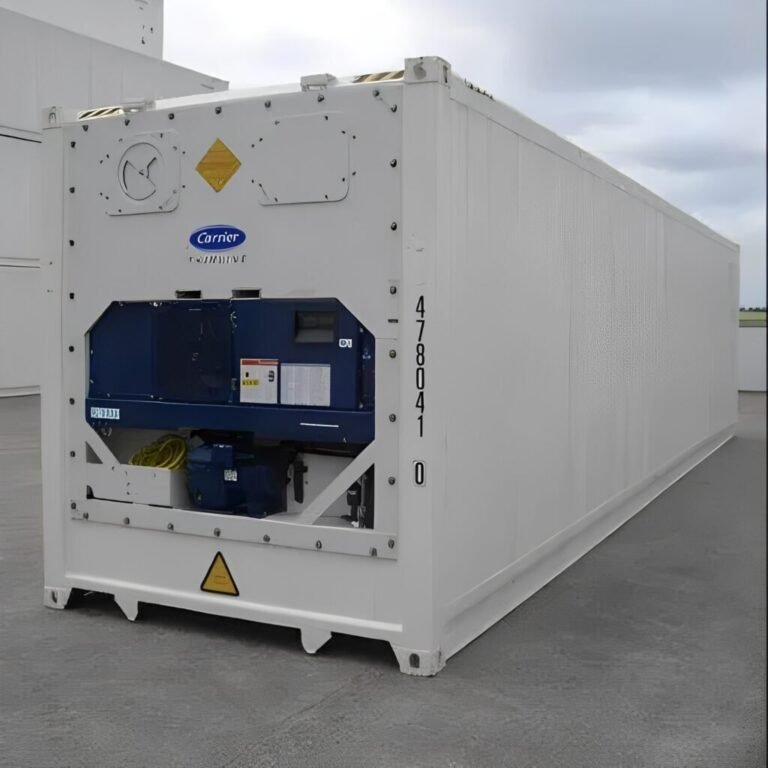
Houston’s used container market includes straightforward purchases of standard 20ft and 40ft units, high cube shipping containers (which add an extra foot of interior height at 9’6″), and modified containers configured as offices, workshops, or climate-controlled storage. Some suppliers also offer container rentals, though buying tends to be more cost-effective for projects lasting longer than 12 months.
Why Location Matters
Shipping container delivery requires specific site conditions. A tilt-bed truck needs roughly 100 feet of straight clearance to offload a 40ft container, and overhead obstructions like power lines or tree branches must clear at least 14 to 15 feet. Houston’s flat terrain is generally favorable for delivery, but flood-prone areas in parts of Harris County require attention to foundation planning. Placing a container on a gravel pad or concrete piers keeps it above potential water accumulation and prevents long-term corrosion on the undercarriage. Lease Lane Containers provides delivery planning support that covers access requirements, turning radius, and placement considerations before your container ships.
Top used shipping containers Options in Houston
Not every buyer needs the same container, and Houston’s large market means you can find units across every price point. Here’s how the options break down by tier.
Budget-Friendly: Wind and Watertight Grade
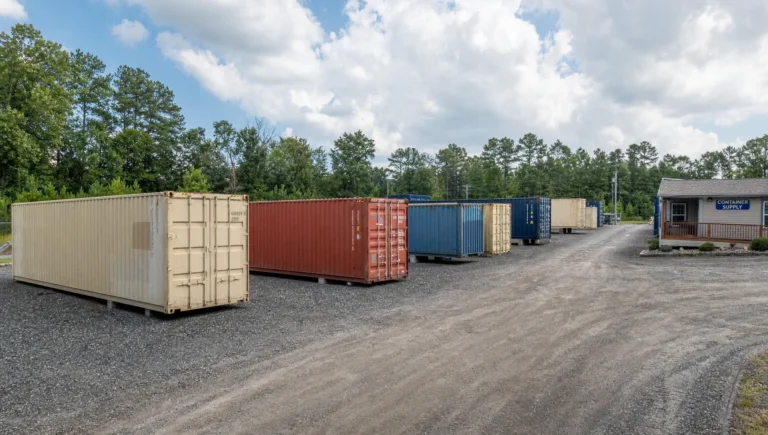
Wind and watertight (WWT) containers are the most affordable option, typically priced between $1,400 and $2,200 for a 20ft unit and $1,800 and $3,000 for a 40ft unit in Houston. These containers show visible wear: surface rust, dents, patched areas, and older paint. The doors may require more effort to open and close. However, they remain structurally sound and keep weather out, which makes them a solid choice for on-site tool storage, agricultural equipment housing, or seasonal inventory overflow.
WWT containers work best for buyers who prioritize function over appearance. If you’re storing hay bales on a ranch in Waller County or keeping landscaping equipment at a job site in Humble, a WWT unit gets the job done at the lowest cost.
Mid-Range: Cargo Worthy Grade
Cargo worthy (CW) containers have been inspected and certified as fit for international ocean transport. In Houston, expect to pay $1,800 to $3,200 for a 20ft CW unit and $2,400 to $4,500 for a 40ft. These containers are in better cosmetic and structural shape than WWT units. Doors seal properly, floors are intact, and the overall condition reflects a container with useful life remaining.
CW containers are the most popular choice for small businesses, contractors, and homeowners who want reliable storage without paying for a near-new unit. If you’re setting up a secure storage solution for a retail operation in the Heights or a contractor staging area near the Energy Corridor, cargo worthy is the sweet spot.
Premium: One-Trip Containers
One-trip containers have made a single voyage from the manufacturing facility (usually in China) to the U.S. They arrive in near-new condition with minimal wear, fresh paint, intact rubber door seals, and clean marine-grade plywood flooring. Pricing in Houston for a 20ft one-trip unit ranges from $3,000 to $4,800, and 40ft units run $4,200 to $6,500.
These containers are the right fit for visible placements, container office conversions, retail pop-ups, or any project where appearance and long-term durability matter. If you’re building a container-based workshop in Montrose or a pop-up retail space near Washington Avenue, one-trip is the grade to specify. You can browse available inventory to compare grades and sizes side by side.
How to Choose the Right used shipping containers in Houston
Buying a used shipping container is straightforward if you know what to evaluate. The wrong purchase usually comes down to misunderstanding condition grades, ignoring site logistics, or skipping basic inspection steps.
Match the Grade to the Job
The single most important decision is matching container grade to your intended use. A wind and watertight unit is perfectly adequate for storing non-sensitive materials. A cargo worthy container works for most general storage and business applications. A one-trip container is worth the premium when the container will be visible to customers, modified into a workspace, or used for a long-term project where condition matters. The right fit depends on your use case, not just your budget.
Questions to Ask Any Supplier
Before purchasing, ask these questions:
- What specific grade is this container, and how was it graded?
- Can you provide photos of the actual unit I’ll receive, not stock images?
- What’s included in the delivery price, and are there additional fees for site conditions?
- What’s the container’s approximate age and shipping history?
- Do you offer any structural warranty or return policy?
A reputable supplier will answer these without hesitation. If a seller can’t tell you the grade or won’t provide actual photos, move on.
Red Flags to Watch For
Avoid suppliers who list containers without specifying a grade. “Used” is not a grade: it’s a vague term that tells you nothing about structural integrity or weather resistance. Be cautious of pricing that seems dramatically below market rates, as this often indicates containers with significant hidden damage, compromised floors, or non-functional doors.
Texas-Specific Considerations
Texas does not require a state-level permit for placing a shipping container on private property for storage purposes. However, Houston and Harris County have local zoning regulations that may apply, particularly in residential areas or within HOA-governed communities. Before purchasing, check with the City of Houston’s Planning and Development Department at (832) 394-8854 or visit their permitting portal online. Buyers outside Houston city limits should contact their county’s building inspection office. In unincorporated Harris County, the Permits Office can be reached at (713) 274-4000.
Houston used shipping containers Market in 2026
The Houston container market in 2026 reflects broader trends in U.S. trade patterns and local economic activity. Several factors are shaping what buyers can expect this year.
Demand Trends
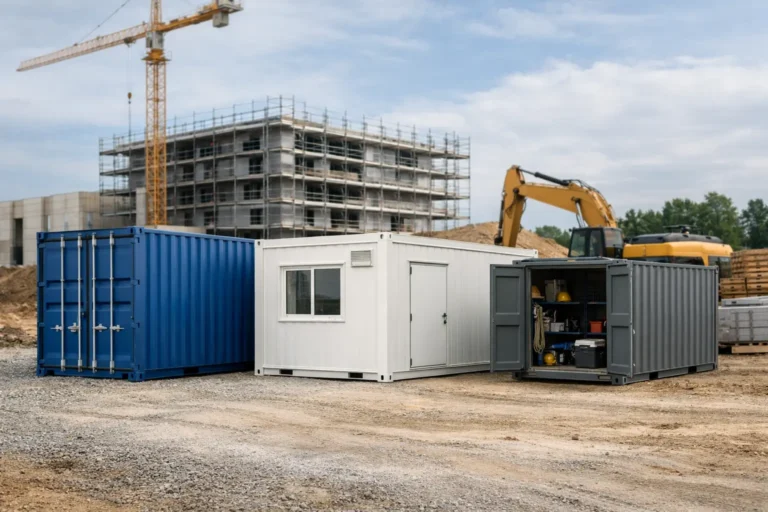
Houston’s construction sector continues to drive strong demand for on-site storage containers. The Texas Workforce Commission reported a 4.2% year-over-year increase in construction employment across the Houston-The Woodlands-Sugar Land metro area through late 2025, and that growth has carried into 2026. More active job sites mean more containers needed for tool storage, material staging, and temporary offices.
Small business demand has also increased. E-commerce operations, particularly those running out of warehouses in the Westchase and Greenspoint areas, are using containers for inventory overflow during peak seasons. Agricultural buyers in surrounding counties like Fort Bend, Brazoria, and Liberty continue to be steady purchasers for equipment and feed storage.
Seasonal Considerations
Container pricing in Houston tends to dip slightly during Q1 (January through March) when demand from construction and agriculture is at its lowest. Prices firm up through spring and summer as outdoor projects ramp up. If you have flexibility on timing, buying in the first quarter can save $200 to $500 on a standard unit.
Hurricane season (June through November) creates a separate demand spike. Buyers in coastal areas of Galveston and Chambers counties often purchase containers for emergency supply storage and equipment protection. This seasonal surge can temporarily tighten inventory at Houston depots.
How Houston Compares to the Rest of Texas
Houston consistently offers the most competitive pricing for used shipping containers in Texas. The Port of Houston’s container volume gives local depots a supply advantage that inland markets can’t match. Buyers in Dallas-Fort Worth typically pay 10% to 20% more for equivalent containers, and Austin buyers often pay even higher premiums due to limited local depot infrastructure. San Antonio falls somewhere in between. If you’re a buyer in Central or North Texas, it can sometimes be more cost-effective to purchase from a Houston depot and pay for longer-distance delivery than to buy locally at a higher unit price.
Houston used shipping containers FAQ
How much does a used shipping container cost in Houston?
A 20ft wind and watertight container starts around $1,400 to $2,200. Cargo worthy 20ft units run $1,800 to $3,200. For 40ft containers, add roughly $600 to $1,300 to those ranges depending on grade. One-trip containers command a premium but arrive in near-new condition. Local delivery within the Houston metro typically adds $150 to $400 to the total cost.
Do I need a permit to put a shipping container on my property in Houston?
For residential properties within Houston city limits, you may need a building permit if the container is being used as a permanent structure or if modifications are being made. For temporary storage on commercial or industrial-zoned property, permits are generally not required. Always verify with the City of Houston’s Planning and Development Department, especially if your property falls within an HOA or a deed-restricted community.
How long does delivery take in the Houston area?
Most suppliers can deliver within 3 to 10 business days after payment and order confirmation. Locations inside the 610 Loop or within Beltway 8 typically receive faster service. Deliveries to outlying areas like Conroe, Galveston, or Wharton may take slightly longer. Site readiness is the most common cause of delays: make sure your placement area is level, accessible, and free of overhead obstructions before scheduling delivery.
What should I inspect on a used shipping container before buying?
Focus on five areas: doors (do they open, close, and seal properly?), flooring (check for soft spots, water damage, or holes in the marine-grade plywood), roof (look for rust-through or patches that may leak), walls (minor dents are cosmetic, but deep creases or holes compromise structural integrity), and the undercarriage (check cross-members for excessive rust or corrosion). If you’re buying remotely and can’t inspect in person, request detailed photos of all four sides, the interior, the roof, and the undercarriage.
Can I get a container delivered to a rural property outside Houston?
Yes. Most suppliers deliver well beyond the Houston metro area. The key consideration is site access: a delivery truck needs a firm, relatively flat surface and enough room to maneuver. For rural properties off unpaved roads, confirm with your supplier that the access road can support a loaded truck (approximately 10,000 to 12,000 lbs for a 40ft unit on a tilt-bed). Lease Lane Containers provides delivery planning guidance that walks through access requirements for different property types.
Get used shipping containers in Houston Today
If you’ve read this far, you have a clear picture of what the Houston market offers and how to make a smart purchase. Here’s how to move forward efficiently.
Start by defining your use case and the grade that matches it. If you’re storing tools and materials on a construction site, cargo worthy is likely your best value. If you’re building a container office or a customer-facing space, one-trip is worth the investment. For basic agricultural or overflow storage, wind and watertight gets the job done.
Next, confirm your site is ready. Measure the placement area, check overhead clearance (minimum 14 to 15 feet for tilt-bed delivery), and ensure the delivery truck has a straight approach of at least 100 feet for a 40ft container. Prepare a level foundation: a compacted gravel pad of at least 4 inches depth is the most common and cost-effective option for Houston’s clay-heavy soil.
Then, request quotes from suppliers who can provide specific container grades, actual unit photos, and transparent delivery pricing. Compare at least two to three options before committing.
Houston buyers are in a strong position. The port city’s container supply keeps pricing competitive, and the flat terrain simplifies delivery logistics. The difference between a good purchase and a frustrating one almost always comes down to preparation: knowing your grade, prepping your site, and choosing a supplier who communicates clearly.
Final Checklist
- Define your use case: storage, workspace, retail, agricultural, or project-based
- Select the appropriate grade: wind and watertight, cargo worthy, or one-trip
- Confirm shipping container dimensions: 20ft vs. 40ft, standard height vs. high cube (9’6″)
- Check local zoning and permit requirements with Houston or your county’s planning office
- Measure site access: turning radius, overhead clearance, ground conditions
- Prepare a level foundation: gravel pad, concrete piers, or railroad ties
- Request actual photos and grade documentation from your supplier
- Compare quotes from at least two to three suppliers
- Schedule delivery only after site prep is complete
- Inspect the container upon delivery: doors, floor, roof, walls, undercarriage
Lease Lane Containers, based in Raleigh, North Carolina, delivers shipping containers nationwide, including to the Houston metro and surrounding Texas counties. If you’re comparing sizes, grades, and pricing, browse our inventory to see what’s currently available. Have questions about site prep, delivery access, or which grade fits your project? Contact us and our team will walk you through the details before you commit.