Shipping Container Delivery Costs Explained
A container quote can look straightforward until delivery is added. That is where most buyers start asking the right questions. If you are comparing vendors, shipping container delivery costs explained in plain terms can save you from the most common problem in this industry – a low product price paired with expensive, avoidable delivery complications.
Delivery pricing is not random, and it should not feel vague. The final number usually comes down to distance, container size and weight, the type of truck required, how difficult the site is to access, and whether the container can be placed safely on the first attempt. For contractors and business owners, that affects scheduling and labor. For homeowners, it often determines whether the project stays within budget.
What actually drives container delivery pricing
The first major factor is mileage. A container may be stocked in a local yard, a regional depot, or a port-adjacent inventory location. The farther the truck has to travel, the more you should expect to pay. That part is simple.
The less obvious factor is equipment time. A standard highway run with easy drop-off access costs less than a delivery that requires extra maneuvering, a return visit, or specialized placement equipment. Delivery companies price risk and complexity, not just miles.
Container dimensions also matter. A 20ft container is generally easier and less expensive to deliver than a 40ft or 45ft unit because it gives the driver more flexibility on tighter sites. High-cube containers add height, which can create clearance concerns near trees, utility lines, carports, and low branches. Reefer containers are heavier and may need more planning because of their flooring and machinery weight. Open-top and tunnel containers can also affect handling depending on the chassis and unloading setup.
Condition can influence cost indirectly. A one-trip container is usually cleaner and more uniform in appearance, but that does not automatically change delivery cost. What can change it is whether the container grade matches the use case. For example, if a customer buys a used unit for a visible retail setup and later decides appearance matters more than expected, the cost of swapping or repositioning the container can become part of the project expense. Clear grading upfront helps prevent that.
Shipping container delivery costs explained by delivery method
Not every container arrives the same way. The delivery method is one of the biggest price variables, and it is often overlooked when buyers compare quotes.
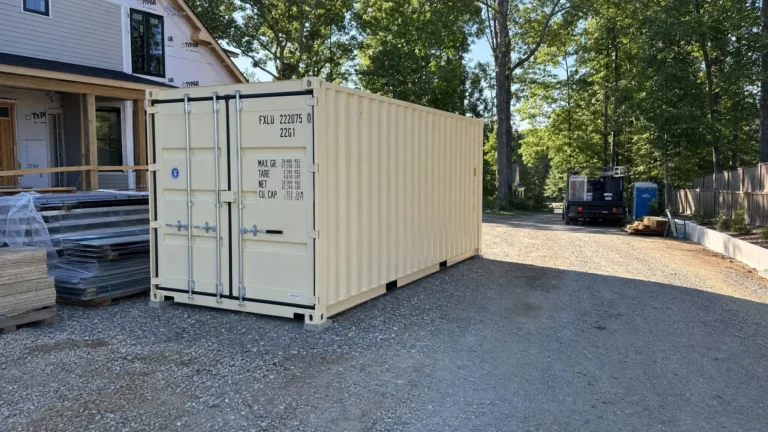
A tilt-bed delivery is common for 20ft and many 40ft containers. The truck bed tilts and the container slides off onto the site. This is usually the most efficient option when there is enough straight-line space for the truck to pull forward as the container is unloaded. It is often the preferred method for ground placement because it reduces the need for cranes or forklifts.
Ground-level delivery sounds simple, but it still depends on proper access and level footing. The truck needs room to align, unload, and exit without getting stuck or damaging the site. If the property is soft, recently graded, muddy, or sloped, the driver may not be able to complete the drop safely. In that case, you may face a redelivery charge.
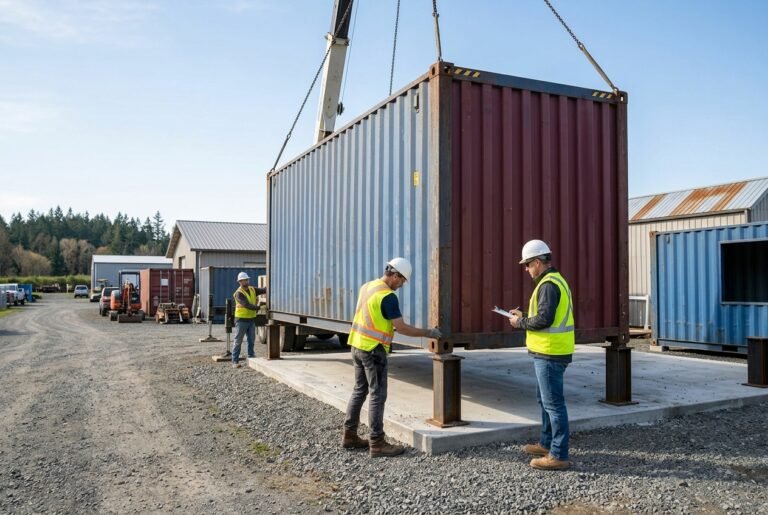
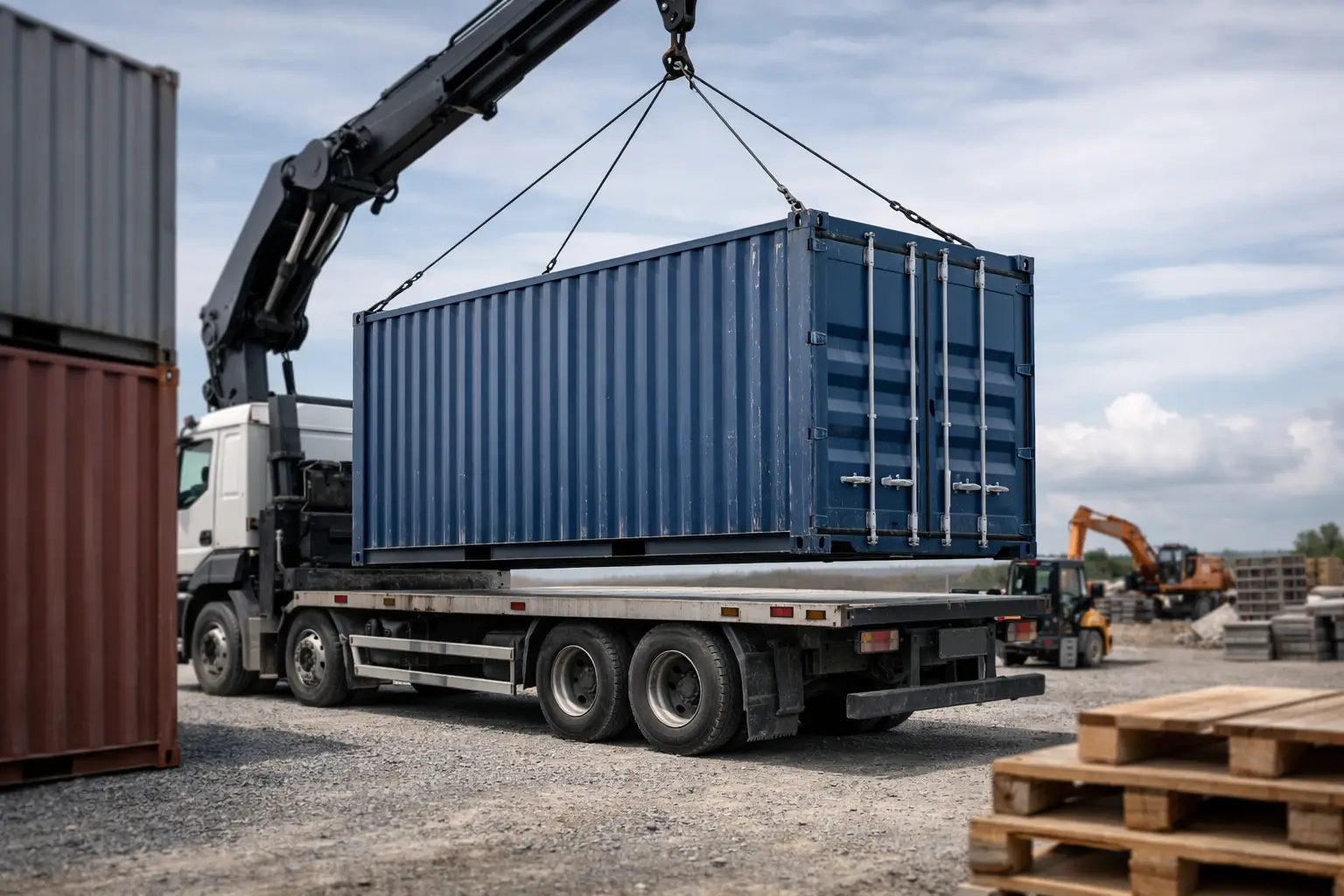
For more complex projects, a crane, forklift, or other lifting equipment may be needed. That is common when the container must be placed behind a structure, set into a tight commercial yard, or installed as part of a modular build. Specialized placement adds cost quickly, but sometimes it is the only practical choice.
This is why a delivery quote should specify more than “delivery included.” It should identify the equipment assumptions behind the price.
The site conditions that create surprise charges
Most extra fees are not caused by the road. They are caused by the last 100 feet.
A delivery site needs enough clearance in width, height, and turning radius for a loaded truck. Narrow gates, low tree limbs, overhead wires, soft shoulders, and steep driveways are all common problems. A 40ft container delivery, in particular, needs substantial room because the truck and container together require a long, straight approach.
Ground conditions matter just as much. Containers are heavy even before they are loaded with your materials. If the truck sinks into soft soil, the delivery may have to be aborted. Gravel, compacted stone, concrete, or other stable surfaces are typically better choices than bare dirt, especially after rain.
Level placement is another issue that buyers underestimate. Containers are designed with structural strength at the corner castings. If the site is badly out of level, doors can bind, the frame can twist under stress, and future use becomes frustrating. Sometimes customers focus only on getting the container delivered cheaply, then end up paying more to correct drainage or leveling later.
Good vendors ask for site photos for a reason. They are trying to confirm truck access, placement room, and safety before dispatching equipment. That step protects the customer as much as the carrier.
What a delivery quote should include
If you want clear pricing, ask for a quote that separates the container price from the delivery charge. That makes comparisons more accurate and helps you understand what is fixed versus what depends on the site.
The quote should state the container size, grade, and type, along with the assumed delivery method. It should also note whether the price covers a standard drop only or includes specific placement needs. If there are possible extra charges for waiting time, failed delivery attempts, difficult access, or equipment upgrades, those should be disclosed upfront.
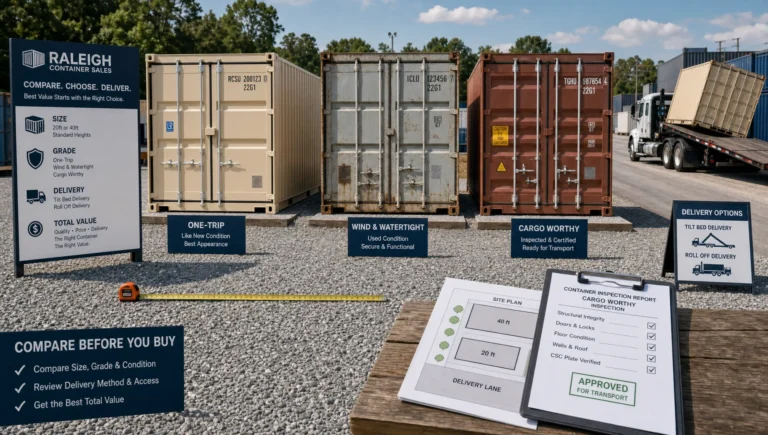
This is especially important for buyers ordering Wind & Watertight or Cargo Worthy units for job-site storage. Those grades describe condition and utility, not delivery simplicity. A structurally sound container can still be expensive to place if the site is not ready.
Transparent providers will usually ask a few practical questions before finalizing the number. Can a full-size truck enter and turn around? Is the site level? Are there overhead obstructions? Do you need doors facing a certain direction? Those details are not sales friction. They are part of getting the container delivered once, correctly.
How to reduce delivery costs without cutting corners
The best way to control cost is to match the container and the delivery method to the site from the beginning. That may mean choosing a 20ft unit instead of a 40ft if access is tight, or selecting a placement area that gives the driver a straighter approach.
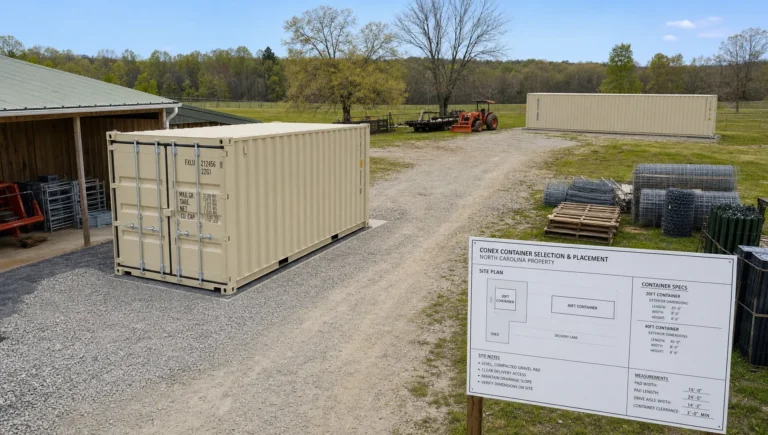
Site preparation has a direct payoff. Trimming branches, widening a gate opening, compacting the pad, and marking the exact drop location can prevent delays and redelivery fees. For contractors, this should be treated like any other logistics step on a job site. For homeowners, it is often the difference between a one-trip delivery and a problem that turns into multiple service charges.
Timing can matter as well. If a delivery is scheduled during wet weather or before grading is complete, the lower initial quote may not stay low for long. It is better to wait a few days than to force a truck onto an unprepared surface.
There is also value in choosing a vendor that understands both container inventory and placement logistics. Companies that regularly coordinate tilt-bed and ground-level deliveries tend to catch issues earlier. In markets such as Raleigh and the broader Southeast, where jobs may range from suburban residential lots to active construction sites and rural acreage, local route knowledge can make the planning process more accurate.
A realistic range for shipping container delivery costs
There is no single nationwide flat rate because every route and site is different, but most delivery charges fall into a broad range based on distance and complexity. A short local delivery with easy access will usually cost much less than a long-distance delivery or a difficult placement requiring extra equipment.
That is why extremely low advertised prices deserve a second look. Sometimes they reflect a basic yard pickup assumption rather than true door-to-site delivery. Sometimes they leave out placement details that later show up as added charges. The right question is not just “What does delivery cost?” but “What exactly does this delivery price cover?”
For many buyers, the lowest quote is not the lowest total cost. A slightly higher upfront delivery charge from a provider that verifies access, confirms equipment needs, and explains grading clearly can save money by preventing failed drops, schedule delays, and container mismatches.
When delivery is priced correctly, it should feel predictable. You know what truck is coming, what the site needs to look like, where the container will sit, and what could change the cost before the order is placed. That is the standard serious buyers should expect.
If you are planning a container purchase, the smartest move is to treat delivery as part of the product, not an afterthought. The container itself may be built from durable Corten steel and engineered to ISO standards, but the value only shows up once it is on your site, level, accessible, and ready to work. Clear delivery planning is what gets you there with no fine print and no surprises.