Reefer Container vs Dry Container
A lot of container buyers ask the same question only after delivery is already on the schedule: should this have been a reefer or a standard box? When you compare reefer container vs dry container options early, you avoid the costly mismatch of buying insulation, electrical work, or interior modifications you did not actually need.
For contractors, growers, retailers, and property owners, the difference is not just temperature control. It affects purchase price, floor height, interior width, usable cubic space, site prep, and ongoing operating cost. A dry container is the default choice for secure, weather-resistant storage. A reefer container is a specialized unit built for temperature-sensitive cargo, and it brings extra equipment, insulation, and power requirements with it.
Reefer container vs dry container: the core difference
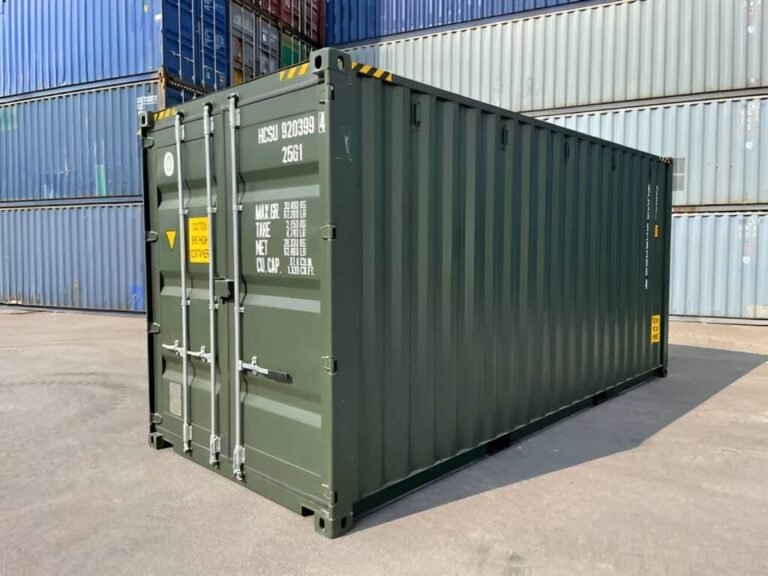
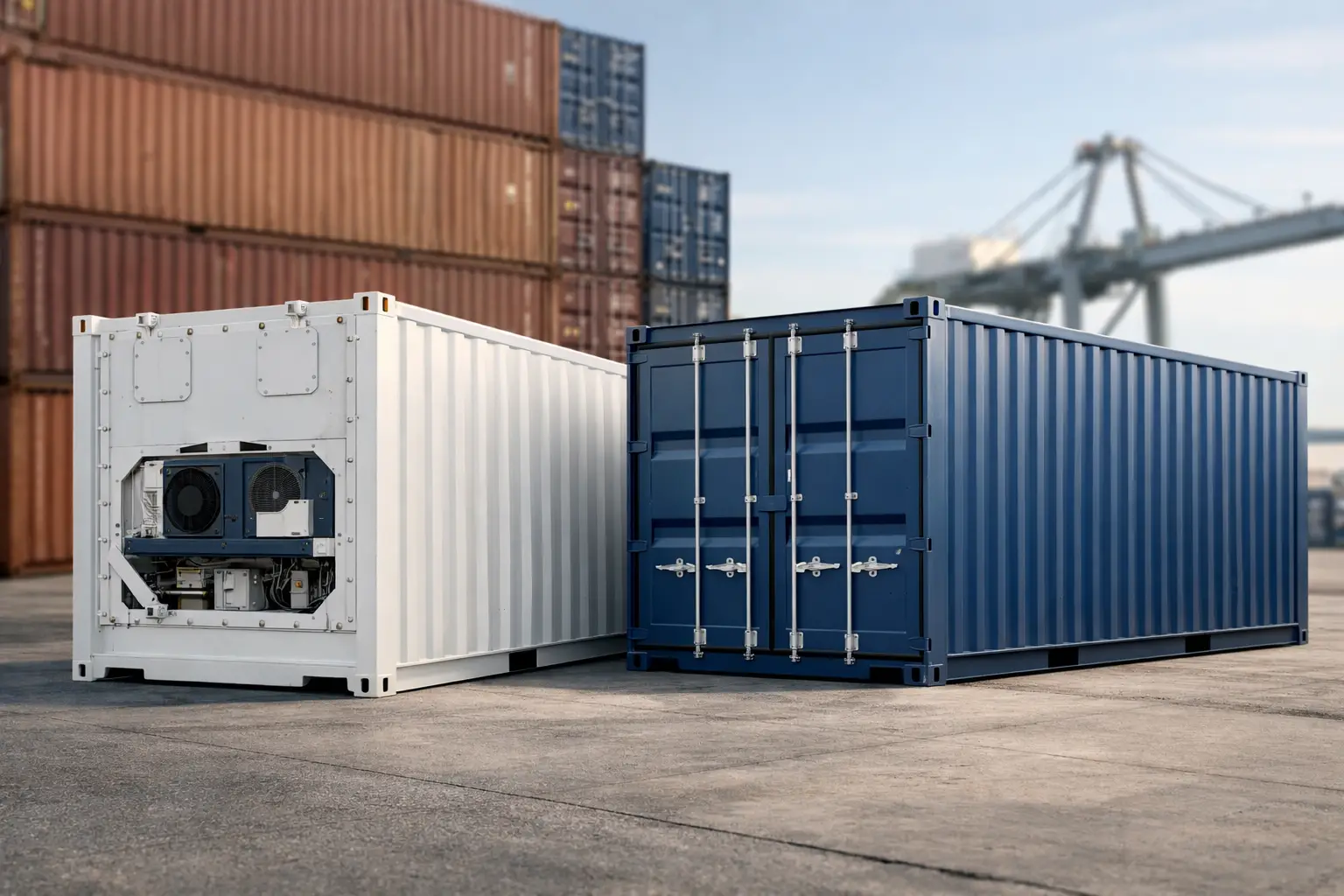
A dry container is the standard steel shipping container most buyers picture first. It is designed for general cargo and on-site storage. These units rely on Corten steel construction, tight door seals, and a durable marine-grade floor to keep contents protected from weather and theft. In the storage market, dry containers are often sold in one-trip, Cargo Worthy, or Wind & Watertight grades depending on condition and intended use.
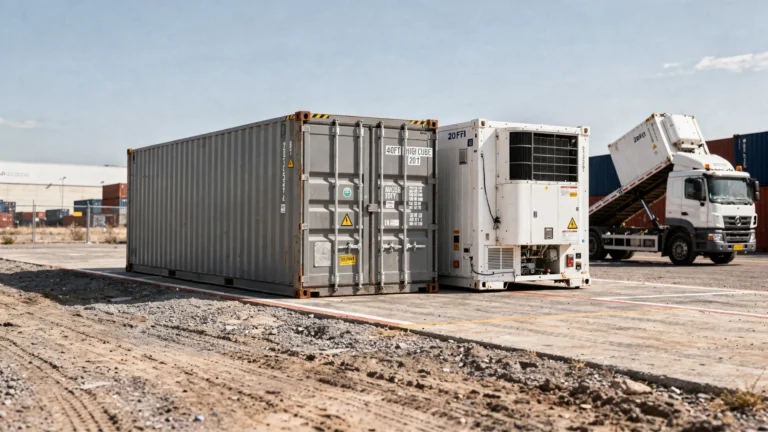
A reefer container starts with a different purpose. It is an insulated container with an integrated refrigeration unit, often mounted at one end, designed to maintain a controlled internal temperature during transit or stationary use. The walls, ceiling, and doors are insulated, and the floor is typically built to support airflow under cargo. That insulation remains valuable even if the cooling unit is no longer in service.
So when people frame reefer container vs dry container as a simple cold versus non-cold choice, they miss part of the decision. A reefer is also a more complex piece of equipment. A dry container is simpler, easier to place, and usually cheaper to own.
When a dry container is the better fit
For most job-site storage, equipment protection, tool lockup, and general inventory overflow, a dry container is the right answer. If your main concern is security, structural integrity, and weather protection, paying for refrigeration hardware rarely makes sense.
Dry containers are widely used by construction firms because they are straightforward to deploy. You can place them on a level gravel, asphalt, or concrete surface, load them immediately, and avoid utility hookups. There is no refrigeration unit to inspect, no specialized electrical service to plan around, and fewer components that can fail over time.
They also tend to offer more practical interior storage geometry. Because a reefer has insulated walls and machinery, the usable interior dimensions are usually tighter than a comparable dry unit. If you are storing pallets of materials, shelving, ladders, fixtures, or equipment cases, those inches matter.
For homeowners and rural property owners, dry containers also make sense when the goal is long-term storage for tools, furniture, seasonal equipment, or workshop overflow. If you want a container shell for a future conversion, a standard dry box often gives you a cleaner starting point with fewer mechanical systems to work around.
When a reefer container makes sense
A reefer container earns its keep when temperature control is not optional. That includes food products, floral goods, pharmaceuticals, certain chemicals, agricultural products, and any inventory that can lose value if exposed to heat or freezing conditions.
But there is a second category of reefer buyer that matters in the storage market: customers who want insulation more than active cooling. A reefer can work well for applications where interior temperature swings need to be reduced, even if the refrigeration unit is not running full time. This can include chocolate storage, candle inventory, certain electronics, or materials affected by humidity and extreme heat.
Some buyers also choose retired reefers for custom builds because the insulated shell helps create a more stable interior environment. For mobile offices, specialty workshops, or pop-up retail concepts, the insulated interior can reduce the amount of additional build-out required. That said, reefer interiors are usually stainless steel and aluminum rather than the simpler plywood-and-steel interior of a dry container, so modifications can be a different kind of project.
Cost is not just the purchase price
The biggest mistake in a reefer container vs dry container comparison is looking only at the initial price tag. A dry container usually costs less to buy and much less to operate. Once it is delivered and set in place, your costs are mostly tied to the container grade, the delivery method, and the site conditions.
A reefer often comes with several layers of additional cost. The unit itself is more specialized. If the refrigeration system needs to run, you need appropriate power at the site. That may mean electrical upgrades, permitting, disconnects, and ongoing utility expense. If the cooling system needs service, that is another line item. Even if you buy a non-working reefer strictly for insulated storage, you still may pay more up front than for a dry box.
This is where transparent specifications matter. A buyer should know whether the reefer unit is tested and operational, whether it is being sold as an insulated shell only, and what power requirements apply. Clear pricing matters just as much on the dry side, especially when comparing one-trip versus used inventory.
Insulation, flooring, and interior space
On paper, a reefer can look like the premium option because it is insulated. In practice, that insulation comes with trade-offs. The thicker walls reduce interior dimensions. The refrigeration machinery takes up space at one end. The floor is often designed for air circulation, which is helpful for refrigerated cargo but may not be ideal for every storage use.
A dry container is more basic, but basic is often exactly what buyers need. It gives you maximum usable width for shelving, pallet access, and bulky items. Its floor is generally better suited to straightforward storage of tools, building materials, and household goods.
If your use case involves framing out an interior, the decision depends on your priorities. A dry container may need added insulation if you are converting it into conditioned space. A reefer starts insulated, but working around its interior finish and machinery can make customization more involved.
Delivery and placement considerations
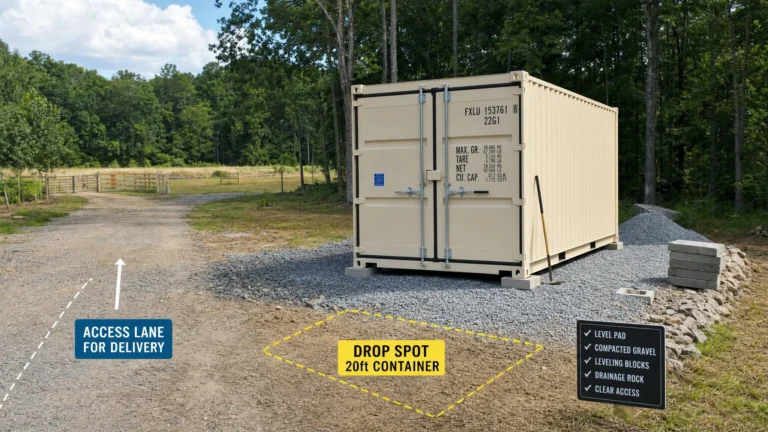
Both container types require proper site prep, but reefers deserve a little more planning. A level, stable surface is always important for door operation and long-term structural performance. With a reefer, you also need to think about airflow around the refrigeration unit, access for service, and electrical proximity if the unit will be active.
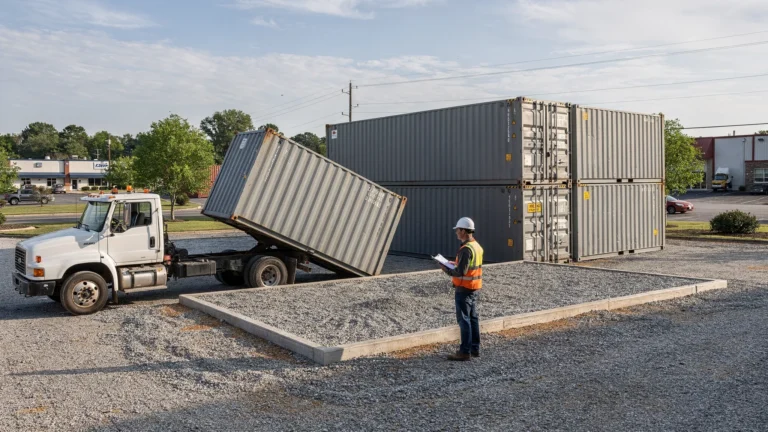
Dry containers are generally easier to drop and use right away. For contractors managing tight schedules, that simplicity matters. A tilt-bed or ground-level delivery can often place the unit exactly where it is needed with minimal coordination beyond clear access and a prepared surface.
This is one reason many buyers choose dry units even when they briefly considered reefers. The less complicated the setup, the fewer surprises on delivery day.
Which container works best by use case?
For construction storage, dry containers are usually the clear winner. They protect tools and materials, they are durable, and they do not add unnecessary operating costs.
For farms and agricultural operations, it depends on what you are storing. Feed, tools, fencing supplies, and equipment parts usually belong in a dry container. Produce, seed stock with temperature limits, or products sensitive to heat may justify a reefer.
For retail overflow and event-based inventory, dry containers work well for general stock and fixtures. A reefer becomes relevant when products are temperature-sensitive or when an insulated environment supports product quality.
For custom modular uses, either can work. The better choice depends on whether you value a simpler shell or an insulated starting point.
How to make the right call
If your priority is secure, cost-effective storage with no utility dependency, choose a dry container first and only move away from it if your cargo truly demands temperature control or insulation. If your inventory has a narrow temperature tolerance, a reefer is not a luxury item. It is the right piece of equipment.
The smartest buyers ask a few practical questions before they commit. Do you need active cooling, or just a more stable interior? Will the container sit at a job site with no power available? Are you maximizing interior storage space, or building out a conditioned workspace? Are you buying for short-term use, or for years of service?
Those answers usually narrow the field quickly. A good container supplier should be able to explain grades, dimensions, power needs, and delivery constraints in plain terms, with no fine print and no surprises.
If you are still undecided, lean toward the container that solves the actual problem in front of you, not the one that sounds more specialized. In container storage, the best choice is usually the one that does the job reliably without adding complexity you will pay for later.