Shipping Container Pool Cost: Budgeting Beyond the Shell
Shipping container pool cost is often misunderstood because the most visible part of the project, the steel container, is only one line item. The shell matters, but a safe, comfortable pool also requires engineering, reinforcement, waterproofing, plumbing, electrical work, equipment, delivery access, permits, and a prepared site.
For homeowners in Raleigh, North Carolina, and across the Southeast, the right way to budget is not “How much is a container?” It is “What will the completed, code-compliant pool cost once the container is delivered, modified, supported, and ready to use?”
That distinction can save you from expensive surprises.
The shell is not the pool
A shipping container is an incredibly strong structure when used the way it was designed: carrying freight through intermodal transport. Standard ISO containers rely on Corten Steel walls, rails, corner posts, and corner castings to transfer loads through the frame. They are built around ISO standards for stacking, lifting, and transport, not around holding thousands of gallons of water after large sections have been cut away.
Water is heavy. One gallon weighs about 8.34 pounds, which means even a compact plunge pool can place tens of thousands of pounds on the container and its foundation. When a contractor cuts out the roof, adds windows, lowers walls, or opens the side, the shell loses some of its original stiffness. That is why the fabrication and engineering budget often exceeds the container purchase price.
A container pool budget should account for:
- The container shell and condition grade
- Delivery and offloading
- Structural reinforcement
- Waterproofing or pool lining
- Plumbing, pump, filtration, and optional heating
- Electrical service and bonding
- Foundation, drainage, and access work
- Permits, engineering, fencing, and final inspections
- Decking, stairs, landscaping, and safety features
If a quote only covers the container, it is not a pool quote. It is a shell quote.
Typical shipping container pool cost ranges in 2026
Every project is site-specific, but a useful planning range for a finished shipping container pool in the U.S. is often $35,000 to $100,000+. Simple above-ground plunge pools can land toward the lower end if the site is accessible and the design is modest. Fully custom 40ft pools with premium finishes, heaters, decking, glass panels, and complex crane placement can exceed six figures.
Here is a practical budgeting framework.
| Cost category | Planning range | What affects the number |
|---|---|---|
| Container shell | $2,500 to $8,500+ | Size, grade, availability, High Cube option, one-trip vs. used condition |
| Delivery and placement | $500 to $3,000+ | Distance, Raleigh-area access, tilt-bed vs. crane, site constraints |
| Structural fabrication | $10,000 to $35,000+ | Cutouts, bracing, stairs, window panels, reinforcement, welding complexity |
| Waterproofing and lining | $5,000 to $20,000+ | Fiberglass, liner systems, coatings, surface prep, warranty requirements |
| Pool equipment | $4,000 to $15,000+ | Pump, filter, plumbing, heater, salt system, automation, equipment pad |
| Foundation and site work | $3,000 to $20,000+ | Excavation, grading, concrete, drainage, soil conditions, retaining work |
| Permits and professional fees | $1,000 to $8,000+ | Engineering, surveys, zoning review, pool permit requirements |
| Decking, fencing, and finish work | $5,000 to $30,000+ | Code-compliant barriers, stairs, rails, lighting, landscaping, hardscape |
These are planning ranges, not a substitute for a formal contractor quote. In Raleigh, Wake County, and surrounding North Carolina communities, local soil conditions, access, HOA rules, and inspection requirements can materially change the final cost.
The key takeaway: the container may represent only 5% to 20% of the finished project budget.
Choosing the right container grade for a pool conversion
Container grade has a direct impact on fabrication time, repair work, and the long-term quality of the build. At Lease Lane Containers LLC, we explain grades clearly because the words “used container” can mean very different things.
| Grade | What it means | Pool conversion fit |
|---|---|---|
| One-Trip | A container that has typically made one loaded voyage and is close to new condition, with fewer dents and cleaner coatings | Best starting point for premium pool conversions and visible backyard projects |
| Cargo Worthy, or CW | Structurally fit for cargo transport, often with a valid CSC plate when certified for export use | Possible fit if professionally inspected and structurally sound, but expect more cosmetic wear |
| Wind & Watertight, or WWT | Keeps out wind and rain for stationary storage, but is not necessarily certified for shipping | Usually a budget storage grade, not the first choice for pool fabrication unless thoroughly evaluated |
A one-trip container usually costs more upfront, but it can reduce rework. Cleaner Corten Steel panels, better factory coatings, less corrosion, and more predictable dimensions make it easier for fabricators to cut, weld, and line the shell. If the pool will sit in a visible backyard, short-term rental property, boutique lodging site, or customer-facing recreation area, the cleaner starting condition often pays for itself.
A Cargo Worthy container may be suitable when the project team wants a lower shell cost but still needs a structurally credible frame. Cargo Worthy units are typically inspected for transport suitability, including structural components such as corner posts, rails, floors, doors, and corner castings. If you are comparing CW options, review our guide to Cargo Worthy container standards before you buy.
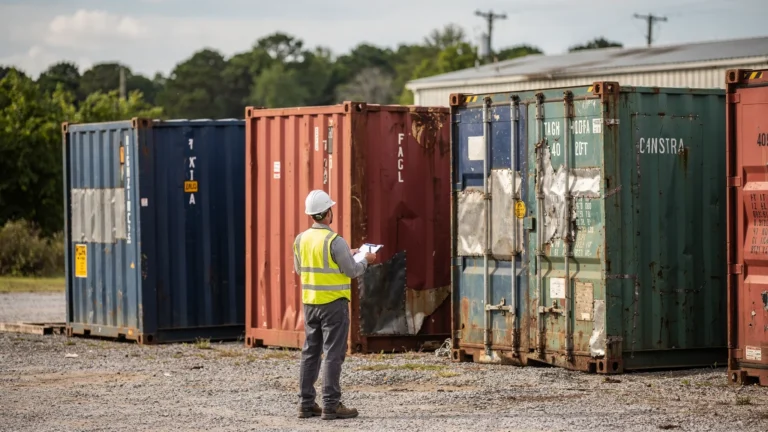
A WWT container can be excellent for ground-level storage, jobsite equipment, farms, and inventory overflow. For a pool, however, the lower purchase price may be offset by corrosion repairs, unknown prior cargo exposure, floor replacement, and added prep work. If you are looking at used containers, ask for clear photos of the roof, walls, underside, floor, corner posts, and door end before committing.
20ft, 40ft, or High Cube: how size changes the budget
Most container pool concepts start with either a 20ft or 40ft unit. Each has a different cost profile.
A 20ft container pool is often used as a plunge pool, spa-style pool, or compact backyard feature. The shell is easier to move, easier to place on tighter residential lots, and usually requires less water volume. If access is limited in a Raleigh neighborhood, a 20ft unit may also be more realistic for tilt-bed delivery. For baseline shell pricing, see our guide to 20ft shipping container price expectations.
A 40ft container pool offers more length for swimming, a stronger visual statement, and more flexibility for benches, steps, and integrated equipment areas. The tradeoff is increased water weight, more reinforcement, more lining area, larger equipment, and a more demanding delivery plan. Review 40ft container cost factors before assuming the larger shell is only slightly more expensive.
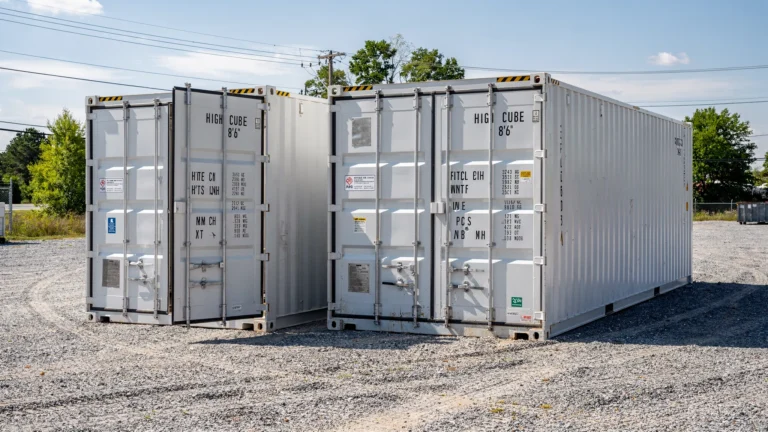
A High Cube container adds one foot of exterior height compared with a standard container, usually 9ft 6in instead of 8ft 6in. That extra height can help certain designs, especially if the pool is partially buried or if the project includes a mechanical space. But for many pool builds, the extra depth must be cut down or managed with internal framing, which can increase fabrication cost. Learn more about High Cube dimensions and door specs if you are comparing standard and High Cube shells.
The fabrication costs most buyers underestimate
The biggest budget mistake is assuming a shipping container can simply be sealed and filled with water. A container pool is a structural modification project.
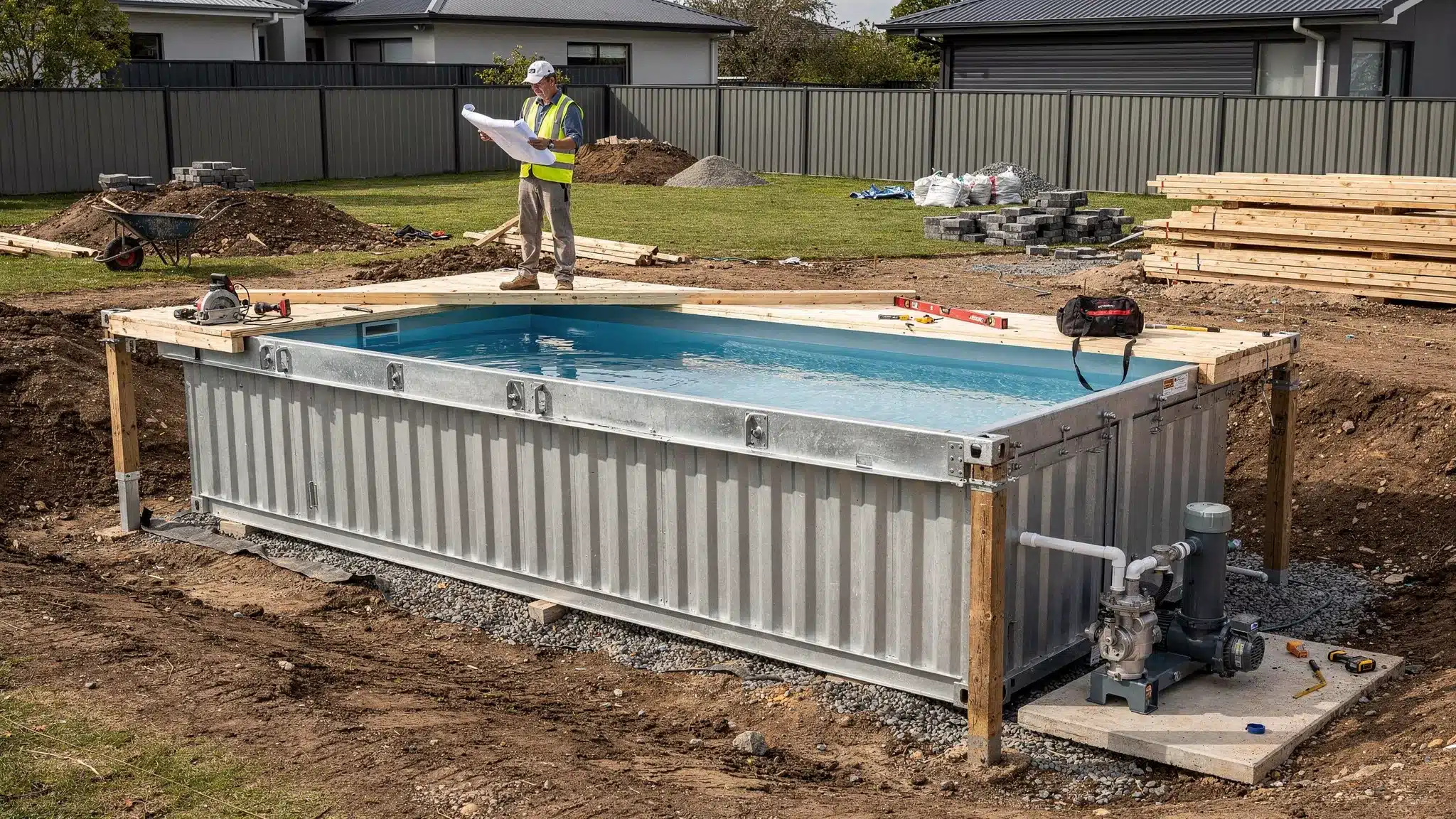
When the roof is removed, the walls may need to be braced to resist outward pressure. If one long side is lowered for a modern pool profile, the remaining structure may need new steel members. If glass viewing panels are added, the frame around the panel must be designed and fabricated carefully. Stairs, benches, skimmer openings, returns, drains, and access panels all introduce cuts that need reinforcement and corrosion protection.
The pool interior also needs a durable water barrier. Corten Steel is valued because it develops a protective patina in atmospheric exposure, but that does not mean bare container steel should be continuously submerged. Pool water chemistry, chlorination, salt systems, abrasion, and trapped moisture can accelerate corrosion if the lining system is not properly specified and installed.
Common approaches include fiberglass interiors, specialized coatings, membrane liners, or custom fabricated inserts. Each has different costs, maintenance needs, and warranty conditions. The cheapest lining option is not always the best value if it shortens the pool’s service life.
Permits, codes, and safety requirements
Container pools often trigger the same permitting concerns as conventional pools. Depending on your jurisdiction, that may include structural review, electrical permits, pool barrier requirements, setbacks, drainage rules, and inspections.
In Raleigh and the broader Triangle area, homeowners should check requirements before ordering the shell. Rules can vary between the City of Raleigh, Wake County, nearby municipalities, and HOA-governed communities. A property outside city limits may still be subject to county building requirements, environmental rules, or neighborhood covenants.
Do not assume a container pool avoids pool regulations because it is “portable” or “above ground.” Once it is connected to utilities, placed on a foundation, decked, fenced, or used as a permanent recreational structure, local officials may treat it as a pool installation.
For commercial sites, short-term rental properties, hospitality venues, and multifamily developments, the review process can be more detailed. Accessibility, occupancy, signage, lighting, fencing, and liability requirements may all affect the budget.
Delivery and placement can change the entire project
A container pool shell is much heavier and more complex to place after modifications. Some buyers choose to deliver the unmodified container first and fabricate on site. Others have the pool fabricated off site and delivered as a finished unit. Each approach affects cost and risk.
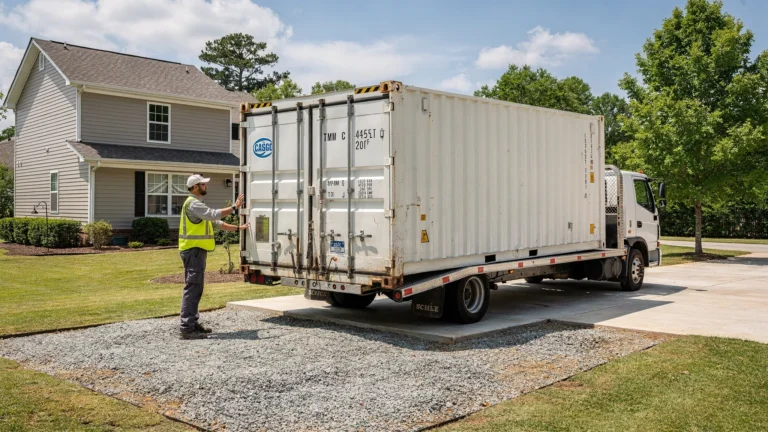
Delivering an unmodified ISO container is typically simpler. A 20ft or 40ft shell can often be placed by tilt-bed truck if the site has adequate straight-line clearance, stable ground, and overhead space. A finished pool shell may require a crane, spreader bar, or specialized rigging because coatings, plumbing, and interior finishes can be damaged by improper handling.
Before you budget, confirm:
- Whether the shell will be delivered before or after fabrication
- Whether a tilt-bed, flatbed, crane, or telehandler is needed
- Whether the driveway can support delivery equipment
- Whether trees, power lines, fences, slopes, or soft soil create access problems
- Whether the pool location allows equipment servicing after installation
For more detail on clearance, turning space, and drop-zone planning, use our guide to shipping container delivery requirements.
Pro-Tip: prepare the site before you price the pool
A container pool budget is only as accurate as the site plan behind it. Before you request final numbers, mark the proposed pool footprint, measure access from the street, photograph the route, and identify overhead obstructions. In much of the Southeast, including Raleigh, clay soils and heavy rain can create drainage and settlement issues if the base is not designed correctly.
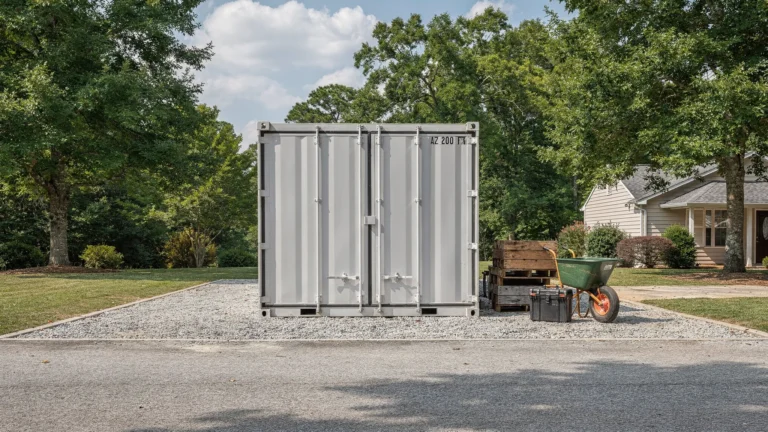
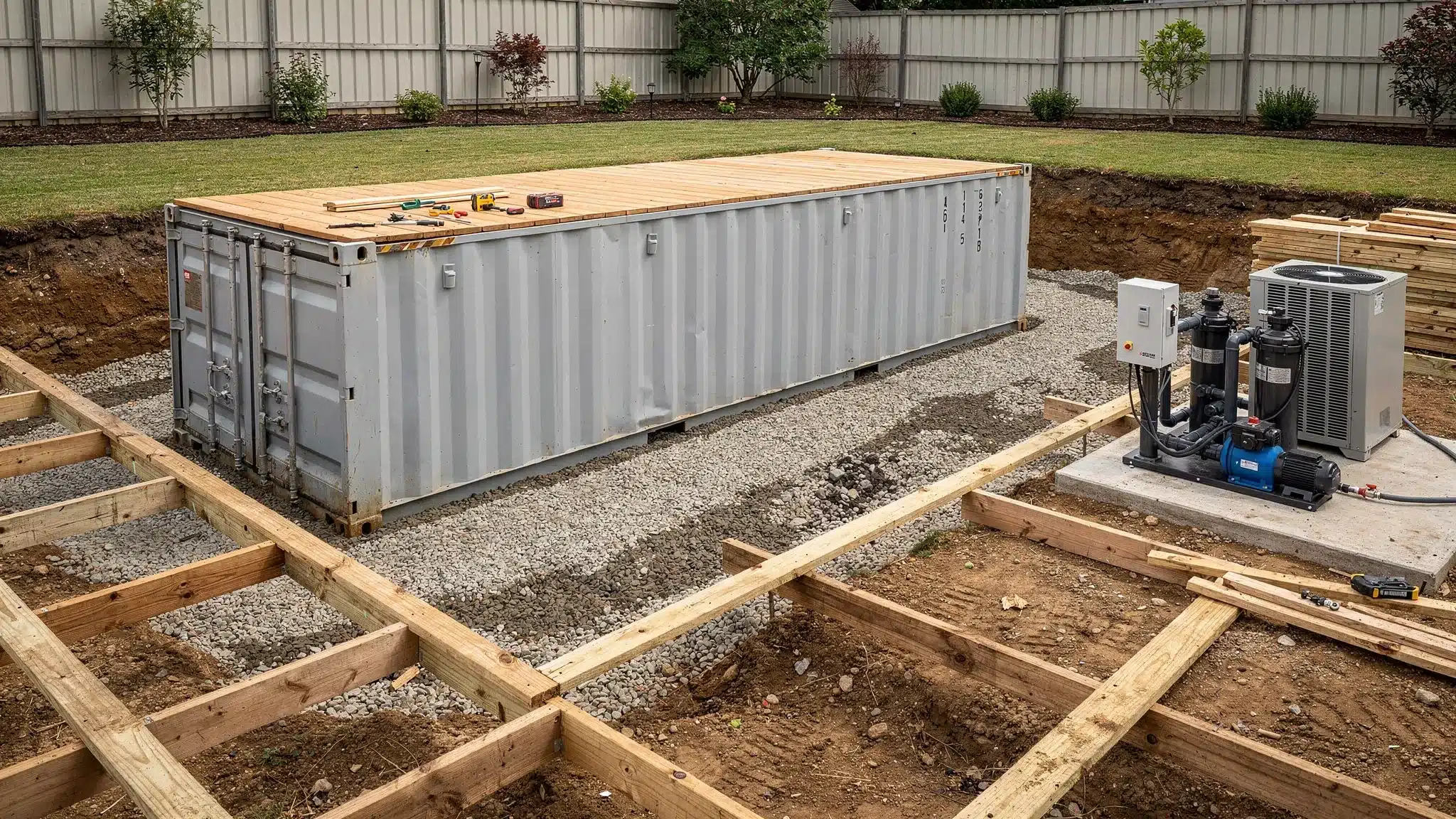
For a storage container, a compacted gravel pad with proper corner support may be enough. For a pool filled with water, you should expect an engineered foundation, concrete slab, grade beams, piers, or another structural base recommended by a qualified professional. Gravel may still be useful for drainage around the work area, but it should not be treated as a substitute for a pool foundation.
Also confirm permits before delivery. Moving a container twice because the first location violates a setback or HOA rule can cost more than doing the planning correctly the first time.
How to compare quotes without getting misled
A low shipping container pool cost can be attractive, but only if the quote includes the same scope as the alternatives. One contractor may quote a shell and lining only. Another may include equipment, stairs, decking, engineering, delivery, and startup. Those are not comparable numbers.
Use this table when reviewing bids.
| Quote item | Ask this before you sign |
|---|---|
| Container shell | What size and grade is included: One-Trip, Cargo Worthy, or WWT? |
| Structural work | Are roof removal, wall reinforcement, stairs, and cutouts included? |
| Waterproofing | What liner or coating system is used, and who warrants it? |
| Pool equipment | Are pump, filter, plumbing, heater, controls, and equipment pad included? |
| Delivery | Is placement included, or only transport to the curb or driveway? |
| Foundation | Who designs and pays for excavation, slab, piers, drainage, and backfill? |
| Permits | Who submits drawings, pays permit fees, and handles inspections? |
| Finish work | Are decking, fencing, rails, lighting, and landscaping included? |
This is the same principle that buyers value in any transparent project quote. Whether you are comparing a container pool, a modular build, or even transparent, fixed-price project pricing for a business website, the goal is to understand what is included, what is excluded, and where change orders may appear.
Where Lease Lane Containers fits in the project
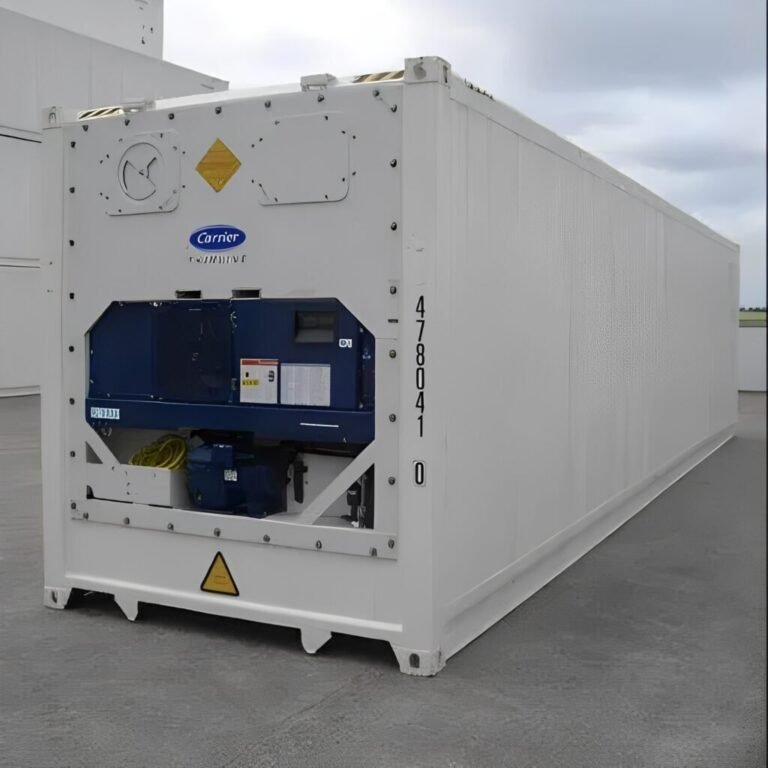
Lease Lane Containers LLC supplies high-quality new one-trip and used shipping containers, including 20ft and 40ft units, Standard and High Cube options, and specialty containers such as reefers. For pool projects, our role is to help you start with the right shell and the right delivery plan.
We can help you think through size, grade, site access, delivery method, and whether a one-trip or used shell makes sense for your intended build. We can also help you avoid common container-buying mistakes, such as choosing a WWT unit for a project that needs cleaner steel, straighter walls, and fewer unknown repairs.
Pool design, structural engineering, waterproofing, electrical work, plumbing, and code compliance should be handled by licensed professionals experienced in pool construction and container modification. The better your team understands the container’s original ISO structure, Corten Steel behavior, and reinforcement needs, the fewer surprises you are likely to face.
Frequently Asked Questions
What is the average shipping container pool cost? A finished container pool often falls between $35,000 and $100,000+ depending on size, engineering, lining, equipment, site work, delivery, and finish details. The container shell itself is only one part of the total budget.
Is a 20ft or 40ft container better for a pool? A 20ft container is usually better for compact plunge pools, tight Raleigh lots, and lower water volume. A 40ft container offers more swim length but usually costs more to reinforce, line, deliver, support, and finish.
Can I use a used WWT container for a pool? Sometimes, but it is not usually the preferred starting point. WWT means wind and watertight for storage, not necessarily clean, corrosion-free, or ideal for a water-holding conversion. A one-trip or carefully inspected Cargo Worthy unit is often a better choice.
Do container pools need permits in North Carolina? In many cases, yes. Requirements may involve zoning, setbacks, electrical work, barriers, drainage, structural review, and pool inspections. Always check with your local jurisdiction and HOA before ordering or placing the container.
Why does a container pool need structural reinforcement? ISO containers are designed to carry cargo loads through the frame and corner posts. Once the roof or walls are cut and the container is filled with water, the shell faces different forces, especially lateral water pressure. Reinforcement helps the pool maintain shape and structural integrity.
Can Lease Lane Containers build the entire pool? Lease Lane Containers LLC supplies containers and helps with selection, grading, delivery planning, and site-preparation guidance. Pool-specific design, engineering, waterproofing, plumbing, and permitting should be handled by qualified pool and construction professionals.
Plan the shell, the site, and the full budget before you build
A container pool can be a striking, space-efficient backyard or commercial feature, but the smartest budgets go far beyond the steel box. Start with the right container grade, confirm the delivery route, involve qualified professionals early, and price the complete installed project before committing.
If you are planning a shipping container pool in Raleigh, North Carolina, the Southeast, or elsewhere in the U.S., Lease Lane Containers LLC can help you choose a clean one-trip or used container shell and think through delivery requirements before the project begins. Contact our sales team at sales@leaselanecontainers.com or visit our Raleigh office to discuss available container options and your project goals.