Container Delivery in Raleigh: What to Expect
A container order can go sideways long before the truck arrives. In Raleigh, the most common problems are not with the container itself – they come from tight driveways, soft ground, low wires, or a site that was never measured for truck clearance. If you are planning container delivery in Raleigh, the smartest move is to treat delivery logistics as part of the purchase, not an afterthought.
That matters whether you need a 20ft unit behind a retail building, a 40ft high-cube on a job site, or a one-trip container for long-term storage on rural property. The container may be built to ISO standards and designed for years of service, but delivery still depends on local access, ground conditions, and choosing the right drop-off method for the site.
How container delivery in Raleigh actually works
Most deliveries start with a simple question that buyers often underestimate: can the truck get in, place the container, and get back out safely? A shipping container is not delivered by forklift in most standard situations. It typically arrives on a tilt-bed trailer or a flatbed with unloading equipment arranged separately, depending on the container size and where it needs to go.
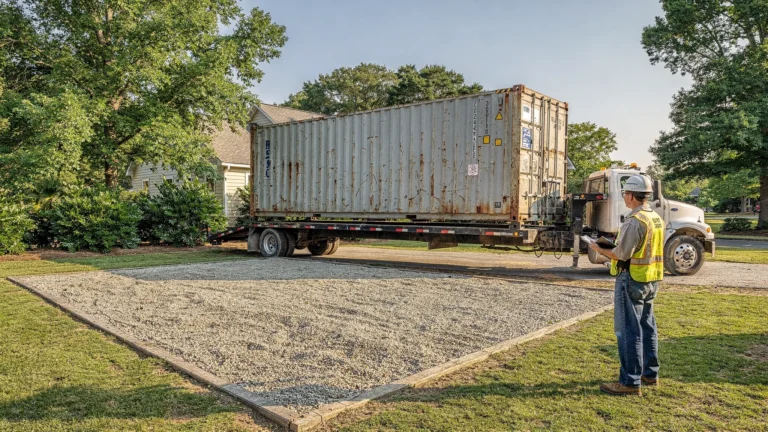
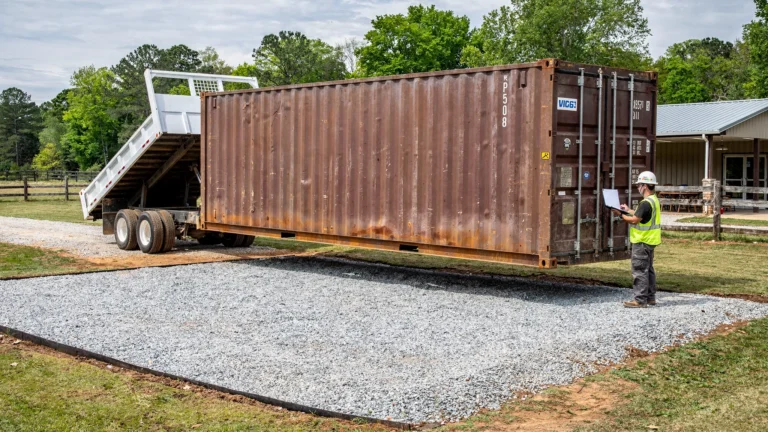
For many residential and light commercial deliveries, a tilt-bed truck is the most efficient option. The driver raises the bed, then slides the container into place as the truck moves forward. It is a practical setup for ground-level placement, but it needs room. A 20ft container may require roughly 60 to 80 feet of straight-line clearance for delivery. A 40ft unit often needs closer to 100 feet or more, depending on truck configuration and site conditions.
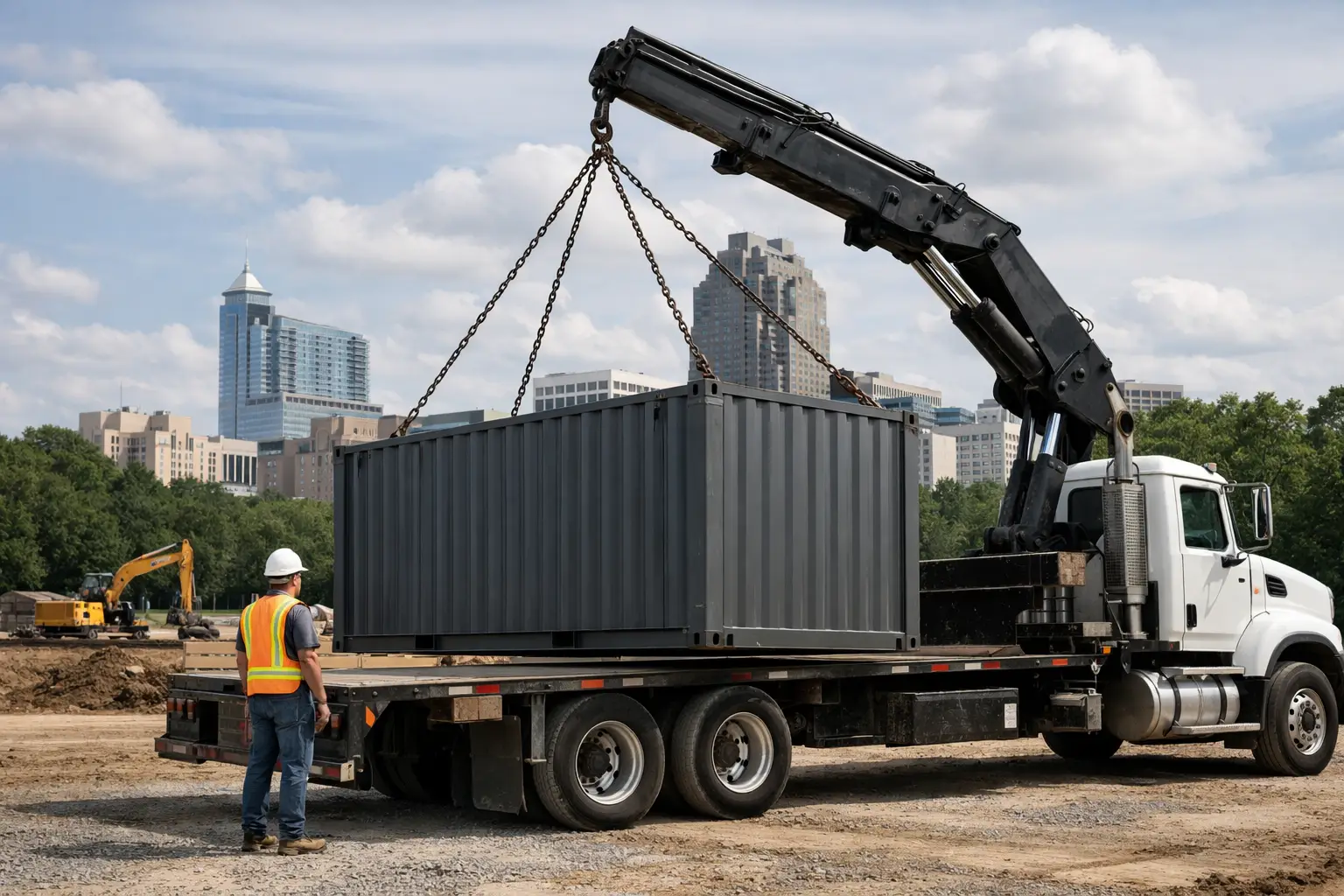
Ground-level delivery is popular because it avoids the cost and coordination of a crane or large forklift. The trade-off is space. If your site has a sharp turn, overhead branches, retaining walls, soft shoulders, or limited staging room, a standard tilt-bed drop may not be the right fit.
The site conditions that matter most
Buyers often focus on the footprint of the container – 20 feet, 40 feet, standard height, or high cube. What matters just as much is the path to that footprint.
The truck needs adequate width, turning radius, and overhead clearance. Trees, power lines, fence gates, parked equipment, and building overhangs create problems fast. A level gravel pad is usually a better delivery surface than bare soil, especially after rain. In the Raleigh area, clay-heavy soil can look firm on top and still shift under weight. That can affect both safe drop-off and long-term container performance.
A container should also rest on sound support points. Railroad ties, concrete piers, gravel pads, and other engineered base options can all work, depending on the site and intended use. The right choice depends on drainage, load requirements, and whether the container will remain simple storage or be converted into a workspace, office, or modular structure.
If the container will hold expensive tools, equipment, or inventory, site placement matters beyond convenience. Good placement reduces standing water around the doors, keeps the unit accessible for regular loading, and helps preserve structural integrity over time.
Choosing the right delivery method
Not every container delivery follows the same playbook. A residential buyer placing one 20ft storage container has different needs than a contractor ordering multiple 40ft Cargo Worthy units for a commercial project.
Tilt-bed delivery is often the most straightforward option when there is enough room for direct placement. It works well for standard storage use and is generally the fastest route from dispatch to drop-off. Ground-level placement is especially useful when the container needs to be opened and used immediately without additional handling equipment.
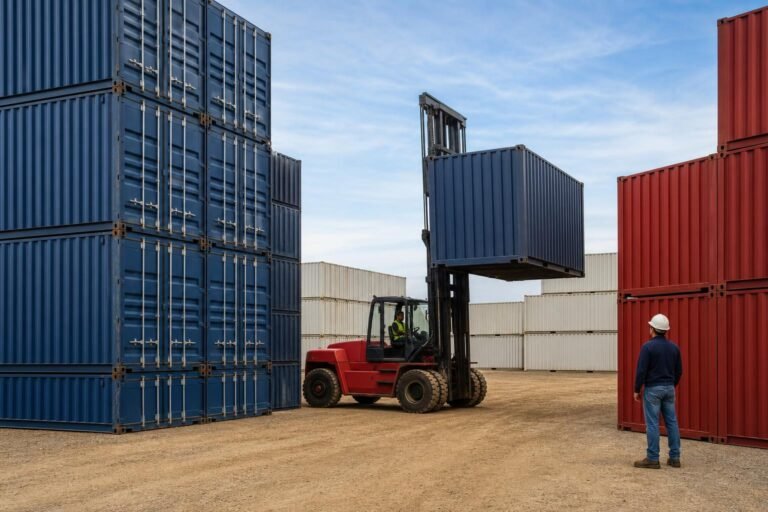
Flatbed delivery can make sense for larger orders, specialty units, or sites where unloading will be handled by crane or heavy forklift. Open-top containers, reefers, tunnel containers, and custom builds sometimes require more planning because of dimensions, weight, or placement constraints.
There is no single best method. It depends on access, the container type, the final position, and how precise the placement needs to be. Buyers who ask only for the lowest delivery rate sometimes end up paying more later when the truck arrives and the site is not ready for that equipment.
Container size changes the logistics
A 20ft container is easier to place and usually the better fit for tighter urban or suburban properties. It offers strong storage capacity without demanding the same turning space and drop length as a 40ft unit. For homeowners, small businesses, and compact job sites, that flexibility can outweigh the lower per-square-foot value of a larger box.
A 40ft container gives more room for inventory, equipment, or build-out projects, but delivery gets less forgiving. The truck needs more approach space, and the site must be more carefully evaluated for grade, clearance, and final orientation. High-cube models add an extra foot of height, which is useful for shelving, taller materials, or conversion projects, but overhead obstacles become more of a concern.
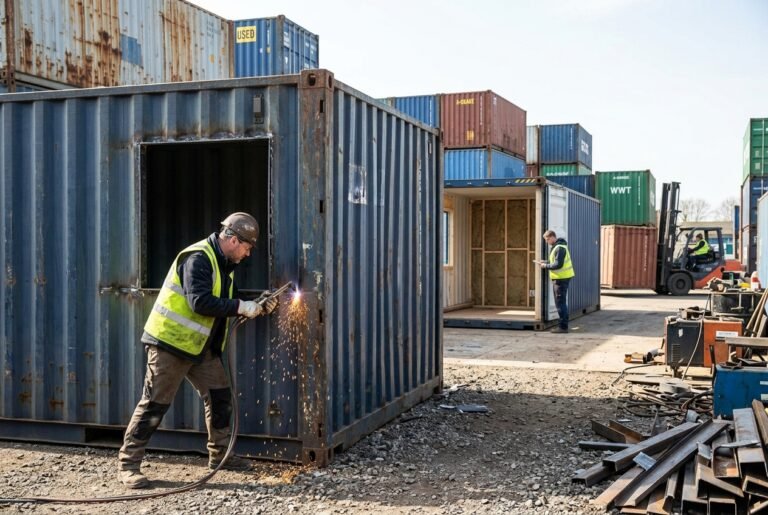
If appearance matters, especially for retail overflow, customer-facing commercial sites, or residential properties, buyers often prefer one-trip units. These are newer containers with minimal wear and a more consistent exterior finish. Used Wind & Watertight containers can be the right value for secure storage, but expectations should be clear up front. Cosmetic dents, surface rust, and patches may be normal even when the container remains structurally sound.
Why grading transparency matters before delivery
Delivery is where grading confusion becomes expensive. If a buyer expects a near-new appearance but ordered a basic used storage unit, the problem often surfaces only when the container is already on site. That is why clear grading language matters.
Wind & Watertight, often shortened to WWT, generally means the container is secure against weather intrusion and fit for storage, though cosmetic wear is expected. Cargo Worthy usually means the unit meets a higher standard associated with international transport serviceability, though exact inspection criteria should always be confirmed. One-trip containers are the closest to new condition and are usually the best choice for buyers prioritizing appearance, long service life, and easier modification.
A dependable supplier should explain the grade in plain language before dispatch. No fine print, no surprises. That is especially important when delivery scheduling, site preparation, and equipment rentals are already in motion.
Timing, pricing, and what affects both
In the Raleigh market, delivery timelines depend on inventory location, container type, and how difficult the site is to access. A standard 20ft or 40ft container in common grades can often move faster than a reefer, open-top, or custom office build. Delivery speed also changes with fuel costs, driver scheduling, and local demand around construction cycles and storm response periods.
Pricing is shaped by more than mileage. Container size, grade, special handling, site complexity, and drop-off method all influence the final number. A low advertised container price can stop looking attractive once surcharges for difficult access or secondary unloading equipment are added.
The better approach is to ask for verified specifications and a realistic delivery assessment before you commit. That usually includes the container dimensions, condition grade, delivery method, and a clear explanation of any site-related limitations. Lease Lane Containers LLC has built its approach around that kind of clarity because buyers in this category are not looking for sales language – they are looking for operational reliability.
How to prepare your site before the truck arrives
The best deliveries are the least dramatic. That usually means the site has already been checked for access width, overhead obstructions, turning room, and ground stability. If the placement area has been marked in advance, the driver can position the container more accurately and with less risk of rework.
It also helps to think one step past delivery day. Make sure the doors can fully open where the container will sit. Leave room for equipment, people, and future loading patterns. If you plan to add electrical service, insulation, shelving, or security accessories later, place the unit with that next phase in mind.
For commercial and agricultural buyers, speed matters, but so does repeatability. If you expect multiple deliveries over the life of a project, standardizing pad prep and truck access can save time on every future order.
A good container should be durable, secure, and honestly represented. A good delivery should feel just as predictable. When the container grade is clear, the truck type matches the site, and the ground is ready to support the load, the process becomes what it should be – straightforward, on schedule, and free of avoidable surprises.
If you are planning a delivery soon, the most useful question is not just which container to buy. It is whether your site is ready for the container you actually need.