How to Choose Container Delivery Method
A container can be the right size, the right grade, and the right price – and still turn into a problem if the delivery method is wrong. If you are figuring out how to choose container delivery method, the real question is not just how the container arrives. It is whether your site can receive it safely, without damage, delay, or added cost.
For contractors, farmers, business owners, and homeowners, delivery is where good planning pays off. A 20-foot container and a 40-foot high-cube do not behave the same on a truck. A flat gravel lot and a sloped backyard do not ask for the same equipment. The best delivery method depends on three things working together: the container itself, the truck setup, and the jobsite conditions.
How to Choose Container Delivery Method for Your Site
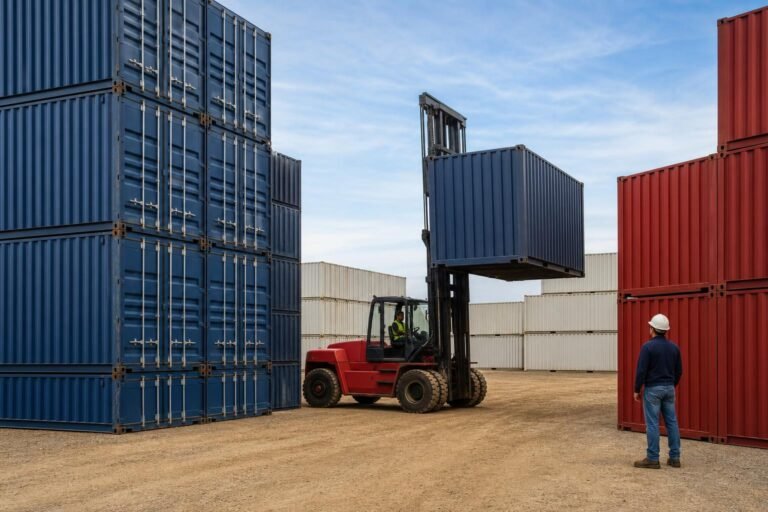
Most buyers are choosing between two common options: tilt-bed delivery and ground-level delivery. In some cases, a crane or forklift-assisted placement may be needed, but that is usually a specialty move rather than the standard starting point.
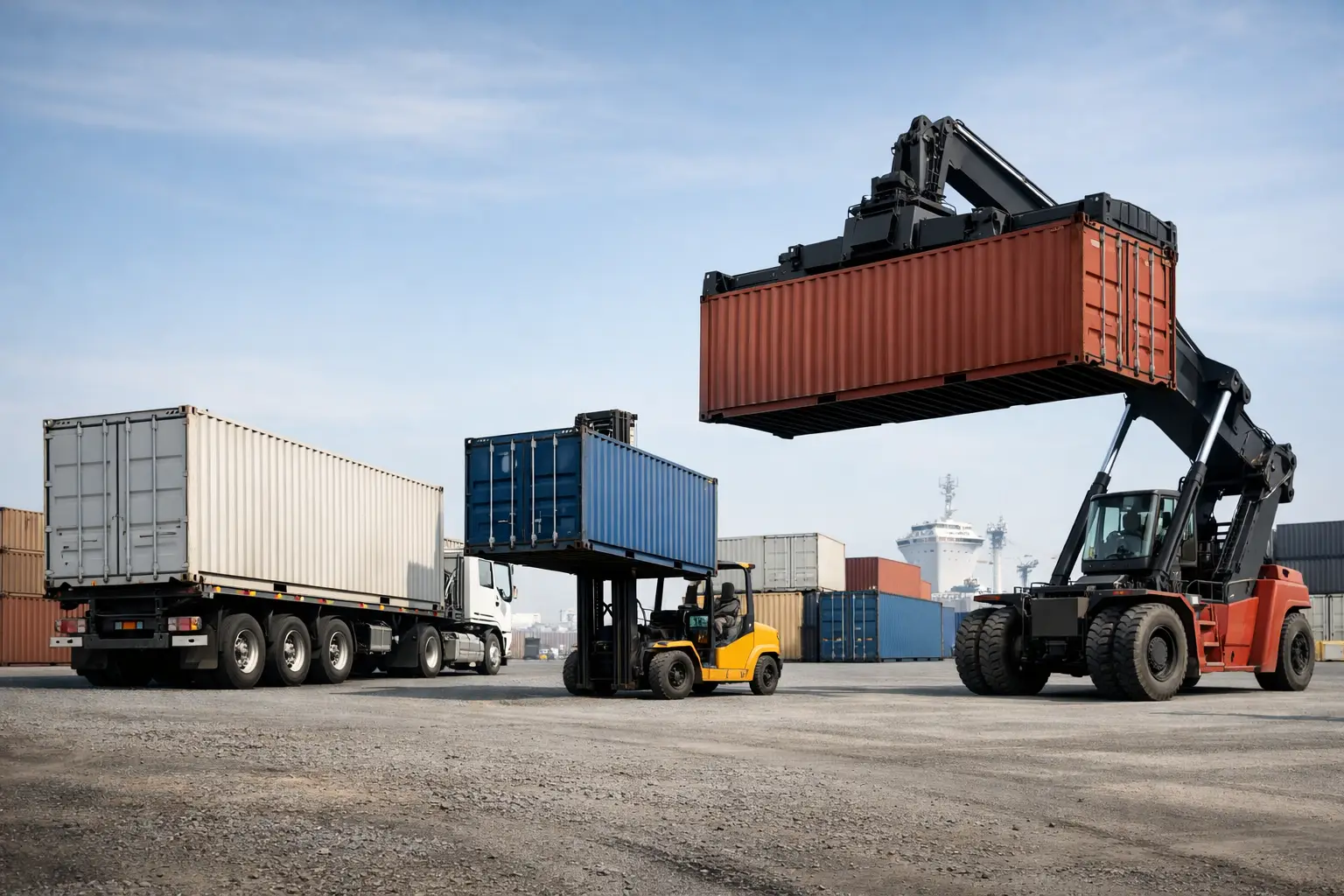
Tilt-bed delivery uses a truck bed that angles upward so the container slides off the back and settles onto the ground. This is one of the most efficient methods for many standard storage placements. It works well when there is enough straight-line clearance behind the truck and the surface is stable.
Ground-level delivery is often discussed alongside tilt-bed service because the goal is similar – placing the container directly on the site without the customer needing unloading equipment. But the exact truck configuration and required clearance can differ based on the carrier and the container size. That is why verified site details matter more than broad assumptions.
If your placement area is tight, obstructed, soft, or unusually elevated, standard delivery may not be enough. That does not mean the job cannot be done. It means the method has to match the site rather than forcing the site to fit the truck.
Start with Container Size and Weight
Before discussing trucks, start with the container itself. Size affects turning radius, unloading clearance, and how much room the driver needs to line up the drop. Weight affects the trailer choice and whether the surface can support delivery equipment.
A 20-foot container is generally easier to place than a 40-foot or 45-foot unit. It requires less maneuvering room and is often the better choice for compact lots, active construction sites, and residential properties with limited access. If a buyer is torn between two 20-foot units or one 40-foot unit, delivery access can be the deciding factor.
Height also matters. A high-cube container adds one foot of height over a standard unit. That may sound minor, but overhead wires, tree limbs, carports, and shop overhangs can turn that extra foot into a delivery issue. Reefer containers add another layer because they are heavier and may require more attention to final placement and power access.
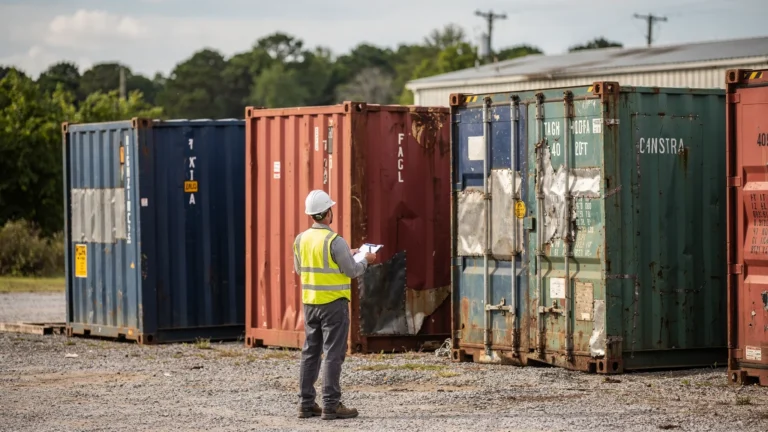
Condition can affect delivery planning too. A one-trip container usually has straighter rails and corner castings, which helps with placement and future leveling. A used Wind & Watertight container is still a solid storage option, but if the final site is uneven, existing cosmetic wear or minor dents can make precise blocking and leveling more important.
Measure Access Before You Schedule
The most common delivery problem is not the container. It is access.
A truck needs enough room to enter, turn, line up, unload, and exit. That includes driveway width, gate openings, fence lines, parked vehicles, septic fields, low branches, and utility lines. Soft shoulders and drainage ditches can also limit what looks like usable space from a distance.
Straight-line clearance is especially important for tilt-bed delivery. The truck needs room to raise the bed and slide the container off at an angle. That means the total unloading footprint is much longer and taller than the container alone. A site may technically fit a 40-foot box once it is on the ground, but still be impossible to unload safely if the truck cannot extend and tilt.
This is where photos, measurements, and honest site descriptions save time. A dependable container provider will ask specific questions because delivery surprises are expensive for everyone involved. Clear pricing starts with clear information.
Ground Conditions Matter More Than Many Buyers Expect
A shipping container is built from Corten steel and designed for structural strength, but the delivery truck is only as stable as the surface beneath it. If the site is muddy, recently filled, heavily rutted, or sloped, the safest delivery method may change.
Firm gravel, compacted stone, concrete, and well-prepared hard surfaces are typically the easiest for standard placement. Grass can work if the ground is dry and compact, but it is not always ideal, especially for larger units or after rain. Loose sand, saturated soil, and uneven fill often require a different plan.
Even when a truck can reach the site, that does not guarantee the final placement is smart. Containers need support at the corners at a minimum, and many long-term installations benefit from additional leveling support. If the container is being used for secure equipment storage, a mobile office conversion, or a workshop shell, taking time to prep the base often prevents door alignment issues later.
Match the Delivery Method to the Placement Goal
Some buyers only need the container dropped in an open area. Others need it positioned tightly along a fence, next to a slab, or in a specific orientation for doors, electrical access, or workflow. The tighter the placement tolerance, the more important the delivery method becomes.
Tilt-bed delivery is efficient, but it has limits on precision. The driver can place the container well, but the truck still needs a workable approach angle and rollout path. If the container must sit in a narrow lane between structures or align exactly with a dock or pad, another method may be more appropriate.
For job sites, the priority is often speed and practical access. A slight adjustment in final location may be acceptable if it gets secure storage on site fast. For residential buyers planning a long-term workshop, home office, or container build, exact placement may matter more because later repositioning is not simple or cheap.
That is why the right question is not just, Which method is available? It is, What does this site and use case actually require?
When Specialized Delivery Is the Better Call
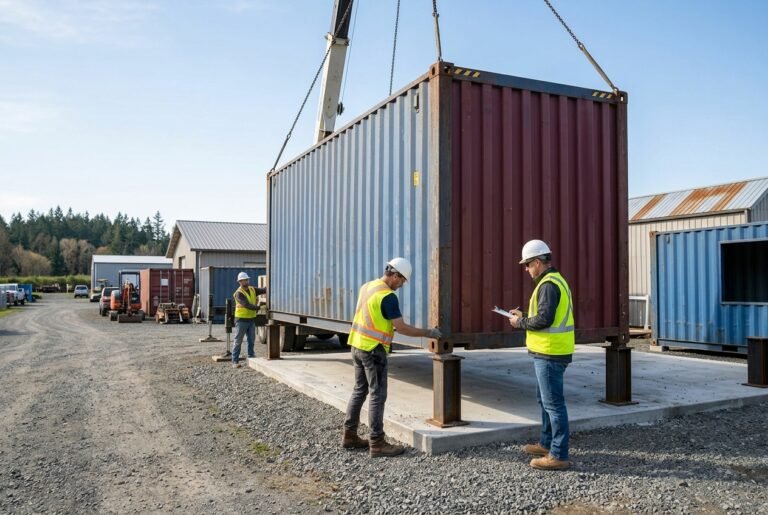
Not every container should be delivered with a standard truck setup. If your site has steep grades, very limited turning space, overhead restrictions, or a placement area away from truck access, a crane-assisted delivery or other specialty equipment may be the better option.
This usually costs more, but it can still be the cheaper decision overall. Trying to force a standard delivery into a site that is not suitable can lead to redelivery fees, property damage, delayed projects, and container placement that creates headaches from day one.
Commercial and industrial buyers tend to understand this quickly because downtime has a cost. Residential buyers sometimes hesitate because specialty delivery feels like an upgrade. In reality, it is often just the correct tool for the job.
Questions to Ask Before You Approve Delivery
If you want zero surprises, ask your supplier to confirm the required delivery clearance, truck type, and surface expectations for your exact container size. Do not rely on general assumptions from another property or a previous order.
You should also confirm whether the quoted service includes ground-level placement, what kind of site prep is recommended, and whether the driver needs a completely straight approach. If you want the cargo doors facing a certain direction, say that before dispatch, not after the container is on the ground.
A strong provider should be able to explain trade-offs clearly. For example, a 20-foot container may be easier and cheaper to place than a 40-foot unit, but if your storage volume will outgrow it in six months, the lower delivery complexity may not be the best long-term decision. The right answer balances access, budget, and actual use.
What Good Delivery Planning Looks Like
Good delivery planning is not complicated, but it is specific. It means matching verified container dimensions to verified site conditions and choosing a delivery method that can be executed safely on the first attempt.
That is especially true when timelines are tight. On a construction site, a missed container delivery can affect materials security and crew efficiency. On a farm, it can interrupt seasonal workflows. For a homeowner, it can mean torn-up ground, driveway damage, or a container sitting somewhere it should not.
A transparent container supplier will not gloss over those risks. They will ask for details, explain the options in plain terms, and tell you when a site needs prep before delivery. That is not sales friction. That is how you avoid hidden costs.
If you are deciding how to choose container delivery method, think less about the truck name and more about the outcome you need: safe access, accurate placement, and no fine print, no surprises. That is the kind of delivery plan that holds up long after the driver pulls away.