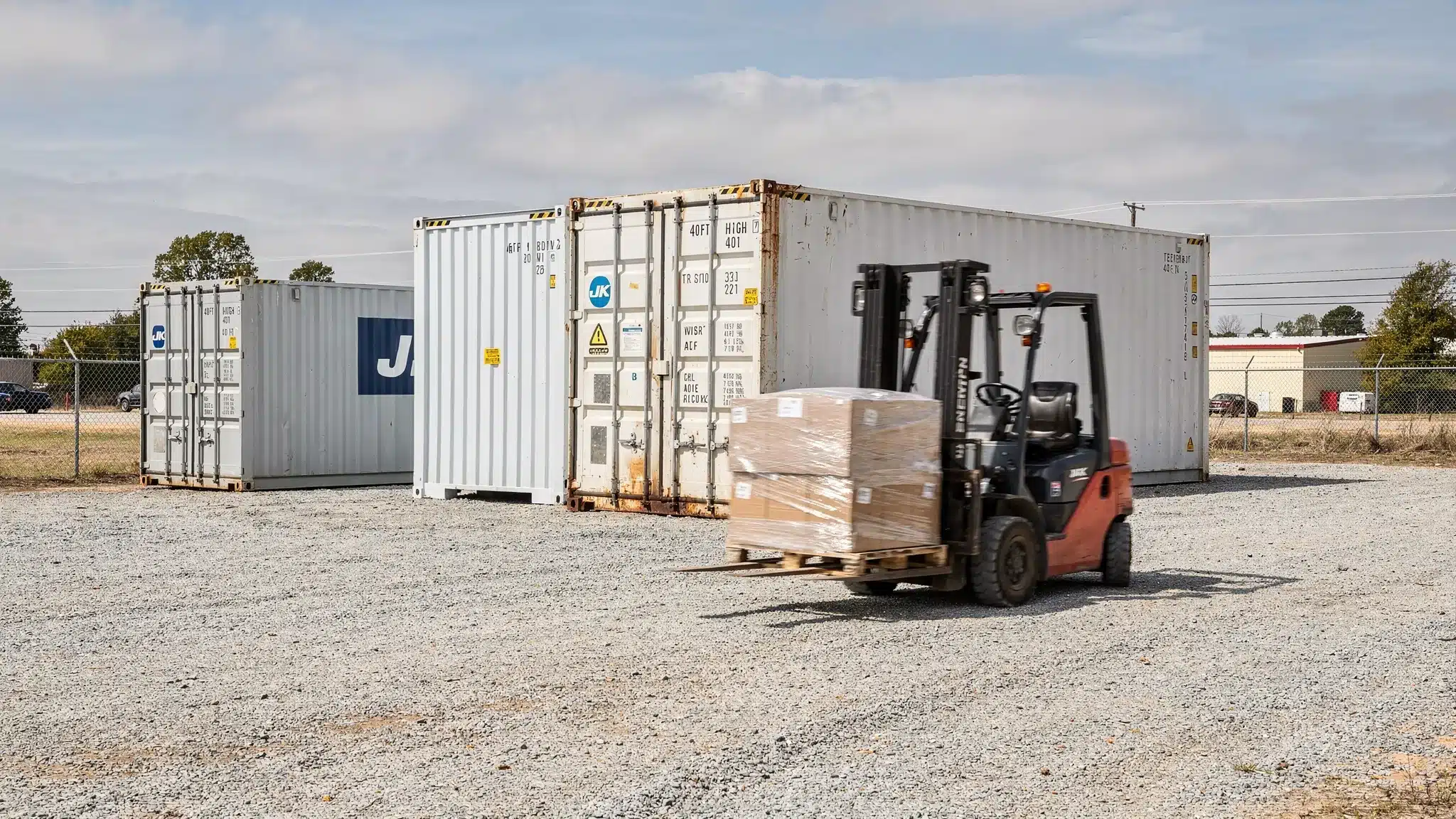
Best Containers for Business Storage and Operations
The best containers for business storage and operations are not simply the biggest or cheapest units available. The right choice depends on what you are protecting, how often your team needs access, whether the container will stay stationary or move through the supply chain, and how visible it will be to customers, inspectors, or project owners.
For contractors in Raleigh, small businesses across North Carolina, agricultural operations in the Southeast, and logistics teams shipping nationwide, a shipping container can function as secure storage, a warehouse overflow area, a mobile workshop, a retail pop-up, or a cold-chain asset. The key is matching the container size, grade, and delivery plan to the way your business actually works day to day.
Lease Lane Containers LLC helps business buyers evaluate new one-trip units, used containers, standard and High Cube sizes, and refrigerated options with clear grading and practical delivery guidance. This guide breaks down the most useful container choices for business operations and explains how to avoid the common mistakes that lead to leaks, poor access, failed deliveries, or unnecessary cost.
Why Shipping Containers Work So Well for Business Operations
Commercial shipping containers are built for demanding transport environments. Standard ISO freight containers are designed around consistent dimensions, corner castings, and handling requirements, which makes them easy to move, stack, load, and repurpose. The dimensional framework is defined by international container standards such as ISO 668 freight container dimensions and ratings, which is one reason containers are so adaptable across industries.
Most standard dry containers are made from corrugated Corten Steel, a weathering steel designed to resist atmospheric corrosion better than ordinary mild steel. That does not mean a container is maintenance-free, especially in humid climates like Raleigh and the wider Southeast, but it does mean a structurally sound unit can provide years of durable service when placed on a stable, well-drained base.
For business owners, the operational value is straightforward: containers create secure, ground-level space without the timeline and expense of a permanent building. They can be delivered to job sites, farms, distribution yards, retail properties, and manufacturing locations, then moved or repurposed as needs change.
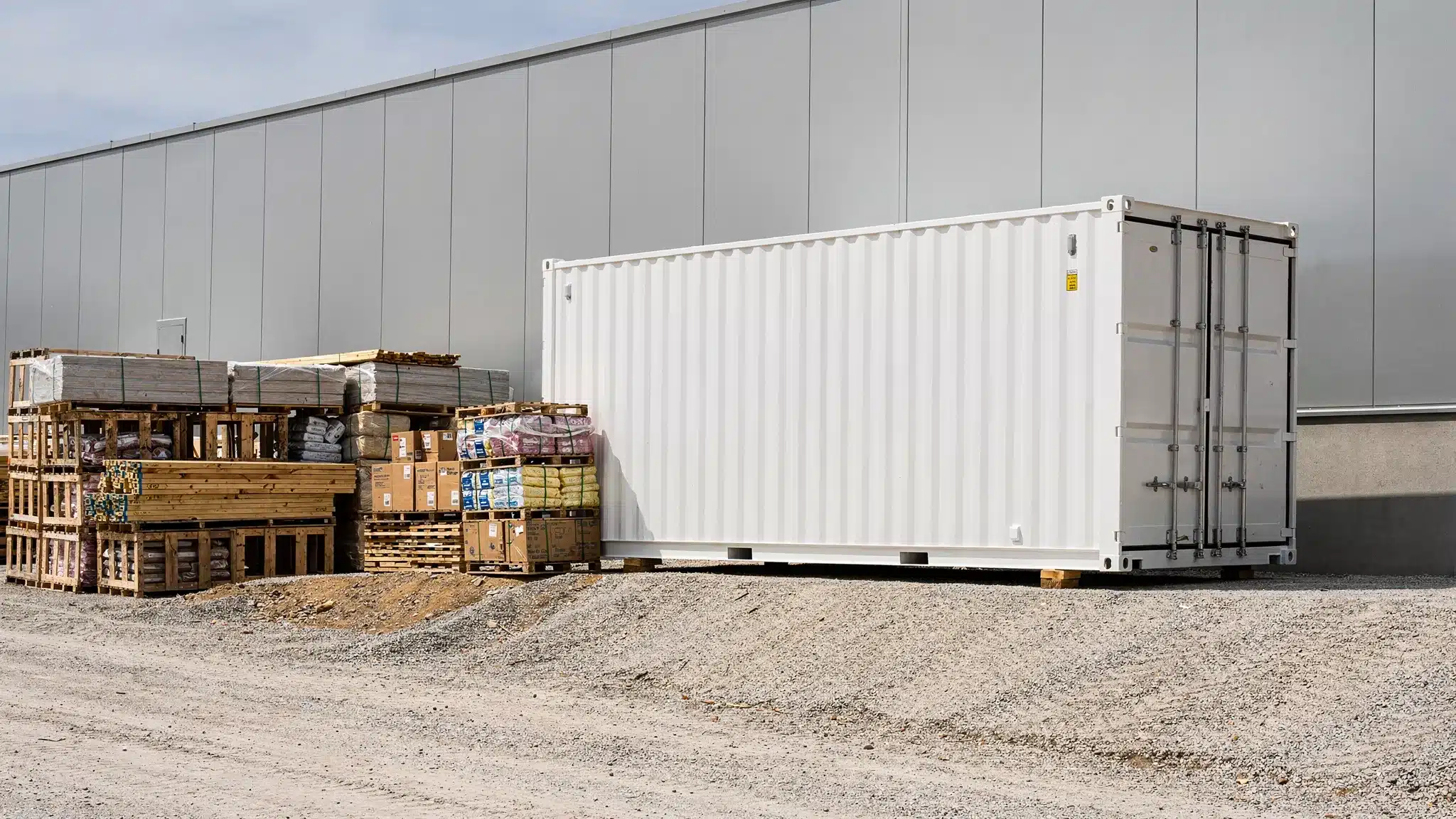
Quick Match: Best Containers for Business by Use Case
The best starting point is to define the business problem first. A contractor storing tools has different requirements than a retailer staging seasonal inventory or a food distributor maintaining cold storage.
| Business need | Best container fit | Recommended grade | Why it works |
|---|---|---|---|
| Jobsite tools and building materials | 20ft or 40ft standard dry container | WWT or Cargo Worthy | Secure, durable, cost-effective for daily site use |
| Warehouse overflow or seasonal inventory | 40ft standard or 40ft High Cube | WWT, Cargo Worthy, or One-Trip | More floor space and vertical capacity for bulk storage |
| Mobile office or workshop | 20ft or 40ft High Cube | One-Trip or Cargo Worthy | Better structure and appearance for modifications |
| Retail pop-up or customer-facing space | 20ft, 40ft, or open-side configuration | One-Trip | Cleaner exterior and stronger resale value |
| Refrigerated inventory | 20ft or 40ft reefer | Tested refrigerated unit | Temperature control for food, flowers, pharmaceuticals, and events |
| Export or intermodal transport | 20ft or 40ft dry container | Cargo Worthy or One-Trip | Suitable for transport when documentation and inspection requirements are met |
This table is a guide, not a substitute for a site-specific recommendation. Delivery access, local permitting, inventory type, and how frequently the container will be opened can all change the right answer.
Understand Container Grades Before You Buy
Container grade is one of the most important purchasing decisions for a business. It affects price, expected lifespan, appearance, resale value, and whether the unit can be used for transport.
| Grade | What it means | Best business use | Key limitation |
|---|---|---|---|
| One-Trip | A newer container that has typically made one loaded ocean voyage from the factory | Retail builds, offices, premium storage, customer-facing projects | Higher upfront cost than used units |
| Cargo Worthy (CW) | Used container inspected for structural integrity and transport suitability | Export, logistics, high-value storage, heavier commercial use | May show dents, wear, and previous shipping marks |
| Wind and Watertight (WWT) | Used container that keeps out wind and water when properly closed | Stationary storage, job sites, farms, warehouse overflow | Not intended for ocean export without further inspection or certification |
| As-Is | Sold in current condition with no reliable performance expectation | Limited, low-risk uses only | May have leaks, floor issues, door problems, or structural damage |
A one-trip container is often the best choice when appearance, longevity, or modification quality matters. These units usually have cleaner paint, less corrosion, straighter panels, and better flooring than older used containers. For a business planning a mobile office, retail pop-up, showroom, or long-term visible storage area, the premium can be justified by lower repair needs and stronger presentation.
A Cargo Worthy container is a used unit that has enough structural integrity for cargo transport when properly inspected and documented. For logistics managers, exporters, and operations that may need to move the unit under load, Cargo Worthy is the practical baseline. Always verify documentation, CSC plate status when relevant, and inspection details before assuming any used container is suitable for shipping.
A Wind and Watertight container is often the best value for static business storage. It should keep rain and wind out, but it is not the same as Cargo Worthy. For contractors, farms, and local businesses that need storage at a fixed property, WWT can be a smart choice if the roof, doors, gaskets, floor, and walls have been inspected carefully. If you are comparing used containers, grade transparency matters more than paint color.
Choosing Between 20ft, 40ft, and High Cube Containers
Container size should be based on workflow, not just square footage. A larger unit can reduce clutter and improve access, but only if your site has enough room for delivery, door swing, and safe loading.
| Container type | Typical exterior dimensions | Best for business operations | Watch for |
|---|---|---|---|
| 20ft standard | 20' x 8' x 8'6" | Residential construction sites, small retail inventory, tools, equipment | Less floor space for aisle access and pallet staging |
| 40ft standard | 40' x 8' x 8'6" | Bulk storage, warehouse overflow, larger job sites | Requires more delivery clearance and placement room |
| 40ft High Cube | 40' x 8' x 9'6" | Taller inventory, racking, workshops, conversions | Extra height affects overhead clearance and local placement planning |
| Reefer container | Commonly 20ft or 40ft | Cold storage, food service, events, perishable goods | Requires power planning, airflow clearance, and equipment testing |
20ft containers are popular for contractors, homeowners running a business from a property, and small retailers because they fit more easily on tight lots. They are easier to place in urban and suburban areas around Raleigh, Cary, Durham, and Wake County where access may be limited by driveways, trees, curbs, or overhead utilities.
40ft containers are better for businesses that need to store palletized goods, fixtures, lumber, seasonal inventory, or multiple crews' equipment. If you have the room, a 40ft unit often delivers more usable capacity per delivered dollar than two smaller units.
High Cube containers add one foot of exterior height, typically 9'6" instead of 8'6". That extra height is valuable for racking, lighting, insulation, HVAC, and interior buildouts. For offices, workshops, and businesses storing taller equipment, a High Cube container can make the space feel more practical and less cramped.
Best Containers for Common Business Operations
Construction and jobsite storage
General contractors and home builders need secure storage that can handle rough site conditions. A 20ft WWT unit often works well for tools, fasteners, compressors, and smaller equipment on residential jobs. A 40ft WWT or Cargo Worthy unit is better for lumber, doors, windows, fixtures, and multi-trade material staging.
For jobsite storage, door condition and security hardware matter as much as the container shell. Look for smooth locking bars, intact gaskets, solid floors, and a secure lockbox. A structurally sound used unit is usually sufficient unless the container will be customer-facing, modified, or kept long-term in a highly visible area.
Retail inventory and warehouse overflow
Small business owners often use containers to handle seasonal inventory, packaging, displays, e-commerce stock, and temporary warehouse overflow. For these uses, a 40ft standard or 40ft High Cube container is usually the most efficient choice.
If the container will sit behind a retail store or in a service yard, WWT may be enough. If customers, landlords, or inspectors will regularly see the unit, a one-trip container can provide a cleaner appearance and reduce the need for repainting or cosmetic repairs. Consider ventilation, shelving, lighting, and clear aisle space if employees will access the unit daily.
Mobile offices, workshops, and operations hubs
A container office or workshop requires a stronger starting shell than basic storage. Cutting windows, personnel doors, vents, or service openings changes how loads move through the container structure. One-trip and good Cargo Worthy units are usually better candidates for modification because they tend to have cleaner frames, better floors, and fewer hidden repair issues.
For occupied spaces, High Cube height is often worth considering. Insulation, ceiling finish, lights, electrical conduit, and HVAC can reduce usable headroom. Starting with more vertical space gives your buildout team more flexibility.
Cold storage and refrigerated operations
Restaurants, florists, farms, event companies, pharmaceutical distributors, and food processors may need refrigerated containers, commonly called reefers. A reefer is not simply an insulated dry container. It includes an integrated refrigeration system, insulated walls, airflow channels, and specific electrical requirements.
Before buying or deploying a reefer, confirm the temperature range, power requirements, maintenance history, controller condition, and whether the unit has been tested under load. Placement also matters. The refrigeration machinery needs airflow, drainage, and access for service. For more detail, review Lease Lane's refrigerated shipping container guide.
Logistics, export, and transport operations
If your business intends to load cargo and move it by truck, rail, or ocean vessel, do not treat a basic storage container as an export-ready container. Logistics managers should focus on Cargo Worthy or one-trip units and verify CSC plate status, inspection documentation, corner castings, door operation, floor condition, and payload requirements.
A WWT container can be excellent for stationary storage, but it is not automatically suitable for international shipping. When cargo value, customs, port acceptance, or insurance requirements are involved, documentation is part of the product.
Match the Container Layout to Your Workflow
A business container should support speed, safety, and accountability. If employees waste time unloading half the unit to find one item, the container is too small or poorly organized.
Think through how material will move in and out. Will crews use forklifts, pallet jacks, dollies, or hand carry? Will inventory be accessed daily or stored for months? Do you need shelving on both walls with a center aisle, or bulk floor storage? Will the doors face a loading zone, a building entrance, or a secure fence line?
Specialty configurations can solve workflow problems. Open-side containers improve access to long materials and retail displays. Tunnel containers with doors on both ends make first-in, first-out inventory easier. Standard dry containers are more cost-effective, but they are not always the most efficient layout for high-turnover operations.
Security should also be planned before delivery. Lockboxes, puck locks, lighting, fencing, cameras, and door orientation all affect risk. Lease Lane has a separate guide on secure container setup if theft prevention is a major concern for your site.
Pro-Tip: Prepare the Site Before the Container Arrives
A strong container can still perform poorly if it is placed on soft, uneven, or poorly drained ground. This is especially important in Raleigh and the Southeast, where clay soils, heavy rain, and humidity can create settling and moisture problems.
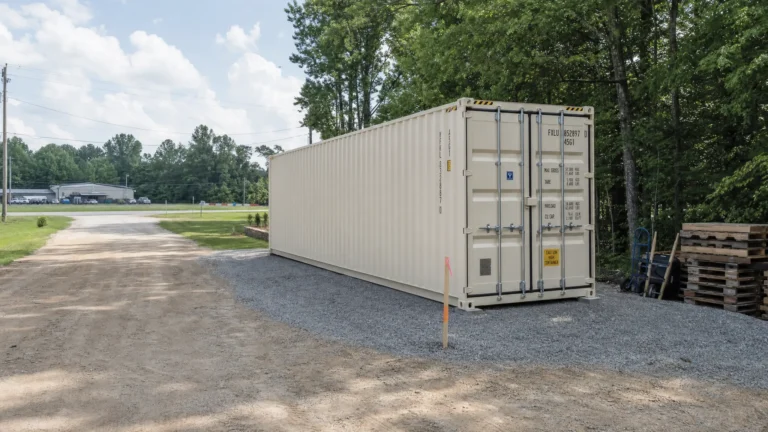
Before delivery, prepare a stable base that supports the container's corner castings and allows water to drain away. A compacted gravel pad over geotextile fabric is often a practical option for storage use, while concrete slabs or engineered piers may be appropriate for offices, workshops, or long-term commercial installations.
Use this site-prep checklist before scheduling delivery:
- Confirm the container footprint, door swing, and working space around the unit.
- Level the placement area so the doors do not bind after delivery.
- Build up low areas with compacted stone rather than loose soil.
- Keep the container slightly elevated to reduce underside corrosion and standing water.
- Clear branches, wires, parked vehicles, fences, and other access obstacles.
- Verify local zoning, permits, landlord approvals, and HOA restrictions where applicable.
- Contact 811 before digging if you plan to install utilities, anchors, footings, or drainage.
For a deeper planning checklist, review Lease Lane's guide to shipping container delivery requirements. A few hours of preparation can prevent a failed delivery, extra handling costs, or door alignment problems after placement.
Budget for Total Operational Value, Not Just Purchase Price
The lowest quote is not always the lowest cost. A business container should be evaluated by total delivered value, which includes the container grade, delivery method, site preparation, security upgrades, ventilation, shelving, maintenance, and future resale value.
A WWT used unit may be the best value for stationary storage if it is structurally sound and properly inspected. A Cargo Worthy unit can be worth the added cost if the container may move, hold higher-value inventory, or need stronger resale appeal. A one-trip unit usually costs more upfront, but it may reduce repair, repainting, and modification surprises.
Also consider the cost of operational friction. A container that is too small, placed in the wrong orientation, or difficult to access can add labor every week. For many businesses, the right container pays for itself through reduced off-site storage costs, fewer material trips, better security, and faster jobsite or warehouse workflow.
Questions to Answer Before Requesting a Quote
You will get a more accurate recommendation if you can describe the container's purpose and site conditions clearly. Before contacting a supplier, gather the basics.
- What will be stored or operated inside the container?
- Will the container be stationary, moved locally, or used for export?
- Do you need 20ft, 40ft, or High Cube capacity?
- Is appearance important to customers, neighbors, landlords, or inspectors?
- Will the unit need modifications such as doors, windows, vents, insulation, or electrical work?
- What is the delivery ZIP code and preferred placement area?
- Is the site level, dry, accessible, and free of overhead obstructions?
- Have you checked permits, zoning, landlord rules, and HOA requirements?
If you are still early in the buying process, Lease Lane's shipping container buyers guide is a useful next step for comparing grades, delivery planning, and purchase considerations.
Frequently Asked Questions
What is the best container for business storage? For most stationary business storage, a Wind and Watertight used container is a cost-effective choice if it has solid doors, intact gaskets, a sound roof, and good flooring. For high-value inventory, frequent movement, or export, consider Cargo Worthy or one-trip units.
Are one-trip containers worth it for a business? One-trip containers are often worth it for customer-facing projects, mobile offices, retail pop-ups, long-term visible storage, and modified builds. They typically offer cleaner appearance, less wear, and stronger modification potential than older used containers.
Do I need a Cargo Worthy container for storage? Not always. Cargo Worthy is important if the container will be used for transport, export, stacking, or higher-value commercial applications. For stationary storage, WWT may be enough if the unit is inspected and placed correctly.
Is a High Cube container better for business operations? A High Cube container is better when you need vertical storage, racking, insulation, lighting, HVAC, or a more comfortable interior for work areas. The extra foot of height can be very useful, but you must confirm overhead clearance for delivery and placement.
Can a shipping container be used as a business office or retail space? Yes, but the container grade, structural modifications, insulation, ventilation, electrical work, permits, and code requirements must be planned carefully. One-trip and strong Cargo Worthy units are usually better starting points for occupied or customer-facing spaces.
Do businesses in Raleigh need permits for shipping containers? Permit and zoning requirements can vary by municipality, property type, duration, and use. Businesses in Raleigh, Wake County, and surrounding areas should check local rules, landlord requirements, and HOA restrictions before delivery.
What should I prepare before delivery? Prepare a level, stable, well-drained placement area, confirm truck access, clear overhead obstructions, mark the drop location, and decide door orientation. Good site preparation protects the container, keeps doors operating correctly, and reduces the risk of delivery delays.
Choose a Business Container With Confidence
The right container can make your business more secure, organized, and efficient, but only when size, grade, delivery, and site preparation are matched to the job. Lease Lane Containers LLC helps businesses in Raleigh, across North Carolina, throughout the Southeast, and nationwide choose clean, properly graded shipping containers for storage, operations, cold storage, and modular projects.
If you are comparing containers for business use, contact the Lease Lane Containers sales team at sales@leaselanecontainers.com or visit our Raleigh office to discuss current availability, delivery planning, and the best container grade for your operation.