Used Containers for Sale Near Me: How to Spot Value
Searching for used containers for sale near me usually starts with a simple goal: find a solid container at a fair price without overpaying for cosmetic condition you do not need. But in the shipping container market, the lowest sticker price can become expensive fast if the unit leaks, has weak flooring, needs door repairs, or costs more to deliver than expected.
Real value comes from matching the container’s grade, size, condition, and delivery plan to the job you need it to do. A general contractor in Raleigh may need secure jobsite storage for tools and lumber. A farm in eastern North Carolina may need long-term equipment storage. A small business may want inventory overflow or a future mobile office. A logistics manager may need a Cargo Worthy unit that can move freight, not just sit on a property.
This guide explains how to spot value before you buy, what industry terms actually mean, and which details matter most when comparing used containers in Raleigh, across the Southeast, or through nationwide delivery.
Value Starts With the Right Grade
A used shipping container is not automatically a bargain just because it has a lower price than a new unit. The grade tells you what the container should be capable of, how much wear to expect, and whether it is suitable for storage, transport, or modification.
Most shipping containers are built from Corten Steel, a weathering steel designed to resist corrosion in marine environments. They are manufactured to ISO standards so they can be stacked, lifted, transported, and handled through global intermodal systems. Even so, years of use, handling, salt exposure, impacts, and floor wear can create major differences between two containers that look similar from a distance.
Here are the most important grades to understand.
| Grade | What it usually means | Best-fit use cases | Value signal |
|---|---|---|---|
| One-Trip | A newer container that has typically made one cargo trip from the manufacturer | Retail builds, mobile offices, clean storage, customer-facing projects | Highest condition, fewer dents, longer remaining service life |
| Cargo Worthy (CW) | Structurally sound and suitable for cargo transport when properly inspected and documented | Export, logistics, regional transport, high-value storage | Strong structure, better doors and floors, transport-ready condition |
| Wind & Watertight (WWT) | Keeps out wind and water, but may not be certified for shipping cargo | Jobsite storage, farm storage, residential storage, inventory overflow | Good storage value when structural and floor condition are acceptable |
| As-Is | Sold with no reliable condition promise | Short-term, low-risk uses only | Only valuable if priced accordingly and inspected carefully |
For many buyers, Wind & Watertight is the best value for stationary storage. For logistics users, Cargo Worthy is usually the more appropriate grade because the container must do more than protect contents from rain. If appearance and long-term modification potential matter, a One-Trip container may deliver better lifetime value even though the upfront cost is higher.
If you want a deeper technical explanation of grading language, Lease Lane’s guide to used shipping container grades breaks down how One-Trip, Cargo Worthy, WWT, and lower-condition units compare.
Do Not Compare Price Until You Know the Use Case
The best value container is the one that performs the job without unnecessary spend. A low-cost WWT unit can be perfect for storing tools on a construction site. That same unit may be the wrong purchase if you plan to export goods, build a customer-facing retail pop-up, or install insulation, windows, and electrical systems.
Start by defining the job clearly:
- Secure jobsite storage: Contractors and home builders often prioritize lockable doors, solid floors, and weather protection over cosmetic appearance.
- Home or farm storage: Long-term durability, door function, drainage, and pest resistance matter more than matching paint.
- Business inventory overflow: Clean interior condition, easy access, and delivery placement may drive value more than exterior dents.
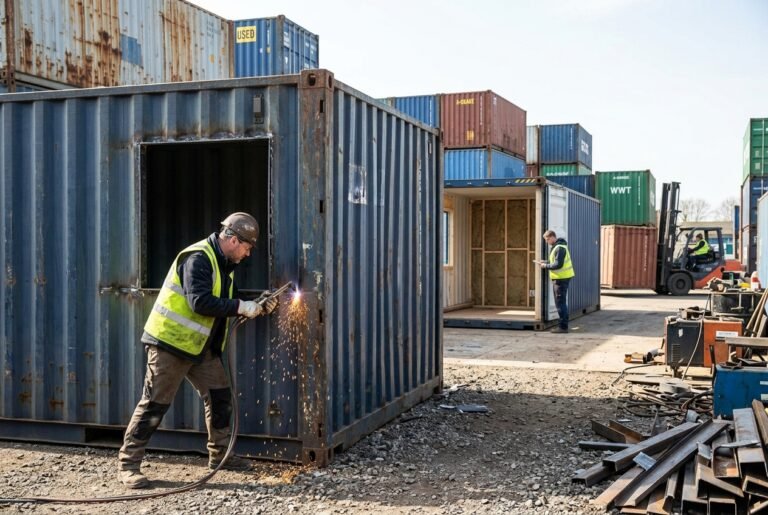
- Modular conversion: A straighter, cleaner unit can reduce prep work before framing, insulation, windows, or HVAC.
- Shipping or transport: Cargo Worthy condition and documentation are critical, especially for international movement.
This is where many buyers overspend or underspend. If a container will sit behind a warehouse storing pallets, you may not need One-Trip condition. If it will become a mobile office in Raleigh or a retail buildout in the Southeast, paying more for a cleaner shell can reduce modification labor and create a better final result.
Match the Size to the Site, Not Just the Budget
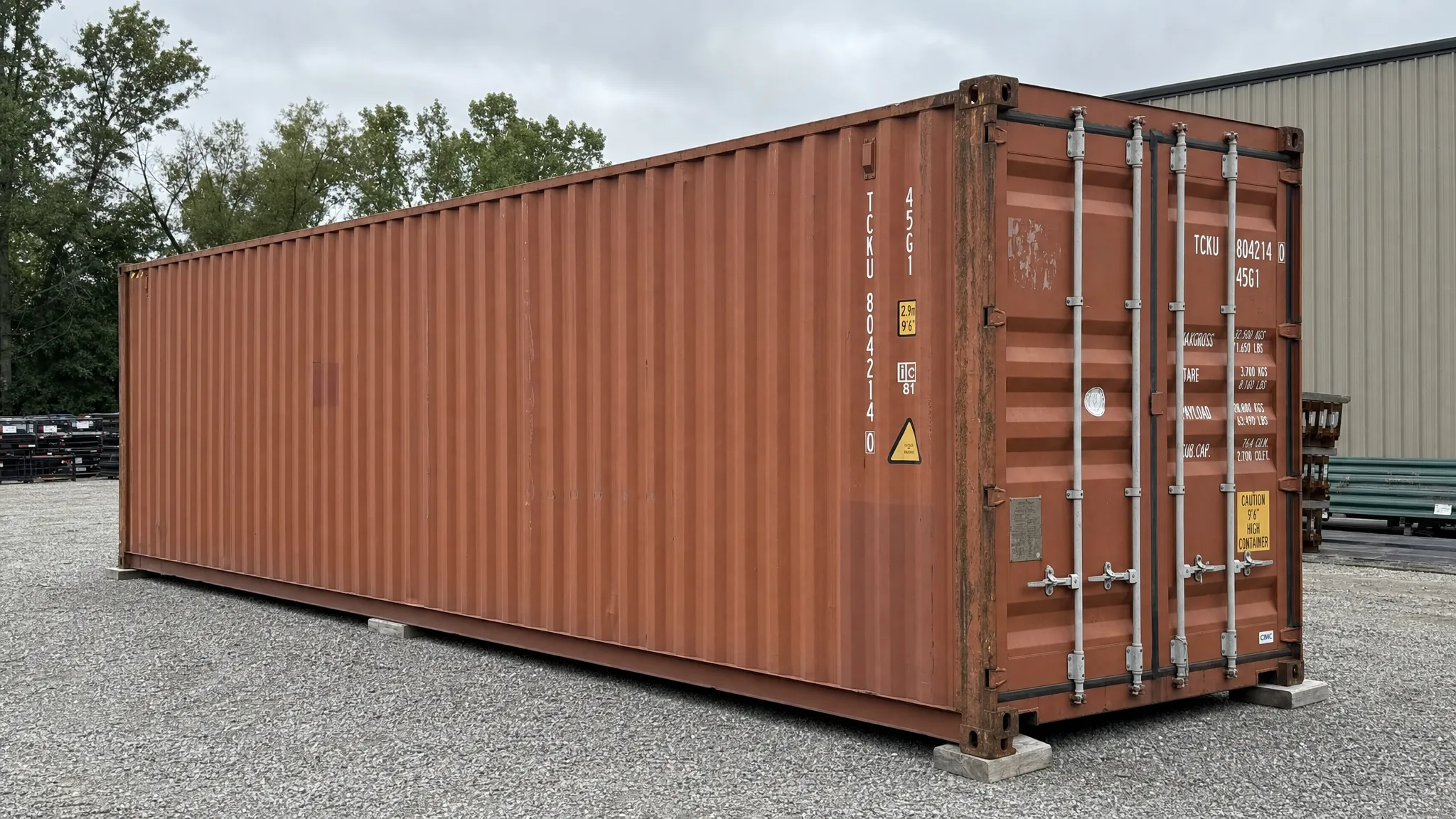
Used containers are commonly available in 20ft and 40ft lengths, with Standard and High Cube configurations. A Standard container is typically 8 feet 6 inches tall, while a High Cube container is typically 9 feet 6 inches tall. That extra foot of height can be valuable for shelving, equipment, insulation, lighting, or any conversion where headroom matters.
A 20ft container is easier to place on tighter properties, urban lots, residential driveways, and crowded jobsites. It is also a practical choice when access roads, trees, slopes, or turning radius limit delivery options. If you are comparing smaller units, the buyer tips in this guide to a 20ft shipping container for sale near you can help you think through grade, delivery, and placement.
A 40ft container usually delivers a lower cost per square foot, which makes it attractive for builders, warehouses, farms, and businesses needing larger storage capacity. The tradeoff is delivery access. A longer truck needs more room to maneuver and unload, especially if the container is delivered by tilt-bed.
High Cube containers can be the best value when you need volume, not just floor space. They are popular for modular construction, mobile offices, storage with racking, and equipment that requires extra clearance. However, the taller profile also means you should check overhead lines, tree limbs, rooflines, and local restrictions before delivery.
Inspect for Value, Not Perfection
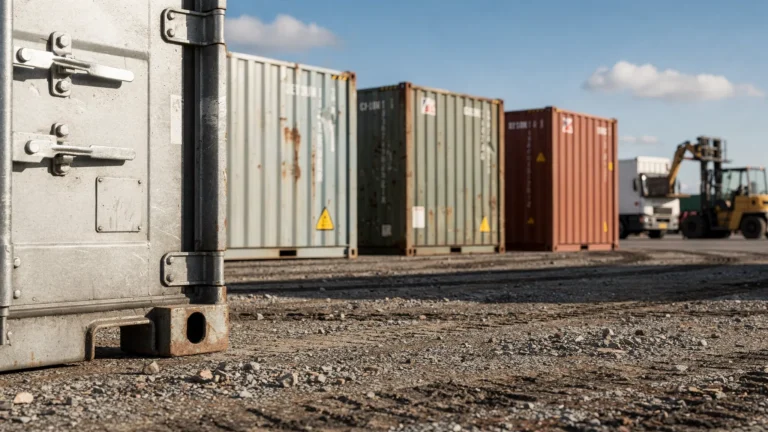
A used container does not need to look new to be a smart purchase. Dents, faded paint, surface rust, patches, and previous markings are common. The question is whether those issues affect the container’s ability to protect contents, open and close safely, sit level, or be modified.
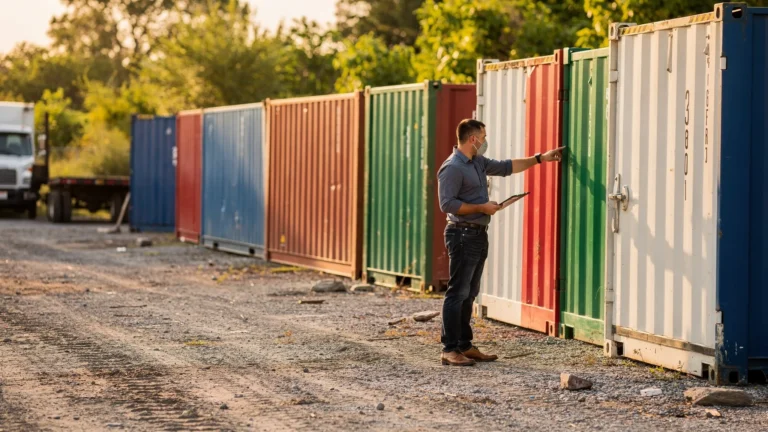
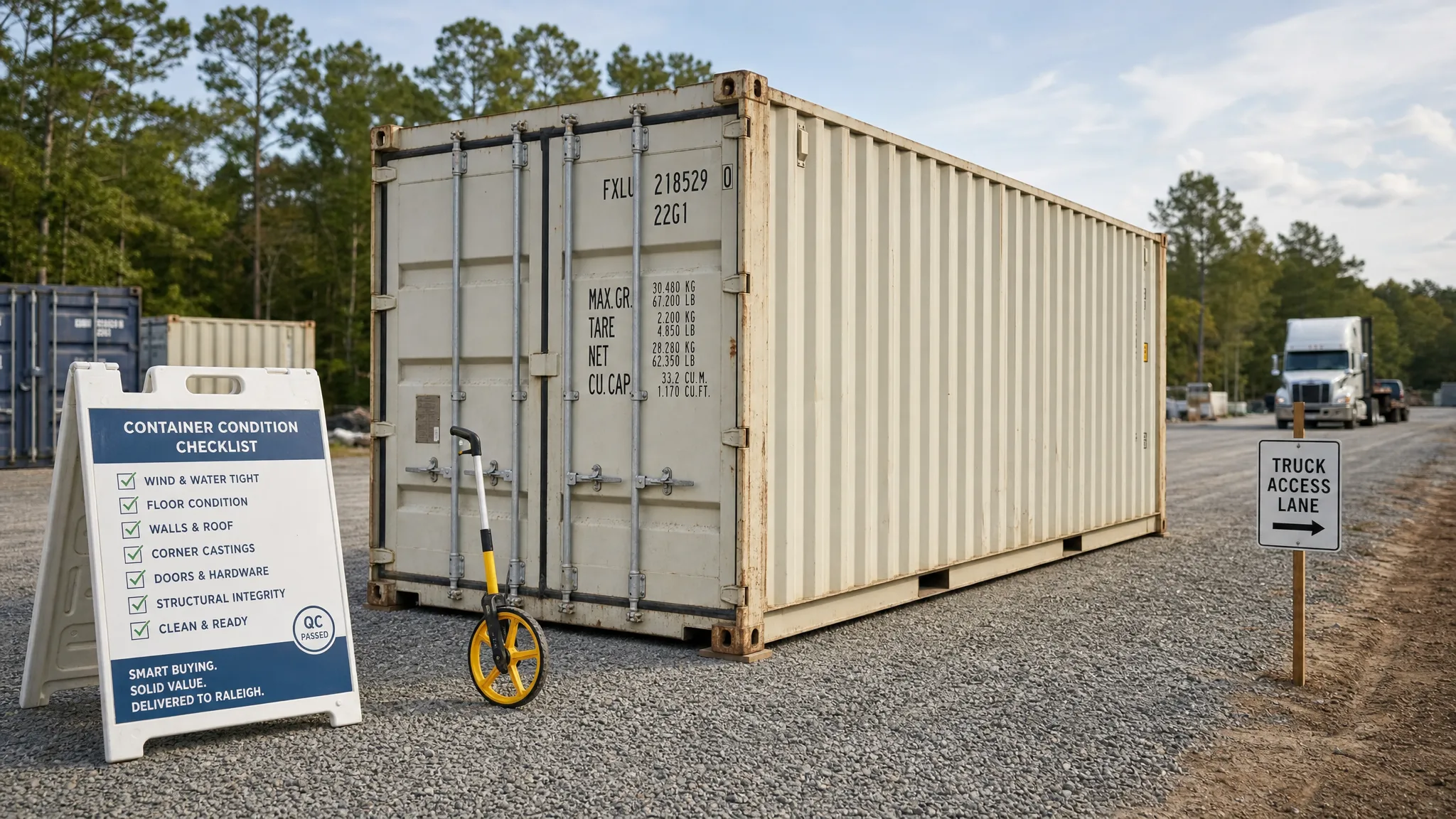
Focus your inspection on the components that affect performance and future cost.
| Inspection area | What to look for | Why it affects value |
|---|---|---|
| Roof | No daylight, major dents, ponding spots, or active leaks | Roof repairs can be costly and leaks damage stored goods |
| Doors | Smooth operation, intact locking rods, good gasket compression | Poor door function creates security and weather issues |
| Floor | Solid marine-grade plywood, no soft spots, no chemical odor | Floor replacement can erase the savings on a cheap unit |
| Corner posts and rails | Straight, structurally sound steel with no major deformation | These carry stacking and lifting loads under ISO design principles |
| Seams and patches | Professional repairs, sealed welds, no open gaps | Bad patchwork can lead to water intrusion |
| Undercarriage | Limited corrosion, intact crossmembers, no severe rot | Critical for long-term stability and safe handling |
The strongest value often comes from a container with normal cosmetic wear but good structural bones: solid Corten Steel panels, straight corner posts, functioning doors, a dry interior, and a usable floor. A unit with fresh paint but weak floors or leaking seams is not a better buy.
If you are buying remotely, ask for clear photos of the roof, all four sides, the interior, the floor, door gaskets, locking rods, corner castings, and any repairs. For higher-value purchases, video can help confirm door operation and interior condition.
Understand the Difference Between Cheap and Cost-Effective
A cheap container can become expensive when hidden costs appear after delivery. A cost-effective container is one where the purchase price, delivery cost, repair risk, and expected service life all make sense together.
For example, a discounted WWT unit may be a great deal if it has tight doors, a dry interior, and a solid floor. But if it needs new gaskets, welding, roof patching, or floor repair, a better-condition WWT or Cargo Worthy unit may cost less over the first year.
When comparing used containers, ask the seller direct questions:
- What is the condition grade, and what does that grade include?
- Is the unit Wind & Watertight, Cargo Worthy, or sold As-Is?
- Are there current photos of the exact container or representative photos only?
- Does the delivered price include all freight and placement considerations?
- What access is required for the delivery truck?
- Are there known repairs, floor issues, odors, or door problems?
Transparent answers are a value signal. Vague answers, unusually low prices, or pressure to buy before seeing condition details should make you cautious.
Delivered Price Matters More Than Yard Price
When people search for used containers locally, they often compare the advertised container price first. That is only part of the equation. The number that matters is the delivered price to your property, jobsite, farm, warehouse, or development parcel.
Delivery cost can vary based on distance, route, container size, truck type, site access, and placement difficulty. Raleigh buyers may have different delivery considerations than customers in rural North Carolina, mountain communities, coastal areas, or dense urban sites elsewhere in the Southeast.
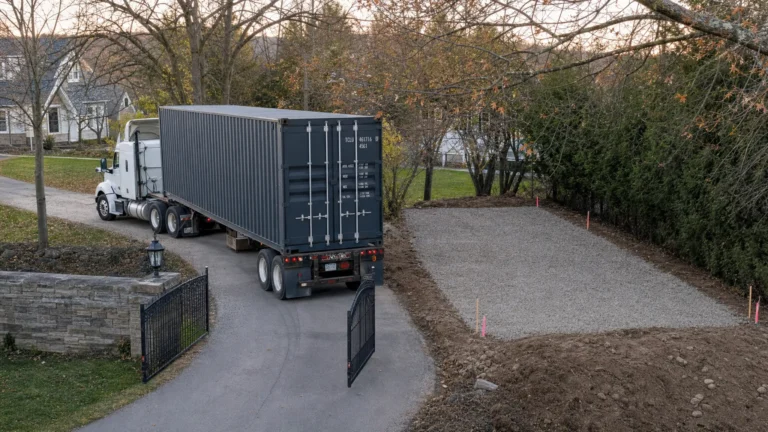
A 20ft container may be easier and less expensive to place in a tight residential or commercial location. A 40ft High Cube may require more clearance, more turning room, and a more carefully prepared drop zone. If the delivery truck cannot safely access the spot, you may need additional equipment or a different placement plan.
Good sellers help you think through the delivery before you buy. That includes asking about driveway width, overhead clearance, slope, surface stability, turning radius, and whether the container needs to be placed with doors facing a specific direction.
This is also why “near me” does not always mean “best value.” A nearby container with unclear grade, poor condition, or difficult delivery can cost more than a better-sourced unit from a supplier that offers reliable nationwide delivery and clear site planning.
Raleigh and Southeast Factors That Affect Container Value
In Raleigh, central North Carolina, and the broader Southeast, climate and ground conditions matter. Heat, humidity, heavy rain, red clay soils, and seasonal storms can all affect how well a container performs over time.
A WWT container on a poorly drained dirt pad may develop moisture issues that have nothing to do with the container’s original condition. A container placed directly in low areas may sit in standing water after storms. In humid climates, airflow and elevation are important for long-term storage quality.
For contractors and builders, jobsite movement is another factor. If a container will be moved from one project to another, a stronger Cargo Worthy unit may be a better long-term investment than the cheapest WWT option. If it will stay in one place for years, a well-inspected WWT unit on a properly prepared pad can provide excellent storage value.
For developers and small businesses planning modifications, consider starting with a cleaner shell. A One-Trip or higher-condition used container can reduce prep time, improve final appearance, and make insulation, framing, doors, windows, and finishes easier to execute.
If you are still deciding whether the price difference is justified, Lease Lane’s comparison of new vs used shipping containers can help you weigh upfront cost against condition, appearance, and expected lifespan.
Pro-Tip: Prepare the Site Before the Truck Arrives
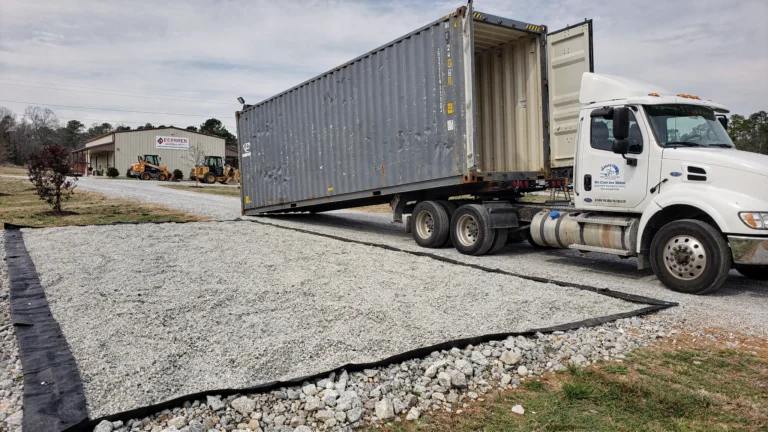
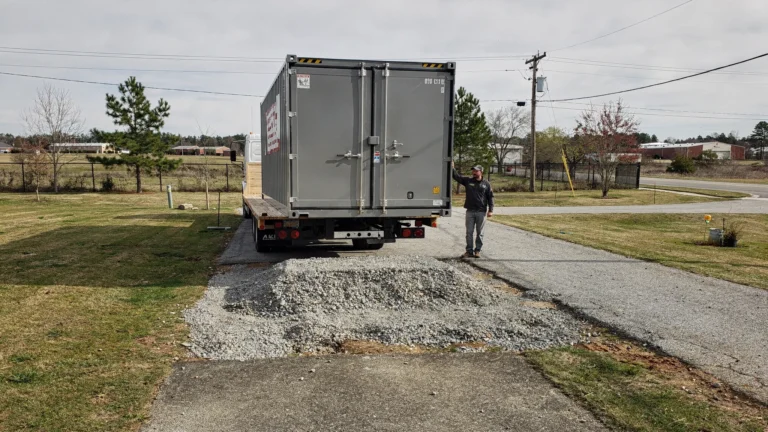
Pro-Tip: The best container value can be lost if the site is not ready. Prepare a level, stable, well-drained pad before delivery, ideally using compacted gravel, concrete, or properly placed supports under the container’s structural points. Avoid dropping a container directly onto soft soil, low spots, or areas where water collects.
For most storage applications, the goal is simple: keep the container level, keep the doors aligned, and keep the underside out of standing water. If a container twists because the ground is uneven, the doors may become difficult to open and close. If the pad traps water, corrosion risk increases over time.
Before delivery, check:
- Ground firmness and drainage after rain
- Overhead clearance from branches, power lines, and building eaves
- Truck approach path, turning radius, and exit path
- Door orientation for loading and daily access
- HOA, zoning, and permit requirements in your city or county
Permit rules can vary across Raleigh, Wake County, nearby municipalities, rural areas, and commercial districts. Some sites treat containers as temporary storage, while others may classify them differently based on duration, visibility, foundation, use, or modifications. Always verify local requirements before buying, especially for business, residential, or modified container projects.
Red Flags That a Used Container Is Not a Good Value
A used container does not need to be flawless, but some issues should make you pause. The lower the price, the more carefully you should inspect the reason behind it.
Be cautious if you see significant roof deformation, daylight through seams, doors that do not close, heavy corrosion around the floor line, soft flooring, strong chemical odors, missing locking hardware, or unclear grade descriptions. These problems can indicate repair costs, security concerns, or limited remaining life.
Also watch for sales practices that create risk. A seller who cannot explain the difference between WWT and Cargo Worthy, will not discuss delivery access, or only provides generic photos may not be giving you enough information to make a sound purchase.
A reputable supplier should be comfortable discussing container grade, condition expectations, delivery planning, and whether a 20ft, 40ft, Standard, High Cube, Reefer, One-Trip, Cargo Worthy, or WWT unit makes sense for your specific use.
How to Choose a Seller When Searching Locally
A good container seller does more than quote a price. They help you avoid buying the wrong unit. This is especially important for first-time buyers, homeowners, contractors, small businesses, and agricultural users who may not know how delivery and grading affect the total cost.
Look for a seller that provides clear condition language, practical delivery guidance, and honest recommendations based on use case. If you only need dry storage, they should not push you into the most expensive unit without a reason. If you need export capability, they should not sell a basic WWT container as if it were Cargo Worthy.
Lease Lane Containers LLC is headquartered in Raleigh, NC and works with buyers across North Carolina, the Southeast, and the wider USA. The team supplies new One-Trip and used containers, including 20ft and 40ft units, Standard, High Cube, and Refrigerated options, with guidance on grading, delivery, and site preparation.
Frequently Asked Questions
What is the best grade when buying used containers for sale near me? For stationary storage, a Wind & Watertight container is often the best value if the roof, doors, floor, and seals are in good condition. For shipping cargo, choose Cargo Worthy. For appearance-sensitive projects or modifications, consider One-Trip or higher-condition used units.
Is Cargo Worthy better than Wind & Watertight? Cargo Worthy usually indicates a higher structural standard and suitability for transport when properly inspected and documented. Wind & Watertight means the container should keep out weather, but it may not be certified or appropriate for cargo movement.
Are used shipping containers built to ISO standards? Standard intermodal shipping containers are manufactured around ISO dimensional and structural standards, which support stacking, lifting, and transport compatibility. However, a used container’s current condition still needs to be inspected because damage and wear can affect performance.
Should I buy a 20ft or 40ft used container? Choose a 20ft container for tighter sites, easier placement, and smaller storage needs. Choose a 40ft container when you need more capacity and have enough access for delivery. A 40ft unit often offers better cost per square foot, but only if your site can handle it.
Can I place a used container directly on the ground? It is better to place the container on a level, well-drained surface such as compacted gravel, concrete, or properly positioned supports. Direct soil contact can increase moisture exposure and may cause leveling issues that affect door operation.
How do I know if a cheap used container is a bad deal? Check for leaks, soft floors, severe rust, door problems, roof damage, and unclear grade descriptions. Also compare delivered cost, not just the listed price. A slightly more expensive unit in better condition can be the stronger long-term value.
Ready to Compare Used Containers With a Local Expert?
If you are looking for used containers for sale near you in Raleigh, across North Carolina, throughout the Southeast, or anywhere in the USA, Lease Lane Containers LLC can help you compare size, grade, delivery requirements, and site preparation before you buy.
Contact the sales team at sales@leaselanecontainers.com or visit the Raleigh office to discuss your project, review available 20ft and 40ft options, and choose a container that delivers real value for your site.