Used Containers: What Smart Buyers Check
A used container can save you thousands compared with a one-trip unit, but only if you know what you are buying. The difference between a solid storage box and a future headache usually comes down to grade, structural condition, and delivery planning – not just the asking price.
For contractors, growers, facility managers, and property owners, that matters. You are not buying decor. You are buying secure, weather-resistant steel space that needs to arrive on time, land where you need it, and perform for years. That is why the best purchase decisions start with verified specifications and clear condition standards, not a low number in a quote.
Why used containers still make sense
Used containers are popular for a simple reason: they deliver practical value fast. A retired shipping container is built from Corten steel, designed for intermodal transport, and engineered to handle heavy stacking loads and rough handling in service. Even after years in circulation, many units still have strong structural integrity for ground-level storage, workshops, agricultural use, and job-site security.
That said, used does not mean uniform. Two 40-foot containers can look similar in photos and perform very differently in the field. One may be Wind and Watertight, with solid floors and working doors. Another may need immediate floor repair, door adjustments, or patching around corrosion points. If a seller is vague about grade, that is usually where surprises begin.
The grades that matter when buying used containers
The fastest way to compare used containers is to understand the grade language. In this market, the most common terms are Wind and Watertight and Cargo Worthy.
Wind and Watertight means storage-ready
A Wind and Watertight, or WWT, container is generally suited for static storage. It should keep out normal wind and rain, have functioning doors, and maintain basic structural soundness. For contractors storing tools and materials or landowners needing secure equipment storage, this is often the practical target.
WWT does not mean cosmetically clean. You should expect dents, surface rust, repair marks, and signs of prior use. The key question is whether those issues are cosmetic or structural. Honest grading makes that distinction clear.
Cargo Worthy means a higher transport standard
Cargo Worthy, or CW, usually indicates the container meets a standard appropriate for continued freight service, subject to inspection and certification requirements. For some buyers, that higher standard offers peace of mind even if the container will never go back on a ship.
The trade-off is price. If your container will sit on a farm, construction site, or back lot for storage only, paying extra for a transport-oriented grade may not always be necessary. If you need maximum structural confidence, plan future relocation, or want a cleaner unit for customer-facing use, the premium can be justified.
What to inspect before you buy
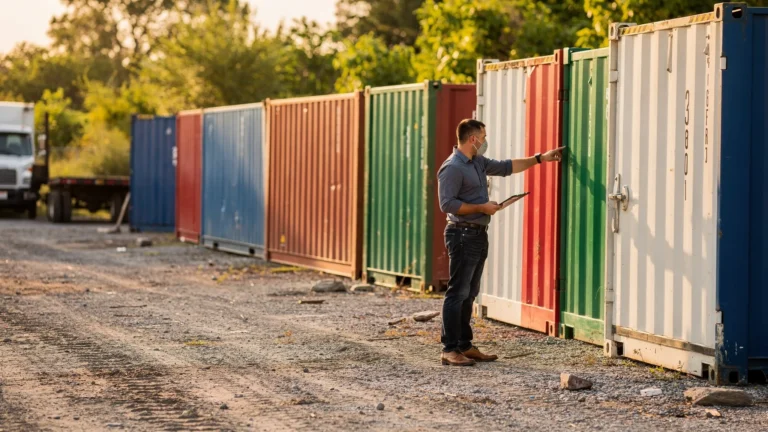
A fair price only matters if the container fits the job. Photos help, but there are a few condition points that deserve special attention in any quote or inspection report.
Start with the roof. Roof damage is easy to overlook from ground level, but ponding water and impact dents can become long-term leak risks. Ask whether the roof is free of active leaks and whether any repairs have been made.
Next, look at the doors. Container doors tell you a lot about frame alignment. If they are hard to open, dragging, or not sealing evenly, the unit may have racking or frame distortion. For daily access on a job site, that gets old quickly.
The floor matters just as much. Most used shipping containers have marine-grade plywood floors over steel cross members. Ask about soft spots, delamination, contamination, and past cargo history. If you plan to store pallets, tools, feed, or machinery, floor integrity is not a minor detail.
Then check the understructure. Cross members, corner castings, and the bottom rails carry the load. Surface rust is common. Heavy scaling, perforation, or bent structural members are a different issue. A container can still look acceptable from the side and have a weak underbody.
Choosing the right size and type
The right container is not always the cheapest one in stock. It is the one that matches your footprint, access needs, and delivery constraints.
A 20-foot used container is often the easiest choice for tight sites and residential properties. It offers substantial storage without demanding as much placement space. For construction firms and agricultural operators, a 40-foot unit is often the better value per square foot, especially when storing long tools, bulk supplies, or seasonal inventory.
High-cube containers add roughly one extra foot of interior height. That difference is meaningful if you are storing taller equipment, adding shelving, or planning a workshop or modular conversion. Standard-height units are often adequate for basic storage, but if vertical space will affect how you use the container, it is worth deciding early.
Specialty units also have their place. Open-top containers can simplify loading oversized materials. Tunnel containers, with doors at both ends, improve access when you need quick retrieval. Reefer containers may work for certain insulated applications, though refrigeration equipment condition should be evaluated separately from the shell itself.
Delivery is where many problems start
A container can be structurally sound and still become a bad purchase if delivery was not planned correctly. This is one of the biggest gaps between a low-price quote and a reliable transaction.
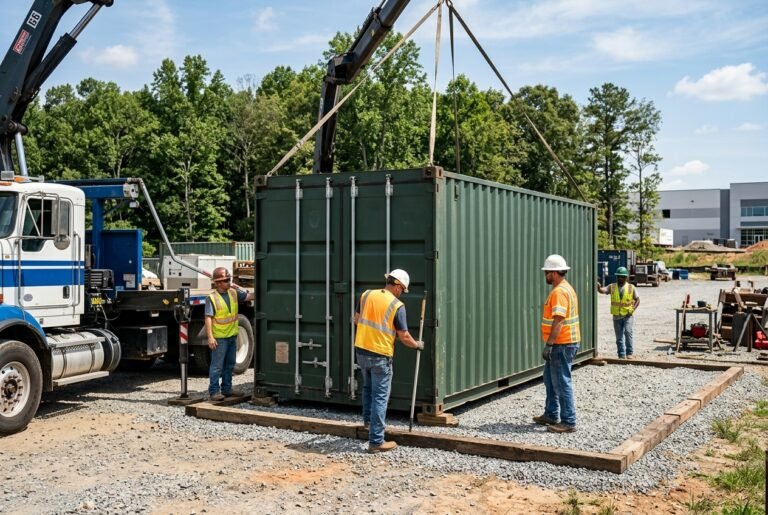
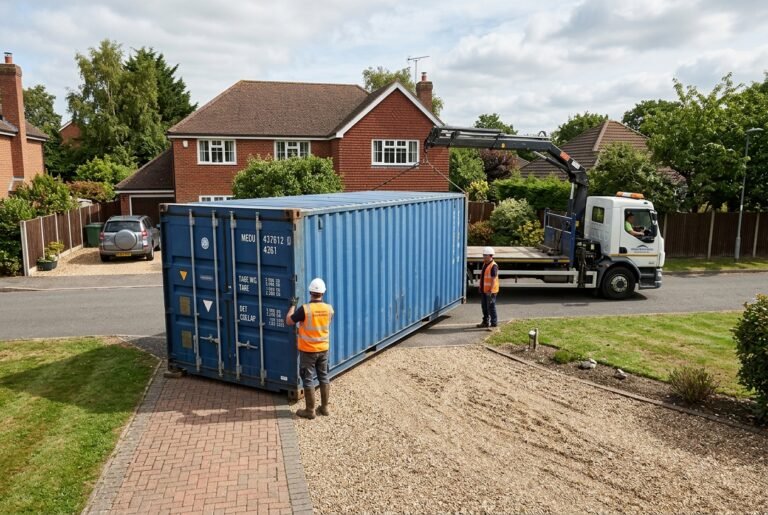
Most deliveries use either a tilt-bed trailer or a ground-level placement method, depending on the site and the container type. That means the drop area needs more than just enough room for the box itself. You also need overhead clearance, approach space, turning room for the truck, and reasonably firm ground.
Soft soil, low branches, narrow gates, steep grades, and overhead wires are common trouble spots. So are assumptions about where the driver can safely place the container. A dependable seller will ask detailed questions about your site before dispatch. That is not red tape. It is how you avoid redelivery fees, failed drops, and damaged property.
For buyers in fast-moving markets like construction, timing matters too. If you need a container before a crew mobilizes or before materials arrive, ask for a realistic delivery window. Precise scheduling is often worth more than chasing the lowest initial price.
Price is only one part of the cost
Used containers are appealing because they lower upfront spend, but total cost still depends on condition, delivery distance, and how much prep work the unit needs after arrival.
A lower-grade container may work well for remote equipment storage where appearance is irrelevant. It may be a poor fit for a retail pop-up, a residential workshop, or any customer-facing installation. Cosmetic wear, patch repairs, and mismatched paint are not defects in every use case, but they affect value depending on the setting.
The same goes for modifications. If you already know you need personnel doors, roll-up doors, vents, insulation, or electrical work, start with a container that supports those upgrades cleanly. Saving money on the initial shell can backfire if the floor, frame, or door end needs more correction before customization begins.
When used is the right call – and when it is not
Used containers are often the best fit for secure storage, overflow inventory, farm use, tool lockups, and workshop shells. They are durable, available, and cost-effective. For many commercial buyers, that is enough.
They are not always the best fit when exterior appearance is critical, when the container will anchor a high-visibility branded space, or when you want the longest possible service life with the fewest cosmetic compromises. In those cases, a one-trip unit may be the better long-term value despite the higher purchase price.
This is where a transparent seller adds real value. The right recommendation is not always the highest-ticket unit. It is the container that matches the job without creating hidden repair, logistics, or appearance costs later.
Questions worth asking before you commit
Before you place an order, ask what grade the container is, whether the seller can verify it is Wind and Watertight or Cargo Worthy, and whether the listed price includes delivery or just the box. Ask about door function, floor condition, visible repairs, and the expected exterior appearance. If your site has limited access, ask what delivery method will be used and what clearance is required.
Those are not small details. They are the difference between a straightforward purchase and a container that shows up wrong for the site, wrong for the use, or more expensive than expected. A company like Lease Lane Containers focuses on those details because buyers want the same thing every time: clear pricing, verified specs, and no surprises.
A good used container should feel boring in the best possible way. It should arrive when promised, sit level, open properly, stay dry, and do its job without demanding constant attention. That is usually the smartest standard to buy against.