
20ft Shipping Container for Sale Near Me: Buyer Tips
Searching for a 20ft shipping container for sale near me usually means you are past the browsing stage. You likely need secure storage, a jobsite unit, inventory space, farm storage, a workshop shell, or a container that can still move freight. The challenge is that nearby listings can look similar online while the real value depends on grade, delivery, condition, seller transparency, and site readiness.
A 20ft container is one of the most versatile ISO-standard storage options because it offers a strong steel structure in a compact footprint. For buyers in Raleigh, Wake County, the wider Southeast, and across the U.S., the best purchase is not always the cheapest listing. It is the unit that fits your use case, arrives as described, and can be placed safely without surprise fees.
This guide explains how to compare nearby 20ft containers like a professional buyer, with practical tips on grades, inspections, delivery, and site preparation.
Start With the Real Reason You Need a 20ft Container
A 20ft shipping container is popular because it is easier to place than a 40ft unit while still offering serious storage capacity. Contractors use them for tools, compressors, lumber, fixtures, and jobsite materials. Homeowners use them during renovations or for long-term property storage. Farms use them for feed, small equipment, and seasonal supplies. Small businesses use them for overflow inventory, pop-up retail concepts, or operational storage behind a shop.
Before comparing sellers, define what the container must do. A construction storage unit can often tolerate dents and cosmetic wear if it is wind and watertight. A customer-facing retail pop-up or office conversion usually deserves a cleaner one-trip unit. A logistics manager planning export cargo should focus on Cargo Worthy condition and current certification details.
For a deeper pricing breakdown, compare your budget with the Lease Lane guide to 20ft shipping container price factors.
Know the Basic 20ft Container Specifications
Most standard 20ft dry containers are built to ISO intermodal dimensions, with corner castings designed for stacking, lifting, and secure transport. The exterior is typically corrugated Corten Steel, a weathering steel designed to handle tough marine and over-the-road conditions. Exact measurements can vary slightly by manufacturer, so always confirm the unit’s data plate and seller specs before purchase.
| Specification | Typical 20ft standard dry container |
|---|---|
| Exterior length | 20 ft |
| Exterior width | 8 ft |
| Exterior height | 8 ft 6 in |
| Interior length | About 19 ft 4 in |
| Interior width | About 7 ft 8 in |
| Interior height | About 7 ft 10 in |
| Door opening | About 7 ft 8 in wide by 7 ft 5 in high |
| Exterior footprint | About 160 sq ft |
| Common construction | Corrugated Corten Steel walls, steel frame, marine-grade plywood floor |
A 20ft High Cube container, when available, adds extra height with a typical exterior height of 9 ft 6 in. High Cube units can be useful for taller shelving, equipment, insulation, or office conversions, but they may require more overhead clearance during delivery. If you are choosing between a 20ft and larger unit, review the Lease Lane guide on shipping container sizes.
Do Not Compare Prices Until You Compare Grades
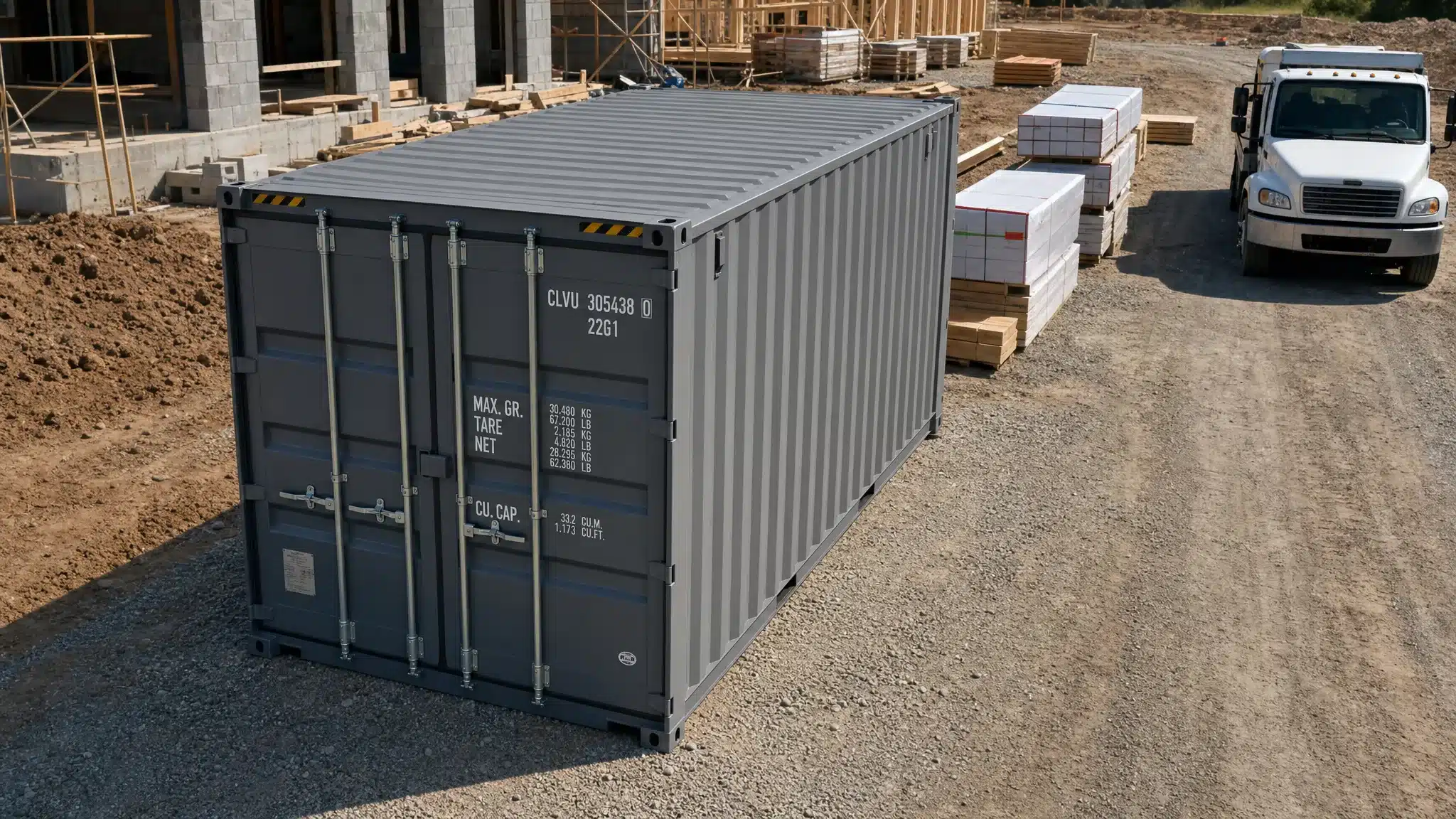
The biggest mistake buyers make is treating all nearby 20ft containers as equal. They are not. The grade determines structural reliability, weather resistance, cosmetic condition, export suitability, and long-term value.
| Grade | What it usually means | Best fit | Watchouts |
|---|---|---|---|
| One-Trip | A nearly new container that has typically made one loaded voyage from the factory | Clean storage, visible business use, office or retail conversions, long-term ownership | Costs more upfront, but usually has better appearance and longer service life |
| Cargo Worthy | A used container inspected for transport suitability, often relevant when a valid CSC plate or survey is required | Export, logistics, stacking, higher-value storage, modification projects needing stronger structure | May have cosmetic dents, rust, or patch repairs despite being structurally sound |
| Wind and Watertight | A used container that should keep out wind and rain for stationary storage | Jobsite storage, farm storage, household goods, business overflow | Not necessarily certified for ocean export, condition can vary widely |
| As-Is | A used unit sold without reliable condition guarantees | Low-cost projects where the buyer can inspect and repair | Higher risk of leaks, floor issues, door problems, or structural corrosion |
For most ground-level storage in Raleigh and the Southeast, a Wind and Watertight unit can be a practical value if it has solid doors, intact gaskets, a usable floor, and no active leaks. For international shipping or intermodal movement, a Cargo Worthy container is usually the safer choice. For clean curb appeal, modifications, or long service life, one-trip containers are often worth the premium.
If you are considering used containers, read the Lease Lane guide to used shipping container grades before comparing quotes.
Buyer Tip 1: Shop Nearby, But Compare the Delivered Price
A local listing may advertise a low container price, but your real cost is the delivered and placed cost. Delivery can change the final number based on distance, fuel, truck type, site access, ground conditions, and whether special equipment is needed.
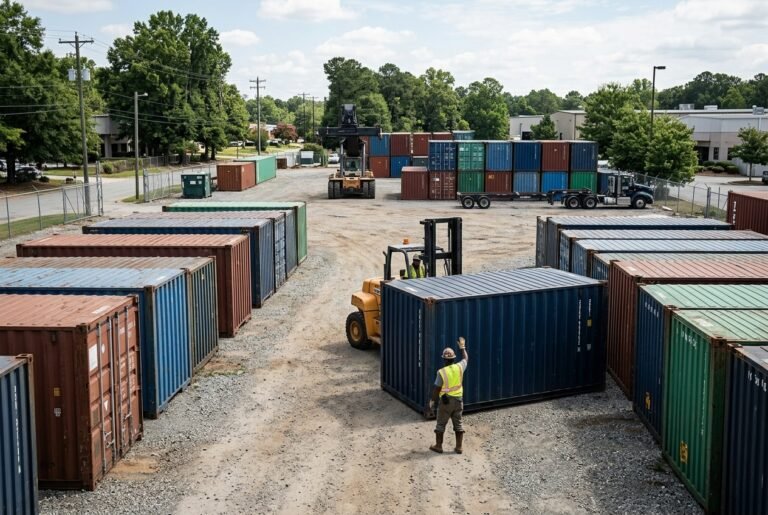
A Raleigh-area buyer, for example, may see different quotes depending on whether the container is staged near the Triangle, coming from a coastal port corridor, or being moved from another regional yard. A nearby supplier with reliable delivery planning can often save time, reduce miscommunication, and help prevent failed delivery attempts.
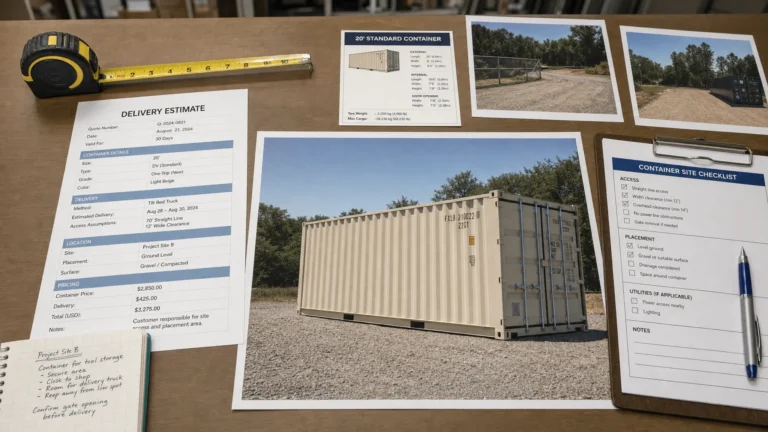
When you request a quote, ask whether it includes delivery, placement, taxes or fees, and any conditions that could trigger extra charges. If you want delivery included from the beginning, Lease Lane’s guide on how to buy a shipping container with delivery included explains what to confirm before you approve the order.
Buyer Tip 2: Ask for Photos That Prove Condition
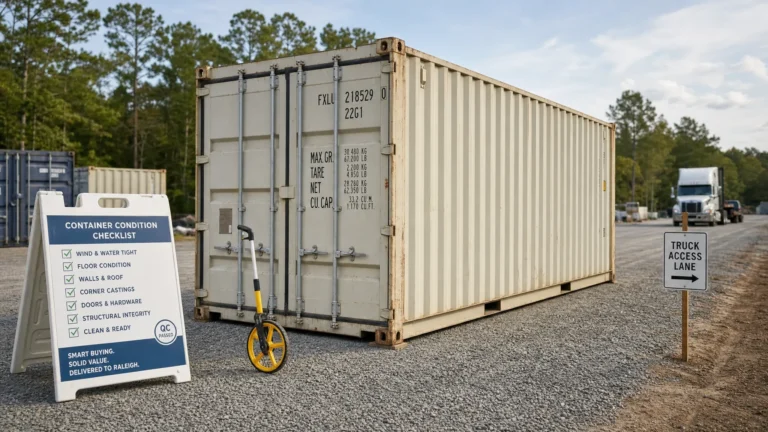
A trustworthy seller should be able to explain the grade clearly and provide photos that match the unit or the grade being sold. For used containers, photos should show more than the front doors. Ask for views of the sides, roof, floor, door gaskets, locking rods, corner castings, and underside if available.
For a 20ft container, pay close attention to the door end. Doors should open and close without excessive force. Gaskets should be flexible enough to seal. Locking rods should move properly. The floor should not have soft spots, chemical odors, or major delamination. Surface rust is common on used Corten Steel containers, but deep corrosion around rails, corners, or roof seams is more serious.
If you cannot inspect the unit in person, ask for documentation of the inspection standard. A Wind and Watertight unit should be checked for leaks. A Cargo Worthy unit should have the proper certification support for its intended transport use. A one-trip unit should still be inspected for handling marks, door operation, and floor condition.
Buyer Tip 3: Match the Grade to the Use Case
The right 20ft container depends on what you are storing and how long it needs to perform. Buying too low a grade can lead to leaks, repairs, or poor resale value. Buying too high a grade can waste money if the unit will only store rugged tools on a temporary site.
| Buyer type | Recommended starting point | Why it works |
|---|---|---|
| General contractors | WWT or Cargo Worthy 20ft unit | Secure, durable storage for tools and materials without paying for new appearance |
| Homeowners | WWT for basic storage, one-trip for long-term visible placement | Balances budget, curb appeal, and weather protection |
| Farms and rural properties | WWT or Cargo Worthy | Handles feed, supplies, and equipment storage with strong steel security |
| Small businesses | One-trip or clean Cargo Worthy | Better appearance for retail, inventory, or customer-facing sites |
| Logistics managers | Cargo Worthy or one-trip | Better fit for export, intermodal movement, and documentation requirements |
| Modular or office projects | One-trip or high-quality Cargo Worthy | Cleaner shell, stronger starting point, and fewer repair surprises |
If your storage needs may grow quickly, compare a 20ft container with 40ft containers. A 20ft unit is easier to place, but a 40ft unit offers significantly more storage for businesses, builders, and agricultural operations with enough space.
Buyer Tip 4: Verify the Seller, Not Just the Container
When a listing says 20ft shipping container for sale near me, you still need to know who is behind it. Container scams and vague broker listings can create problems when buyers pay deposits without confirmed inventory, grade definitions, or delivery details.
A reputable container company should explain grades in plain language, confirm whether the unit is one-trip, Cargo Worthy, or Wind and Watertight, and provide a clear delivery plan. Local knowledge also matters. A team familiar with Raleigh neighborhoods, rural North Carolina properties, and Southeast delivery conditions can spot issues like tight driveways, soft ground, overhead branches, or HOA restrictions before the truck arrives.
Before sending payment, confirm the company’s business identity, service area, inventory process, delivery method, and inspection expectations. Lease Lane’s guide on how to vet a shipping container company in Raleigh, NC gives a practical checklist for checking supplier credibility.
Buyer Tip 5: Treat Delivery as Part of the Purchase
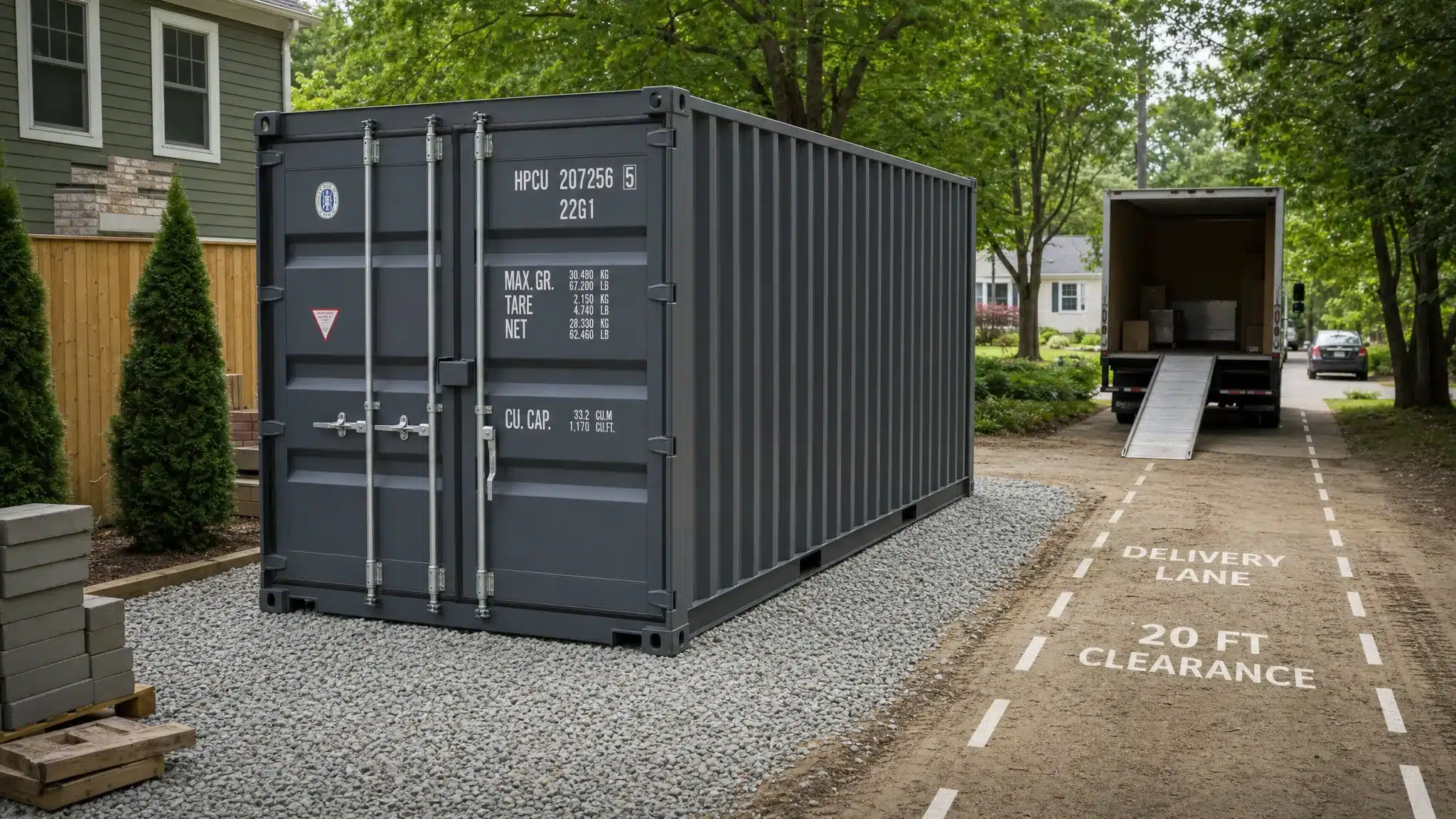
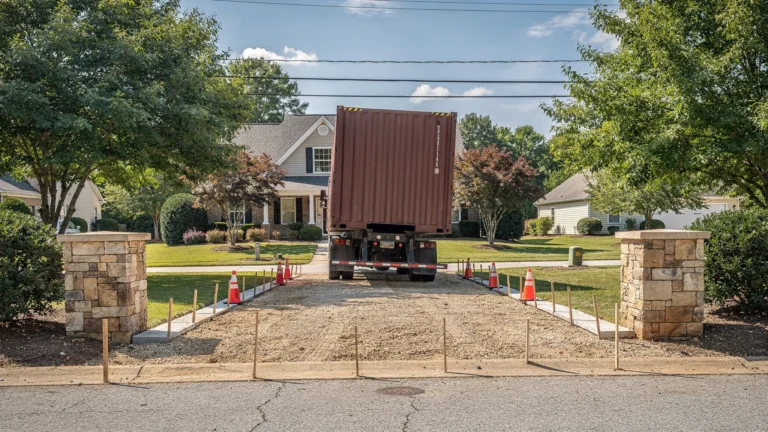
A 20ft container is smaller than a 40ft unit, but it is still heavy and requires proper access. Many buyers choose a tilt-bed delivery because it allows the driver to slide the container into place at ground level. Other sites may require a flatbed, crane, side-loader, or other equipment depending on obstacles and placement needs.
The most important delivery questions are simple: Can the truck access the property safely? Is there enough straight-line room to unload? Is the ground firm enough? Are there low power lines, tree limbs, fences, septic areas, or tight turns? Is the door orientation marked before the truck arrives?
For many 20ft tilt-bed deliveries, buyers should expect to need a clear approach path and adequate straight-line room beyond the container footprint. Exact requirements depend on the truck, trailer, driver, surface, slope, and placement angle, so always confirm with the delivery team. For a full planning checklist, review how to prepare your site for container delivery.
Pro Tip: Prepare the Pad Before You Schedule the Drop
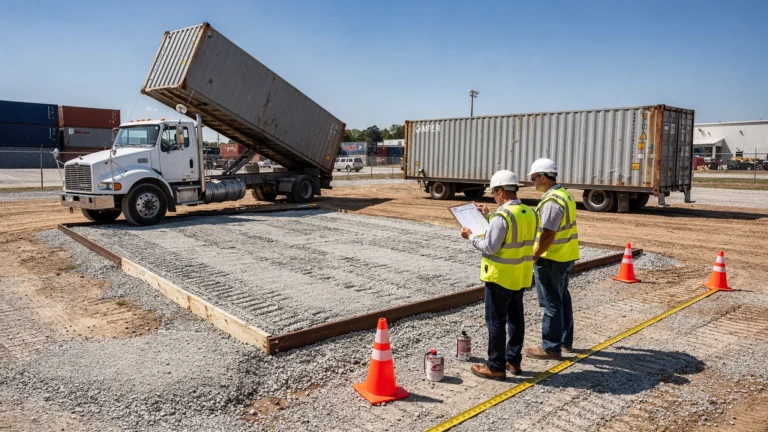
Do not place a container directly on soft soil if you can avoid it. A level base helps the doors operate properly, reduces frame twist, and improves drainage under the steel structure. In North Carolina’s humid climate, airflow and drainage are especially important because trapped moisture can accelerate corrosion and create interior condensation problems.
For many storage projects, a compacted gravel pad is a practical starting point. Extend the pad beyond the container footprint, slope surrounding grade away from the unit, and support the corners evenly with suitable blocks, pavers, railroad ties, piers, or a properly designed slab. Avoid setting the container where water pools after rain. If you plan to dig, trench, install piers, or run utilities, contact NC 811 before work begins.
Also check permits and rules before delivery. In Raleigh, Wake County, and nearby municipalities, requirements can vary based on zoning, property type, duration, visibility, business use, and whether the container is modified or used as an occupied structure. HOAs and commercial property managers may have their own rules. A quick permit check is much easier than moving a loaded container later.
What to Ask Before You Buy
A good quote should make the container, grade, delivery, and placement assumptions clear. If a seller cannot answer basic questions, keep shopping.
Ask these questions before you commit:
- What is the exact container grade: One-Trip, Cargo Worthy, Wind and Watertight, or As-Is?
- Is the price for the container only, or does it include delivery and placement?
- Where is the container located, and how soon can it be delivered to my ZIP code?
- Can I see current photos of the doors, roof, sides, floor, gaskets, and lock area?
- Is the unit built to standard ISO dimensions, and is it standard height or High Cube?
- If I need export use, is the container Cargo Worthy with appropriate CSC documentation?
- What delivery method will be used, and what access or clearance does that truck require?
- What happens if my site is not ready on delivery day?
For broader purchasing guidance, Lease Lane’s shipping container buyers guide covers size, grade, inspection, delivery, and site planning in one place.
When a 20ft Container May Not Be the Best Fit
A 20ft container is ideal when space is limited, access is tight, or you need a manageable storage footprint. But it is not always the best choice. If you need bulk inventory storage, pallet racking, large farm equipment, or long materials, a 40ft container may deliver better cost per cubic foot. If you need extra interior height for insulation, lighting, roll-up doors, or workspace comfort, a High Cube may be worth considering.
If you need temperature control for food, flowers, pharmaceuticals, or sensitive inventory, a refrigerated container, also called a reefer, may be more appropriate than a standard dry container. Reefer units require power planning, temperature testing, and more maintenance, so the buying process is different from a basic storage container.
The best seller will not force every buyer into the same size. They should help you match container type, grade, delivery, and site conditions to your actual project.
Frequently Asked Questions
Is a 20ft shipping container big enough for jobsite storage? Yes, a 20ft container is often a strong fit for contractors because it provides secure ground-level storage in a compact footprint. It works well for tools, materials, fasteners, fixtures, and smaller equipment. Larger crews or long materials may need a 40ft unit.
What grade should I buy for basic storage? Wind and Watertight is often sufficient for stationary storage if the unit has good doors, gaskets, flooring, and no active leaks. Choose Cargo Worthy for transport or higher structural confidence, and choose one-trip when appearance and long service life matter.
Can a 20ft container be delivered to a driveway? Often, yes, but it depends on driveway width, slope, overhead clearance, turning room, surface strength, and truck access. Concrete, asphalt, and compacted gravel may all work in the right conditions, but the delivery team should review the site before scheduling.
Do I need a permit for a shipping container in Raleigh, NC? It depends on location, zoning, property type, use, duration, and whether the container is modified or occupied. Check with the City of Raleigh, Wake County, your municipality, or your HOA before delivery.
Is a Wind and Watertight container suitable for export? No, not by grade alone. WWT means the container should keep out wind and rain for storage, but it does not necessarily mean the unit is approved for ocean shipping. For export, ask for a Cargo Worthy unit and confirm CSC requirements.
Ready to Find the Right 20ft Container?
If you are searching for a 20ft shipping container for sale near me in Raleigh, North Carolina, the Southeast, or anywhere in the U.S., focus on more than the closest listing. Confirm the grade, inspect the condition, compare delivered pricing, and prepare the site before the truck arrives.
Lease Lane Containers LLC supplies high-quality one-trip and used containers, including 20ft and 40ft units, High Cube options, refrigerated containers, trailers, and custom modular solutions. For current availability, delivery planning, and clear pricing, contact the sales team at sales@leaselanecontainers.com or visit the Raleigh office.
One Comment