20 Foot Shipping Container Weight and Payload Basics
The 20 foot shipping container weight most buyers ask about is the empty weight, also called tare weight. For a standard 20ft dry container, that number is commonly around 4,800 to 5,200 pounds, but the more important question is often, “How much can I safely load inside?”
That is where payload comes in. A 20ft container may look compact next to a 40ft unit, yet it can carry a surprisingly heavy load when it is built to ISO standards, kept in good structural condition, and loaded correctly. For general contractors in Raleigh, small businesses across North Carolina, farms in the Southeast, and logistics teams moving freight nationwide, understanding weight and payload helps prevent delivery problems, overloaded floors, road-limit issues, and avoidable repair costs.
This guide explains the core weight terms, typical numbers, grade differences, and practical loading decisions you should make before buying or scheduling delivery.
The Three Weight Terms Every Buyer Should Know
Container weight discussions can get confusing because sellers, truckers, and freight forwarders may use different terms. The three numbers that matter most are tare weight, payload, and maximum gross weight.
| Term | What it means | Why it matters |
|---|---|---|
| Tare weight | The empty weight of the container itself | Helps plan delivery equipment, site placement, and crane or forklift needs |
| Payload capacity | The maximum cargo weight the container is designed to carry | Helps determine how much material, inventory, or freight can be loaded |
| Maximum gross weight | Tare weight plus payload | The total loaded weight of the container and its contents |
The basic formula is simple:
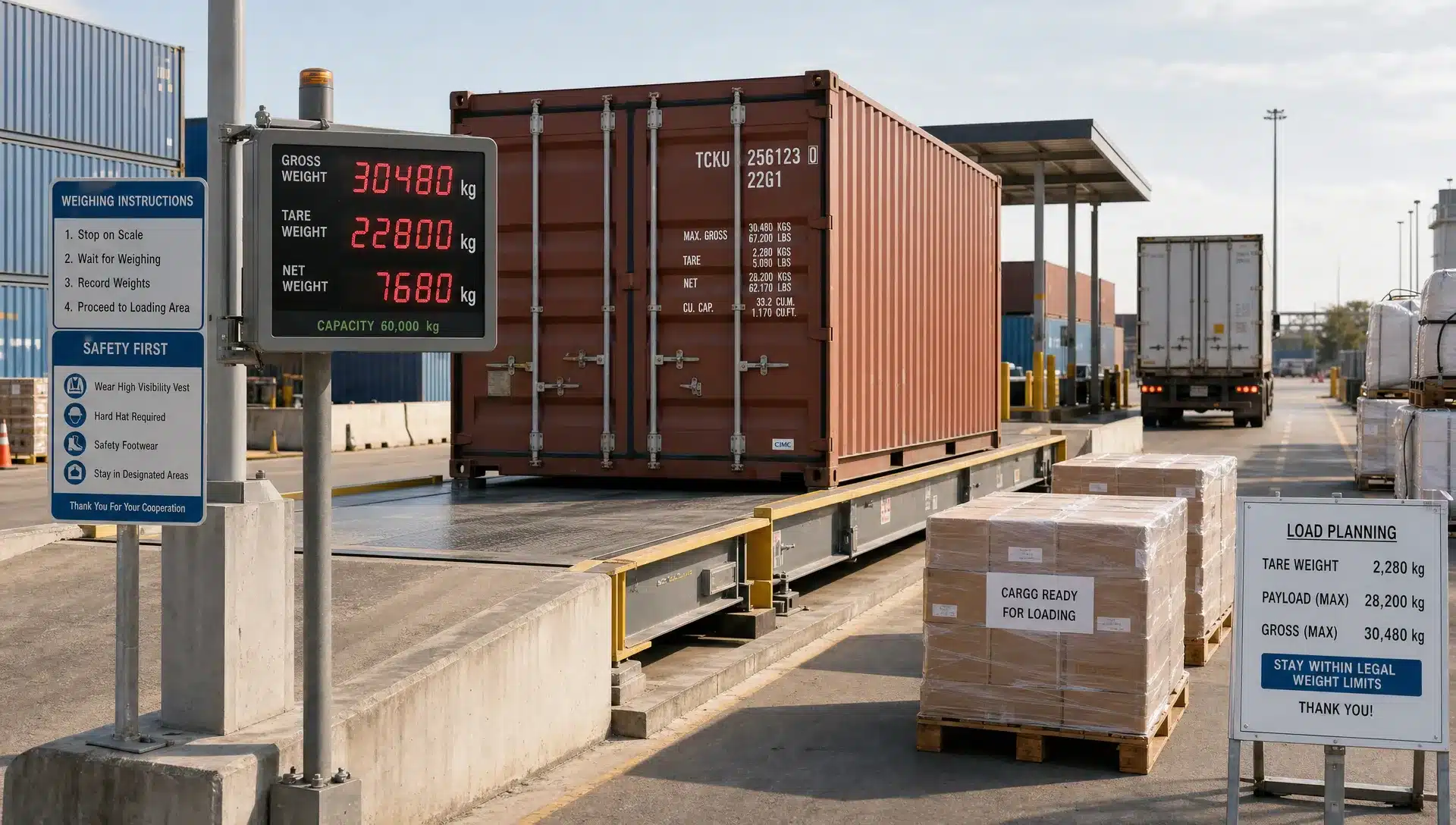
Maximum payload = maximum gross weight minus tare weight
For example, if a 20ft dry van has a maximum gross weight of 67,200 pounds and a tare weight of 4,900 pounds, the listed payload capacity is about 62,300 pounds. That does not automatically mean you should put 62,300 pounds inside for every use case. Road regulations, axle limits, floor loading, forklift handling, and the condition grade of the unit all affect what is practical.
Typical 20 Foot Shipping Container Weight by Type
A standard 20ft dry van is the most common option for storage and freight. It is built with a Corten Steel frame and corrugated steel walls, with corner castings designed for ISO handling. High Cube and refrigerated options can weigh more because of added height, insulation, or mechanical systems.
The table below gives planning ranges. Always verify the CSC plate on the actual container before shipping or loading near its limits.
| 20ft container type | Typical tare weight | Common maximum gross weight | Payload planning note |
|---|---|---|---|
| Standard 20ft dry van | About 4,800 to 5,200 lb | Often up to 67,200 lb on many ISO units | Best general reference point for storage and dry cargo |
| 20ft High Cube | About 5,100 to 5,600 lb | Often similar to standard ISO ratings | Extra height can slightly reduce usable payload because the unit weighs more |
| 20ft refrigerated container | About 6,500 to 7,500 lb | Often up to 67,200 lb, depending on the plate | Refrigeration machinery and insulation reduce cargo payload |
| Older or specialty 20ft units | Varies by build and plate | Some older units may show lower ratings | Confirm the plate before assuming modern payload numbers |
For storage buyers, tare weight matters most at delivery. For freight buyers, maximum gross weight and payload matter just as much. For anyone planning to move a loaded container by truck, the practical limit may be set by federal and state road rules rather than the container’s design capacity.
If you are comparing size, door opening, interior clearance, and payload together, Lease Lane’s guide to storage container measurements for doors, interiors, and payload is a useful companion before you commit to a unit.
Why a 20ft Container Can Carry Heavy Loads
A 20ft container is shorter than a 40ft container, but it is often preferred for dense cargo because the weight is concentrated over a smaller footprint. This is one reason 20ft units are common for heavy materials such as tile, machinery, metal parts, tools, fasteners, and certain agricultural supplies.
The strength comes from the container’s structural system. ISO containers rely on corner posts, top and bottom rails, crossmembers, and corner castings to carry and transfer loads. The corrugated Corten Steel side walls add rigidity, while the marine-grade plywood floor sits over steel crossmembers. The container is designed to be lifted, stacked, and moved when loaded, provided it is within rating and in suitable condition.
Still, payload is not just about one total number. A container floor can be damaged by concentrated point loads even when the total cargo weight is below the listed payload. A small but extremely heavy machine, for example, may need steel plates, timber dunnage, or blocking to spread the load across multiple crossmembers.
How Container Grade Affects Weight and Payload Decisions
A container’s grade does not usually change the manufacturer’s original tare weight or maximum gross rating, but it strongly affects how you should use the unit. This is especially important when comparing one-trip, Cargo Worthy, Wind and Watertight, and condition-graded used containers.
| Grade or condition | What it means | Weight and payload relevance | Best fit |
|---|---|---|---|
| One-Trip | A newer container that has typically made one cargo journey | Usually excellent condition, but payload still depends on the CSC plate | Long-term storage, modifications, retail, offices, high-appearance uses |
| Cargo Worthy | Inspected as structurally suitable for cargo transport | Most relevant when loading freight or shipping internationally | Logistics, export cargo, regional transport, heavier jobsite loads |
| Wind and Watertight, or WWT | Used container that keeps out wind and water but is not necessarily certified for shipping | Good for static storage, but not the same as cargo certification | Tools, equipment, farm storage, residential storage |
| Grade A used | Higher-condition used unit based on supplier grading standards | Useful when appearance and maintenance history matter | Contractors, businesses, and homeowners wanting cleaner used storage |
For logistics managers, the distinction between Cargo Worthy and WWT is critical. A WWT unit may be perfectly serviceable for storing tools at a Raleigh jobsite, but that does not mean it is approved for international cargo movement. If you need a unit evaluated for transport, a 20ft Cargo-Worthy Shipping Container Dry Van is the category to consider first.
For buyers who want a higher-condition used option for property storage, a Grade A Standard 20Ft Shipping Container can be a practical comparison point because condition, door function, floor quality, and exterior integrity matter even when the container is not being used for ocean freight.
Reading the CSC Plate Before You Load
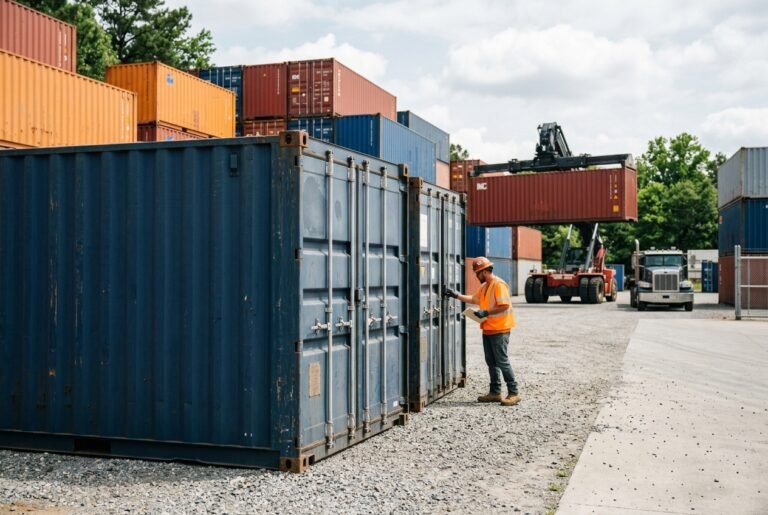
The CSC plate is usually mounted on the container door and contains key safety data. For cargo movement, it is more important than a seller’s general weight estimate because it identifies the actual rating of that specific unit.
On the plate, look for maximum gross weight, tare weight, payload or net weight, manufacturing information, and examination status. Some plates show both kilograms and pounds. If the plate is missing, unreadable, or inconsistent with the container’s use, ask the seller before planning a loaded move.
This is especially important for businesses coordinating complex logistics. Whether a project manager is scheduling container delivery in North Carolina or arranging regional site travel through services such as car hire in South Africa, the same principle applies: transportation planning works best when the real equipment limits are confirmed before the schedule is built.
Payload Planning for Common Buyers
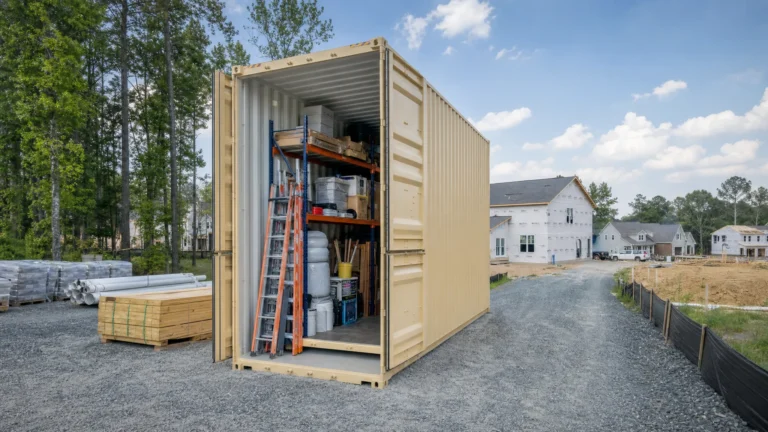
For contractors and builders, the biggest risk is underestimating dense materials. Lumber, tools, ladders, and boxed supplies usually do not approach a 20ft container’s payload capacity. Pallets of tile, stone, brick, bagged concrete, or metal components can add weight quickly. If the container will stay on site, make sure the pad can support the loaded weight. If it may be moved while loaded, confirm the plan with the carrier first.
For small businesses, payload often matters less than access and organization. Inventory overflow, retail fixtures, event equipment, and seasonal stock are rarely too heavy for the container, but uneven loading can still create problems. Keep heavier inventory low, distribute it evenly, and leave a center aisle if employees need regular access.
For homeowners and agricultural users, the biggest concern is often long-term settlement. A container holding household goods may sit well on a simple prepared pad, while a unit loaded with feed, parts, or equipment may need stronger support under the corners and crossmembers. Southeast soils can soften during extended rain, so drainage should be part of the plan.
For developers and modification buyers, remember that modifications add weight. Framing, insulation, windows, doors, HVAC systems, electrical components, and interior finishes all reduce remaining payload. A High Cube unit may be attractive for a mobile office or modular build because of the extra height, but it also has a different tare weight and may require different handling considerations.
Delivery Weight Is Not the Same as Loaded Transport Weight
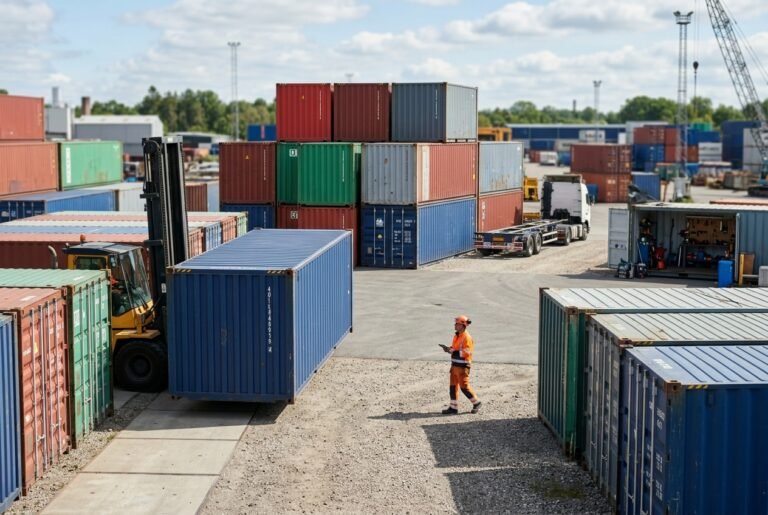
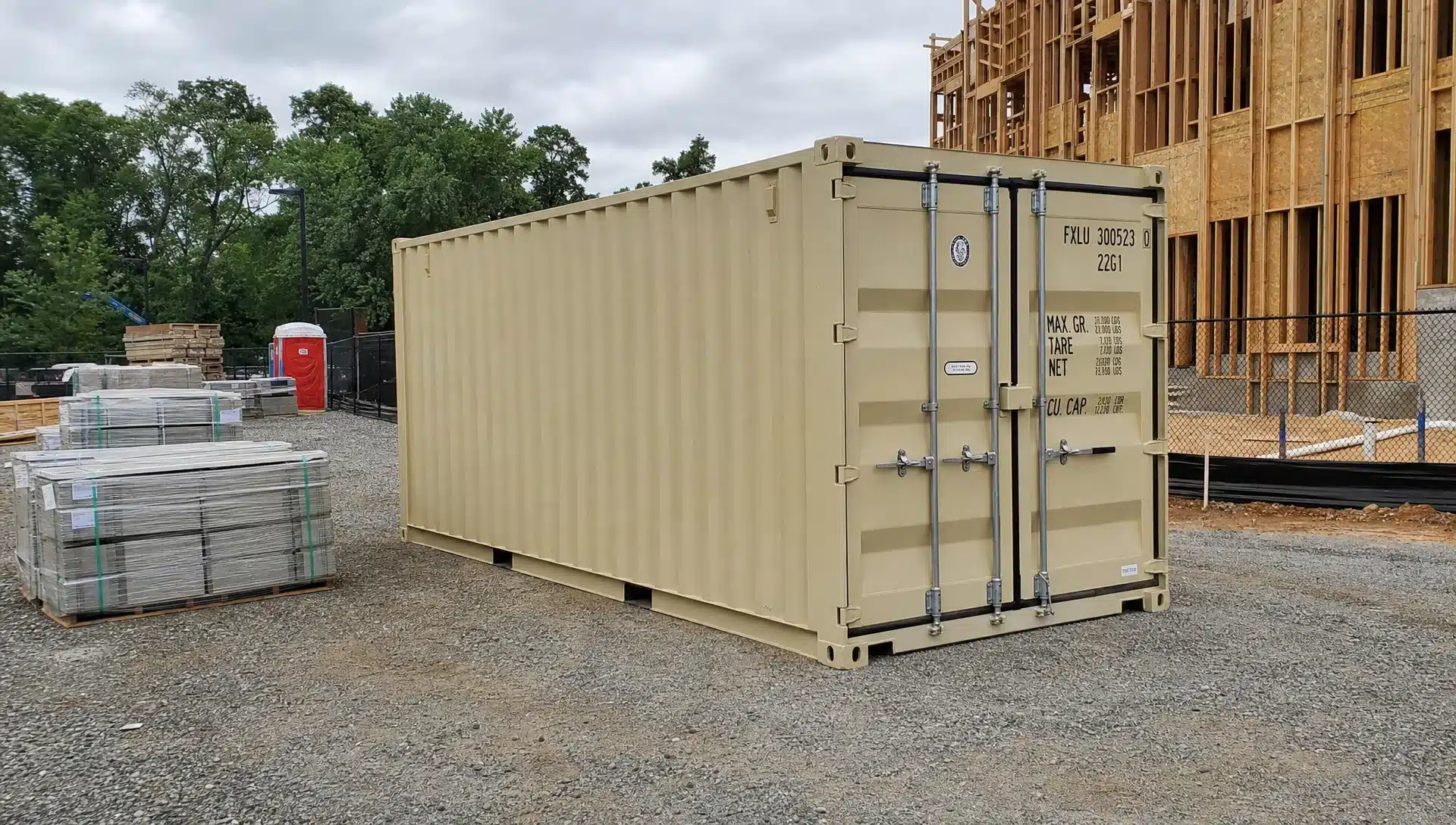
When Lease Lane Containers delivers an empty 20ft container, the truck and delivery method are planned around the tare weight, site access, and placement requirements. A standard 20ft dry container weighing around 5,000 pounds is still far too heavy for improvised handling with light equipment. It should be placed with proper delivery equipment, such as a tilt-bed truck, roll-off system, crane, or suitable heavy forklift depending on the site.
Once loaded, the situation changes. A container that is easy to deliver empty may be impossible or unsafe to relocate without specialized planning after it is filled. This is why we advise customers in Raleigh, throughout North Carolina, and across the Southeast to choose the drop location carefully before loading.
If you are still deciding whether a 20ft unit is the right size and grade, our guide on how to shop for a 20 ft shipping container for sale walks through practical buying questions before delivery.
Pro-Tip: Prepare the Site for the Loaded Weight, Not Just the Empty Container
A 20ft container may arrive empty, but your site should be prepared for what it will weigh after you use it. This is one of the most common planning gaps for jobsite storage, farm storage, and long-term residential use.
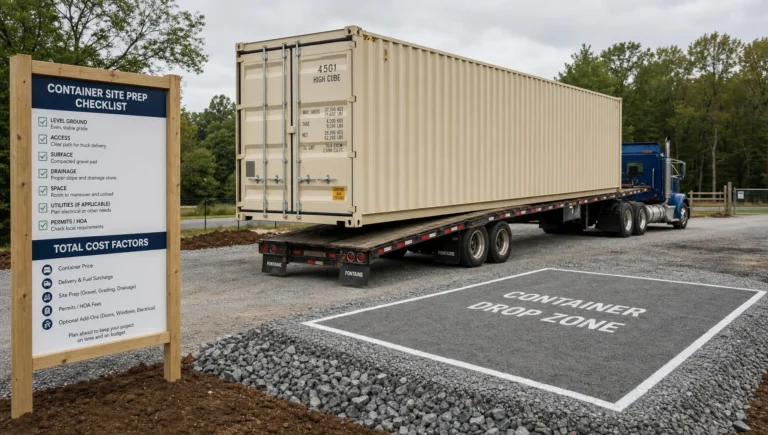
Start with a level, compacted base. In much of Raleigh and the Southeast, a crushed gravel pad is a reliable choice because it improves drainage and reduces mud around the doors. The container should be supported at the corners, and for heavier loads, additional support along the bottom rails or crossmember areas may be appropriate. Avoid placing the unit directly on soft soil, low spots, or areas where stormwater collects.
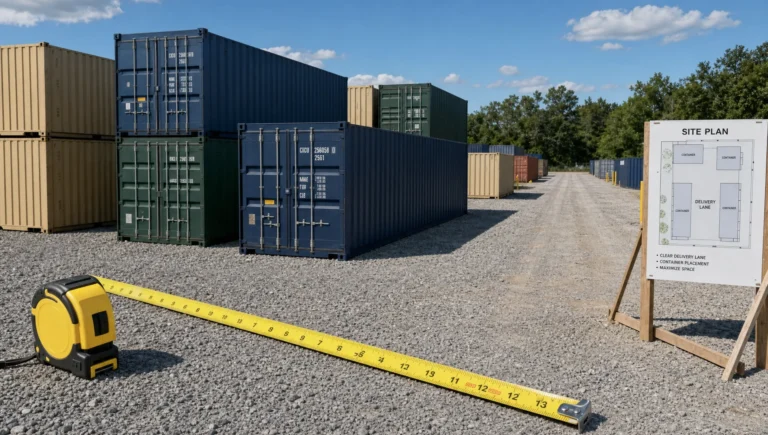
Confirm truck access before delivery. A 20ft tilt-bed delivery may need a clear straight approach, adequate overhead clearance, and enough room for the truck to pull away after the container is set down. Low tree limbs, power lines, fences, narrow gates, and steep grades can all affect placement.
Also check permit and HOA requirements. Rules can vary by city, county, neighborhood, zoning, intended use, and how long the container will remain on site. In Raleigh and surrounding Wake County communities, it is smart to confirm requirements before scheduling delivery, especially for visible residential placements, commercial sites, or modification projects.
Quick Buyer Checklist Before You Load a 20ft Container
Use this checklist before adding heavy cargo or asking a carrier to move a loaded unit.
- Confirm the tare weight, maximum gross weight, and payload on the CSC plate.
- Match the grade to the use case, such as Cargo Worthy for freight or WWT for static storage.
- Ask whether the container will ever need to be moved while loaded.
- Distribute weight evenly across the floor and avoid concentrated point loads.
- Prepare a level pad that can handle the container plus its contents.
- Check local permits, HOA rules, and site access before delivery.
The safest container plan is not simply choosing the highest payload number. It is matching the container type, grade, site conditions, cargo weight, and delivery method to the job.
Frequently Asked Questions
What is the empty weight of a 20 foot shipping container? A standard 20ft dry shipping container commonly weighs about 4,800 to 5,200 pounds empty. The exact tare weight varies by manufacturer, age, floor construction, and container type, so confirm the CSC plate on the actual unit.
How much payload can a 20ft shipping container carry? Many ISO-rated 20ft dry containers have a maximum gross weight up to about 67,200 pounds, which can produce a listed payload near 62,000 pounds if the tare weight is around 5,000 pounds. Practical payload may be lower because of road limits, axle weights, floor loading, and cargo distribution.
Does a 20ft High Cube container weigh more than a standard 20ft container? Usually, yes. A 20ft High Cube has extra height, which generally adds steel weight and slightly reduces remaining payload if the maximum gross rating is similar. High Cube units are useful when vertical clearance matters more than maximum payload.
Can I move a loaded 20ft container after delivery? Sometimes, but you should plan it with the carrier before loading. A loaded container can exceed equipment limits or legal road weight limits even if the container itself is within its design rating. Always confirm whether loaded relocation is available.
Is WWT good enough for heavy storage? Wind and Watertight can be a good choice for static storage if the unit is structurally sound and the floor is in good condition. However, WWT is not the same as Cargo Worthy certification, so it should not be assumed suitable for international shipping or loaded transport.
Talk With Lease Lane Containers Before You Load
Choosing the right 20ft container is about more than the empty weight. You need the right grade, the right payload expectations, the right delivery plan, and a site that can support the container after it is filled.
Lease Lane Containers LLC supplies clean new one-trip and used containers, including Standard, High Cube, Cargo Worthy, WWT, and refrigerated options for customers in Raleigh, across North Carolina, throughout the Southeast, and nationwide. For help matching a container to your storage, construction, agricultural, business, or logistics needs, contact our sales team at sales@leaselanecontainers.com or visit our Raleigh office.