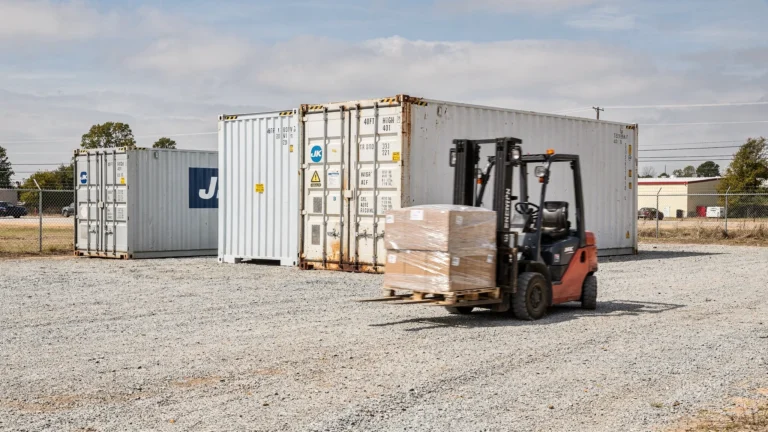
What Is the Size of a 20ft Container?
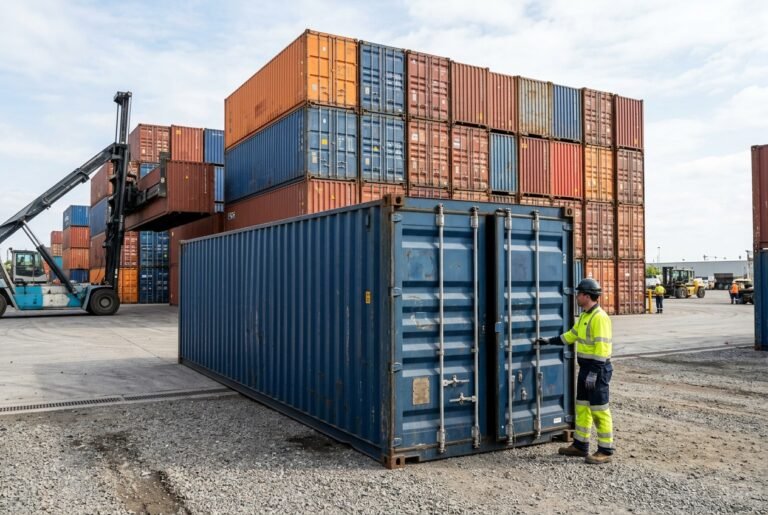
A standard 20ft shipping container is 20 feet long, 8 feet wide, and 8 feet 6 inches tall on the exterior. That size gives buyers a compact, ground-level storage unit with roughly 148 square feet of floor space and about 1,170 cubic feet of interior volume, depending on the manufacturer and container type.
For Raleigh contractors, homeowners, farms, small businesses, and logistics teams across the Southeast, the 20ft size is popular because it fits where a 40ft container may be too long, while still offering serious capacity for tools, inventory, furniture, building materials, or cargo.
The important detail is this: the “20ft” label describes the outside length. The usable inside space is slightly smaller because of the Corten steel walls, end frame, door hardware, floor structure, and corner posts.
Standard 20ft Container Dimensions at a Glance
Most standard 20ft dry shipping containers are built to ISO standards, which helps make them compatible with trucks, ships, chassis, forklifts, cranes, and stacking systems around the world. Exact measurements can vary slightly by manufacturer, but the following figures are the common buyer reference points.
| Measurement | Typical standard 20ft dry container | Why it matters |
|---|---|---|
| Exterior length | 20 ft | Determines site footprint and truck placement |
| Exterior width | 8 ft | Helps confirm access through gates, driveways, and yards |
| Exterior height | 8 ft 6 in | Standard height for most dry storage units |
| Interior length | About 19 ft 4 in | Usable storage length inside the box |
| Interior width | About 7 ft 8 in | Usable width for pallets, shelving, equipment, or inventory |
| Interior height | About 7 ft 10 in | Vertical clearance for stacked goods and interior buildouts |
| Door opening width | About 7 ft 8 in | Maximum practical loading width through the cargo doors |
| Door opening height | About 7 ft 5 in | Critical for forklifts, carts, appliances, and equipment |
| Interior volume | About 1,170 cu ft | Total enclosed storage capacity |
| Floor area | About 148 sq ft | Comparable to a small room or compact garage bay |
If you are comparing this size against larger units, Lease Lane Containers also has a more detailed shipping container dimensions guide for 20ft and 40ft containers that breaks down standard, High Cube, and refrigerated options.
Exterior Size vs. Usable Interior Space
The exterior size of a 20ft container is the number most buyers start with, but the interior dimensions are what determine whether your equipment, furniture, pallets, or materials will actually fit.
The walls and roof are made from corrugated Corten steel, a weathering steel designed to resist corrosion in demanding marine and freight environments. That steel shell is one of the reasons shipping containers are so durable, but it also means the interior is narrower and shorter than the exterior.
The floor assembly matters too. A standard shipping container floor typically sits on steel crossmembers with a heavy-duty plywood floor above them. This structure is designed for cargo loads, pallet jacks, and industrial use, but it reduces the usable internal height compared with the outside height.
Door openings are another common point of confusion. Even though the container is 8 feet wide on the outside, the door opening is not a full 8 feet wide. If you plan to load wide equipment, cabinets, motorcycles, compact machinery, or palletized goods, measure the door opening first, not just the interior wall-to-wall width.
What Can Fit Inside a 20ft Container?
A 20ft container is often the right balance between capacity and maneuverability. It is large enough for business storage but small enough for many residential driveways, rural properties, construction sites, and commercial lots around Raleigh and the Southeast.
A typical 20ft container can work well for:
- Jobsite tools, compressors, fasteners, ladders, and boxed materials
- Retail overflow inventory, seasonal displays, and packaged goods
- Household storage during renovations or moves
- Farm supplies, fencing materials, feed storage, and small implements
- Motorcycle, ATV, lawn equipment, or compact machinery storage
- Palletized freight, depending on pallet size and loading method
For pallet planning, a standard 20ft container can often hold about 10 standard 48 inch by 40 inch pallets in a single layer, depending on orientation, packaging, and whether you need walking room. If you are shipping internationally, pallet layout should be confirmed against cargo weight, bracing requirements, and the container’s certified capacity.
Is Every 20ft Container the Same Size?
Not exactly. “20ft container” usually refers to a standard dry van container, but there are several 20ft configurations that affect usable space.
A standard 20ft dry container is the most common option for storage and general cargo. It is the size most people mean when they ask about the size of a 20ft container: 20 ft by 8 ft by 8 ft 6 in on the outside.
A 20ft High Cube container is usually 20 ft long and 8 ft wide, but 9 ft 6 in tall on the exterior. The extra foot of height can be valuable for mobile offices, workshop conversions, taller shelving, and modified container projects. High Cube units are less common in 20ft than in 40ft, so availability can vary by market.
A 20ft refrigerated container, also called a reefer, has a similar exterior footprint but less usable interior space. The refrigeration machinery and insulated walls reduce the internal dimensions. Reefers are a specialty choice for cold storage, food, floral, pharmaceutical, and temperature-sensitive applications.
If height, door clearance, or exact interior volume is critical, ask for the specific container type and measurements before purchase. This is especially important for custom modular solutions, container offices, and equipment storage.
Size Also Connects to Container Grade
Dimensions tell you whether the container fits your space. Grade tells you what condition the container is in and what it should be used for. At Lease Lane Containers LLC, this distinction matters because a storage buyer in Raleigh may need a different grade than a logistics manager preparing cargo for ocean transport.
One-Trip containers are the closest thing to new commonly available in the United States. They are usually manufactured overseas, loaded once with cargo, shipped to the U.S., and then sold. They typically have cleaner paint, fewer dents, tighter door seals, and a stronger appearance for retail, office, residential, and commercial uses. For buyers who want a clean ISO-certified unit, a product like the 20ft White Shipping Container for Sale – New One Trip ISO Certified is relevant when appearance and long service life matter.
Cargo Worthy containers are used containers that are suitable for transporting cargo. They should be structurally sound and may be appropriate for domestic or international freight when properly inspected and documented. If you plan to ship loaded cargo, ask about the CSC plate, inspection status, and whether the container meets the requirements of your carrier or freight forwarder.
Wind and Watertight containers, often shortened to WWT, are used primarily for ground-level storage. A WWT unit should keep out wind and rain under normal conditions, but it may show cosmetic wear, dents, surface rust, or previous repairs. It is not automatically certified for ocean shipping. For buyers who want the standard 20 ft by 8 ft by 8.5 ft footprint for storage, the 20′ x 8′ x 8.5′ Tall– New Shipping/Storage Container – Wind and Watertight – Beige is an example of how size and condition language appear together in real product descriptions.
How Much Space Do You Need Around a 20ft Container?
The container itself is only part of the planning. You also need room for delivery, door swing, drainage, and safe access.
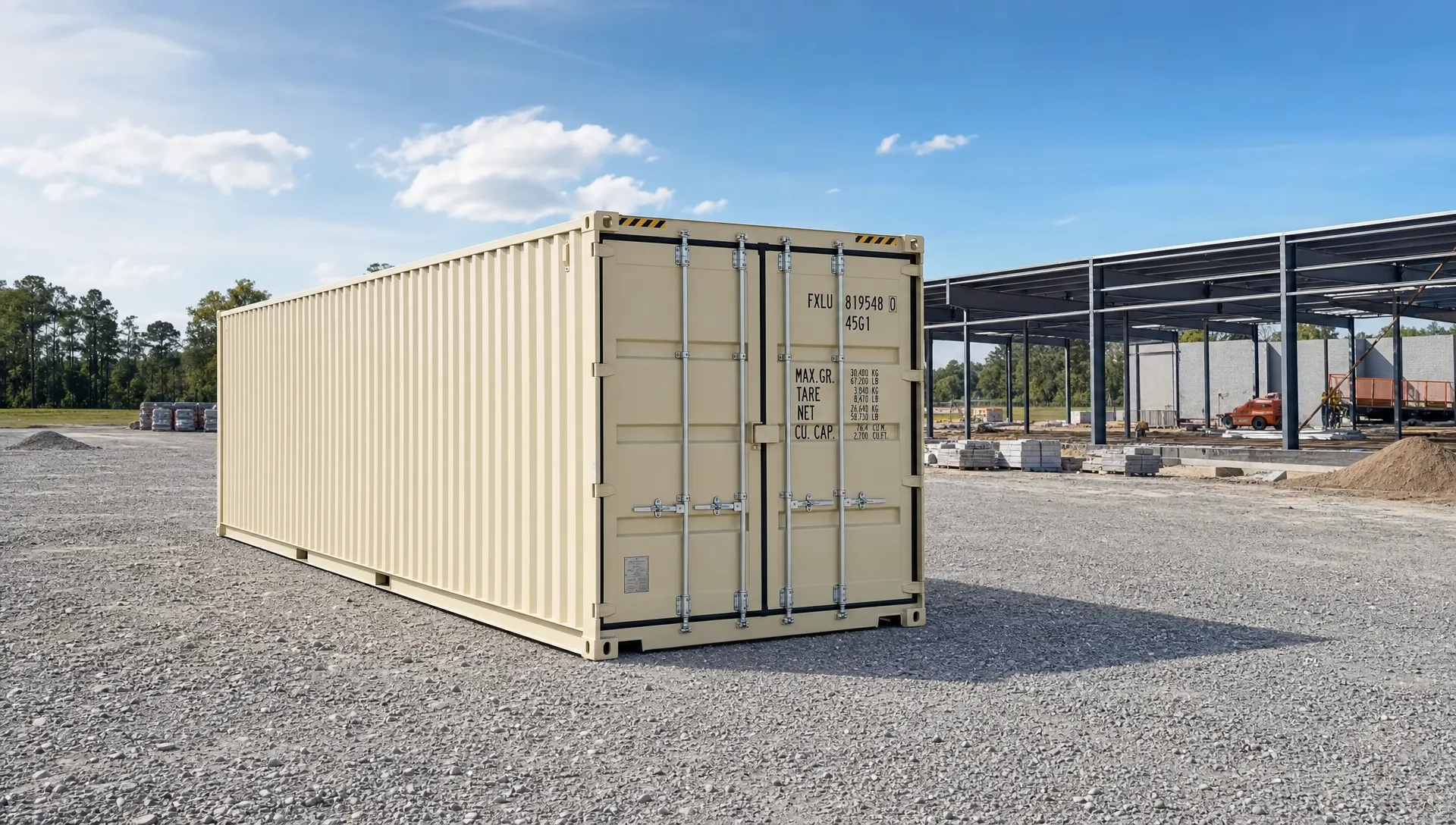
For a 20ft container, the pad or landing area should be at least slightly larger than the container footprint. Many buyers plan for a base around 22 feet long and 10 feet wide so there is margin around the edges. If you want shelving, frequent loading, or a walkway along one side, plan for more space.
The cargo doors swing outward, so leave several feet of clearance in front of the door end. If the container will sit near a fence, wall, building, tree line, or parked equipment, confirm that both doors can fully open.
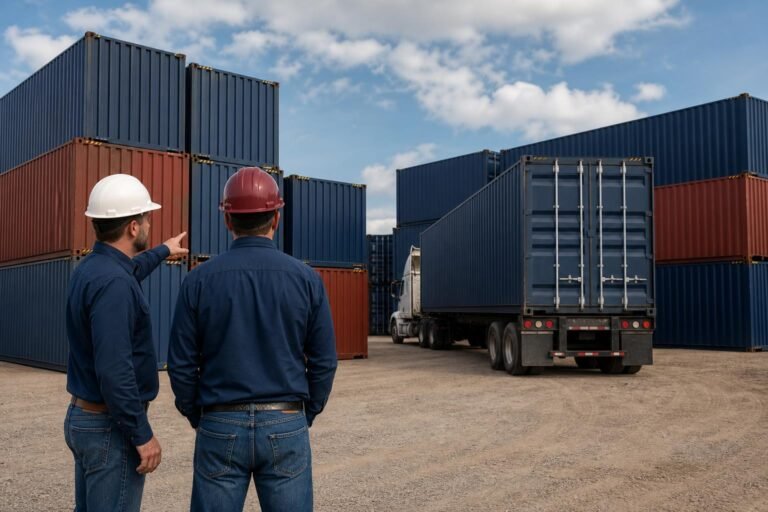
Delivery access is often the bigger issue. A tilt-bed truck or similar delivery setup needs room to back in, raise the bed, and slide the container into place. Requirements vary by truck, route, ground condition, and driver assessment, but a straight and stable approach makes every delivery easier. In tight Raleigh residential neighborhoods, wooded lots, or active construction sites, sending photos of the drop area in advance can prevent costly surprises.
If weight is part of your planning, especially for asphalt, concrete, gravel, or soft soil, review the basics of 20ft container weight before finalizing the drop location.
Pro-Tip: Prepare the Site Before Delivery
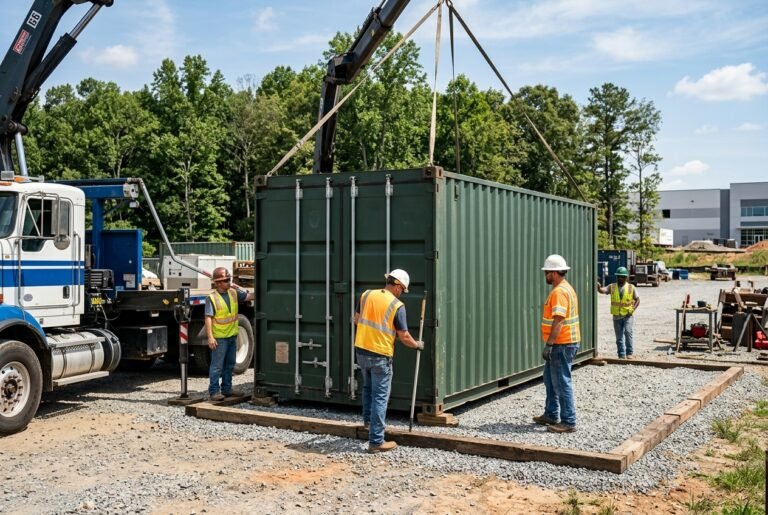
A 20ft container performs best when it sits level, supported, and dry. This is especially important in North Carolina, where clay soils, heavy rain, and seasonal storms can create drainage problems if the container is placed directly on soft ground.
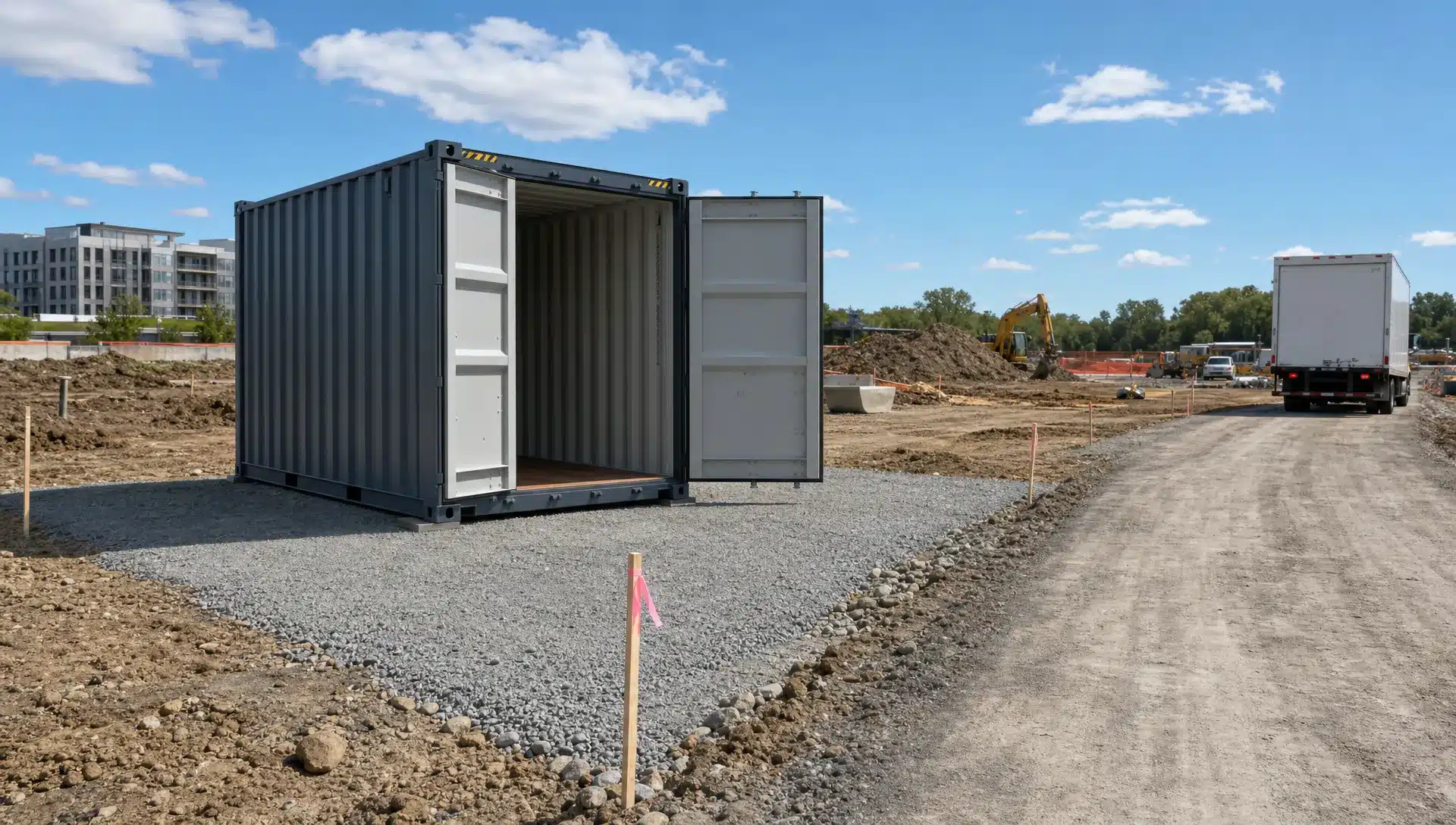
For most storage applications, a compacted gravel pad is a practical choice. Gravel helps with drainage, reduces mud around the doors, and limits ground contact that can accelerate corrosion. Railroad ties, concrete blocks, or piers may be used in some situations, but the container should be supported evenly at structural points and remain level enough for the doors to operate properly.
Before delivery, check these site factors:
- Confirm the ground is level from side to side and end to end
- Remove low branches, debris, vehicles, and overhead obstructions
- Leave room for the delivery truck to approach and exit safely
- Plan door orientation based on daily access, slope, and security
- Ask your city, county, HOA, or project authority about permit requirements
Permit rules can vary across Raleigh, Wake County, surrounding North Carolina municipalities, and rural areas throughout the Southeast. A temporary construction storage unit may be treated differently than a permanent commercial installation or modified container office. When in doubt, check before the container is delivered.
When a 20ft Container Is the Better Choice Than a 40ft
A 40ft container provides more total storage, but bigger is not always better. The 20ft size is often easier to place, easier to access, and better suited to smaller lots or changing jobsites.
Choose a 20ft container when your available space is limited, when you need storage close to a work area, or when you expect to move the container between sites. General contractors often prefer 20ft containers because they can fit near active building zones without taking over the entire lot. Homeowners like them because they can often fit in a driveway or side yard where a 40ft unit would be difficult.
A 40ft container may be the better choice for large-volume inventory, long building materials, furniture warehouses, multi-trade construction projects, or modular conversions that need more interior length. If you are still deciding between sizes, the guide on how to shop for a 20 ft shipping container for sale can help you match container size, grade, and intended use.
Quick Buyer Checklist for the Size of a 20ft Container
Before ordering, confirm three measurements: the container dimensions, the access dimensions, and the usable interior requirements. A container that fits on paper may still be difficult to deliver if the truck cannot reach the drop site safely.
Measure the length, width, and height of the intended placement area. Then measure gates, driveways, turns, slopes, overhead wires, tree limbs, roof eaves, and any narrow access points. Finally, measure your largest item, including packaging, pallet height, wheels, handles, and any angle needed to turn through the door opening.
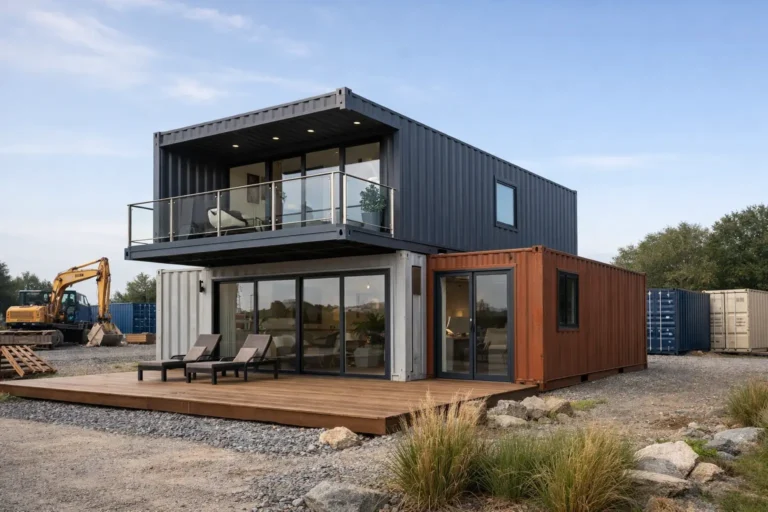
If your project involves modification, such as adding roll-up doors, insulation, HVAC, partitions, windows, or electrical, remember that buildout materials reduce interior space. This is one reason many office and workshop buyers consider High Cube containers when available.
Frequently Asked Questions
What is the outside size of a 20ft container? A standard 20ft container is typically 20 feet long, 8 feet wide, and 8 feet 6 inches tall on the exterior.
What is the inside size of a 20ft container? The interior is usually about 19 feet 4 inches long, 7 feet 8 inches wide, and 7 feet 10 inches high. Exact measurements vary slightly by manufacturer and container type.
How many square feet are in a 20ft container? A standard 20ft container has about 148 square feet of usable floor area inside.
Is a 20ft High Cube container the same size? It has the same general length and width, but it is taller. A 20ft High Cube is typically 9 feet 6 inches tall on the exterior, giving about one extra foot of height compared with a standard unit.
Is a WWT container the same size as a Cargo Worthy container? The size may be the same, but the grade is different. WWT means the container is intended to keep out wind and water for storage. Cargo Worthy means it is structurally suitable for cargo transport when properly inspected and documented.
Can Lease Lane Containers deliver a 20ft container outside Raleigh? Lease Lane Containers LLC is headquartered in Raleigh, NC and supports buyers locally, across the Southeast, and nationwide with container sourcing and delivery coordination.
Get Help Choosing the Right 20ft Container
The size of a 20ft container is straightforward, but choosing the right unit depends on your site, access, grade, budget, and intended use. Lease Lane Containers LLC can help you compare One-Trip, Cargo Worthy, and Wind and Watertight options, plan your drop spot, and understand what will work best for storage, cargo, construction, agriculture, retail, or modular projects.
For help choosing a 20ft container in Raleigh, across North Carolina, or anywhere in the wider U.S., contact the sales team at sales@leaselanecontainers.com or visit the Raleigh office to discuss your project with a local container specialist.