20ft Container Weight Explained for Buyers and Delivery
Buying a 20ft container is not only a dimensions decision. Weight affects the truck that can deliver it, the ground that can support it, the amount of cargo you can safely load, and whether a future move will be legal on public roads.
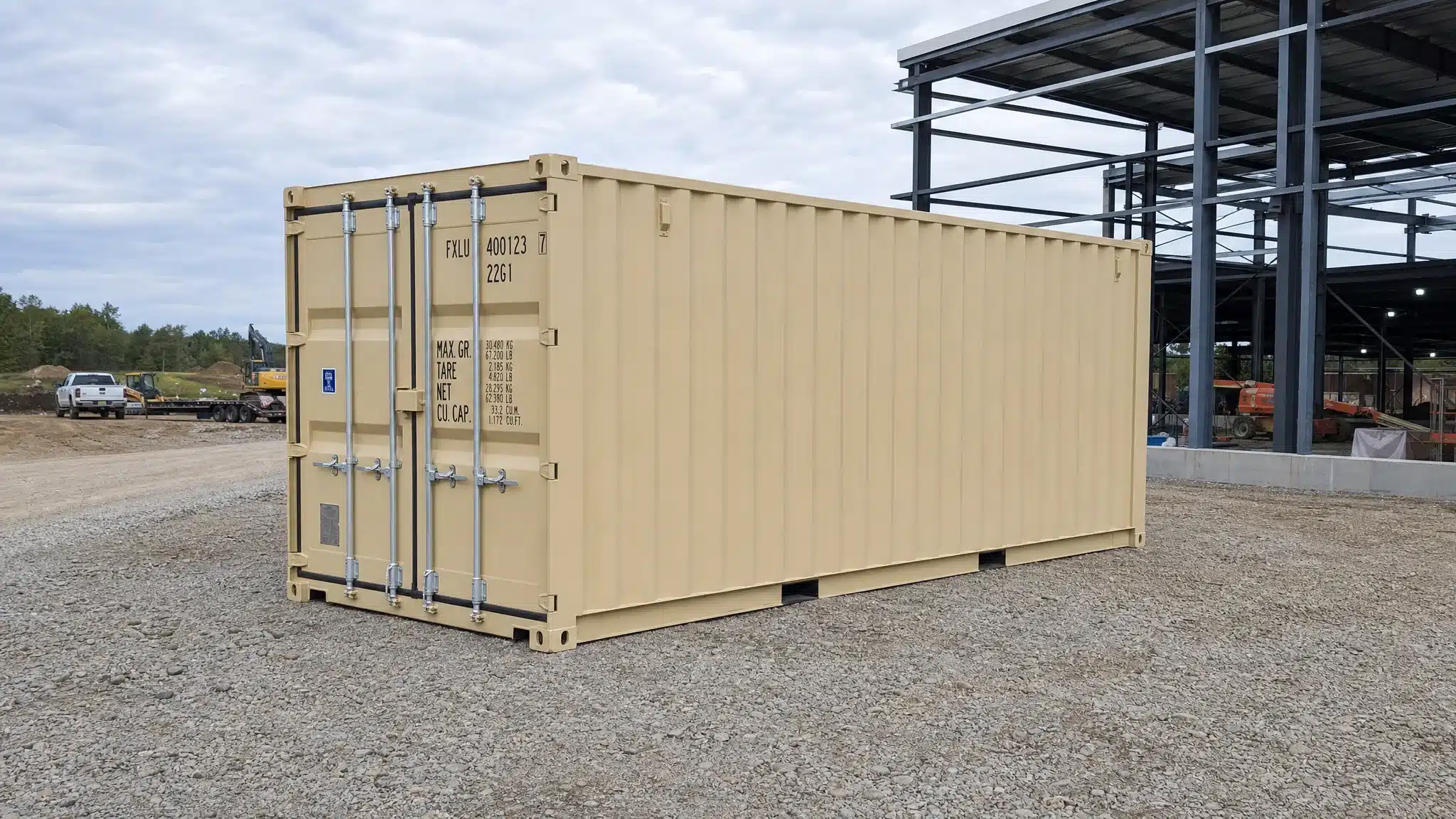
For most buyers, the useful starting point is simple: a standard empty 20ft dry shipping container usually weighs about 4,800 to 5,100 pounds. That empty weight is called tare weight. The exact number varies by manufacturer, floor system, repairs, and container type, so the best source is always the container data plate.
That matters whether you are a general contractor storing tools on a Raleigh job site, a small business setting up overflow inventory storage in North Carolina, a farm owner in the Southeast, or a logistics manager planning cargo movement. If you are comparing actual units, it can help to pair the weight guidance below with practical tips for finding a 20ft shipping container for sale near you.
What 20ft Container Weight Actually Means
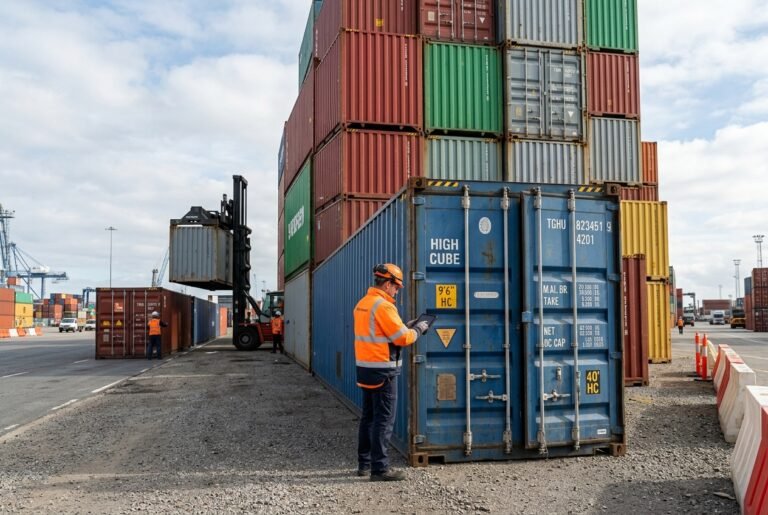
When people ask about 20ft container weight, they may be asking one of three different questions. These terms are often listed on the CSC plate, which is the safety approval plate used on ISO shipping containers.
Tare weight is the empty weight of the container itself. Payload is the maximum cargo weight the container is rated to carry. Maximum gross weight is the tare weight plus the payload. For international and heavy cargo use, these numbers should be verified on the plate attached to the unit, not assumed from a generic chart.
Most 20ft containers are built to ISO standards with Corten Steel exterior panels, structural steel frame members, marine-grade plywood flooring, and standardized corner castings. The ISO format is what allows the container to be lifted, stacked, transported, and secured with industry equipment. However, ISO compatibility does not mean every container has the same tare weight or payload rating.
| 20ft container type | Approximate empty weight | Common maximum gross rating | Buyer note |
|---|---|---|---|
| 20ft standard dry container | 4,800 to 5,100 lb | Plate-specific, often 52,910 to 67,200 lb | Most common choice for storage, job sites, and dry cargo |
| 20ft High Cube dry container | 5,100 to 5,400 lb | Plate-specific | Adds 1 ft of exterior height, useful for taller items or modifications |
| 20ft refrigerated container | 6,700 to 7,700 lb | Plate-specific | Heavier because of insulation, refrigeration machinery, and interior components |
Use these as planning ranges, not certification numbers. If the container will be shipped by rail, vessel, or highway with cargo inside, verify the CSC plate, inspection status, and carrier requirements before loading.
Why Weight Matters Before You Buy
A 20ft container is compact compared with a 40ft unit, but it is still a multi-ton steel structure. Empty weight influences delivery equipment, site access, driveway durability, and the way the container settles once it is placed.
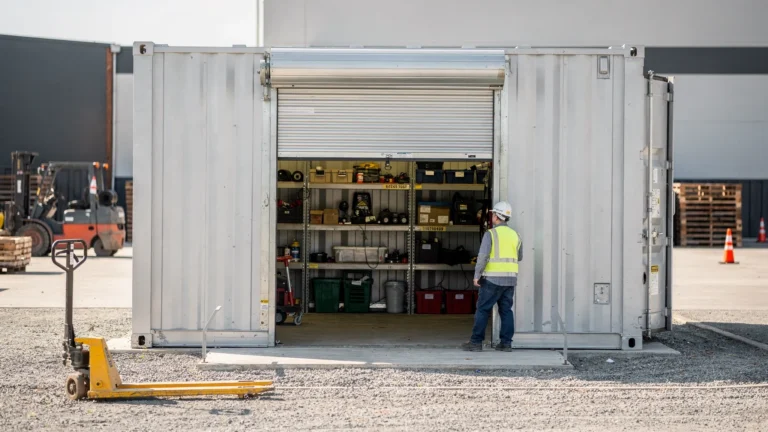
For contractors in Raleigh and across the Southeast, this can affect where the container sits on a construction site. A fully loaded tool and material container may need to be kept out of soft clay, low drainage areas, and unfinished drive lanes. For homeowners, the empty weight is still heavy enough to rut lawns or crack weak pavement if the delivery path is not planned.
Weight also affects future flexibility. If you may need to relocate the container while it is full, tell your container supplier before you buy. Many standard deliveries are for empty containers only. Moving a loaded container may require different equipment, a crane, a Landoll trailer, a heavy-duty rollback, or a carrier willing to handle the load.
The key point is that container weight is not only about whether the unit can hold your items. It is about whether the delivery route, ground surface, truck, and legal transport limits can handle the combined weight safely.
How Grade Affects Weight, Strength, and Use
Container grade does not usually change the tare weight as much as size or type does, but it does affect what the container should be used for. Buyers should understand the difference between One-Trip, Cargo Worthy, and Wind and Watertight before making a decision.
| Grade | What it means | Best fit | Weight and delivery impact |
|---|---|---|---|
| One-Trip | A newer container that has typically made one cargo trip from the factory to its destination market | Premium storage, modifications, retail, mobile office projects, long-term ownership | Tare is similar to other 20ft dry units, but condition is usually cleaner and more consistent |
| Cargo Worthy | A used container inspected as structurally suitable for cargo transport | International shipping, export use, heavy-duty logistics, storage where structural certification matters | Verify CSC plate and inspection documentation if shipping loaded cargo |
| Wind and Watertight | A used container that keeps out wind and rain but is not necessarily certified for ocean shipping | Job-site storage, farms, residential storage, equipment protection | Ideal for storage buyers, but confirm floor, doors, seals, and roof condition |
For buyers who want a newer, cleaner 20ft option for long-term storage or a modification project, a New One Trip 20 Ft Shipping Container is often worth considering. One-trip units are popular when appearance, lower wear, and long service life matter.
For contractors, homeowners, and property owners who mainly need secure storage, a 20ft Standard Wind and Watertight Shipping Container for Sale can be a practical choice. WWT units are commonly selected for ground-level storage because the primary requirement is protection from weather, not export certification.
If you want to go deeper into ratings, door openings, floor construction, and plate data, Lease Lane Containers also provides a detailed guide to shipping container specifications every buyer should know.
Delivery Planning for an Empty 20ft Container
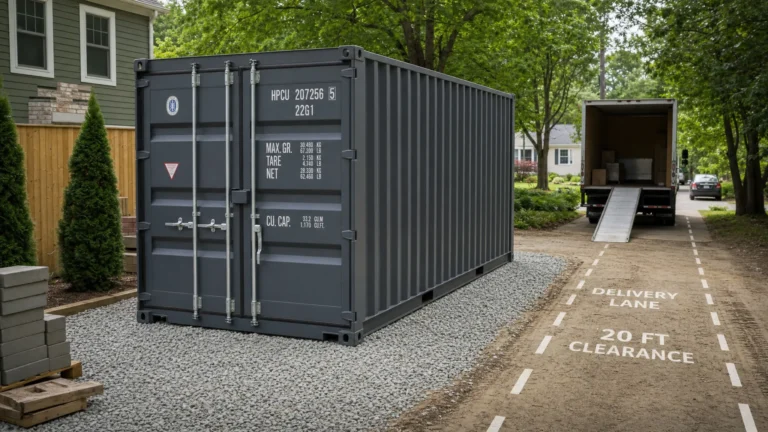
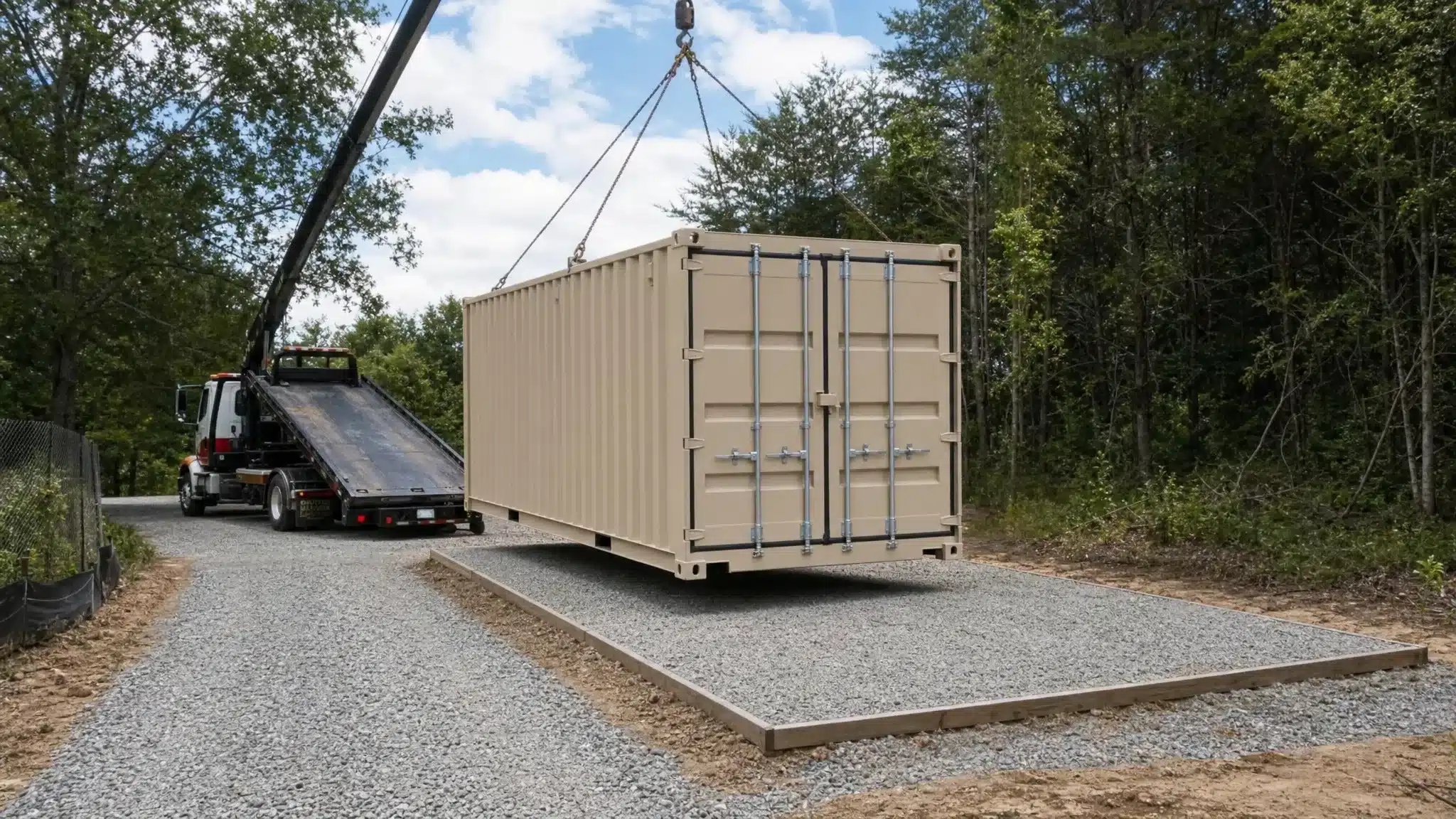
An empty 20ft container weighing roughly 5,000 pounds is often delivered by tilt-bed truck, rollback, or trailer depending on the site and delivery region. The truck backs into position, tilts the bed, and slides the container onto the prepared area. The driver needs enough straight-line space to pull forward as the container comes off the truck.
Access requirements vary by truck, but buyers should plan for a wide, stable approach with clear overhead space. Low tree limbs, power lines, tight gates, steep grades, and soft soil can all create delivery problems. In urban Raleigh neighborhoods, older driveways and narrow side yards may also limit where a container can be placed.
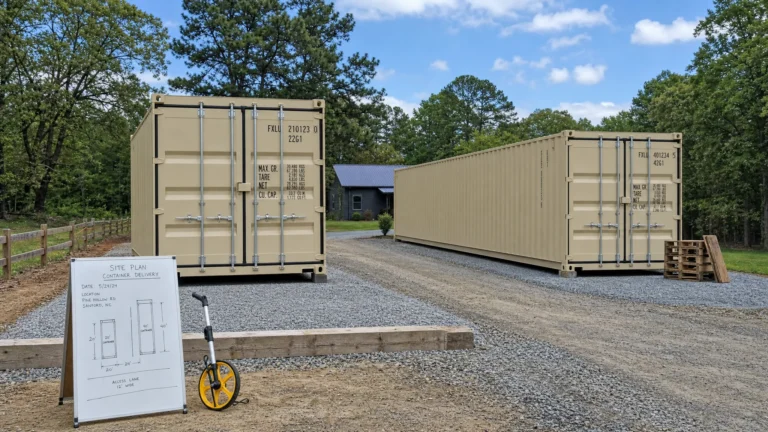
Door orientation is another detail to settle before delivery. Because the container is unloaded from the truck in a specific direction, you should confirm with the dispatcher which end will come off first and how the doors should face when the unit is set down. This is especially important for contractors who need fast access to tools or homeowners placing a unit along a fence line.
Pro-Tip: Prepare the Drop Site Before the Truck Arrives
Do not place a 20ft container directly on soft dirt if you want trouble-free doors and long-term stability. A level, compacted gravel pad is one of the best site preparation options for storage containers in Raleigh, North Carolina, and the broader Southeast because it improves drainage and reduces settling.
A practical pad usually starts with vegetation removal, compaction, and a layer of crushed stone. Many buyers use 4-6 inches of compacted gravel, extending the pad beyond the container footprint so water can drain away from the steel frame. Concrete pads can also work well, especially for commercial sites or long-term placements, but they need to be level and designed to handle concentrated loads.
Container doors are the first clue that the pad is not right. If the unit twists because one corner sinks, the doors may become difficult to open. Leveling the four corners and preventing standing water under the container helps protect the floor, frame, and door alignment.
Permits are also part of site prep. Requirements vary by municipality, zoning district, project type, and duration of use. In Raleigh, Wake County, and other North Carolina jurisdictions, confirm local rules before placing a container on residential property, a visible commercial lot, or an active construction project. Lease Lane Containers can help you think through delivery logistics, but the local authority having jurisdiction makes the final permit decision.
Loaded Weight: Do Not Confuse Capacity With Legal Transport
The loaded weight of a container is the tare weight plus the weight of everything inside. A simple example: if a 20ft container has a tare weight of 4,950 pounds and you load 8,000 pounds of tools, shelving, and materials, the loaded container weighs 12,950 pounds before counting the truck or trailer.
That may be manageable for storage, but transport is a different question. The container might be structurally rated for far more cargo than your delivery equipment or legal road limits allow. Federal highway weight rules, state regulations, axle spacing, bridge limits, and carrier policies all matter. The Federal Highway Administration overview of size and weight regulations explains that the federal gross vehicle weight limit on the Interstate System is generally 80,000 pounds, subject to axle and configuration rules.
This is why dense materials require extra planning. Stone, tile, metal parts, machinery, seed, feed, and palletized liquids can make a 20ft container extremely heavy long before the interior space is full. A logistics manager shipping heavy cargo should verify the CSC plate, weight distribution, blocking and bracing, and carrier acceptance. A contractor storing dense materials on site should still think about ground bearing and whether the container may need to move later.
A 20ft container is often preferred for dense cargo because it has less floor length than a 40ft unit but may carry a similar maximum gross rating depending on the plate. In other words, a 20ft unit can be a better fit for heavy items, while a 40ft or 40ft High Cube may be better for bulky, lighter goods. For dimensional comparisons, see Lease Lane Containers' guide to 20ft and 40ft shipping container dimensions.
20ft vs 40ft Container Weight for Buyers
Many buyers assume a 40ft container can carry twice as much as a 20ft container because it is twice as long. In practice, that is not usually how container ratings work. A 40ft unit has much more volume, but its maximum gross rating may be similar to a 20ft unit. The 40ft container is heavier when empty, so its available payload may be lower than expected.
| Container size | Approximate empty weight | Main advantage | Watch-out |
|---|---|---|---|
| 20ft standard | 4,800 to 5,100 lb | Easier placement, better for tight sites and dense cargo | Less interior volume than 40ft units |
| 40ft standard | 8,000 to 8,800 lb | More floor area and storage volume | Needs more delivery space and stronger access planning |
| 40ft High Cube | 8,600 to 9,200 lb | Extra vertical clearance for bulky items | Taller profile may create clearance or permit concerns |
For Raleigh contractors working on compact lots, a 20ft container often fits where a 40ft unit would be difficult to deliver. For warehouses, farms, and developers with more room, a 40ft or High Cube container may make better use of the site. The right answer depends on contents, access, door orientation, ground conditions, and delivery equipment.
Buyer Checklist: Weight Questions to Ask Before Ordering
Before you commit to a 20ft container, ask weight-related questions early. They help prevent delivery delays, unexpected access problems, and unsafe loading decisions.
- What is the tare weight listed on the container plate?
- Is the unit One-Trip, Cargo Worthy, or Wind and Watertight?
- Will the container be delivered empty, loaded, or relocated later while loaded?
- What delivery equipment will be used at my location?
- How much straight-line space, width, and overhead clearance does the driver need?
- Is my surface level, compacted, and strong enough for the container and contents?
- Do Raleigh, county, HOA, or job-site rules require a permit or placement approval?
If a seller cannot explain these basics, be cautious. Weight is a practical delivery and safety issue, not a minor spec buried in paperwork.
Frequently Asked Questions
How much does a 20ft container weigh empty? A standard empty 20ft dry shipping container usually weighs about 4,800 to 5,100 pounds. The exact tare weight should be confirmed on the CSC plate because manufacturer, age, repairs, and container type can change the number.
What is the maximum weight a 20ft container can hold? It depends on the plate rating. Many 20ft dry containers have maximum gross ratings in the 52,910 to 67,200 pound range, but legal road transport, equipment limits, and carrier rules may reduce what you can actually move.
Does a 20ft High Cube container weigh more than a standard 20ft container? Usually, yes. A 20ft High Cube adds one foot of exterior height and typically has a slightly higher empty weight. The difference is not as large as the difference between a 20ft and 40ft unit, but it should still be verified before delivery.
Is a Wind and Watertight container strong enough for storage? In most cases, yes. WWT containers are commonly used for secure ground-level storage because they are sealed against wind and rain. They are not necessarily certified for international shipping, so choose Cargo Worthy if loaded cargo movement or export is required.
Can Lease Lane Containers deliver a 20ft container in Raleigh and beyond? Lease Lane Containers LLC is headquartered in Raleigh, NC, and supports buyers throughout North Carolina, the Southeast, and nationwide. Delivery planning depends on site access, equipment, container type, and location.
Need Help Confirming 20ft Container Weight and Delivery Requirements?
Lease Lane Containers LLC helps buyers choose the right 20ft container, understand grade options, and prepare for a successful delivery. Whether you need a One-Trip unit, a Cargo Worthy container for shipping, or a Wind and Watertight unit for job-site storage, the right conversation starts with weight, access, and site conditions.
For help planning your container purchase or delivery, contact the sales team at sales@leaselanecontainers.com or visit our Raleigh office to speak with the local Lease Lane Containers team.